
2027 Is a Master's Degree in Psychology Right for You?

Co-Founder and Chief Data Scientist
Choosing a master’s degree in psychology is not just a question of liking the subject. It is a decision about licensure, cost, career direction, supervised experience, and whether you want to work in counseling, research, education, business, or eventually doctoral-level psychology practice. Demand for mental health support remains high: in the United States, there are an estimated 340 individuals for every one mental health provider (State of Mental Health in America, 2024). That shortage makes graduate psychology training relevant, but it does not mean every psychology master’s program leads to the same job.
This guide explains how Master’s Degree in Psychology programs work, how they differ from counseling and social work degrees, which specializations are common, what admissions committees usually expect, and how to evaluate return on investment. It also reviews selected programs, career outcomes, online and accelerated options, doctoral pathways, and common mistakes to avoid before enrolling.
Quick answer: Is a master’s degree in psychology worth it?
A master’s degree in psychology can be worthwhile if it clearly supports your target career, such as counseling-related work, research assistance, school or career counseling, rehabilitation counseling, industrial-organizational roles, or preparation for doctoral study. It is less suitable if you assume it will automatically qualify you to become a licensed psychologist; in the US, that title generally requires a doctorate, supervised clinical hours, and state licensure.
- A psychology master’s degree can support careers in mental health, education, social services, research, and business, but eligibility depends heavily on specialization, practicum hours, and state rules.
- Marriage and family therapists in the US earned a median annual wage of $58,510 in 2023 [US Bureau of Labor Statistics (BLS), 2024].
- Online psychology master’s programs may reduce some costs tied to housing, commuting, and campus-based fees, though students should still compare tuition, practicum requirements, technology fees, and licensure alignment.
- Master’s Degree in Psychology Programs to Compare
- Master’s in Psychology vs. Bachelor’s in Psychology
- Core Skills Taught in Psychology Master’s Programs
- How to Know Whether This Degree Matches Your Career Goals
- Preferred Applicant Background and Prerequisites
- Psychology Master’s Degree vs. Related Graduate Degrees
- Return on Investment for a Master’s Degree in Psychology
- How to Choose the Right Psychology Master’s Program
- Combining Psychology with Marriage and Family Therapy Training
- Accelerated and Online Psychology Programs vs. Traditional Formats
- Moving from a Master’s Degree to a Psychology Doctorate
- Common Admission Requirements
- Psychology Master’s Specializations
- What Students Often Find Most Rewarding
- Why Practicums, Internships, and Fieldwork Matter
- How to Plan for a Doctorate Without Overspending
- Current Trends Affecting Graduate Psychology Education
- Post-Graduation Support to Look For
- Common Challenges in Psychology Master’s Programs
- Career Outlook for Psychology Master’s Graduates
- Financial Considerations Before Enrolling
- Supplemental Certifications and Career Value
- Do You Need a Doctorate to Work as a Psychologist?
Master’s Degree in Psychology Programs to Compare
Program fit matters more than brand name alone. Some psychology master’s degrees are terminal programs designed for working professionals, while others are awarded only to students already enrolled in a doctoral program. Before applying, check whether the curriculum, research expectations, practicum structure, accreditation, and degree purpose match your goals.
The following program examples were developed using the Research.com methodology. Data were gathered and reviewed from the IPEDS database, Peterson's database, the College Scorecard database, and the National Center for Education Statistics.
1. Stanford University
Stanford University offers a Master of Arts in Psychology only for current Stanford doctoral students. Students pursuing the Doctor of Philosophy in Psychology may request the MA after completing the first two years of required doctoral coursework and earning at least 45 units of psychology courses. This is not a terminal master’s degree for applicants who are not already part of Stanford’s graduate psychology program.
- Program length: Two years
- Tracks or concentrations: N/A
- Cost per credit: $1,272–$1,391 per unit
- Required credits to graduate: 45 credits
- Accreditation: Western Association of Schools and Colleges Senior College and University Commission (WSCUC)
2. University of California-Berkeley
The University of California-Berkeley provides graduate psychology training across six specialization areas. Like Stanford, it does not offer a standalone terminal Master’s Degree in Psychology. Doctoral students may earn an MA during their doctoral studies after completing at least 20 semester units of graduate coursework and a thesis.
- Program length: At least two semesters
- Areas of specialization:
- Behavioral and Systems Neuroscience
- Clinical Science
- Cognition
- Cognitive Neuroscience
- Developmental
- Social-Personality
- Tuition per semester: $6,381
- Required credits to graduate: A minimum of 20 semester units
- Accreditation: WSCUC; Psychological Clinical Science Accreditation System (PCSAS)
3. Harvard University
Harvard University offers a psychology graduate program through Harvard Extension School. Students complete 11 online courses and one on-campus course. The program is designed with flexible pacing, allowing part-time study and course scheduling that may work for adults balancing school with employment. Online courses may be synchronous or asynchronous, and students choose either a capstone or thesis pathway.
- Program length: Between two and five years
- Tracks or concentrations: N/A
- Cost per course: $3,340
- Required credits to graduate: 48 credits
- Accreditation: New England Commission of Higher Education (NECHE)
4. University of Illinois at Urbana-Champaign
The University of Illinois at Urbana-Champaign offers MS options in psychology and psychological science. The psychology master’s option is generally tied to doctoral progress rather than direct preparation for professional employment. The MS in Psychological Science is an on-campus, research-oriented program with advanced coursework in exploratory methods and professional development. The psychological science program does not require a thesis, while the psychology program includes thesis and non-thesis choices.
- Program length: A minimum of two years
- Areas of specialization for doctoral candidates:
- Attention and Perception
- Behavioral Neuroscience
- Clinical-Community
- Cognitive Neuroscience
- Cognitive
- Developmental
- Industrial-Organizational
- Quantitative
- Social-Personality
- Cost of attendance:
- Resident: $14,052
- Non-resident: $30,356
- Required credits to graduate: 32 hours
- Accreditation: Higher Learning Commission (HLC)
5. New York University
New York University offers two psychology-related master’s programs: an MA in Psychology and an MA in Industrial-Organizational Psychology. The MA in Psychology includes 12 courses and either a thesis or comprehensive exam, making it useful for students preparing for PhD study in clinical or counseling psychology. The industrial-organizational psychology program focuses on applying psychological research, methods, and principles to workplace performance, employee well-being, and organizational effectiveness.
- Program length: A minimum of two years
- Areas of focus:
- Social Psychology
- Cognition/Perception and Neuroscience
- Clinical Psychology
- Clinical Neuroscience
- Forensic Psychology
- Social and Consumer Psychology
- Cost per credit: $2,185
- Required credits to graduate: 36 credits
- Accreditation: Middle States Commission on Higher Education (MSCHE); Masters in Psychology and Counseling Accreditation Board (MPCAC)
| Program | Best fit | Important caution |
| Stanford University | Current Stanford psychology PhD students seeking the MA during doctoral study | Not available as a terminal MA for outside applicants |
| University of California-Berkeley | Doctoral students pursuing research-intensive psychology training | The MA is not a standalone master’s program |
| Harvard Extension School | Working adults seeking flexible graduate psychology coursework | Students must complete one on-campus course |
| University of Illinois at Urbana-Champaign | Students interested in research training or doctoral progression | Some options are not designed as direct employment credentials |
| New York University | Students preparing for doctoral study or industrial-organizational psychology roles | Applicants should confirm whether their chosen path meets licensing or career requirements |
What Alumni Feedback Can and Cannot Tell You
Graduate feedback can help you understand workload, faculty support, peer networks, practicum quality, and whether courses feel applicable to real-world work. However, testimonials should not replace hard checks on accreditation, licensure alignment, costs, internship availability, and career services. When reading student reviews, look for specific comments about supervision, research mentoring, advising responsiveness, and how the program helped graduates move into employment or doctoral study.
- Useful feedback: comments about practicum placement quality, faculty accessibility, research opportunities, and course difficulty.
- Less useful feedback: broad claims that a degree “changed everything” without details about cost, job outcomes, or licensure preparation.
- Best follow-up step: ask admissions advisors for completion expectations, fieldwork requirements, graduate outcomes, and whether the program supports your intended state or career path.
Key Findings
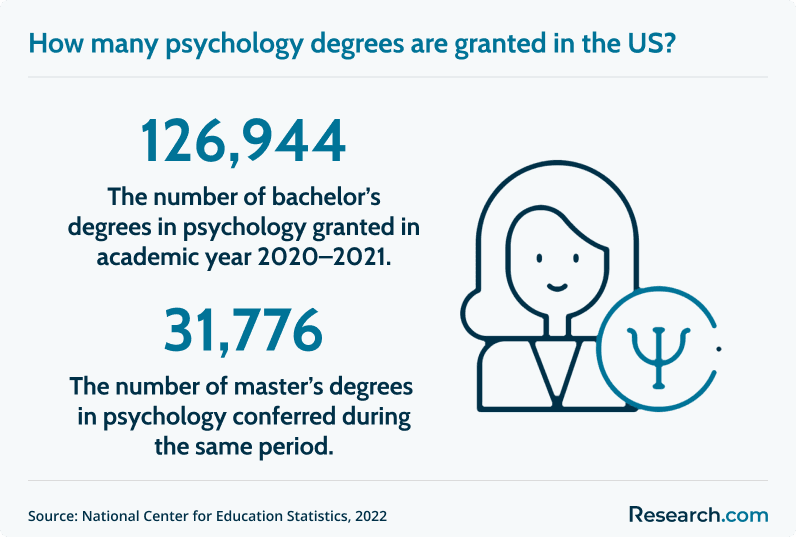
- A psychology master’s degree is more specialized than a bachelor’s degree and may require a larger academic, time, and financial commitment. In the academic year 2020–2021, US institutions conferred 126,944 bachelor’s degrees and 31,776 master’s degrees in psychology (National Center for Education Statistics, 2022).
- MA and MS psychology degrees can overlap, but MS programs often place more weight on quantitative research, measurement, and data analysis. For example, a quantitative psychology curriculum may include Multivariate Analysis in Psychology and Education or Theories of Measurement.
- Several career paths connected to graduate psychology training have positive projected employment growth for 2023 to 2033.
- Postsecondary psychology teachers earned a median annual wage of $82,140 in 2023 (US BLS, 2024).
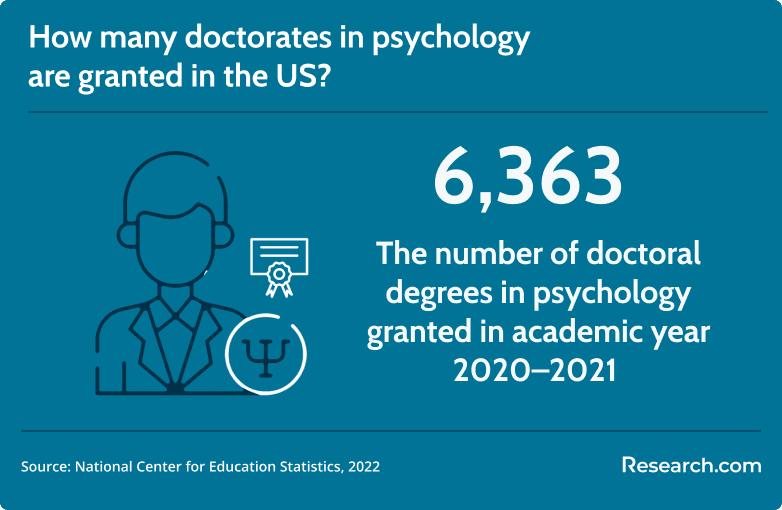
- Doctoral study remains a common next step for students pursuing psychologist licensure or advanced research roles. In the academic year 2020–2021, US institutions awarded 6,363 doctorates in psychology (National Center for Education Statistics, 2022).
Master’s in Psychology vs. Bachelor’s in Psychology
A bachelor’s degree introduces psychology as a broad discipline. A master’s degree asks students to apply research, theory, assessment, and specialized methods at a more advanced level. Graduate study may also open doors to roles that are not typically available with only an undergraduate degree, although career eligibility depends on the program type and state requirements.
There are affordable psychology master’s programs, but graduate study still requires careful budgeting. The difference in degree volume also shows that fewer students continue to this level: US institutions granted 126,944 bachelor’s degrees and 31,776 master’s degrees in psychology in the academic year 2020–2021 (National Center for Education Statistics, 2022). Students who need a shorter route can compare options among the shortest online master’s degree programs, including accelerated formats that may allow completion in less than a year.
| Factor | Bachelor’s Degree in Psychology | Master’s Degree in Psychology |
| Academic focus | Broad introduction to human behavior, theory, and basic research methods | Advanced study in research, assessment, specialization, and applied psychology |
| Typical roles | Entry-level social services, health education, case support, or behavioral support positions | Advanced roles such as rehabilitation counselor, mental health counselor, research associate, or postsecondary instructor depending on program and licensure rules |
| Level of specialization | Usually general, with limited concentration options | Often includes focused areas such as clinical, counseling, I-O, school, forensic, or quantitative psychology |
| Licensure relevance | Usually not enough for independent mental health practice | May support some counseling-related credentials, but psychologist licensure generally requires a doctorate |
If your main goal is counseling practice rather than broad psychology study, compare psychology degrees with counseling programs and ask, is a master's in counseling worth it for the specific license and population you want to serve?
Core Skills Taught in Psychology Master’s Programs
Graduate psychology programs help students move from learning about psychological concepts to using them in research, assessment, consultation, organizational settings, or supervised helping roles. The skill mix differs by degree type, specialization, and whether the program is research-focused, clinically oriented, or designed for doctoral preparation.
Skills Often Emphasized in an MA in Psychology
- Critical evaluation of theory and evidence. Students learn to read research carefully, identify limitations, compare theoretical frameworks, and explain how findings apply to real people and institutions.
- Therapeutic and professional communication. Programs that include counseling-related coursework often build listening, interviewing, empathy, and client-centered communication skills.
- Cultural responsiveness. Graduate students study how culture, identity, social context, and structural barriers shape behavior, diagnosis, support, and communication.
Skills Often Emphasized in an MS in Psychology
- Data analysis and interpretation. MS students may complete more quantitative coursework than MA students. A quantitative psychology program, for instance, may require Multivariate Analysis in Psychology and Education or Theories of Measurement.
- Research design. Students learn how to form research questions, design studies, evaluate methods, and interpret findings responsibly.
- Biological and cognitive foundations of behavior. Some MS curricula place stronger emphasis on neuroscience, cognition, measurement, and the biological processes connected to behavior.
How to Know Whether This Degree Matches Your Career Goals
A master’s degree in psychology is a good fit only when the curriculum leads toward your intended outcome. Before applying, define whether you want direct client work, research experience, business applications, education roles, or doctoral preparation. A strong program for one goal can be a poor fit for another.
- You want mental health or counseling-related work. A psychology master’s degree can provide a strong foundation in human behavior, helping skills, assessment, and ethics. Still, you must verify whether the program meets licensing requirements for the role and state where you plan to work.
- You want to contribute to research. Research-oriented programs can train students in experimental design, statistics, literature review, and data interpretation, which may support academic, clinical research, or evaluation roles.
- You want a specialized psychology pathway. If your goal is a field such as Masters in Behavioral Psychology, clinical psychology, forensic psychology, or industrial-organizational psychology, look for targeted coursework, faculty expertise, and practicum or research opportunities in that area.
If you are more interested in policy, management, nonprofit leadership, or public-sector administration than psychological practice, it may be more useful to compare psychology programs with online public administration degree options.
| Your goal | Program feature to prioritize | Question to ask before applying |
| Licensed counseling-related work | Practicum hours, supervised clinical training, and state licensure alignment | Does this program meet requirements in the state where I plan to practice? |
| Doctoral study | Thesis option, research mentorship, statistics, and faculty research fit | Do graduates move into PhD or PsyD programs? |
| Workplace consulting or HR-related roles | Industrial-organizational psychology, analytics, assessment, and organizational behavior | Does the curriculum include applied projects with organizations? |
| School or education settings | Developmental psychology, assessment, counseling, and school-based experience | What credentials are required in my state or district? |
Preferred Applicant Background and Prerequisites
Many psychology master’s programs prefer applicants with previous study in psychology, behavioral science, sociology, or a closely related field. Applicants from other academic backgrounds may still be competitive if they have completed prerequisite coursework in psychology, statistics, and research methods.
Relevant experience can also strengthen an application. Paid or volunteer work in mental health settings, social services, schools, community programs, laboratories, or research teams can show that you understand the field beyond the classroom. Admissions committees often look for evidence of maturity, ethical judgment, communication ability, and readiness for emotionally demanding work.
Applicants comparing unrelated career paths may also ask, is cyber security two-year degree worth it? That question belongs to a very different training path, but it illustrates the same principle: choose the credential that matches the job market, required skills, and advancement route you actually want.
If you are still exploring undergraduate or entry-level options before graduate study, review easy psychology degree programs as a starting point.
Psychology Master’s Degree vs. Related Graduate Degrees
Psychology overlaps with counseling, social work, education, and business, but each degree prepares students for a different professional identity. The best choice depends on whether you want to study behavior, provide therapy, manage services, lead organizations, teach, conduct research, or support communities through case management and advocacy.
- Social work. A Master of Social Work prepares graduates for direct service, advocacy, case management, and community-based support. Social work emphasizes social systems, resource navigation, and social justice more heavily than psychology. Students interested in this path can compare Masters of Social Work programs that do not require GRE scores. In 2023, licensed social workers earned a median annual wage of $58,380 (US BLS, 2024).
- Education. A Master’s Degree in Education generally focuses on teaching, curriculum, administration, or school support roles. Psychology programs study cognition, development, assessment, and behavior, while education programs emphasize instructional design, classroom practice, and educational systems. Postsecondary psychology teachers earned a median annual wage of $82,140 in 2023 (US BLS, 2024).
- Business administration. An MBA prepares students for leadership, finance, operations, and strategy. Psychology may support organizational behavior and employee motivation, but an MBA is usually broader for management careers. In 2023, human resources managers earned a median annual wage of $136,350 (US BLS, 2024). Students focused on HR may also compare an affordable online master's degree in human resources.
| Graduate degree | Primary focus | Often best for | Potential limitation |
| Master’s in Psychology | Human behavior, research, assessment, specialization, and applied psychology | Students seeking research, doctoral preparation, I-O work, or psychology-informed helping roles | May not meet counseling or psychologist licensure requirements by itself |
| Master of Social Work | Direct services, case management, advocacy, communities, and systems | Students who want client support, community practice, and social service leadership | Less focused on psychological research methods and experimental design |
| Master’s in Education | Teaching, curriculum, student support, and school systems | Educators, school professionals, and instructional leaders | May not prepare graduates for mental health practice outside school-related roles |
| MBA or HR master’s | Leadership, management, finance, organizational strategy, and workforce systems | Professionals targeting corporate, HR, consulting, or leadership roles | Less clinical or research-focused than psychology programs |
The chart below illustrates earnings in fields connected to psychology and related disciplines.
Return on Investment for a Master’s Degree in Psychology
The ROI of a psychology master’s degree depends on tuition, time out of the workforce, financial aid, supervised training requirements, licensure eligibility, and the salary range for your target occupation. A lower-cost program is not automatically the best value, and a prestigious program is not automatically worth the added expense. The right measure is whether the degree moves you toward a defined career or doctoral pathway at a cost you can manage.
Start by comparing total program cost against realistic job outcomes in mental health, research, education, business, or organizational consulting. If your goal is clinical work, confirm whether the program’s practicum and coursework support the credential you need. If your goal is doctoral admission, prioritize research fit, thesis opportunities, and faculty mentorship. For career examples after clinical psychology graduate study, review what can you do with a masters in clinical psychology.
| ROI factor | Why it matters | What to verify |
| Total cost | Tuition is only one part of the investment | Fees, books, travel, residency requirements, technology costs, and lost wages |
| Licensure alignment | A degree that does not meet state requirements may limit practice options | Required coursework, supervised hours, exams, and state board expectations |
| Field experience | Practicum and internship quality affect job readiness | Placement support, supervisor qualifications, and approved field sites |
| Career services | Graduate support can influence job search success | Employer connections, alumni network, resume support, and doctoral advising |
| Program format | Online, hybrid, accelerated, and campus formats affect flexibility and cost | Residency requirements, synchronous meetings, fieldwork logistics, and scheduling |
How to Choose the Right Psychology Master’s Program
When comparing programs, begin with your end goal and work backward. Accreditation, faculty expertise, curriculum, practicum structure, cost, and scheduling should all support the career you want. A program that is excellent for research may not be ideal for licensure-focused counseling work, while a flexible online program may still require local field placements or short campus residencies.
- Check accreditation first. Confirm institutional accreditation and any programmatic accreditation relevant to your goal.
- Map coursework to outcomes. Review whether courses match your target specialization, state requirements, or doctoral interests.
- Evaluate practical training. Ask who arranges practicum sites, how supervision works, and whether placements are available near you.
- Look beyond tuition. Include fees, books, residency travel, lost income, and fieldwork costs in your budget.
- Ask about graduate results. Request information on employment, doctoral placements, licensure exam preparation, and alumni pathways.
Students still exploring possible roles can use psychology careers to compare options before committing to a specialization.
Combining Psychology with Marriage and Family Therapy Training
Some students want psychological theory plus preparation for relationship- and family-focused counseling work. In that case, a general psychology master’s may not be enough. Marriage and family therapy training usually requires coursework in family systems, couples therapy, human development, ethics, diagnosis, and supervised clinical experience aligned with state licensing rules.
If this is your goal, look for programs that explicitly prepare students for marriage and family therapy credentials rather than assuming any psychology master’s will qualify. Flexible options, including a master's degree marriage and family therapy online pathway, can help students compare cost and format while focusing on family-centered practice.
Accelerated and Online Psychology Programs vs. Traditional Formats
Online and accelerated programs can be valuable for working adults, military students, caregivers, and career changers who need flexible scheduling. Traditional campus programs may offer easier access to labs, in-person faculty relationships, and local practicum networks. Neither format is automatically better; the right choice depends on your learning style, schedule, fieldwork needs, and career goals.
| Format | Advantages | Trade-offs | Best fit |
| Online | Flexible location, potential commuting savings, and easier access for working students | May require self-discipline, synchronous sessions, local practicum coordination, or campus visits | Students who need flexibility and can manage independent learning |
| Accelerated | Faster completion and concentrated coursework | Heavy workload and limited time for reflection, research, or field experience | Students with strong preparation and enough weekly availability |
| Traditional campus | Face-to-face networking, lab access, campus resources, and local placement connections | Commuting, relocation, and schedule constraints may increase cost | Students who want in-person mentoring and campus-based learning |
| Hybrid | Combines online flexibility with selected in-person experiences | Residency travel or scheduled campus meetings may be required | Students who want flexibility without fully remote study |
Students prioritizing speed and flexibility can compare accelerated psychology degree online options, but they should still verify accreditation, workload, and field placement requirements.
Moving from a Master’s Degree to a Psychology Doctorate
A master’s degree can be a stepping stone to doctoral study, especially for students who need stronger research experience, a clearer specialization, or a more competitive academic record. Doctoral pathways usually provide deeper research training, advanced clinical preparation, supervision, and preparation for roles that require psychologist licensure or university-level research leadership.
Before choosing a master’s program for doctoral preparation, ask whether it offers thesis work, faculty mentorship, graduate-level statistics, research assistantships, and support for PhD or PsyD applications. Students who need flexibility can compare an online doctoral degree in psychology, but should confirm accreditation, residency expectations, clinical training, and state licensure compatibility.
Common Admission Requirements
Admission requirements vary, but most psychology master’s programs review academic history, relevant coursework, writing ability, recommendations, and professional fit. Some institutions require GRE scores, while others make them optional or do not use them. Applicants should always check the current requirements of each program rather than assuming one standard applies everywhere.
- Transcripts. Programs review undergraduate performance and may look for psychology, statistics, and research methods coursework.
- Prerequisites. Applicants without a psychology background may need foundational courses before or during enrollment.
- Letters of recommendation. Strong letters should speak to academic ability, maturity, ethics, research potential, or readiness for helping professions.
- Statement of purpose. This essay should explain your goals, why the program fits, and how your experience prepares you for graduate work.
- Resume or CV. Relevant employment, volunteer work, research, counseling exposure, and community service can strengthen your application.
- GRE scores, if required. Requirements differ by institution, so confirm before spending time and money on testing.
If your main goal is counseling rather than general psychology, compare requirements for online master programs in counseling as well.
Psychology Master’s Specializations
Specialization is one of the most important decisions in graduate psychology education. It influences coursework, practicum requirements, faculty fit, career options, and future doctoral study. The following are common psychology areas associated with advanced study and recognized by the American Psychological Association (APA):
- Clinical psychology. This area focuses on assessment, diagnosis, treatment, and research related to mental and behavioral health conditions. At the master’s level, students should verify whether the program is intended for doctoral preparation, counseling-related work, or another purpose.
- Counseling psychology. Counseling psychology emphasizes support for life stressors, relationships, adjustment issues, development, and well-being. Programs may include helping skills, ethics, multicultural counseling, and supervised practice.
- Industrial-organizational psychology. I-O psychology applies psychological science to workplaces, including employee selection, training, leadership, motivation, productivity, and organizational culture.
- Forensic psychology. Forensic psychology connects psychological knowledge with legal and criminal justice settings. Students may study assessment, offender behavior, expert consultation, and the role of psychology in court-related contexts.
- School psychology. School psychology focuses on students’ academic, behavioral, emotional, and social development. Professionals often collaborate with families, teachers, administrators, and support teams.
| Specialization | Best suited for students interested in | Important consideration |
| Clinical psychology | Mental health assessment, treatment, and doctoral clinical training | Independent psychologist practice generally requires a doctorate |
| Counseling psychology | Helping individuals with adjustment, stress, relationships, and development | Check state requirements for counseling-related licensure |
| Industrial-organizational psychology | Workplace behavior, HR analytics, leadership, and employee performance | Look for applied projects, statistics, and organizational partnerships |
| Forensic psychology | Legal systems, criminal behavior, assessment, and consultation | Some advanced forensic roles may require doctoral training or additional credentials |
| School psychology | Student support, assessment, learning, and school-based services | Credentialing rules vary by state and role |
What Students Often Find Most Rewarding
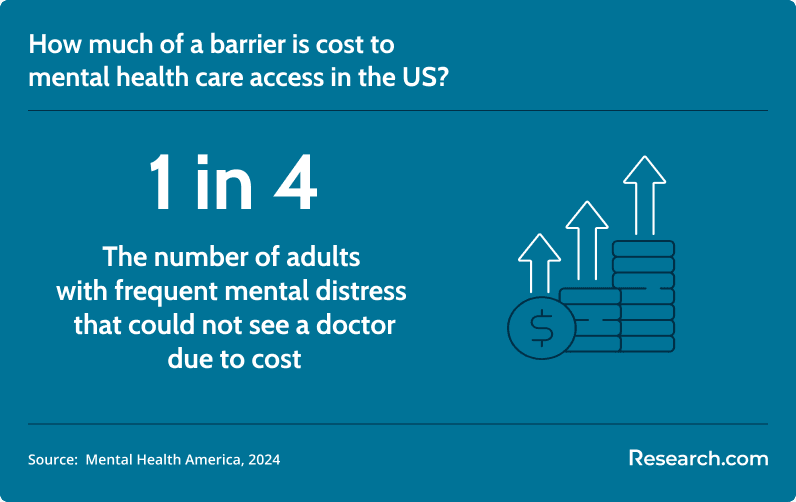
Many students find graduate psychology rewarding because it connects academic study with direct human impact. Mental health access remains a major public concern: cost is considered a significant barrier to mental health care access for 1 in 4 adults with regular mental distress (Mental Health America, 2024). Graduate training can help students understand these challenges more deeply and prepare for roles that support individuals, groups, schools, workplaces, and communities.
The rewarding parts are often practical as much as intellectual. Students may apply theory in supervised practicum settings, contribute to research, learn to communicate with empathy and precision, and build self-awareness that improves both professional and personal relationships. For many, the most meaningful moment is when coursework stops feeling abstract and begins shaping how they assess problems, listen to clients, interpret data, or design interventions.
Why Practicums, Internships, and Fieldwork Matter
Psychology is not learned well through reading alone. Supervised experience helps students practice ethical decision-making, interviewing, documentation, assessment, crisis awareness, consultation, and professional boundaries. It also helps students test whether a specialization truly fits them before committing to a long-term path.
Practicums and internships can also affect licensure progress and employability. Before enrolling, ask whether the program helps secure placements, whether supervisors meet credential requirements, and whether online students can complete fieldwork in their local area. Students building toward graduate study from the undergraduate level may also compare the cheapest online bachelors in psychology degree options.
How to Plan for a Doctorate Without Overspending
Students who expect to continue to a PhD or PsyD should avoid treating the master’s degree as a standalone purchase. Instead, choose a master’s program that strengthens doctoral readiness without creating unnecessary debt. Prioritize research mentorship, thesis opportunities, assistantships when available, and faculty whose work aligns with your intended doctoral specialization.
Online doctoral options may reduce relocation and some campus-related expenses, but they still require careful review. Check accreditation, clinical training, residency requirements, faculty access, supervision, and licensure outcomes. Students comparing lower-cost professional doctorate options can review the most affordable PsyD programs online.
Current Trends Affecting Graduate Psychology Education
Graduate psychology programs are adapting to changes in mental health delivery, technology, workforce demand, and student expectations. Telehealth, hybrid learning, simulation-based training, and competency-focused assessment are increasingly relevant to how students learn and how services are delivered. These trends can improve access, but they also make program evaluation more complex.
Students should ask whether online or hybrid courses still provide strong supervision, whether telehealth training is included where relevant, and whether the curriculum addresses ethical use of digital tools. Those seeking counseling pathways may also compare online mental health counseling programs (CACREP accredited) to understand how accreditation and clinical preparation differ from general psychology programs.
Post-Graduation Support to Look For
Strong psychology programs support students after coursework ends. Career services, faculty mentoring, alumni networks, doctoral application guidance, and practicum-to-employment connections can make a major difference, especially in fields where credentials and supervised hours matter.
- Career advising: help with resumes, interviews, job searches, and role targeting.
- Licensure guidance: information on supervised experience, exams, and state requirements where relevant.
- Doctoral preparation: support for research statements, writing samples, faculty fit, and application strategy.
- Employer and alumni networks: connections to clinics, schools, research labs, nonprofits, and organizations.
Students considering a doctorate after the master’s degree can also compare PsyD online programs as part of long-term planning.
Common Challenges in Psychology Master’s Programs
Graduate psychology study can be meaningful, but it is demanding. Students must manage advanced theory, statistics, research writing, ethical practice, and sometimes emotionally intense field experiences.
- Heavy academic workload. Graduate courses often require extensive reading, research papers, data analysis, and applied projects. Students balancing work or caregiving need a realistic weekly schedule.
- Emotional strain. Client-related training, trauma content, crisis scenarios, and sensitive case material can be difficult. Students should build self-care habits and use supervision appropriately.
- Skill development under evaluation. Assessment, interviewing, therapeutic communication, and research methods improve through feedback, which can be uncomfortable but necessary.
- Licensure confusion. Students may discover too late that a program does not meet requirements for their desired credential or state.
- Financial pressure. Tuition, fees, books, travel, and unpaid fieldwork can create budget strain if not planned in advance.
| Common mistake | Why it can hurt you | Better approach |
| Choosing based only on school name | A prestigious program may not match your license, specialization, or budget | Compare curriculum, fieldwork, accreditation, outcomes, and total cost |
| Ignoring state licensure rules | You may graduate without meeting requirements for your intended role | Check state board requirements before applying |
| Assuming online means easier | Online programs can still require intensive work, live sessions, and practicum hours | Ask for weekly time expectations and field placement rules |
| Focusing only on tuition | Fees, travel, books, technology, and unpaid internships can change total cost | Build a full cost-of-attendance estimate |
| Skipping faculty fit | Weak research or mentorship alignment can limit doctoral preparation | Review faculty interests and contact programs with specific questions |
Career Outlook for Psychology Master’s Graduates
A graduate background in psychology can support roles in healthcare, social services, education, research, and business. Career outcomes vary by specialization and credentials. Some roles are available with a master’s degree, while others require additional licensure, certification, supervised hours, or doctoral training.
Several psychology-related occupations have positive projected employment growth from 2023 to 2033. Employment for rehabilitation counselors is projected to grow by 2%. Jobs for school and career counselors and advisors are projected to increase by 4%, which is as fast as the average growth rate for all occupations in the US. Employment for postsecondary teachers, including psychology instructors, is projected to grow by 8% over the same period.
| Career area | How a psychology master’s degree may help | Credential note |
| Rehabilitation counseling | Builds understanding of behavior, adjustment, disability, and support strategies | Requirements vary by role and state |
| School and career counseling | Supports knowledge of development, assessment, motivation, and student needs | School roles often have state-specific credential rules |
| Postsecondary teaching | May qualify graduates for some teaching roles, especially at certain institutions | Doctoral degrees may be preferred or required for many faculty positions |
| Industrial-organizational roles | Applies psychology to workplace behavior, selection, training, and performance | Strong quantitative and applied project experience can be important |
| Research support | Prepares graduates for data collection, analysis, literature review, and project coordination | Doctoral study may be required for independent research leadership |
The chart below visualizes projected outlook information for psychology-related professions.
Financial Considerations Before Enrolling
Before committing to a psychology master’s program, calculate the full cost of attendance and compare it with your likely career path. Tuition is only the starting point. Students may also pay for fees, books, software, background checks, liability insurance, travel to practicum sites, campus residencies, and lost income from reduced work hours.
- Compare total cost, not only tuition. Include required fees, materials, travel, and fieldwork expenses.
- Ask about aid. Review scholarships, grants, assistantships, employer tuition support, work-study, and payment plans.
- Consider pacing. Part-time study may reduce short-term pressure but can extend the time before career benefits begin.
- Evaluate licensure value. A cheaper program may be costly in the long run if it does not meet credential requirements.
- Plan for doctoral study if needed. If psychologist licensure is your goal, budget beyond the master’s degree.
Students focused on counseling roles and affordability can also compare the cheapest online counseling degree options.
Supplemental Certifications and Career Value
Additional certifications can strengthen a psychology-related resume when they match the role you want. They are most useful when they add a concrete, employer-recognized skill rather than simply adding another credential. Possible areas include behavioral analysis, clinical supervision, assessment tools, crisis response, research methods, organizational consulting, or specialized populations.
Before paying for a certification, ask whether employers request it, whether it is recognized in your state or field, and whether it overlaps with or complements your master’s curriculum. Students interested in behavior analysis can compare options such as the cheapest BCBA programs online.
Do You Need a Doctorate to Work as a Psychologist?
In the US, licensed psychologists generally need a doctoral degree to practice independently under the psychologist title. State rules vary, but clinical and counseling psychologists typically complete a Doctor of Psychology or Doctor of Philosophy in psychology, supervised clinical hours, and licensing examinations.
A Master’s Degree in Psychology can still lead to meaningful work, including counseling-related positions, research roles, postsecondary teaching opportunities, rehabilitation counseling, or organizational roles depending on the program and credentials. However, students should not assume that a psychology master’s degree alone authorizes independent practice as a psychologist. If your goal is counseling, compare psychology programs with license-oriented options such as addiction counseling degree programs.
Doctoral pathways remain significant in the field. In the academic year 2020–2021, 6,363 doctorates were awarded in psychology in the US (National Center for Education Statistics, 2022).
Key Insights
- A master’s degree in psychology is valuable when it is tied to a specific goal: research, counseling-related work, school support, I-O psychology, rehabilitation, teaching, or doctoral preparation.
- Not all psychology master’s programs are terminal degrees. Some elite university programs award the master’s only to students already enrolled in doctoral study.
- Licensure is the most important issue for students who want direct mental health practice. Always check state requirements before enrolling.
- Online and accelerated formats can improve flexibility, but they do not remove the need for rigorous coursework, supervision, field experience, or accreditation checks.
- ROI depends on total cost, career fit, licensure alignment, practicum quality, and whether the degree helps you reach a realistic next step.
- Students aiming to become licensed psychologists should plan for doctoral study, because a doctorate is generally required for psychologist licensure in the US.
References:
- Mental Health America. (2024). The State of Mental Health in America. https://mhanational.org/issues/state-mental-health-america
- National Center for Education Statistics. (2022). Table 325.80. Degrees in psychology conferred by postsecondary institutions, by level of degree and sex of student: Selected academic years, 1949-50 through 2020-21. Digest of Education Statistics. https://nces.ed.gov/programs/digest/d22/tables/dt22_325.80.asp
- US Bureau of Labor Statistics. (2024, August 29). Human Resources Managers. Occupational Outlook Handbook. https://www.bls.gov/ooh/management/human-resources-managers.htm
- US Bureau of Labor Statistics. (2024, August 29). Marriage and Family Therapists. Occupational Outlook Handbook. https://www.bls.gov/ooh/community-and-social-service/marriage-and-family-therapists.htm
- US Bureau of Labor Statistics. (2024, April 03). Occupational Employment and Wages, May 2023: 25-1066 Psychology Teachers, Postsecondary. Occupational Employment and Wage Statistics. https://www.bls.gov/oes/current/oes251066.htm
- US Bureau of Labor Statistics. (2024, August 29). Postsecondary Teachers. Occupational Outlook Handbook. https://www.bls.gov/ooh/education-training-and-library/postsecondary-teachers.htm
- US Bureau of Labor Statistics. (2024, August 29). Rehabilitation Counselors. Occupational Outlook Handbook. https://www.bls.gov/ooh/community-and-social-service/rehabilitation-counselors.htm
- US Bureau of Labor Statistics. (2024, August 29). School and Career Counselors and Advisors. Occupational Outlook Handbook. https://www.bls.gov/ooh/community-and-social-service/school-and-career-counselors.htm
- US Bureau of Labor Statistics. (2024, August 29). Social Workers. Occupational Outlook Handbook. https://www.bls.gov/ooh/community-and-social-service/social-workers.htm
Other Things You Should Know About Master’s Degree in Psychology Programs
Yes, many universities and institutions offer scholarships and financial aid for psychology graduate students. In 2027, you can explore federal financial aid, university-specific grants, and external scholarships specifically for psychology students to help manage tuition costs. It's essential to research and apply early to maximize your opportunities.
An online master’s degree in psychology can be just as respected as an on-campus program if it is from an accredited academic institution and meets high educational and professional standards. Employers usually value the reputation of the university and the quality of the training over the format of delivery. Online programs also often offer the same curriculum as in-person options. Moreover, as online learning has become more common, the stigma around it has lessened in professional psychology fields.


