
2027 Easiest Psychology Degree Programs

Co-Founder and Chief Data Scientist
Choosing the right psychology degree program can be difficult, particularly for those wanting academic rigor and an easy completion path. This article guides prospective students by showcasing the easiest psychology degree programs. We focus on institutions with flexible coursework, supportive learning environments, and quicker graduation options to help students achieve their educational goals efficiently and effectively.
What are the benefits of getting a psychology degree?
- A psychology degree prepares students for a wide range of careers. These include counseling, social work, human resources, and marketing.
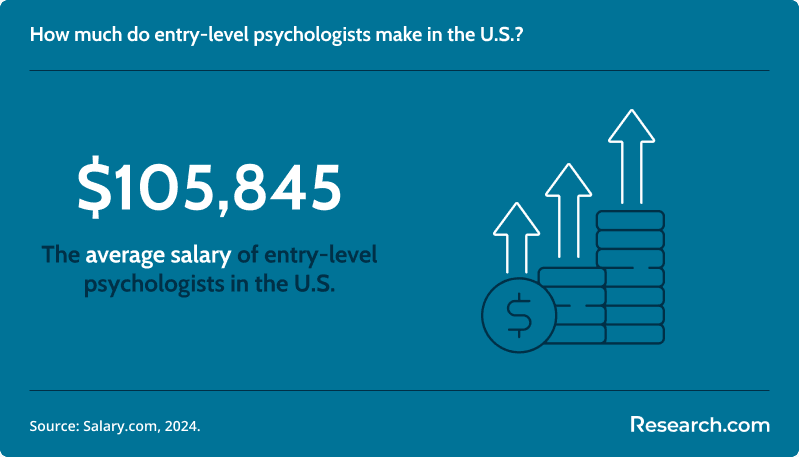
- The average salary of entry-level psychologists in the U.S. is $105,845.
- Earning a psychology degree online provides the flexibility to balance work, family, and other commitments while pursuing your education.
What can I expect from a psychology degree?
A psychology degree offers a comprehensive understanding of human behavior, mental processes, and their influencing factors. As a psychology major, you will explore topics such as:
- Cognitive Psychology. Studies mental processes like attention, perception, learning, memory, language, problem-solving, and decision-making.
- Developmental Psychology. Examines how and why people change throughout their lives.
- Social Psychology. Examines how people's thoughts, feelings, and behaviors are influenced by the presence of others, whether real or imagined.
- Abnormal Psychology. Focuses on abnormal thoughts, feelings, and behaviors.
You will study the history and theories that have shaped the field, along with research methods used to examine the mind and behavior. You will also develop critical thinking, problem-solving, and communication skills through research projects and internships.
Where can I work with a psychology degree?
Psychology graduates find employment in diverse industries and companies. They work as clinical psychologists, health psychologists, and psychiatric nurses in healthcare. In education, they become teachers, educational psychologists, or school counselors.
The social services sector offers roles like social workers, case managers, and youth counselors. Graduates also work in law enforcement as forensic psychologists or in legal firms as legal psychologists.
In business, they find opportunities in human resources, marketing, and management, where they use their understanding of human behavior and motivation. Government agencies, media organizations, and research institutions also employ psychology graduates, allowing them to utilize their analytical and research skills.
How much can I make with a psychology degree?
The U.S. Bureau of Labor Statistics (BLS) reported that in 2023, the median annual wage for psychologists was $92,740. Here are the annual salaries for specific types of psychologists that same year:
- Industrial-organizational psychologists: $147,420
- Psychologists, all other: $117,750
- Clinical and counseling psychologists: $96,100
- School psychologists: $84,940
For 2024, Salary.com reported that the average salary of entry-level psychologists is $105,845.
- 2027 List of the Easiest Psychology Degree Programs List of Programs
- How long does it take to complete a psychology program? Program Length
- How does an online psychology program compare to an on-campus program? How does an online psychology program compare to an on-campus program?
- What is the average cost of a psychology program? Program Cost
- What are the financial aid options for students enrolling in a psychology program? What are the financial aid options for students enrolling in a psychology program?
- What are the prerequisites for enrolling in a psychology program? Admission Requirements
- What courses are typically in a psychology program? What courses are typically in a psychology program?
- What types of specializations are available in psychology programs? What types of specializations are available in psychology programs?
- How can I enhance my psychology degree with minors or electives? How can I enhance my psychology degree with minors or electives?
- How to Choose the Best Psychology Program How to Choose the Best Psychology Program
- What career paths are available for graduates of psychology programs? Career Options
- What is the job market for graduates with a psychology degree? Job Outlook
- Can an accelerated master’s degree in psychology enhance my career prospects? Can an accelerated master’s degree in psychology enhance my career prospects?
- How can accelerated PsyD programs fast-track your clinical career? How can accelerated PsyD programs fast-track your clinical career?
- The Role of Health Psychology in Psychology Careers The Role of Health Psychology in Psychology Careers
- Are easy psychology degree programs just as good as traditional psychology programs? Are easy psychology degree programs just as good as traditional psychology programs?
- How crucial is hands-on training in psychology programs? How crucial is hands-on training in psychology programs?
- Do APA accredited PsyD programs improve clinical career outcomes? Do APA accredited PsyD programs improve clinical career outcomes?
- Is pursuing a PhD in psychology online a viable option for advanced career opportunities? Is pursuing a PhD in psychology online a viable option for advanced career opportunities?
- What are the in-demand career paths for psychology graduates? What are the in-demand career paths for psychology graduates?
- How can I access the most affordable online PsyD programs? How can I access the most affordable online PsyD programs?
- How can I verify the accreditation and quality of an online psychology program? How can I verify the accreditation and quality of an online psychology program?
- Do easy psychology degree programs offer robust career support? Do easy psychology degree programs offer robust career support?
2027 Guide to the Easiest Psychology Degree Programs
Choosing an “easy” psychology degree should not mean choosing a weak program. For most students, the easiest psychology degree is one that removes avoidable barriers: flexible scheduling, clear degree requirements, transfer-friendly policies, online access, manageable tuition, and student support that helps you finish. The right program still needs accreditation, credible coursework, and enough research or field experience to support your long-term goals.
This guide is for students comparing psychology bachelor’s programs, online psychology degrees, accelerated pathways, and affordable options. You will learn how Research.com evaluates programs, what makes a psychology degree easier to complete, how online and campus formats compare, what psychology degrees usually cost, which careers may require graduate study or licensure, and what mistakes to avoid before enrolling.
Quick Answer: What Is the Easiest Psychology Degree to Earn?
The easiest psychology degree for most students is an accredited online or hybrid bachelor’s degree in psychology with flexible scheduling, generous transfer credit policies, clear general psychology requirements, and strong advising. However, “easy” should be understood as accessible and well-structured—not academically low quality. Students who want to become licensed psychologists, counselors, or clinical providers should plan for graduate education because a bachelor’s degree alone usually does not qualify graduates for independent clinical practice.
What “easy” should mean when comparing psychology programs
- Flexible delivery: Online, hybrid, evening, or asynchronous courses can help working adults and parents stay enrolled.
- Clear curriculum: Programs with straightforward major requirements reduce confusion and scheduling delays.
- Transfer-friendly policies: Students with prior college credits may finish faster if the school accepts eligible transfer coursework.
- Accreditation: Regional or recognized institutional accreditation is essential for credit transfer, financial aid eligibility, and graduate school consideration.
- Practical support: Advising, tutoring, internship guidance, and career services can make completion more realistic.
How Research.com Ranks Psychology Degree Programs
A degree is a major financial and academic commitment, so students need transparent information before they apply. Research.com evaluates psychology programs using current, publicly available education data and program-level factors that help students compare options more clearly.
Our ranking process uses comprehensive data from the following sources:
- The Integrated Postsecondary Education Data System (IPEDS) database
- Peterson’s database, including the Distance Learning Licensed Data Set
- College Scorecard database
- National Center for Education Statistics
Program evaluation also considers indicators such as graduation rate, student-faculty ratio, and academic focus. For a fuller explanation of the ranking process, visit Research.com’s methodology page.
Best Easiest Psychology Degree Programs for 2027
The programs below may appeal to students who want a psychology degree with flexible delivery options, broad psychology coursework, and accessible academic pathways. Always verify current tuition, online availability, transfer policies, and licensure alignment directly with each school before applying.
| School | Degree Features | Best Fit |
| Columbia College | Online and campus psychology program with foundational coursework in major psychology areas | Students who want a traditional bachelor’s structure with online access |
| Westminster College | Online Bachelor of Arts in Psychology with general psychology focus and small-class learning | Students who want an online liberal arts psychology pathway |
| Truett McConnell University | Biblically centered psychology curriculum with online general psychology option | Students seeking a faith-integrated psychology degree |
| Life University | Online and campus Bachelor of Science in Psychology with mind, body, and spirit emphasis | Students interested in broad human behavior applications |
| Keiser University-Fort Lauderdale | Psychology degree with six concentration options | Students who want specialization choices within a bachelor’s program |
| Grand View University | Psychology program emphasizing internships, research, and applied learning | Students who value faculty interaction and experiential learning |
| Eastern Kentucky University | Online Bachelor of Science in Psychology with eight concentration options | Students seeking a flexible online program with multiple focus areas |
| Dallas Baptist University | Christ-centered psychology degree with several concentration options | Students looking for a faith-based psychology education |
| University of Providence | Online and Montana-based Bachelor of Arts in Psychology with six concentrations | Students who want concentration options and internship opportunities |
| Blue Mountain College | Program details should be confirmed directly with the institution | Students comparing additional psychology degree options |
1. Columbia College
The psychology bachelor’s program at Columbia College gives undergraduates a broad introduction to psychological theories, research methods, and applied human behavior. Students can study online or on campus and take courses in areas such as developmental, social, abnormal, and cognitive psychology. The program may be a strong option for learners who want a flexible psychology degree that builds critical thinking, research literacy, and preparation for careers or graduate study.
- Estimated completion time: 4 years
- Available tracks or concentrations: N/A
- Listed cost per credit: $407 (online)
- Credits required: 120
- Accreditation: Southern Association of Colleges and Schools Commission on Colleges (SACSCOC)
2. Westminster College
Westminster College offers an online psychology program centered on general psychology. Students use recorded lectures, discussion forums, and digital course materials, while smaller classes can support more direct faculty engagement. The Bachelor of Arts in Psychology can prepare students for non-licensed roles or graduate study, but students who want professional licensure should expect to continue into a graduate program.
- Estimated completion time: 4 years
- Available tracks or concentrations: General Psychology
- Listed tuition detail: $12,600 online tuition (36 credits)
- Credits required: 122
- Accreditation: Higher Learning Commission (HLC)
3. Truett McConnell University
The Bachelor of Science in Psychology at Truett McConnell University combines psychology coursework with a Christian worldview. The curriculum connects psychological theory with Scripture and Christian theology, which may appeal to students planning for service-oriented work in counseling-adjacent fields, social work, healthcare preparation, or graduate study.
- Estimated completion time: 4 years
- Available tracks or concentrations: General Psychology (available online)
- Listed cost per credit: $414 (online)
- Credits required: 120-121
- Accreditation: SACSCOC
4. Life University
Life University offers a Bachelor of Science in Psychology in online and campus formats. The program introduces students to core psychological concepts while emphasizing the relationship between the mind, body, and spirit. Graduates may use the degree in areas such as sports psychology support, probation or parole-related roles, human resources, or preparation for graduate education.
- Estimated completion time: 4 years
- Available tracks or concentrations: N/A
- Listed cost detail: $497 (quarterly student fees)
- Credits required: 188 quarter units
- Accreditation: SACSCOC
5. Keiser University-Fort Lauderdale
The Bachelor of Arts in Psychology at Keiser University allows students to choose from several concentration areas, including human services, developmental psychology, applied behavior analysis, healthcare/fitness, business, and general psychology. The curriculum is designed for students who want to understand behavior and mental processes while preparing for graduate school or work in related fields.
- Estimated completion time: 4 years
- Available tracks or concentrations: Human Services, Developmental Psychology, Applied Behavior Analysis, Healthcare/Fitness, Business, General Psychology
- Listed cost per credit: N/A
- Credits required: 120
- Accreditation: SACSCOC
6. Grand View University
Grand View University structures its psychology program around applied learning, internship opportunities, and research preparation. Students study behavior, mental processes, critical thinking, and problem-solving while building a foundation for mental health-related careers or graduate study. Graduates have pursued further education at institutions such as Drake University, the University of Iowa, Universitat Pompeu Fabra in Barcelona, and the International University of Sarajevo in Bosnia.
- Estimated completion time: 4 years
- Available tracks or concentrations: N/A
- Listed cost detail: $849 full-time (over 18 credits)
- Credits required: 124
- Accreditation: HLC
7. Eastern Kentucky University
Eastern Kentucky University offers an online Bachelor of Science in Psychology with eight concentration choices. Coursework includes topics such as abnormal psychology, social psychology, statistics, research, and clinical psychology. Students may also have opportunities to participate in faculty-guided research, making the program useful for learners planning either direct workforce entry or graduate study.
- Estimated completion time: 4 years
- Available tracks or concentrations: General Psychology, Autism Spectrum Disorders, Forensic Psychology, Child & Family Psychology, Workplace Psychology, Psychiatric Rehabilitation, Brain & Cognitive Science, and Substance Abuse
- Listed cost per credit: $443
- Credits required: 120
- Accreditation: SACSCOC
8. Dallas Baptist University
The undergraduate psychology program at Dallas Baptist University blends psychology education with Christian teaching. Students can pursue concentration areas that support interests in mental health, education, business, forensic psychology, or graduate preparation. This program may fit learners who want both academic psychology training and a faith-based college environment.
- Estimated completion time: 4 years
- Available tracks or concentrations: General Psychology, Child Life Specialist, Clinical Psychology, Forensic Psychology, Industrial/Organizational Psychology
- Listed cost per credit: $1,278
- Credits required: 120
- Accreditation: SACSCOC
9. University of Providence
The University of Providence offers a Bachelor of Arts in Psychology online and on campus in Montana. Students can choose from six concentration areas and may complete psychology internships to connect classroom learning with practical experience. The program is suited for students who want a flexible psychology major with room to tailor coursework toward specific interests.
- Estimated completion time: 4 years
- Available tracks or concentrations: General Psychology, Helping Skills, Social Services, Forensic Psychology, Physiological Psychology, and Sports Psychology
- Listed tuition detail: $30,048 freshman (tuition)
- Credits required: 120
- Accreditation: Northwest Commission on Colleges and Universities (NWCCU)
10. Blue Mountain College
Blue Mountain College appears as an additional psychology program option to investigate. Before applying, students should confirm current program format, tuition, accreditation status, required credits, transfer policies, and whether the curriculum supports their intended career or graduate school plans.
How Long Does It Take to Complete a Psychology Degree?
The timeline depends on the degree level, enrollment status, transfer credits, and whether the student chooses an accelerated or part-time format. A bachelor’s degree is usually the entry point, while clinical, counseling, research, and licensed psychologist roles generally require graduate education.
| Degree Level | Typical Time to Complete | What It Can Prepare You For |
| Bachelor’s degree | 4 years | Entry-level roles in human services, business, research support, education-related support, or preparation for graduate study |
| Master’s degree | 2-3 years | Advanced applied roles, counseling-related pathways, research support, or preparation for doctoral study, depending on program and state rules |
| Doctoral degree | 7-8 years | Advanced clinical, research, academic, or leadership roles, depending on the degree type and licensure requirements |
- Bachelor’s degree: Full-time students often complete a psychology bachelor’s degree in 4 years. Students may shorten the timeline with summer enrollment or eligible transfer credits.
- Master’s degree: A psychology master’s program commonly takes 2-3 years, with timelines varying by program structure and full-time or part-time status.
- Doctoral degree: A research-focused PhD in psychology often takes 7-8 years from the beginning of graduate study. Clinical psychology PhD requirements can vary. Doctoral students entering without a master’s degree have eight years to finish, while those entering with a master’s degree have six years. Students comparing flexible doctoral routes can review Research.com’s guide to online psychology doctoral programs.
Online vs. On-Campus Psychology Programs: Which Format Is Easier?
Online and campus-based psychology programs can cover similar academic material, but the learning experience is different. The easier option depends on your schedule, learning style, access to campus, and need for face-to-face support.
| Factor | Online Psychology Program | On-Campus Psychology Program |
| Schedule | Often more flexible, especially for students balancing work or family responsibilities | Usually follows fixed class times and campus-based schedules |
| Interaction | Uses discussion boards, video sessions, online chats, and digital collaboration tools | Provides more direct in-person interaction with faculty and classmates |
| Learning format | May include recorded lectures, streamed content, virtual libraries, and online simulations | Often includes live lectures, classroom discussions, labs, and campus activities |
| Best for | Self-directed learners who need location flexibility | Students who prefer structure, campus resources, and face-to-face engagement |
| Accreditation check | Must be verified just as carefully as campus programs | Must also meet institutional and any relevant specialized accreditation standards |
Accreditation matters in either format. For counseling-related graduate programs, the Council for Accreditation of Counseling and Related Educational Programs (CACREP) is an independent accreditor that reviews master’s and doctoral programs in counseling and related fields. Students comparing affordable counseling pathways can explore Research.com’s list of the cheapest CACREP-accredited programs online.
What Does a Psychology Degree Cost?
Psychology program costs vary by school type, degree level, residency status, delivery format, fees, and whether students receive financial aid. Tuition is only one part of the total price; students should also compare technology fees, textbooks, transportation, housing, internship requirements, and the number of credits needed to graduate.
Reported psychology degree cost ranges include:
- Bachelor's degree in psychology: $50,000 to $150,000
- Master's degree in clinical psychology: around $62,650
- Doctorate (Ph.D.) in psychology: about $81,900
At public four-year colleges, online degrees can be more affordable than in-person degrees. When tuition and overall attendance costs are compared, an online degree saves students $31,165. Students focused on cost should compare accredited options in Research.com’s guide to the cheapest online psychology degree programs.
Financial Aid Options for Psychology Students
Most psychology students should start the financial aid process before they choose a school. Aid availability can differ by degree level, enrollment status, school, and program format.
Grants and scholarships
- Federal need-based grants such as the Pell Grant do not have to be repaid when eligibility requirements are met.
- Colleges, universities, and psychology departments may offer institutional scholarships or fellowships for eligible psychology students.
- Private foundations, community groups, and professional organizations may sponsor scholarships for students studying psychology or mental health-related fields.
Federal student loans
The William D. Ford Federal Direct Loan Program is the main federal student loan program, with the U.S. Department of Education serving as the lender. Graduate and professional students in eligible degree or certificate programs may qualify for the following loan types:
- Direct Unsubsidized Loans: Eligible students can borrow up to $20,500 per school year. Students in certain health profession programs may qualify for additional Direct Unsubsidized Loan amounts each academic year.
- Direct PLUS Loans: Graduate or professional students who need funding beyond the maximum unsubsidized loan amount may apply for a PLUS loan. A credit check is part of the application process.
Additional funding strategies
- Monthly payment plans offered by schools can spread tuition payments across the term.
- Employer tuition reimbursement, public service programs, or loan forgiveness options may apply to some psychology-related career paths.
- Graduate assistantships in teaching or research may help cover tuition in exchange for work, depending on the school and program.
Admission Requirements and Prerequisites for Psychology Programs
Admission requirements vary widely by degree level. Bachelor’s programs usually focus on high school preparation and general college admissions criteria, while graduate programs may require prior psychology coursework, research experience, recommendations, and minimum academic performance.
- Undergraduate applicants are often encouraged to build a foundation in social science and humanities subjects. In some systems, students may be advised to take the Humanities and Social Sciences (HUMSS) strand in high school, which includes topics related to human behavior, literature, and society.
- Introductory psychology coursework, such as General Psychology, is commonly expected before advanced study.
- Courses in experimental psychology, developmental psychology, and statistics can strengthen preparation for upper-division or graduate-level work.
- Relevant experience, such as research assistant work, volunteering in mental health clinics, or serving special populations, may help graduate applicants stand out.
- Some graduate programs may specify minimum academic or test criteria. A commonly cited benchmark is a GPA of 3.3 or higher and a GRE score of 1,200 or more, but applicants should confirm current requirements because policies differ by school.
Common Courses in a Psychology Degree Program
Psychology curricula differ by institution and concentration, but most programs introduce students to scientific methods, human development, cognition, behavior, personality, and research design.
- Experimental Psychology with lab: Students learn how psychological research is designed, conducted, interpreted, and evaluated through lectures and hands-on lab activities.
- Theories of Personality: This course examines major explanations of personality development and individual differences, including perspectives associated with Freud, Jung, and Rogers.
- General Psychology: Students receive a broad introduction to the scientific study of behavior and mental processes.
- Thesis or research project: A capstone-style project may require students to design a study, collect or analyze data, and present findings in written or oral form under faculty supervision.
Psychology Specializations to Consider
Specializations help students connect psychology coursework to career interests. Not every school offers every concentration, so students should review course catalogs before applying.
| Specialization | Focus | May Fit Students Interested In |
| Neuropsychology | Brain function, cognition, and conditions such as autism, dementia, and Parkinson's disease | Brain-behavior research, rehabilitation, or advanced clinical study |
| Industrial-Organizational Psychology | Workplace behavior, employee performance, training, morale, and productivity | Human resources, organizational development, consulting, or workplace research |
| Organizational Psychology | Motivation, job performance, labor relations, and behavior in work settings | Business, management, employee engagement, and workplace analytics |
| Counseling | Mental health, substance abuse, behavioral disorders, and marriage or family therapy topics | Graduate counseling pathways and human services careers |
Students considering counseling-focused graduate education can compare online master degree programs in counseling to find options aligned with their budget and career plans.
How to Strengthen a Psychology Degree With Minors and Electives
A psychology major becomes more useful when paired with coursework that supports a specific career direction. Minors and electives can help students build practical skills in research, communication, health, business, criminal justice, or child development.
| Add-On Option | Why It Helps | Good Match For |
| Sociology minor | Adds context about social systems, group behavior, and social influences on human behavior | Students interested in community services, policy, or social research |
| Criminal Justice minor | Connects psychology with legal systems, crime, corrections, and offender behavior | Students considering forensic psychology or justice-related careers |
| Health Science minor | Builds knowledge of wellness, public health, and the psychological dimensions of illness | Students interested in health psychology or patient support roles |
| Child Development elective | Deepens understanding of childhood, family development, and developmental milestones | Students who want to work with children, schools, or families |
| Cognitive Psychology elective | Focuses on memory, perception, problem-solving, and decision-making | Students interested in research, user experience, or graduate study |
| Organizational Psychology elective | Applies psychology to hiring, motivation, workplace culture, and performance | Students targeting human resources or business roles |
| Statistics and Research Methods | Strengthens data analysis and research design skills | Students planning graduate study or research-related employment |
| Communication and Public Speaking | Improves presentation, interviewing, and client-facing communication | Students entering counseling-adjacent, education, business, or service roles |
How to Choose the Best Psychology Program
The best psychology program is the one that matches your career goal, budget, academic background, and preferred learning format. A program that is easy to enter but hard to finish—or not accepted by graduate schools—may be a poor investment.
Key factors to compare before applying
- Accreditation: Confirm institutional accreditation and any specialized accreditation relevant to your intended graduate or counseling pathway.
- Career alignment: Decide whether you need a general psychology degree, a research-oriented program, a practitioner-focused pathway, or a scientist-practitioner model.
- Delivery format: Choose online, hybrid, or campus study based on your schedule and learning preferences.
- Total cost: Compare tuition, fees, textbooks, technology costs, travel, housing, and the number of credits required.
- Transfer policies: Ask how many previous credits can apply to general education, electives, and major requirements.
- Student outcomes: Review retention, graduation rates, internship support, job placement information, and licensure exam pass rates where relevant.
- Hands-on learning: Look for research labs, internships, practicums, service learning, or faculty-guided projects.
Questions to ask admissions advisors
- Is the psychology degree fully online, hybrid, or campus-based?
- How many credits can I transfer into the program?
- Are courses asynchronous, synchronous, or a mix of both?
- Does the program include a research methods sequence, statistics, or a capstone?
- Are internships or field placements required or optional?
- Will this bachelor’s degree meet prerequisites for the graduate programs I am considering?
- What career services are available to online students?
- What is the full estimated cost after fees, not just tuition?
Career Paths for Psychology Degree Graduates
Psychology graduates develop skills in communication, research, critical thinking, data interpretation, and understanding behavior. These skills can apply across healthcare, business, education, social services, and human resources. However, titles such as psychologist, licensed counselor, or clinical provider usually require graduate education, supervised experience, and state licensure.
| Career Path | Listed Salary | Important Note |
| Clinical psychologist | $100,377 | Typically requires doctoral education and licensure |
| Counselor | $60,934 | Often requires a graduate degree and state-specific credentials |
| Career advisor | $55,701 | May be accessible through education, counseling, student services, or workforce development experience |
| Educational psychologist | $141,350 | Usually requires advanced graduate preparation |
| Human resource officer | $77,518 | Psychology graduates may enter HR through business, organizational behavior, or people operations roles |
Students interested in applying psychology to workplace behavior may also compare online masters in human resources programs to prepare for HR leadership or organizational development roles.
The following table shows the largest employers of psychologists.
| Employers | Percentage of Workers |
| Self-employed workers | 28% |
| Elementary and secondary schools; state, local, and private | 27% |
| Ambulatory healthcare services | 21% |
| Government | 8% |
| Hospitals; state, local, and private | 4% |
If psychology does not match your goals, you may want to compare other flexible academic routes, including easy PhD degrees, easy online finance degrees, easy online healthcare degrees, and fastest online RN programs. Students still comparing fields can also revisit healthcare degree options, finance degree options, and PhD pathways.
Job Outlook for Psychology Graduates
The overall employment of psychologists is projected to grow by 6% from 2022 to 2032, which is faster than the average for all occupations.
About 12,800 job openings for psychologists are expected each year, on average, over the decade. Many openings are projected to result from workers moving into different occupations or leaving the labor force through retirement.
The chart below shows the percent change in employment of psychologists from 2022 to 2032.
Can an Accelerated Master’s in Psychology Improve Career Options?
An accelerated master’s degree in psychology can help students move into advanced coursework faster, but speed should not be the only reason to enroll. Students should review accreditation, faculty qualifications, curriculum depth, research expectations, and field experience requirements before choosing a shortened program. A faster format may be useful for working professionals who already know their goals and can handle intensive coursework. To compare options, review Research.com’s guide to an accelerated master's in psychology online.
How Accelerated PsyD Programs May Shorten the Clinical Pathway
Accelerated PsyD programs are designed to move students through doctoral clinical training in a compressed format. These programs may reduce the overall time to completion, but students still need to confirm that coursework, clinical hours, practicum experiences, internships, and state licensing requirements are fully addressed. Before choosing a fast-track option, compare program structure, placement support, faculty expertise, and licensure alignment. For more detail on timing, see How long does it take to get a PsyD?.
Health Psychology as a Career-Focused Specialization
Health psychology examines how psychological, behavioral, and social factors influence physical health and illness. For psychology students, this area can connect mental health, lifestyle behavior, patient care, chronic illness management, and public health.
What health psychology studies
Health psychology focuses on the relationship between mental and physical well-being. Professionals in this area may study stress, coping, health habits, patient behavior, and interventions that support better health outcomes.
Students who want a deeper look at this field can read Research.com’s guide to health psychology careers.
Why students consider health psychology
- It can support work with patients managing chronic illnesses such as diabetes and cardiovascular diseases.
- It connects psychology to stress reduction, behavior change, and mental health interventions.
- It can inform community health programs, wellness initiatives, and patient education.
How to include health psychology in your degree plan
Students can look for health psychology electives, internships in healthcare settings, public health coursework, or research projects related to behavior and health. This specialization may be especially useful for students who want a psychology career that connects mental and physical health.
Are Easy Psychology Programs as Credible as Traditional Programs?
Easy psychology programs can be just as worthwhile as traditional programs if “easy” refers to flexibility, clear scheduling, and student support rather than reduced academic quality. The most important test is whether the program is accredited, academically coherent, and aligned with the student’s next step.
Students interested in clinical, counseling, forensic, or research careers should pay close attention to research requirements, statistics coursework, internship access, and graduate school prerequisites. A convenient bachelor’s degree may still be a poor fit if it does not prepare the student for the specialized graduate program they need.
For example, students interested in the legal system and human behavior may eventually compare the best online forensic psychology master's programs. A flexible undergraduate psychology degree can support that path, but students should choose courses and experiences that build relevant preparation.
How Important Is Hands-On Training in Psychology?
Hands-on training is especially important for students who plan to continue into counseling, clinical, behavioral, or research-focused graduate programs. Internships, practicums, field placements, research assistantships, and service learning help students apply theory, build professional references, and test whether a career path is the right fit.
Applied experience can also help students become more competitive for graduate programs and entry-level roles. Specialty pathways, including a behavioral psychology degree, may offer more focused opportunities to practice applied skills earlier in the academic journey.
Do APA-Accredited PsyD Programs Support Clinical Career Goals?
APA-accredited PsyD programs can be important for students pursuing clinical psychology because they emphasize evidence-based clinical training, supervised practice, and preparation for licensure-related requirements. Students should compare curriculum, practicum and internship placements, faculty expertise, state licensure alignment, and student outcomes before enrolling. For examples of doctoral options, see Research.com’s guide to APA accredited PsyD programs.
Is an Online PhD in Psychology a Viable Advanced Path?
An online doctorate in psychology can be a realistic option for some advanced students, especially those seeking flexibility for research, leadership, academic, or applied professional goals. The program still needs strong accreditation, qualified faculty, research opportunities, and appropriate in-person or practical components when required. Students should carefully evaluate whether the online format supports their intended career and licensure path. For more information, compare options for a PhD in psychology online.
In-Demand Career Areas for Psychology Graduates
Psychology graduates can apply their understanding of behavior in several employment areas. The strongest career path depends on degree level, experience, licensure, and specialization.
- Healthcare: Clinical psychologists and psychiatric aides support patients dealing with mental health needs.
- Education: School psychologists and counselors help students with academic, social, and emotional challenges.
- Business: Industrial-organizational psychologists use psychology to improve employee performance, selection, training, and satisfaction.
- Social services: Case managers and social workers help connect individuals and families with community resources.
- Technology: Behavioral data analysts may apply psychology to user experience, product design, and consumer behavior.
A bachelor’s degree can open some entry-level paths, but specialized and licensed roles often require graduate education. Students seeking affordable graduate study can compare online MS psychology cheap online programs.
How to Find Affordable Online PsyD Programs
Students comparing PsyD programs should look beyond tuition. Accreditation, state recognition, clinical training structure, faculty qualifications, practicum and internship placement support, and student services all affect the long-term value of the degree. Affordable programs are only worthwhile if they support licensure preparation and professional credibility. For cost-focused comparisons, review Research.com’s guide to the most affordable online PsyD programs.
What Graduates Say About Studying Psychology Online
- Salma: ""Online psychology courses made it possible for me to keep my full-time job while finishing my degree. The flexible format helped me manage assignments on a realistic schedule, and that made the experience much less overwhelming.""
- Jared: ""The online structure fit my routine better than a campus schedule would have. Virtual discussions and interactive classes helped me stay connected with classmates while building a stronger understanding of human behavior.""
- Britney: ""I was unsure about online learning at first, but the support from instructors made a major difference. The curriculum was organized, the faculty were accessible, and the program helped me prepare for my next step in counseling.""
How to Verify Accreditation and Program Quality
Before enrolling in any online psychology program, confirm that the institution is accredited by a recognized regional or institutional accreditor. Then review faculty credentials, course requirements, research or field experience opportunities, student support, transfer policies, and graduate school acceptance requirements.
Students considering faster options should also verify that speed does not come at the expense of academic preparation. Research.com’s guide to an accelerated online psychology bachelor's degree can help students compare flexible programs that still need to meet quality expectations.
Do Easy Psychology Programs Provide Career Support?
Career support can make a flexible psychology program more valuable. Look for resume help, interview preparation, internship guidance, alumni networking, career fairs, and advising for graduate school applications. Online students should ask whether they receive the same services as campus students.
Students aiming for counseling careers may need graduate preparation after the bachelor’s degree. A clinical mental health counseling masters degree can provide a more direct route toward counseling specialization, depending on state requirements and program design.
Common Mistakes When Choosing an Easy Psychology Degree
| Mistake | Why It Can Hurt You | Better Approach |
| Choosing the easiest-looking program without checking accreditation | Credits may not transfer, financial aid may be affected, and graduate schools may not recognize the degree | Verify accreditation before applying |
| Looking only at tuition | Fees, textbooks, travel, housing, and extra credit requirements can change the real cost | Compare total cost of attendance |
| Assuming a bachelor’s degree leads directly to clinical practice | Licensed psychologist and counselor roles usually require graduate education and state credentials | Map the full education and licensure pathway early |
| Ignoring transfer policies | Previously earned credits may not apply, extending time to graduation | Request a transfer evaluation before enrolling |
| Skipping hands-on experience | Graduate programs and employers may value research, internship, or field exposure | Choose electives, internships, or research opportunities strategically |
| Relying only on rankings | A highly ranked program may not fit your budget, schedule, or career goal | Use rankings as one factor, not the entire decision |
References
- Bureau of Labor Statistics, U.S. Department of Labor. (2004). Occupational outlook handbook: Psychologists. https://www.bls.gov/ooh/life-physical-and-social-science/psychologists.htm
- Federal Student Aid. (n.d.). Financial aid for graduate or professional students. https://studentaid.gov/sites/default/files/graduate-professional-funding-info.pdf
- Hanson, M. (2023, August 23). Cost of online education vs. traditional education. EducationData. https://educationdata.org/cost-of-online-education-vs-traditional-education
- Salary.com. (2024). Career advisor salary in the United States. https://www.salary.com/research/salary/alternate/career-advisor-salary
- Salary.com. (2024). Clinical psychologist salary. https://www.salary.com/research/salary/recruiting/clinical-psychologist-salary
- Salary.com. (2024). Counselor salary in the United States. https://www.salary.com/research/salary/benchmark/counselor-salary
- Salary.com. (2024). Educational psychologist salary in the United States. https://www.salary.com/research/salary/posting/educational-psychologist-salary
- Salary.com. (2024). Entry-level psychologist salary in the United States. https://www.salary.com/research/salary/posting/entry-level-psychologist-salar
- Salary.com. (2024). Human resource officer salary. https://www.salary.com/research/salary/recruiting/human-resource-officer-salary
Key Insights
- The easiest psychology degree is usually the most flexible accredited program that still provides strong coursework, advising, and a clear path to graduation.
- A bachelor’s in psychology can support entry-level work in many fields, but licensed clinical, counseling, and psychologist roles generally require graduate education and state-specific credentials.
- Online psychology programs can be easier for working adults, but students must still verify accreditation, transfer rules, course format, and access to support services.
- Program cost should be judged by total price, not tuition alone. Fees, credit requirements, transfer credit acceptance, and financial aid can significantly affect affordability.
- Students who plan to pursue graduate study should prioritize research methods, statistics, faculty mentorship, internships, and specialization-aligned electives.
- Before enrolling, ask whether the program fits your career goal, whether credits will transfer, whether online students receive full support, and whether the degree prepares you for the next credential you need.
Other Things You Should Know About the Easiest Psychology Degree Programs
After completing an easy psychology degree in 2027, graduates can pursue roles in human resources, case management, sales, and mental health services. These positions often require understanding human behavior but may not need advanced clinical training or licensing.
Yes. Many accredited psychology degrees include supervised practicum or internship hours, especially if the program leads toward graduate study or licensure. Some bachelor’s programs require 100 to 300 hours, while counseling-related master’s tracks can require 600 or more supervised hours.
In 2027, universities like Southern New Hampshire University and Liberty University offer flexible psychology degree programs with online options and self-paced courses, allowing students to complete their degrees at a comfortable pace without geographical constraints.


