2027 Online Data Science Degrees for Students Re-entering College

Co-Founder and Chief Data Scientist
Returning to college for data science is a high-stakes choice because the field rewards both technical skill and credible education. The U. S. Bureau of Labor Statistics reported a May 2024 median annual wage of $112,590 for data scientists, making program choice especially important for adults balancing tuition, time, work, and family. This guide explains online degree options, accreditation, admissions, costs, courses, career outcomes, and red flags so you can decide whether an online data science degree is the right investment for your next career move.
Key Things You Should Know
- Online data science degrees can fit returning students who need flexible scheduling, but the best choice depends on transfer-credit rules, weekly workload, live-session requirements, and whether the curriculum includes Python, statistics, machine learning, databases, and portfolio projects.
- Cost varies widely, so compare total program price rather than tuition alone; College Board data for 2024-25 shows published tuition and fees averaged $11,610 at public four-year in-state institutions and $43,350 at private nonprofit four-year institutions.
- Career upside is real but not automatic: BLS data shows a May 2024 median annual wage of $112,590 for data scientists, while employer expectations increasingly emphasize applied projects, communication skills, and experience with AI-assisted workflows.
What is an online data science degree for students returning to college?
An online data science degree is a college program delivered fully or mostly online that teaches students how to collect, clean, analyze, model, and explain data. For students returning to college, the phrase usually refers to programs designed with adult learners in mind: asynchronous courses, part-time schedules, generous transfer-credit policies, career services, and support for students who have been away from school for several years.
Data science sits at the intersection of statistics, computer science, business problem-solving, and communication. A strong program should not only teach coding or analytics tools; it should help you learn how to ask useful questions, choose the right methods, interpret results responsibly, and present findings to nontechnical audiences.
Returning students often enter from one of several starting points. Some have prior college credits but no degree. Some already hold a bachelor's degree in another field and want to change careers. Others work in business, healthcare, logistics, finance, education, or public service and want to move into analytics-heavy roles. The right program depends heavily on which of these profiles fits you.
In practical terms, an online data science degree may be worth considering if you want a structured credential, access to faculty feedback, eligibility for federal financial aid, and a curriculum that builds from foundations to advanced projects. A shorter certificate or bootcamp may make more sense if you already have a degree, strong math skills, and only need targeted training in Python, SQL, or machine learning.
How do online data science programs compare with on-campus options for adult learners?
Online and on-campus data science programs can lead to similar academic credentials when they are offered by accredited institutions, but the student experience can be very different. For returning students, the biggest difference is usually not academic rigor; it is how the program fits into work schedules, caregiving duties, commuting limits, and long-term motivation.
The table below compares the decision factors that matter most for adult learners. Use it to identify which format fits your life, not just which format sounds more convenient.
| Factor | Online data science degree | On-campus data science degree | Best fit |
| Schedule | Often asynchronous or evening-friendly | Usually tied to fixed class times | Online is often better for full-time workers |
| Networking | Requires intentional participation in forums, group projects, and virtual events | More natural access to classmates, faculty, labs, and campus events | Campus may help students who value in-person relationships |
| Hands-on learning | Usually built through cloud tools, datasets, simulations, and capstones | May include labs, in-person research groups, and local employer partnerships | Either can work if the program includes real projects |
| Accountability | Requires strong self-management | Provides more physical structure and routine | Campus may help students who struggle with independent study |
| Geographic flexibility | Allows enrollment without relocating | Limited by commute or relocation | Online is stronger for students outside major tech hubs |
Online study is not automatically easier. Data science courses involve programming, math, debugging, and project deadlines, so students need protected study time. A realistic schedule for a working adult might include two or three focused study blocks during the week plus a longer weekend session.
On-campus programs can be valuable if you want in-person tutoring, lab access, research opportunities, or a more immersive college environment. However, commuting time and rigid course schedules can extend completion time for adults who cannot attend daytime classes. The better choice is the one you can sustain through difficult courses, not the one that looks best on paper.
What types of online data science degrees are available for returning students?
Returning students can choose from several degree levels, and each serves a different purpose. The key is to match the credential to your current education level, target role, and tolerance for time and cost.
The table below summarizes the major online degree options and when each one is most useful.
| Degree type | Typical student profile | Common goal | Important trade-off |
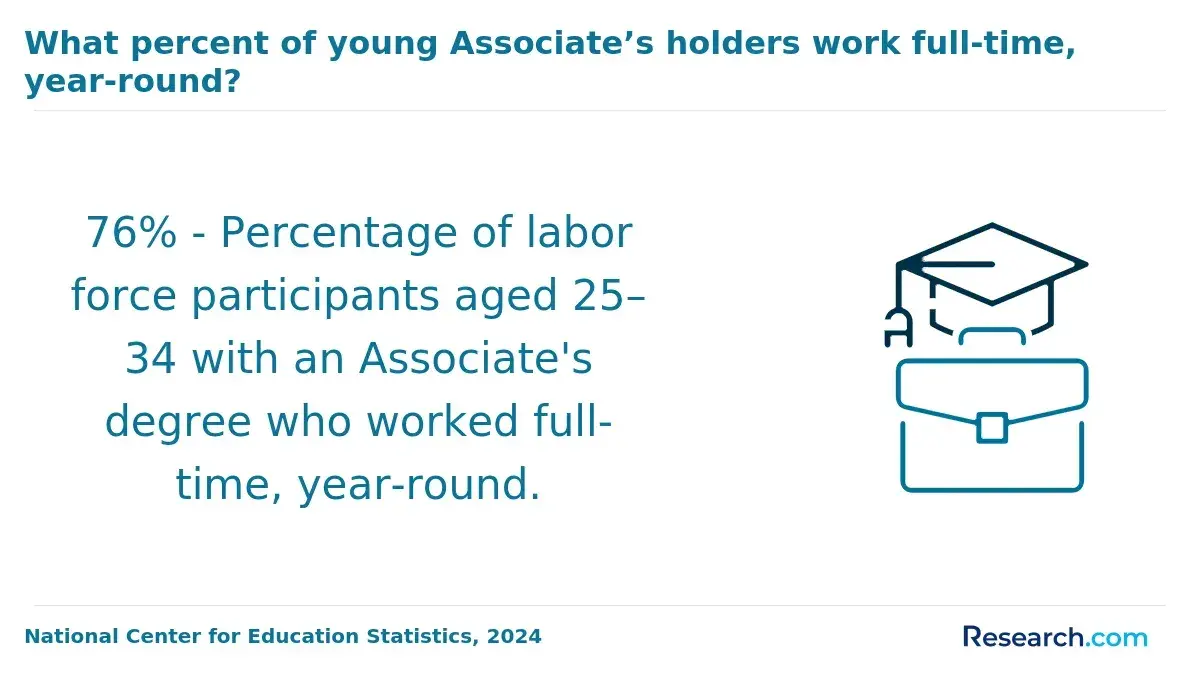
| Associate degree in data analytics or related field | Students with little or no prior college credit | Build foundations and transfer into a bachelor's program | May not be enough for many data scientist roles by itself |
| Bachelor's degree in data science | Students re-entering college without a completed bachelor's degree | Qualify for entry-level analytics, business intelligence, or junior data roles | Takes longer but provides the broadest undergraduate credential |
| Bachelor's completion program | Students with substantial transfer credits | Finish a degree while focusing upper-division coursework on analytics | Transfer rules can strongly affect time and cost |
| Master's degree in data science | Students who already hold a bachelor's degree | Move into advanced analytics, machine learning, or leadership-oriented roles | May require prerequisite math or programming courses |
| Doctoral degree in data science, AI, or related area | Students aiming for research, high-level technical leadership, or academia | Develop original research expertise | Requires a long time horizon and strong research fit |
A bachelor's degree is often the most practical route for returning students who do not already have a four-year credential. It provides room for general education, statistics, programming, databases, ethics, and applied projects. If you already have a bachelor's degree, a second bachelor's may be less efficient than a master's, graduate certificate, or bridge program.
Doctoral programs are much more specialized. If your long-term interest is artificial intelligence research, university teaching, or advanced algorithmic work, you may eventually compare data science doctorates with an online PhD in AI. For most career changers, however, a bachelor's or master's program is the more direct route into the labor market.
How can I tell if an online data science program is properly accredited?
Accreditation is one of the most important checks for returning students because it affects credit transfer, financial aid eligibility, employer recognition, and graduate-school options. In the U.S., you should first confirm that the institution is accredited by an agency recognized by the U.S. Department of Education or the Council for Higher Education Accreditation.
For data science, institutional accreditation is usually the baseline requirement. Program-specific accreditation is less common than in fields such as nursing, engineering, or teacher education, but related programs may have computing, business, or engineering accreditations depending on the department that houses the degree.
Use this sequence before applying or paying a deposit:
- Search the school directly in the U.S. Department of Education's accreditation database or CHEA-recognized listings.
- Confirm that the online program is offered by the same accredited institution, not by an unrelated marketing partner using similar branding.
- Ask whether online students receive the same transcript and diploma language as campus students.
- Check whether credits are commonly accepted by other accredited colleges if you might transfer later.
- Review complaints, teach-out history, and state authorization disclosures for online students outside the school's home state.
A common mistake is assuming that a professional-looking website means a program is accredited. Another is focusing only on rankings while ignoring whether the institution is eligible for federal financial aid. The same verification habit applies across online education fields; for example, students comparing an accredited online animal science degree would still need to confirm institutional accreditation, state authorization, and transfer-credit policies before enrolling.
What admission requirements do online data science programs have for re-entry students?
Admission requirements vary by degree level, but returning students should expect schools to evaluate both academic readiness and technical readiness. The process is often more flexible than traditional first-year admissions because adult learners may bring prior college credits, military training, professional experience, or industry certifications.
Most undergraduate programs ask for high school transcripts or GED documentation, transcripts from every college previously attended, and a minimum GPA for transfer admission. Some schools may waive standardized tests, especially for adult or transfer applicants. Bachelor's completion programs may require a certain number of transferable credits before admission to the major.
Graduate data science programs usually require a completed bachelor's degree, official transcripts, a resume, statement of purpose, and sometimes letters of recommendation. GRE requirements have become less common in many online professional programs, but they have not disappeared everywhere. More important, some master's programs expect prior coursework in calculus, statistics, linear algebra, or programming.
Before applying, returning students should collect the items that most often delay admission decisions:
- Official transcripts from all prior institutions, including schools where you withdrew or earned only a few credits.
- Course descriptions or syllabi for math, statistics, computer science, or business analytics courses you hope to transfer.
- A current resume that explains work experience involving spreadsheets, databases, reporting, coding, process improvement, or quantitative decision-making.
- Documentation for military, employer-based, or certification-based learning if the school evaluates prior learning for credit.
- A short academic plan showing when you can study each week and whether you need part-time enrollment.
Do not hide weak prior grades. Many returning students are admitted after academic setbacks if they can show maturity, recent coursework, or a clear plan. If your math background is rusty, ask whether the school offers placement support, refresher modules, or noncredit preparation before the first statistics or programming course.
What core courses and skills are taught in online data science degrees?
A credible online data science degree should develop both technical and interpretive skills. Employers rarely need someone who can only run code; they need people who can translate messy data into decisions, explain uncertainty, and understand the limits of models.
The curriculum usually builds in layers. Foundational courses cover programming, statistics, databases, and data management. Intermediate courses add machine learning, visualization, data mining, and cloud or big-data tools. Advanced courses often include ethics, domain applications, and a capstone project.
Look for courses and assignments that build the following skill clusters:
- Programming and scripting, usually with Python and sometimes R, focused on data cleaning, analysis, automation, and reproducible workflows.
- Statistics and probability, including hypothesis testing, regression, experimental design, sampling, and uncertainty.
- Database skills, especially SQL, data modeling, data warehousing concepts, and working with structured and semi-structured data.
- Machine learning, including supervised learning, unsupervised learning, model evaluation, feature engineering, and responsible use of algorithms.
- Data visualization and communication, including dashboards, storytelling, executive summaries, and explaining limitations to nontechnical audiences.
- Ethics, privacy, and governance, including bias, fairness, consent, data security, and appropriate use of AI tools.
- Portfolio development through projects using real or realistic datasets, preferably with written explanations and code repositories.
AI is changing the workflow of data science, but it is not eliminating the need for fundamentals. Tools can now help generate code, summarize data, and suggest model approaches, but students still need enough statistical and programming knowledge to detect errors, leakage, bias, and misleading conclusions. A program that treats AI tools as shortcuts without teaching validation and ethics should be viewed cautiously.
How long do online data science degrees take and what do they cost?
Completion time depends on degree level, transfer credits, enrollment intensity, prerequisite courses, and whether the program runs on traditional semesters or accelerated terms. Returning students should estimate time to completion using their real weekly availability rather than the school's fastest advertised pathway.
The table below gives a practical comparison of common timelines and cost drivers. It is not a price quote; it shows which variables usually have the biggest effect on affordability.
| Program type | Typical completion time | Main cost drivers | Best affordability strategy |
| Associate degree | About 2 years full time; longer part time | Community college tuition, textbooks, technology fees | Use transfer pathways into a bachelor's program |
| Bachelor's degree | About 4 years full time; less with transfer credits | Tuition per credit, residency rules, general education requirements | Maximize accepted transfer credits before enrolling |
| Bachelor's completion program | Often 1 to 3 years depending on credits accepted | Upper-division credit requirements and major prerequisites | Request a written transfer evaluation early |
| Master's degree | Often 1 to 3 years | Graduate tuition, prerequisite bridge courses, course load | Compare total credits required, not only cost per credit |
| Doctoral degree | Often 3 or more years | Research credits, dissertation fees, residency expectations | Choose only if the research goal justifies the time commitment |
Cost comparisons should include tuition, mandatory fees, books, software, hardware, proctoring, graduation fees, and any lost income from reducing work hours. College Board's 2024-25 figures show published tuition and fees averaged $11,610 at public four-year in-state institutions and $43,350 at private nonprofit four-year institutions; online programs may price differently, but the gap illustrates why institution type, residency, and aid matter.
To control cost, returning students should ask for a degree audit before enrolling, compare employer tuition benefits, complete lower-cost prerequisite courses when transferable, and file the FAFSA if the institution is eligible for federal aid. If price is your primary constraint, comparing the cheapest data science degree options can help you identify lower-cost programs, but affordability should still be weighed against accreditation, curriculum quality, support, and graduation requirements.
What data science careers can an online degree help me pursue?
An online data science degree can support several career paths, but the exact role you qualify for depends on your degree level, portfolio, prior work history, and technical depth. Many returning students do not move directly into the title "data scientist." They may start in analytics, reporting, business intelligence, or operations roles and then move into more advanced modeling work.
The table below outlines common roles connected to data science education and how they differ in day-to-day work.
| Role | Typical responsibilities | Good fit for |
| Data analyst | Clean data, build reports, analyze trends, create dashboards, answer business questions | Students entering the field with strong SQL, Excel, visualization, and communication skills |
| Business intelligence analyst | Design dashboards, maintain metrics, support managers with performance reporting | Professionals with business, finance, operations, or healthcare experience |
| Junior data scientist | Build predictive models, test hypotheses, prepare features, explain model results | Graduates with strong statistics, Python, machine learning, and project portfolios |
| Machine learning engineer | Deploy models, build pipelines, monitor performance, collaborate with software teams | Students with deeper programming, cloud, and software engineering skills |
| Data engineer | Create data pipelines, manage databases, support reliable data infrastructure | Students who prefer systems, databases, and backend technical work |
| AI trainer or AI data specialist | Evaluate model outputs, improve datasets, label content, test AI behavior, document quality issues | Students interested in applied AI, data quality, and human-in-the-loop systems |
Career changers should connect their previous experience to data problems. A nurse moving into healthcare analytics, a logistics coordinator moving into supply-chain analytics, or a teacher moving into learning analytics may have an advantage because they understand the domain behind the data.
AI-related roles are also expanding around model evaluation, dataset quality, prompt testing, and responsible deployment. If you are interested in the human review and quality-control side of AI systems, learning how to become an AI trainer can help you compare that path with more traditional data analyst or data scientist roles.
What salary ranges and job outlook can data science graduates expect?
Salary outcomes vary by role, location, industry, experience, education level, and technical specialization. A degree can help you qualify for opportunities, but it does not guarantee a specific title or salary. Employers typically evaluate candidates through a combination of credentials, project evidence, coding ability, statistical reasoning, communication skills, and domain knowledge.
The U.S. Bureau of Labor Statistics reported a May 2024 median annual wage of $112,590 for data scientists. For returning students, the important interpretation is that data science can offer strong earning potential, but entry points may start below the median if you are moving from another field or beginning in an analyst role.
Job outlook remains favorable because organizations continue to collect more data and need people who can turn it into decisions. Demand is especially visible in technology, finance, insurance, healthcare, logistics, retail, cybersecurity, government contracting, and AI-enabled product teams. However, competition for pure data scientist roles can be intense, particularly for remote jobs that attract applicants nationwide.
Use salary data carefully when calculating return on investment. Consider your current income, tuition after grants or employer support, time to completion, opportunity cost, and the likelihood that your first role may be a bridge position. A lower-cost program with strong applied projects may produce a better personal ROI than a more expensive program with limited career support.
Students should also watch how AI changes job expectations. Routine reporting and basic code generation are becoming more automated, which increases the value of judgment, data validation, stakeholder communication, privacy awareness, and the ability to frame the right problem. Graduates who can combine technical tools with business context may be better positioned than those who only complete isolated coding exercises.
How should returning students evaluate and choose the right online data science program?
The best online data science program is not simply the cheapest, fastest, or highest ranked. It is the program that matches your starting point, career goal, budget, schedule, and learning style while meeting basic quality standards.
Before shortlisting schools, decide what outcome you need. If you need a first bachelor's degree, prioritize transfer credits, advising, and broad academic support. If you already have a degree, prioritize technical prerequisites, portfolio depth, employer alignment, and career services. If you want a research career, evaluate faculty expertise and research opportunities rather than convenience alone.
Use this step-by-step process to compare programs in a way that protects your time and money:
- Define your target role, such as data analyst, business intelligence analyst, junior data scientist, machine learning engineer, or AI data specialist.
- Verify institutional accreditation and state authorization before reviewing rankings or marketing claims.
- Request a written transfer-credit evaluation and degree plan showing remaining courses, estimated completion time, and total expected cost.
- Check whether the curriculum includes Python, SQL, statistics, machine learning, data visualization, ethics, and a capstone or portfolio project.
- Ask how online students access tutoring, faculty office hours, career coaching, alumni networks, and technical support.
- Review sample syllabi to confirm that assignments use real datasets, written analysis, and reproducible code rather than only quizzes.
- Compare total cost after grants, employer assistance, transfer credits, fees, and likely time to completion.
- Speak with admissions, but also ask to connect with current students, alumni, or program staff who can describe workload and support honestly.
Watch for red flags. Be cautious if a school will not provide clear accreditation information, avoids written cost estimates, promises specific salaries, pressures you to enroll immediately, offers vague course descriptions, or claims you can become a data scientist with little math, coding, or project work. Returning students should also avoid overloading the first term; starting part time can be smarter if you are rebuilding study habits.
A good final test is simple: after reviewing the program, can you explain what you will learn, what projects you will complete, what support you will receive, how much you will pay, and what jobs the curriculum realistically prepares you to pursue? If not, keep asking questions before you commit.
Other Things You Should Know About Data Science
You do not need to master advanced math before enrolling, but you should be ready to build skills in statistics, algebra, probability, and eventually some calculus or linear algebra depending on the program. If you have been away from math for years, take a refresher before your first quantitative course.
Yes. Save polished versions of course projects, capstones, dashboards, notebooks, and written analyses. A useful portfolio should show the problem, data source, cleaning process, method, results, limitations, and business interpretation rather than only displaying code.
Many online data science bachelor’s programs accept up to 90 transfer credits toward a 120-credit degree, including approved general education and lower-division STEM courses. Schools usually require an official transcript review, a minimum 2.0 GPA on transferable coursework, and recent grades for key math or programming classes.
References
- Choose the Right Data Science Program for Career | Learnbay https://www.learnbay.co/blogs/how-to-choose-the-right-data-science-program-for-your-career-goals
- How to Choose the Right Data Science Course? https://henryharvin.ae/blog/how-to-choose-the-right-data-science-course/
- How to Choose the Right Data Science Course for You in 3 Easy Steps? – 365 Data Science https://365datascience.com/trending/how-to-choose-the-right-data-science-course/
- Best Data Science Courses Online with AI Integration [2026] - Great Learning https://www.mygreatlearning.com/data-science/courses
- Data Science https://apply.unimib.it/en_GB/courses/course/75-data-science
- Data Science Accreditation https://www.theorsociety.com/ORS/ORS/Membership/Accreditation/data-science-professional.aspx
- What are the requirements for international students in the online Data Science bachelor's programmes? https://www.privathochschulen.net/en/questions/what-are-the-entry-requirements-for-online-data-science-bachelors-programmes
- Data Science Institute Accredited AI & Data Science Courses https://www.datascienceinstitute.net/
- Master Data Science https://sc.informatik.rwth-aachen.de/en/studium/master/master-data-science/application-for-admission/
- Accredited Online Courses: How to Pick Programs That Actually Count https://www.upskillist.com/blog/accredited-online-courses-how-to-pick-programs-that-actually-count/