2027 Online Communication Disorders Bachelor's Degree Programs With No Prerequisites

Co-Founder and Chief Data Scientist

Reviewed by Rhea Paul, PhD
SLP Education & Research Expert
Choosing an online bachelor’s degree in communication disorders is often a practical first step for adults who want to move toward speech-language pathology, audiology, education support, or related human services roles but do not already have the usual prerequisite coursework. The main question is not simply whether a program will admit you. It is whether the program can help you build the academic foundation, credits, and advising plan needed for your next goal.
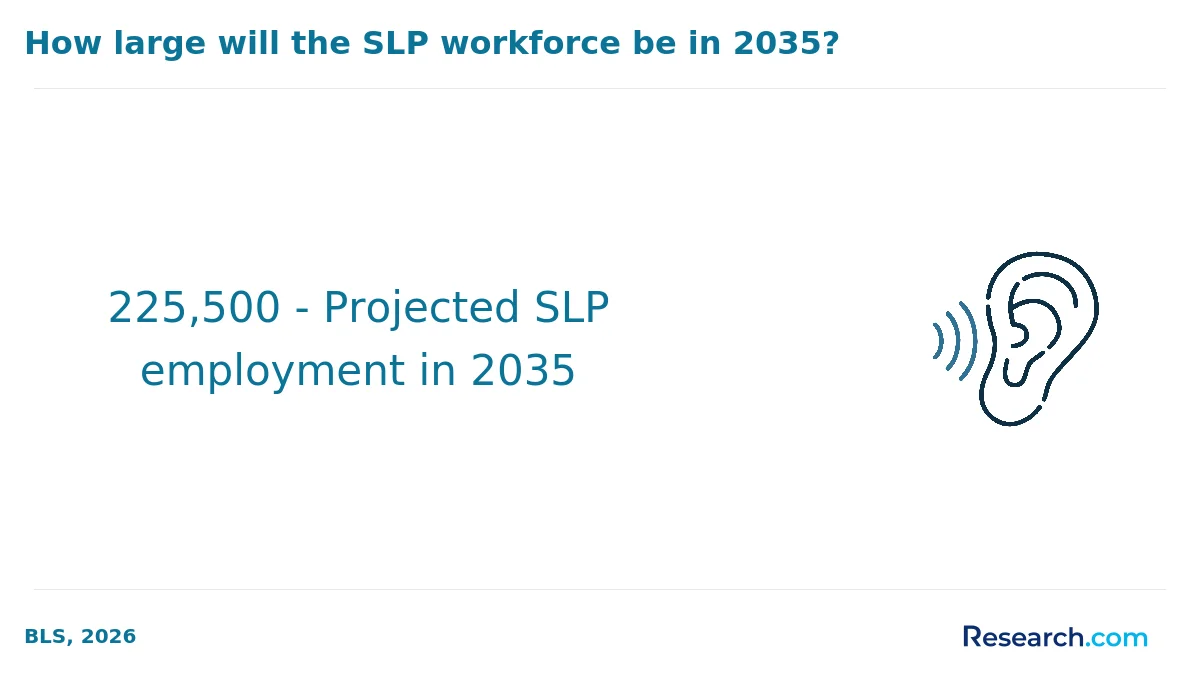
No-prerequisite options matter because many career changers, returning students, and first-generation college students cannot pause their lives to complete several separate preparatory courses before applying. Recent data shows that 35% of online communication disorders bachelor's degree programs require no prerequisites, creating more direct entry points for students with unrelated academic backgrounds. Demand also supports interest in the field: employment in speech-language pathology and audiology is projected to increase 21% over the next decade.
This guide explains what “no prerequisites” actually means, how open-admission and selective programs differ, what accredited universities typically require, how students catch up academically, and how to compare tuition, transfer credit, support services, and realistic completion timelines before enrolling.
Key Benefits of Online Communication Disorders Bachelor's Degree Programs With No Prerequisites
- Online communication disorders bachelor's programs with no prerequisites offer schedule flexibility ideal for working professionals balancing career and education.
- These programs enable accelerated skill acquisition through targeted coursework, allowing students to quickly build expertise relevant to evolving industry demands.
- Students can earn valued communication disorders credentials on timelines and budgets tailored to their personal circumstances, increasing access to career advancement opportunities.
What Does 'No Prerequisites' Mean for Online Communication Disorders Bachelor's Degree Programs, and Who Benefits Most?
In an online communication disorders bachelor’s program, “no prerequisites” usually means applicants do not need to complete specific college courses in anatomy, linguistics, psychology, statistics, biology, or communication sciences before admission. The program either starts with introductory coursework or builds foundational requirements into the degree plan.
This is different from an open-admission college. Open admission generally refers to the institution’s broad acceptance policy for applicants who meet basic entry standards, such as a high school diploma or GED. A no-prerequisite major may still require an application, transcripts, placement review, or general university admission. It simply does not require prior subject-specific coursework before you begin the communication disorders sequence.
Who benefits most from no-prerequisite programs?
- Career changers: Adults with degrees or work experience in other fields can begin without first piecing together prerequisite courses at another college.
- Working adults: Online formats and embedded foundations can reduce the time spent navigating separate admissions processes, course schedules, and campus requirements.
- Returning learners: Students who have been away from school can restart with structured academic support instead of needing to prove recent coursework in advance.
- First-generation college students: Clearer entry routes can make the process less intimidating, especially when advising and degree maps are strong.
- Students still exploring the field: Introductory courses can help confirm whether communication disorders is the right direction before committing to graduate-level preparation.
According to data from the National Center for Education Statistics (NCES), non-traditional student enrollment has steadily increased, which helps explain why flexible online programs have become more important for adults balancing school, work, and family obligations.
What to verify before applying
- Admission flexibility: Confirm whether “no prerequisites” applies to the major, the university, or both.
- Academic quality: Prioritize regionally accredited institutions and check whether the curriculum prepares students for graduate study or assistant-level work where applicable.
- Student support: Look for online advising, tutoring, writing help, library access, disability accommodations, and career planning.
- Cost and aid: Ask whether foundational courses add credits, tuition, or time to the degree.
- Long-term fit: If your goal is speech-language pathology or audiology, verify whether the bachelor’s curriculum supports future graduate admission expectations.
Students comparing adjacent behavioral and communication-focused career paths may also review online BCBA master’s programs as part of broader planning.
Which Accredited Online Communication Disorders Bachelor's Programs Accept Students With No Prior College Coursework?
Some regionally accredited universities offer online communication disorders or communication sciences and disorders bachelor’s pathways that can accommodate students who have no prior college coursework. These programs usually do this by admitting students through general undergraduate admission and placing foundational courses inside the degree plan rather than requiring them before entry.
Applicants should read each school’s current admission page carefully. “No prior college coursework” does not always mean automatic admission to the major, and some programs may require students to complete general education or lower-division requirements before taking advanced major courses.
- University of Arkansas at Little Rock: This public university offers an online bachelor’s in communication disorders with a low-barrier admission process. Foundational coursework is built into the program for students without prior related study. The university holds regional accreditation from the Higher Learning Commission and provides academic advising for online learners. Enrollment data reflects steady growth among adult learners.
- East Carolina University: ECU’s online pathway supports students beginning communication disorders coursework without previous college experience by integrating bridge or foundational courses. It is regionally accredited and offers tutoring and career counseling relevant to communication disorders majors. Enrollment figures show a significant number of adult learners using ECU’s online platform.
- Colorado State University Global: CSU Global is known for flexible adult education and offers an online communication disorders pathway with minimal prerequisites. Students can complete foundational courses before progressing to advanced work. The university holds regional accreditation and offers financial aid, including scholarships for online students without prior credits.
- University of North Dakota: UND admits students directly into its online bachelor’s communication disorders program and emphasizes inclusive enrollment policies. Foundational courses are available for beginners, and the institution is regionally accredited. Student support includes technology assistance and academic coaching, with a diverse enrollment that includes many returning adults.
- Western Carolina University: WCU offers a fully online communication disorders degree that accepts students without prior coursework by embedding foundational classes. It is regionally accredited by the Southern Association of Colleges and Schools and provides dedicated advisors and financial aid counseling. Enrollment trends show growth among students entering without previous college experience.
How to compare beginner-friendly programs
| Factor | Why it matters | Question to ask admissions |
| Regional accreditation | Supports credit transfer, graduate school recognition, and federal financial aid eligibility. | Which agency accredits the university? |
| Embedded foundation courses | Lets beginners start without separate prerequisites, but may affect total credits and time. | Are introductory communication disorders courses included in the degree plan? |
| Major declaration rules | Some schools admit students to the university first and the major later. | When can I officially enter the communication disorders major? |
| Online student support | Students without prior coursework often need strong advising, tutoring, and writing support. | Are tutoring and advising available fully online? |
| Graduate preparation | Speech-language pathology and audiology careers often require graduate education. | Does the curriculum meet common graduate prerequisite expectations? |
Students who want a faster undergraduate route can also compare an accelerated bachelor’s degree online with standard communication disorders pathways, keeping in mind that acceleration only helps if the schedule is realistic and the program still meets future academic goals.
How Do Open-Admission Policies in Online Communication Disorders Programs Differ From Traditional Selective Admissions?
Open-admission policies reduce entry barriers by allowing most applicants with a high school diploma or GED to enroll. Traditional selective admissions, by contrast, may evaluate GPA, prerequisite grades, completed college credits, essays, test scores, or competitive program capacity before admitting students to the university or major.
Open admission is not the same as rolling admission. Rolling admission describes when applications are reviewed throughout the year. It also differs from conditional admission, where students may be accepted only if they complete remedial coursework, placement requirements, or academic milestones after enrollment.
| Admission model | Typical entry standard | Best fit | Main trade-off |
| Open admission | Basic institutional criteria such as high school completion or GED. | Students seeking the broadest access and a clear starting point. | Students may enter with uneven academic preparation and need more support. |
| Rolling admission | Applications reviewed during an extended cycle, sometimes with minimum academic standards. | Students who need flexible start dates. | Admission may still be selective or capacity-limited. |
| Conditional admission | Acceptance tied to placement results, bridge coursework, or early academic performance. | Students who need to demonstrate readiness after entry. | Progression may depend on completing required support courses. |
| Selective admission | Competitive academic review, prior coursework, GPA thresholds, or limited seats. | Students with strong preparation who want a more structured or competitive pathway. | Access is narrower and admission may take longer. |
Institutions such as the University of Texas Rio Grande Valley and Fort Hays State University publicly list their open-admission policies on admissions pages and national IPEDS reports. These policies can expand access, but students should still evaluate the communication disorders curriculum, advising structure, and graduate preparation.
The main academic trade-off is readiness. Students entering with fewer prerequisites may need orientation, developmental coursework, tutoring, or writing support before they are comfortable with upper-division material. This does not make the program lower quality, but it does mean the student must use available support early rather than waiting until grades suffer.
According to the National Center for Education Statistics, more than 40% of U.S. undergraduates attend colleges with open or minimally selective admissions, showing that inclusive pathways are a major part of higher education.
- Access is broader: Open admission can help students who were previously blocked by GPA, testing, or prerequisite requirements.
- Preparation varies: A strong program should provide placement tools, tutoring, writing help, and advising.
- Policies should be documented: Applicants should rely on official admissions pages, catalogs, and accreditation records rather than marketing language alone.
- Graduate goals require planning: Students aiming for speech-language pathology or audiology should confirm that the bachelor’s degree supports later graduate admission requirements.
One professional who entered an online communication disorders bachelor’s program without prerequisites described the opportunity as valuable but demanding. The flexible admission policy made the career change possible, but success depended on using tutoring, orientation resources, and faculty feedback from the first term. The lesson is straightforward: open admission can open the door, but students still need a disciplined plan to meet advanced academic expectations.
What Are the Typical Enrollment Requirements for No-Prerequisite Online Communication Disorders Bachelor's Programs?
No-prerequisite online communication disorders bachelor’s programs usually remove major-specific entry courses, not all admissions requirements. Students still need to satisfy the university’s general undergraduate admission standards and submit required documentation.
Most applicants enter through one of two routes: freshman/general admission or transfer/second-degree admission. Freshman applicants may begin with general education and introductory communication disorders coursework. Transfer or second-degree students may have transcripts reviewed to determine which credits apply and which major courses remain.
- Proof of education: Most programs require evidence of high school completion or an equivalent credential such as a GED. This baseline supports institutional and accreditation standards.
- Official transcripts: Applicants typically submit high school transcripts, GED records, or college transcripts from every institution previously attended, even if the prior coursework is unrelated.
- English language skills: Non-native English speakers may need to demonstrate proficiency through accepted exams such as TOEFL or IELTS. Domestic applicants may be exempt, depending on institutional policy.
- Age criteria: A minimum age, usually 18 years, is common because online students are expected to manage enrollment, coursework, financial aid, and academic responsibilities independently.
- Application materials: Programs may require an application form, personal statement, references, or a short statement of motivation. These materials help admissions staff understand goals and readiness.
- Placement or readiness review: Some universities use placement tools for writing, math, or reading to place students into appropriate first-term courses.
- Technology access: Online programs may require reliable internet, a computer, webcam access, and the ability to use a learning management system.
Common mistake to avoid
Do not assume that “no prerequisites” means the degree will be shorter or easier. In many programs, the missing preparation is simply moved inside the degree plan. That can be helpful, but students should ask whether foundational courses count toward the major, general education, electives, or extra credits.
Students who are rebuilding academic momentum may also explore practical credentials in other fields, such as bookkeeping certification, but these should be evaluated separately from communication disorders licensure or graduate school goals.
Are No-Prerequisite Online Communication Disorders Bachelor's Programs Available at Regionally Accredited Universities?
Yes. No-prerequisite or low-prerequisite online communication disorders bachelor’s programs can be found at regionally accredited universities. Regional accreditation matters because it signals that the institution has been reviewed for academic quality, faculty qualifications, student services, governance, and financial stability.
For students, accreditation is not a technical detail. It can affect whether credits transfer, whether graduate schools recognize the degree, whether employers trust the credential, and whether the student can access federal financial aid. This is especially important in communication disorders because many students later pursue graduate study in speech-language pathology or audiology.
Regional accreditation versus program accreditation
Regional accreditation applies to the university as a whole. Program-level accreditation or approval applies to a specific academic or professional program. At the bachelor’s level, students should first confirm institutional accreditation, then ask whether the curriculum is designed to support graduate school prerequisites or state-specific assistant-level expectations where relevant.
- Accrediting body: Confirm that the institution is accredited by a regional agency recognized by the U.S. Department of Education.
- Program alignment: Ask whether the communication disorders curriculum aligns with common graduate preparation expectations.
- Transfer policies: Review how credits transfer in and how credits may transfer out if you later change schools.
- Financial aid eligibility: Confirm that the institution and program qualify for federal financial aid.
- State authorization: Online students should verify whether the university is authorized to offer online education in their state.
National accreditation is more common among some vocational or for-profit institutions and may not provide the same transferability or graduate-school recognition as regional accreditation. Students should verify status using official accreditation databases rather than relying only on program websites or advertisements.
A graduate of a no-prerequisite online communication disorders bachelor’s program said regional accreditation was one of the deciding factors. It reduced uncertainty about financial aid, credit transfer, and whether graduate schools would take the degree seriously. That kind of verification is especially valuable for students entering the field without prior coursework.
How Do Students Without Academic Prerequisites Catch Up in Online Communication Disorders Bachelor's Courses?
Students without academic prerequisites catch up by using a combination of embedded foundation courses, structured advising, tutoring, and deliberate study routines. Strong programs do not simply admit beginners and leave them to manage alone; they sequence coursework so students build the scientific, linguistic, and writing skills needed for advanced communication disorders classes.
- Developmental courses: Some accredited schools offer foundational or refresher modules in English composition, basic science, study skills, or college-level writing before students take advanced major courses.
- Introductory major courses: Beginner-friendly programs often start with survey courses in communication disorders, speech and language development, hearing science, and related topics.
- Dedicated tutoring: Online tutoring may include live sessions, writing center support, test preparation, and help with discipline-specific terminology.
- Peer mentoring: New students may be paired with advanced students who can explain course expectations, time management, and how to work with online faculty.
- Formal bridge programs: Some universities combine foundation courses, academic advising, progress checks, and study-skills support into a structured bridge pathway.
- Early diagnostics: Placement tests or self-assessments can help students identify weak areas before they become obstacles in upper-division coursework.
National Survey of Student Engagement (NSSE) data reveal that students utilizing academic support services in online environments have significantly higher retention and graduation rates, up to 20% more among at-risk groups. Enrollment in open-access online communication disorders programs has also grown by over 15% in recent years, increasing the need for support systems that help adult and first-generation learners persist.
A practical catch-up plan
- Before enrolling, request a sample degree plan and identify any foundation courses in the first year.
- Take placement or readiness assessments seriously, even if they are optional.
- Schedule advising before registering for the first term, not after classes begin.
- Use tutoring in the first difficult course rather than waiting for a failing grade.
- Create a weekly study schedule that accounts for reading, terminology review, writing, and online discussion deadlines.
The students who perform best in no-prerequisite programs are usually not the ones with perfect preparation. They are the ones who recognize gaps early and use support consistently.
What Support Services Help No-Prerequisite Students Succeed in Online Communication Disorders Bachelor's Programs?
No-prerequisite students often need more than flexible admission. They need an online support system that helps them choose the right courses, manage workload, strengthen academic skills, and connect the degree to future career or graduate study plans.
- Academic advising: Advisors help students understand course sequencing, major requirements, transfer credit, graduation timelines, and whether the bachelor’s plan supports graduate school preparation.
- Online tutoring: Tutoring can support writing, research, science foundations, statistics, and major-specific terminology.
- Writing center access: Communication disorders coursework often requires clear academic writing, source use, and professional language. Online writing feedback can be especially useful for returning students.
- Library and research help: Students should have remote access to databases, librarians, citation tools, and research guides.
- Mental health resources: Remote counseling and wellness services can support students managing stress, work demands, family responsibilities, or academic anxiety.
- Disability accommodations: Accessibility offices may provide extended test time, accessible materials, captioning, assistive technology, or other approved accommodations.
- Career counseling: Career services can help students explore roles such as speech-language pathology assistants, audiology support positions, education support roles, or graduate school pathways.
- Technology support: Reliable help with learning platforms, proctoring tools, video software, and account access is essential for online learners.
Institutions recognized by U.S. News Best Online Bachelor's Programs emphasize strong student support, and studies show nearly 85% of online learners who engage with these services report enhanced confidence and persistence. Asynchronous course models can make support more accessible, but students should confirm whether advising, tutoring, and counseling are available outside standard business hours.
Questions to ask before enrolling
- Will I have an assigned advisor familiar with communication disorders?
- Are tutoring and writing support included in tuition or charged separately?
- Can online students access the same library databases as campus students?
- Are career services available to online and out-of-state students?
- How quickly do faculty and support staff typically respond to online students?
Can Transfer Credits or Prior Learning Assessments Replace Prerequisites in Online Communication Disorders Programs?
Yes, transfer credits and prior learning assessments can sometimes replace general education requirements, introductory coursework, or lower-level prerequisites in online communication disorders programs. They do not always replace core major courses, especially when those courses are required for graduate preparation or professional alignment.
Transfer credit is based on completed college coursework, usually from regionally accredited institutions. Prior learning assessment, or PLA, evaluates college-level learning gained through work, military training, standardized exams, professional training, or portfolios. The value of these options depends on the university’s credit policies and how closely prior learning matches required courses.
- Flexible transfer policies: Some online communication disorders programs accept up to 90 semester hours of transfer credit from accredited colleges, which can shorten time to degree.
- Prior learning assessments: CLEP and DSST exams can help students demonstrate competency in foundational subjects and avoid repeating entry-level requirements.
- ACE credit recommendations: The American Council on Education evaluates workplace training, military service, and professional certifications and translates them into college credit recommendations.
- Documentation matters: Students should prepare official transcripts, exam scores, course descriptions, training records, military records, or portfolios as required.
- Institutional differences: Thomas Edison State University, Excelsior College, and Charter Oak State College are known for generous credit acceptance policies and extensive PLA options.
- Adult learner trend: According to a National Center for Education Statistics report, adult learners using PLA credits to complete bachelor's degrees increased by 15%.
Where credit is most likely to apply
| Credit source | Often applies to | Less likely to replace |
| Previous college courses | General education, electives, introductory social science or science courses. | Upper-division communication disorders major courses. |
| CLEP or DSST | General education subjects such as composition, history, psychology, or math. | Specialized speech, language, and hearing science coursework. |
| ACE-reviewed training | Electives or applied professional learning, depending on school policy. | Courses tied directly to graduate preparation standards. |
| Portfolio assessment | Documented college-level learning from work or professional experience. | Courses requiring supervised academic or clinical foundations. |
Students comparing flexible credit policies in other fields can also review a paralegal certificate online ABA-approved option, but communication disorders students should prioritize credits that support their specific academic and career pathway.
What Is the Average Time to Completion for No-Prerequisite Online Communication Disorders Bachelor's Degree Programs?
The average time to complete a no-prerequisite online communication disorders bachelor’s degree generally follows the standard 120-credit-hour bachelor’s framework. The actual timeline depends on whether the student enrolls full time or part time, transfers credits, takes summer courses, or chooses an accelerated calendar.
- Standard credit framework: Bachelor’s degrees usually require about 120 semester credit hours. Students entering with no prior credits should expect to complete the full degree plan unless the school awards credit through exams, transfer work, or prior learning assessment.
- Enrollment pace: Full-time students progress faster, while working adults often choose part-time enrollment to balance employment and family responsibilities.
- Term length: Eight-week terms and year-round enrollment can allow faster completion than a traditional 16-week semester format if the student can handle the workload.
- Accelerated options: Some programs enable completion in as little as three years when students take heavier course loads and use frequent start dates.
- Competency-based formats: A few accredited online communication disorders programs offer competency-based education, allowing students to progress by demonstrating mastery rather than spending a fixed amount of time in each course.
- Admission selectivity and completion rates: IPEDS data indicate open-admission, no-prerequisite programs tend to have longer average completion times than selective-admission programs, reflecting differences in academic preparation and part-time enrollment patterns.
- Cost impact: Time affects total tuition, fees, books, and opportunity cost. A lower per-credit price may not produce savings if the pathway adds several terms of coursework.
How to estimate your own timeline
- Ask for a full degree audit or sample plan based on your current credits.
- Confirm whether foundational courses count inside the 120-credit-hour framework.
- Compare full-time, part-time, summer, and accelerated options.
- Ask how often required major courses are offered online.
- Review withdrawal, repeat, and progression policies that could delay graduation.
Students should also compare accreditation, nonprofit status, and support services before choosing a program. To review flexible online options at quality nonprofit institutions, see non profit colleges.
How Does Tuition Compare Between No-Prerequisite and Standard Online Communication Disorders Bachelor's Programs?
In the 2025–2026 academic year, tuition for online Bachelor’s in Communication Disorders programs, often called Communication Sciences and Disorders or CSD, varies significantly depending on whether the program is a full four-year degree or an accelerated leveling track for students who already hold a degree.
No-prerequisite bachelor’s programs may look less expensive per credit, especially when offered by public universities, but the total cost depends on how many credits the student must complete. Standard or selective programs may charge more per credit, yet students who enter with prerequisites or transfer credits may complete fewer courses.
| Cost factor | No-prerequisite programs | Standard programs |
| Per-credit tuition | Often lower when housed at public or access-focused institutions. | May be higher at private, selective, or research-focused universities. |
| Extra coursework | May include foundation, developmental, or bridge courses inside the degree plan. | Often assumes students have already completed baseline academic preparation. |
| Time to completion | Can be longer for students starting with no college credits. | Can be shorter for students with completed prerequisites or transfer credits. |
| Fees | May include online, technology, proctoring, or course-specific fees. | May include similar fees, plus possible cohort or program fees. |
| Financial aid | Federal aid may be available at eligible accredited institutions. | Federal and institutional aid may vary by school and student status. |
Per-credit tuition: Programs with open-admission policies commonly offer lower per-credit rates because they are often housed within public or state-funded institutions aimed at expanding educational access. Selective online communication disorders programs may charge higher credit fees because of specialized faculty, research resources, or smaller cohorts.
Additional fees: Some no-prerequisite programs require developmental or foundational courses. If those courses add credits, they increase total tuition even when the posted per-credit rate is affordable.
Institutional type and funding: Public universities often receive state support that can reduce sticker price. Private institutions may charge more but sometimes provide institutional aid beyond federal assistance.
Program delivery format: Asynchronous online programs may reduce scheduling barriers and operational costs. Hybrid or cohort-based programs may cost more if they include live sessions, smaller class sizes, or intensive faculty interaction.
Total cost: Students should compare the full program price, not only the advertised tuition rate. Include transfer credits, required foundation courses, fees, books, technology, and the number of terms needed to graduate. Students planning for graduate school costs may also want to understand how undergraduate expenses fit into longer-term funding research, including resources on fully funded slp programs online.
Which Online Communication Disorders Bachelor's Programs Allow Students To Start Without A High School Diploma Or GED?
Most accredited online communication disorders bachelor’s programs require a high school diploma or an accepted equivalency credential such as a GED or HiSET. A program may have no major prerequisites and still require proof of secondary education for undergraduate admission.
Students without a traditional high school diploma usually need to complete an equivalency route before applying. Some institutions may offer conditional enrollment, adult education pathways, or nondegree study options, but full admission to a bachelor’s degree commonly depends on documented secondary completion.
- Equivalency acceptance: Many programs accept GED or HiSET certificates as proof of secondary education, allowing nontraditional students to apply without a traditional diploma.
- Conditional enrollment: Some schools may provisionally admit students who need placement testing, foundational coursework, or additional readiness review before progressing.
- Application requirements: GED applicants may need official scores, placement exams, recommendation letters, or other documentation that shows readiness for college-level study.
- International credentials: Students educated outside the U.S. typically need credential evaluation to show equivalency to U.S. secondary education.
- Support services: Accredited programs may offer tutoring, advising, financial aid guidance, and orientation to help students transition into online college coursework.
Best next steps if you do not have a diploma or GED
- Ask the university whether GED, HiSET, or another equivalency credential is accepted.
- Confirm whether conditional or provisional enrollment is available.
- Complete any required placement testing before selecting courses.
- Request written confirmation of admission requirements from the admissions office.
- Verify that the program is regionally accredited before committing tuition money.
What Graduates Say About Their Online Communication Disorders Bachelor's Degree Program With No Prerequisites
- : "I chose the online communication disorders bachelor's degree program with no prerequisites because I wanted a faster way to change careers without starting over through separate prerequisite courses. The affordability helped me move forward without taking on more financial pressure than I could manage. The program expanded my knowledge and helped me pursue new opportunities in speech therapy clinics near me. — Axton"
- : "The online format made the degree realistic for my schedule. I needed a program that understood adult students and did not require a long list of courses before I could even begin. The accessible tuition fees helped me continue supporting my family while preparing for a new professional direction in communication therapy. — Jaime"
- : "I enrolled because the program was convenient, cost-conscious, and clear about what I would need to complete. I appreciated the transparency around total costs compared with more traditional options. Professionally, the degree strengthened my resume and showed employers that I was serious about building expertise in communication disorders. — Roman"
Other Things You Should Know About Communication Disorders Degrees
Most online communication disorders bachelor's programs require at least one practicum, clinic observation, or internship tied to the major. Common requirements include 25 to 100 supervised hours, completed through an approved site under faculty or licensed professional oversight before graduation.
A 2027 online communication disorders bachelor's degree with no prerequisites typically includes core courses like phonetics, audiology, and language development. Students might take around 120 credit hours, incorporating both theoretical and practical learning experiences, tailored for flexible online study.
Quality no-prerequisite online communication disorders programs are usually accredited by recognized regional accrediting bodies. Additionally, programs preparing students for speech-language pathology roles seek accreditation or recognition from the Council on Academic Accreditation in Audiology and Speech-Language Pathology (CAA). Accreditation ensures curricula meet professional standards and that students receive rigorous training required for certification or licensure.
References
- U.S. Bureau of Labor Statistics - Speech-Language Pathologists https://www.bls.gov/ooh/healthcare/speech-language-pathologists.htm
- ASHA EdFind - Accredited Speech-Language Pathology Programs https://find.asha.org/ed/
- Audiology and Speech-Language Pathology Interstate Compact https://aslpcompact.com/compact-map/
- West Virginia University - Speech-Language Pathology, M.S. - Online https://medicine.hsc.wvu.edu/communications-sciences-and-disorders/speech-language-pathology-ms/future-students/curriculum/online-slp-program/
- James Madison University - Master of Science (M.S.) in Speech-Language Pathology (Distance Education / Online) https://www.jmu.edu/chbs/csd/online_ms/index.shtml
- University of Scranton - Master of Science (M.S.) in Speech-Language Pathology https://www.scranton.edu/academics/pcps/health-and-human-performance/programs/speech-language-pathology/index.shtml
- California State University-Northridge - Master of Science in Communicative Disorders (Online) https://tsengcollege.csun.edu/programs/CDS
- University of North Carolina at Greensboro - Speech-Language Pathology, M.A. (Online) https://csd.uncg.edu/graduate/masters-of-arts-online/