2027 Return on Investment of an Online Communication Disorders Bachelor's Degree: Salary vs Cost

Co-Founder and Chief Data Scientist

Reviewed by Rhea Paul, PhD
SLP Education & Research Expert
An online bachelor’s degree in communication disorders can be a smart pathway into healthcare, education, early intervention, or speech-language support roles—but the financial payoff depends on the job you can legally qualify for, the net price you pay, and whether you plan to continue into graduate study. A bachelor’s degree can prepare graduates for assistant-level, support, research, and related service roles, while licensed speech-language pathologist positions typically require additional graduate education and state licensure.
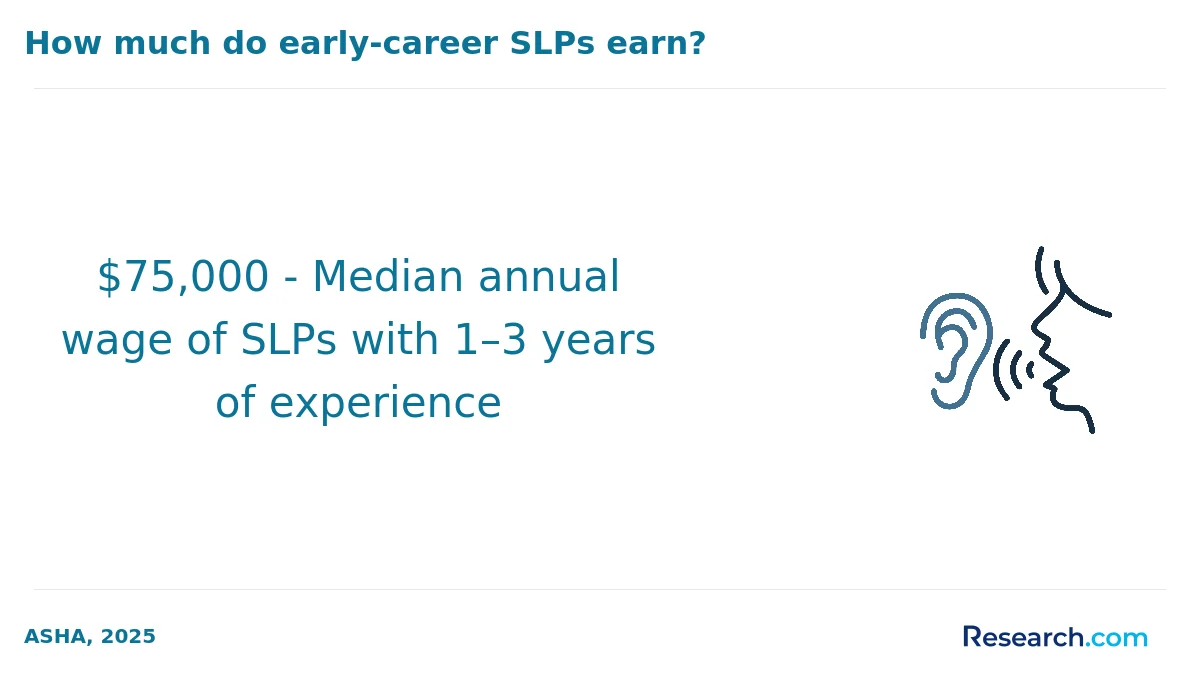
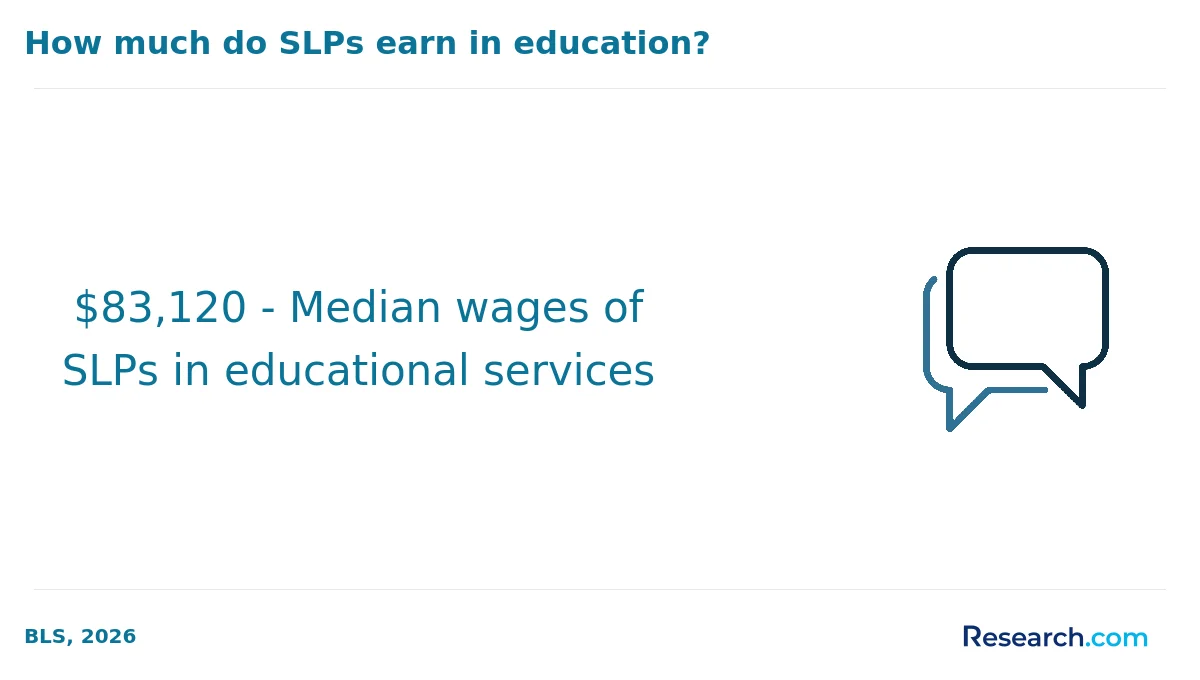
That distinction matters when evaluating return on investment. Nationwide, the median annual wage for speech-language pathologists reached $82,000 in 2027, reflecting strong demand tied to aging populations, school-based services, and early intervention programs. However, tuition and related costs can exceed $40,000 for accredited online programs, making it essential to compare realistic earnings against the full cost of enrollment—not just advertised tuition.
This guide breaks down the true cost of an online communication disorders bachelor’s degree, how salaries compare with program expenses, which credentials and concentrations may improve earnings, and what factors can raise or reduce ROI over a 10-, 20-, or 30-year career.
Key Things to Know About the Return on Investment of an Online Communication Disorders Bachelor's Degree
- Average tuition for online communication disorders bachelor's degrees ranges from $15,000 to $35,000-significantly lower than on-campus costs, improving affordability for first-generation and working students.
- Graduates reported median salaries near $60,000 annually, reflecting competitive outcomes that can recoup tuition expenses within six years, according to BLS and IPEDS data.
- Beyond salary, degree holders benefit from enhanced career advancement, greater job stability in growing healthcare fields, and ongoing professional development opportunities critical for long-term success.
What Is the True Cost of Earning an Online Communication Disorders Bachelor's Degree From Enrollment to Graduation?
The true cost of an online communication disorders bachelor’s degree is the total amount you pay from enrollment through graduation after financial aid, employer support, fees, course materials, technology requirements, and lost work time are considered. The advertised tuition rate is only the starting point. For many students, the more useful number is the net price after grants, scholarships, tuition reimbursement, and institutional aid.
Online programs can look less expensive than campus-based options because students often avoid relocation, commuting, and housing costs. Still, online students should budget carefully because mandatory fees, course materials, proctoring charges, and technology expenses can add up across several years.
- Tuition and fees: Tuition is usually the largest expense. Public universities often list sticker prices averaging $8,000 to $15,000 per year for in-state online students. Net prices after financial aid can reduce these costs by 30 to 50 percent, according to data from IPEDS and individual university net price calculators.
- Technology fees: Many programs charge mandatory technology fees, typically ranging from $200 to $600 annually. These fees help cover learning platforms, online library tools, technical support, and digital course delivery.
- Course materials: Students should budget $500 to $1,200 for textbooks and specialized materials over the course of the program. Digital access codes, assessment tools, and discipline-specific materials can raise costs even when courses are fully online.
- Proctoring and exam fees: Some programs require online proctoring or additional exam fees that add $50 to $150 per exam. A program with frequent proctored assessments can become more expensive than its tuition page suggests.
- Indirect costs: Reliable internet, a functioning computer, webcam equipment, quiet testing space, and possible reductions in work hours all affect the real cost of attendance. These costs are easy to underestimate, especially for working adults and first-generation students.
When these expenses are combined, the average total cost often falls between $25,000 and $55,000 after aid. That range is more useful for ROI planning than tuition alone because it reflects what students are more likely to pay across the full degree.
Before enrolling, ask each school for a full cost-of-attendance estimate, not just the per-credit tuition rate. Compare that estimate with your likely aid package, your expected time to graduation, and the entry-level roles available in your state. If you are still comparing broad online options, reviewing the easiest degree to get online can help you think through workload, affordability, and academic fit before committing.
How Does the Starting Salary for Communication Disorders Bachelor's Degree Graduates Compare to the Total Cost of the Degree?
For bachelor’s-level communication disorders graduates, the most realistic starting salary comparison should focus on assistant, support, rehabilitation, early intervention, and related service roles—not fully licensed speech-language pathologist roles that typically require graduate education. According to the Bureau of Labor Statistics (BLS), the median annual salary for entry-level related positions is about $40,000.
The total cost of an online communication disorders degree typically ranges from $15,000 to $40,000, depending on tuition rates, transfer credits, institutional aid, federal grants, employer reimbursement, and time to completion. That means a graduate’s first-year gross salary may be similar to, or higher than, the total educational investment in lower-cost scenarios.
- Best-case payback scenario: If a student keeps degree costs near $15,000 through transfer credits, public tuition, grants, or employer assistance, the education cost may be offset in under five months of gross salary.
- Higher-cost scenario: If total costs approach $40,000 and aid is limited, the degree may require approximately 12 months of gross salary to equal the upfront investment.
- Practical reality: Gross salary is not take-home pay. Taxes, living costs, loan interest, certification expenses, and transportation can lengthen the real break-even period.
- Career value beyond year one: Starting salary is only the first measure of ROI. A bachelor’s degree may also improve eligibility for promotions, graduate school, school-based support roles, research positions, or state-recognized assistant credentials.
Students should avoid making the decision based only on the highest salary figure they see online. A stronger method is to identify three target job titles in your state, confirm whether certification or supervision is required, then compare local job postings with the net cost of the programs you are considering. Students exploring adjacent helping professions may also compare affordability and credential requirements across fields, including CACREP-accredited programs online.
What Is the Average Return on Investment (ROI) for an Online Communication Disorders Bachelor's Degree Over a 10-Year Career?
ROI for an online communication disorders bachelor’s degree measures how much additional income the degree may help generate after subtracting total education costs. The calculation is strongest when it compares realistic bachelor’s-level career outcomes with the student’s net cost, rather than comparing published tuition with the highest possible wage in the field.
Data from the Georgetown University Center on Education and the Workforce shows that bachelor’s degree holders typically earn about $1 million more over their lifetimes than high school graduates. That broad benchmark supports the long-term value of a bachelor’s degree, but communication disorders students should also account for licensure limits, state requirements, and whether they plan to pursue graduate education.
Using median wage data from the Bureau of Labor Statistics, a speech-language pathologist with a communication disorders degree earns roughly $79,000 yearly, with an assumed 3% annual raise. Over 10 years, this compounds to near $850,000 in income. In contrast, a high school graduate in a related field might earn around $40,000 annually, totaling approximately $444,000 over the same period. The additional earnings with the degree therefore approximate $406,000. Considering an average program cost ranging from $30,000 to $50,000, the net ROI remains substantially positive when measured against nationwide figures for all bachelor’s degrees.
That example is useful as a long-term benchmark, but students should read it carefully: speech-language pathologist roles generally require education beyond the bachelor’s level. For a student who stops at the bachelor’s degree, ROI may still be positive, but the earnings path will usually depend on assistant-level roles, state-approved support positions, related healthcare jobs, or advancement into graduate study.
- Degree cost: Online communication disorders programs generally require a moderate upfront investment, averaging $30,000 to $50,000, which may be more affordable than some traditional on-campus options.
- Salary growth: Earnings can rise with experience, stronger supervision responsibilities, certification, graduate education, or movement into healthcare and school-based settings.
- Career advancement: The bachelor’s degree can qualify graduates for higher-level support roles and may serve as a foundation for graduate study in speech-language pathology, audiology, counseling, education, or rehabilitation services.
- Job security: Demand for communication disorders specialists is growing faster than average, which can support employment stability when graduates meet state and employer requirements.
- National comparison: The 10-year ROI for communication disorders degrees can compare favorably with many undergraduate programs when students control costs and use the degree to enter a clear career pathway.
A graduate who evaluated an online communication disorders bachelor’s program described the decision as a numbers-based choice rather than a leap of faith. He weighed tuition, lost time, expected wages, and family responsibilities before enrolling. “I needed concrete numbers to justify taking on the coursework alongside my job,” he said. The program required discipline and careful scheduling, but the cost-versus-earnings comparison helped him stay focused on the long-term career benefit.
How Do Online Communication Disorders Program Tuition Rates Compare Across Public, Private, and For-Profit Institutions?
Online communication disorders tuition varies sharply by institution type. Public universities are often the lowest-cost option for in-state students, private nonprofit colleges may cost more but offer stronger advising or cohort support, and for-profit colleges may advertise flexibility while producing uneven value depending on accreditation, transfer policies, and employer recognition.
The lowest tuition is not always the best ROI. A cheaper program can become expensive if credits do not transfer, graduation rates are weak, clinical or fieldwork expectations are unclear, or the degree does not meet requirements for certification, graduate admission, or employment in your state.
- Public institutions: Public universities tend to offer the most affordable tuition for in-state students, often under $6,000 annually. Some provide flat-rate tuition for online learners regardless of residency. Public programs may also have established reputations, clearer transfer pathways, and curricula aligned with state workforce needs.
- Private nonprofit institutions: Tuition at these schools usually ranges between $15,000 and $30,000 per year. The higher price may come with smaller classes, more advising, stronger alumni networks, or structured academic support. Students should verify whether those services justify the additional cost.
- For-profit colleges: These institutions often advertise tuition below $10,000 annually and may emphasize flexible enrollment. However, lower posted tuition does not guarantee better value. Students should examine accreditation, graduation outcomes, credit transfer limits, employer perception, and access to field-related experiences before enrolling.
- Trade-offs to weigh: A program with higher tuition but strong completion support, recognized accreditation, and clear graduate school pathways may provide better ROI than a cheaper program with weak outcomes. The best financial choice is the program that combines manageable net cost with credible career mobility.
When comparing programs, request written answers to three questions: whether the institution is appropriately accredited, whether graduates qualify for the roles you want in your state, and whether credits are accepted by graduate programs. Students comparing online healthcare and human services pathways may also review MFT accredited programs to see how accreditation and time-to-completion affect program value in related fields.
What Long-Term Salary Growth Can Communication Disorders Bachelor's Degree Holders Expect Over a 20- to 30-Year Career?
Communication disorders bachelor’s degree holders can expect salary growth to be gradual at first, then stronger if they add certification, supervisory experience, graduate education, or specialized skills. The degree can create a durable career foundation, but the highest earnings in speech-language pathology and audiology usually require credentials beyond the bachelor’s level.
- Early career (0-5 years): Entry-level roles such as speech therapy assistants or support specialists typically start with salaries between $40,000 and $50,000 annually. During this stage, income growth is usually tied to certification, employer type, and experience under supervision.
- Mid-career acceleration (5-10 years): After about five years, many professionals improve earnings through certification or further education, leading to salary boosts of 10-20%. This is often the stage when graduates decide whether to remain in support roles, move into administration, or pursue graduate training.
- Established professionals (10-15 years): By this stage, individuals may move into leadership, specialized support, program coordination, or licensed roles if they completed additional education. Salaries can move toward $70,000 to $80,000, reflecting the value of experience and specialized knowledge as shown by data from the American Community Survey.
- Late career growth (15+ years): Income growth often stabilizes after 15 years, though some professionals move into administrative or academic positions where salaries can exceed $90,000. Region, employer type, seniority, and licensure status can strongly influence late-career earnings.
Lifelong earnings premium: Over a 30-year career, those holding a communication disorders bachelor’s degree earn an estimated additional $700,000 to $1,000,000 compared to peers without the degree, underscoring the degree’s long-term financial value when paired with steady employment and career progression.
One graduate said the online format made the long-term payoff possible because she could continue working while studying. “I often felt overwhelmed juggling job responsibilities with coursework, yet the flexibility of the program allowed me to keep progressing.” After graduation, she saw salary improvements that aligned with her added qualifications and gained access to career options she had not previously considered.
How Does the ROI of an Online Communication Disorders Bachelor's Degree Compare to an Associate Degree or a Professional Certificate?
The ROI of a bachelor’s degree is usually stronger over the long term, while an associate degree or certificate may produce a faster short-term payoff because the upfront cost is lower. The right choice depends on whether your priority is quick entry into the workforce, minimal debt, future graduate school eligibility, or access to higher-paying roles.
- Bachelor’s degree: Tuition for a bachelor’s program typically ranges from $25,000 to $40,000. The degree takes longer and costs more, but it generally offers broader preparation, stronger transferability, and better positioning for graduate school or advancement.
- Associate degree: Associate degrees usually cost between $10,000 and $15,000. They can be a practical option for students who want a lower-cost start, but they may limit access to some bachelor’s-level positions or graduate pathways.
- Professional certificate: Certificate programs may be available for under $5,000. They can help workers add a narrow skill quickly, but certificate-only pathways generally provide the least earnings upside and may not meet employer or state requirements for communication disorders roles.
- Salary outcomes: Graduates holding bachelor’s credentials tend to earn median salaries between $60,000 and $75,000 annually, while associate degree holders often earn around $40,000 to $50,000. Certificate recipients generally see earnings below $40,000.
- Short-term investment benefits: Students with limited funds or urgent employment needs may benefit from an associate degree or certificate first, especially if credits can later transfer into a bachelor’s program.
- Long-term financial gains: The bachelor’s degree often produces stronger lifetime earnings through access to higher-level positions, leadership pathways, graduate programs, and improved job stability.
If you know you want to become a licensed speech-language pathologist, the bachelor’s degree is often only one step in the education path. In that case, compare the undergraduate cost with future graduate expenses as well; students planning ahead can review online slp masters options to understand how the full credential pathway may affect total ROI.
Which Online Communication Disorders Specializations or Concentrations Yield the Highest Earning Potential After Graduation?
Specializations can affect earnings because they shape the populations you serve, the technologies you learn, and the credentials you may pursue after graduation. According to Bureau of Labor Statistics (BLS) data, specialized tracks typically yield a 10% to 25% salary premium over more generalist programs. The strongest ROI usually comes from concentrations that connect directly to high-demand settings such as schools, healthcare, early intervention, assistive communication, or audiology-related support.
- Speech-language pathology assistants: Median annual wages are around $50,000. This path may require additional certification or licensure depending on the state, but it can provide a clear bachelor’s-level route into supervised speech-language services.
- Augmentative and alternative communication (AAC): AAC specialists work with communication technologies and supports used by people with complex communication needs. Median salaries range between $55,000 and $65,000, reflecting demand in healthcare and education. The trade-off is that students may need specialized training beyond the standard curriculum.
- Early childhood communication disorders: This concentration focuses on early intervention and developmental communication needs. Salaries generally range from $45,000 to $60,000. Students should verify state requirements because some roles require specific coursework, supervised experience, or certification.
- Hearing sciences and audiology assistant roles: These pathways may lead toward audiology-related support positions, though many higher-level roles require graduate education beyond the bachelor’s degree. Median salaries can reach $70,000, so students should compare future education costs with expected earnings.
- Generalist communication disorders graduates: Graduates who enter broader roles such as rehabilitation counseling support, community health, or educational services typically see median salaries of $40,000 to $50,000. Generalist programs may offer flexibility, but salary growth can be slower without a defined credential pathway.
Choose a specialization by working backward from job postings, not just course descriptions. Look at the roles you want, note the required degree, certification, supervision, and experience, then confirm that the program’s concentration supports that path. Career changers may benefit from higher-paying niches like AAC, while students who want stable school-based work may prefer early childhood or assistant-focused preparation.
How Do Employer Tuition Reimbursement and Financial Aid Reduce the Net Cost of an Online Communication Disorders Bachelor's Degree?
Employer tuition reimbursement and financial aid can dramatically improve the ROI of an online communication disorders bachelor’s degree because they lower the amount a student must pay or borrow. For working adults, this can be the difference between a degree that creates manageable debt and one that creates years of repayment pressure.
Employer tuition reimbursement programs under IRS Section 127 allow many workers to receive up to $5,250 annually in tax-free educational benefits. According to the Society for Human Resource Management (SHRM), nearly 60% of U.S. employers offer some form of tuition assistance, often based on job relevance, grade requirements, continued employment agreements, or annual funding caps.
Federal and institutional aid can further reduce the net price. Grants and scholarships do not require repayment. Subsidized federal loans can help cover remaining costs without accruing interest while the student is enrolled. Institutional aid, whether need-based or merit-based, may lower annual costs by thousands of dollars.
For example, a student in an online communication disorders bachelor’s program with a $15,000 yearly tuition might receive $5,250 from employer reimbursement, $4,000 in federal grants, and $3,000 in institutional scholarships. The remaining balance of $2,750 can be managed through subsidized loans or personal financing. In this scenario, aid layering reduces the practical annual cost to far below the advertised tuition.
- Employer tuition reimbursement: Tax-free benefits up to $5,250 annually under IRS Section 127 can cover a significant share of tuition for eligible working students.
- Prevalence of assistance: SHRM reports that about 60% of employers provide tuition aid, giving many students a realistic way to lower degree costs through workplace benefits.
- Federal and institutional aid: Grants, scholarships, and subsidized loans can reduce out-of-pocket costs and limit reliance on high-interest borrowing.
- Tax advantages: Employer tuition benefits are not counted as taxable income, making them more valuable than the same amount received as ordinary wages.
- Practical cost example: Combining employer reimbursement with federal and institutional aid can lower a $15,000 tuition to below $3,000 annually.
- Impact on ROI: Lower net cost improves salary-to-debt ratios, shortens the payback period, and gives graduates more flexibility after graduation.
Before counting on employer support, ask whether reimbursement is paid upfront or after course completion, whether you must earn a minimum grade, and whether you must remain with the employer for a set period. Professionals comparing education investments in other career tracks may also review the one year online MBA entrepreneurship pathway to see how program length and employer benefits can affect ROI.
What Hidden Costs Should Students Factor Into the Total Investment of an Online Communication Disorders Bachelor's Degree?
Students should budget for hidden costs because they can change the real price of an online communication disorders bachelor’s degree. Technology fees, proctoring charges, graduation fees, software licenses, and professional memberships can collectively add $1,000 to $2,000 over the duration of the program, based on institutional cost-of-attendance data and College Board research.
These costs may seem minor compared with tuition, but they matter when calculating ROI. A student who borrows for unexpected fees may pay interest on those costs for years. A working student who needs a better laptop or faster internet may face expenses before the first course even begins.
- Technology fees: Annual charges ranging from $100 to $500 support learning platforms, IT infrastructure, digital libraries, and online student services.
- Exam proctoring costs: Secure testing services often cost $25 to $75 per exam. Programs with frequent proctored tests can add several hundred dollars in assessment-related costs.
- Graduation and administrative fees: Processing and degree clearance fees of $100 to $200 can appear near the end of the program, when students may already be managing job searches or graduate applications.
- Course-specific software: Some courses require specialized software licenses, such as speech analysis tools, that may cost between $50 and $150 per semester.
- Professional memberships: Yearly dues around $100 may support networking, career development, and access to field resources.
To avoid surprises, ask each school for a line-item estimate that includes tuition, fees, materials, proctoring, software, graduation charges, and any required residency or fieldwork expenses. Students looking for lower-cost online options can also compare the most affordable online colleges to identify institutions where fees and net price may be more manageable.
How Does the Accreditation Status of an Online Communication Disorders Program Affect Graduate Salary and Employability?
Accreditation affects employability because it signals that a college or program meets recognized academic standards. For communication disorders students, accreditation can influence financial aid eligibility, credit transfer, graduate school admission, employer confidence, and access to licensure-related pathways.
Regional accreditation evaluates the institution as a whole, including academic quality, governance, faculty standards, and student services. Programmatic accreditation focuses on a specific field or program and may matter when students plan to pursue advanced credentials in communication disorders, speech-language pathology, or audiology.
Data from the National Association of Colleges and Employers (NACE) shows nearly 80% of hiring managers prioritize candidates with degrees from accredited schools. Graduates from regionally or programmatically accredited programs often have stronger credibility in salary negotiations and job searches than graduates from nationally accredited-only or non-accredited institutions.
The risk of enrolling in a program without appropriate accreditation is significant. Students may lose access to federal financial aid, face difficulty transferring credits, encounter barriers to graduate admission, or discover that the degree does not meet employer or licensure expectations. Those problems can reduce salary potential even if the program appears affordable upfront.
- Regional vs programmatic accreditation: Regional accreditation validates the institution, while programmatic accreditation can confirm that a specific communication disorders program aligns with professional expectations.
- Employer preferences and salary impact: NACE survey results show that employers favor accredited degrees, which can improve job prospects and salary leverage.
- Licensing and further education: Proper accreditation is often important for graduate program admission and may affect eligibility for licensure-related pathways.
- Verification tools: Students should verify accreditation through the U.S. Department of Education’s accreditation database and the Council for Higher Education Accreditation (CHEA) before enrolling.
A simple rule can prevent costly mistakes: do not rely only on a school’s marketing language. Confirm accreditation independently, then ask the program in writing how its degree supports your intended career or graduate school path.
What Entry-Level Job Titles and Salary Ranges Are Available to Graduates of Online Communication Disorders Bachelor's Programs?
Graduates of online communication disorders bachelor’s programs commonly begin in assistant, support, education, healthcare, rehabilitation, or research roles. Job titles and pay vary by state, employer, certification status, and whether the role requires supervision by a licensed professional.
- Speech-language pathology assistant: Annual salaries range from $36,000 to $49,000, primarily in healthcare and school settings. Certification often improves starting wages and employability.
- Rehabilitation specialist: Entry pay usually falls between $34,000 and $46,000. Government and healthcare employers may offer stronger compensation, and internship experience can improve competitiveness.
- Early intervention specialist: Median salaries lie between $35,000 and $45,000 within education and social service agencies. Specialized training can improve access to higher-paying roles.
- Hearing technician: Early-career earnings typically range from $33,000 to $44,000, with many roles located in audiology clinics and healthcare settings.
- Communication disorders therapist assistant: Entry-level pay ranges from $32,000 to $43,000, with healthcare providers often offering more competitive wages.
- Rehabilitation counselor assistant: Starting salaries are between $34,000 and $47,000, with social service and government roles often at the higher end.
- Academic advisor: Initial pay often ranges from $36,000 to $50,000, mainly in educational institutions. Advanced credentials can improve long-term salary outcomes.
- Clinical research coordinator: Entry-level salaries extend from $38,000 to $52,000, especially in healthcare and pharmaceutical industries, where internships and research experience can influence pay.
The highest starting salaries are often found in healthcare, education, government, and research-related settings, especially for graduates who complete internships, earn relevant certifications, or bring prior work experience. To improve ROI, students should use the bachelor’s program to build a resume before graduation: seek supervised experience, document field-related projects, and understand state-specific assistant requirements early.
What Graduates Say About the Return on Investment of Their Online Communication Disorders Bachelor's Degree
- : "Choosing the online communication disorders bachelor’s degree program was a strategic decision after weighing the tuition costs against potential salary gains. The flexibility allowed me to continue working while studying, which helped offset expenses and improved my financial stability. Beyond income, the program opened doors to leadership roles in clinical settings, proving the investment was worth every penny. — Axton"
- : "Reflecting on my experience, the non-financial returns of the online communication disorders degree have been equally valuable. The curriculum enhanced my critical thinking and communication skills—qualities that led to greater job security and professional respect. This degree truly offered a blend of personal growth and career advancement opportunities I hadn’t anticipated. — Jaime"
- : "Pursuing the online communication disorders bachelor’s degree fundamentally transformed my career trajectory. It provided me with the credentials needed to enter a competitive field and gave me confidence in my expertise. Considering the long-term earning potential and steady demand for professionals, the ROI extends far beyond the initial investment in time and tuition. — Roman"
Other Things You Should Know About Communication Disorders Degrees
On average, graduates of online Communication Disorders bachelor's degree programs can expect to recoup their tuition costs within five to seven years through higher earnings. This timeframe depends on several factors, including the total tuition paid, part-time versus full-time study, and initial salary levels. Graduates entering healthcare or education sectors with steady demand often see faster financial returns.
Salary outcomes for Communication Disorders bachelor's graduates vary significantly by region and industry. Urban areas with larger healthcare systems tend to offer higher salaries compared to rural locations. Additionally, those working in hospitals or specialized clinics may earn more than graduates employed in educational settings or community services.
Employer surveys consistently report strong demand for Communication Disorders graduates due to a growing need for speech and language specialists. Labor market data from sources like the Bureau of Labor Statistics show job growth rates above average for related professions. Employers value the specialized training and communication skills that come with a bachelor's degree in Communication Disorders.
In 2027, the average salary for graduates with an online Communication Disorders bachelor's degree is approximately $50,000 per year. With an average program cost of about $40,000, students typically see a positive return on investment within the first two years of employment, assuming consistent employment in the field.
References
- U.S. Bureau of Labor Statistics - Speech-Language Pathologists https://www.bls.gov/ooh/healthcare/speech-language-pathologists.htm
- ASHA EdFind - Accredited Speech-Language Pathology Programs https://find.asha.org/ed/
- Audiology and Speech-Language Pathology Interstate Compact https://aslpcompact.com/compact-map/
- Emerson College - Master of Science (M.S.) in Communication Disorders (Speech@Emerson, online) https://speech.emerson.edu/
- University of Nebraska at Kearney - Speech-Language Pathology, Master of Science in Education (Online Track) https://www.unk.edu/online/degrees-programs/speech-language-pathology-online.php
- New York University - Online MS, Communicative Sciences and Disorders (Speech@NYU) https://steinhardt.nyu.edu/degree/online-ms-communicative-sciences-and-disorders
- West Virginia University - Speech-Language Pathology, M.S. - Online https://medicine.hsc.wvu.edu/communications-sciences-and-disorders/speech-language-pathology-ms/future-students/curriculum/online-slp-program/
- University of Wisconsin-Eau Claire - Master of Science in Speech-Language Pathology (Online) https://www.uwec.edu/speech-language-and-hearing-sciences-department/graduate-program/speech-language-pathology-online