2027 What Requirements Do You Need for an Online Communication Disorders Bachelor's Degree? Admission Rules, Credits & Eligibility

Co-Founder and Chief Data Scientist

Reviewed by Rhea Paul, PhD
SLP Education & Research Expert
Choosing an online communication disorders bachelor’s degree usually starts with a practical question: do you meet the requirements now, or will you need to complete missing courses, documents, tests, or transfer evaluations before you can enroll?
This matters because communication disorders programs prepare students for a specialized field tied to speech, language, hearing, development, and human communication. Many students use the bachelor’s degree as a foundation for graduate study, while others pursue related roles in education, healthcare support, human services, or research settings. For working adults, transfer students, and career changers, the details of admission can affect cost, time to graduation, and eligibility for future academic pathways.
Enrollment in online communication disorders degrees has surged by over 25% in recent years, reflecting stronger demand for flexible routes into this field. This guide explains the typical eligibility rules, GPA expectations, test score policies, credit requirements, prerequisites, transfer-credit limits, accreditation considerations, language requirements, and documentation students should review before applying.
Key Benefits of Preparing for Online Communication Disorders Bachelor's Degree Requirements
- Understanding admission requirements aids in selecting accredited programs with relevant curricula, improving future licensure prospects in communication disorders fields.
- Maximizing transfer credits from prior coursework can shorten degree completion time, reducing costs and allowing focused study on core communication disorders topics.
- Completing an accredited online bachelor's degree opens career opportunities in speech-language pathology assistance, audiology support, and related healthcare roles, with growing demand nationwide.
What Are the Basic Eligibility Requirements to Apply for an Online Communication Disorders Bachelor's Degree?
To apply for an online communication disorders bachelor’s degree, students generally need proof that they are ready for undergraduate study and legally eligible to enroll. Eligibility is not the same as admission. It means you meet the baseline requirements to submit an application; the school still decides whether to accept you based on its review process.
Most accredited programs expect applicants to hold a high school diploma or GED equivalent. Schools may also require applicants to meet a minimum age threshold, usually 17 or 18 years old. For international students, eligibility can involve additional documentation, such as proof of identity, visa status, or English language proficiency.
Academic readiness also matters. Some programs publish minimum GPA expectations or request standardized test scores, while others use more flexible admission policies designed for adult learners, transfer students, and applicants with varied educational backgrounds. Before applying, compare each school’s requirements carefully rather than assuming all online programs use the same standards.
- High school diploma or GED: This is the usual baseline requirement for first-year undergraduate admission.
- Minimum age: Many schools require students to be at least 17 or 18 years old before enrolling.
- Citizenship, residency, or visa status: These rules can affect admission processing, tuition classification, and access to some forms of aid.
- Academic preparedness: Programs may review GPA, prior coursework, class rank, or college-level credits if available.
- English proficiency: Non-native English speakers may need TOEFL, IELTS, Duolingo English Test, or another approved proof of proficiency.
The safest approach is to make a checklist for each school: diploma or GED, transcripts, GPA rule, application form, identity documents, test policy, and language requirements. Students comparing broader undergraduate options can also review best degrees to understand how communication disorders fits alongside other academic paths.
What Is the Minimum GPA Required for Admission to an Online Communication Disorders Bachelor's Degree Program?
The minimum GPA required for admission depends on the school. Some online communication disorders bachelor’s programs may consider applicants with a 2.0 cumulative high school GPA, while more selective programs often look for a 2.5 or higher. GPA is usually one part of the review, not the entire decision.
Admissions teams may also consider course difficulty, class rank, standardized test scores, recommendation letters, transfer credits, work experience, or a personal statement. This broader review is especially important for students whose academic record does not fully reflect their current readiness, such as adults returning to college after several years away.
Applicants should pay attention to how each school calculates GPA. Some institutions distinguish between weighted and unweighted GPA. A weighted GPA may reflect honors, Advanced Placement, or other advanced coursework, while an unweighted GPA uses a standard scale. If your GPA is close to the minimum, ask whether the program offers conditional or probationary admission and what grades you must earn after enrolling to remain in good standing.
- Common minimum range: Some programs accept a 2.0 GPA, while more selective options may require a 2.5 or higher.
- Holistic review: GPA may be considered with test scores, recommendations, class rank, essays, and prior college work.
- Weighted versus unweighted GPA: Schools may treat advanced high school coursework differently, so verify which GPA format they use.
- Conditional admission: Applicants below the preferred GPA may be admitted if they meet early performance benchmarks.
- Transcript accuracy: Use official records when reporting GPA to avoid delays, corrections, or admission problems.
If you are comparing admission standards across online degrees, it can help to look at other fields as well, such as a library science degree online, to see how GPA expectations differ by discipline and degree level.
Do Online Communication Disorders Bachelor's Degree Programs Require SAT or ACT Test Scores?
Many online communication disorders bachelor’s degree programs no longer require SAT or ACT scores for all applicants. Test-optional and test-free policies have become common, particularly for adult learners, transfer students, and applicants who completed high school several years ago.
That said, some schools still request or recommend scores. SAT or ACT results may be required for first-year applicants at certain institutions, for merit scholarships, for honors programs, or for highly selective admission tracks. If a school lists scores as optional, submitting strong scores may help, but weak or outdated scores may not be necessary.
Programs that publish score expectations often cite combined SAT totals between 1100 and 1200 or ACT composite scores from 22 to 26. These figures should be treated as general reference points rather than universal cutoffs. Policies can change quickly, so confirm the current rule directly on the program’s admissions page or with an admissions counselor.
- Test-optional admission: Students may choose whether to submit SAT or ACT scores.
- Test-free admission: The school does not use SAT or ACT scores in the admission decision.
- Scholarship review: Some merit awards may still ask for scores even if general admission does not.
- Selective programs: More competitive schools may use scores as one factor among several.
- Current trend: Over 85% of U.S. colleges had adopted test-optional policies by 2023.
One career changer who applied without submitting test scores found that prior college coursework and work experience carried more weight than an old ACT result. He said the process felt more relevant because the program evaluated his current preparation rather than a test taken years earlier. At the same time, he learned that some scholarships still asked for scores, so he kept the option open and checked funding rules separately from admission rules.
How Many Total Credit Hours Are Needed to Complete an Online Communication Disorders Bachelor's Degree?
Most accredited online communication disorders bachelor’s degree programs require around 120 semester credit hours (SCH). Some tracks may require up to 128 or 130 credits, depending on general education requirements, major coursework, electives, and practicum or capstone expectations.
Semester credit hours are the standard unit used by many U.S. colleges. If a school uses quarter credit hours instead, the numbers will look different because quarter terms are shorter. A common conversion is to multiply quarter credits by about 0.67 to estimate semester credits. Always verify the school’s own conversion policy before assuming credits will apply as expected.
The total credit requirement usually includes several categories of coursework. Understanding these categories helps students estimate cost, transfer-credit value, and likely time to completion.
- General education: Courses in English, math, science, social sciences, and humanities often account for 40 to 60 credits.
- Major core: Communication disorders coursework in areas such as speech science, language development, audiology, anatomy, and assessment foundations often represents 40 to 50 credit hours.
- Electives or minor courses: Programs may include 10 to 20 credits that allow students to explore related areas or fulfill remaining degree requirements.
- Capstone or practicum components: Applied projects, field experiences, or culminating assignments may make up about 6 to 12 credits.
- Prior learning and transfer credit: AP, CLEP, and eligible college transfer credits can reduce the number of new credits you must complete.
Before enrolling, request a written degree plan showing which credits you still need. This is especially important for transfer students who want the most affordable and credit-efficient path. Students comparing helping-profession degrees can also review the easiest social work programs to get into to understand how admission and credit structures differ across fields.
What High School Courses or Prerequisites Are Required Before Enrolling in an Online Communication Disorders Bachelor's Degree?
Online communication disorders bachelor’s programs usually expect applicants to have completed a college-preparatory high school curriculum. Specific requirements vary, but English, science, and math are the most important areas to review before applying.
English composition or advanced high school English helps prepare students for reading research, writing reports, and explaining clinical or developmental concepts clearly. Science courses such as biology or physical science support later study in anatomy, physiology, speech mechanisms, and hearing. Algebra is commonly expected because students may later take statistics, research methods, or data-focused coursework.
Psychology and social studies may not be required by every school, but they are useful for understanding development, behavior, education systems, families, and healthcare settings. If you are missing a prerequisite, ask whether the program offers a bridge course, remedial course, or accepted community college equivalent.
- English composition: Builds the writing and reading skills needed for communication disorders coursework.
- Biology or physical science: Provides a foundation for anatomy, physiology, hearing, and speech-related topics.
- Algebra: Supports later study in statistics, research methods, and evidence-based practice.
- Psychology or social studies: Often recommended because communication disorders work is closely tied to development and human behavior.
- Dual enrollment: High school or community college credits may satisfy prerequisites and reduce time to degree.
- Bridge or remedial courses: These can fill gaps but may extend the time needed to graduate.
Students who plan to continue into graduate-level speech-language pathology should also check whether undergraduate courses align with future master’s prerequisites. Comparing online slp masters requirements early can help avoid missing foundational courses that may be needed later.
One graduate who changed careers said prerequisite planning was the hardest part of getting started. Dual enrollment credits from a community college helped her move faster, but a missing biology course delayed her by a semester. Her advice was simple: ask for a course-by-course plan before enrolling, not after the first term begins.
Can Transfer Credits Count Toward an Online Communication Disorders Bachelor's Degree, and How Many Are Accepted?
Yes. Most accredited colleges and universities allow transfer credits to count toward an online communication disorders bachelor’s degree, but the number accepted depends on the school, the source of the credits, course equivalency, grades, and degree requirements. Many institutions typically allow between 60 and 90 transfer credits toward a bachelor’s degree.
This range can cover about half to three-quarters of the total degree, but students usually must complete a minimum number of credits at the school granting the degree. This requirement is often called a residency requirement, even for online students.
- Transfer credit caps: Schools often limit outside credits to between 60 and 90 credits.
- Course equivalency: A registrar or academic department compares prior courses with current degree requirements.
- Accreditation of prior school: Credits from accredited institutions are more likely to transfer.
- Minimum grade rules: Courses with low grades may be rejected or accepted only as electives.
- Major requirements: General education courses often transfer more easily than specialized communication disorders courses.
- Articulation agreements: 2+2 agreements between community colleges and universities can make transfer pathways clearer.
- Official evaluation: Request a formal transfer-credit evaluation before committing, especially if cost and time to graduation are major concerns.
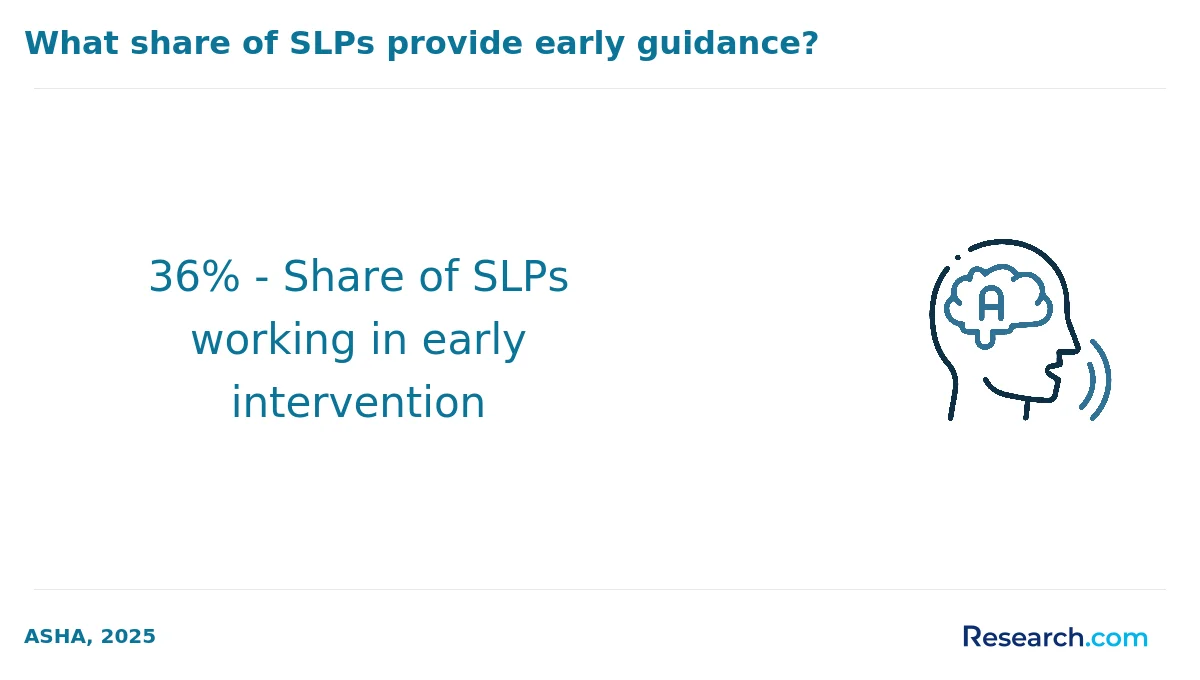
According to recent data from the National Center for Education Statistics, about 36% of undergraduate students transfer schools at least once during their education. That makes transfer policy one of the most important questions to ask before choosing an online program.
Does Accreditation Status Affect Admission Requirements for an Online Communication Disorders Bachelor's Degree?
Accreditation can affect admission requirements, credit transfer, financial aid access, graduate school eligibility, and how employers view a degree. For an online communication disorders bachelor’s degree, institutional accreditation is the first thing to verify.
Institutional accreditation may be regional or national and should be recognized by the Council for Higher Education Accreditation (CHEA) or the U.S. Department of Education. A school’s accreditation status does not guarantee admission, but it helps confirm that the institution meets recognized academic standards.
Programmatic accreditation may also matter in communication disorders-related pathways, especially for students who plan to pursue graduate education, certification, or licensure later. Admission requirements can be stricter at schools that align undergraduate preparation with professional expectations, including prerequisite courses, GPA standards, or field-related coursework.
- Institutional accreditation: Confirms the college or university meets recognized quality standards and can affect federal financial aid eligibility.
- Credit transferability: Credits from regionally accredited schools are generally easier to transfer than credits from unaccredited institutions.
- Graduate school preparation: Accredited undergraduate coursework is often more useful when applying to graduate programs.
- Programmatic expectations: Some communication disorders pathways may have additional prerequisite or academic standards tied to professional preparation.
- Employer and graduate recognition: Degrees from accredited institutions are more widely accepted by employers and graduate schools.
- Risk of unaccredited programs: Students may lose access to federal aid, face rejected transfer credits, or find that the degree does not support future licensing or graduate goals.
- English proficiency and documents: Accredited programs commonly require official transcripts, GPA review, and proof of English proficiency when applicable.
One important signal of accreditation’s value is employer preference: Over 85% of employers prefer candidates with degrees from accredited institutions. Before applying, verify accreditation on the school’s website and through a recognized accreditor database.
What Documents Do You Need to Apply for an Online Communication Disorders Bachelor's Degree Program?
Most online communication disorders bachelor’s degree applications require a standard set of documents. Collecting these early reduces the risk of missed deadlines, incomplete files, or delayed admission decisions.
- Official high school transcript: Required for first-year applicants to verify graduation, coursework, and grades.
- Official college transcripts: Required if you attended any college, even if you did not finish a degree.
- GED documentation: Needed if you are applying with a GED equivalent instead of a high school diploma.
- Government-issued ID: A driver’s license, passport, or other valid ID may be used to confirm identity.
- Application essay or personal statement: Some programs ask you to explain your interest in communication disorders, career goals, and relevant experience.
- Letters of recommendation: Selective programs may request letters from teachers, employers, supervisors, or mentors.
- Résumé or CV: Useful for adult learners, transfer students, and applicants with work, volunteer, or healthcare-related experience.
- Test scores: SAT, ACT, TOEFL, IELTS, Duolingo English Test, CLEP, AP, or other scores may be required depending on your situation.
- International documents: International applicants may need passport information, visa documentation, certified English translations, or credential evaluations.
- Portfolio: Uncommon at the bachelor’s level, but some programs may request examples of relevant work, research, or service experience.
Official documents are usually sent directly from a school, testing agency, or credential service. Unofficial copies may be accepted for preliminary review, but they often cannot be used for final admission or enrollment.
Start gathering materials at least three to six months before your deadline, especially if you need international evaluations, recommendation letters, or transfer-credit reviews. Students considering long-term pathways in related helping professions may also compare future options such as a masters in social work online.
Are There English Language Proficiency Requirements for Non-Native Speakers Applying to an Online Communication Disorders Bachelor's Degree?
Yes. Most accredited U.S. online communication disorders bachelor’s degree programs require non-native English speakers to show English language proficiency. This requirement is especially important in communication disorders because coursework relies heavily on listening, reading, writing, pronunciation, language analysis, and professional communication.
Commonly accepted tests include TOEFL iBT, IELTS Academic, and the Duolingo English Test. Minimum scores vary by institution, so applicants should confirm the exact requirement for each program before applying.
- TOEFL iBT: Undergraduate programs commonly require scores between 61 and 80.
- IELTS Academic: A band score from 6.0 to 6.5 is often the minimum accepted range.
- Duolingo English Test: Many schools now accept it, often with a recommended minimum score near 90.
- Exemptions: Applicants from English-speaking countries or those educated for several years in English-medium schools may qualify for a waiver.
- Conditional admission: Some programs allow students slightly below the minimum score to begin with ESL bridge support before full enrollment.
Do not assume a waiver applies automatically. Ask the admissions office whether your previous schooling, country of education, or prior college credits meet the exemption policy. Also confirm whether language scores must be current, since some institutions limit how old test results can be.
Students comparing online academic routes beyond communication disorders may also review data science degrees to see how language and admission requirements vary across disciplines.
Do Online Communication Disorders Bachelor's Degree Programs Accept CLEP Exams or Prior Learning Credits?
Some online communication disorders bachelor’s degree programs accept CLEP exams or other prior learning credits, but policies differ widely. The College-Level Examination Program (CLEP) allows students to earn college credit by passing standardized subject exams. The American Council on Education (ACE) supports a recommended score of 50 for CLEP credit, and over 2,900 institutions accept these credits.
The key issue is how credits apply. A school may accept CLEP for general education requirements but not for major-specific communication disorders courses. Another school may accept credits only if they match a required course, meet minimum score rules, and fall within transfer-credit limits.
- CLEP exams: Often useful for general education subjects such as composition, math, social science, or humanities.
- DANTES/DSST exams: May provide additional credit options for eligible students, including military-affiliated learners.
- AP or IB credits: High school exam-based credits may reduce introductory course requirements.
- Portfolio evaluation: Some schools award credit for documented college-level learning gained through work or training.
- Professional certifications: Certain credentials may be evaluated for academic credit if they align with college-level outcomes.
- Military training: ACE-reviewed training may be eligible for credit at participating institutions.
Contact the registrar before taking an exam or paying for a prior learning assessment. Ask which exams are accepted, the minimum score required, how credits apply to the degree plan, and whether there is a limit on the number of credits that can be earned this way.
Are There Residency or In-State Tuition Requirements That Affect Enrollment in an Online Communication Disorders Bachelor's Degree?
Residency rules can affect both enrollment eligibility and tuition cost for online communication disorders bachelor’s degree students. Some public universities charge the same online tuition rate regardless of where students live, while others maintain different in-state and out-of-state rates.
Many institutions participate in the State Authorization Reciprocity Agreement (SARA), a multi-state agreement that allows colleges in member states to enroll online students from other member states without seeking separate approval in each state. SARA can reduce administrative barriers, but it does not automatically guarantee in-state tuition.
Before enrolling, confirm whether the program is authorized to serve students in your state and what tuition rate applies to you. This is especially important for students comparing public universities across state lines.
- SARA participation: Helps schools legally enroll online students across participating states with fewer regulatory hurdles.
- In-state tuition: Some schools extend lower rates to online students, but others reserve them for residents only.
- Out-of-state fees: Distance learners may still be charged higher tuition at some institutions.
- Residency documentation: Schools may request a driver’s license, voter registration, tax records, lease, or utility bills to prove residency.
- Program authorization: Even if admission is possible, state authorization rules can affect whether a school can enroll students from your location.
- Budget planning: Confirm tuition, fees, technology charges, and residency rules before accepting admission.
What Graduates Say About Preparing for the Online Communication Disorders Bachelor's Degree Requirements
-
: "
Understanding the admission requirements before I applied made the process much less stressful. I knew which transcripts to request, what GPA information the school needed, and how to avoid last-minute surprises. That preparation helped me start the program with more confidence.
Dorothy
"
-
: "
The transfer-credit review was the most important step for me. Once I knew which credits counted and which requirements I still had to complete, I could plan my schedule and budget realistically. It saved me time, money, and a lot of uncertainty.
Edward
"
-
: "
Balancing work, family, and online classes required a clear plan from day one. Reviewing eligibility rules, credit policies, and prerequisites early helped me stay on track. Finishing the degree gave me more confidence and opened new professional possibilities.
Leonie
"
Other Things You Should Know About Communication Disorders Degrees
In 2027, working professionals enrolling in an online communication disorders bachelor's degree may need to provide proof of employment and may benefit from flexible scheduling options. Some programs could offer credit for relevant work experience, further enhancing accessibility for adult learners.
Completion time varies but most online communication disorders bachelor's degree programs take around four years of full-time study. Part-time students or those transferring credits from previous coursework may take longer. Some institutions offer accelerated options that allow students to finish in three years, especially if prerequisite general education credits are already earned.
Students must have reliable access to a computer capable of running necessary software and stable high-speed internet for streaming lectures and submitting assignments. Schools often require a webcam, microphone, and basic office programs such as word processing and presentation software. Some courses may include specialized communication software to simulate speech and language pathology scenarios.
References
- U.S. Bureau of Labor Statistics - Speech-Language Pathologists https://www.bls.gov/ooh/healthcare/speech-language-pathologists.htm
- ASHA EdFind - Accredited Speech-Language Pathology Programs https://find.asha.org/ed/
- ETS Praxis - Speech-Language Pathology (5331) https://praxis.ets.org/test/speech-language-pathology-5331.html
- Delaware Valley University - Master of Science in Speech-Language Pathology (M.S.) https://delval.edu/programs/graduate-programs/speech-language-pathology
- University of Nebraska at Kearney - Speech-Language Pathology, Master of Science in Education (Online Track) https://www.unk.edu/online/degrees-programs/speech-language-pathology-online.php
- Emerson College - Master of Science (M.S.) in Communication Disorders (Speech@Emerson, online) https://speech.emerson.edu/
- Idaho State University - Master of Science in Speech-Language Pathology (Online/Distance Education) https://www.isu.edu/slp/programs-offered/slp-graduate-program/
- New York University - Online MS, Communicative Sciences and Disorders (Speech@NYU) https://steinhardt.nyu.edu/degree/online-ms-communicative-sciences-and-disorders