
2027 Best Online Colleges for Working Adults

Co-Founder and Chief Data Scientist
Going back to college while working full time is not just an academic decision. It affects your schedule, budget, family time, career plans, and energy level. The right online college can make that trade-off manageable; the wrong one can leave you with debt, credits that do not transfer, or a degree that does not support your goals.
This guide is for working adults comparing online colleges, accelerated programs, degree-completion options, scholarships, and flexible learning formats. You will learn how online colleges support adult learners, what to check before enrolling, how accreditation affects financial aid and employer recognition, which fast online degree fields are commonly available, and how to evaluate whether the investment is worth it for your situation.
Quick Answer: What Should Working Adults Look for in an Online College?
The best online colleges for working adults are accredited, flexible, transparent about cost, generous with transfer credit, and strong in student support. Look for asynchronous or evening courses, part-time enrollment, accelerated terms, credit for prior learning, career services, tutoring, technical help, and clear policies for financial aid and graduation requirements.
- Scholarships for working adults studying online can range from $1,000 to $5,000.
- Online colleges may cost less than campus-based programs. Public university online degrees average $54,183, while private online degrees average $60,593.
- Most students need a reliable computer, stable internet, Adobe Reader/Acrobat, Microsoft Word 2003 or newer, and basic audio/video equipment.
- Asynchronous classes are often the best fit for adults who cannot attend live lectures at fixed times.
- Accelerated programs can shorten completion time, but they usually require stronger weekly time management.
Affordable Quick Online Degree Programs With High Acceptance Rates in 2027
Working adults often search for programs that are practical, available online, and fast enough to support a career move without putting life on hold. The degree areas below are common options for adults who want a flexible bachelor’s pathway and a clearer connection to employment, promotion, or graduate study.
1. Business Administration
Business administration is a broad degree for students who want transferable skills in management, accounting, finance, marketing, human resources, and operations. It can be useful for adults already working in office, retail, logistics, nonprofit, healthcare, or service environments who want to move into supervisory or administrative roles. The biggest advantage is versatility; the trade-off is that students should choose electives, internships, projects, or certificates that point toward a specific career direction.
2. Psychology
A psychology degree introduces students to human behavior, cognition, emotion, development, research methods, mental health concepts, and social interaction. It can support entry-level roles in human resources, case management, social services, healthcare support, and research assistance. Adults considering counseling, clinical psychology, or therapy careers should understand that a bachelor’s degree is usually only the first step; many licensed roles require graduate education and supervised experience.
3. Counseling
Counseling-related undergraduate programs help students understand communication, helping skills, ethics, human development, crisis response, and mental health foundations. This path may fit adults drawn to human services, community support, employee assistance, or nonprofit work. Before enrolling, check whether the program leads only to general helping roles or whether it is designed as preparation for a graduate counseling program, since licensure requirements vary by state and profession.
4. Computer Science
Computer science programs focus on programming, algorithms, data structures, software development, computing systems, databases, cybersecurity concepts, and emerging areas such as AI and data analysis. This degree can be a strong choice for adults seeking technical careers, but it is not the easiest path if you dislike math, coding practice, or long problem-solving sessions. Working learners should ask whether the program includes hands-on projects, current programming tools, career support, and enough flexibility for coding-intensive coursework.
5. Healthcare Administration
Healthcare administration prepares students to understand healthcare policy, finance, operations, compliance, human resources, and organizational leadership. It may fit adults already working in clinics, hospitals, insurance, medical billing, long-term care, or public health settings who want to move into administrative roles. This degree is different from clinical healthcare training; it is focused on managing systems, people, budgets, and services rather than delivering direct patient care.
6. Nursing
A bachelor’s degree in nursing can prepare students for registered nursing practice when the program includes the required clinical training and meets licensure expectations. Nursing is a high-responsibility field, so working adults should not choose a program based on speed alone. Confirm clinical placement requirements, state board approval, accreditation, exam preparation, and whether the format is fully online, hybrid, or intended for already licensed registered nurses completing a BSN.
7. Social Work
Social work programs cover human behavior, social welfare policy, practice methods, ethics, advocacy, and supervised field experience. This degree can lead to roles in community agencies, schools, healthcare organizations, and social service programs. Adults who want licensed clinical social work should plan carefully, because clinical roles commonly require graduate education, state licensure, and supervised practice after the bachelor’s degree.
8. Accounting
Accounting degrees train students in financial reporting, taxation, auditing, cost accounting, business law, and financial systems. This path can be a practical option for adults who like detail-oriented work and want roles in public accounting, corporate accounting, nonprofit finance, government, or forensic accounting. If your goal is CPA eligibility, check your state’s credit-hour and course requirements before choosing a program.
9. Finance
A finance degree develops skills in financial analysis, investment concepts, corporate finance, risk management, budgeting, and decision-making. It may suit adults interested in banking, financial planning, corporate finance, insurance, or investment-related work. Because finance careers vary widely, compare programs based on analytics coursework, internship options, Excel and data tools, and whether the curriculum supports your target role.
10. Marketing
Marketing programs usually include consumer behavior, marketing strategy, brand management, digital marketing, market research, analytics, and social media strategy. This field can be attractive for adults with communication, sales, design, or business experience. To make the degree more career-focused, look for portfolio projects, analytics training, campaign work, and opportunities to build evidence of practical skills.
How to Use This Guide
Use the table of contents to move directly to the decision point that matters most to you: cost, flexibility, accreditation, employer recognition, fast degree options, or student support. If you are still comparing majors, start with the program section above. If you already know your field, focus on accreditation, transfer credits, tuition, and career outcomes.
- 2027 best online colleges for working adults
- Scholarships for working adults in online colleges
- How online colleges fit work schedules
- Why accreditation matters
- Whether employers respect online degrees
- Online master’s and doctoral options for working adults
- How to stay motivated in an online degree
- Technical requirements for online college
- Open admissions options for working adults
- Graduate success rates and what they mean
- Long-term career benefits of an online degree
- Online accelerated BSN programs for working adults
- Online doctoral degrees for working professionals
- Cost of online college for adults
- Common challenges in online learning
- Financial value of online bachelor’s degrees
- Fast-track degrees in high-demand fields
- Networking opportunities in online colleges
- Fast bachelor’s degree options for working adults
- How to choose the right online college
- Student support for online adult learners
- Online colleges with no application fee
- Final checklist before applying
2027 Best Online Colleges for Working Adults
The colleges below are presented as options for adults who need online access, flexible formats, and recognized accreditation. Many schools report graduates earning average starting salaries of $45,000 to $60,000 annually, which can help students evaluate the value of accredited online degree programs. However, salary outcomes are never guaranteed. Your results depend on your field, location, experience, prior credits, employer needs, and how well the program fits your career plan.
How do we rank schools?
Research.com rankings are developed through research and data analysis by our team. You can review the full process in the methodology section. Ranking inputs include information from:
- IPEDS database
- Peterson’s database
- Distance Learning Licensed Data Set, College Scorecard database
- National Center for Education Statistics.
What to Compare Before Choosing a Ranked School
| Factor | Why it matters for working adults | Question to ask |
| Accreditation | It affects financial aid eligibility, credit transfer, graduate school admission, and employer confidence. | Is the institution accredited by a recognized accreditor, and does my program need separate programmatic accreditation? |
| Schedule format | Adults with jobs often need asynchronous classes, part-time pacing, or evening options. | Are classes live, self-paced, asynchronous, accelerated, or a mix? |
| Transfer credit | Prior college credits, military training, or professional learning may shorten completion time. | How many credits can I transfer, and when will I receive an official transfer evaluation? |
| Total cost | Tuition is only one part of the price; fees, books, technology, and lost work time also matter. | What is the estimated total cost to finish my specific degree plan? |
| Student support | Adult learners often need advising, tutoring, tech support, and career services outside business hours. | Can I access support in the evenings or weekends? |
1. Union Institute & University
Union Institute & University, located in Cincinnati, OH, offers 28 programs, and 79% are available online. Adult learners can consider 14 online bachelor’s programs and 4 online master’s programs. Nearly 100% of students receive financial aid, the student-to-teacher ratio is 8-to-1, and the reported graduation rate is 58%.
Tuition fees:
- Undergrad In-State: $13,080
- Undergrad Out-of-State: $13,080
- Graduate In-State: $14,652
- Graduate Out-of-State: $14,652
Accreditation: Higher Learning Commission
2. Charter Oak State College
Charter Oak State College in New Britain, CT, provides 29 programs, including ten online bachelor’s programs and one online master’s program. This public, 4-year college has a 14-to-1 student-teacher ratio, and 100% of students receive some type of financial aid. Its retention rate is 50%.
Tuition fees:
- Undergrad In-State: $7,656
- Undergrad Out-of-State: $10,056
- Graduate In-State: $9,288
- Graduate Out-of-State: $9,720
Accreditation: New England Commission on Higher Education
3. Excelsior College
Excelsior College in Albany, NY, offers 101 programs, including 54 online bachelor’s programs and 27 online master’s programs. This private, not-for-profit institution serves 21,974 students and is positioned as a flexible option for adults comparing return on investment and degree-completion pathways.
Tuition fees:
- Undergraduate Half-time (In-State): $6,120
- Undergraduate Half-time (Out-of-State): $6,120
- Undergraduate Full-time (In-State): $12,240
- Undergraduate Full-time (Out-of-State): $12,240
- Graduate (Non-nursing programs): $715 per credit
- Graduate (Nursing programs): $755 per credit
Accreditation: Middle States Commission on Higher Education
4. Bethel University
Bethel University in Saint Paul, MN, lists 96 programs, with 38% offered online. The private, not-for-profit university provides 8 online bachelor’s programs and 12 online master’s programs. It reports an 11-to-1 student-teacher ratio, 100% of students receiving financial aid, a 73% graduation rate, and an 87% acceptance rate.
Tuition fees:
- Undergrad In-State: $38,300
- Undergrad Out-of-State: $38,300
- Graduate In-State: $11,700
- Graduate Out-of-State: $11,700
Accreditation: Higher Learning Commission
5. Thomas Edison State University
Thomas Edison State University in Trenton, NJ, offers 69 programs, all of them online. This public institution includes 20 online bachelor’s programs and nine online master’s programs, which can help adults avoid relocation and commuting costs while completing a degree.
Tuition fees:
- Undergrad In-State: $7,926
- Undergrad Out-of-State: $9,856
- Graduate In-State: $12,024
- Graduate Out-of-State: $12,024
Accreditation: Middle States Commission on Higher Education
6. Regis University
Regis University in Denver, CO, offers 157 programs, and 70% are available online. The private, not-for-profit university reports a 12-to-1 student-teacher ratio, a 64% graduation rate, a 78% acceptance rate, and 99% of students receiving financial aid.
Tuition fees:
- Undergrad In-State: $37,830
- Undergrad Out-of-State: $37,830
- Graduate In-State: $14,441
- Graduate Out-of-State: $14,441
Accreditation: Higher Learning Commission
7. National University
National University in San Diego, CA, provides 53 programs across multiple fields. This private, 4-year institution offers three online bachelor’s programs and 26 online master’s programs, giving working adults several graduate-level options in addition to undergraduate pathways.
Tuition fees:
- Undergrad In-State: $11,064
- Undergrad Out-of-State: $11,064
- Graduate In-State: $16,983
- Graduate Out-of-State: $16,983
Accreditation: Western Association of Schools and Colleges Senior Colleges and University Commission
8. Maryville University of Saint Louis
Maryville University of Saint Louis in Saint Louis, MO, offers 101 programs, with 51% available online. The private, not-for-profit institution reports a 14-to-1 student-teacher ratio, an 83% acceptance rate, 99% of students receiving financial aid, and a 71% graduation rate.
Tuition fees:
- Undergrad In-State: $26,070
- Undergrad Out-of-State: $26,070
- Graduate In-State: $14,346
- Graduate Out-of-State: $14,346
Accreditation: Higher Learning Commission
9. Northeastern University Lifelong Learning Network
Northeastern University Lifelong Learning Network in Boston, MA, offers 88 programs, and 50% are online. The not-for-profit institution includes 14 online bachelor’s degree options for undergraduates and 26 online master’s options for graduate students.
Tuition fees:
- Undergrad In-State: $29,298
- Undergrad Out-of-State: $29,298
- Graduate In-State: $24,933
- Graduate Out-of-State: $24,933
Accreditation: New England Commission on Higher Education
10. Endicott College
Endicott College in Beverly, MA, offers 70 programs, with 30% available online. The private college lists 5 online bachelor’s programs and 8 online master’s programs. It reports a 69% acceptance rate, 95% of students receiving financial aid, and a 74% graduation rate.
Tuition fees:
- Undergrad In-State: $33,304
- Undergrad Out-of-State: $33,304
- Graduate In-State: $12,555
- Graduate Out-of-State: $12,555
Accreditation: New England Commission on Higher Education
What Online Graduates Often Value Most
Adult learners commonly point to three benefits when describing a positive online college experience: control over their schedule, the ability to use new skills at work quickly, and access to instructors or peers without relocating. These benefits are most likely when the program is intentionally designed for working adults rather than simply placing campus courses online.
- “Online coursework helped me keep my job and manage family obligations while finishing my degree. The flexible schedule made it possible to study when I had time, and that helped me qualify for a promotion after graduation.” Allie
- “The program changed how I approached my work. I could apply what I learned immediately, and the combination of instructor support and at-home study made the experience realistic for my schedule.” John
- “Earning my degree online gave me the credential and confidence to pursue a role I had been considering for years. Group projects, online discussions, and virtual collaboration helped me feel connected throughout the program.” Jordan
Are there scholarships available for working adults attending online colleges?
Yes. Working adults can apply for scholarships designed for returning students, parents, low-income learners, women, and career changers. Scholarship awards may not cover the full cost of a degree, but even smaller awards can reduce borrowing, pay for books, or cover technology expenses.
Examples include:
- Return2College Scholarship: Offers $1,000 for adult students returning to college.
- Jeannette Rankin Women’s Scholarship: Provides around $2,000 worth of funds to low-income women over 35 pursuing higher education.
- Patsy Takemoto Mink Education Foundation Awards: Offers $5,000 to low-income mothers for education and training.
Also ask each school about institutional scholarships, employer tuition reimbursement, military education benefits, payment plans, and grants. Apply early, because many awards have deadlines well before the term begins.
How do online colleges accommodate the busy schedules of working adults?
Online colleges support working adults by offering formats that reduce the need to be on campus at specific times. Programs similar to those in flexible business fields, including some of the easiest business majors, often provide multiple pacing options so students can continue working while progressing toward a degree.
| Format | Best for | Potential drawback |
| Asynchronous courses | Students with rotating shifts, caregiving duties, or unpredictable work hours. | You must manage deadlines without live class structure. |
| Accelerated terms | Adults who want faster progress and can handle intensive weekly coursework. | Falling behind can be difficult because courses move quickly. |
| Part-time enrollment | Learners balancing demanding jobs, parenting, or health responsibilities. | Completion may take longer. |
| Mobile access | Students who read, watch lectures, or check assignments during breaks or commutes. | Major assignments are still easier on a full computer. |
If speed matters, compare accelerated online degree programs for working adults. If stability matters more, a part-time plan may be better than an accelerated schedule.
Why is accreditation important for online colleges?
Accreditation is one of the first things working adults should verify before applying to online universities. It indicates that a school or program has been reviewed against educational standards. It can affect federal and state financial aid, transfer credit, graduate school eligibility, licensure preparation, and how employers evaluate your degree.
Accreditation is especially important in fields with professional requirements, such as nursing, counseling, social work, accounting, and education. Institutional accreditation is not always enough; some careers require programmatic accreditation or state approval. Before enrolling, ask whether the exact online program you are considering meets requirements in your state.
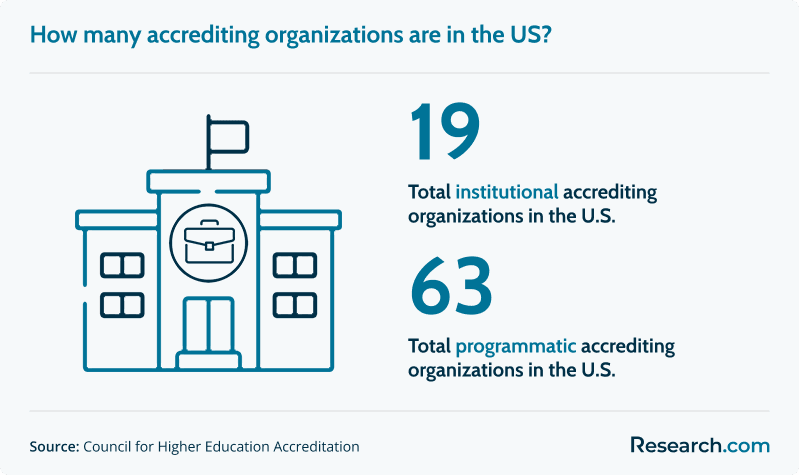
According to the Council for Higher Education Accreditation (CHEA), there are 19 institutional and 63 programmatic accrediting organizations in the U.S. that help maintain academic standards. A report from Inside Higher Ed also noted efforts to strengthen student-outcome benchmarks so that programs better demonstrate preparation for employment and further education.
Are degrees from online colleges for working adults respected by employers?
Yes, employers can respect online degrees, especially when they come from accredited institutions with recognizable academic standards. The format of the degree matters less when the school is credible, the program is relevant, and the graduate can demonstrate useful skills.
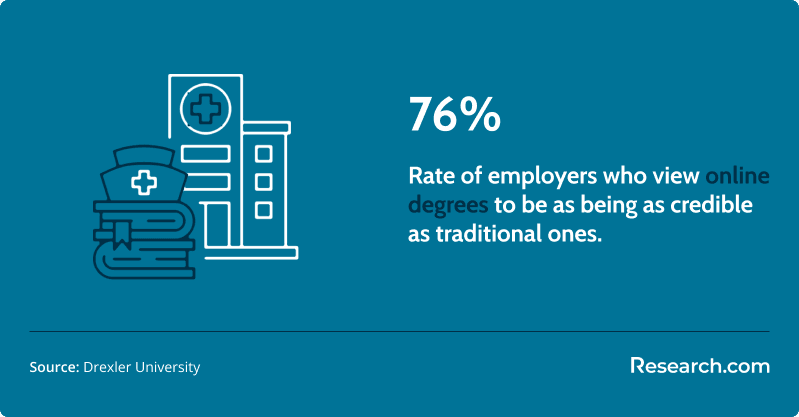
Drexel University reported that 76% of academic leaders consider accredited online degrees as valuable as traditional degrees, and the perception rises to 89% when the online college also has a traditional campus. Employer views can still vary by industry. The Online Journal of Distance Learning Administration (OJDLA) found that recruiters viewed online programs favorably for technology and critical thinking skill development, while nursing recruiters expressed concerns about hands-on practice, making hybrid formats more advantageous in that field.
To strengthen employer confidence, choose a reputable accredited school, build a portfolio or project record when relevant, complete internships or fieldwork when possible, and be ready to explain how the online format required discipline, communication, and independent problem-solving.
Can working adults pursue advanced degrees through online colleges?
Yes. Many working adults complete master’s and doctoral programs online while continuing to work. These programs can be useful for leadership roles, career changes, specialized practice, salary advancement, or academic and research goals. The key is to confirm that the program format matches your schedule and that the credential is valued in your field.
Some institutions offer accelerated graduate pathways, including a one year online masters option. These programs can be efficient, but they are demanding. Adults should review weekly workload expectations, capstone or practicum requirements, faculty access, and whether courses are offered continuously enough to finish on time.
If an advanced degree is not the right fit, shorter career-focused paths may be worth comparing. For example, becoming a physical therapy assistant has an annual rate of $83,170, though the amount can vary by state. You can compare the PTA salary by state before deciding whether that path aligns with your goals.
How can working adults stay motivated while pursuing an online degree?
Motivation is easier to maintain when your program, schedule, and support system are realistic. Working adults do not usually fail because they lack ambition; they struggle when coursework, job responsibilities, and personal obligations collide without a plan.
- Set a career-based goal: Define what the degree should help you do, such as qualify for a promotion, change fields, meet licensure prerequisites, or complete a long-delayed credential.
- Use weekly blocks: Schedule study time the same way you schedule work shifts or appointments. Treat it as nonnegotiable when possible.
- Track short milestones: Monitor assignments, exams, course completions, credit totals, and registration deadlines.
- Stay visible in class: Participate in discussions, message instructors early, and connect with classmates before you need help.
- Protect your study environment: Keep one consistent place for coursework, even if it is a small desk or quiet corner.
- Plan rewards: Recognize completed courses and difficult assignments so the degree does not feel like an endless obligation.
- Ask for help early: Contact advising, tutoring, financial aid, or technical support before a small problem becomes a withdrawal.
What kind of technical requirements are needed for online colleges?
Most online colleges require basic technology that allows students to access learning platforms, write papers, attend video sessions, complete quizzes, and upload assignments. Requirements vary by program, but students commonly need:
- Computer: Less than 5 years old
- RAM and Processor: At least 1GB RAM and a 2 GHz processor
- Internet: Reliable connection with at least 512 kbps speed
- Software: Adobe Reader/Acrobat, Microsoft Word 2003 or newer
- Audio/Video: Sound card, speakers, camera, and microphone
Technical demands can be higher in some fields. An online computer science degree may require stronger hardware and specialized development tools, while many online business degree programs rely mainly on standard office software, spreadsheets, web conferencing, and learning management systems.
Are there online colleges with open admissions policies for working adults?
Yes. Some online colleges use open admissions or less selective admissions policies to help adults begin or return to college without the same entry barriers found at more selective institutions. These schools can be helpful for learners with older transcripts, interrupted education histories, or career experience that does not show up in traditional admissions metrics.
Examples include:
- American Public University: Offers programs in areas such as business, healthcare, and public service.
- University of Maryland Global Campus: Known for online programs in technology, business, and cybersecurity.
- Western Governors University: Uses competency-based education in fields such as teaching, IT, and healthcare.
Open admissions does not mean every program is easy or that every student will be admitted to selective professional tracks. Nursing, teaching, counseling, and other regulated fields may have separate requirements. Adults who want a skills-based model can also review list of competency-based colleges, which may allow experienced learners to move faster by demonstrating mastery.
What are the success rates for graduates of online college for adults worth it?
Graduation outcomes vary significantly by institution type, student support, admissions model, and learner circumstances. Public or private nonprofit university students generally have higher six-year graduation rates, ranging from 42.9% to 57.1%. For-profit institutions show lower rates, ranging from 14.2% to 28.1%.
Research indicates that students in exclusively online programs at selective four-year institutions are more likely to finish than students at for-profit schools. Strong online programs improve completion by investing in student engagement, faculty interaction, advising, tutoring, and proactive support. For working adults, these services are not extras; they can be the difference between finishing and stopping out.
What are the long-term career benefits of earning an online degree for working adults?
An online degree can support long-term career growth when it fills a real credential gap, builds relevant skills, and comes from an accredited institution. Benefits may include eligibility for promotions, stronger job security, access to roles that require a bachelor’s or graduate degree, and more confidence when changing careers.
Quality programs from accredited online schools often include career services, resume support, employer connections, internship guidance, and curricula aligned with professional expectations. Still, the degree should be evaluated against your target job. A low-cost program with weak career alignment may not be a better investment than a more expensive program with strong outcomes in your field.
How can online accelerated BSN programs benefit working adults?
Online accelerated BSN programs can help some working adults move into nursing more efficiently, especially if they already have prior college credit or healthcare experience. These programs typically compress nursing theory and practice into a shorter, more intensive format and may combine online coursework with in-person clinical requirements.
Because nursing requires hands-on preparation, adults should verify clinical placements, state approval, program accreditation, exam preparation, and schedule expectations before applying. If you are comparing options, review online accelerated BSN programs and confirm whether each program is suitable for your state and career goals.
Is pursuing a doctoral degree online a practical option for working adults?
An online doctoral degree can be practical for experienced professionals who need advanced research, leadership, or academic preparation but cannot pause their careers. The best fit is usually a student with a clear research interest, strong time management, and a realistic understanding of dissertation, capstone, practicum, or residency expectations.
Before applying, compare faculty mentoring, research support, cohort structure, graduation requirements, accreditation, and whether the degree is respected in your professional field. Exploring a doctoral degree online can help you identify shorter formats, but speed should not be the only factor in a doctoral decision.
How much does it cost to attend online college for adults worth it?
Online college is often less expensive than attending in person, especially when students avoid relocation, commuting, campus housing, and some meal costs. According to the Education Data Initiative, average tuition for an online degree at a public university is around $54,183, compared with $85,348 for the same degree in person. At private institutions, an online degree averages $60,593, while an in-person degree can cost up to $185,252.
Tuition is only part of the calculation. Working adults should also consider books, technology, internet, electricity, online learning fees, childcare, reduced work hours, and the value of finishing sooner through transfer credits or accelerated coursework.
Cost Comparison of Online and Traditional Education
| Cost Item | Online Education | Traditional Education |
| Tuition (Public Universities) | $54,183 | $85,348 |
| Tuition (Private Institutions) | $60,593 | $185,252 |
| Transportation | N/A | $1,360 per year |
| Campus Meal Plan | N/A | $600 more per year |
| On-campus Housing | N/A | $1,513 per month |
| Books | $1,295 per year | $1,295 per year |
| Internet | $50 per month | Included |
| Electricity and Heat | $175 per month | Included |
| Online Learning Fee | $25-$100 per semester | included |
Source: Education Data Initiative
What challenges do working adults face in online learning?
Online learning can be flexible, but it is not effortless. Working adults often struggle with time management, isolation, competing deadlines, family obligations, digital fatigue, and adapting to unfamiliar learning platforms. Home can also be a distracting study environment, especially for students with caregiving responsibilities.
Good programs address these challenges through structured course design, accessible faculty, virtual peer groups, tutoring, advising, mental health resources, and clear assignment calendars. If you are trying to complete the fastest degree to get that pays well, support services matter even more because accelerated programs leave less room for missed deadlines.
Common Mistakes Working Adults Should Avoid
| Mistake | Why it can hurt you | Better approach |
| Choosing based only on low tuition | A cheap program can become expensive if credits do not transfer or support is weak. | Compare total cost to finish, not just cost per credit. |
| Ignoring accreditation | It can affect financial aid, licensure, graduate school, and employer recognition. | Verify institutional and programmatic accreditation before applying. |
| Assuming online means self-paced | Many online courses still have weekly deadlines and required participation. | Ask whether courses are asynchronous, synchronous, competency-based, or fixed-term. |
| Overloading the first term | Taking too many credits while working can lead to burnout or withdrawal. | Start with a manageable course load and increase only if your schedule allows. |
| Skipping career alignment | A degree that does not match your target role may have limited value. | Review job postings and program outcomes before enrolling. |
| Assuming licensure transfers across states | Education, counseling, nursing, and social work rules can vary by state. | Confirm state-specific requirements in writing. |
Are online bachelor's degrees a smart financial investment for working adults?
An online bachelor’s degree can be a smart investment when it helps you qualify for roles you could not access otherwise, increases promotion potential, or supports a career shift into a more stable field. It is less likely to pay off if you choose a program without checking accreditation, transfer credits, total cost, or labor-market fit.
Adults seeking a lower-cost pathway can compare the cheapest online bachelor options, but affordability should be weighed alongside program quality, employer relevance, career services, and completion support. The strongest financial decision is usually the program that helps you finish with the least unnecessary debt while preparing you for a realistic next step.
Which fast track degrees align with high-demand career sectors?
Fast-track degrees are designed to move students through coursework more quickly, often through shorter terms, transfer-credit-friendly policies, or competency-based pacing. They can be useful for working adults who already have college credits, industry experience, or a clear career target.
Fields such as technology, healthcare administration, nursing pathways, accounting, finance, business, and marketing often offer accelerated online options. Before choosing, compare curriculum relevance, hands-on learning, employer expectations, total cost, and the likely value of the credential in your region. Reviewing fast track degrees can help you identify programs built around speed without ignoring career fit.
How can online colleges help working adults build their professional networks?
Networking is possible in online college, but it requires intentional participation. The best online programs create structured opportunities for students to interact with instructors, peers, alumni, and employers rather than leaving students isolated behind a screen.
- Virtual networking events: Webinars, alumni panels, employer sessions, and online meetups can connect students with professionals in their field.
- Mentorship programs: Some schools match students with faculty, alumni, or industry mentors who can provide career guidance.
- Discussion forums and group projects: Class collaboration can help adults meet peers with similar goals and professional backgrounds.
- Career services: Online students may receive help with resumes, interviews, internships, job searches, and employer events.
- Alumni networks: A strong alumni base can be valuable for informational interviews, referrals, and career exploration.
What are the fastest bachelor's degree options for working adults?
The fastest bachelor’s degree for a working adult is usually not the same for every student. Your speed depends on transfer credits, prior learning credit, course availability, work schedule, program structure, and how many credits you can take each term without burning out.
Popular Fast-Track Bachelor’s Options
- Accelerated online programs: Some colleges use shorter terms, such as 5-8 weeks per class instead of traditional 16-week semesters. These may appeal to students searching for the fastest bachelor's degree.
- Credit for prior learning: Schools may award credit for work experience, military training, certifications, exams, or previous coursework.
- Degree completion programs: These are designed for students who already have college credits and need upper-division courses to finish.
- Competency-based education: Students move forward by demonstrating mastery, which can benefit experienced and highly self-directed learners.
- Dual credit programs: Some pathways allow students to work toward bachelor’s and master’s requirements in an integrated sequence.
What should you consider when choosing the right online college for working adults?
Choosing an online college should begin with your goal, not the school’s marketing. Identify the role, credential, salary range, licensure requirement, or promotion path you want, then work backward to find programs that meet those needs at a cost and pace you can sustain.
- Confirm accreditation: Make sure the institution is accredited by a recognized agency. If affordability is a priority, compare cheap accredited online colleges rather than choosing an unverified low-cost option.
- Evaluate flexibility: Check whether courses are asynchronous, synchronous, accelerated, part-time, competency-based, or cohort-based.
- Request a transfer evaluation: Do not rely on informal estimates. Ask how many credits apply to your exact degree.
- Compare total cost: Include tuition, fees, books, technology, proctoring, travel for residencies, and time away from work.
- Review support services: Look for advising, tutoring, writing help, career counseling, technical support, and library access.
- Check licensure rules: For nursing, teaching, counseling, social work, and similar fields, confirm state requirements before enrolling.
- Look beyond rankings: Rankings can narrow your list, but your final choice should fit your schedule, budget, field, and completion plan.
Questions to Ask an Online College Before Applying
| Question | Why it matters |
| How many of my prior credits will count toward this degree? | Transfer credit can significantly reduce time and cost. |
| What is the full estimated cost to graduate? | Tuition alone may not reflect fees, books, technology, or residency costs. |
| Are courses asynchronous, live, or both? | Your work schedule may not allow fixed class meeting times. |
| Does the program meet licensure or certification requirements in my state? | Some online programs do not meet every state’s professional requirements. |
| What support is available after business hours? | Working adults often study at night or on weekends. |
| What happens if I need to stop out for a term? | Leave policies affect financial aid, billing, course sequencing, and graduation timing. |
How do online colleges deliver comprehensive student support for working adults?
Strong online colleges support adult learners through more than basic advising. They may provide technical assistance, tutoring, writing centers, library access, career coaching, degree planning, mentoring, mental health resources, and proactive outreach when students fall behind.
Support is especially important in accelerated programs such as a fast track bachelor degree online, where short terms can make small delays costly. Adults should ask whether tutoring, advising, and technical help are available during the hours they actually study.
Are there online colleges that waive application fees for working adults?
Yes. Some online colleges waive application fees, which can help working adults apply to multiple schools without increasing upfront costs. This can be useful when comparing transfer-credit evaluations, financial aid packages, and program formats before committing.
No-application-fee policies can reduce one barrier to entry, but they should not be the main reason to choose a school. Still check accreditation, total cost, program quality, support services, and whether the degree aligns with your career plan. A list of online colleges no application fee can help you compare options with fewer initial costs.
Applying to more than one school can also help you compare official credit-transfer decisions. For many working adults, the school that accepts the most relevant credits may be more affordable than the school with the lowest advertised tuition.
Final Checklist Before Applying to an Online College
- Verify institutional accreditation and any required programmatic accreditation.
- Request an official transfer-credit review before assuming how long the degree will take.
- Compare total estimated cost, not just tuition per credit.
- Confirm whether courses are asynchronous, live, accelerated, part-time, or competency-based.
- Ask whether the program meets licensure requirements in your state, if applicable.
- Review graduation rates, retention, student support, and career services.
- Check technology requirements before classes begin.
- Apply for scholarships, grants, employer tuition benefits, and financial aid early.
- Choose a first-term course load that fits your work and family schedule.
- Make sure the degree clearly supports your next career step.
Key Insights
- The best online college for a working adult is not simply the fastest or cheapest option. It is the accredited program you can finish, afford, and use for a real career goal.
- Accreditation should be verified before applying, especially for fields tied to licensure, certification, graduate school, or employer requirements.
- Asynchronous, part-time, accelerated, and competency-based formats serve different students. Choose the format that matches your schedule and discipline level.
- Online degrees can be respected by employers when they come from credible institutions and are backed by relevant skills, projects, clinical work, internships, or professional experience.
- Cost comparisons should include tuition, fees, books, internet, technology, lost work time, and transfer-credit policies.
- Working adults should prioritize schools with strong advising, tutoring, technical support, career services, and clear communication outside standard business hours.
- Fast online degrees are useful only when speed does not compromise accreditation, licensure preparation, learning quality, or your ability to keep up with coursework.
References:
- Cote, C. (2023, April 13). 4 reasons online classes can benefit working adults. Business Insights Blog.
- Czeisler, M. É., Lane, R. I., Petrosky, E., Wiley, J. F., Christensen, A., Njai, R., Weaver, M. D., Robbins, R., Facer-Childs, E. R., Barger, L. K., Czeisler, C. A., Howard, M. E., & Rajaratnam, S. M. (2020). Mental health, substance use, and suicidal ideation during the COVID-19 pandemic — United States, June 24–30, 2020. Morbidity and Mortality Weekly Report, 69(32), 1049–1057.
- Drexel University Online. (2024). Online Degree vs On-Campus Degrees.
- Firsthand advice for taking online classes while working full time. (2024). Www.umassglobal.edu; Brandman University.
- Garrett, J. (2018, February 22). Ensuring online course quality requires constant vigilance. Faculty Focus | Higher Ed Teaching & Learning.
- Hanson, M. (2023, August 23). Cost of online education vs. traditional education [2023]: Comparison. Education Data Initiative.
- Lederman, D. (2022, July 6). What have we learned about online learning? Inside Higher Ed | Higher Education News, Events and Jobs.
- Mental health implications of virtual learning on student engagement - IDRA. (2021, August 30). IDRA.
- Mowreader, A. (2024, February 27). Best practices in online course design for college students. Inside Higher Ed | Higher Education News, Events and Jobs.
- National Center for Education Statistics. (n.d.). Fast facts: Distance learning (79).
- National Center for Education Statistics. (n.d.-b). Fast facts: Distance learning (80).
- Online versus face-to-face nursing degrees: A study of recruiters’ perceptions - OJDLA. (n.d.). OJDLA.
- Ortagus, J. C., Hughes, R., & Allchin, H. (n.d.). The role and influence of exclusively online degree programs in higher education. EdWorkingPapers.
- Sharp, G. (2023, August 30). Addressing the mental health and wellness needs of online college students. TimelyCare.
- Tips and technical requirements for online courses - UNC extended campus. (n.d.). Tips to succeed in online courses.
Other Things You Should Know About Online Colleges for Working Adults
Most online colleges require a reliable computer, a webcam, a microphone, and high-speed internet, usually at least 10 Mbps download and 5 Mbps upload. Many also require current versions of Chrome, Edge, or Safari, plus access to a learning management system such as Canvas or Blackboard.
In 2027, working adults should expect to have access to a reliable computer, high-speed internet, and familiarity with platforms like Zoom and Blackboard. Some programs may require specific software, such as Microsoft Office or Adobe Creative Suite, to complete assignments effectively.


