
2027 Average Physical Therapist Assistant Salary by State

Co-Founder and Chief Data Scientist
Choosing a physical therapist assistant career is not just a question of whether you like rehabilitation work. It is also a question of pay, state licensing, program cost, job availability, and whether the work fits your physical and emotional capacity. PTA salaries vary widely by state, employer, experience level, and care setting, so the same credential can lead to very different financial outcomes depending on where you live and work.
This guide explains how much physical therapist assistants make, where employment is strongest, which states report higher average pay, what affects salary growth, and how to evaluate PTA education options. It is designed for prospective students comparing healthcare careers, current PTAs planning a move or specialization, and career changers who want a practical view of the field before committing to a program.
Quick Answer: Is Becoming a Physical Therapist Assistant a Good Career in 2026?
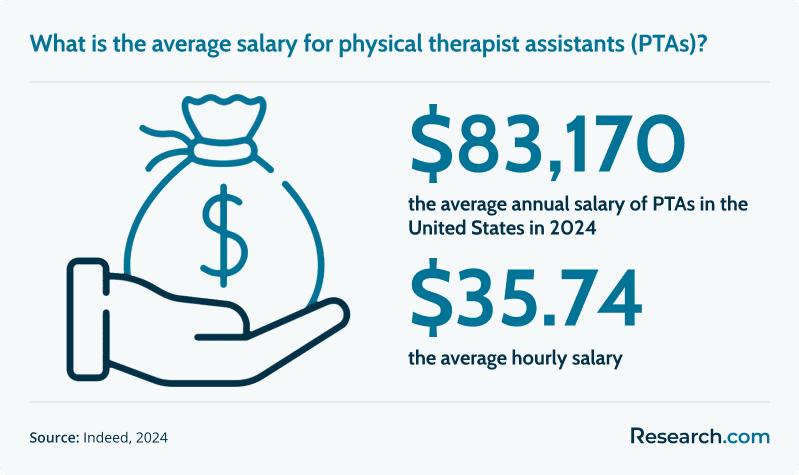
Becoming a physical therapist assistant can be a strong healthcare career choice for people who want direct patient care, a faster education path than becoming a physical therapist, and solid employment demand. In 2024, the average annual salary for physical therapist assistants in the United States is $83,170, with an average hourly wage of $35.74. Job growth is projected at 26%, compared with 3% for all occupations, making PTA one of the more promising allied health paths for students who want a hands-on role in rehabilitation.
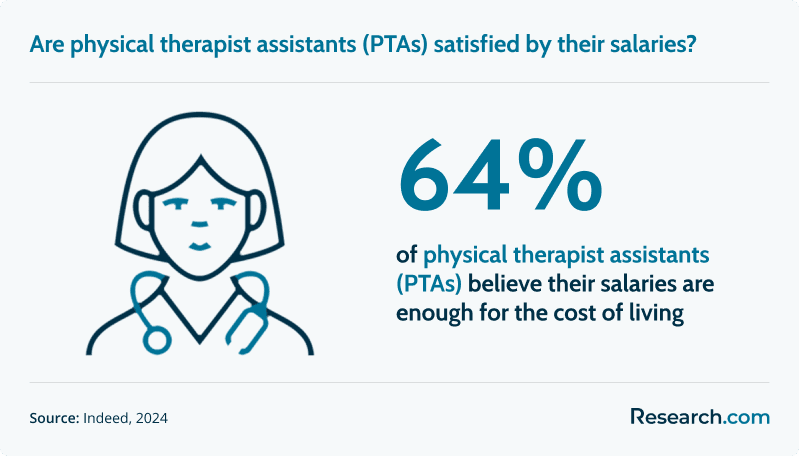
The decision still depends on location and cost. Nevada, California, Texas, Georgia, and Massachusetts report some of the higher average salaries in the state data below, while Texas, Florida, and California have the highest employment levels. Around 64% of PTAs believe their salaries are enough to cover the cost of living, but affordability can look very different in Dallas, rural Alabama, Miami, or Los Angeles.
Fast Facts About Physical Therapist Assistant Salaries and Careers
- The average annual salary for physical therapist assistants in the United States in 2024 is $83,170, and the average hourly wage is $35.74.
- Around 64% of PTAs report that their pay is enough for the cost of living in their area.
- Dallas, TX, reports the highest average annual PTA salary among the cited cities at $105,156, followed by Albuquerque, NM, at $86,741, and San Antonio, TX, at $85,863.
- The projected job growth rate for PTAs is 26%, far above the 3% average for all occupations.
- PTAs with more than 10 years of experience earn an average salary of $90,823.
- Texas has the largest PTA employment level with 10,110 positions, followed by Florida with 9,130 and California with 8,230.
- What does a physical therapist assistant do?
- How many physical therapist assistants are employed in the United States?
- How much do physical therapist assistants make?
- Which states pay physical therapist assistants the most?
- What affects PTA salary?
- How does PTA pay compare with other healthcare jobs?
- How can physical therapist assistants advance their careers?
- Which certifications and credentials can support PTA salary growth?
- Which accredited PTA programs should students compare?
- What is the job outlook for physical therapist assistants?
- What entry-level credentials can strengthen a PTA resume? Review job outlook before choosing credentials
- How can interdisciplinary education support PTA career growth?
- Is telehealth changing PTA career opportunities? Compare interdisciplinary options
- Where do physical therapist assistants work?
- How can management training help PTAs move into leadership?
- Can pharmacy education complement PTA clinical knowledge?
- Can cross-training expand a PTA’s healthcare skill set?
- What challenges should PTAs expect?
- What affordable alternatives exist for students unsure about PTA school?
- Can ultrasound training add value to a PTA background?
- What related careers can PTAs consider? Understand PTA challenges first
What PTAs Say About the Career
- Working as a physical therapy assistant has been meaningful because I can see patients regain strength, movement, and confidence over time. The income has also made the career feel stable for me. — Jane
- My PTA role in Dallas has been a good fit because demand is strong and compensation is competitive. The combination of patient care and career opportunity keeps me motivated. — Chris
- After more than ten years as a PTA, I still find the work rewarding. The job can be demanding, but helping patients make real progress and earning a strong high-five-figure salary have made the path worthwhile for my family. — Hal
What Does a Physical Therapist Assistant Do?
A physical therapist assistant works under the direction and supervision of a licensed physical therapist. The physical therapist evaluates the patient and develops the treatment plan; the PTA helps carry out that plan through therapeutic exercise, mobility training, manual techniques, gait training, functional activities, and selected treatment modalities such as ultrasound or electrical stimulation when allowed by state rules and employer policy.
PTAs also track patient progress, document treatment sessions, communicate changes to the supervising physical therapist, and coach patients and families on home exercise routines. The work is highly patient-facing. A typical day may involve helping someone walk after surgery, guiding an older adult through balance exercises, supporting an athlete during rehabilitation, or assisting a patient with chronic pain in rebuilding strength and movement tolerance.
PTA vs. Physical Therapist: What Is the Difference?
| Role | Main responsibility | Typical education path | Career fit |
| Physical therapist assistant | Implements treatment interventions under the supervision of a licensed physical therapist | PTA associate degree from an accredited program plus state requirements | Best for students who want a shorter route into hands-on rehabilitation care |
| Physical therapist | Evaluates patients, diagnoses movement-related impairments, creates care plans, and supervises PTAs | Doctor of Physical Therapy pathway plus state licensure | Best for students seeking greater clinical autonomy, diagnostic responsibility, and leadership scope |
How Many Physical Therapist Assistants Are Employed in the United States?
As of 2023, approximately 104,000 physical therapist assistants were employed in the United States. This workforce supports rehabilitation services across outpatient clinics, hospitals, skilled nursing facilities, home health agencies, schools, and other care settings.
The size of the PTA workforce reflects the importance of rehabilitation in modern healthcare. Demand is tied to older adults needing mobility support, patients recovering from surgery or injury, and people managing chronic conditions that affect movement and function.
How Much Do Physical Therapist Assistants Make?
In 2024, physical therapist assistants in the United States earn an average annual salary of $83,170, or an average hourly wage of $35.74. Salary reporting can differ by source and method, so readers should compare national averages with state wage tables, local job postings, and employer-specific offers before making financial decisions.
For context, PTA earnings are comparable to compensation discussed for graduates of accelerated ultrasound tech programs. PTA pay is also considerably higher than the average CNA salary 2024, which is $38,200 yearly. That does not automatically make PTA the better option for every student, but it shows why many people compare PTA with other allied health careers before choosing a program.
The strongest salary decision is local, not national. A higher state average may come with higher housing costs, licensing expenses, commuting time, or competition for desirable jobs. Use the table below to compare average annual salary and employment level by state.
Average Physical Therapist Assistant Salary by State in 2024
| State | Average Annual Salary | Employment Level |
| Alabama | $59,480 | 1,990 |
| Alaska | $67,360 | 130 |
| Arizona | $60,700 | 1,620 |
| Arkansas | $62,620 | 1,590 |
| California | $77,700 | 8,230 |
| Colorado | $65,470 | 1,570 |
| Connecticut | $65,400 | 940 |
| Delaware | $66,310 | 390 |
| District of Columbia | $65,780 | 70 |
| Florida | $67,500 | 9,130 |
| Georgia | $71,830 | 2,370 |
| Hawaii | $60,470 | 220 |
| Idaho | $61,000 | 510 |
| Illinois | $67,170 | 4,550 |
| Indiana | $63,240 | 1,920 |
| Iowa | $57,990 | 1,170 |
| Kansas | $61,720 | 1,350 |
| Kentucky | $58,990 | 2,000 |
| Louisiana | $57,400 | 1,440 |
| Maine | $61,240 | 430 |
| Maryland | $68,870 | 1,890 |
| Massachusetts | $71,320 | 2,340 |
| Michigan | $58,940 | 3,060 |
| Minnesota | $62,380 | 1,320 |
| Mississippi | $62,130 | 1,130 |
| Missouri | $62,750 | 2,220 |
| Montana | $60,240 | 330 |
| Nebraska | $56,920 | 920 |
| Nevada | $80,360 | 670 |
| New Hampshire | $66,200 | 340 |
| New Jersey | $65,920 | 2,010 |
| New Mexico | $58,150 | 860 |
| New York | $59,510 | 4,190 |
| North Carolina | $65,770 | 3,220 |
| North Dakota | $51,470 | 180 |
| Ohio | $64,280 | 6,540 |
| Oklahoma | $62,150 | 1,570 |
| Oregon | $66,560 | 660 |
| Pennsylvania | $59,640 | 4,700 |
| Puerto Rico | $26,150 | 700 |
| Rhode Island | $65,050 | 500 |
| South Carolina | $67,230 | 1,870 |
| South Dakota | $52,140 | 260 |
| Tennessee | $63,220 | 2,820 |
| Texas | $72,060 | 10,110 |
| Utah | $60,030 | 770 |
| Vermont | $66,720 | 130 |
| Virginia | $65,970 | 2,930 |
| Washington | $67,610 | 2,050 |
| West Virginia | $61,740 | 820 |
| Wisconsin | $63,530 | 1,820 |
| Wyoming | $60,690 | 140 |
Which States Pay Physical Therapist Assistants the Most?
Among the states listed, Nevada reports the highest average annual salary for PTAs at $80,360. California follows at $77,700, and Texas reports an average annual salary of $72,060. Georgia and Massachusetts are also among the higher-paying states, with average annual salaries of $71,830 and $71,320.
Higher pay does not always mean a better personal outcome. Before relocating or choosing a school based on salary alone, compare wages with cost of living, state licensing rules, commute patterns, and the number of available jobs. For example, Texas combines a high employment level of 10,110 positions with an average annual salary of $72,060, while Nevada reports a higher average salary of $80,360 but a smaller employment level of 670.
| State | Average Annual Salary | Employment Level | How to interpret the data |
| Nevada | $80,360 | 670 | Highest listed state average, but fewer positions than larger states |
| California | $77,700 | 8,230 | High salary and large employment base, with cost of living an important factor |
| Texas | $72,060 | 10,110 | Strong combination of high employment and competitive average pay |
| Georgia | $71,830 | 2,370 | Higher-than-many-state average with moderate employment level |
| Massachusetts | $71,320 | 2,340 | Competitive average salary, but students should compare local living costs |
What Affects PTA Salary?
PTA pay is shaped by more than a national average. The most important salary factors are location, experience, employer type, work setting, specialty skills, and local demand. In 2024, entry-level physical therapist assistants earn $74,703 per year, while PTAs with more than 10 years of experience can expect an average salary of $90,823.
- State and metro area: Salaries often rise in areas with stronger demand, higher reimbursement pressure, or higher living costs. Dallas, TX, reports an average annual salary of $105,156, while Albuquerque, NM, reports $86,741 and San Antonio, TX, reports $85,863.
- Experience level: Employers typically pay more for PTAs who can manage complex caseloads, communicate well with supervising therapists, and work efficiently with less day-to-day coaching.
- Employer setting: Hospitals, outpatient clinics, skilled nursing facilities, home health agencies, schools, and sports settings can offer different pay structures, schedules, and productivity expectations.
- Specialized training: Orthopedics, geriatrics, neurology, sports rehabilitation, clinical instruction, and digital health skills can improve competitiveness, though no credential guarantees a salary increase.
- Schedule and flexibility: Weekend coverage, travel, home health routes, or hard-to-fill shifts may affect pay offers, but they can also increase stress or commuting time.
For students comparing healthcare education options, a PTA associate degree may be one of the fastest degree to get that can lead to solid pay in patient care. The better question is whether the likely salary in your state justifies tuition, fees, transportation, clinical placement requirements, and time out of the workforce.
How Does PTA Pay Compare With Other Healthcare Jobs?
PTA compensation sits in the middle of the healthcare salary landscape. In 2023, the median annual salary for physical therapist assistants was $64,080. That places PTAs above some entry-level support roles but below professions that require longer education or broader clinical authority.
Physical therapists had a median annual salary of $99,710, and healthcare diagnosing or treating practitioners, including physicians and surgeons, had a median annual salary of $98,760. Registered nurses had a median annual salary of $86,070. These comparisons show an important trade-off: PTA programs generally offer a shorter route into rehabilitation work, while higher-paying clinical roles may require more years of education, more debt, and greater responsibility.
| Career | Salary figure cited | How it compares with PTA | Best fit |
| Physical therapist assistant | $64,080 median annual salary in 2023 | Baseline for this comparison | Students seeking hands-on rehabilitation work with a shorter education path |
| Physical therapist | $99,710 median annual salary | Higher pay, but substantially more education and responsibility | Students who want to evaluate patients, design plans of care, and practice with more autonomy |
| Registered nurse | $86,070 median annual salary | Higher median salary, different clinical scope and work environment | Students interested in broader medical care, medication-related duties, and varied specialties |
| Certified nurse assistant | $38,200 yearly average CNA salary 2024 | Lower average pay, generally faster entry into direct care | Students who want a quicker starting point in patient care before advancing |
How Can Physical Therapist Assistants Advance Their Careers?
PTAs can grow their careers by deepening clinical skills, moving into specialized settings, becoming clinical instructors, taking on lead responsibilities, or using their PTA background as a bridge into another healthcare profession. The best path depends on whether you want more pay, more autonomy, less physical strain, a leadership role, or a different type of patient care.
- Build a specialty focus: Orthopedic rehabilitation, geriatric care, neurologic rehabilitation, sports medicine, and home health can help PTAs stand out when applying for targeted roles.
- Become a clinical instructor or mentor: PTAs who enjoy teaching may support students during clinical experiences and become valuable members of education-focused teams.
- Move into leadership or operations: Experienced PTAs may qualify for lead roles, scheduling responsibilities, quality improvement work, or clinic operations support.
- Continue education strategically: Some PTAs pursue bachelor’s degrees, healthcare administration education, nursing pathways, or eventually physical therapist education if they want broader scope and autonomy.
- Use professional development carefully: Online credentials can be useful, but focus on programs that are relevant to your target role. Research.com’s guide to easy certifications to get online that pay well can help students compare credential-based options across fields.
A bachelor’s degree can support advancement outside direct PTA practice, especially for PTAs interested in management, business operations, or healthcare leadership. Students comparing broader options may review best bachelor degrees, most useful degrees, and accelerated online degree programs to understand how additional education may change their career direction.
PTAs interested in advanced patient care sometimes compare nursing and rehabilitation-adjacent pathways. For example, nurse practitioner online programs may appeal to healthcare workers drawn to advanced clinical practice, although the education, licensing, and scope differ substantially from PTA work.
Which Certifications and Credentials Can Support PTA Salary Growth?
Additional credentials can make a PTA more competitive, but students should be careful about one common mistake: assuming every specialty credential is designed for PTAs. Some advanced specialist certifications are intended for licensed physical therapists, while PTAs may benefit from continuing education, employer-recognized training, clinical instruction credentials, or certifications in adjacent areas such as strength and conditioning.
| Credential or focus area | How it may help | Important caution |
| Orthopedic specialty training | Supports work with post-surgical, musculoskeletal, and injury-recovery patients | Confirm whether a credential is open to PTAs or intended for physical therapists |
| Geriatric specialty knowledge | Can be useful in skilled nursing, home health, assisted living, and older-adult rehabilitation | The linked GCS pathway is a specialist route; PTAs should verify eligibility and appropriate PTA-focused options |
| Neurologic rehabilitation training | Helps PTAs work with patients recovering from stroke, traumatic brain injury, multiple sclerosis, and other neurologic conditions | Specialist credentials may have eligibility rules that differ by profession |
| Certified Strength and Conditioning Specialist | Can support work in sports rehabilitation, fitness, performance, and athletic populations | It is not a PTA license; it is an additional credential that may complement rehabilitation experience |
| Certified Clinical Instructor training | Can prepare PTAs to mentor students and support clinical education | Value depends on employer needs and whether the workplace hosts students |
In 2024, around 64% of physical therapists believe that their salaries are enough for living in their areas. For PTAs, the practical takeaway is to choose credentials that match the jobs available in your local market rather than collecting certifications without a clear purpose.
Which Accredited PTA Programs Should Students Compare?
Students should prioritize PTA programs accredited by the Commission on Accreditation in Physical Therapy Education (CAPTE), because accreditation is central to eligibility for professional pathways and employer confidence. A hybrid or online-supported PTA program may offer flexibility, but every serious option should still provide in-person lab training and supervised clinical education.
How Research.com Evaluates Programs
Research.com rankings are based on structured research and analysis using our methodology. Data sources include the IPEDS database from the National Center for Education Statistics, Peterson's database for program-level information, and the College Scorecard for information about costs and outcomes. Students should still verify current tuition, accreditation status, clinical placement rules, and state eligibility directly with each institution.
Program Comparison: Hybrid and Online-Supported PTA Options
| School | Program format and focus | Length | Cost information | Credits | Accreditation |
| San Juan College | Hybrid Associate of Applied Science pathway with anatomy and physiology, kinesiology, therapeutic exercise, rehabilitation techniques, general education, and clinical education | 36 to 42 months | $200 program fee per credit | 49 | Commission on Accreditation in Physical Therapy Education (CAPTE) |
| Clarkson College | Hybrid Associate of Science in PTA with asynchronous coursework, on-campus skills weekends each semester, and a clinical experience semester | 16 months | $651 per credit | 74 | Commission on Accreditation in Physical Therapy Education (CAPTE) |
| Rasmussen University | Online coursework combined with on-campus labs and clinical practice preparation in healthcare facilities | 18 months | $30,514 tuition | 93 | Commission on Accreditation in Physical Therapy Education (CAPTE) |
| Miami Dade College | AS PTA program using MDC LIVE for virtual faculty lectures and MDC Online for self-paced work, with clinical assignments in Miami-Dade County | 2 or more years | $8,748.28 estimated tuition cost | 74 | Commission on Accreditation in Physical Therapy Education (CAPTE) |
| Clark State College | PTA degree with online lectures, on-site labs, and directed practice in regional clinical facilities | 76 weeks | $175.33 for Ohio residents and $322.66 for out-of-state residents | 60 | Commission on Accreditation in Physical Therapy Education (CAPTE) |
When comparing costs, remember that tuition is only one part of the budget. Lab travel, clinical transportation, uniforms, background checks, immunizations, exam fees, technology, and time away from paid work can change the real price. For comparison, Miami Dade College’s listed program cost is similar in scale to discussions of online coding bootcamp cost, but healthcare programs often include clinical requirements that bootcamps do not.
Questions to Ask Before Enrolling in a PTA Program
- Is the program currently CAPTE accredited?
- Does the program meet the requirements for the state where I want to practice?
- Where are clinical placements located, and can I complete them near my home?
- How many campus visits, labs, or skills weekends are required?
- What is the total cost after fees, supplies, travel, and lost work hours?
- What support is available for licensing preparation and job placement?
- What happens if I cannot complete a clinical rotation on the assigned schedule?
What Is the Job Outlook for Physical Therapist Assistants?
The job outlook for PTAs is strong. Recent data show a projected growth rate of 26% for physical therapist assistants, compared with 3% for all occupations. Occupational therapy and physical therapist assistants and aides are also projected to grow by 20%.
This growth reflects continued demand for rehabilitation services, especially as healthcare systems support patients recovering from surgery, injury, neurologic conditions, chronic disease, and age-related mobility limitations. Still, job outlook should be interpreted locally. A state may have strong employment overall, but openings can vary by city, employer type, schedule, and clinical specialty.
What Entry-Level Credentials Can Strengthen a PTA Resume?
Early-career PTAs usually benefit most from credentials that directly match the setting where they want to work. A new graduate applying to an outpatient sports clinic may prioritize exercise and conditioning knowledge, while someone targeting skilled nursing or home health may focus on geriatric rehabilitation, fall prevention, and safe mobility training.
Options such as a Certified Clinical Rehabilitation Specialist or Certified Strength and Conditioning Specialist may help demonstrate initiative and specialized interest. Students can also compare broader medical certificate programs if they are deciding whether PTA is the right first step or if another allied health credential fits their timeline and budget better.
How Can Interdisciplinary Education Support PTA Career Growth?
Interdisciplinary education can help PTAs understand how rehabilitation connects with medication use, chronic disease management, nursing care, imaging, administration, and patient education. This does not replace PTA licensure or expand scope of practice by itself, but it can improve communication with the wider care team.
For PTAs interested in medication-related knowledge or long-term healthcare study, comparing options such as the cheapest online pharmacy school can clarify how pharmacy education differs from rehabilitation training. This type of exploration is most useful for PTAs considering a major career transition rather than a small resume upgrade.
Is Telehealth Changing PTA Career Opportunities?
Telehealth and digital care tools are becoming more common in healthcare, including rehabilitation support, remote check-ins, patient education, and exercise monitoring. PTAs may not provide the same services in every state or employer setting, so telehealth responsibilities depend on supervision rules, payer policies, workplace protocols, and patient needs.
PTAs who are comfortable with digital documentation, virtual communication, remote patient coaching, and technology-supported home programs may be better prepared for evolving care models. Similar to how pharmacist schooling prepares professionals for a specific regulated role, telehealth training should be chosen with a clear understanding of what it does and does not authorize a PTA to do.
Where Do Physical Therapist Assistants Work?
PTAs work across several care environments, and the setting can affect salary, schedule, patient population, and physical demands. Students should think carefully about where they want to practice before choosing clinical placements or specialty training.
| Work setting | Typical patients | Potential advantages | Possible trade-offs |
| Outpatient clinics | Patients recovering from musculoskeletal injuries, surgery, pain, or mobility limitations | High patient variety and strong skill development in therapeutic exercise | Fast pace and productivity expectations can be demanding |
| Hospitals | Patients recovering from surgery, illness, stroke, or acute medical events | Interdisciplinary teamwork and exposure to complex cases | Physically demanding work and variable schedules may be common |
| Skilled nursing facilities | Older adults and patients recovering from surgery, illness, or chronic conditions | Stable demand and meaningful long-term rehabilitation work | Emotional strain and documentation requirements can be significant |
| Home health care | Patients receiving therapy in their homes | Autonomy, flexible scheduling, and one-on-one patient attention | Travel time, safety considerations, and independent problem-solving are important |
| Schools | Children with disabilities, injuries, or mobility-related support needs | Structured calendar and pediatric experience | Lower salaries may occur in some districts, and school systems have unique documentation needs |
| Sports teams and athletic facilities | Athletes and active patients recovering from injuries | Appealing for PTAs interested in performance, strength, and sports rehabilitation | Competition for roles may be higher in desirable sports settings |
How Can Management Training Help PTAs Move Into Leadership?
Management education can help experienced PTAs transition toward supervisory, scheduling, clinic operations, compliance, training, or administrative support roles. This path is most relevant for PTAs who want less direct physical care over time or who enjoy workflow improvement and team coordination.
PTAs considering leadership roles can compare healthcare administration options, including the quickest online degree for healthcare administration. Before enrolling, ask whether the degree supports the specific role you want, such as rehab department coordinator, clinic manager, healthcare administrator, or operations lead.
Can Pharmacy Education Complement PTA Clinical Knowledge?
Pharmacy education can broaden a PTA’s understanding of medication use, contraindications, chronic disease management, and interdisciplinary communication. However, it is a separate professional pathway with its own admissions standards, curriculum, and licensing expectations.
Students interested in a major shift toward pharmacy can review the best accelerated doctor of pharmacy programs. For most PTAs, shorter continuing education in medication awareness or interprofessional care may be more practical than committing to a full pharmacy degree.
Can Cross-Training Expand a PTA’s Healthcare Skill Set?
Cross-training can be useful when it fills a specific gap. For example, clinical administrative skills may help a PTA understand intake workflows, documentation, patient communication, and front-office coordination. A medical assistant accelerated program online may be worth comparing for students who want a broader healthcare entry point or PTAs considering hybrid clinical-administrative roles.
The key is to avoid paying for unrelated credentials that do not improve your employability. Ask employers in your target setting which skills they actually value before enrolling in another program.
What Challenges Should Physical Therapist Assistants Expect?
PTA work can be fulfilling, but it is not an easy desk job. The role requires stamina, patience, precise documentation, and comfort working with people who may be in pain, frustrated, fearful, or slow to improve.
- Physical strain: PTAs spend much of the day standing, walking, bending, guarding patients, and assisting with movement. Good body mechanics are essential.
- Emotional pressure: Rehabilitation can involve pain, setbacks, disability, and difficult conversations. PTAs need empathy without burning out.
- Schedule demands: Depending on the employer, PTAs may work evenings, weekends, long shifts, or variable schedules.
- Documentation workload: Treatment notes, progress communication, compliance requirements, and electronic health records can take substantial time.
- Continuous learning: Rehabilitation methods, equipment, payer expectations, and documentation standards change. Some PTAs later explore broader healthcare education, including an LPN to BSN online pathway, if they want to move toward nursing.
Common Mistakes to Avoid When Choosing a PTA Path
| Mistake | Why it can hurt you | Better approach |
| Choosing a program without checking accreditation | It can affect eligibility, employment confidence, and licensing-related planning | Verify CAPTE accreditation before applying |
| Looking only at tuition | Fees, travel, clinical placements, supplies, and lost work hours can change the true cost | Build a full budget before enrolling |
| Assuming online means fully remote | PTA education requires hands-on labs and clinical experiences | Confirm all campus, lab, and clinical attendance requirements |
| Ignoring state requirements | Program completion alone may not be enough to practice where you live | Check your intended state’s PTA requirements before committing |
| Expecting salary averages to be guaranteed | Actual offers depend on location, employer, experience, shift, and setting | Compare local job postings and talk with employers in your area |
What Affordable Alternatives Exist for Students Unsure About PTA School?
If you want to enter healthcare but are uncertain about the cost, time, or physical demands of PTA education, consider lower-cost or shorter pathways before committing. Medical billing and coding is one option for students who prefer administrative healthcare work over direct physical patient care. Research.com’s guide to a low-cost medical coding and billing online program can help you compare a less physically demanding healthcare entry route.
This type of alternative can also be useful for people who want healthcare exposure before deciding whether to pursue PTA, nursing, radiology, or another allied health field.
Can Ultrasound Training Add Value to a PTA Background?
Ultrasound education may interest PTAs who want to move into imaging or better understand diagnostic workflows, but it should not be treated as a simple PTA salary booster. Ultrasound technology is its own allied health field with separate training expectations and job duties.
Students who are drawn to imaging can compare ultrasound tech school online options and decide whether a sonography pathway fits better than PTA practice. This is especially relevant for students who like anatomy and patient care but prefer diagnostic imaging over rehabilitation sessions.
What Related Careers Can PTAs Consider?
PTA training can point toward several related healthcare careers. Some require a new degree, some require certification, and others use the communication, anatomy, movement, and patient-care experience PTAs already develop.
- Radiology technician: Radiology technicians work with imaging procedures such as X-rays, MRIs, and CT scans. Students comparing imaging careers can explore radiology technician online programs.
- Occupational therapy assistant: OTAs help patients build or regain skills for daily living, school, work, and independence. The role is related to PTA but focuses more on functional activities and occupation-based goals.
- Fitness trainer or coach: PTAs who enjoy exercise programming may move toward wellness, performance, or strength coaching, especially with credentials such as the Certified Strength and Conditioning Specialist.
- Medical equipment sales or consulting: PTAs with strong communication skills and clinical knowledge may work with rehabilitation equipment, mobility devices, or healthcare products.
- Physical therapist: Some PTAs later pursue the education needed to become physical therapists. This path requires a major investment but offers greater autonomy and higher earning potential.
- Nursing and allied health: PTA experience can help students understand patient care before moving into nursing, medical assisting, imaging, or other healthcare careers.
References
- Indeed. (2024). Physical therapist assistant salary in Texas. Retrieved June 3, 2024, from Indeed.
- Indeed. (2024). Physical therapist assistant salary in United States. Retrieved June 3, 2024, from Indeed.
- U.S. Bureau of Labor Statistics. (2024). Occupation: Physical therapist assistants (SOC code 312021). Retrieved June 3, 2024, from BLS.
- U.S. Bureau of Labor Statistics. (2024). Occupational employment and wages, May 2023 - 31-2021 Physical therapist assistants. Retrieved June 3, 2024, from BLS.
- U.S. Bureau of Labor Statistics. (2024). Physical therapists. Retrieved June 3, 2024, from BLS.
- U.S. Bureau of Labor Statistics. (2024). Physical therapist assistants and aides. Retrieved June 3, 2024, from BLS.
- U.S. Bureau of Labor Statistics. (2024). Registered nurses. Retrieved June 3, 2024, from BLS.
Key Insights
- PTA can be a strong allied health career for students who want direct rehabilitation work without the longer education route required to become a physical therapist.
- Salary varies sharply by location. Nevada reports the highest listed state average at $80,360, while Texas has the largest employment level at 10,110 positions.
- National averages are useful, but local job postings, cost of living, state rules, and employer setting matter more for personal ROI.
- PTA job growth is projected at 26%, compared with 3% for all occupations, but job availability still depends on your region and preferred care setting.
- CAPTE accreditation should be a non-negotiable factor when comparing PTA programs.
- Additional credentials can help when they match a target role, but they do not guarantee higher pay and may not all be designed for PTAs.
- Before enrolling, calculate total program cost, confirm clinical placement requirements, and compare PTA with related healthcare paths such as radiology, nursing, medical assisting, medical billing and coding, or sonography.
Other Things You Should Know About the Average Physical Therapist Assistant Salary by State
Physical Therapist Assistants must hold a state license or registration in every U.S. state except a few that use licensure by the physical therapy board. Most states require graduation from a CAPTE-accredited program and passage of the NPTE for PTAs, administered by the Federation of State Boards of Physical Therapy.
In 2027, the average salary for a Physical Therapist Assistant in Texas is approximately $60,000 per year. This figure reflects the growing demand for healthcare professionals in the state and aligns with salary statistics from recent years.
The cost of living significantly impacts salaries, as states with higher living costs, like California or New York, tend to offer higher salaries to balance expenses. In 2027, PTAs in high-cost states often earn more compared to those in lower-cost regions.


