2027 Highest Paying Public Health Jobs and Careers

Co-Founder and Chief Data Scientist
Choosing a public health career is not just a question of mission; it is also a question of salary, education level, job growth, and long-term career mobility. Public health professionals work behind the scenes and on the front lines to prevent disease, improve health systems, respond to emergencies, shape policy, analyze population data, and reduce health risks across communities.
This guide is for students, career changers, healthcare workers, and public health professionals who want to identify the highest-paying public health jobs and understand what it takes to qualify for them. You will learn which roles pay the most, which majors and credentials can improve earning potential, where salaries tend to be highest, what industries offer stronger compensation, and how to evaluate whether a public health degree is worth the investment.
Quick Answer: What are the highest-paying public health jobs?
The highest-paying public health careers are typically roles that combine public health knowledge with law, healthcare management, statistics, engineering, nursing, emergency preparedness, or environmental risk management. Based on the salary figures cited in this guide, public health attorneys have the highest listed average annual salary at $176,470, followed by medical and health services managers and health specialties teachers at $134,440.
Public health salaries vary widely by occupation, employer, state, degree level, and experience. Many roles fall in the $60,000 to $100,000 or more range, while specialized leadership, legal, analytics, and healthcare administration positions can pay substantially more.
Key Things You Should Know About the Highest Paying Public Health Jobs and Careers
- A public health background can lead to high-paying work in health policy, epidemiology, biostatistics, healthcare administration, environmental health, emergency preparedness, and health law.
- Technical skills matter. Professionals who can use data, digital health tools, analytics platforms, and evidence-based decision-making often have access to stronger career opportunities.
- Public health pay is not uniform. Average salaries can range from $60,000 to $100,000 or more depending on role, employer, education, and location.
- Graduate education is often important for senior public health roles, especially in epidemiology, biostatistics, policy, research, and executive leadership.
- Accreditation, practical experience, certifications, and field placements should be considered before enrolling in any public health program, especially an online program.
- 10 Highest Paying Public Health Jobs and Careers for 2027
- What majors lead to high-paying public health roles?
- Which states pay the highest salaries for public health professionals for 2027?
- What industries pay the most for public health professionals?
- What are the most in-demand public health jobs and careers?
- How do public health salaries compare to other healthcare careers?
- What certifications help increase public health salaries?
- Do advanced degrees in public health lead to higher salaries?
- What skills are essential for high-paying public health careers?
- Can interdisciplinary certifications enhance my public health career?
- Can integrating clinical doctorate studies enhance my public health career?
- Can non-traditional certifications elevate my public health career?
- How can I maximize the return on investment for my public health degree?
- How can I leverage business expertise to accelerate my public health career?
- How can I gain practical experience while advancing my public health career?
- How can I verify the quality and career outcomes of my online public health program?
- Is affordable online education pivotal for boosting my public health career?
- Can I get a high-paying public health job with an online degree?
- What are the emerging career paths for public health graduates for 2027?
10 Highest Paying Public Health Jobs and Careers for 2027
The best-paid public health jobs usually require one or more of the following: advanced education, quantitative expertise, regulatory knowledge, management experience, clinical credentials, or specialized technical training. The roles below use salary and education figures cited from BLS, PayScale, and ZipRecruiter data referenced in this guide.
| Rank | Public Health Career | Average Annual Salary | Typical Entry-Level Education | Best Fit For |
| 1 | Public Health Attorneys | $176,470 | Doctoral/professional degree | Professionals interested in law, regulation, litigation, and health policy |
| 2 | Medical and Health Services Managers | $134,440 | Bachelor’s degree | Future healthcare administrators and public health operations leaders |
| 3 | Health Specialties Teachers | $134,440 | Master’s or doctoral degree | Public health professionals who want to teach, research, and mentor |
| 4 | Biostatisticians | $109,190 | Master’s degree | Students strong in statistics, coding, research design, and data analysis |
| 5 | Health and Safety Engineers | $108,740 | Bachelor’s degree | Problem-solvers interested in workplace safety, systems, and risk prevention |
| 6 | Certified Public Health Nurses | $94,480 | Bachelor’s degree | Registered nurses who want to focus on prevention and community health |
| 7 | Emergency Management Directors | $93,690 | Bachelor’s degree | Leaders drawn to disaster response, preparedness planning, and crisis coordination |
| 8 | Epidemiologists | $90,430 | Master’s degree | Professionals interested in disease patterns, outbreak response, and population data |
| 9 | Environmental Specialists | $86,710 | Bachelor’s degree | Graduates focused on pollution, environmental hazards, regulation, and sustainability |
| 10 | Industrial Hygienists | $85,570 | Bachelor’s degree and certifications | Professionals who want to identify and control workplace health risks |
1. Public Health Attorneys
- Average Annual Salary: $176,470
- Entry-Level Education: Doctoral/professional degree
Public health attorneys work where law, healthcare, regulation, and population health intersect. They may advise agencies, hospitals, nonprofits, or advocacy organizations on healthcare compliance, environmental health rules, patient protections, emergency powers, or public safety requirements. Their work can include drafting legislation, supporting litigation, interpreting regulations, and helping organizations respond legally and ethically to public health challenges.
2. Medical and Health Services Managers
- Average Annual Salary: $134,440
- Entry-Level Education: Bachelor’s degree
Medical and health services managers plan, direct, and improve healthcare operations. In a public health context, they may oversee clinics, community health programs, health departments, quality improvement initiatives, or population health units. Their responsibilities often include budgeting, staffing, compliance, program evaluation, and implementation of new healthcare technologies or policies.
3. Health Specialties Teachers
- Average Annual Salary: $134,440
- Entry-Level Education: Master’s or doctoral degree
Health specialties teachers prepare future healthcare and public health professionals. They may teach public health, nursing, epidemiology, medical technology, health education, or related subjects in colleges, universities, and medical schools. Many also conduct research, publish scholarship, supervise students, and help shape academic programs that respond to current healthcare workforce needs.
4. Biostatisticians
- Average Annual Salary: $109,190
- Entry-Level Education: Master’s degree
Biostatisticians use statistical methods to answer medical and public health questions. They help design studies, analyze clinical and population data, evaluate interventions, and interpret patterns in disease, treatment, risk, and outcomes. Their work is especially valuable in research organizations, pharmaceutical companies, government agencies, hospitals, and academic health centers.
5. Health and Safety Engineers
- Average Annual Salary: $108,740
- Entry-Level Education: Bachelor’s degree
Health and safety engineers design processes, systems, and controls that reduce injury, illness, and exposure to hazards. They apply engineering, occupational health, and regulatory principles to improve safety in settings such as manufacturing, construction, healthcare, and public infrastructure. This role is a strong option for students who want a technical career with direct public health impact.
6. Certified Public Health Nurses
- Average Annual Salary: $94,480
- Entry-Level Education: Bachelor’s degree
Public health nurses bring clinical training into community-based prevention. They may support immunization programs, maternal and child health initiatives, chronic disease education, school health programs, home visits, and services for underserved populations. This path is best suited to nurses who want to focus less on acute bedside care and more on prevention, outreach, education, and population health.
7. Emergency Management Directors
- Average Annual Salary: $93,690
- Entry-Level Education: Bachelor’s degree
Emergency management directors prepare organizations and communities for disasters, disease outbreaks, natural hazards, infrastructure failures, and other large-scale emergencies. They coordinate planning, training, communication, response logistics, and recovery efforts across government agencies, healthcare systems, nonprofits, and community partners. In public health, this role became especially important as organizations strengthened preparedness for pandemics and other complex threats.
8. Epidemiologists
- Average Annual Salary: $90,430
- Entry-Level Education: Master’s degree
Epidemiologists investigate how diseases and health conditions spread, who is most affected, and which interventions are likely to work. They collect and analyze data, conduct field investigations, monitor outbreaks, and translate findings into recommendations for policymakers and health leaders. This career is a core public health path for students interested in surveillance, research, and prevention.
9. Environmental Specialists
- Average Annual Salary: $86,710
- Entry-Level Education: Bachelor’s degree
Environmental specialists examine how air, water, soil, waste, chemicals, and built environments affect human health. They may conduct inspections, analyze environmental samples, support regulatory enforcement, advise businesses or agencies, and recommend strategies to reduce pollution or exposure. Related job titles can include environmentalist and sanitarian.
10. Industrial Hygienists
- Average Annual Salary: $85,570
- Entry-Level Education: Bachelor’s degree and certifications
Industrial hygienists are often classified within occupational health and safety specialist roles. They identify, measure, and control workplace hazards such as chemical exposure, noise, ventilation problems, biological risks, and ergonomic stressors. Their work helps employers prevent occupational illness, meet safety requirements, and protect workers from long-term health problems.
This chart displays the average salaries of some of the highest-paying public health jobs.
What majors lead to high-paying public health roles?
A general public health major can prepare students for entry-level work in community health, health education, program coordination, research support, and public service. However, students aiming for higher-paying roles should think carefully about specialization. The strongest salary pathways often combine public health with data, law, administration, engineering, informatics, or environmental science.
If you are asking is public health a good major, the answer depends on the career path you choose. Public health can be a practical major, but earnings are usually higher when students build marketable technical, analytical, legal, or leadership skills.
| Major or Concentration | What You Study | Potential High-Paying Roles | When This Path Makes Sense |
| Biostatistics | Statistical modeling, study design, clinical trial methods, public health data analysis | Biostatistician, data analyst, research scientist | Choose this if you are comfortable with math, statistics, software, and research methods. |
| Epidemiology | Disease patterns, outbreak investigation, surveillance, risk factors, prevention strategies | Epidemiologist, surveillance analyst, research specialist | Choose this if you want to investigate health trends and translate data into public health action. |
| Health Administration | Healthcare finance, policy, operations, management, quality improvement | Health services manager, hospital administrator, policy advisor | Choose this if your goal is leadership in healthcare organizations or public health agencies. |
| Environmental Health Science | Toxicology, occupational health, environmental regulation, pollution, hazard control | Environmental specialist, industrial hygienist, sustainability or safety professional | Choose this if you want to work on environmental risks that affect community and worker health. |
| Health Informatics | Health data systems, digital records, analytics, cybersecurity, healthcare technology | Health informatics specialist, data scientist, healthcare IT leader | Choose this if you want to work at the intersection of public health, technology, and data. |
| Public Health Law and Policy | Health law, regulation, policy analysis, compliance, public safety authority | Public health attorney, policy analyst, compliance officer | Choose this if you are interested in legislation, advocacy, regulation, or legal strategy. |
The right major should match both your strengths and your target role. A student who dislikes quantitative work may struggle in biostatistics, while a student who wants executive responsibility may be better served by health administration or policy. The goal is not simply to pick the highest-paying field on paper, but to choose a path where you can build expertise employers will pay for.
Which states pay the highest salaries for public health professionals for 2027?
Public health salaries differ by state because labor demand, employer mix, government funding, healthcare infrastructure, unionization, and cost of living vary widely. A state with higher pay may also have more expensive housing, transportation, childcare, taxes, or insurance, so salary alone should not drive a relocation decision.
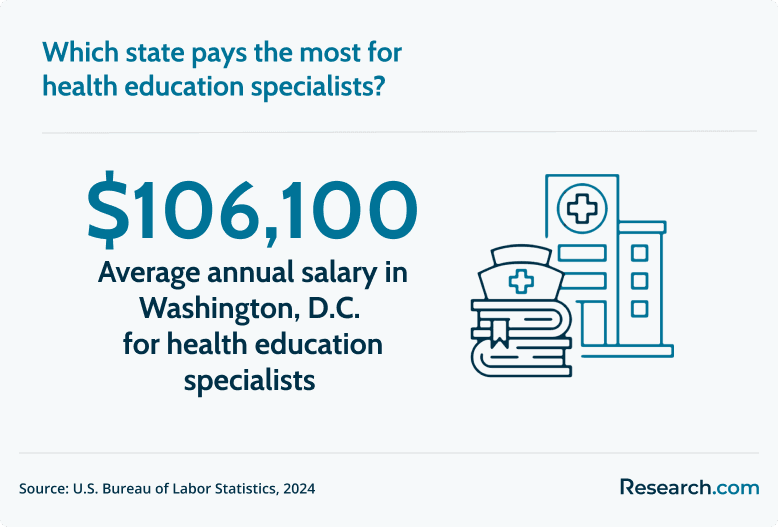
According to the BLS data cited in this guide, New York reports the highest salaries for medical and health services managers and statisticians, including biostatisticians, at $179,160 and $140,860 respectively. Washington, D.C. leads in pay for lawyers, emergency management directors, environmental scientists and specialists, and health education specialists, with annual wages ranging from $106,000 to $239,000.
Wisconsin offers the top listed salary for epidemiologists at $121,150. California is identified as the highest-paying state for registered nurses, including public health nurses, as well as health and safety engineers, mental health counselors, and school counselors, with wages ranging from $90,000 to $100,000 or more.
| Location | Roles Noted for High Pay | Salary Figures Cited | Decision Factor to Consider |
| New York | Medical and health services managers; statisticians, including biostatisticians | $179,160 and $140,860 respectively | Strong healthcare and research markets can be attractive, but living costs may be high. |
| Washington, D.C. | Lawyers; emergency management directors; environmental scientists and specialists; health education specialists | Annual wages ranging from $106,000 to $239,000 | Federal agencies, policy organizations, and contractors may create specialized opportunities. |
| Wisconsin | Epidemiologists | $121,150 | Consider the number of openings, employer types, and long-term advancement options. |
| California | Registered nurses, including public health nurses; health and safety engineers; mental health counselors; school counselors | Wages ranging from $90,000 to $100,000 or more | Higher pay should be weighed against housing costs and regional competition. |
Before moving for a public health role, compare salary with real net income, commuting demands, benefits, remote-work policies, and advancement opportunities. A lower-paying role in a lower-cost region may offer better financial stability than a higher-paying role in a costly metro area.
What industries pay the most for public health professionals?
Industry choice can affect compensation as much as job title. Public health professionals working in pharmaceutical manufacturing, healthcare management, government, regulatory policy, environmental systems, and specialized consulting may earn more because their work requires technical knowledge, compliance expertise, or high-stakes decision-making.
The BLS data cited here show that pharmaceutical and medicine manufacturing is among the more lucrative industries for public health-related analytics and research roles. Epidemiologists in this industry earn $154,610 annually, while statisticians earn $171,110, identified as the second-highest salary for that occupation.
Lawyers in the water, sewage, and other systems industry earn $315,000 per year. Emergency management directors are paid $176,080 by government agencies, excluding education and healthcare settings. Medical and health services managers have the highest listed salaries in the wholesale trade agents and brokers industry, at $254,660 annually.
| Industry | Public Health Role | Salary Figure Cited | Why Pay May Be Higher |
| Pharmaceutical and medicine manufacturing | Epidemiologists | $154,610 annually | Employers need rigorous evidence, surveillance, research, and regulatory support. |
| Pharmaceutical and medicine manufacturing | Statisticians | $171,110 | Advanced analytics and study design skills are central to research and product evaluation. |
| Water, sewage, and other systems | Lawyers | $315,000 per year | Legal work can involve regulation, infrastructure, environmental protection, and public safety. |
| Government agencies, excluding education and healthcare settings | Emergency management directors | $176,080 | Preparedness, response coordination, and public safety planning can carry major responsibility. |
| Wholesale trade agents and brokers | Medical and health services managers | $254,660 annually | Management roles may involve complex operations, contracts, compliance, and healthcare distribution. |
When comparing industries, look beyond base pay. Benefits, pension eligibility, job security, remote work, workload, travel, and advancement can change the overall value of an offer.
What are the most in-demand public health jobs and careers?
Demand is strongest in public health roles tied to healthcare operations, disease surveillance, workplace safety, statistics, behavioral health, and data science. BLS data (2024c) cited in this guide identify several public health-related careers with notable projected growth from 2023 to 2033.
| Career Area | Projected Job Outlook from 2023 to 2033 | What This Means for Students |
| Medical and Health Services Managers | 28.5% | Management and operations skills may be especially valuable as healthcare organizations expand and adapt. |
| Epidemiologists | 18.8% | Training in surveillance, outbreak investigation, and public health research can support long-term opportunities. |
| Occupational Health and Safety Specialists | 14.9% | Employers need professionals who can prevent workplace hazards and maintain compliance. |
| Statisticians | 11.8% | Quantitative skills remain important for research, analytics, and evidence-based public health planning. |
| Occupational Health and Safety Technicians | 11.4% | Technical safety roles may offer a practical route into occupational and environmental health work. |
| Substance Abuse, Behavioral Disorder, and Mental Health Counselors | 18.8% | Behavioral health continues to be a major public health workforce need. |
| Mental Health and Substance Abuse Social Workers | 11.6% | Public health systems need professionals who can connect individuals and communities with support. |
| Public Health Data Researchers or Scientists | 36% | Data-focused roles may be especially attractive for students who combine public health with analytics. |
Students considering graduate education often ask whether is a masters in public health worth it. It can be worthwhile when the degree is aligned with a specific career target, such as epidemiology, biostatistics, public health leadership, health policy, or program evaluation. It is less likely to pay off quickly if the program is expensive, lacks field experience, or does not build skills employers are actively requesting.
This chart illustrates the job outlook of various public health careers.
How do public health salaries compare to other healthcare careers?
Public health salaries can be competitive, but they do not always match the highest-paying clinical careers. Physicians, surgeons, anesthesiologists, and some advanced practice clinicians often earn more because their roles require extensive clinical training, licensure, and direct patient care responsibilities. Public health careers, however, may offer broader policy impact, more predictable schedules, and lower exposure to some clinical workplace risks.
For comparison, nurse practitioners earn up to $128,490 annually, while family and internal medicine physicians make over $240,000. Surgeons and anesthesiologists can earn well above $300,000. Other non-physician clinical roles, including diagnostic medical sonographers, radiation therapists, and surgical assistants, offer salaries ranging from $60,000 to $99,000, which overlaps with several public health positions.
| Path | Potential Advantage | Potential Trade-Off | Who Should Consider It |
| Public Health | Population-level impact, policy influence, prevention, analytics, and leadership options | Some roles require graduate education for higher pay | Students interested in systems, communities, prevention, data, or policy |
| Advanced Clinical Practice | Strong earning potential and direct patient care responsibilities | Requires clinical prerequisites, licensure, and hands-on training | Career changers who want patient-facing roles and can meet clinical requirements |
| Physician Careers | Among the highest healthcare salaries | Requires medical school, residency, licensure, and long training timelines | Students committed to intensive clinical education and practice |
| Allied Health | Often shorter training timelines than physician careers | Salary ceilings may vary by role and location | Students who want practical healthcare employment without medical school |
Career changers who want a clinical route rather than a population health route may compare options such as MSN direct entry programs online. The right decision depends on whether you want to work directly with patients, manage health systems, analyze population data, influence policy, or design prevention programs.
This chart illustrates the average wages of other healthcare roles that provide clinical or direct patient care.
What certifications help increase public health salaries?
Certifications do not guarantee a raise, but they can help validate specialized skills, meet employer preferences, and strengthen applications for higher-responsibility roles. They are most useful when paired with experience, a relevant degree, and a clear career goal.
| Certification | Best For | What It Signals to Employers | Important Eligibility Note |
| Certified in Public Health (CPH) | Public health students, educators, and experienced professionals | Knowledge of core public health competencies such as epidemiology, policy, and program management | Offered by the National Board of Public Health Examiners (NBPHE) |
| Certified Health Education Specialist (CHES) | Health educators, outreach specialists, wellness coordinators, and community program staff | Competence in health education, program planning, communication, and community engagement | Candidates must have a degree in health education |
| Certified in Healthcare Compliance (CHC) | Professionals in healthcare regulation, risk management, administration, and policy | Ability to support compliance programs in hospitals, insurers, agencies, and healthcare organizations | Offered through the Health Care Compliance Association |
The CHC credential may be especially relevant for professionals pursuing healthcare compliance, regulatory affairs, or administration. Students who need a lower-cost management pathway may also compare options such as the cheapest online healthcare management degree while evaluating accreditation, curriculum quality, and career outcomes.
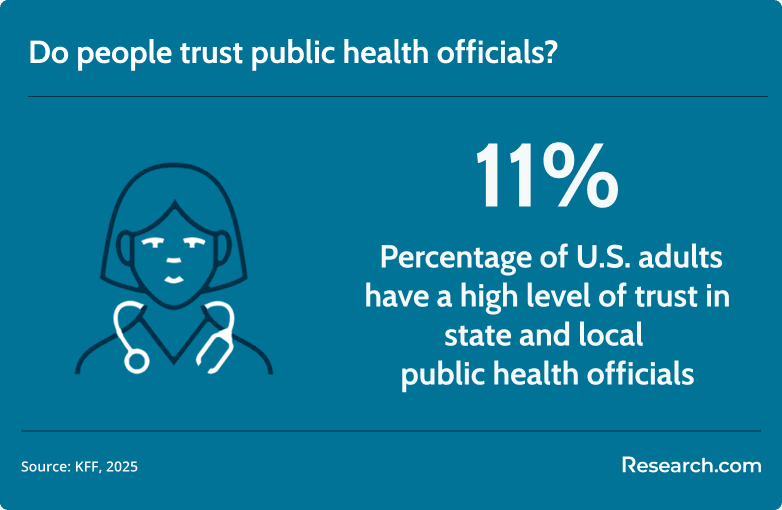
Credentials can also support public trust. A KFF Tracking Poll (Kearney et al., 2025) found that 43% of U.S. adults trust state and local public health officials a fair amount, while 11% trust them a great deal. For professionals who communicate with the public, lead programs, or influence policy, recognized credentials can reinforce credibility when combined with transparent, evidence-based practice.
Do advanced degrees in public health lead to higher salaries?
Advanced degrees can improve access to higher-paying public health positions, especially in epidemiology, biostatistics, health policy, academic teaching, executive leadership, and applied research. However, a graduate degree is not automatically a good investment. The return depends on program cost, employer demand, fieldwork opportunities, networking, specialization, and whether the degree is required for your target role.
| Advanced Degree | Typical Career Use | When It Can Be Worth It | Possible Concern |
| Master of Public Health (MPH) | Epidemiology, biostatistics, health policy, community health, global health, and program leadership | Useful when your target role requires graduate-level public health training or a specialization | Cost and time can outweigh benefits if the program lacks applied experience or career support |
| Dual MD/MPH or JD/MPH | Clinical leadership, health policy, public health law, regulatory work, global health consulting | Strong fit for physicians or attorneys who want population health expertise | Lengthy and demanding educational path |
| Doctor of Public Health (DrPH) | Executive leadership, applied research, policy development, public health systems management | Best for experienced professionals seeking senior leadership roles | Usually not necessary for entry-level public health work |
An accelerated MPH online may appeal to working professionals who want to complete graduate training more quickly, but speed should not be the only priority. Students should confirm accreditation, fieldwork requirements, faculty expertise, employer connections, and whether the curriculum supports their desired specialization.
What skills are essential for high-paying public health careers?
The highest-paying public health roles reward professionals who can turn evidence into action. Technical knowledge is important, but employers also value people who can lead projects, communicate risk, manage budgets, analyze systems, and work across agencies, communities, and healthcare organizations.
| Skill Area | Why It Matters | Roles Where It Is Especially Valuable |
| Data Analysis and Epidemiological Research | Public health decisions depend on accurate interpretation of disease trends, program outcomes, and risk factors. | Epidemiologist, biostatistician, public health data scientist, research analyst |
| Health Policy and Advocacy | Policy knowledge helps professionals influence laws, funding, access, emergency response, and health equity strategies. | Public health attorney, policy analyst, compliance officer, health department leader |
| Leadership and Program Management | Senior roles require managing teams, budgets, timelines, grants, partnerships, and measurable outcomes. | Medical and health services manager, emergency management director, program director |
| Risk Communication | Public health professionals must explain evidence clearly during outbreaks, emergencies, and controversial health debates. | Health educator, communications lead, emergency preparedness specialist, public information officer |
| Technology and Informatics | Digital health tools, surveillance systems, and analytics platforms are increasingly central to prevention and response. | Health informatics specialist, digital health specialist, data analyst |
Students can build these skills through internships, capstone projects, applied research, health department volunteer work, certifications, software training, and supervised field placements. Employers generally want evidence that you can apply classroom knowledge to real public health problems.
Can interdisciplinary certifications enhance my public health career?
Interdisciplinary credentials can be useful when they connect directly to your target public health role. For example, professionals working in medication safety, pharmaceutical policy, healthcare operations, or population health programs may benefit from understanding pharmacy systems. Exploring a pathway such as pharmacist school online may make sense for students whose goals require deeper pharmaceutical knowledge, but it is not necessary for every public health career.
The practical question is whether the credential fills a real skill gap. Before adding another program, compare the cost, time, licensure implications, and employer demand for that credential in your intended role.
Can integrating clinical doctorate studies enhance my public health career?
Clinical doctorate training can strengthen a public health career when your work involves clinical systems, medication policy, patient safety, health outcomes, or leadership with clinicians. A credential such as an online doctor of pharmacy program may provide valuable context for professionals focused on pharmaceutical care, drug policy, population medication management, or healthcare quality.
This route is most appropriate for students with a clear clinical or pharmacy-related objective. If your goal is epidemiology, health education, environmental health, or public health administration, a different graduate degree or certification may be more efficient.
Can non-traditional certifications elevate my public health career?
Some non-traditional healthcare credentials can improve employability when they support administrative, compliance, billing, data, or operations work. For example, an accredited medical billing and coding certification online may help professionals understand claims, documentation, reimbursement, and compliance processes that affect healthcare access and program operations.
However, non-traditional certifications should be chosen strategically. A credential is most valuable when it helps you qualify for a specific job description, improve a current role, or move into a defined career track.
How can I maximize the return on investment for my public health degree?
To maximize ROI, choose a program based on career outcomes, total cost, accreditation, field experience, and fit with your target role. Do not evaluate tuition alone. Fees, lost wages, commuting, technology costs, internship requirements, and time to completion can all affect the true cost of a degree.
| ROI Factor | What to Check | Why It Matters |
| Accreditation | Institutional accreditation and any relevant public health program recognition | Accreditation can affect credit transfer, employer acceptance, and financial aid eligibility. |
| Total Cost | Tuition, fees, books, technology, travel, and field placement expenses | A lower advertised tuition does not always mean a lower total cost. |
| Career Alignment | Whether the curriculum matches roles such as epidemiology, policy, biostatistics, health administration, or environmental health | Specific training is often more valuable than a broad degree with no clear specialization. |
| Applied Experience | Internships, practicum placements, capstones, research projects, and employer partnerships | Hands-on experience can make graduates more competitive for public health jobs. |
| Completion Timeline | Full-time, part-time, accelerated, or flexible options | The faster option is not always better if it limits work experience or increases stress. |
| Financial Aid | Scholarships, grants, employer tuition support, assistantships, and loan options | Reducing out-of-pocket cost can improve the value of the degree. |
For some students, an entry-level healthcare credential can provide practical experience before or during a public health degree. Options such as online medical assistant programs may offer a lower-cost way to enter healthcare, but they should be evaluated separately from public health degree requirements.
How can I leverage business expertise to accelerate my public health career?
Business training can be valuable in public health roles that involve budgets, operations, staffing, contracts, strategy, performance improvement, or executive leadership. Professionals who understand both population health and organizational management may be stronger candidates for administrative and consulting roles.
A program such as an accelerated MBA healthcare administration online may fit professionals who want to manage healthcare organizations, lead public health programs, or move into operations-focused leadership. Before enrolling, compare the curriculum with your target job descriptions to confirm whether business training is more useful than an MPH, MHA, certificate, or specialized analytics program.
How can I gain practical experience while advancing my public health career?
Public health employers value applied experience because much of the work involves real communities, real data, real constraints, and real stakeholders. Students should look for opportunities that demonstrate measurable skills rather than relying only on coursework.
- Apply for internships with health departments, hospitals, nonprofits, research centers, or community health organizations.
- Volunteer for outreach, vaccination, health education, food access, emergency preparedness, or environmental health projects.
- Build a portfolio that includes data dashboards, policy briefs, program evaluations, literature reviews, grant materials, or community needs assessments.
- Ask faculty about research assistantships, capstone partnerships, and local public health collaborations.
- Use entry-level healthcare work to understand patient access, documentation, operations, and care coordination.
Some students explore short programs such as a 6 week online medical assistant program to gain exposure to healthcare delivery. This can be useful for context, but students should confirm whether the program supports their broader public health goals and whether any hands-on requirements are included.
How can I verify the quality and career outcomes of my online public health program?
Online public health programs can be legitimate and career-relevant, but quality varies. Students should verify the basics before applying and should ask direct questions about outcomes, support, and fieldwork.
| Question to Ask | Why It Matters |
| Is the institution properly accredited? | Accreditation affects credibility, financial aid, transfer options, and employer recognition. |
| Does the curriculum match my target career? | A student aiming for biostatistics needs different coursework than someone targeting health administration or health education. |
| Are internships, practicums, or capstones required? | Applied experience is often essential for public health job readiness. |
| Who teaches the courses? | Faculty experience in public health practice, research, policy, or healthcare management can improve learning quality. |
| What career services are available to online students? | Online learners should have access to advising, networking, job boards, resume help, and employer connections. |
| What outcomes does the program report? | Graduation, employment, licensure, certification, and placement information can help evaluate value. |
Students interested in fast healthcare data pathways may compare options such as a fast health information management degree online. The key is to confirm that speed does not come at the expense of accreditation, practical training, or employer relevance.
Is affordable online education pivotal for boosting my public health career?
Affordable online education can help students reduce debt and keep career options open, but affordability should never be separated from quality. A low-cost program that lacks accreditation, applied experience, or employer recognition can be more expensive in the long run if it does not help graduates compete for jobs.
When comparing programs, review tuition, fees, transfer credit policies, scholarship availability, practicum support, faculty experience, and career services. Students considering health data or administrative pathways may also examine the cheapest health information management degree options while checking whether each program aligns with their public health goals.
Can I get a high-paying public health job with an online degree?
Yes, an online public health degree can support a high-paying public health career if the program is accredited, rigorous, and aligned with the student’s target role. Employers generally care more about skills, experience, credentials, and institutional quality than whether coursework was completed online or on campus.
Online programs can be especially useful for working adults, parents, military-connected students, rural students, and career changers who need flexibility. Many online programs use the same or similar curriculum and faculty as campus-based programs, but students should not assume every requirement is virtual. Public health programs may include internships, practicums, fieldwork, labs, residencies, or local placements.
| Online Degree Advantage | Potential Limitation | What to Do Before Enrolling |
| Flexible scheduling | Self-discipline and time management are essential | Ask how courses are delivered and how much weekly time is expected. |
| Access to programs outside your region | Field placements may still need to be completed locally | Confirm who arranges practicum sites and whether your location is supported. |
| May allow students to keep working | Balancing work, school, and fieldwork can be difficult | Compare part-time, full-time, and accelerated pacing options. |
| Can reduce relocation and commuting costs | Some programs still charge online fees or require campus visits | Calculate total cost, not just tuition. |
The best online public health degree is not simply the cheapest or fastest. It is the program that meets quality standards, builds relevant competencies, supports field experience, and helps you move toward a specific career outcome.
What are the emerging career paths for public health graduates for 2027?
Public health careers are expanding as health systems rely more heavily on technology, real-time data, climate preparedness, and equity-focused analysis. These newer roles often reward professionals who can combine public health fundamentals with informatics, analytics, environmental science, or digital health strategy.
- Digital Health Specialist: Digital health specialists help develop, evaluate, and implement technology-supported health tools such as telehealth platforms, mobile health applications, electronic health records, wearable technologies, and analytics systems. This path fits professionals interested in both healthcare innovation and population health outcomes.
- Climate and Health Analyst: Climate and health analysts examine how air pollution, extreme weather, environmental disruption, and disease patterns affect communities. They may support emergency preparedness, policy planning, and environmental health research. The Trust for America’s Health emphasizes the need for greater investment in research and emergency planning, urging policymakers and healthcare providers to prioritize these efforts.
- Public Health Informatics Specialist: Public health informatics specialists use information systems, analytics, and machine learning-supported tools to strengthen disease surveillance, outbreak tracking, program evaluation, and health system decision-making. They are often employed by health departments, hospitals, research organizations, and global health groups.
- Health Equity Data Analyst: Health equity data analysts use data to identify disparities in access, treatment, outcomes, and social determinants of health. Their work can guide targeted interventions, policy recommendations, grant funding, and community health programs.
These emerging careers are best suited for graduates who are willing to keep learning. Public health professionals who can communicate across disciplines, work with data responsibly, and understand community context will be better positioned for future roles.
Common Mistakes to Avoid When Choosing a Public Health Career Path
| Mistake | Why It Can Hurt You | Better Approach |
| Choosing a degree without checking accreditation | It can affect employer recognition, transfer credit, financial aid, and graduate school options. | Verify institutional accreditation and relevant program quality indicators before enrolling. |
| Looking only at salary rankings | High salaries may require advanced degrees, licensure, relocation, or years of experience. | Compare salary with required education, job duties, demand, and your strengths. |
| Ignoring field experience | Coursework alone may not be enough for competitive public health roles. | Prioritize programs with internships, practicums, capstones, or employer partnerships. |
| Assuming every online program is equal | Online programs vary in rigor, support, faculty access, and placement assistance. | Ask detailed questions about outcomes, advising, fieldwork, and graduate employment. |
| Taking certifications without a career plan | Extra credentials can waste time and money if employers do not value them for your target role. | Select certifications that appear in job postings or clearly build needed skills. |
| Underestimating quantitative skills | Many higher-paying public health roles rely on data, statistics, software, and evaluation. | Build analytics skills early through coursework, projects, and applied practice. |
Questions to Ask Before Pursuing a High-Paying Public Health Job
- Does this role require a bachelor’s degree, master’s degree, doctorate, professional degree, license, or certification?
- Is the salary high because of location, employer type, advanced education, risk level, or years of experience?
- Will I need strong statistics, coding, policy, management, legal, clinical, or communication skills?
- Are jobs available in my region, or would I need to relocate?
- Does the program I am considering include fieldwork or an applied capstone?
- Can I reduce costs through transfer credits, scholarships, employer tuition support, or part-time study?
- What entry-level jobs can help me build toward the high-paying role I want?
- Do job postings in my target field mention specific software, certifications, degrees, or experience?
Here’s What Graduates Have to Say About Their Public Health Jobs and Careers
- “I started in business and was unsure how to move into public health. Online study let me change direction while keeping my job. After finishing the program, I moved into healthcare consulting, where I help hospitals improve patient outcomes. The compensation is strong, and the work feels meaningful.” - Keith
- “My interest in global health pushed me toward graduate public health training. The coursework in data, policy, and community health helped prepare me for international health projects. Online learning gave me flexibility while I gained experience, and now my work supports health initiatives across borders.” - Nora
- “Public health education changed my career path. Before earning the degree, I was in a lower-paying healthcare role. Now I work as a health policy analyst earning six figures. The program helped me learn how to interpret data, evaluate policy, and contribute to stronger community health decisions.” - Jesse
Key Insights
- The highest listed public health salary in this guide is for public health attorneys at $176,470, reflecting the value of combining legal expertise with health policy and regulation.
- Public health careers with strong earning potential often sit at the intersection of health and another specialized field, such as law, statistics, administration, engineering, nursing, or informatics.
- Location matters. New York, Washington, D.C., Wisconsin, and California are cited for high salaries in specific public health-related occupations, but cost of living and job availability should be weighed carefully.
- Industry can change earning potential. Pharmaceutical and medicine manufacturing, government agencies, water and sewage systems, and wholesale trade agents and brokers are cited for high compensation in selected roles.
- Demand is especially strong for medical and health services managers, epidemiologists, occupational health and safety specialists, statisticians, behavioral health workers, and public health data researchers or scientists.
- Certifications such as CPH, CHES, and CHC can improve credibility and competitiveness, but they are most valuable when they match a specific job goal.
- An online public health degree can lead to strong career outcomes if it is accredited, career-aligned, and includes meaningful applied experience.
- The best ROI comes from choosing a public health pathway that fits your strengths, target role, budget, and local or national job market—not from choosing a program based only on speed, tuition, or rankings.
References:
- U.S. Bureau of Labor Statistics. (2024a, August 29). Field of degree: Healthcare and related. Occupational Outlook Handbook. https://www.bls.gov/ooh/field-of-degree/healthcare-and-related/healthcare-and-related-field-of-degree.htm
- U.S. Bureau of Labor Statistics. (2024b, August 29). Healthcare Occupations. Occupational Outlook Handbook. https://www.bls.gov/ooh/healthcare
- U.S. Bureau of Labor Statistics. (2024, August 29). Occupational projections, 2023–33, and worker characteristics, 2023 (Numbers in thousands). Employment Projections. https://www.bls.gov/emp/tables/occupational-projections-and-characteristics.htm
Other Things You Should Know About the Highest Paying Public Health Jobs and Careers
Epidemiology managers commonly earn about $110,000 to $160,000 a year in 2027. Roles in large health systems, government agencies, and consulting firms can pay more when candidates have an MPH, epidemiology experience, and strong data analysis skills.
In 2027, leading public health roles typically require a Master's in Public Health (MPH) or a related field. Essential skills include strong analytical abilities, leadership prowess, and expertise in data management and policy development. Additional certifications, like Certified in Public Health (CPH), can further enhance career prospects.