
2027 Best Nursing Schools in Minnesota – Accredited ADN, BSN, MSN Programs

Co-Founder and Chief Data Scientist
Choosing a nursing school in Minnesota is not just a question of location or tuition. The program you select can affect your eligibility for licensure, your clinical training options, your ability to keep working while enrolled, and your long-term path into registered nursing, advanced practice, leadership, education, or specialized care. Minnesota’s nursing workforce is also changing: government data projects a 5% employment increase for registered nurses by 2032, while employers continue to report strong demand across hospitals, clinics, long-term care, and community health settings.
This guide is designed for future nurses comparing ADN, BSN, RN-to-BSN, MSN, DNP, LPN, and nurse practitioner pathways in Minnesota. You will find ranked school options, cost and timeline comparisons, online versus campus considerations, licensing steps, common mistakes to avoid, and practical questions to ask before enrolling.
Quick Answer: Is nursing school in Minnesota worth it?
For many students, a nursing degree in Minnesota can be a strong career investment if the program is accredited, approved for licensure, financially realistic, and aligned with the role they want. Registered nurses in Minnesota earn a median annual salary of around $100,870, and nurses can work in hospitals, clinics, public health agencies, long-term care facilities, home health, education, leadership, and advanced practice. However, outcomes depend on program quality, NCLEX-RN preparation, clinical placement access, debt level, work experience, and the type of nursing credential earned.
What are the benefits of getting a nursing degree in Minnesota?
- Clear licensure preparation: Minnesota nursing programs are built to prepare students for state licensure and, for RN pathways, the NCLEX-RN exam.
- Broad employment settings: Nurses in Minnesota work in hospitals, outpatient clinics, public health departments, long-term care, schools, home health, and community-based care.
- Competitive earning potential: Registered nurses in Minnesota earn a median annual salary of around $100,870.
- Multiple entry points: Students can start with an LPN certificate, ADN, BSN, RN-to-BSN, MSN, DNP, or specialized graduate pathway depending on their background and goals.
- Room for advancement: Experienced nurses can move into nurse practitioner, nurse educator, nurse administrator, nurse midwife, informatics, and leadership roles with additional education and credentials.
What can I expect from a nursing program in Minnesota?
A nursing program in Minnesota typically combines science coursework, professional nursing theory, simulation labs, supervised clinical rotations, and preparation for licensure exams. Students usually study anatomy, physiology, microbiology, pharmacology, pathophysiology, patient assessment, nursing fundamentals, ethics, communication, and specialty care across the lifespan.
The most important feature to verify is whether the program prepares graduates for the license they intend to pursue. Most RN programs are designed to prepare graduates for the National Council Licensure Examination for Registered Nurses (NCLEX-RN). LPN programs prepare students for practical nursing licensure, while graduate programs may prepare licensed RNs for advanced practice certification, leadership, education, or specialty roles.
| Program type | Best fit | Typical outcome | Decision point |
| LPN certificate or diploma | Students who want a faster route into bedside care | Licensed practical nurse eligibility after meeting exam and state requirements | Good starting point, but advancement may require additional education |
| ADN or ASN | Students seeking an RN pathway at a lower cost and shorter timeline | NCLEX-RN eligibility and entry-level RN roles | Some employers may prefer or require a BSN for certain roles |
| Traditional BSN | First-time college students or transfer students seeking broader RN preparation | NCLEX-RN eligibility and wider long-term advancement options | Usually takes longer and may cost more than an ADN |
| RN-to-BSN | Licensed RNs who already hold an ADN or diploma | Bachelor’s completion for career mobility | Best for working nurses who need flexibility |
| MSN or DNP | RNs pursuing advanced practice, education, or leadership | Specialized graduate-level nursing roles | Requires careful review of certification, clinical, and licensure requirements |
Where can I work with a nursing degree in Minnesota?
A nursing degree from a Minnesota school can lead to work in many care environments. Hospitals hire nurses for medical-surgical units, emergency departments, intensive care, pediatrics, geriatrics, maternal-neonatal care, operating rooms, and specialty units. Outpatient clinics, urgent care centers, ambulatory surgery centers, and primary care practices also employ RNs and advanced practice nurses.
Nurses are also needed outside traditional hospital settings. Public health agencies, nonprofit organizations, long-term care facilities, assisted living communities, home health providers, correctional facilities, schools, and community health programs all rely on nursing staff. These options matter because not every nurse wants a hospital schedule, and not every career path requires the same level of education.
Policy discussions in Minnesota have also focused on improving working conditions for nurses, including staffing and workplace concerns. Students should monitor state legislation, employer contracts, and professional association updates because these issues can influence job conditions after graduation.
How much can I make with a nursing degree in Minnesota?
According to the BLS, registered nurses in Minnesota earn a median annual salary of around $100,870. Pay can vary by degree level, specialty, years of experience, employer, location, shift differential, union status, and whether the role is in direct care, leadership, education, or advanced practice. RNs with more education and experience may earn more, with salaries reaching up to $130,000 based on years of experience.
Students should not choose a program based on salary alone. A lower-cost ADN may offer a faster route into RN employment, while a BSN or graduate degree may support broader advancement. The stronger question is: will the program’s total cost, licensure outcomes, clinical access, and employer reputation support the job you want?
- Best nursing schools in Minnesota for 2027
- How long does nursing school take in Minnesota?
- Online vs. on-campus nursing programs in Minnesota
- Average nursing program costs in Minnesota
- Financial aid options for Minnesota nursing students
- Common nursing program prerequisites in Minnesota
- Typical nursing courses in Minnesota programs
- Nursing specializations available online and on campus
- How to choose the best nursing program in Minnesota
- Career paths for Minnesota nursing graduates
- How Minnesota’s healthcare landscape shapes nursing education
- Minnesota nurse practitioner programs and leadership preparation
- Tuition cost and nursing career ROI in Minnesota
- Minnesota nursing job market outlook
- How advanced practice degrees can improve career outcomes
- Alternative healthcare careers for nurses in Minnesota
- Education and licensure pathways for LPNs in Minnesota
- How RNs can move into advanced practice roles
- Diversity and inclusion in Minnesota nursing programs
- Career advancement resources for Minnesota nurses
- Nurse midwife program pathways in Minnesota
- Minnesota nursing licensing and postgraduate requirements
- Online nursing opportunities in Minnesota
- Accreditation and compliance in Minnesota nursing education
- Supplementary certifications for nursing career flexibility
- Admissions strategies for competitive nursing programs
List of the Best Nursing Schools in Minnesota for 2027
How do we rank schools?
Our ranking is intended to help students compare Minnesota nursing schools using factors that affect educational quality and career readiness. We considered academic reputation, accreditation, NCLEX-RN pass rates, and program formats that may fit different student needs. The evaluation uses information from the IPEDS database, Peterson’s database, the Distance Learning Licensed Data Set from the College Scorecard database, and the National Center for Education Statistics. You can review the broader ranking process in our methodology section.
1. University of Minnesota
The University of Minnesota offers a BSN pathway that blends clinical preparation with nursing theory and professional skill development. Its nursing program supports students who want a strong foundation for RN practice and future graduate study. The MSN program includes options such as Nurse Practitioner, Nurse Educator, and Leadership, which can help licensed nurses move into advanced clinical, teaching, and administrative roles.
- Program Length: Varies based on program
- Tracks/concentrations: Nursing
- Estimated Cost: $34,338 per year (undergraduate resident rate), $56,450 per year (undergraduate non-resident rate); $47,654 total program cost (MSN)
- Required Credits to Graduate: 120 credits
- Accreditation: Commission on Collegiate Nursing Education (CCNE)
2. Winona State University
Winona State University provides a traditional pre-licensure BSN for students preparing to care for patients across the lifespan. The program can also serve as a base for graduate education and professional advancement. Its MSN offerings include tracks such as Nurse Educator, Nurse Administrator, and other healthcare management-focused options for nurses seeking advanced practice, leadership, or teaching responsibilities.
- Program Length: Varies based on program
- Tracks/concentrations: Nursing
- Estimated Cost: $437 per credit (undergraduate resident rate), $718 (undergraduate non-resident rate); $1,156 per credit (graduate rate)
- Required Credits to Graduate: 124 credits
- Accreditation: Commission on Collegiate Nursing Education (CCNE)
3. Bethel University
Bethel University offers a BSN and a post-baccalaureate nursing route for students entering nursing from another academic background. The BSN combines nursing coursework, clinical preparation, and a faith-informed approach to compassionate care. The post-baccalaureate option is designed for students who already hold a bachelor’s degree in another field and want to transition into nursing. Both pathways prepare students for NCLEX-RN testing and entry-level RN practice.
- Program Length: Varies based on program
- Tracks/concentrations: Nursing
- Estimated Cost: $1,220 per credit
- Required Credits to Graduate: Varies based on program
- Accreditation: Commission on Collegiate Nursing Education (CCNE)
4. Minnesota State University - Mankato
The School of Nursing at Minnesota State University - Mankato offers several routes for different types of nursing students. The Pre-Licensure BSN includes clinical learning in rural and urban settings. Licensed RNs can complete the 100% online RN to BSN program, which emphasizes family-centered care. Graduate options include a fully online master’s program in Advanced Practice Nursing and a traditional DNP program.
- Program Length: Varies based on program
- Tracks/concentrations: Nursing
- Estimated Cost: $373 per credit (undergraduate rate); $552 per credit (graduate rate)
- Required Credits to Graduate: Varies based on program
- Accreditation: Commission on Collegiate Nursing Education (CCNE)
5. St. Olaf College
The St. Olaf College nursing program centers on whole-person care. Students are taught to evaluate physical, psychological, social, and spiritual factors that influence patient health. The curriculum develops critical thinking, communication, collaboration, and care-planning skills for diverse populations. Graduates are eligible to take the NCLEX-RN exam.
- Program Length: Four years
- Tracks/concentrations: Nursing
- Estimated Cost: $59,760 per year
- Required Credits to Graduate: No information available
- Accreditation: Commission on Collegiate Nursing Education (CCNE)
6. Alexandria Technical & Community College
Alexandria Technical & Community College offers an Associate Degree in Nursing for students seeking an entry-level RN pathway. Graduates can sit for the NCLEX-RN exam after meeting program and state requirements. The program is accredited by the National League for Nursing Commission for Nursing Education Accreditation (NLN CNEA).
- Program Length: Two semesters
- Tracks/concentrations: Nursing
- Estimated Cost: $207 to $237 per credit
- Required Credits to Graduate: 64 credits
- Accreditation: National League for Nursing Commission for Nursing Education Accreditation (NLN CNEA)
7. Concordia St. Paul
Concordia University St. Paul offers a BSN program structured as a five-semester, on-campus route toward RN preparation. Students begin clinical experiences in the first semester while completing science and foundational nursing coursework. The curriculum includes care of adults, children, and older adults and prepares graduates for generalist nursing roles in a range of healthcare settings.
- Program Length: Three years
- Tracks/concentrations: Nursing
- Estimated Cost: $12,800 per semester
- Required Credits to Graduate: 61 credit hours
- Accreditation: Commission on Collegiate Nursing Education (CCNE)
8. St. Cloud State University
St. Cloud State University combines classroom instruction, lab work, and supervised clinical practice. Its nursing options include a traditional nursing program, an RN to BSN completion program, and an early high school acceptance nursing program. The curriculum emphasizes holistic care, wellness, and the changing needs of patients, families, and communities.
- Program Length: Varies based on program
- Tracks/concentrations: Nursing
- Estimated Cost: $5,091 per semester
- Required Credits to Graduate: Varies based on program
- Accreditation: Commission on Collegiate Nursing Education (CCNE)
9. The College of St. Scholastica
The College of St. Scholastica offers a traditional BSN that includes nursing theory, clinical practice, and research preparation. The program is designed to build practical readiness for nursing careers. Its MSN program includes several options, such as nursing education, administration, and family nurse practitioner preparation.
- Program Length: Varies based on program
- Tracks/concentrations: Nursing
- Estimated Cost: $1,280 per credit (undergraduate rate); $14,215 per semester (post-baccalaureate nursing)
- Required Credits to Graduate: Varies based on program
- Accreditation: Commission on Collegiate Nursing Education (CCNE)
10. Herzing University
Herzing University offers a BSN focused on nursing theory, clinical skills, and evidence-based care. Herzing University does not offer an ADN program. Its online MSN options include specializations such as Family Nurse Practitioner (FNP), Psychiatric-Mental Health Nurse Practitioner (PMHNP), and Adult-Gerontology Primary Care Nurse Practitioner (AGPCNP).
- Program Length: Varies based on program
- Tracks/concentrations: Nursing
- Estimated Cost: $496 to $992 per credit
- Required Credits to Graduate: Varies based on program
- Accreditation: Commission on Collegiate Nursing Education (CCNE)
What graduates say about online nursing programs
-
: "
"I already had a nursing diploma, but I needed a BSN to move forward professionally. Leaving my job was not realistic, so an online program let me complete coursework on weekends and days off. It was demanding, but the flexibility made the degree possible." - David
"
-
: "
"Online nursing fit the way I learn. I could review material on my own schedule, and the class discussions with faculty and other students helped me stay engaged." - Emily
"
-
: "
"I came from marketing and wanted work that felt more directly meaningful. The online format helped me start the transition without immediately giving up my job. I am now practicing as a nurse, and the work feels deeply rewarding." - Sarah
"
Key Findings
- Nursing program timelines in Minnesota commonly range from two to four years, depending on the credential and student background.
- Listed Minnesota BSN tuition and fees range from $373 to $1,280 per credit.
- Average student loan debt for nursing school graduates ranges from $40,000 to $54,999.
- Students can pursue specialties such as critical care, oncology, pediatrics, nurse practitioner, nurse educator, and nursing administration.
- Minnesota’s demand for nurses remains significant, and nurse practitioners are projected to see a 44% job growth rate through 2032.
How long does it take to complete a nursing program in Minnesota?
The time required depends on the credential, transfer credits, enrollment pace, prerequisites, clinical scheduling, and whether the program is designed for new students or already licensed nurses. ADN programs are often the shortest RN pathway, while BSN programs typically take longer but may provide broader preparation. RN-to-BSN and graduate programs are usually designed for licensed nurses who want to build on prior education and work experience.
| Pathway | Typical length stated in this guide | Who it fits best | What to check before enrolling |
| ADN or ASN | Typically two years | Students seeking a shorter RN route | NCLEX-RN preparation, transfer options, and employer BSN preferences |
| Traditional BSN | Around four years | Students starting college or transferring into nursing | Clinical placement access, graduation requirements, and total cost |
| Online RN to BSN | One to two years | Licensed RNs who need a bachelor’s degree | Part-time scheduling, employer tuition support, and practicum requirements |
| Direct-entry master’s or graduate nursing route | Varies by program | Students with prior degrees or licensed nurses pursuing advanced roles | Licensure alignment, clinical hours, certification eligibility, and admissions requirements |
All RN graduates must pass the NCLEX-RN to practice as registered nurses in Minnesota. Many graduates prepare for and take the exam within one year. After passing, the Minnesota Board of Nursing generally mails the license within 10 business days. New graduates waiting for the NCLEX-RN may apply for a temporary practice permit, which is typically issued within two to five days.
How does an online nursing program compare to an on-campus program in Minnesota?
Online and on-campus nursing programs can both be credible, but they serve different student needs. Campus programs provide in-person lectures, labs, simulations, faculty access, and peer interaction on a set schedule. They may be a better fit for students who want structure, direct support, and a traditional college environment.
Online programs are often better suited to licensed nurses, working adults, parents, or students who cannot easily relocate. Coursework may use recorded lectures, live sessions, discussion boards, simulations, and digital assignments. Clinical experiences are still required in nursing education, so students should ask exactly where clinical placements occur and whether the school helps arrange them. The same logic applies when comparing flexible programs in other fields, including affordable online public relations programs: convenience matters, but structure, outcomes, support, and total cost matter more.
| Factor | Online nursing program | On-campus nursing program |
| Flexibility | Usually better for working students and licensed nurses | More fixed class, lab, and clinical schedules |
| Clinical training | Required, often completed locally when approved by the program | Often coordinated through nearby clinical partners |
| Student support | Depends heavily on virtual advising, faculty access, and technology | More face-to-face access to faculty, labs, and classmates |
| Best fit | Self-directed learners who can manage time independently | Students who prefer structured learning and in-person accountability |
| Risk to watch | Weak clinical placement support or unclear licensure alignment | Less schedule flexibility and possible relocation needs |
What is the average cost of a nursing program in Minnesota?
Nursing program costs in Minnesota vary by degree level, school type, residency status, delivery format, fees, books, supplies, uniforms, testing expenses, background checks, travel to clinical sites, and lost income if a student reduces work hours. Tuition alone does not show the full cost of attendance.
Associate programs such as an ADN or ASN are usually the shortest and lowest-cost RN pathways. At Alexandria Technical & Community College, the ADN costs $207 to $237 per credit. Listed BSN costs in this guide range from $373 to $1,280 per credit, with Minnesota State University - Mankato showing the lowest listed undergraduate per-credit rate.
Graduate nursing programs usually cost more than undergraduate options. Minnesota State University - Mankato lists the MSN at $552 per credit, which is 48% more than the BSN rate.
| Cost factor | Why it matters | Question to ask the school |
| Tuition model | Programs may charge per credit, per semester, or by total program cost | What is the full estimated cost from start to graduation? |
| Clinical expenses | Travel, health requirements, uniforms, and supplies can add up | Which expenses are not included in tuition? |
| Transfer credits | Accepted credits can reduce time and cost | How many of my prior credits will apply to the nursing program? |
| Enrollment pace | Part-time study may reduce immediate cost but extend the timeline | Can I attend part time without delaying clinical progression? |
| Loan burden | Debt can reduce the return on investment after graduation | What is the typical debt range for graduates of this program? |
What are the financial aid options for students enrolling in a nursing program in Minnesota?
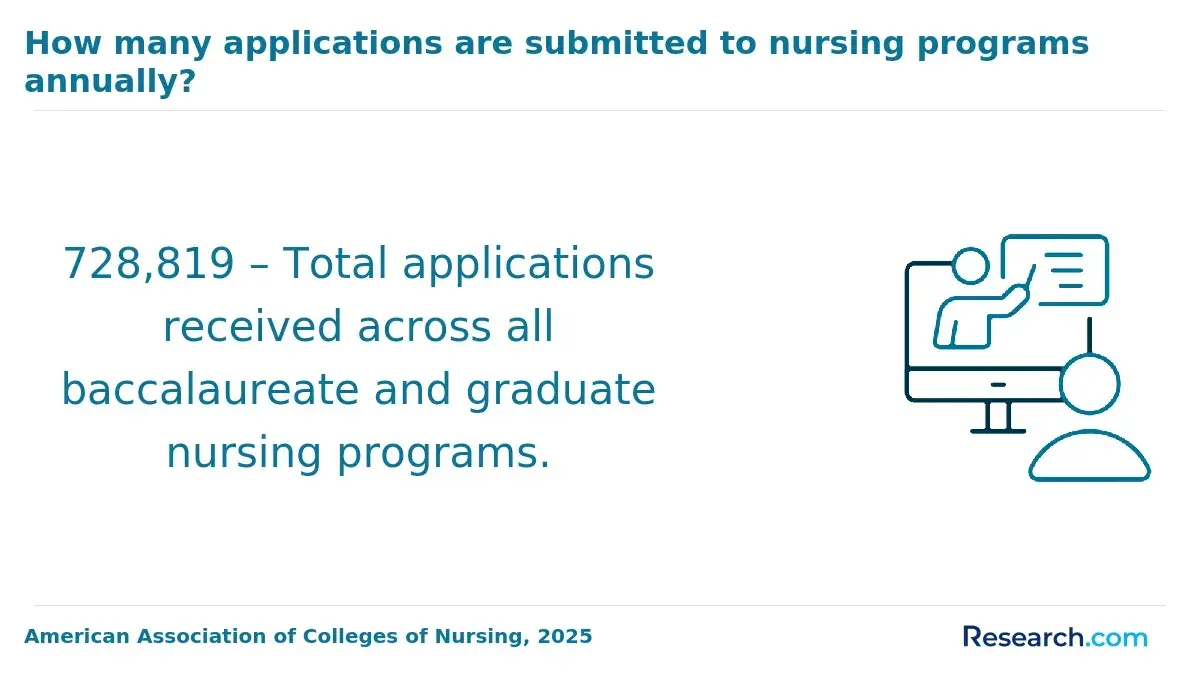
Students comparing nursing programs should start with the Free Application for Federal Student Aid (FAFSA). Federal aid may include Pell Grants, federal student loans with lower interest rates, and work-study opportunities. This step matters whether you are entering nursing or researching another career-focused option such as the cheapest online master's in cyber security. Reducing unnecessary borrowing is especially important because the average nursing school graduate holds between $40,000 and $54,999 of student loan debt, according to Haverstock and Helhoski.
Students should also ask each school about institutional scholarships, nursing department awards, state grants, employer tuition assistance, loan repayment options, and local healthcare organization scholarships. Some nursing scholarships begin at about $500, and smaller awards can still reduce out-of-pocket expenses when combined.
Ways to reduce nursing school costs
- Complete transferable prerequisites at a lower-cost accredited institution before entering the nursing major.
- Ask whether your employer offers tuition reimbursement, especially if you already work in healthcare.
- Compare total program cost rather than focusing only on per-credit tuition.
- Confirm whether online fees, clinical placement fees, lab fees, testing fees, and graduation fees are included.
- Apply for scholarships every year, not just before your first semester.
- Consider ADN-to-BSN or RN-to-BSN routes if they better match your budget and career timeline.
What are the prerequisites for enrolling in a nursing program in Minnesota?
Admission requirements vary by institution, degree level, delivery format, and whether the program is pre-licensure or designed for already licensed nurses. ADN and BSN applicants may need to provide several documents before being admitted or before beginning clinical rotations.
- High school diploma or GED
- CNA diploma, if applicable
- Background check results
- Health and immunization records
- Standardized test results, such as SAT or ACT scores
- Proof of English language proficiency, such as TOEFL results
- Proof of work experience, if applicable
Admission documents are not the only hurdle
Many nursing programs also evaluate prerequisite grades, science GPA, entrance exams, interviews, essays, references, prior healthcare experience, and readiness for clinical placement. Students should ask whether admission to the college automatically means admission to the nursing major, because some schools use a separate and more selective nursing application.
What courses are typically in a nursing program in Minnesota?
Undergraduate nursing programs build the clinical and scientific foundation needed for entry-level nursing practice. Graduate nursing programs are designed for licensed nurses who want advanced clinical, educational, administrative, or specialty roles. Most programs also include supervised clinical rotations in hospitals, clinics, community settings, or long-term care facilities.
Undergraduate Nursing Courses
Foundational Sciences
- Anatomy and Physiology
- Microbiology
- Pathophysiology
- Chemistry
- Nutrition
Core Nursing Courses
- Fundamentals of Nursing
- Adult Health Nursing
- Pediatric Nursing
- Maternal-Neonatal Nursing
- Mental Health Nursing
- Pharmacology for Nurses
Graduate Nursing Courses
- Advanced Specialty Courses
- Research Methods and Statistics
- Leadership and Management
BSN and MSN curricula may also include professional communication, ethics, health policy, legal issues in nursing, population health, evidence-based practice, informatics, and leadership. When comparing schools, review the course sequence carefully; a strong curriculum should prepare you not only for exams, but also for safe practice with real patients.
What types of specializations are available in online nursing programs in Minnesota?
Specializations allow nurses to focus on a patient population, care setting, clinical need, or leadership function. Some undergraduate programs introduce specialty areas through clinical rotations or electives, while graduate programs often use formal concentration tracks. A specialization can make sense if it matches the work setting you want and if employers in your target area value that credential.
Undergraduate Specializations
- Critical Care: Students prepare for high-acuity environments such as intensive care units and emergency departments.
- Oncology: Nurses in this area care for patients with cancer and support treatment, symptom management, and patient education.
- Pediatrics: This focus prepares students to care for infants, children, and adolescents.
- Women's Health: Nurses in this area support women across the lifespan, including pregnancy, birth, and postpartum care.
Graduate Specializations
- Nurse Practitioner (NP): NPs may specialize in family practice, pediatrics, adult gerontology, women’s health, and other areas.
- Clinical Nurse Specialist (CNS): CNSs develop expertise in a focused clinical area and often advise other nurses and care teams.
- Nurse Anesthetist: Graduates in this specialty prepare for licensure and practice related to anesthesia care for procedures and surgeries.
- Nursing Education: Nurse educator programs prepare nurses to teach in colleges, universities, and clinical learning environments.
- Nursing Informatics: Informatics-focused nurses use data, technology, and workflow analysis to improve healthcare delivery and patient outcomes.
- Nursing Administration: Similar in career direction to the cheapest online master degree in healthcare administration programs, nursing administration tracks prepare nurses for management and organizational leadership roles.
How to choose the best nursing program in Minnesota?
The best nursing program is the one that is properly accredited, licensure-aligned, affordable enough to complete, realistic for your schedule, and respected by employers in the setting where you want to work. A highly ranked school may not be the right choice if it creates unmanageable debt, lacks clinical placements near you, or does not match your intended license or specialty.
- Accreditation: Look for recognition from agencies such as CCNE or NLN CNEA, and confirm that the program meets Minnesota licensure requirements.
- Curriculum: Review whether the program covers core nursing competencies, clinical judgment, patient safety, evidence-based practice, and specialty areas relevant to your goals.
- Faculty: Ask about faculty credentials, clinical experience, student access, advising, and support for struggling students.
- Clinical Experiences: Confirm where clinical rotations happen, how placements are assigned, and whether you will gain experience in multiple settings.
- NCLEX-RN Support: Ask how the program prepares students for NCLEX-RN success through review courses, practice testing, remediation, and faculty coaching.
- Schedule Fit: Determine whether the program allows part-time study, evening coursework, online classes, or flexible clinical arrangements.
- Total Cost: Compare tuition, fees, supplies, transportation, lost wages, and loan needs before committing.
| Question to ask | Why it matters | Red flag |
| Is the program accredited and approved for my intended license? | Licensure and employer acceptance can depend on program quality and recognition | The school gives vague answers about licensure eligibility |
| Where will I complete clinical rotations? | Clinical access affects learning, scheduling, and travel costs | Students must find placements with little support |
| What are recent NCLEX-RN outcomes? | Exam preparation is central to RN licensure | The program avoids sharing outcome data |
| What is the full cost through graduation? | Hidden fees can change affordability | The estimate excludes major required expenses |
| What happens if I fail or withdraw from a course? | Progression policies can delay graduation | Policies are unclear or highly punitive |
What career paths are available for graduates of nursing programs in Minnesota?
Minnesota nursing graduates can pursue direct patient care, public health, leadership, education, advanced practice, informatics, case management, and specialty nursing roles. According to Minnesota Board of Nursing data, 49.7% of RNs work directly with patients at hospitals, making hospitals a major but not exclusive employer.
New RN graduates often begin in medical-surgical units, pediatrics, emergency departments, long-term care, or outpatient settings. With experience, they may specialize in oncology, cardiac care, mental health nursing, critical care, women’s health, or community health.
Nurses who complete an MSN may qualify for advanced practice registered nurse roles, including nurse practitioner, clinical nurse specialist, or nurse anesthetist. These roles typically involve a broader scope of practice and higher earning potential. Many APRNs work in clinics, professional offices, and health and ambulatory centers, which employ 43.3% of those surveyed.
| Career path | Common education route | Work setting examples | Good fit for nurses who want... |
| Registered Nurse | ADN or BSN plus RN licensure | Hospitals, clinics, long-term care, home health | Direct patient care and broad job options |
| Nurse Practitioner | MSN or DNP plus specialty certification and licensure | Primary care, specialty clinics, ambulatory care | Expanded clinical responsibility and patient management |
| Nurse Educator | Graduate nursing education | Colleges, universities, hospitals, training departments | Teaching, mentoring, and curriculum development |
| Nurse Administrator | BSN plus experience; MSN often helpful | Hospitals, systems, clinics, long-term care organizations | Operations, staffing, policy, and leadership |
| Nursing Informatics Specialist | BSN or graduate training with informatics focus | Health systems, technology teams, quality improvement units | Combining nursing, data, and technology |
How does Minnesota's healthcare landscape impact nursing education?
Minnesota nursing education reflects the state’s mix of major urban health systems, rural communities, long-term care needs, public health priorities, and growing use of technology-enabled care. Students may need preparation for both high-acuity hospital work and community-based care in areas where access to providers is more limited.
Because of these needs, many programs emphasize telehealth, chronic disease management, interprofessional teamwork, rural healthcare delivery, health equity, and care coordination. Students interested in advanced acute and critical care roles may compare options such as the best online acute care NP programs to understand how graduate preparation can support practice in complex care environments.
Clinical partnerships are especially important in Minnesota because students need supervised experience in settings that reflect local healthcare realities. When reviewing a school, ask whether clinical placements include urban hospitals, rural facilities, community clinics, long-term care, mental health, and public health opportunities.
How Are Minnesota Nurse Practitioner Programs Preparing Graduates for Leadership Roles?
Minnesota nurse practitioner programs do more than teach diagnosis and treatment. Strong programs also develop leadership, evidence-based decision-making, interprofessional collaboration, care coordination, and technology skills such as telehealth. These competencies help graduates contribute to clinical practice and operational improvement across hospitals, clinics, and community care settings. Nurses seeking this route should compare nurse practitioner programs in Minnesota by specialty track, clinical placement support, certification preparation, and leadership coursework.
How Does Tuition Cost Impact Your Nursing Career ROI in Minnesota?
Return on investment depends on more than future salary. Students should weigh tuition, fees, supplies, living expenses, lost wages, scholarships, borrowing, program completion time, licensure outcomes, and the types of jobs graduates typically secure. Understanding how much is nursing school can help applicants compare total education cost with salary potential, job stability, and advancement opportunities in Minnesota’s healthcare market. A lower-cost program with strong licensure outcomes may offer better value than a more expensive option with limited support.
What is the job market for graduates with a nursing program in Minnesota in Minnesota?
Minnesota had 134,648 active registered nurses in 2024, reflecting gradual growth from prior years. Even with that increase, the Minnesota Hospital Association reported an 11.13% vacancy rate, indicating continued hiring pressure in hospital nursing roles.
BLS-based reports show especially strong projected demand for nurse practitioners through 2032, with a projected 44% job growth rate. Registered nurse employment is projected to grow 5% through 2032, but RN roles still account for a larger number of average annual openings across the decade.
Workforce demand does not guarantee a job for every graduate in every specialty or region. Students improve their prospects by choosing accredited programs, completing strong clinical rotations, preparing well for licensure exams, building references, and applying broadly across hospitals, clinics, long-term care, public health, and ambulatory care settings.
How can an advanced practice degree enhance career outcomes for nurses in Minnesota?
An advanced practice degree can expand a nurse’s clinical authority, specialty options, leadership responsibilities, and earning potential. MSN and DNP programs may prepare nurses for roles such as nurse practitioner, clinical nurse specialist, nurse anesthetist, nurse educator, and nurse leader. Students evaluating this route should compare curriculum quality, certification preparation, clinical placement support, and graduate outcomes. Salary expectations should be reviewed carefully using role-specific data, including resources that discuss the DNP degree and advanced nursing compensation by state.
Are alternative healthcare career paths available for nurses in Minnesota?
Nurses who want to move beyond traditional bedside care can use their clinical background in public health, care coordination, case management, informatics, quality improvement, healthcare administration, education, and related healthcare fields. Some may explore interdisciplinary pathways connected to pharmacy, compliance, or revenue cycle operations. For example, nurses considering a transition into pharmaceutical services can review guidance on how to be a pharmacist in Minnesota. The right alternative path depends on required education, licensing rules, time commitment, and whether the new role still uses the nurse’s clinical strengths.
What are the educational and licensure pathways for LPNs in Minnesota?
Future LPNs in Minnesota must complete a state-approved practical nursing program that includes classroom and clinical preparation. These programs focus on patient care basics, safety, communication, medication-related responsibilities within scope, and practical clinical skills. After completing the program, graduates must pass the required national exam and meet state licensure requirements. Students can review LPN requirements in Minnesota for a clearer step-by-step overview of the pathway.
How Can Registered Nurses Transition Into Advanced Practice Roles in Minnesota?
Registered nurses who want advanced practice roles usually need graduate education, specialty clinical training, national certification, and state licensure that matches the intended role. Bridge programs, RN-to-BSN pathways, MSN programs, and DNP programs can support this progression depending on the nurse’s current degree. Coursework often includes advanced assessment, advanced pharmacology, pathophysiology, evidence-based practice, leadership, and specialty management. RNs interested in primary care or specialty provider roles can review how to become a nurse practitioner in Minnesota for detailed guidance.
How Do Minnesota Nursing Programs Foster Diversity and Inclusion?
Diversity and inclusion efforts in nursing education can improve student support and prepare graduates to care for patients from varied cultural, linguistic, geographic, and socioeconomic backgrounds. Minnesota nursing programs may use culturally responsive curricula, community partnerships, inclusive advising, targeted recruitment, flexible formats, and student support services to reduce barriers. Flexible options, including the best online LPN programs in Minnesota, may also improve access for students who cannot attend a traditional full-time campus program.
What career advancement resources are available for nurses in Minnesota?
Minnesota nurses can use professional organizations, state agencies, employer education programs, and certification providers to keep their skills current and move into higher-responsibility roles. These resources can support continuing education, networking, mentorship, advocacy, leadership development, and licensure compliance.
- Minnesota Board of Nursing (MBN): The MBN provides licensing rules, renewal information, regulatory updates, and guidance on state-specific nursing requirements.
- Minnesota Nurses Association (MNA): The MNA represents over 22,000 nurses in Minnesota and provides advocacy, professional development, networking, and labor-related support.
- Healthcare Education Industry Partnership (HEIP): HEIP connects education providers, healthcare employers, and industry partners through training, certification, and workforce development resources.
- Minnesota Organization of Leaders in Nursing (MOLN): MOLN supports nurses in leadership roles and nurses preparing for management, policy, and administrative responsibilities.
- Continuing Education and Certification Programs: Minnesota schools and healthcare employers offer training in areas such as critical care, gerontology, informatics, and other specialty fields.
What Are the Pathways and Benefits of Nurse Midwife Programs in Minnesota?
Nurse midwife programs prepare nurses for specialized care in pregnancy, birth, postpartum health, reproductive health, and family-centered care. These programs combine graduate coursework with supervised clinical practice and emphasize evidence-based care, communication, safety, and collaboration with other healthcare professionals. Students considering this specialty should review admission expectations, clinical hour requirements, certification preparation, and state rules. For a focused overview, see the guide to nurse midwife education requirements in Minnesota.
Exploring Licensing and Postgraduate Requirements for Minnesota Nurses
Licensure is the step that allows nursing graduates to move from education into legal practice. RN candidates who complete an associate or bachelor’s nursing pathway must pass the NCLEX-RN and meet Minnesota Board of Nursing requirements before practicing as registered nurses.
Minnesota also allows eligible new graduates to apply for a temporary practice permit. This permit can allow supervised practice while the graduate waits to take and pass the NCLEX-RN, helping reduce the gap between graduation and full licensure.
Advanced practice roles require additional education, certification, and licensure. Nurse practitioners, clinical nurse specialists, nurse anesthetists, and other advanced practice nurses usually need an MSN or DNP and national certification in the relevant specialty area.
Because licensing requirements can be detailed and role-specific, students should align their school choice with Minnesota rules before enrolling. For a step-by-step overview, review the guide on how to become an RN in Minnesota.
What Online Opportunities Are Available for Nursing Students in Minnesota?
Online nursing education can be useful for students who need flexibility, especially licensed nurses completing a BSN or graduate degree while working. However, online does not mean fully hands-off. Nursing students still need clinical experiences, skills assessment, faculty support, and preparation for licensure or certification. Students comparing online nursing programs in Minnesota should verify accreditation, clinical placement support, state authorization, technology requirements, and whether the format fits their learning style.
What accreditation and compliance standards ensure quality in Minnesota nursing education?
Accreditation helps students identify programs that meet recognized standards for curriculum, faculty qualifications, clinical learning, student outcomes, and continuous improvement. Minnesota nursing students should look for programs accredited by respected bodies such as the Commission on Collegiate Nursing Education (CCNE) or the Accreditation Commission for Education in Nursing (ACEN), and should also confirm that the program meets state regulatory requirements for the intended license. This is especially important for students seeking a nursing license in Minnesota.
How Can Supplementary Certifications Diversify Your Nursing Career in Minnesota?
Additional certifications can help nurses move into specialized clinical roles, administrative work, compliance, informatics, coding, quality improvement, or interdisciplinary healthcare positions. The best certification depends on your current license, work setting, and career goal. Nurses interested in revenue cycle or documentation-related roles, for example, may explore how to become a medical biller and coder in Minnesota as one way to apply healthcare knowledge outside direct bedside care.
Strategies for Navigating the Competitive Nursing School Admissions Process in Minnesota
Admission to Minnesota nursing programs can be competitive because clinical seats are limited and demand for nursing education remains strong. A strong application shows academic readiness, healthcare exposure, communication ability, and a realistic understanding of the profession.
Meet Academic Requirements
Many nursing programs require a minimum GPA, often 3.0 or higher. If your grades are below the program’s competitive range, retaking science prerequisites such as anatomy, physiology, or microbiology may strengthen your application. Strong SAT or ACT scores may also help at some BSN programs.
Gain Relevant Experience
Healthcare exposure can help you confirm that nursing is the right career and show admissions committees that you understand patient care. Volunteering in a hospital, working as a Certified Nursing Assistant, shadowing a registered nurse, or holding a healthcare support role can make your application more credible.
Write a Focused Personal Statement
A strong personal statement should explain why nursing fits your skills, values, and long-term goals. Avoid vague claims about wanting to help people. Use specific examples from work, volunteering, caregiving, or academic experiences to show maturity and readiness for the demands of nursing education.
Choose Schools with Accessible Admission Processes
If your GPA, test scores, or prerequisite history make highly selective programs difficult, consider applying to a balanced mix of schools. Some students may benefit from researching the easiest nursing schools to get into, while still confirming accreditation, clinical quality, licensure preparation, and graduate outcomes.
Common mistakes to avoid when choosing a nursing school in Minnesota
- Choosing based only on tuition: A cheaper program may become expensive if it has hidden fees, poor transfer policies, limited clinical access, or weak support.
- Ignoring accreditation and licensure alignment: Always verify that the program meets the requirements for the license or certification you want.
- Assuming online means no campus or clinical requirements: Nursing programs require hands-on clinical learning, even when coursework is online.
- Not asking about NCLEX-RN preparation: Licensure exam support is critical for RN candidates.
- Overlooking clinical placement logistics: Long commutes, limited sites, or self-placement requirements can create major barriers.
- Borrowing without an ROI plan: Compare total debt with realistic salary expectations and the type of role you are likely to get after graduation.
- Relying only on rankings: Rankings can be useful, but fit, cost, accreditation, schedule, and outcomes should drive the final decision.
Key Insights
- Minnesota offers several nursing pathways, including LPN, ADN, BSN, RN-to-BSN, MSN, DNP, nurse practitioner, and nurse midwife options.
- The best program is not automatically the most prestigious one; it is the program that is accredited, licensure-aligned, affordable, clinically strong, and realistic for your schedule.
- Registered nurses in Minnesota earn a median annual salary of around $100,870, but salary outcomes vary by role, experience, employer, location, and credential.
- Listed Minnesota BSN costs in this guide range from $373 to $1,280 per credit, while ADN options may offer a lower-cost entry point into RN practice.
- Online nursing programs can be valuable for working adults, but students must confirm clinical placement support and state licensure eligibility before enrolling.
- Minnesota’s job market remains favorable for many nursing graduates, with 134,648 active registered nurses in 2024 and an 11.13% hospital nursing vacancy rate reported by the Minnesota Hospital Association.
- Nurse practitioners show especially strong projected demand, with a 44% job growth rate through 2032.
- Before applying, ask each school about accreditation, NCLEX-RN outcomes, clinical placements, total cost, transfer credits, progression policies, and graduate employment support.
Related Articles for Nearby States
- 2027 Best Nursing Schools in Wisconsin – Accredited ADN, BSN, MSN Programs
- 2027 Best Nursing Schools in Iowa – Accredited ADN, BSN & MSN Programs
- 2027 Best Nursing Schools in North Dakota – Accredited ADN, BSN, MSN Programs
- 2027 Best Nursing Schools in South Dakota – Accredited ADN, BSN, MSN Programs
- 2027 Best Nursing Schools in Nebraska – Accredited ADN, BSN, MSN Programs
- 2027 Best Nursing Schools in Illinois – Accredited ADN, BSN, MSN Programs
- 2027 Best Nursing Schools in Missouri – Accredited ADN, BSN, MSN Programs
- 2027 Best Nursing Schools in Michigan – Accredited ADN, BSN, MSN Programs
- 2027 Best Nursing Schools in Kansas – Accredited ADN, BSN, MSN Programs
- 2027 Best Nursing Schools in Indiana – Accredited ADN, BSN, MSN Programs
References:
- American Association of Colleges of Nursing. (2025). 2024-2025 Enrollment and Graduations in Baccalaureate and Graduate Programs. https://www.aacnnursing.org/news-data/all-news/schools-of-nursing-enrollment-increases-across-most-program-levels-signaling-strong-interest-in-nursing-careers
- Minnesota Board of Nursing. (2024). 2024 Nursing Workforce Data Report. https://mn.gov/boards/assets/2024_Workforce_Data_Rpt_tcm21-512309.pdf
- Minnesota Hospital Association. (2024). Data shows hospital nursing workforce making a turnaround from pandemic, hiring remains strong. https://www.mnhospitals.org/2024/09/03/data-shows-hospital-nursing-workforce-making-a-turnaround-from-pandemic-hiring-remains-strong
- O*NET OnLine. (2026). Minnesota Employment Trends - Registered Nurses. Retrieved March 2026, from https://www.onetonline.org/link/localtrends/29-1141.00?st=MN
- O*NET OnLine. (2026). Minnesota Employment Trends - Nurse Practitioners. Retrieved March 2026, from https://www.onetonline.org/link/localtrends/29-1171.00?st=MN
- The Business Research Company. (2026). Care Services Market Report. https://www.thebusinessresearchcompany.com
- U.S. Bureau of Labor Statistics. (2026). Occupational Employment and Wage Statistics - Minnesota. Retrieved March 2026, from https://data.bls.gov/oes/#/area/2700000
Other Things You Should Know About the Best Nursing Schools in Minnesota
Top nursing schools in Minnesota in 2027 typically offer clinical experiences in diverse healthcare settings, including major hospitals like the Mayo Clinic. Students often complete 600-800 clinical hours, providing hands-on practice in pediatrics, geriatrics, and acute care, essential for comprehensive nursing training.
Graduates must apply for licensure as a Registered Nurse through the Minnesota Board of Nursing and pass the NCLEX-RN exam. Minnesota RN applicants also complete a criminal background check and meet board-approved education requirements before receiving a license.
To enroll in an ADN program in Minnesota in 2027, students typically need a high school diploma or GED, completion of prerequisite courses such as biology and chemistry, and a minimum GPA, usually around 2.5 or higher, depending on the institution.


