2027 Fastest Way To Become a Counselor in Massachusetts

Co-Founder and Chief Data Scientist
If you want to become a counselor in Massachusetts as quickly as possible, the main question is not whether you can skip steps. You generally cannot. The real strategy is choosing a licensure-aligned master’s program, completing practicum and internship requirements without delays, lining up qualified supervision early, and preparing for the required exam while you build post-graduate clinical hours.
This guide explains the fastest practical route to counseling licensure in Massachusetts, what you can do with only a bachelor’s degree, how accelerated and online programs compare, what employers look for, how much counselors earn, and when a fast-track path is worth the pressure. It is designed for career changers, psychology and counseling students, bachelor’s degree holders, and working adults who want a clear plan before investing in graduate school.
Quick answer: Fastest path to becoming a counselor in Massachusetts
The fastest route to becoming a licensed counselor in Massachusetts is to complete a 60-credit master’s degree in counseling or a closely related field, finish the required 100-hour practicum and at least 600 hours of post-practicum internship, then complete 3,360 hours of supervised clinical experience over a minimum of two years. You should also prepare for the National Clinical Mental Health Counseling Examination (NCMHCE) while completing your supervised hours so the exam does not slow down your licensure timeline.
Accelerated bachelor’s-to-master’s programs and online counseling degrees can shorten the academic portion of the path, but they do not remove Massachusetts supervision, fieldwork, or examination requirements. The best “fast” option is the one that is accredited, licensure-aligned, placement-friendly, affordable, and realistic for your schedule.
Key reasons to consider counseling in Massachusetts
- Massachusetts continues to show strong need for counseling professionals, supported by greater public attention to mental health and continued investment in behavioral health services.
- Counselor pay in Massachusetts can be competitive. The article’s salary data includes an average counselor salary of approximately $60,000, with higher figures reported for several licensed and specialized roles.
- The state offers clear licensing expectations and many educational options, but students should weigh graduate tuition, supervision requirements, field placement access, and the high cost of living before choosing a program.
- What is the fastest way to become a licensed counselor in Massachusetts?
- What counseling careers can you pursue in Massachusetts with only a bachelor’s degree?
- Are there accelerated counseling degree programs in Massachusetts?
- Are online counseling programs in Massachusetts faster than traditional ones?
- What challenges do fast-track counseling students face?
- How do employers in Massachusetts view fast-track counselors?
- Are fast-track and online counseling programs in Massachusetts more affordable?
- Is there a demand for counselors in Massachusetts?
- How do I maintain my counselor license in Massachusetts?
- What are the LPC license requirements for counselors in Massachusetts?
- How much do counselors get paid in Massachusetts?
- Is taking the fast route to become a counselor in Massachusetts worth it?
- How can I specialize in substance abuse counseling in Massachusetts?
- How do counselors and social workers differ in Massachusetts? Related comparison note
What is the fastest way to become a licensed counselor in Massachusetts?
The fastest path is a carefully sequenced licensure plan, not a shortcut. Massachusetts requires substantial graduate education, supervised training, and examination readiness before a counselor can practice independently.
To pursue Massachusetts counseling licensure, you must complete a 60-credit master’s degree in counseling or a closely related field. The program must include required coursework, a 100-hour practicum, and a post-practicum internship of at least 600 hours. After the degree, candidates must complete 3,360 hours of supervised clinical experience over a minimum of two years with a qualified supervisor who has at least five years of post-licensure experience.
The most efficient route is to prevent avoidable gaps between each stage. Many students lose time not because the requirements change, but because they choose a program that does not align with licensure, wait too long to arrange fieldwork, or delay exam preparation until after supervised hours are nearly complete.
| Stage | Requirement | How to avoid delays |
| Graduate education | Complete a 60-credit master’s degree in counseling or a closely related field | Confirm that the curriculum is designed for Massachusetts counseling licensure before enrolling |
| Practicum | Finish a 100-hour practicum | Ask how placements are assigned, how early students apply, and whether evening or weekend options exist |
| Internship | Complete a post-practicum internship of at least 600 hours | Choose a program with strong placement support and clear documentation procedures |
| Supervised experience | Accumulate 3,360 hours over a minimum of two years | Identify a qualified supervisor before graduation or immediately after accepting a clinical role |
| Licensure exam | Prepare for and pass the National Clinical Mental Health Counseling Examination (NCMHCE) | Study while earning supervised hours instead of waiting until the end of the process |
To move as quickly as the rules allow, complete these steps in order:
- Choose a master’s program that explicitly prepares students for Massachusetts LMHC requirements.
- Verify that the program includes required coursework, practicum, and internship hours before you enroll.
- Ask the school how it supports clinical placements and whether students may complete hours near their home or workplace.
- Secure a qualified supervisor early so your post-master’s experience can begin without a long gap.
- Keep detailed records of coursework, field hours, supervision, and evaluations from the start.
- Begin NCMHCE preparation while completing supervised clinical hours.
- Submit transcripts, supervision documentation, exam results, and application materials as soon as you meet eligibility requirements.
If you want a broader timeline before committing to graduate study, Research.com’s guide to how long it takes to become a licensed counselor can help you compare the Massachusetts process with the general counseling licensure path.
What counseling careers can you pursue in Massachusetts with only a bachelor’s degree?
A bachelor’s degree can help you enter behavioral health, youth services, case management, and community support roles in Massachusetts. However, it generally does not qualify you for independent clinical counseling. For that level of practice, a graduate degree and licensure are normally required.
Bachelor’s-level positions are still valuable. They can help you confirm whether counseling work fits your strengths, build client-facing experience, earn income before graduate school, and strengthen future applications to master’s programs.
| Bachelor’s-level role | Typical setting | What the work may involve | Important limitation |
| Substance abuse counselor | Treatment centers, community agencies, recovery programs | Supporting clients in structured programs, documenting progress, and assisting licensed clinicians | Certifications such as Certified Alcohol and Drug Counselor (CADC) may be preferred or required in some settings |
| Case manager or children’s services case manager | Public agencies, nonprofits, family service organizations | Coordinating services, maintaining records, helping clients access benefits or care | The role is usually service coordination rather than independent therapy |
| Behavioral or mental health technician | Hospitals, residential programs, community mental health centers | Monitoring clients, supporting treatment plans, assisting clinical teams | Clinical decisions remain under licensed supervision |
| Residential or youth counselor | Group homes, youth programs, residential treatment settings | Providing daily support, crisis response, skills coaching, and structure | Schedules may include evenings, weekends, or overnight shifts |
| Rehabilitation counselor assistant | Rehabilitation centers, disability service agencies, social service organizations | Helping clients follow rehabilitation plans and connect with community supports | Advanced counseling and assessment duties usually require further education |
Employers use job titles differently, so read postings carefully. A role called “counselor” may involve mentoring, advocacy, residential support, or case coordination rather than psychotherapy. Some employers provide training in crisis response, documentation, trauma-informed care, motivational interviewing, or de-escalation. Others expect applicants to already have exposure to these skills.
Students comparing bachelor’s-level work with licensed practice can review Research.com’s mental health counselor career guide for additional salary and role context. The key point is simple: bachelor’s-level jobs can be strong stepping stones, but they are not substitutes for graduate training if your goal is independent clinical counseling.
In 2024, workforce supply data for mental health services shows mental health counselors representing the largest share among the professional groups shown in the chart below. The numbers help illustrate how many providers are available across core mental health service areas as demand continues to rise.
Are there accelerated counseling degree programs in Massachusetts?
Yes, but “accelerated” has a specific meaning in counseling. These programs may shorten the time spent in school, especially by combining undergraduate and graduate coursework, but they cannot erase Massachusetts licensure requirements for fieldwork, supervision, and examination.
Fast-track master’s options are less common in counseling than in some other fields because licensure depends on both academic credits and supervised clinical preparation. A shorter program is only useful if it still meets state expectations.
| Institution | Accelerated option described | Best fit | What to verify before enrolling |
| Suffolk University | Accelerated Bachelor’s/Master’s in Mental Health Counseling for psychology undergraduates who can begin graduate coursework early | Students already pursuing psychology who want to reduce the time between undergraduate study and graduate counseling preparation | Confirm tuition details, eligibility rules, field placement structure, and alignment with Massachusetts licensure requirements |
| Assumption University | Accelerated BA/Rehabilitation Counseling MA Dual Degree Program that allows human services and rehabilitation studies majors to complete both degrees in about five years | Students interested in rehabilitation counseling, advocacy, and clinical support roles | Review GPA requirements, annual tuition changes, practicum expectations, and licensure outcomes |
| Eastern University | Accelerated MA in Clinical Counseling that can be completed in two years by highly qualified full-time students | Full-time students who can handle a condensed graduate workload | Ask which concentrations are excluded, how placements work, and whether the curriculum meets the licensing path you intend to follow |
Accelerated programs can be worthwhile when they save time without weakening preparation. They can be risky when students focus only on speed and overlook field placement quality, faculty support, supervision access, or licensure fit.
If your counseling interests include relationship, family, or systems-based therapy, you may also want to compare licensure expectations with online marriage and family therapy master’s programs. Similar-sounding degrees can lead to different licenses, so match the program to the credential you actually want.
The 2023 data below shows Walden University awarding the most degrees in mental health counseling, followed by Capella University and Grand Canyon University. These large graduate pipelines help show where many future counseling professionals are being trained as the field expands.
Are online counseling programs in Massachusetts faster than traditional ones?
Online counseling programs can be faster for some students, but they are not automatically shorter. The required credits, practicum, internship, supervision, and exam expectations still matter. The potential time savings usually come from scheduling flexibility, not from reduced licensure standards.
| Factor | Online counseling program | Traditional campus program | Decision point |
| Course scheduling | May offer asynchronous classes, evening options, summer terms, or flexible pacing | Often follows fixed semester schedules and campus meeting times | Online may help working adults take more consistent course loads |
| Commute and location | No regular campus commute for online coursework | Requires travel to campus for classes and activities | Online can save time for students outside major metro areas |
| Field placement | Students may need to find or coordinate approved local placements | Programs may have established relationships with nearby sites | Placement support is often more important than delivery format |
| Peer and faculty connection | Networking may require more intentional effort | More built-in face-to-face interaction | Students who need structured community may prefer campus or hybrid formats |
| Self-management | Requires strong time discipline and independent planning | Provides more external structure through class schedules | Online can work well for organized students but may be difficult for those who need frequent in-person accountability |
Online formats may help students take classes year-round, use lighter work periods to add courses, or avoid commuting time that would otherwise cut into study and fieldwork. For example, a working educator may be able to take evening or weekend modules and continue employment while finishing degree requirements.
The main bottleneck is usually clinical placement. If a program does not help students secure approved practicum and internship sites, an online degree can become slower than expected. Before enrolling, ask who approves sites, who contacts agencies, how far in advance placements are arranged, and whether students in Massachusetts have successfully completed required hours through the program.
What challenges do fast-track counseling students face?
Fast-track counseling programs can save time, but the workload can be demanding. Counseling is a skills-based profession, so students need more than quick completion. They need enough supervised practice, feedback, reflection, and emotional bandwidth to become safe and effective clinicians.
| Challenge | Why it matters | How to manage it |
| Compressed coursework | Terms as short as 8 to 10 weeks can leave little time to absorb complex clinical material | Limit outside commitments during intensive terms and plan study blocks before classes begin |
| Heavy course loads | Some students may take up to four classes per term while also preparing for practicum or internship | Ask whether part-time sequencing is available if you work full time or have caregiving responsibilities |
| Limited reflection time | Counseling skills develop through feedback, practice, and self-awareness, not just completed assignments | Choose programs with strong supervision, skills labs, and regular faculty interaction |
| Fieldwork scheduling | The 600-hour practicum-related requirement and 3,360 hours of supervised work create logistical pressure | Start placement planning early and confirm whether hours can be completed at approved employment sites |
| Reduced peer connection | Online or condensed programs may offer fewer informal mentoring and networking opportunities | Join professional associations, attend workshops, and seek consultation groups |
| Burnout risk | Students may be learning trauma, crisis work, ethics, and documentation while managing their own stress | Build in recovery time and use advising support before problems become unmanageable |
A fast-track path works best for students who are organized, emotionally prepared for intensive training, and able to secure reliable supervision. It may not be the best choice for students who need a slower pace to integrate counseling theory with clinical practice.
How do employers in Massachusetts view fast-track counselors?
Massachusetts employers usually care less about the label “fast-track” and more about licensure readiness, supervised experience, clinical judgment, documentation habits, and ability to work with diverse clients. A shorter academic path is not automatically a disadvantage if the graduate meets state requirements and can demonstrate competence.
- Licensure eligibility matters most: Employers still expect candidates to meet Massachusetts standards, including a 60-credit master’s degree and 3,360 hours of supervised post-master’s clinical experience.
- Clinical readiness is closely reviewed: Hiring teams may ask about practicum sites, internship populations, crisis experience, documentation systems, and supervision quality.
- Program reputation can influence confidence: A well-structured online or accelerated program with strong placements may be viewed more favorably than a fast program with unclear clinical training.
- Prior work experience can strengthen an application: Candidates coming from education, healthcare, social services, residential care, or case management may bring practical skills that employers value.
- Adaptability can be a strength: Completing an intensive program while working or managing fieldwork can show discipline, resilience, and time management.
- Evidence matters more than claims: Employers may want references, supervision records, examples of clinical populations served, and proof that the candidate understands ethical and cultural responsibilities.
Fast-track graduates should be ready to explain their training clearly. A strong answer includes where they completed fieldwork, what populations they served, how supervision was structured, what evidence-based approaches they studied, and how they plan to keep developing after hire.
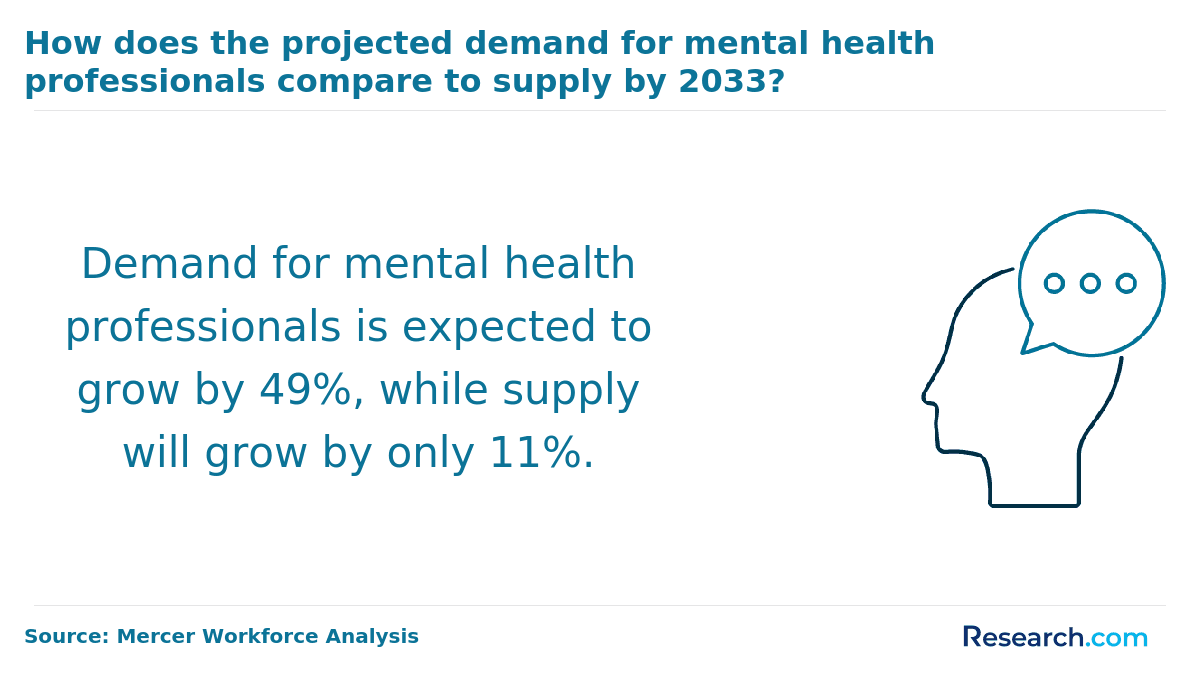
The image below compares projected workforce demand and supply for mental health professionals in Massachusetts by 2033, helping show why clinical preparation and workforce entry both matter.
Are fast-track and online counseling programs in Massachusetts more affordable?
They can be, but affordability depends on the full cost of attendance, not tuition alone. Online and accelerated counseling programs may reduce commuting, housing, and lost-income costs. At the same time, students should check fees, placement expenses, technology requirements, residency sessions, exam preparation costs, and whether they will need to reduce work hours during internship.
The article’s existing cost range notes that online master’s counseling programs in Massachusetts typically charge roughly from $9,500 to $20,000. Campus-based tuition, especially for out-of-state students, can be higher. However, the lowest sticker price is not always the best value if the program lacks placement support or does not align with licensure.
| Cost factor | Why it affects affordability | Question to ask before enrolling |
| Tuition | Online programs may have lower published tuition, with the cited range roughly from $9,500 to $20,000 | Is tuition charged per credit, per term, or as a flat program rate? |
| Program length | Accelerated completion can reduce the number of semesters and may allow earlier workforce entry | Does faster completion require heavier course loads or unpaid fieldwork during work hours? |
| Commuting and relocation | Online study can reduce travel, parking, and housing expenses, especially near Boston | Are any campus visits, residencies, or in-person intensives required? |
| Employment flexibility | Asynchronous courses may help students keep working while enrolled | Can internship hours be scheduled around employment? |
| Financial aid | Eligibility may depend on enrollment status, institution type, and program structure | What federal, state, institutional, or workforce funding options are available? |
| Licensure fit | A cheaper program can become expensive if it does not meet Massachusetts requirements | Can the school provide written confirmation of how the curriculum maps to Massachusetts licensure? |
Online learning can also reduce opportunity costs for students who cannot relocate or leave work. One common trade-off is networking. Students in virtual programs may need to be more deliberate about building relationships with supervisors, local agencies, faculty, and peers.
The best financial decision is not simply the cheapest program. It is the lowest-risk program that meets Massachusetts requirements, helps you complete field hours, fits your schedule, and keeps debt manageable relative to realistic earnings.
Is there a demand for counselors in Massachusetts?
Yes. Massachusetts has continued need for counselors and other behavioral health professionals. Since the pandemic, reports of anxiety and depression symptoms among adults have more than doubled, increasing pressure on mental health services. Behavioral health workforce shortages remain an important concern, including acute care hospitals where vacancy rates for bachelor-level positions reached up to 17 percent in 2022.
Demand is not the same across every counseling role. Community behavioral health, substance use treatment, school counseling, crisis services, hospital-based care, and outpatient mental health may have different hiring patterns, schedules, pay ranges, and supervision opportunities.
- Substance abuse, behavioral disorder, and mental health counseling: Employment growth is projected to continue through 2033, reflecting sustained need for treatment and support services.
- School and career counseling: Demand remains strong, with median salaries exceeding $65,000 annually in the data discussed here.
- Clinical and counseling psychology: Employment is expected to grow by 12 percent over a decade, signaling broader mental health workforce opportunity.
- Community-based roles: These settings often need counselors but may also face burnout pressures and lower compensation compared with some healthcare or private practice settings.
Access and equity are also major workforce issues. Underserved populations, including non-white adults reporting higher behavioral health needs, may face barriers when the provider workforce does not reflect the diversity of the communities served. Future counselors who bring multilingual skills, cultural humility, trauma-informed practice, and community-based experience may be especially valuable.
If you want a flexible graduate route that still supports licensure planning, compare programs carefully through Research.com’s overview of a master’s degree in counseling online. Online study can be practical, but it should still meet fieldwork, supervision, and state-specific licensing expectations.
How do I maintain my counselor license in Massachusetts?
Licensed counselors in Massachusetts must follow renewal rules set by the Massachusetts Board of Registration of Allied Mental Health and Human Services Professionals. This typically involves completing continuing education, keeping documentation, meeting renewal deadlines, and staying current with ethics and clinical practice expectations.
Continuing education is not just a compliance task. It is also how counselors keep pace with changes in trauma treatment, telehealth, suicide risk assessment, substance use care, cultural responsiveness, and ethical practice. Because renewal rules can change, licensed professionals should confirm current requirements directly with the Board before each renewal period.
If your long-term goal is school-based practice rather than general mental health counseling, compare the route carefully with Research.com’s guide on how to become a school counselor in Massachusetts.
What are the LPC license requirements for counselors in Massachusetts?
Many people use “LPC” as a general phrase for professional counselor licensure, but Massachusetts commonly refers to the licensed mental health counseling credential as LMHC. If you are researching LPC requirements, make sure you are reviewing the Massachusetts-specific license category that matches your intended scope of practice.
The core path includes a qualifying graduate degree, required clinical coursework, supervised practicum and internship experience, post-master’s supervised clinical hours, examination, and formal application documentation. Applicants should be prepared to provide transcripts, field training records, supervision verification, and any additional materials required by the state.
For a more focused breakdown of the credentialing process, review Research.com’s guide to LPC license requirements in Massachusetts.
How much do counselors get paid in Massachusetts?
Counselor salaries in Massachusetts vary by license, specialty, employer, experience, location, and whether the counselor works in community care, education, healthcare, private practice, or another setting. The state’s high cost of living is also an important part of any salary decision.
| Role or category | Salary information stated | What affects pay |
| Mental health counselors | Average annual salary is around $70,250, with most earning between $51,300 and $79,200; top professionals can earn over $100,000 | Licensure, clinical setting, caseload, experience, and specialty training |
| LPCs | Average pay is approximately $78,251, with job postings ranging from $60,000 to $140,000 | Urban location, employer type, demand, and clinical responsibilities |
| General counselors | Annual earnings typically fall between $66,000 and $70,000, with an overall range from $58,400 to $83,400 | Experience, certifications, population served, and work setting |
| School and substance abuse counselors | Salaries differ across public schools, private practice, and community health centers | Employer funding, credential requirements, work calendar, and specialization |
| LMHCs | Average about $83,700 annually, with many earning between $75,425 and $93,272 | Independent licensure, years of practice, specialty, and organization type |
Higher pay is possible, but it is not guaranteed. Students should compare likely earnings with tuition, debt, cost of living, unpaid or low-paid fieldwork, and the time needed to complete 3,360 supervised hours. Salaries can also differ substantially between Boston-area employers, western Massachusetts, community agencies, schools, hospitals, and private practice.
To compare role options beyond counseling licensure alone, review Research.com’s guide to jobs you can get with a counseling degree.
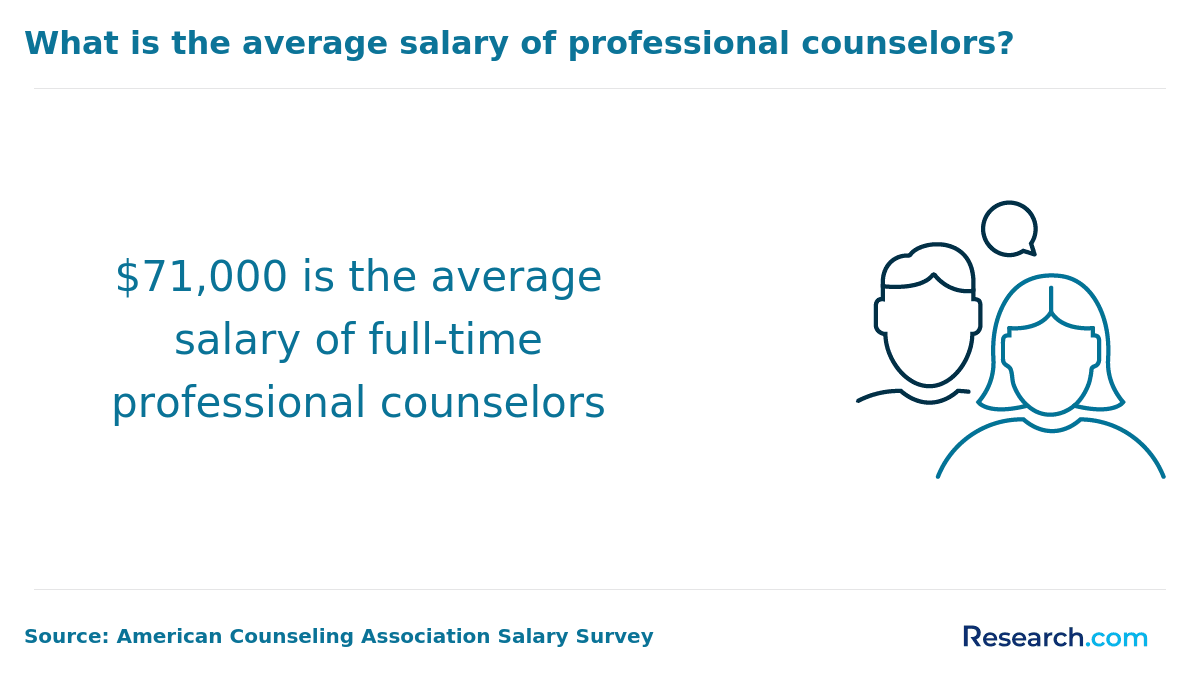
The visual below places Massachusetts counseling pay in a broader context by showing the national average for professional counselors.
Is taking the fast route to become a counselor in Massachusetts worth it?
A fast route can be worth it if you are academically prepared, can handle a demanding schedule, and choose a program that fully supports Massachusetts licensure. It is most valuable when it reduces downtime without weakening clinical preparation.
Fast-track students may enter paid supervised roles earlier, gain experience with real clients sooner, and position themselves for workforce programs that support behavioral health careers. State-supported initiatives such as the HPC Behavioral Health Workforce Center, the Recovery Coach Supervisor Training Incentive Fund, and the Behavioral Health Workforce Scholarship Program can be especially relevant for people already working in the field.
The trade-off is intensity. Accelerated students often balance coursework, fieldwork, supervision, employment, and personal responsibilities with less margin for rest or reflection. Some learners thrive in this structure. Others may become overwhelmed or feel they need more time to build confidence before taking on complex clinical responsibilities.
| Choose a fast-track route if... | Consider a slower route if... |
| You already have experience in education, healthcare, social services, recovery support, or behavioral health | You are new to client-facing work and want more time to develop professional identity |
| You can study consistently in condensed terms | You learn best through longer reflection, discussion, and repeated practice |
| You have reliable financial, family, and scheduling support | You cannot reduce work hours or make room for practicum and internship demands |
| You have confirmed that the program meets Massachusetts licensure requirements | You are unsure whether the degree leads to the license or setting you want |
| You are comfortable actively arranging placements, networking, and supervision | You need a program with highly structured, in-person support at every step |
The strongest fast-track decision is not “finish as soon as possible.” It is “finish efficiently while becoming employable, ethical, supervised, and prepared for the clients you plan to serve.”
Questions to ask before choosing a fast-track or online counseling program
Before enrolling, use direct questions to reduce risk. Admissions pages rarely answer everything a future counselor needs to know about licensure, placement, cost, and supervision.
- Does the program meet the 60-credit expectation for Massachusetts counseling licensure?
- How does the curriculum cover required coursework for LMHC eligibility?
- Does the program include a 100-hour practicum and a post-practicum internship of at least 600 hours?
- Who helps students secure practicum and internship placements in Massachusetts?
- Can current students complete field hours while employed, or are daytime weekday placements required?
- What percentage of students complete the program on the advertised accelerated timeline?
- Are there any in-person residencies, campus visits, or travel requirements?
- What is the full cost, including fees, books, technology, insurance, exam preparation, and travel?
- How does the program prepare students for the NCMHCE?
- What licensure outcomes, employment outcomes, or graduate support services can the school document?
How can I specialize in substance abuse counseling in Massachusetts?
Substance abuse counseling is a strong option for students who want to work in recovery services, community health, behavioral health clinics, correctional settings, hospitals, or integrated care. Specialization may involve focused coursework, supervised experience with substance use populations, and additional certification or training expectations depending on the employer and role.
This path can be especially practical for bachelor’s-level workers already employed in recovery support or behavioral health settings. However, students who want independent clinical counseling authority should still evaluate how substance use training fits with graduate licensure requirements.
For a role-specific pathway, review Research.com’s guide on how to become a substance abuse counselor in Massachusetts.
Related Articles for Nearby States
- 2027 Fastest Way To Become a Counselor in Rhode Island
- 2027 Fastest Way To Become a Counselor in Connecticut
- 2027 Fastest Way To Become a Counselor in New Hampshire
- 2027 Fastest Way To Become a Counselor in New York
- 2027 Fastest Way To Become a Counselor in Vermont
- 2027 Fastest Way To Become a Counselor in New Jersey
- 2027 Fastest Way To Become a Counselor in Maine
- 2027 Fastest Way To Become a Counselor in Pennsylvania
- 2027 Fastest Way To Become a Counselor in Delaware
- 2027 Fastest Way To Become a Counselor in Maryland
How do counselors and social workers differ in Massachusetts?
Counselors and social workers may both support mental health, but their training models and job functions are not identical. Counselors typically focus on assessment, therapy, treatment planning, and clinical interventions rooted in counseling theory and supervised practice. Social workers often combine clinical services with advocacy, case management, systems navigation, public benefits, community resources, and attention to social determinants of health.
| Comparison point | Counselor | Social worker |
| Primary training focus | Counseling theory, psychotherapy skills, diagnosis, treatment planning, supervised clinical practice | Human behavior, social systems, advocacy, case management, community resources, and clinical or macro practice depending on degree level |
| Common work settings | Outpatient clinics, private practice, schools, hospitals, substance use programs, community mental health centers | Hospitals, schools, government agencies, nonprofits, child welfare, community organizations, clinical practices |
| Typical client support | Therapy, coping skills, behavioral change, mental health treatment, crisis support | Therapy in clinical roles, plus resource coordination, systems advocacy, discharge planning, and social service navigation |
| Best fit for students who want... | A career centered primarily on counseling and mental health treatment | A broader role that may combine clinical care with social services, policy, advocacy, or community work |
If you are comparing counseling with social work, review the Massachusetts social worker educational requirements before choosing a graduate program. The wrong degree can add time and cost if it does not lead to the license you want.
Common mistakes to avoid
| Mistake | Why it can hurt your timeline | Better approach |
| Choosing a program based only on speed | A shorter program is not useful if it does not satisfy Massachusetts licensure expectations | Confirm curriculum, credits, practicum, internship, and licensure alignment in writing |
| Looking only at tuition | Fees, travel, lost income, field placement costs, and exam preparation can change the real cost | Build a full cost estimate before enrolling |
| Assuming online means easier | Online programs can require more self-direction and may still have intensive field requirements | Evaluate your schedule, learning style, and placement support honestly |
| Waiting to plan supervision | Post-master’s hours cannot move quickly without a qualified supervisor | Ask employers about supervision before accepting a role |
| Ignoring field placement logistics | Practicum and internship availability can delay graduation | Ask where recent students completed placements and how early the process begins |
| Assuming salaries are guaranteed | Pay varies by setting, license, experience, location, and specialty | Compare local job postings with your expected debt and living costs |
| Confusing counseling, psychology, social work, and marriage and family therapy licenses | Different degrees can lead to different scopes of practice | Choose the license first, then choose the degree that leads to it |
Key Insights
- The fastest counseling path in Massachusetts still requires a 60-credit master’s degree, a 100-hour practicum, at least 600 hours of post-practicum internship, 3,360 supervised clinical hours over a minimum of two years, and NCMHCE preparation.
- Accelerated and online programs can reduce school time or improve flexibility, but they do not remove licensing requirements. Field placement support is often the deciding factor.
- Bachelor’s-level roles can help you gain experience in behavioral health, case management, youth services, and substance use support, but they usually do not allow independent clinical practice.
- Massachusetts shows continued demand for mental health professionals, including areas tied to substance use, behavioral health, school counseling, and community care.
- Salary potential is strongest for licensed and specialized roles, but students should compare earnings with tuition, cost of living, unpaid fieldwork, and the time needed to complete supervision.
- A fast-track route is worth considering if you can handle intensive coursework, secure strong supervision, and verify licensure alignment before enrolling.
- The safest decision is to choose the credential first, then select the program that gets you there efficiently without sacrificing clinical preparation.
References:
- Jenner Law. (n.d.). Unregulated life coaching. https://www.jennerlawfirm.com/blog/unregulated-life-coaching/
- Lesley University. (n.d.). How to become a licensed mental health counselor (LMHC) in Massachusetts. https://lesley.edu/article/how-to-become-a-licensed-mental-health-counselor-lmhc-in-massachusetts
- Mass.gov. (n.d.). Licensed mental health professionals consumer fact sheet. https://www.mass.gov/info-details/licensed-mental-health-professionals-consumer-fact-sheet
- William James College. (n.d.). 4 steps to getting your LMHC in Massachusetts. https://www.williamjames.edu/academics/counseling/clinical-mental-health-counseling-ma/lmhc-licensure/index.html
Other Things to Know About Becoming a Counselor in Massachusetts
Counselors in Massachusetts must renew their licenses every two years. The renewal process typically involves completing 30 hours of continuing education, including mandatory training in ethics, and submitting a renewal application along with the required fee to the Massachusetts Board of Registration of Allied Mental Health and Human Services Professions.
To become a counselor in Massachusetts in 2027, candidates must pass the National Clinical Mental Health Counseling Examination (NCMHCE). This exam is a requirement for obtaining licensure from the Board of Registration of Allied Mental Health and Human Services Professionals.
The Massachusetts Board of Registration of Allied Mental Health and Human Services Professions licenses mental health counselors. To practice as a Licensed Mental Health Counselor, applicants must meet the board’s education, supervised experience, and exam requirements under 262 CMR before receiving state authorization.