2027 What Can You Do with a Counseling Degree? Costs & Job Opportunities

Co-Founder and Chief Data Scientist
Choosing a counseling degree is not just a college decision; it is a licensing, career, and financial decision. The right program can prepare you for work in mental health, addiction recovery, school counseling, rehabilitation, marriage and family services, community agencies, or private practice. The wrong program can delay licensure, limit transfer options, or leave you with debt that does not match your career goals.
This guide explains what a counseling degree is, how much different degree levels can cost, which jobs may be available, what licensing usually requires, and how to compare programs before enrolling. It is designed for students considering an undergraduate counseling path, career changers planning for graduate school, and working professionals comparing online, hybrid, affordable, or accelerated options. If you are also exploring related specializations, you may want to compare counseling with a degree in substance abuse counseling.
The need for trained mental health professionals remains a major issue in the United States. There are 340 individuals for every licensed mental health provider. In 2024, 23% of adults experienced mental illness while among the youth population, 51% experienced at least one major depressive episode (Reinhold et al., 2024). These conditions do not automatically make every counseling degree a good investment, but they do make careful program selection especially important.
Counseling Degree Table of Contents
- What is a Counseling degree?
- Cost of Counseling Degree
- Counseling Degree Jobs
- Types of Degrees in Counseling
- Counseling Degree Requirements
- What to Look for in a Counseling Program
- Majors Related to Counseling
- 2027 Best Bachelor’s in Counseling Programs
- How can you build a successful private counseling practice after graduation?
- How can I maximize my counseling career earnings?
- How to find affordable counseling programs?
- The Role of Technology in Modern Counseling Practices
- Exploring Flexible Online Counseling Degrees
- What is the quickest way to become a therapist?
- How can earning a doctoral degree boost my counseling career?
- How do I obtain professional licensure in counseling?
- Can accelerated online MFT programs fast-track my counseling career?
- Can specializing in forensic psychology enhance my counseling practice?
- Are accelerated online psychology degree programs a smart addition to my counseling education?
- What advanced certifications can accelerate my counseling career?
Quick Answer: Is a Counseling Degree Worth Pursuing?
A counseling degree can be worth pursuing if you want a career centered on helping people manage emotional, behavioral, academic, family, addiction, or life-transition challenges. However, students should understand one critical point before enrolling: a bachelor’s degree alone is usually not enough for independent clinical practice. Most states require a master’s degree, supervised clinical experience, and a licensure exam before a counselor can practice independently.
The strongest candidates for counseling programs are students who are patient listeners, comfortable with complex human problems, willing to complete supervised fieldwork, and prepared for graduate study if they want clinical licensure. Students who want fast entry into high-paying roles without graduate education may want to compare counseling with related majors in social work, psychology, human services, or healthcare administration.
What is a counseling degree?
A counseling degree is an academic program that teaches students how human behavior, mental health, relationships, culture, trauma, development, and environment affect well-being. Programs usually combine psychology, counseling theory, human services, ethics, research, communication, and supervised practice. The goal is not simply to “give advice.” Counselors are trained to listen carefully, assess needs, apply evidence-informed techniques, and help clients build healthier coping strategies.
At the undergraduate level, counseling programs often prepare students for support roles or graduate study. At the graduate level, counseling programs can prepare students for professional licensure, depending on the state and specialization. Common paths include clinical mental health counseling, substance abuse counseling, marriage and family counseling, rehabilitation counseling, and school counseling.
Coursework commonly includes counseling theories and models, helping skills, crisis intervention, cultural competency, lifespan development, interpersonal communication, ethics, assessment, and practicum or internship experiences. Programs may be offered through departments of psychology, counseling, education, behavioral health, human services, or social sciences.
What can you do with a counseling degree?
A counseling degree can lead to roles in schools, hospitals, behavioral health agencies, rehabilitation centers, correctional settings, nonprofit organizations, community programs, employee assistance services, and private practice. Your exact options depend heavily on the degree level, state licensing rules, and whether your program includes supervised clinical training.
For students seeking clinical practice, the master’s degree is usually the key credential. The United States Bureau of Labor Statistics (BLS) projects 17% employment growth for mental health counselors from 2024 to 2034. Demand is shaped by mental health needs, limited provider availability, and long wait times for care. In some areas, patients spend more than six months on a waiting list for mental health support (Bebinger 2021).
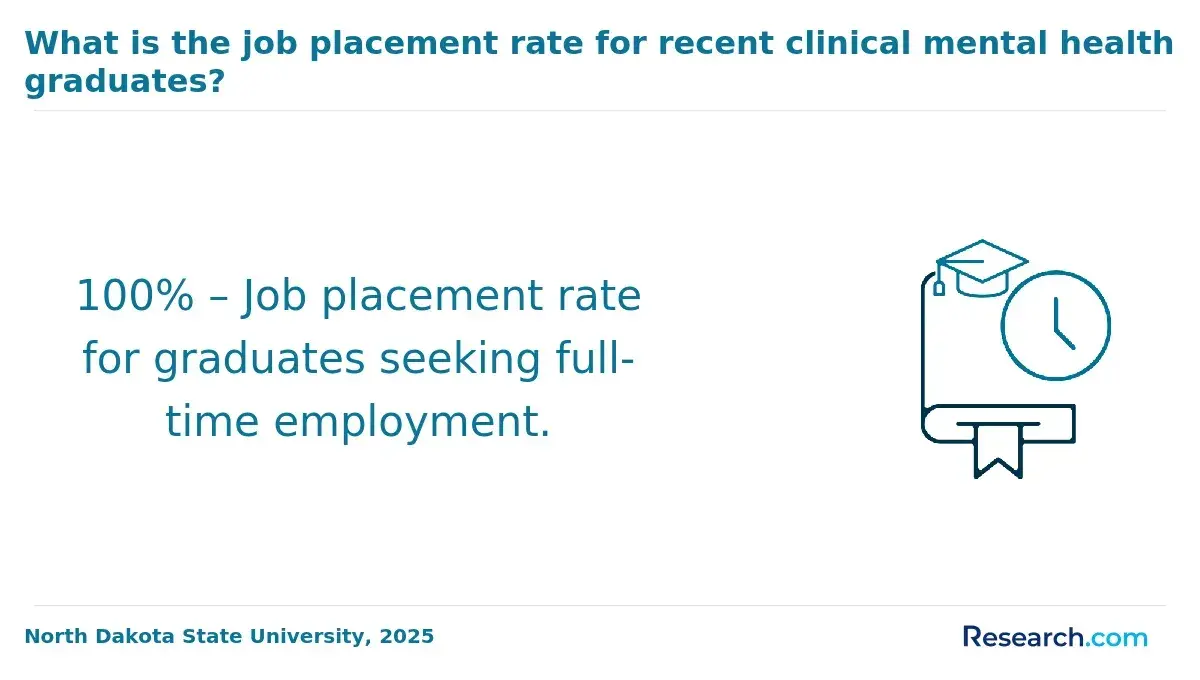
Students in counseling programs build practical skills that extend beyond therapy rooms. They learn how to communicate with empathy, document client needs, understand ethical boundaries, work across cultures, analyze behavior, and collaborate with schools, healthcare teams, social service agencies, and families. Strong programs also help students form professional networks that can support internships, employment, supervision, and eventual practice development.
Cost of Counseling Degree
The price of a counseling degree depends on the degree level, public or private status of the institution, residency classification, location, delivery format, and program length. Tuition is only one part of the total cost. Students should also budget for fees, textbooks, technology, transportation, background checks, internship-related expenses, exam preparation, licensure fees, and possible lost income if fieldwork reduces work hours.
How much does it cost to get a counseling degree?
Costs vary widely across associate, bachelor’s, master’s, and doctoral programs. Public in-state options are generally less expensive than out-of-state or private institutions, while online programs may reduce commuting or housing costs but can still charge technology and distance-learning fees. The table below summarizes average tuition costs by degree level and institution type.
| Degree Level | Public In-State | Public Out-of-State | Private |
| Associate Degree | $ 3,800 | $ 9,209 | $ 14,587 |
| Bachelor's Degree | $ 8,597 | $ 21,900 | $ 39,400 |
| Master's Degree | $ 11,957 | $ 19,167 | $ 36,172 |
| Doctoral Degree | $ 11,798 | $ 37,758 | $ 52,456 |
Is a degree in counseling worth it?
A counseling degree may be worth the cost when it leads to the credential you actually need, prepares you for licensure in your state, offers high-quality supervised fieldwork, and keeps debt at a level you can reasonably repay. It is less likely to be a strong investment if the program is not properly accredited, does not align with state requirements, or requires more borrowing than your target role can support.
The labor market case is meaningful but should not be treated as a guarantee. The U.S. Bureau of Labor Statistics forecasts 17% growth from 2024 to 2034 for substance abuse, behavioral disorder, and mental health counselors, which is much faster than the average for all occupations. The United States also faces a documented shortage of counselors. Even so, salaries vary by role, state, employer, licensure level, and experience.
How to judge counseling degree ROI before enrolling
| Question to Ask | Why It Matters | Better Decision |
| Does the program meet licensure requirements in my state? | Licensure rules are state-specific and can affect whether you can practice independently. | Confirm requirements with the state licensing board before applying. |
| What is the total cost beyond tuition? | Fees, books, commuting, fieldwork, exams, and supervision can raise the real price. | Request a full cost estimate and compare net price after aid. |
| What supervised practicum or internship support is included? | Clinical experience is often required for graduation and licensure. | Choose programs with clear placement support and approved training sites. |
| What jobs do graduates actually obtain? | Program marketing may not reflect typical outcomes. | Ask for graduate placement data, licensure pass rates, and employer partners. |
| Will credits transfer or count toward graduate admission? | Transfer rules can affect completion time and cost. | Get transfer and prerequisite policies in writing. |
Counseling Degree Jobs
Counseling graduates work in several settings because the training combines behavioral science, communication, crisis response, ethics, research, and human services. Some jobs are available with an associate or bachelor’s degree, but clinical counseling roles typically require a graduate degree and licensure. Students should separate “helping professions” from “licensed counselor” roles when comparing career paths.
Is counseling in high demand?
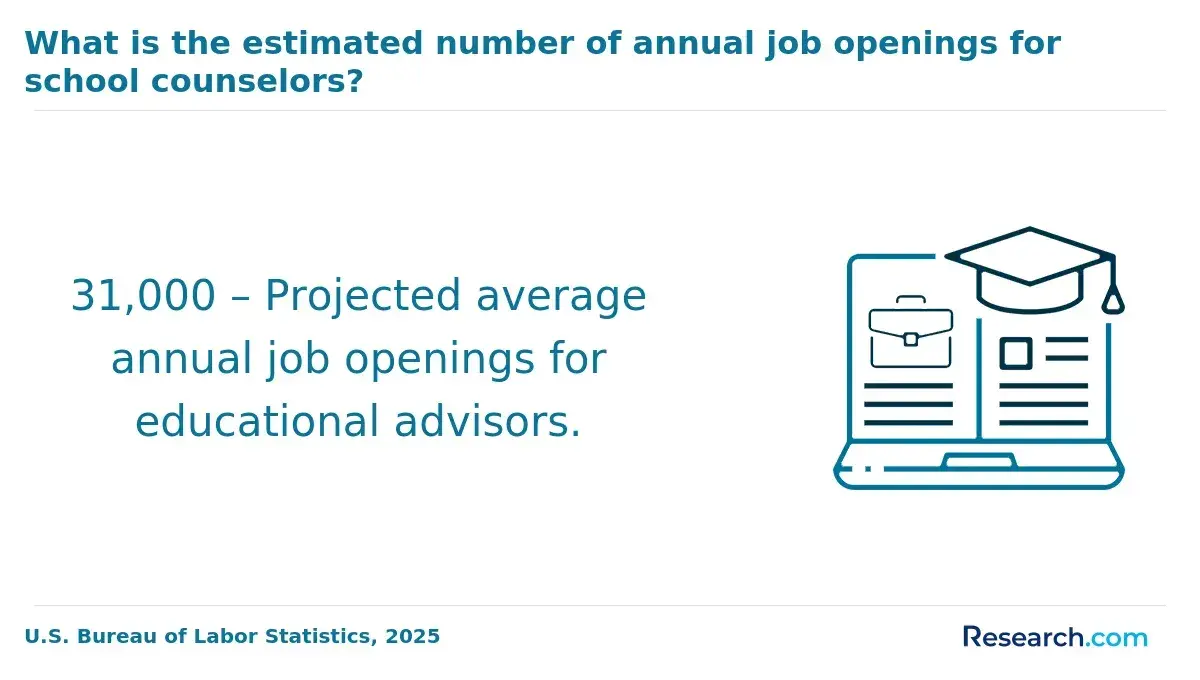
Demand is strong in several counseling-related fields. From 2024 to 2034, about 48,300 new counseling and mental health counselor jobs are projected per year based on BLS job outlook data. Employers include schools, community clinics, hospitals, outpatient centers, nonprofits, residential programs, correctional systems, insurance companies, government agencies, and private practices.
In the U.S., the demand for behavioral health practitioners is expected to top 60,000 by 2026, creating a shortage of 15,000 professionals. This points to opportunity, but students should still evaluate local demand, state licensing rules, reimbursement models, and the availability of supervised clinical positions.
What jobs can you get with a counseling degree?
| Role | Typical Work | Degree and Credential Considerations |
| Substance Abuse, Behavioral Disorder, and Mental Health Counselors | Support clients dealing with addiction, depression, behavioral concerns, emotional distress, and recovery planning. | Clinical roles commonly require a master’s degree, supervised hours, and licensure. Mental health counselors are also needed as sadness and hopelessness among young people increased by about 33% in the last ten years (CDC, 2024). The U.S. Preventive Services Task Force recommends regular anxiety screenings for youth ages 8 to 18. |
| Health Education Specialists and Community Health Workers | Promote wellness, connect communities with services, design outreach programs, and advocate for public health needs. | Some roles are available with undergraduate preparation, especially in community agencies and public health organizations. |
| Probation Officers and Correctional Treatment Specialists | Assess people in custody, probation, or parole and recommend rehabilitation plans, monitor progress, and maintain case documentation. | Requirements vary by agency, but counseling coursework can support work in rehabilitation and behavioral assessment. |
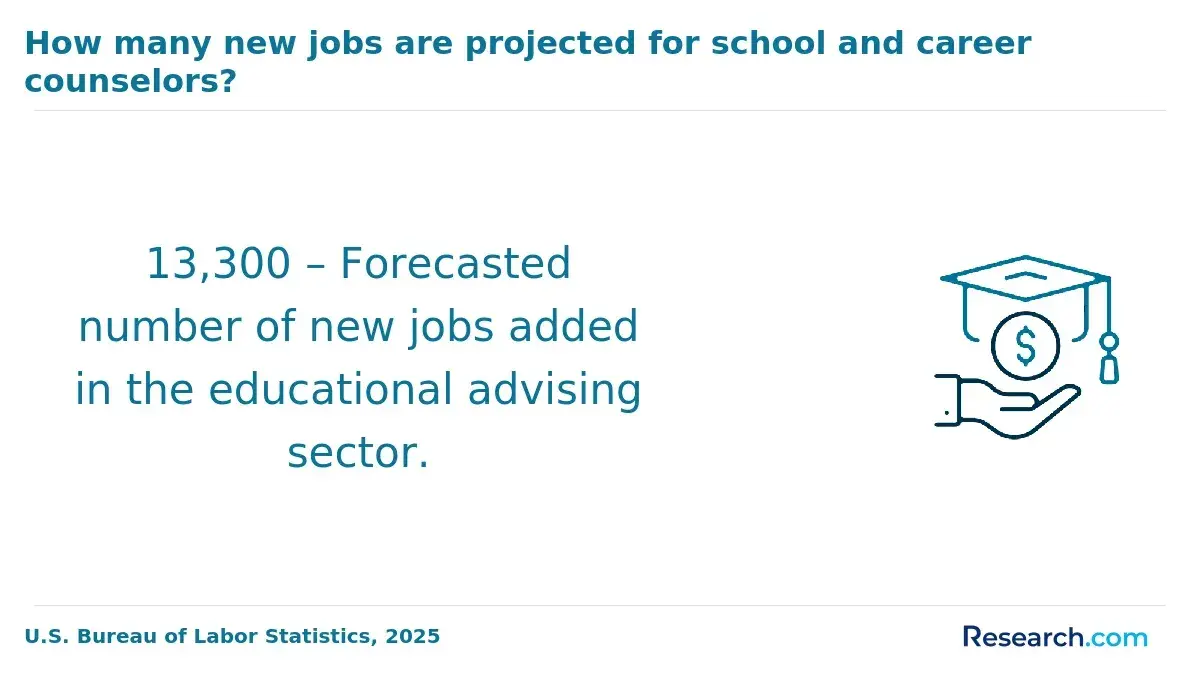
| School and Career Counselors and Advisors | Help students with academic planning, social development, college and career decisions, and life transitions. | School counseling roles usually require graduate education and state-specific credentials. A 2024 survey found that 49 percent of U.S. public schools provided diagnostic mental health assessments (NCES, 2024). |
What kind of salary can I earn with a counseling degree?
Salary depends on specialization, education level, license status, employer, location, and years of experience. Based on 2024 BLS data, the median annual wage for counseling degree graduates is $48,860. The average annual median salary for probation officers and correctional treatment specialists is $64,520, while school and career counselors get an average of $60,510 annually. For social and community service managers, the average median salary is $74,000.
Types of Degrees in Counseling
Counseling degrees are available at the associate, bachelor’s, master’s, and doctoral levels. Certificates are also available for students or professionals who want specialized preparation. The best degree depends on your end goal. If you want an entry-level human services role, an associate or bachelor’s degree may be enough. If you want to become a licensed professional counselor, therapist, or independent clinician, you should expect to complete graduate study and supervised clinical hours.
What kinds of counseling degrees are there?
| Credential | Average Time | Best For | Possible Roles |
| Associate Degree in Counseling | 2 years | Students seeking a low-cost foundation or transfer pathway into a bachelor’s program. | Social research assistant, social and community service workers, correctional treatment specialists. |
| Bachelor’s Degree in Counseling | 4 years | Students preparing for graduate counseling study or entry-level behavioral health support roles. | Recovery counselor, mental health specialist, mental health clinician. |
| Master’s Degree in Counseling | Approximately 2 years | Students pursuing licensure and direct counseling practice. | Social and community service manager, substance abuse counselor, marriage and family therapist. |
| Doctoral Degree in Counseling | 4-6 years | Licensed professionals pursuing teaching, supervision, research, consulting, or advanced clinical leadership. | University faculty, advanced clinicians, mental health agency supervisor, consultant. |
| Certificate in Counseling | Between 6 months to 1 year | Professionals adding specialization in a focused counseling area. | Addiction counselor, grief/bereavement counselor, suicide counselor. |
Associate Degree in Counseling
An associate degree introduces students to applied psychology, helping skills, counseling concepts, ethics, multicultural awareness, lifespan development, career development, and basic research. Programs often require 60-64 credit units and may be offered online, on campus, or through a mix of synchronous and asynchronous coursework.
This degree is usually not designed for independent counseling practice. Its main value is as a transfer-friendly starting point or preparation for entry-level support roles in human services, corrections, community programs, or social service settings.
Bachelor’s Degree in Counseling
A bachelor’s program provides broader training in psychology, human development, social policy, research, communication, and behavioral health. Bachelor of Arts programs often take a broader liberal arts approach, while Bachelor of Science programs may place more emphasis on research, statistics, and scientific methods.
Many bachelor’s programs include internships in settings such as schools, shelters, community mental health centers, or nonprofit organizations. Except for required field experiences, some coursework may be completed online. Students who plan to become licensed counselors should use the bachelor’s degree to prepare for a master’s program that meets state licensure requirements.
Master’s Degree in Counseling
A master’s in counseling is the standard academic pathway for many licensed counseling careers. Most programs take about two years of full-time study and require 60 credits. Some online accelerated programs can be completed in 18 months. Coursework often includes assessment, diagnosis, counseling theory, group counseling, ethics, multicultural counseling, research, practicum, and internship experiences.
Graduates may be eligible to move toward licensure after completing state-required supervised practice. Master’s degree holders in counseling are required to have 2,000-4,000 hours of supervised counseling to qualify for the licensure exam that is required by most states. Students should verify state rules before enrolling because requirements vary.
Doctoral Degree in Counseling
A doctoral degree in counseling prepares experienced professionals for advanced clinical work, counselor education, research, supervision, consulting, and leadership in academic or clinical settings. Programs generally take 4-6 years and may include advanced research, teaching preparation, supervision training, clinical specialization, and dissertation work.
Some programs offer online or hybrid coursework, but many still require residencies, cohort meetings, clinical supervision, or in-person research and teaching activities. Courses offered by institutions are accredited by the Council for Accreditation of Counseling and Related Educational Programs (CACREP).
Certificate in Counseling
Counseling certificates help students or professionals build expertise in a specific area, such as clinical mental health counseling, marriage and family therapy, school counseling, rehabilitation counseling, crisis response, or substance abuse counseling. Certificates may be offered before or after a graduate degree, but post-master’s certificates are especially useful for licensed counselors who want to expand their scope or prepare for doctoral study.
Formats include full-time, part-time, online, campus-based, and hybrid options. Coursework varies by school, but may include clinical supervision, psychopathology, crisis intervention, trauma-informed care, or specialized assessment methods.
Counseling Degree Requirements
Admission requirements depend on the school, degree level, and delivery format. Undergraduate programs usually focus on high school completion, transcripts, and general college readiness. Graduate programs often review prior coursework, GPA, recommendations, essays, interviews, professional experience, and fit with the counseling profession.
Admission Requirements
Proof of Graduation
Associate and bachelor’s applicants typically submit a high school diploma, GED transcript, or other completion documentation required by the school. Some institutions may also require placement testing or a proficiency exam.
Transcript
Undergraduate applicants usually provide high school transcripts, while master’s and doctoral applicants submit prior college transcripts. GPA requirements differ by institution, but counseling programs commonly expect a 2.5 3.0 GPA.
Coursework
Associate programs may require 60-90 credits depending on concentration. Bachelor’s programs commonly require 120 credit hours. Associate-level coursework often covers counseling theory, lifespan development, multicultural competence, and career development. Bachelor’s coursework usually adds psychology, policy, social science, research, and field experience.
SAT or ACT score
Many colleges no longer require SAT or ACT scores for associate or bachelor’s admission, although some still encourage applicants to submit them. Typical score ranges include an SAT score between 1110-1360 or an ACT score of 21-29.
Other Requirements
Depending on the program, applicants may need recommendation letters, a personal statement, an essay, an interview, a resume, prerequisite courses, or math proficiency results. Graduate counseling programs may also ask applicants to explain their professional goals, readiness for clinical training, and understanding of ethical responsibilities.
Skill Requirements
| Skill | Why It Matters in Counseling |
| Communication Skills | Counselors must ask clear questions, explain treatment goals, document sessions accurately, and create a safe space for clients to share sensitive information. |
| Analytical Skills | Effective counseling requires more than listening; counselors must identify patterns, understand triggers, interpret client responses, and choose appropriate interventions. |
| Interpersonal Skills | Counselors work with clients, families, teachers, physicians, social workers, courts, and agencies, so collaboration and emotional awareness are essential. |
| Listening Skills | Active listening helps build trust, clarify concerns, and understand what the client may not state directly. |
| Problem-Solving Capacities | Counselors do not solve every problem for clients, but they must help clients evaluate options, manage crises, and build practical coping strategies. |
Modern counseling also requires comfort with technology and team-based care. As counseling becomes more connected to healthcare, universities are adding interprofessional training to their curricula. A quantitative investigation by Miller et al. (2024) studied the importance of technology competency and interprofessional education among students taking up counseling and healthcare courses. As presented in the paper “Digital Proficiency and Collaborative Readiness: Training the Modern Health Workforce," the research found that interprofessional collaborations and comfort in using technology can be enhanced by including specific training programs in the curricula.
Published in the Journal of Counselor Preparation and Supervision, Johnson (2025) concluded that, “Universities that are preparing the professionals of tomorrow are struggling with equally innovative methodologies to bring various professional students together for meaningful collaborative learning endeavors while also incorporating telehealth technologies." The author also suggested that, “Counselor educators might want to consider curriculum placement when moving toward encouraging interprofessional education" and that, “Students may need assistance in becoming comfortable with specific telehealth technologies."
What to Look for in a Counseling Program
A strong counseling program should fit your career goal, budget, schedule, state licensure requirements, and preferred learning format. Do not choose based only on reputation, speed, or tuition. Counseling is a regulated profession in many roles, so a program that looks convenient can become costly if it does not satisfy licensing or field placement requirements.
Available Specializations
Specialization matters because counseling careers are not interchangeable. A student interested in school counseling should not evaluate programs the same way as someone planning to become a marriage and family therapist or addiction counselor. Compare the curriculum, practicum sites, faculty expertise, and licensure alignment for your intended path.
Accreditation
Accreditation is one of the most important checks before enrolling. Institutional accreditation affects financial aid, credit transfer, employer recognition, and graduate admission. Programmatic accreditation can also matter for licensure or professional credibility. Relevant accrediting organizations may include the American Psychological Association (APA), National Association of School Psychologists (NASP), and Psychological Clinical Science Accreditation System (PCSAS), depending on the program type and professional goal.
Student-Teacher Ratio
Small class sizes and accessible faculty can be especially valuable in counseling education because students need feedback on communication, ethics, cultural responsiveness, and clinical skills. A lower student-to-teacher ratio may support more individualized instruction, but students should also ask how supervision, advising, and internship support are delivered.
Financial Aid Options
Compare scholarships, grants, assistantships, employer tuition support, payment plans, and federal aid eligibility. A low tuition price does not always mean the lowest total cost, and a higher-priced program may be more affordable after aid. Ask for the full estimated cost of attendance, not just the per-credit tuition rate.
Common mistakes when choosing a counseling program
- Choosing speed over licensure fit: An accelerated program is only useful if it meets your state’s academic and supervised training rules.
- Focusing only on tuition: Fees, travel, books, technology, internship costs, and lost work hours can change the real price.
- Assuming online means fully remote: Many online counseling programs still require in-person internships, residencies, or local supervised placements.
- Ignoring accreditation: Lack of recognized accreditation can limit financial aid, transfer credits, licensure eligibility, or employer acceptance.
- Relying only on rankings: Rankings can help you build a shortlist, but your state, specialization, cost, and fieldwork needs should drive the final choice.
- Not asking about placement support: Counseling students often need approved practicum and internship sites. Weak placement support can delay graduation.
Majors Related to Counseling
Students interested in counseling may also compare adjacent majors that lead to human services, behavioral health, research, social policy, or clinical graduate pathways.
2027 Best Bachelor’s in Counseling Programs
The Research.com team reviewed current data sets to identify 2026 bachelor’s-level programs relevant to counseling preparation. Factors included academic ratings, enrollment rate, online reliability, affordability, and other key measures. These rankings should be used as a starting point, not a substitute for checking curriculum, accreditation, transfer policies, and licensure alignment. As of December 2024, more than 122 million people lived in a Mental Health Professional Shortage Area, with 40% (137 million) of the U.S. population in such areas (County Health Rankings & Roadmaps, 2025).
1. University of Southern California: Bachelor of Science in Human Development and Aging with specialization in Counseling
The University of Southern California Human Development and Aging program gives undergraduates the option to pursue a health science track within a gerontology-centered curriculum. The program can support students preparing for graduate study or careers connected to aging, health, occupational or physical therapy, and physician assistant preparation.
Students complete practicum experiences that involve working with aging clients in healthcare environments. Undergraduate study is generally campus-based or hybrid, while graduate options may include fully online formats.
Program Length: 4 years
Tracks/concentrations: Health Science Gerontology
Cost per Credit: $63,468 per year (12-18 units)
Required Credits to Graduate: 128 units
Accreditation: Western Association of Schools and Colleges
2. Northwestern University: Bachelor of Science in Human Development and Psychological Services
The Bachelor of Science in Human Development and Psychological Services at Northwestern University includes a psychological services concentration focused on human development, service systems, counseling theory, counseling techniques, and developmental psychopathology.
Offered through the School of Education and Social Policy, this interdisciplinary program is well suited to students who want research exposure along with practical learning. The undergraduate program is campus-based, while the university’s master’s in Counseling is available both on campus and online.
Program Length: 4 years
Tracks/concentrations: Psychological Development and Counseling
Cost per Credit: $20,797 per quarter, $7,394 per unit (part-time)
Required Credits to Graduate: 45 credits
Accreditation: Higher Learning Commission
3. Boston University: Bachelor of Science in Psychology with a Concentration in Counseling and Clinical Psychology
The Boston University Bachelor of Science in Psychology includes 10 core courses in experimental psychology. Students also complete requirements in quantitative reasoning, social inquiry, critical thinking, research, and information literacy.
This program can be a strong fit for students preparing for graduate study in psychology, counseling, medicine, or law. It is available full time or part time and is delivered on campus.
Program Length: 4 years
Tracks/concentrations: Counseling and Clinical Psychology
Cost per Credit: $30,525 per semester
Required Credits to Graduate: 128 credits
Accreditation: New England Commission of Higher Education
4. University of Edinburgh: Bachelor of Science in Psychology with Counseling
The University of Edinburgh Bachelor of Science in Psychology with Counseling allows students to study theory, research, and practice connected to clinical psychology and counseling. The University of Edinburgh is one of Scotland’s leading providers of postgraduate education, training, and research in counseling studies. The program is based in the School of Health in Social Science, Counselling, and Psychotherapy.
This program is relevant for students considering health and social care careers. It emphasizes social scientific inquiry and is offered on campus, while some postgraduate certificates, diplomas, and master’s programs may be completed fully online.
Program Length: 4 years
Tracks/concentrations: Counseling, Research Methods, and Statistical Analysis
Cost per Credit: £1,820 (Total tuition per year in Scotland)
Required Credits to Graduate: 120 credits per year
Accreditation: The British Psychological Society
5. University of Roehampton: Bachelor of Arts in Psychology with Counseling
The Psychology and Counseling degree program at the University of Roehampton in London lets students study counseling psychology, clinical psychology, psychotherapy, health, cognitive psychology, neuroscience, psychological research, and psychological assessment formulation.
The full-time program can be completed in three years, with an optional additional placement year for students who want more applied experience. The BA in Psychology with Counseling is delivered on campus.
Program Length: 3 years, plus 1 year if availing of placement
Tracks/concentrations: Psychology and Counseling
Cost per Credit: £ 9,250 (UK, Total tuition per year)
Required Credits to Graduate: 360 credits
Accreditation: The British Psychological Society
How can you build a successful private counseling practice after graduation?
Private practice can offer autonomy, flexible scheduling, and direct client relationships, but it is also a regulated business. Before launching, graduates must understand licensure, supervision, insurance, privacy rules, marketing, documentation, and financial management. A strong clinical identity alone is not enough; sustainable practice requires operational discipline.
- Confirm state licensure first: Independent practice usually requires a qualifying graduate degree, supervised clinical hours, and a passing score on a required exam. Check your state licensing board before investing in office space or advertising services.
- Write a business plan: Define your services, client population, pricing model, referral sources, expenses, insurance strategy, and growth goals.
- Choose a focused niche: Areas such as family counseling, addiction recovery, trauma therapy, grief work, or adolescent counseling can help clients and referral partners understand your expertise.
- Set up compliant service delivery: Decide whether you will provide in-person counseling, telehealth, or both. Use secure systems for records, scheduling, billing, and client communication.
- Build a referral network: Connect with physicians, schools, social workers, attorneys, clergy, hospitals, community agencies, and other counselors who may refer clients.
- Develop an ethical marketing plan: A professional website, local search visibility, community workshops, and directory listings can help clients find you without relying on exaggerated claims.
- Get legal and financial guidance: An attorney can help with compliance and consent forms, while an accountant can help with taxes, bookkeeping, and cash-flow planning.
How can I maximize my counseling career earnings?
Counselors can improve earning potential by advancing from support roles to licensed clinical practice, adding in-demand specializations, pursuing supervisory credentials, building telehealth competency, and choosing work settings with stronger compensation. Earnings may also rise through private practice, leadership roles, consulting, program management, or doctoral-level teaching and supervision.
Do not assume that every credential automatically produces a salary increase. Compare local job postings, payer reimbursement patterns, licensure requirements, and employer expectations before paying for additional training. For a deeper salary breakdown, see Research.com’s guide to how much counselors make.
How to find affordable counseling programs?
Affordability is not just about finding the lowest tuition. The best affordable counseling program is one that meets your academic goal, supports licensure if needed, minimizes unnecessary credits, offers field placement help, and keeps total borrowing manageable.
- Compare online options carefully: Online counseling degrees may reduce commuting and housing costs, but they can still include fees and in-person fieldwork. Students interested in family therapy pathways can compare affordable options such as the cheapest MFT programs.
- Use financial aid and scholarships: Ask each school about federal aid eligibility, institutional scholarships, assistantships, state grants, and scholarships for counseling students.
- Start at a community college when appropriate: Completing lower-division coursework at a community college before transferring to a public university can reduce bachelor’s degree costs if credits transfer cleanly.
- Prioritize recognized accreditation: Accredited programs are more likely to qualify for financial aid, transfer pathways, graduate admission, and professional recognition.
- Ask about employer tuition benefits: Students already working in education, healthcare, social services, or nonprofit settings may have access to tuition assistance.
- Calculate return on investment: Compare total program cost with likely roles, license timeline, local salaries, and required supervised hours.
A practical approach is to build a spreadsheet with tuition, fees, aid, transfer credits, program length, practicum requirements, licensure alignment, graduation requirements, and estimated debt. This makes trade-offs visible before you commit.
The Role of Technology in Modern Counseling Practices
Technology now affects how counselors meet clients, document care, coordinate with other professionals, and deliver services. Telehealth platforms can expand access, especially for clients who face transportation, mobility, scheduling, or geographic barriers. At the same time, digital counseling requires careful attention to privacy, informed consent, boundaries, crisis planning, and secure documentation.
Students should look for programs that teach telehealth ethics, data privacy, digital recordkeeping, virtual rapport-building, and technology-assisted assessment. Emerging tools such as AI-supported mental health apps and virtual reality interventions may support care in some settings, but they do not replace professional judgment, ethical supervision, or evidence-informed clinical practice.
Students pursuing a counseling degree or a masters in christian counseling should ask how the curriculum addresses telehealth, multicultural counseling in digital settings, and legal responsibilities across state lines.
Exploring Flexible Online Counseling Degrees
Online counseling degrees can be valuable for working adults, parents, rural students, military-connected learners, and career changers who need more flexible scheduling. The strongest online programs offer rigorous coursework, qualified faculty, advising, peer interaction, field placement guidance, and clear licensure information.
Before enrolling, confirm whether the online program is authorized in your state, whether it meets licensure requirements where you plan to practice, and whether you must attend residencies or complete local internships. CACREP accreditation can be important for certain counseling pathways, but students should still verify state-specific rules.
Affordability also matters. Students comparing online graduate options can review resources such as the cheapest online masters in mental health counseling to identify programs that may reduce educational costs while still supporting professional preparation.
What is the quickest way to become a therapist?
The fastest route to becoming a therapist usually involves choosing a state-approved master’s program that aligns directly with licensure requirements, completing practicum and internship hours without delays, passing required exams promptly, and securing supervised post-graduate experience as soon as possible. Accelerated or hybrid programs can shorten coursework time, but they cannot eliminate state-mandated clinical experience.
Students should be cautious about any program that promises a shortcut to independent practice. The better strategy is to avoid preventable delays: choose an accredited program, confirm licensure fit, plan fieldwork early, and stay organized with documentation. For more detailed pathway planning, review What is the quickest way to become a therapist?.
How can earning a doctoral degree boost my counseling career?
A doctoral degree can strengthen a counseling career by preparing professionals for university teaching, clinical supervision, research, agency leadership, consulting, and advanced practice roles. It is most useful for counselors who want to move beyond direct service into education, scholarship, administration, or specialized clinical leadership.
Because doctoral study requires significant time and money, compare program format, dissertation expectations, faculty expertise, residency requirements, and career outcomes. Students seeking a flexible advanced psychology pathway can explore an affordable online doctor of psychology degree.
How do I obtain professional licensure in counseling?
Professional licensure is the gateway to independent counseling practice in many specialties. Although rules differ by state, the typical process includes completing an eligible graduate degree, finishing supervised clinical hours, passing a required exam, submitting documentation to the licensing board, and completing continuing education to maintain the license.
- Identify your target license: Examples may include professional counselor, marriage and family therapist, school counselor, or substance abuse counselor, depending on your state.
- Check state rules before enrolling: Confirm required credits, coursework, accreditation expectations, practicum hours, internship hours, and exam requirements.
- Complete supervised experience: Many states require post-degree supervised practice before independent licensure.
- Pass the licensing exam: Prepare for the required state or national exam that tests counseling knowledge, ethics, and applied skills.
- Maintain the credential: Licensed counselors usually complete continuing education and renewal requirements.
Students comparing long-term professional options can also review Research.com’s overview of careers in counseling.
Can accelerated online MFT programs fast-track my counseling career?
Accelerated online marriage and family therapy programs can shorten classroom time for qualified students, but they still need to provide clinical training that aligns with licensure requirements. A faster format is useful only if the program is accredited, supports approved field placements, and prepares students for the exam and supervised practice requirements in their state.
When comparing fast-track options, look at total credits, practicum expectations, internship support, residency requirements, faculty credentials, cohort pace, and student support services. Students exploring this pathway can compare the best online MFT programs.
Can specializing in forensic psychology enhance my counseling practice?
Forensic psychology can expand a counselor’s understanding of behavior in legal, correctional, custody, victim services, competency, risk assessment, and court-connected settings. This specialization may be useful for professionals who work with justice-involved clients, trauma survivors, families in legal conflict, or agencies that require behavioral assessment.
It is not a substitute for counseling licensure, and it may not be necessary for every clinician. Students interested in interdisciplinary legal and behavioral health work can evaluate programs such as the cheapest masters in forensic psychology degree.
Are accelerated online psychology degree programs a smart addition to my counseling education?
Accelerated online psychology programs can help students strengthen research, assessment, human behavior, and mental health foundations. They may be especially useful for students who need prerequisite coursework before graduate counseling study or professionals who want broader behavioral science knowledge.
However, psychology programs do not automatically satisfy counseling licensure requirements. Before enrolling, compare the curriculum with your intended counseling path. Students seeking a shorter psychology pathway can review the fastest online psychology degree programs.
What advanced certifications can accelerate my counseling career?
Advanced certifications can help counselors deepen expertise, serve specialized populations, and stand out in competitive job markets. Examples may include focused training in trauma-informed care, crisis intervention, addiction counseling, grief counseling, telehealth, supervision, or digital therapy tools. The value of a certification depends on employer recognition, client needs, state rules, and whether it builds skills beyond your existing license.
Professionals who want a more comprehensive academic credential may compare graduate options such as the best masters in clinical mental health counseling.
Make An Impact: Choose A Counseling Degree
A counseling degree can lead to meaningful work in schools, hospitals, community agencies, rehabilitation centers, public programs, private organizations, and independent practice. It can also support broader career goals in advocacy, research, education, supervision, and behavioral health leadership.
The best choice is not necessarily the cheapest, fastest, or most recognizable program. The best choice is the program that fits your target role, meets licensure rules, provides strong supervised training, is properly accredited, and keeps total cost within a realistic range. Counseling can be personally rewarding and socially important, but it requires preparation, ethical maturity, and a clear understanding of the path from student to professional.
Key Insights
- A bachelor’s degree is usually a starting point, not the final credential: Many independent counseling careers require a master’s degree, supervised clinical hours, and licensure.
- Licensure alignment should come before convenience: Before choosing an online, accelerated, or out-of-state program, confirm that it meets requirements where you plan to practice.
- Demand is strong but outcomes vary: BLS projects 17% growth from 2024 to 2034 for substance abuse, behavioral disorder, and mental health counselors, but salary depends on role, location, license, and employer.
- Total cost matters more than tuition alone: Include fees, technology, transportation, fieldwork expenses, exam costs, and the value of transfer credits when comparing programs.
- Accreditation is a practical safeguard: Recognized accreditation can affect financial aid, transferability, graduate admission, licensure eligibility, and employer confidence.
- Fieldwork support is critical: A counseling program should clearly explain how practicum and internship placements work, especially for online students.
- Technology skills are now part of counseling readiness: Telehealth, digital privacy, secure documentation, and virtual client engagement are increasingly important in modern practice.
- Specialization should match your intended clients: School counseling, clinical mental health, addiction, marriage and family therapy, rehabilitation, and forensic-related pathways require different preparation.
References:
- Arizona State University. (2025). Master of Counseling Program Evaluation Outcomes Report. https://cisa.asu.edu/sites/g/files/litvpz691/files/2026-02/MC%20Annual%20Program%20Outcome%20Report%202024-2025.pdf
- Texas State University. (2025). CACREP Student Outcome Data Summary. https://docs.gato.txst.edu/769109/CACREP%20Student%20Outcome%20Data%20Summary%20AY%202024-2025.pdf
- U.S. Bureau of Labor Statistics. (2025). Employment Projections: 2024-2034 Summary. https://www.bls.gov/emp/
- U.S. Bureau of Labor Statistics. (2025). Occupational Projections and Worker Characteristics. https://www.bls.gov/emp/tables/occupational-projections-and-characteristics.htm
- U.S. Bureau of Labor Statistics. (2025). Projected job openings in occupations typically requiring a graduate-level degree, 2024–34. https://www.bls.gov/opub/ted/2025/projected-job-openings-in-occupations-typically-requiring-a-graduate-level-degree-2024-34.htm
Other Things You Should Know About Counseling Degrees
In 2027, counseling graduates can explore specialized roles such as school counselors, mental health counselors, substance abuse counselors, and marriage and family therapists. Each specialization offers unique opportunities and demands specific expertise, aligning with the growing emphasis on mental health services.
Students should consider tuition, books, technology fees, and living expenses. In 2027, tuition varies widely depending on the institution. On average, public universities may charge $10,000 per year for in-state students, while private institutions might charge $30,000 or more. Financial aid and scholarships can help offset these costs.
In 2027, counseling graduates can enhance their career prospects with certifications like Certified Clinical Trauma Professional (CCTP) or skills in multicultural counseling. These credentials demonstrate specialized expertise, improving employability and potentially leading to higher-paying positions in diverse professional settings.
In 2027, the job market for counseling degree graduates is robust, driven by the increased demand for mental health professionals. Job opportunities span across schools, hospitals, and private practices, with specializations like family counseling and addiction therapy in high demand due to societal needs.
Most states require a state-issued professional counselor license, such as LPC or LCPC, for private practice. Typical requirements include a 60-credit master’s degree, 2,000 to 4,000 supervised post-master’s hours, and passing the National Counselor Examination (NCE) or the National Clinical Mental Health Counseling Examination (NCMHCE).