2027 What Can You Do With a Psychology Counselling Degree?

Co-Founder and Chief Data Scientist
Choosing a psychology counselling degree is not just a question of what to study. It is a decision about licensure, supervised clinical training, cost, specialization, and the kind of clients you want to serve. The need is significant: in 2026, the American Psychological Association reported that 76% of adults experienced stress-related health effects, including headaches, anxiety, depression, and other concerns. One in 10 also reported using alcohol or drugs for short-term relief.
Demand for care has grown as more people seek support. More than 30 million people received treatment in 2024, while many others still had unmet needs (SAMHSA, 2025). The labor market reflects that need: employment for counselling psychologists is projected to grow by 12% from 2024 to 2034 (U.S. Bureau of Labor Statistics, 2025).
This guide explains what a psychology counselling degree is, how it differs from related psychology and therapy pathways, what degree level you may need, how licensure works, what programs can cost, and which career options may be available. If you are considering a career as a counselor, use this guide to compare programs, avoid costly mistakes, and decide whether this field fits your goals.
Psychology Counselling Degree Table of Contents
- Psychology counselling degree overview
- Skills developed in counselling psychology programs
- Psychology counselling degree cost and value
- 2027 master’s programs in psychology counselling
- Jobs for psychology counselling graduates
- Types of psychology counselling degrees
- Admission, academic, and skill requirements
- Licensing and certification for psychology counseling
- How to choose a counselling degree program
- Online counseling degrees
- Spirituality and counseling practice
- Financial aid and lower-cost degree options
- Trends shaping psychology counselling education
- Career pathways after graduation
- Therapist specializations and higher earnings
- Sports psychology specialization
- Online master’s in Christian counseling
- Counseling credentials and career mobility
- Substance abuse counseling specialization
Quick Answer: What Is a Psychology Counselling Degree?
A psychology counselling degree prepares students to help individuals, families, groups, and communities manage emotional, behavioral, educational, and mental health concerns. The bachelor’s degree can introduce the field, but most professional counseling roles require a master’s degree, supervised field experience, and state licensure. Doctoral study is typically used for advanced clinical practice, supervision, research, teaching, or leadership.
The right degree depends on your target role. A school counseling program is different from a clinical mental health counseling program. A CACREP-accredited master’s degree may be especially important if you want the broadest licensure flexibility. Before enrolling, verify accreditation, practicum requirements, state licensure alignment, total program cost, transfer policies, and placement support.
What is a Psychology Counselling Degree?
Counselling is a professional helping relationship focused on mental health, wellness, education, career development, coping skills, and personal growth. Counselors do more than listen. They assess client needs, build treatment or support plans, apply evidence-informed interventions, maintain ethical boundaries, protect confidentiality, and refer clients when specialized care is needed.
A psychology counselling degree combines psychological theory with practical counseling methods. Students study how people think, feel, relate, develop, experience distress, recover, and make decisions. Depending on the program, coursework may include:
- Foundations of psychology
- Interpersonal and therapeutic communication
- Human behavior in social environments
- Crisis response, prevention, and referral practices
- Social policy, ethics, and professional standards
The master’s degree is the usual academic requirement for licensure as a professional counselor in many states. After graduation, students generally complete supervised post-degree experience, pass required examinations, and apply through their state licensing board.
What skills will you learn in a psychology counselling degree program?
A strong counselling program should build both clinical competence and interpersonal maturity. Students are trained to work with real people in sensitive situations, so technical knowledge and professional judgment matter equally.
| Skill area | Why it matters in counseling practice |
| Active listening | Counselors must understand what clients say, what they avoid saying, and how emotions show up through tone, body language, and behavior. |
| Clear communication | Clients need explanations, boundaries, feedback, and treatment goals that are understandable and respectful. |
| Critical thinking | Counselors evaluate complex situations, identify risk factors, and select interventions that fit the client’s needs. |
| Problem-solving | Effective counseling helps clients build practical strategies for relationships, emotions, decisions, and daily challenges. |
| Empathy and compassion | Clients are more likely to engage when they feel respected, heard, and not judged. |
| Ethical decision-making | Counselors handle confidentiality, informed consent, mandated reporting, conflicts of interest, and professional boundaries. |
| Cultural competence | Clients’ identities, communities, beliefs, and lived experiences shape how they understand distress and healing. |
Students also learn to use assessment tools, write case notes, create treatment plans, apply counseling theories, and evaluate client progress. These skills are developed through coursework, role-play, practicum, internship, and supervised clinical training.
Licensure preparation is another major outcome. Most graduates must complete practical experience and pass a required exam before practicing independently, so the best programs connect classroom learning with fieldwork from the start.
Cost of a Psychology Counselling Degree
Education Data (2024) reports that an average master’s degree can cost between $37,000 and $140,000. Psychology counselling programs may be less expensive than some graduate degrees, with annual tuition and fees starting at $12,000 or less. However, tuition is only part of the total cost. Books, technology, clinical placement travel, housing, transportation, fees, exam costs, and unpaid internship hours can affect affordability.
How much does it cost to get a psychology counselling degree?
Although undergraduate psychology counselling options exist, the most common professional route begins with graduate study. Students planning the common path to a career in counseling should compare the full cost of a master’s degree, not only the advertised tuition rate.
| Program example | Institution type or format | Stated tuition and fees |
| MA in Counseling Psychology, University of Denver | Public university example | $21,568 |
| California Baptist University | Private institution example | $46,920 |
| Online MS in Counseling, University of Wisconsin-Madison | Online program example | About $32,534 |
Online study can be useful for working adults, caregivers, and students who do not live near a campus-based program. If remote learning fits your schedule, a master’s in psychology counselling may be among the best online degree to get for students seeking a flexible route into a licensed helping profession. Still, online students should confirm that practicum and internship placements are available in their state.
Is a psychology counselling degree worth it?
A psychology counselling degree can be worth the investment if you are committed to client-facing work, understand the licensure process, and choose a program aligned with your state’s requirements. The social need is clear: over 57 million adults live with mental illness, and many communities continue to face barriers to treatment.
The degree may also be useful for students exploring broader psychology-related career options. If you are comparing this path with other psychology careers, review related outcomes in our guide to what to do with psychology degree. The key question is not simply whether the field is meaningful; it is whether the program’s cost, licensure alignment, and expected career path make sense for your situation.
2027 Best Master’s Degrees in Psychology Counselling
Research.com’s review team evaluated current public information to identify master’s programs that may be strong options for students interested in psychology counselling. The selection considered academic reputation, accessibility, affordability, and student outcomes. Use this list as a starting point, not a substitute for checking state licensure rules and program disclosures.
| Rank | School | Program focus | Program length | Credits | Accreditation |
| 1 | University of Missouri | Counseling Psychology, School Counseling, Sports Psychology, Career Counseling | Two years | 49-64 | American Psychological Association (APA) |
| 2 | Northwestern University | Counseling Psychology | Two years | 51 | Council for the Accreditation of Counseling and Related Educational Programs (CACREP) |
| 3 | University at Albany, SUNY | Mental Health Counseling | Two years | 60 | Masters in Psychology and Counseling Accreditation Council (MPCAC) |
| 4 | The Chicago School of Professional Psychology | Mental Health Counseling, Counseling Psychology | Two years (offline), Three years (online) | 60 | Council for the Accreditation of Counseling and Related Educational Programs (CACREP) |
| 5 | University of Cincinnati | School Counseling, Mental Health Counseling | Two years | 60 | Council for the Accreditation of Counseling and Related Educational Programs (CACREP) |
1. University of Missouri
The University of Missouri offers Counseling Psychology programs built around the scientist-practitioner model. The MA and MEd pathways connect research, professional practice, and applied training, making them suitable for students interested in practice, academic work, or future doctoral study. Program options include school counselling, career counselling, sports psychology, and counseling psychology.
- Program length: Two years
- Tracks/concentrations: Counseling Psychology, School Counseling, Sports Psychology, Career Counseling
- Estimated cost per credit: $435.30 (in-state), $1,191.90 (out-of-state)
- Required credits to graduate: 49-64
- Accreditation: American Psychological Association (APA)
2. Northwestern University
Northwestern University’s MA in Counseling emphasizes reflective practice, cultural responsiveness, and self-awareness. Students complete clinical experiences through The Family Institute, the university’s onsite clinic, or through clinical centers in other locations. The program is designed for students who want a strong grounding in counseling theory, practice, and lifelong professional scholarship.
- Program length: Two years
- Tracks/concentrations: Counseling Psychology
- Estimated cost per credit: $863
- Required credits to graduate: 51
- Accreditation: Council for the Accreditation of Counseling and Related Educational Programs (CACREP)
3. University at Albany, SUNY
The University at Albany, SUNY offers an MS in Mental Health Counseling that may appeal to applicants from psychology and non-psychology backgrounds. The program has limited standardized testing requirements, accepts up to 29 equivalent psychology credits for transfer, and includes supervised counseling experience. Students can also use electives to shape a professional focus.
- Program length: Two years
- Tracks/concentrations: Mental Health Counseling
- Estimated cost per credit: $608.72 (in-state), $1,100.72 (out-of-state)
- Required credits to graduate: 60
- Accreditation: Masters in Psychology and Counseling Accreditation Council (MPCAC)
4. The Chicago School of Professional Psychology
The Chicago School of Professional Psychology offers MA counseling options in online and campus-based formats. The curriculum highlights diversity, multicultural practice, and licensure preparation. The online Mental Health Counseling program incorporates the eight content areas identified by the National Board for Certified Counselors (NBCC), while campus programs offer concentrations and dual-degree options such as Latino Mental Health, Applied Behavior Analysis, and Health Psychology.
- Program length: Two years (offline), Three years (online)
- Tracks/concentrations: Mental Health Counseling, Counseling Psychology
- Estimated cost per credit: $1,303
- Required credits to graduate: 60
- Accreditation: Council for the Accreditation of Counseling and Related Educational Programs (CACREP)
5. University of Cincinnati
The University of Cincinnati’s cohort-based MEd in School Counseling prepares students for licensure as a Professional School Counselor. The program uses the ASCA National Model and trains students to develop comprehensive school counselling programs within K-12 settings. Students interested in mental health practice can also consider UC’s Mental Health Counseling program.
- Program length: Two years
- Tracks/concentrations: School Counseling, Mental Health Counseling
- Estimated cost per credit: $1,257 (in-state), $1,897 (out-of-state)
- Required credits to graduate: 60
- Accreditation: Council for the Accreditation of Counseling and Related Educational Programs (CACREP)
Psychology Counselling Degree Jobs
Graduates can work in schools, hospitals, community agencies, government programs, private organizations, research settings, and independent practice, depending on their degree level, license, specialization, and state rules. Some roles involve direct therapy, while others focus on prevention, assessment, student support, program design, workplace wellbeing, or research.
Are counselling psychologists in high demand?
Demand is shaped by both need and access. In “Help-seeking behaviors for mental health problems during the COVID-19 pandemic: A systematic review,” published in the Journal of Affective Disorders, Yonemoto and Kawashima found that stigma can discourage people from seeking mental health support. They noted that pandemic-related changes in communication and social contact may have altered help-seeking behavior. A 2024 World Health Organization report also stated that global mental health service utilization decreased by approximately 20% during the pandemic's peak periods (World Health Organization, 2024).
The researchers also reported that internalized stigma and treatment stigma were frequently connected with reduced help-seeking. Disclosure concerns were a common stigma-related barrier, and groups including ethnic minorities, men, young people, military personnel, and healthcare workers were disproportionately affected.
At the same time, providers have faced heavy demand. The APA reported increases in patients seeking help for anxiety (85%), depression (70%), and trauma and stress-related disorders (68%), leaving many psychologists struggling to meet the demands for care.
Labor projections show continued opportunity across counseling-related fields. From 2024 to 2034, employment is expected to grow by 17% for substance abuse, behavioral disorder, and mental health counsellors, 13% for marriage and family therapists, and 6% for social workers (BLS, 2025).
What jobs can you get with a psychology counselling degree?
Your job options depend heavily on whether you earn a bachelor’s, master’s, doctorate, certificate, or license. The table below shows common directions for graduates.
| Career option | Typical setting | Primary focus |
| Marriage and Family Therapist | Clinics, agencies, private practice | Couples, families, communication patterns, conflict, and major transitions |
| School Counselor | K-12 schools | Academic planning, social-emotional support, crisis response, and career readiness |
| Group Therapist | Clinics, hospitals, community programs | Facilitating therapeutic groups and peer support |
| Industrial-organizational Counselor | Businesses and organizations | Employee wellbeing, burnout, leadership coaching, and workplace stress |
| Mental Health Counselor | Clinics, hospitals, agencies, private practice | Anxiety, depression, trauma, life transitions, and emotional distress |
| Substance Abuse Counselor | Treatment centers, community programs, healthcare settings | Addiction recovery, relapse prevention, and coping strategies |
| Geriatric Counselor | Healthcare settings, senior services, private practice | Aging, grief, chronic illness, loneliness, and family transitions |
| Forensic Psychologist | Legal, correctional, and forensic settings | Psychological assessment, legal cases, behavior analysis, and expert insight |
Counselling psychology roles
Counselling psychology often focuses on life stress, identity concerns, relationships, grief, burnout, adjustment, and personal growth. Roles in this area may include marriage and family therapist, school counselor, group therapist, and industrial-organizational counselor.
Clinical psychology roles
Clinical psychology is more closely associated with diagnosing and treating significant mental health disorders such as depression, anxiety, trauma-related conditions, and personality disorders. Related roles may include mental health counselor, substance abuse counselor, geriatric counselor, and forensic psychologist.
What salary can you earn with a psychology counselling degree?
The U.S. Bureau of Labor Statistics reports that clinical and counseling psychologists earn a median salary of $82,510 per year. Salary varies by setting, license, education level, geographic area, specialization, and experience.
Government roles report a median annual salary of $107,250. School counselors earn $80,410 annually (U.S. Bureau of Labor Statistics, 2024). Educational level may also influence earnings: BLS data from 2024 shows master’s degree holders earning a yearly average of $89,410, while doctorate holders earn $97,810. Additional credentials may support advancement, but they do not guarantee a specific income.
Types of Psychology Counselling Degrees
Psychology counselling education is offered at undergraduate, graduate, doctoral, and certificate levels. The degree you choose should match your career goal. A bachelor’s degree may help you enter human services or related roles, but a master’s degree is usually the key step for licensure. Doctoral study supports advanced clinical, research, academic, or leadership work.
| Credential | Typical completion time | Best fit | Example entry-level roles |
| Bachelor’s degree in psychology counseling | Four years | Students exploring psychology, human services, research, or graduate preparation | HR Specialist, Career Counselor, Research Assistant |
| Master’s degree in psychology counseling | Two years | Students preparing for licensure and direct counseling practice | Mental Health Counselor, Substance Abuse Counselor, Industrial-organizational Counselor |
| Doctorate degree in psychology counseling | Four to seven years | Licensed professionals or advanced students pursuing research, supervision, teaching, or leadership | Professor, Researcher, Mental Health Supervisor |
| Non-degree certificate | Six months to two years | Licensed counselors expanding expertise or meeting continuing education goals | Rehabilitation Counselor, Career Counselor, Marriage and Family Counselor |
Bachelor’s degree in psychology counseling
Time to complete: Four years
Consistent with the bachelor’s degree definition, this undergraduate option introduces students to psychology, counseling concepts, general education, and electives. It is less common than graduate counseling programs and usually does not qualify graduates for independent counseling practice.
Bachelor’s graduates may pursue roles in human resources, case support, research assistance, career services, or business-related fields, including some highest paying jobs with a bachelor’s degree. Students who want to become licensed counselors should plan for graduate study.
Entry-level jobs: HR Specialist, Career Counselor, Research Assistant
Master’s degree in psychology counseling
Time to complete: Two years
A master’s degree in psychology counselling is the main professional degree for students who want to become counselors or clinicians. It provides advanced coursework, clinical preparation, research exposure, and supervised field experience.
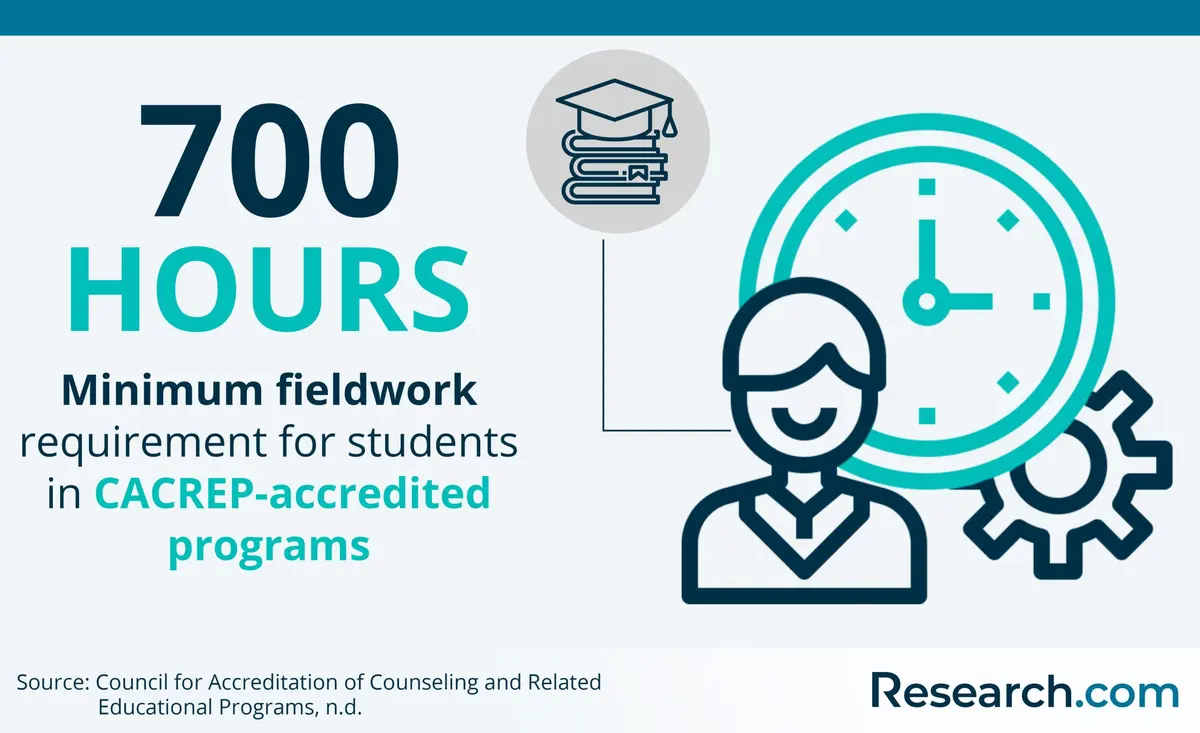
Students in CACREP-accredited programs can expect to complete at least 700 hours of fieldwork. Common specializations include:
- Mental Health Counseling
- School Counseling
- Substance Abuse Counseling
- Career Counseling
MA and MS in Counseling vs. MeD in Counseling
MA and MS programs often share a similar professional foundation but may emphasize different dimensions of the field. An MA may give more attention to theory, ethics, counseling philosophy, and human behavior. An MS may lean more toward research methods, statistics, assessment, and empirical practice. Both can support licensure preparation, depending on accreditation and curriculum design.
A Master of Education (MeD) in Counseling is usually more practice-oriented and may be especially relevant for school counseling or students who want a structured route into professional practice after graduation.
Entry-level jobs: Mental Health Counselor, Substance Abuse Counselor, Industrial-organizational Counselor
Doctorate degree in psychology counseling
Time to complete: Four to seven years
A doctorate is the highest academic credential in this area. These programs are typically research-intensive and can prepare graduates for advanced clinical work, supervision, administration, college teaching, or academic research.
Many students enter doctoral study after earning a master’s degree and gaining licensure, but some schools offer combined master’s-to-doctorate pathways for students entering after a bachelor’s degree.
PhD in Counseling vs. PsyD in Counseling
The two major psychology counseling doctorate degrees are the Doctor of Philosophy (PhD) and Doctor of Psychology (PsyD).
A PhD is commonly designed for students interested in research, teaching, scholarship, and academic leadership. A PsyD is more practice-focused and usually emphasizes clinical service, assessment, supervision, and applied work with clients.
Entry-level jobs: Professor, Researcher, Mental Health Supervisor
Non-degree certificate in psychology counseling
Time to complete: Six months to two years
Certificate programs are often used by licensed counselors who want to add a specialty, refresh professional skills, or meet continuing education requirements. They may not replace a degree or license, but they can document focused training.
Examples include:
- National Certified Counselor (NCC)
- Certified Clinical Mental Health Counselor (CCMHC)
- Certified Rehabilitation Counselor (CRC)
- Certified School Counselor (CSC)
Certificates can strengthen a professional profile when they align with a real practice area, employer requirement, or renewal obligation. They should be evaluated for credibility, relevance, and recognition by employers or licensing bodies.
Entry-level jobs: Rehabilitation Counselor, Career Counselor, Marriage and Family Counselor
Psychology Counselling Degree Requirements
Requirements differ by school, degree level, specialization, and state licensure pathway. Most graduate programs ask for an accredited bachelor’s degree, transcripts, recommendation letters, and a personal statement. Some may request standardized test scores such as the GRE.
Admission requirements
Bachelor’s degree
Applicants to graduate counselling programs usually need a bachelor’s degree from an accredited college or university. Psychology is a common undergraduate background: Zippia reports that 35% of counselling psychologists studied psychology, followed by counselling psychology (24%), school counselling (9%), and clinical psychology (7%). Some programs also accept students from majors such as social work, human services, education, or related fields.
Grades, tests, and prerequisite coursework
Graduate programs typically review official undergraduate transcripts. Many require a minimum GPA of 3.0. Some also expect prerequisite coursework such as introductory psychology, abnormal psychology, statistics, or research methods.
Programs may require standardized tests such as the Graduate Record Examination (GRE) or Miller Analogies Test (MAT), though requirements vary. Always verify current admissions policies directly with the school.
Letters of recommendation and personal statement
Recommendation letters and a personal statement help admissions committees evaluate maturity, motivation, communication ability, and fit for the counseling profession. Strong application materials and relevant experience can help contextualize academic records, especially when GPA alone does not fully reflect readiness.
Skill requirements
- Active listening. Counselors must listen closely, reflect accurately, and notice nonverbal signals while keeping the client’s needs at the center of the conversation.
- Crisis intervention. Counselors need judgment under pressure, including knowing when immediate action, referral, safety planning, or mandated reporting may be necessary.
- Trustworthiness. Clients share sensitive information, so counselors must protect confidentiality, explain its limits, and behave consistently and professionally.
- Empathy. Counselors need to understand a client’s perspective without losing professional boundaries or allowing personal reactions to direct treatment.
How Do I Navigate Licensing and Certification for Psychology Counseling?
Licensing is one of the most important parts of the counseling career path. A degree alone does not automatically authorize independent practice. Most students must complete a qualifying graduate program, supervised clinical hours, required examinations, background checks, and a state board application.
Because counseling licenses are regulated by state boards, requirements can vary. Before choosing a program, compare its curriculum and fieldwork structure against the rules in the state where you plan to practice. If you expect to move, ask whether the degree supports portability to other states.
Certification is different from licensure. A license gives legal permission to practice within a defined scope. A certification usually documents specialty knowledge or professional competence. Specialized credentials may also support niche career paths, including areas connected to forensic psychology salary considerations.
What to Look for in a Psychology Counselling Degree Program
A strong program should do more than offer convenient classes. It should prepare you for licensure, ethical practice, supervised client work, and employment in your target setting. Accreditation, curriculum, field placement quality, faculty expertise, state alignment, and student support should all factor into your decision.
Accreditation
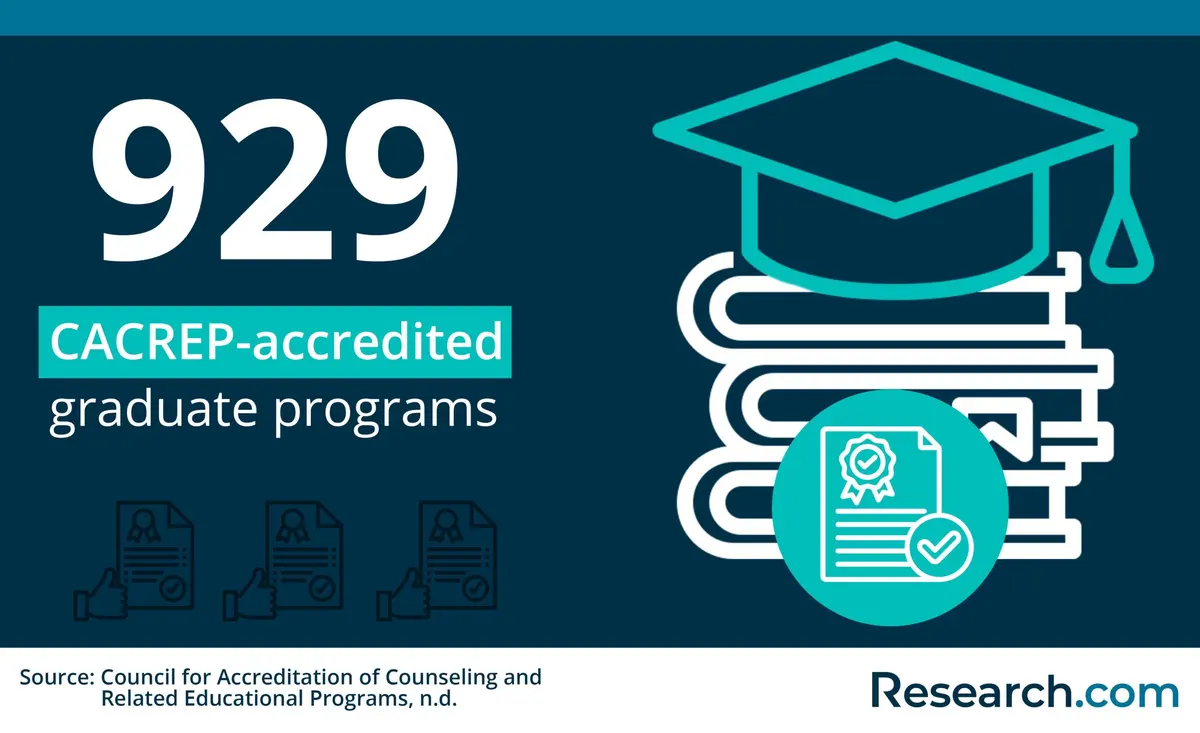
Accreditation helps verify that a program meets recognized educational standards. The Council for Accreditation of Counseling and Related Educational Programs (CACREP) accredits advanced counseling programs. Its directory lists 929 degree programs are CACREP-accredited.
CACREP accreditation may help with licensure, employment, and future academic study. Some state licensing boards require or prefer graduation from a CACREP-accredited program, so students should confirm requirements before enrolling.
Specializations
Specialization matters because counseling roles serve different populations and settings. If you already know your preferred work environment, choose a program that matches it. Common options include:
- MeD in School Counseling
- MS in Clinical Mental Health Counseling
- MA in Marriage, Couple and Family Counseling
- MS in Addiction Counseling
Fieldwork, practicum, and internship
Most states require license applicants to complete 2,000 to 3,000 hours of supervised counselling experience (American Counseling Association, n.d.). A program with strong embedded practicum and internship support can make the transition from coursework to supervised practice smoother.
Ask how placements are arranged, whether students must find their own sites, what kinds of agencies partner with the school, and whether online students receive placement support near where they live.
Questions to ask before enrolling
- Is the program accredited, and by which accreditor?
- Does the curriculum meet licensure requirements in my state?
- How many practicum and internship hours are included?
- Who helps students secure field placements?
- What are the total costs beyond tuition?
- Are online students eligible for the same support services as campus students?
- What exam preparation or licensure advising is offered?
- Can transfer credits reduce my time or cost?
Is an Online Counseling Degree Right for You?
An online counseling degree can work well for students who need flexibility, but it requires careful verification. Accreditation, curriculum quality, faculty access, field placement support, technology requirements, and state licensure alignment are all essential.
Online programs may reduce commuting and relocation costs, but they do not eliminate clinical training requirements. Students must still complete supervised experiences, and those placements must usually be approved by the program and compatible with state rules. If affordability is a priority, compare accredited options such as an online counseling degree list while checking licensure fit separately.
Can Integrating Spirituality Enhance Traditional Counseling Practices?
Spirituality can be relevant in counseling when it reflects the client’s values, worldview, coping resources, and sources of meaning. Ethical integration requires counselor competence, client consent, cultural humility, and respect for professional boundaries. Spiritual perspectives should support evidence-informed care, not replace appropriate clinical assessment or treatment.
Students interested in this path should seek training that clearly addresses ethics, multicultural practice, referral boundaries, and clinical integration. For a related career overview, review our guide on how to become a spiritual practitioner.
Financial Aid Options and Cost-Effective Alternatives for Counselling Degrees
Because counseling careers often require graduate education and supervised training, cost planning should begin before enrollment. Students should compare net price, not just tuition. Financial aid, employer benefits, assistantships, online formats, and loan forgiveness pathways can all change the real cost of the degree.
Scholarships and grants
Scholarships and grants may be available through universities, professional organizations, state programs, community foundations, and mental health organizations. Some awards are based on need, while others consider academic performance, service commitment, identity, specialty area, or career goals.
Tuition reimbursement programs
Employed students should ask whether their workplace offers tuition assistance. Healthcare, school, government, and nonprofit employers may support graduate study when it aligns with workforce needs or advancement pathways.
Graduate assistantships
Assistantships can reduce cost through tuition support, stipends, or both. They may involve research, teaching support, administrative work, or faculty projects. These roles can also strengthen a résumé and help students build professional relationships.
Affordable accredited online programs
Online study may reduce expenses tied to relocation, housing, or commuting. However, students should prioritize accreditation and licensure readiness. Those comparing lower-cost options can review the cheapest CACREP-accredited programs online while confirming that each program fits their state and career goals.
Loan forgiveness programs
Graduates who work in public service or underserved communities may qualify for loan forgiveness programs. Public Service Loan Forgiveness (PSLF) may be relevant for eligible professionals working in qualifying public service settings. Review eligibility rules before assuming your job or loans will qualify.
Flexible payment plans
Some universities allow students to divide tuition payments across a semester or longer period. Payment plans can help manage cash flow, but students should compare fees and avoid assuming they are always cheaper than other funding options.
Emerging Trends in Psychology Counselling Education
Counseling education is changing as client needs, technology, and employer expectations evolve. Students choosing a program should look for curricula that prepare them for current practice rather than outdated service models.
- Technology in counseling training: Programs increasingly introduce teletherapy platforms, digital documentation, virtual communication skills, and ethical issues in remote care.
- Diversity, equity, and cultural responsiveness: Many programs, including accelerated psychology programs, now give greater attention to cultural competence, systemic barriers, and inclusive care.
- Interdisciplinary practice: Counseling students may encounter coursework or fieldwork connected to social work, public health, neuroscience, education, and healthcare systems.
- Global and cross-cultural perspectives: Some programs include international examples and cross-cultural mental health frameworks to broaden students’ understanding of care.
- Counselor self-care and burnout prevention: Programs increasingly address resilience, supervision, workload boundaries, and reflective practice.
- Competency-based learning: Some curricula emphasize demonstrated mastery of counseling skills rather than seat time alone.
Career Pathways for Psychology Counseling Graduates
A psychology counseling degree can lead to several professional directions, but the best path depends on licensure, specialization, work setting, and personal fit. Students should choose a degree with a clear end goal instead of assuming any counseling program will qualify them for every role.
Common career pathways
- Mental Health Counselor: Works with clients experiencing concerns such as anxiety, depression, trauma, grief, and life transitions.
- School Counselor: Supports students with academic planning, career readiness, social-emotional development, and school-based crises.
- Substance Abuse Counselor: Helps individuals address addiction, recovery planning, relapse prevention, and related behavioral health challenges.
- Industrial-Organizational Counselor: Applies psychology and counseling skills to workplace wellbeing, leadership, stress, and organizational performance.
- Private Practice: Licensed professionals with experience may build an independent practice, choose a niche, and manage their own caseload and operations.
Students who want to reduce delays should choose programs with strong advising, clear licensure alignment, and intensive field training. For more planning guidance, review the fastest way to become a counselor.
Can Therapist Specializations Truly Lead to a Six-Figure Salary?
Specialization can improve career positioning, but it does not automatically produce a six-figure income. Earnings depend on license level, location, experience, employer type, client population, reimbursement models, and whether a professional works in private practice, healthcare, government, consulting, or academia.
Focused expertise in areas such as forensic, neuropsychology, or industrial-organizational psychology may open access to roles with stronger compensation potential. To compare possible routes, see our guide to what therapist specialization lead to a six-figure salary.
Is Specializing in Sports Psychology the Next Step for Your Counseling Career?
Sports psychology may fit counseling graduates who want to work with athletes, teams, coaches, and performance-focused organizations. This specialty combines mental resilience, performance optimization, emotional regulation, injury adjustment, and team dynamics.
Students considering this path should seek coursework, supervised experience, and mentors connected to athletic or wellness settings. To explore the field further, review the career outlook for a sports psychologist.
Is Pursuing a Master's in Christian Counseling Online Right for You?
Christian counseling programs combine counseling preparation with faith-informed perspectives. This path may be appropriate for students who want to serve in faith-based organizations or integrate spiritual themes ethically with client care.
Before enrolling, confirm accreditation, licensure alignment, clinical training requirements, and how the program balances theology with evidence-informed counseling practice. A master's in Christian counseling online may be worth considering if it fits your professional goals and state requirements.
How Do Licensing Credentials Impact Your Counseling Career?
Licensing credentials determine what services you may provide, where you can practice, whether you can work independently, and how employers classify your role. Requirements may include a qualifying degree, supervised hours, exams, continuing education, and state-specific applications.
Credential choice also affects career direction. Students comparing counseling with social work should review What is the difference between LPC and LCSW? before committing to a program.
What Are the Key Considerations for Specializing in Substance Abuse Counseling?
Substance abuse counseling is a focused pathway for students interested in addiction treatment, behavioral health, prevention, recovery support, and community-based care. Before specializing, evaluate accreditation, licensure requirements, supervised experience, clinical placement quality, and total cost.
Because requirements and job settings can vary, students should compare programs carefully and ask whether coursework prepares them for addiction-specific credentials or state requirements. For related cost and program planning, review How much does it cost to become a substance abuse counselor?.
Common Mistakes to Avoid When Choosing a Psychology Counselling Degree
| Mistake | Why it can hurt you | Better approach |
| Choosing a program without checking accreditation | It may create barriers to licensure, employment, or doctoral study. | Verify institutional accreditation and programmatic accreditation before applying. |
| Looking only at tuition | Fees, travel, books, technology, internship costs, and lost work hours can change affordability. | Calculate the full cost of attendance and compare aid options. |
| Assuming online programs automatically meet state licensure rules | Licensure requirements vary by state and may affect practicum or internship approval. | Confirm state alignment with both the program and licensing board. |
| Ignoring field placement support | Weak placement help can delay graduation or licensure progress. | Ask who secures placements and what sites are available. |
| Choosing a specialization too late | The wrong track may not prepare you for your preferred population or setting. | Match the degree concentration to your target role before enrolling. |
| Assuming salaries are guaranteed | Pay varies by role, location, employer, license, and experience. | Use salary data as a planning tool, not a promise. |
Commit to Changing Lives With a Psychology Counseling Degree
Mental health awareness has improved, but access to care remains uneven. Mental Health America reports one mental health provider for every 350 people, and over 28% of adults remain without treatment for mental health issues (Mental Health America, n.d.). This gap helps explain why well-trained counseling professionals continue to matter.
A psychology counselling degree can be a strong fit if you want a career centered on listening, ethical practice, evidence-informed support, and long-term client wellbeing. It can also connect to specialized and potentially well-compensated roles, making it one of several good paying majors for students who choose the right path and complete the necessary credentials.
References
- U.S. Bureau of Labor Statistics. (2024). Field of degree: Psychology. https://www.bls.gov/ooh/field-of-degree/psychology/psychology-field-of-degree.htm
- U.S. Bureau of Labor Statistics. (2025). Psychologists: Occupational Outlook Handbook. https://www.bls.gov/ooh/life-physical-and-social-science/psychologists.htm
- APA. (2024). Psychological distress survey 2024. American Psychological Association. https://www.apa.org/news/press/releases/2024/04/distress-survey
Key Insights
- A psychology counselling degree is most useful when it is tied to a clear licensure and career goal; the master’s degree is the typical professional entry point for counseling practice.
- Accreditation, state licensure alignment, practicum quality, and field placement support are more important than brand name alone.
- Costs vary widely, and students should compare total degree expenses, not just tuition. Financial aid, assistantships, employer support, and accredited online options can reduce the burden.
- Career options include mental health counseling, school counseling, marriage and family therapy, substance abuse counseling, workplace wellbeing, private practice, and advanced psychology roles.
- Salary potential depends on education, license, specialization, employer, and location. Reported salaries can guide planning, but they should not be treated as guaranteed outcomes.
- Online counseling degrees can be practical for working adults, but students must verify accreditation, clinical placement arrangements, and state licensing compatibility before enrolling.
Other Things You Should Know About a Psychology Counselling Degree
A psychology counselling degree is highly adaptable across diverse work settings, including schools, hospitals, and private practices. The skills acquired, such as active listening and empathy, are applicable in fields like human resources, social services, and corporate training, making the degree versatile for the evolving job market in 2027.
Absolutely, the knowledge gained can be applied in education, community organizations, and corporate environments. Understanding behavior, motivation, and emotional well-being is valuable in many non-clinical contexts. Graduates often apply these principles in supportive or advisory capacities.
Yes, a psychology counselling degree can open doors to careers in human resources, marketing, education, and social services by utilizing skills in communication, empathy, and understanding human behavior, applicable in various non-counselling settings.
In 2027, a psychology counselling degree unlocks diverse career paths, including mental health counseling, human resources, educational support, and corporate training. The skills gained are in demand across various industries due to an increasing awareness of mental health's importance, thus broadening career options.