2027 LPC Counseling Licensure Requirements in Maryland

Co-Founder and Chief Data Scientist
If you want to practice counseling independently in Maryland, the license most people search for as an “LPC” is Maryland’s Licensed Clinical Professional Counselor credential, commonly referred to as the LCPC. Getting there requires the right graduate degree, specific counseling coursework, supervised clinical experience, national and state exams, and a complete application to the Maryland Board of Professional Counselors and Therapists.
This guide is for students comparing counseling master’s programs, recent graduates preparing for supervised practice, and licensed counselors from other states who want to understand Maryland’s rules. You will learn what degree you need, which courses and exams matter, how supervised hours work, how long the process usually takes, and how to avoid delays that can slow down licensure.
The decision matters because Maryland reported a 15% growth in mental health counseling jobs between 2020 and 2030. Licensure can affect where you work, whether you can practice independently, and how much responsibility you can take on in clinical, school, agency, hospital, telehealth, and private practice settings.
Quick Answer: Maryland LPC Licensure Requirements
To become a fully licensed professional counselor in Maryland, you generally need a qualifying master’s or doctoral degree in counseling or a closely related field, at least 60 semester hours of graduate coursework, required supervised field experience, 3,000 hours of supervised clinical experience for the standard master’s-level route, and passing scores on the National Counselor Examination and the Maryland Law Assessment. Most applicants first obtain the Licensed Graduate Professional Counselor credential before completing supervised practice toward the Licensed Clinical Professional Counselor license.
| Requirement | Maryland expectation | What applicants should check |
| Graduate degree | Master’s or doctoral degree in counseling or a related field | Whether the program aligns with Maryland Board standards and required coursework |
| Graduate credits | At least 60 semester hours | Whether missing courses must be completed before application review |
| Field experience | Practicum or internship with a minimum of 125 direct client contact hours | Whether the program documents direct counseling hours clearly |
| Postgraduate supervision | 3,000 hours for the typical master’s-level path | Whether the supervisor is Board-approved and documentation is complete |
| Exams | National Counselor Examination and Maryland Law Assessment | When you are eligible to sit for each exam and how results are submitted |
Key Things to Know About LPC Counseling Licensure Requirements in Maryland
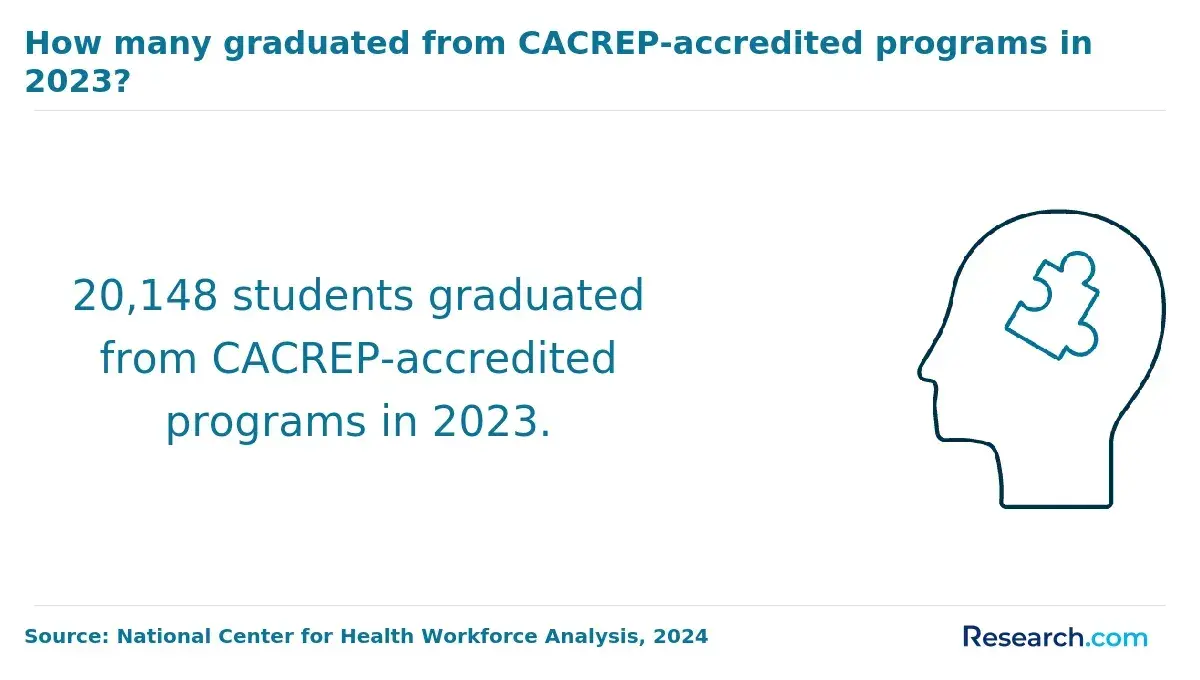
- A master’s degree in counseling or a related field from a CACREP-accredited program is the most direct academic route for meeting Maryland’s professional counseling education expectations.
- Maryland expects at least 60 semester hours of graduate-level preparation covering counseling theory, assessment, ethics, diagnosis, clinical practice, and related professional competencies.
- Before full independent clinical licensure, most candidates complete 3,000 hours of supervised post-master’s clinical experience to show they are ready to practice without direct oversight.
- What degree is required to become an LPC in Maryland?
- What core coursework is required for LPC licensure in Maryland?
- How many supervised counseling hours are required for LPC licensure in Maryland?
- What exams are required for LPC licensure in Maryland?
- How do you apply for LPC licensure in Maryland?
- How long does it take to be a Licensed Professional Counselor in Maryland?
- What types of LPC licenses are offered in Maryland?
- What are the common challenges during the LPC licensure application process in Maryland?
- What are the licensure renewal and continuing education requirements in Maryland?
- Does Maryland have LPC reciprocity with other states?
- What is the demand for LPCs in Maryland?
What degree is required to become an LPC in Maryland?
Maryland expects professional counselors to begin with graduate-level preparation that builds clinical judgment, ethical decision-making, assessment skills, and supervised counseling practice. The safest approach is to choose a program that is designed for professional counseling licensure in Maryland rather than assuming that any psychology, human services, or counseling-related degree will qualify.
- Master’s degree in clinical professional counseling or a related field: This is the most common pathway. The program should provide graduate counseling coursework, clinical skill development, and field experience that can be reviewed against Maryland’s licensure requirements.
- Doctoral degree in clinical professional counseling or a related field: A doctoral program may meet or exceed many graduate education expectations, but applicants still need to confirm that required counseling content, exams, supervision, and application materials satisfy Maryland’s Board rules.
- Related graduate fields: Degrees in psychology, social work, human services, or similar areas may be considered only when the coursework and clinical preparation match the Board’s requirements closely enough. A related title alone is not enough.
Before enrolling, ask the program director whether graduates are eligible for Maryland’s LGPC and LCPC pathway, how the school documents practicum or internship hours, and whether any past graduates have needed extra coursework after applying. This is especially important for online, out-of-state, and non-CACREP programs.
| Program choice | When it may make sense | Main risk to verify |
| CACREP-aligned counseling master’s program | You want the clearest route into Maryland counseling licensure | Confirm the program includes all Maryland-required content and field documentation |
| Related mental health master’s program | You already have a degree in psychology, social work, or human services | Some required counseling courses may be missing |
| Doctoral counseling or related program | You want advanced clinical, research, supervisory, or academic preparation | Licensure rules still apply even with a higher degree |
| Out-of-state or online program | You need flexibility or plan to study outside Maryland | The program may not automatically satisfy Maryland’s coursework or fieldwork expectations |
What core coursework is required for LPC licensure in Maryland?
Maryland’s coursework rules are meant to ensure that counselors understand human development, diagnosis, treatment planning, ethical practice, assessment, research, cultural context, and direct counseling methods before serving clients. When comparing programs, review the course catalog against each required content area rather than relying only on the degree name.
- Human Growth and Personality Development: Covers lifespan development and personality concepts that help counselors understand client behavior, change, and adjustment.
- Social and Cultural Foundations of Counseling: Examines how culture, ethnicity, community, identity, and social conditions influence mental health and counseling relationships.
- Counseling Theory: Introduces major counseling models so future clinicians can connect case conceptualization with treatment approaches.
- Counseling Techniques: Builds practical interviewing, intervention, communication, and helping skills used in individual and group settings.
- Group Dynamics, Processing, and Counseling: Explains group development, facilitation, leadership, member interaction, and therapeutic group processes.
- Lifestyle and Career Development: Focuses on career counseling, vocational assessment, work-life issues, and decision-making across life stages.
- Appraisal: Prepares students to understand assessment tools, testing principles, measurement limits, and appropriate use of results.
- Research and Evaluation: Develops the ability to interpret counseling research, evaluate programs, and apply evidence-informed methods.
- Professional, Legal, and Ethical Responsibilities: Addresses confidentiality, boundaries, informed consent, mandated reporting, recordkeeping, professional conduct, and legal obligations.
- Marriage and Family Therapy: Introduces systemic thinking and counseling approaches used with couples, families, and relational concerns.
- Alcohol and Drug Counseling: Covers assessment, intervention, referral, and treatment considerations for substance use disorders.
- Diagnosis and Psychopathology: Teaches recognition, classification, and clinical understanding of mental and emotional disorders.
- Psychotherapy and Treatment of Mental and Emotional Disorders: Reviews therapeutic approaches used to treat a range of psychological and behavioral health conditions.
- Supervised Field Experience, Practicum, or Internship: Requires a minimum of 125 direct client contact hours so students can practice counseling skills under supervision.
Students who want to build a long-term counseling career in Maryland should treat coursework planning as a licensure strategy, not just a graduation checklist. If you are comparing career outcomes, Research.com’s overview of counseling career paths and salary considerations can help you see how licensure connects to job options in the field.
| Question to ask your program | Why it matters |
| Does the curriculum meet Maryland’s 60 semester hours requirement? | A master’s degree with too few credits can delay eligibility. |
| Which courses map to Maryland’s required content areas? | Course titles vary, so documentation may be needed during Board review. |
| How are practicum and internship hours recorded? | Applicants need clear proof of direct client contact and supervision. |
| Do graduates usually qualify for the LGPC credential? | This shows whether the program is commonly used for Maryland’s supervised practice route. |
| Will the school provide syllabi if the Board asks? | Syllabi can help resolve questions about course content. |
How many supervised counseling hours are required for LPC licensure in Maryland?
For Licensed Clinical Professional Counselor licensure in Maryland, candidates on the standard master’s-level route complete 3,000 hours of supervised clinical experience. This supervised period is designed to move a graduate counselor from academic training into competent, ethical, independent clinical practice.
- Direct client contact: At least 1,500 hours must involve counseling services such as individual, group, family, or couples counseling, intake, assessment, diagnosis, crisis response, or related face-to-face clinical work.
- Supervision requirements: At least half of the total hours, or 1,500 hours, must be completed with oversight from a Board-approved licensed clinical professional counselor, giving candidates structured feedback and accountability.
- Indirect clinical activities: Up to 1,500 hours may include professional tasks such as treatment planning outside sessions, consultation, case management, documentation, training, seminars, and other clinical support work.
- Post-master’s requirement: At least 2,000 of the 3,000 supervised hours must be earned after the master’s degree is completed.
- Graduate fieldwork allowance: Up to 1,000 hours may come from graduate practicum or internship experiences if they meet Board standards, including the minimum of 125 face-to-face counseling hours.
A Maryland-licensed counselor who completed graduate training in the state described the supervised period as demanding but valuable. She explained that completing the 3,000-hour requirement took just over three years while she balanced post-master’s employment, supervision meetings, documentation, and indirect clinical responsibilities.
Her biggest lesson was that the hours themselves were only part of the process. The quality of supervision mattered just as much. Regular feedback from a Board-approved supervisor helped her improve treatment planning, strengthen documentation habits, and become more confident in complex client situations.
| Supervised experience component | Maryland requirement or allowance | Practical tip |
| Total supervised experience | 3,000 hours | Track hours weekly instead of reconstructing records later. |
| Direct client counseling | At least 1,500 hours | Separate direct service hours from administrative or indirect work. |
| Supervision by approved LCPC | At least 1,500 hours under required supervision structure | Confirm supervisor approval before counting hours. |
| Post-master’s hours | At least 2,000 hours | Do not assume graduate internship hours will satisfy the full requirement. |
| Graduate practicum or internship | Up to 1,000 hours may count if eligible | Keep school records, evaluations, and direct contact hour documentation. |
What exams are required for LPC licensure in Maryland?
Maryland uses exams to confirm that applicants understand both general counseling practice and the legal framework that applies inside the state. Passing the exams does not replace education or supervised experience, but it is a required part of the licensure process.
- National Counselor Examination requirements in Maryland: The NCE is a 200-question multiple-choice examination covering major counseling knowledge areas such as human development, assessment, ethics, psychopathology, treatment planning, and core professional practice.
- Maryland Law Assessment exam for counselors: This state-focused assessment checks whether applicants understand Maryland-specific rules involving professional conduct, confidentiality, reporting duties, client protection, and legal responsibilities.
Many applicants prepare for the national exam after finishing graduate coursework and before completing all supervised clinical hours, but timing can vary based on credential status and Board instructions. If you are also researching career outcomes, Research.com’s guide to the mental health counselor career path can help you connect licensure steps with common work settings.
| Exam | What it measures | How to prepare strategically |
| National Counselor Examination | Broad counseling knowledge and professional competency | Review core graduate coursework, practice exam formats, ethics, assessment, and treatment planning. |
| Maryland Law Assessment | Maryland laws, regulations, and professional obligations | Study current Board materials and do not rely only on national ethics review books. |
How do you apply for LPC licensure in Maryland?
The Maryland application process is easiest when treated as a sequence: complete the right degree, obtain the supervised-practice credential, document experience carefully, pass exams, and submit a complete LCPC application. Missing transcripts, unclear supervision records, or incomplete forms can create avoidable delays.
- Earn a qualifying master’s or doctoral degree: Complete graduate study through a regionally accredited institution in counseling or a Board-acceptable related field, including required coursework and at least 125 hours of direct client counseling experience during supervised field training.
- Apply for the Licensed Graduate Professional Counselor credential: The LGPC allows eligible graduates to work under supervision while pursuing full licensure. Applicants submit required academic records and pay a $200 fee.
- Complete supervised clinical experience: Master’s-level candidates complete 3,000 hours over at least three years, while doctoral graduates may complete 2,000 hours over two years, with supervision that satisfies Maryland Board expectations.
- Pass the required exams: Applicants must complete the National Counselor Examination and the Maryland Law Assessment to demonstrate both counseling competence and knowledge of state-specific professional rules.
- Submit the LCPC application: After finishing education, exams, and supervised experience, submit the application, transcripts, supervision verification, exam results, and the $200 fee through the Maryland Board’s required process.
| Application stage | Documents to prepare | Common delay |
| Education review | Official transcripts, course descriptions, syllabi if requested | Coursework does not clearly match Maryland categories. |
| LGPC application | Graduate records, application form, fee documentation | Applicants wait too long to request official transcripts. |
| Supervision period | Supervision contract or verification, hour logs, supervisor credentials | Hours are counted before confirming supervisor eligibility. |
| Exam completion | Scores for NCE and Maryland Law Assessment | Exam scheduling is left until the end of the process. |
| LCPC submission | Final application, supervised experience proof, exam results, fee | Forms contain inconsistent dates or incomplete hour totals. |
How long does it take to be a Licensed Professional Counselor in Maryland?
From the start of college through full independent licensure, the Maryland counseling pathway often takes six to eight years. The exact timeline depends on whether you study full time, how quickly you complete graduate credits, how soon you find approved supervision, and how efficiently you pass exams and submit applications.
- Bachelor’s degree: Many future counselors begin with a four-year degree in psychology, counseling, human services, or a related field that prepares them for graduate admission.
- Master’s degree: A counseling master’s program typically takes about two years of full-time study and must include at least 60 graduate credits for Maryland licensure eligibility.
- Supervised clinical experience: After graduate training, candidates complete 3,000 hours of supervised work for the master’s-level LCPC route.
- Required exams: Preparing for, scheduling, and completing the National Counselor Examination and Maryland Law Assessment may add several months depending on timing.
- Board review and licensure decision: Application review, background checks, fee processing, and Board communication can take weeks to a few months.
One Maryland LCPC described his own route as taking about seven years. He said coursework felt structured and predictable, while the supervised experience period required more planning because he had to locate the right supervisor, maintain steady clinical hours, and prepare for exams while working.
His advice to new applicants was straightforward: start documenting early. Waiting until the end to organize supervision records, exam results, and transcripts can turn a normal review into a frustrating delay.
| Phase | Typical time commitment stated in the pathway | What can speed up or slow down progress |
| Undergraduate study | Four-year bachelor’s degree | Transfer credits, course load, and graduate admission planning |
| Graduate counseling program | Two years of full-time study | Part-time enrollment, missing prerequisites, or field placement availability |
| Supervised practice | 3,000 hours | Supervisor access, caseload volume, employment setting, and documentation quality |
| Exams and application | Weeks to a few months for approval after submission | Exam scheduling, background checks, transcript processing, and incomplete forms |
What types of LPC licenses are offered in Maryland?
Maryland uses different counseling and therapy credentials because not every practitioner has the same training stage, scope of practice, or specialty. For professional counselors, the main progression is from supervised graduate-level practice to independent clinical licensure.
- Licensed Graduate Professional Counselor: The LGPC is the supervised practice credential for graduates who are building clinical hours toward full licensure.
- Licensed Clinical Professional Counselor: The LCPC is the independent clinical credential that permits broader clinical responsibility, private practice eligibility, and work settings that require full licensure.
- Graduate and Clinical Alcohol and Drug Counselor: GADC and CADC credentials support professionals focused on substance use counseling and related clinical services.
- Graduate and Clinical Marriage and Family Therapy: GMFT and CMFT credentials apply to clinicians specializing in family systems, couples, and relational therapy.
- Graduate and Clinical Professional Art Therapy: GPAT and CPAT credentials are designed for practitioners who use specialized art therapy training in clinical care.
If your interests are centered on couples, families, or relational work, compare Maryland’s counseling pathway with programs such as the best online marriage and family counseling master’s degree options before choosing a graduate program.
| Credential path | Best fit | Decision point |
| LGPC to LCPC | Students who want independent professional counseling practice | Choose a graduate program that supports Maryland counseling licensure. |
| Alcohol and drug counseling credentials | Professionals focused on substance use treatment | Confirm whether your target jobs require substance use-specific credentials. |
| Marriage and family therapy credentials | Clinicians who want to specialize in couples and family systems | Compare counseling and MFT curriculum before enrolling. |
| Professional art therapy credentials | Practitioners trained in therapeutic use of art and creative expression | Make sure the program meets art therapy-specific education and supervision rules. |
What are the common challenges during the LPC licensure application process in Maryland?
The most common Maryland licensure problems are not usually about clinical ability. They are administrative: missing transcripts, unclear course matches, incomplete supervision logs, exam timing issues, and confusion between graduate-level and full clinical credentials. Applicants who studied online or outside Maryland should be especially careful because the Board may need extra evidence that the degree, coursework, and field experience satisfy Maryland requirements.
| Common mistake | Why it causes problems | Better approach |
| Choosing a program without checking Maryland licensure alignment | The degree may not include all required counseling content or field experience. | Ask the program for written confirmation of how it prepares students for Maryland LGPC and LCPC eligibility. |
| Focusing only on tuition | A cheaper program can become more expensive if extra courses are needed later. | Compare total cost, transfer policies, practicum support, licensure fit, and graduation requirements. |
| Assuming all online programs meet Maryland rules | Online programs may be designed for another state’s licensure standards. | Verify Maryland requirements before enrolling, especially for practicum and internship placement. |
| Counting hours before confirming supervisor approval | Hours may not be accepted if supervision does not meet Board standards. | Confirm supervisor eligibility at the start and keep signed records. |
| Waiting to organize documents | Reconstructing hours, dates, and course records later can delay review. | Maintain a licensure folder with transcripts, syllabi, logs, evaluations, and exam results. |
| Relying only on rankings | A highly visible program may not be the best licensure fit for your location and goals. | Use rankings as one input, then verify accreditation, coursework, field placement, cost, and outcomes. |
| Assuming salary outcomes are guaranteed | Pay varies by setting, experience, location, specialty, and license level. | Research employer requirements and compare roles before committing to a pathway. |
For a step-by-step look at Maryland’s mental health counseling route, Research.com’s guide on how to become a mental health counselor in Maryland can help you plan the process from education through licensure.
What are the licensure renewal and continuing education requirements in Maryland?
After earning licensure, Maryland counselors must keep the credential active by following the Board’s renewal and continuing education rules. Continuing education is meant to keep clinicians current in areas such as ethics, cultural competence, clinical practice, legal responsibilities, and changes in treatment standards or regulation.
Because renewal rules can change, licensed counselors should confirm the current renewal cycle, required continuing education categories, documentation rules, and submission process directly with the Maryland Board before each renewal period. Keep certificates, course descriptions, attendance records, and any other proof of completion in case the Board requests verification.
If your goal is to enter the field as efficiently as possible while still meeting Maryland standards, review Research.com’s guide to the fastest way to become a counselor in Maryland for planning considerations.
Does Maryland have LPC reciprocity with other states?
Maryland does not use automatic LPC reciprocity that lets a counselor simply transfer a license from another state and begin practicing. Instead, out-of-state counselors generally pursue licensure by endorsement. This means the applicant must show that their education, supervised experience, exams, and current license meet Maryland’s standards.
The endorsement process may require an Out of State LCPC Application, license verification, official transcripts, supervised clinical experience documentation, National Counselor Examination scores, the Maryland Law Assessment, and a criminal background check. If the Board finds gaps, the applicant may need additional coursework or supervised hours before approval.
For relocating counselors, the key is to compare credentials before moving or accepting a job. Do not assume that years of practice in another state automatically satisfy Maryland’s categories for coursework, supervision, or documentation.
What is the demand for LPCs in Maryland?
Maryland’s need for licensed counselors is tied to rising mental health awareness, population needs, school and community behavioral health services, and broader access to telehealth. LPCs and LCPCs can work in settings such as hospitals, schools, private practices, community agencies, local health departments, and behavioral health organizations.
National data project an 18% growth in employment for behavioral health counselors through 2032. In Maryland, demand can vary by region, specialty, employer type, license level, and whether the counselor can provide independent clinical services. LCPC licensure can make candidates more competitive for roles that involve diagnosis, treatment planning, clinical leadership, supervision, or private practice.
Students comparing mental health professions should also understand how counseling differs from social work. Research.com’s guide to the difference between LCSW and LPC degree programs explains how degree requirements, scope, and career pathways can diverge.
| Employment setting | Why LPCs may be needed | What to consider before targeting this setting |
| Community mental health agencies | Ongoing demand for accessible behavioral health services | Caseload size, supervision quality, crisis work, and documentation expectations |
| Schools and academic institutions | Student mental health, family support, and prevention services | Whether the role requires counseling licensure, school certification, or both |
| Hospitals and healthcare systems | Integrated behavioral health, assessment, crisis intervention, and discharge planning | Experience with interdisciplinary teams and medical documentation systems |
| Private practice | Client demand for flexible outpatient counseling options | LCPC status, insurance billing, business planning, referral networks, and ethics |
| Telehealth providers | Expanded access to remote counseling services | Maryland practice rules, privacy requirements, technology platforms, and interstate limits |

How does LPC licensure affect career growth in Maryland?
Maryland LCPC licensure can change both the type of work a counselor can do and the level of independence they can hold. It signals that the counselor has completed graduate training, supervised clinical experience, exams, and state review, which many employers use as a threshold for advanced clinical roles.
- More clinical job options: Full licensure can qualify counselors for positions in hospitals, schools, agencies, private practices, government programs, and behavioral health organizations that require independent clinical credentials.
- Stronger earning potential: Licensed counselors may qualify for roles with higher responsibility and compensation than unlicensed or provisionally licensed staff, though actual salary depends on employer, specialty, location, and experience.
- Private practice eligibility: The LCPC credential is important for counselors who want to operate independently, manage their own caseload, and pursue insurance-based or self-pay practice models.
- Supervision and leadership opportunities: Experienced LCPCs may move into clinical supervision, program management, training, administration, or teaching-related roles.
- Specialization: Licensure can support advanced training in areas such as trauma, substance use, family systems, crisis counseling, assessment, or telebehavioral health.
If you are still early in the process and wondering what you can do with a counseling degree, remember that career options often expand as you move from undergraduate study to graduate training, supervised practice, and full clinical licensure.
What do LPCs in Maryland say about their career?
- My LPC preparation at Towson University helped me connect counseling theory with practical skills for Maryland’s varied communities. I began in a local school setting and quickly saw how meaningful it is to help students work through academic stress, family concerns, and emotional challenges. The role offers stability, but the deeper reward is the chance to be part of a community. Maryland’s cultural diversity keeps the work challenging and purposeful. - Marnie
- Morgan State University gave me strong academic preparation and introduced me to a professional network that continued to support me after graduation. Working as a licensed professional counselor in a local school showed me how much mental health education can affect students’ daily lives. Maryland’s focus on student support services has given me room to keep developing professionally. The range of student needs has pushed me to grow as a clinician. - Alina
- The University of Maryland, College Park strengthened my clinical foundation and helped me understand the communities I hoped to serve. As an LPC in an academic setting, I have found the work both personally meaningful and professionally challenging. I value the collaborative nature of Maryland’s counseling field and the opportunity to contribute to young people’s well-being. Seeing clients make progress is still the part of the job that motivates me most. - Charles
Key Insights
- Maryland’s independent counseling credential is commonly searched as LPC, but the full clinical license is the Licensed Clinical Professional Counselor, or LCPC.
- The most reliable starting point is a graduate counseling program that clearly meets Maryland’s coursework, credit, and supervised field experience expectations.
- Applicants should plan for at least 60 semester hours, a practicum or internship with a minimum of 125 direct client contact hours, required exams, and supervised clinical experience.
- The standard master’s-level route includes 3,000 supervised hours, with at least 1,500 hours in direct client contact and at least 2,000 hours completed after the master’s degree.
- Documentation is one of the biggest licensure risks. Keep transcripts, syllabi, supervision records, hour logs, exam scores, and Board correspondence organized from the beginning.
- Maryland does not offer automatic LPC reciprocity, so out-of-state counselors should prepare for endorsement review and possible additional requirements.
- LCPC licensure can improve access to independent practice, clinical leadership, supervision, specialized roles, and broader employment options, but salary and job outcomes are not guaranteed.
References:
- American Association for Marriage and Family Therapy. Maryland state professional resources. AAMFT
- Coppin State University. (2025). Professional counseling licensure information for LCPC preparation. CSU Coppin State University licensure page
- Cornell Law School. Maryland Code Regulations for Licensed Clinical Professional Counselors. Cornell Law
- Maryland Department of Health Board of Professional Counselors and Therapists. Professional counselor LCPC licensure requirements. MDH
- Monti, J. (2025). Maryland licensed counselor pathway overview. Psycholgy.org Maryland counseling licensure overview
- Online Counseling Programs with edX. Maryland counselor licensure guide. OCP with edX
- Towson University. (2025). Maryland counselor licensure information for graduate students. Towson University
- Zippia. (2025). Education requirements for licensed professional counselors. Zippia Licensed professional counselor education data
- Zippia. (2025). Licensed professional counselor demographics and workforce statistics. Zippia
Other Things You Need to Know About Becoming a Counselor in Maryland
The Maryland Board of Professional Counselors and Therapists issues LPC licenses. It reviews applications, verifies education and supervised experience, administers state rules for licensure, and enforces renewal and discipline standards under the Maryland Department of Health.
In 2027, Maryland requires LPC candidates to complete 3,000 hours of supervised clinical experience. This must include at least 1,500 hours of face-to-face client contact under the supervision of a board-approved licensed clinical professional counselor or equivalent.
To obtain LPC licensure in Maryland in 2027, candidates must pass the National Counselor Examination (NCE). This exam is administered by the National Board for Certified Counselors and tests knowledge and skills essential for effective counseling practice.