2027 How to Become a Mental Health Counselor in Maryland

Co-Founder and Chief Data Scientist
Becoming a mental health counselor in Maryland is a structured, graduate-level career path for people who want to provide therapy, assessment, crisis support, and treatment planning for clients facing anxiety, depression, substance use, trauma, family stress, and other behavioral health concerns. The need is visible across the state: 29.1% of adults in Maryland experience symptoms of anxiety and/or depression (Kaiser Family Foundation, 2023), and many residents still struggle to access timely, affordable care.
This guide explains how to become a mental health counselor in Maryland, what education and supervised experience you should expect, how licensure works, where counselors are employed, what the salary and demand picture looks like, and how to choose a program or specialization without making costly mistakes.
Quick Answer: How do you become a mental health counselor in Maryland?
To become a licensed professional counselor (LPC), candidates must complete a master's degree in a related field, undergo supervised clinical experience, and pass the National Counselor Examination (NCE). In practice, aspiring counselors should confirm current Maryland Board of Professional Counselors and Therapists requirements before enrolling because licensure titles, supervision rules, forms, and approved coursework can change.
| Step | What it means for Maryland candidates | Decision point |
| Complete undergraduate study | Earn a bachelor’s degree, commonly in psychology, social work, human services, or a related field. | Choose courses that prepare you for graduate counseling admissions. |
| Earn a graduate counseling degree | Complete a master’s degree in counseling or a closely related field that supports Maryland licensure eligibility. | Check accreditation, curriculum, practicum requirements, and state licensure alignment before applying. |
| Complete supervised experience | Build clinical skill through practicum, internship, and post-graduate supervised practice. | Ask programs and supervisors how hours are documented for the Maryland Board. |
| Pass the required exam | Prepare for and pass the National Counselor Examination (NCE). | Plan study time and confirm which exam applies to your intended credential. |
| Apply for licensure | Submit your application and documentation to the Maryland Board. | Do not provide independent clinical services unless your credential legally permits it. |
Key Things You Should Know About Becoming a Mental Health Counselor in Maryland
- Maryland has a substantial behavioral health need. In the Old Line State, 39.1% of adults reported symptoms of anxiety or depression during the first quarter of 2021, and 31.3% were unable to receive the necessary treatment (National Alliance on Mental Illness, 2021).
- The core pathway includes graduate education, supervised clinical training, examination, and state licensure.
- Substance abuse, behavioral disorder, and mental health counselors in Maryland had a median hourly wage of $26.18 in May 2023 [US Bureau of Labor Statistics (BLS), 2024].
- Single adult residents without children in Maryland can live comfortably with a gross annual income of $51,460 (Glasmeier & Massachusetts Institute of Technology, 2024).
- Across the US, employment for substance abuse, behavioral disorder, and mental health counselors is projected to grow by 18% between 2022 and 2032 (US BLS, 2024).
- What does a mental health counselor do in Maryland?
- What steps are required to become a mental health counselor in Maryland?
- How should Maryland students prepare for this career?
- Why does practicum and supervised experience matter?
- Which counseling specializations are available in Maryland?
- Is Maryland a practical state for mental health counselors?
- How strong is demand for mental health counselors in Maryland?
- Which resources can help aspiring Maryland counselors?
- Which specialized fields can create additional opportunities?
- What jobs can mental health counseling graduates pursue in Maryland?
- How does telehealth affect counseling access in Maryland?
- What legal and ethical rules shape Maryland counseling practice?
- What challenges should Maryland counselors expect?
- How can counselors serve underserved Maryland communities?
- How can substance abuse counseling fit into mental health practice?
- Why does accreditation matter for counseling students?
- How can Maryland counselors advance after licensure?
- How can counselors support student mental health?
- How can counselors build professional networks in Maryland?
- How does interdisciplinary collaboration improve care?
- How can counselors and social workers coordinate client support?
- How can counselors protect their own well-being?
- How can counselors provide culturally competent care in Maryland?
What is the role of a mental health counselor in Maryland?
Mental health counselors help clients understand emotional, behavioral, and relational problems and develop practical strategies for change. In Maryland, that work may happen in private practices, hospitals, community mental health agencies, substance use treatment programs, schools, correctional settings, nonprofit organizations, and telehealth platforms.
The role matters because the need is not evenly distributed. Maryland includes dense urban areas such as Baltimore, suburban communities, rural counties, college towns, military-connected populations, immigrant communities, and aging residents. Each setting can bring different barriers: transportation, stigma, insurance coverage, provider shortages, language access, or a lack of culturally responsive care.
Common responsibilities include intake interviews, mental health assessment, treatment planning, individual or group counseling, crisis intervention, referral coordination, documentation, and collaboration with other professionals. Counselors also help clients manage conditions and life challenges such as anxiety, depression, grief, trauma, relationship conflict, addiction, and major life transitions.
| Responsibility | What it looks like in practice | Why it matters |
| Assessment | Gathering client history, symptoms, risks, strengths, and goals. | Good assessment reduces guesswork and guides appropriate treatment. |
| Treatment planning | Creating measurable goals and selecting suitable therapeutic approaches. | Clients need a clear plan, not open-ended conversations with no direction. |
| Counseling sessions | Providing individual, family, group, or crisis-focused support. | Therapy helps clients build coping skills and make behavioral changes. |
| Referral and coordination | Connecting clients with psychiatrists, social workers, schools, hospitals, or community resources. | Many clients need more than counseling alone. |
| Documentation and ethics | Maintaining records, confidentiality, consent, and professional boundaries. | Accurate documentation protects clients, clinicians, and agencies. |
If you are comparing counseling with adjacent careers, Research.com’s overview of counseling career growth can help you understand how counseling roles differ by setting, population, and credential level.
A Baltimore-based counselor described the early career experience as demanding but meaningful: “Working in Baltimore required me to learn quickly. Clients came from very different backgrounds, and I had to balance empathy with strong clinical boundaries.” That perspective reflects a central truth of the profession: Maryland counselors need both technical preparation and cultural humility.
What are the steps to pursue mental health counseling in Maryland?
The path to mental health counseling in Maryland is not a single course or short certificate. It is a multi-stage process that combines education, supervised clinical practice, examination, and board approval. Students who want a broader overview of the profession can also review Research.com’s guide on counseling education requirements.
- Earn a bachelor’s degree. Start with an undergraduate program that builds a foundation in psychology, human development, research methods, social services, or related areas. A counseling-specific bachelor’s degree is not always required, but relevant coursework can strengthen graduate applications.
- Choose a licensure-aligned master’s program. Maryland candidates typically need a master’s degree in counseling or a closely related discipline. The original requirement stated for this pathway is that programs be accredited by the Council for Accreditation of Counseling and Related Educational Programs (CACREP). Students should verify this directly with the Maryland Board and each school before enrolling.
- Complete practicum and internship training. Graduate programs should include supervised field experience where students practice counseling skills with real clients under qualified supervision.
- Complete post-graduate supervised clinical experience. After graduation, candidates generally need supervised experience before independent practice. Keep careful records of hours, supervisor credentials, settings, and clinical duties.
- Pass the required examination. Maryland candidates are expected to prepare for and pass the National Counselor Examination (NCE), as required by the Maryland Department of Health Board of Professional Counselors and Therapists.
- Apply through the Maryland Board. Submit official transcripts, supervision documentation, exam results, fees, and any required forms. Do not assume that graduating from a counseling program automatically grants a license.
- Consider an additional credential only when it supports your goals. Specialized training in addiction, trauma, family systems, or child and adolescent counseling can be valuable, but it should fit your intended clients and work setting.
Maryland counseling pathway at a glance
| Career stage | Typical focus | Questions to ask before moving forward |
| Undergraduate student | Build academic foundation and gain helping-field exposure. | Does this major prepare me for graduate counseling admissions? |
| Graduate applicant | Compare counseling programs, accreditation, cost, and licensure fit. | Will this program meet Maryland licensure requirements? |
| Counseling graduate student | Complete coursework, practicum, internship, and clinical skill development. | Where will I complete field placement, and who supervises it? |
| Post-graduate supervisee | Accumulate documented supervised clinical experience. | Is my supervisor approved and are my hours properly recorded? |
| Licensed counselor | Provide professional counseling within the scope of the license. | Which setting, population, or specialization best fits my strengths? |
What continuing education opportunities are available for mental health counselors in Maryland?
Continuing education helps counselors keep their skills current, protect clients, and maintain professional standing. It is especially important in areas such as ethics, trauma-informed care, substance use, telehealth, cultural competence, suicide risk, and documentation.
- Workshops and seminars: Short-format training can help counselors update specific clinical skills or meet ethics-related learning needs.
- Online courses: Distance learning can be useful for working counselors who need flexible scheduling, especially when courses are approved for licensure renewal.
- Professional conferences: Conferences offer clinical updates, networking, supervision discussions, and exposure to emerging practice models.
- Specialty certificates: Focused training in cognitive-behavioral therapy, dialectical behavior therapy, play therapy, trauma care, or addiction counseling may improve clinical competence in a niche area.
- Supervision and peer consultation: Case consultation helps counselors think through complex clinical, ethical, and cultural issues.
- Research and publication: Counselors who contribute to research or professional writing can deepen expertise and strengthen career visibility.
How can students in Maryland prepare for a career in mental health counseling?
Students should prepare early because graduate admissions, field placement, and licensure planning all take time. The strongest candidates usually combine academic readiness with real exposure to helping work.
- Compare programs by licensure fit, not reputation alone. Johns Hopkins University, Towson University, and the University of Maryland, College Park are among Maryland institutions associated with relevant academic pathways, but students should still confirm whether a specific program supports their intended counseling license.
- Prioritize supervised field learning. A program with strong practicum and internship support can be more valuable than a program that leaves students to secure placements alone.
- Gain human-service experience before graduate school. Work or volunteer roles in crisis lines, shelters, youth programs, hospitals, recovery organizations, or community agencies can clarify whether counseling is the right path.
- Join professional communities early. Student membership in counseling organizations can provide exposure to conferences, mentors, ethics discussions, and job-market realities.
- Understand the cost and timeline. Tuition, fees, commuting, technology, books, unpaid field hours, exam costs, and licensure fees can affect affordability.
Questions to ask before choosing a Maryland counseling program
| Question | Why it matters |
| Does the curriculum match Maryland licensure requirements? | A degree that does not align with the Board’s requirements can delay or block licensure. |
| Is the program CACREP-accredited or otherwise accepted for the credential I want? | Accreditation can affect licensure review, employer confidence, and transferability. |
| How are practicum and internship placements arranged? | Field placement quality directly affects clinical preparation. |
| Can I complete the program while working? | Many counseling students need part-time, evening, hybrid, or online flexibility. |
| What are total costs beyond tuition? | Fees, transportation, technology, exam prep, and unpaid clinical hours can change the real price. |
| What support is available for licensure paperwork? | Programs that understand Maryland documentation can reduce avoidable mistakes. |
How important is practicum experience for mental health counselors in Maryland?
Practicum and internship experience are where counseling students begin turning classroom knowledge into clinical judgment. In these placements, students learn how to conduct sessions, respond to risk, document appropriately, receive feedback, and manage the emotional pressure of client work.
The Maryland Board of Professional Counselors and Therapists requires aspiring counselors to complete supervised practicum experience. Because rules can depend on credential type and program structure, students should confirm the required number of hours, acceptable settings, supervisor qualifications, and documentation procedures before starting fieldwork.
- Clinical confidence: Students learn how to sit with distress, ask better questions, and apply counseling theories with real clients.
- Professional identity: Fieldwork helps students decide whether they prefer children, adults, couples, groups, crisis care, community agencies, or private practice.
- Employment connections: A strong placement can lead to references, job interviews, or post-graduate supervision opportunities.
- Ethical readiness: Supervision teaches counselors how to handle confidentiality, mandated reporting, boundaries, risk, and documentation.
One Maryland counselor summarized the importance of practicum this way: “My practicum showed me what textbooks could not. I had to learn how to stay calm during crisis situations, ask for supervision, and keep showing up for clients even when the work felt heavy.”
What specializations can mental health counselors in Maryland pursue?
Specialization can help counselors focus their training, choose field placements, and build a more coherent career path. The best specialization is not necessarily the highest-profile one; it is the one that matches your strengths, client interests, and local service needs.
| Specialization | Clients or issues served | Best fit for counselors who want to... |
| Substance abuse counseling | Clients affected by alcohol, drug use, relapse risk, recovery, and co-occurring mental health concerns. | Work in treatment centers, hospitals, community agencies, or integrated behavioral health settings. |
| Behavior disorder counseling | Clients with behavioral regulation concerns, including ADHD, oppositional defiant disorder, and conduct disorder. | Support children, adolescents, families, and school-connected systems. |
| Licensed Mental Health Counseling (LMHC) | Clients with a wide range of emotional and behavioral health needs. | Provide general therapy, assessment-informed care, and treatment planning. |
| Licensed Clinical Mental Health Counseling (LCMHC) | Diverse populations in individual, group, and advanced clinical settings. | Move toward clinical leadership, supervision, or broader therapeutic practice. |
| Marriage and family therapy | Couples, families, relationship systems, and parenting concerns. | Focus on relational patterns rather than only individual symptoms. |
| Grief and trauma counseling | Clients experiencing bereavement, loss, violence exposure, or traumatic stress. | Develop advanced skills in stabilization, meaning-making, and trauma-informed care. |
If you are comparing how licensure pathways differ by state, Research.com also explains the licensed counselor career path in Kansas. Use out-of-state guides as comparisons only; Maryland candidates should rely on Maryland Board requirements for final decisions.
The chart below provides a visualization of counseling programs with the highest number of enrollees in 2023, according to recent data from the Council for Accreditation of Counseling and Related Educational Programs (CACREP).
Is Maryland a good place to work as a mental health counselor?
Maryland can be a viable state for mental health counselors, but the financial answer depends on your work setting, experience level, student loan burden, location, and whether you work for an agency, hospital, school-related program, telehealth provider, or private practice.
The estimated median annual wage of substance abuse, behavioral disorder, and mental health counselors in Maryland was 50,265.6 in May 2023, based on their $26.18 median hourly wage during that period (US BLS, 2024). For comparison, single adult residents without children in Maryland can live comfortably with a gross annual income of $51,460 (Glasmeier & Massachusetts Institute of Technology, 2024).
That comparison suggests a narrow margin for single adults without children when using median wage and living-wage figures. Candidates should therefore evaluate benefits, supervision support, caseload expectations, paid documentation time, continuing education reimbursement, retirement contributions, health insurance, and advancement potential—not just hourly wage.
| Factor | Why it affects whether Maryland is a good fit |
| Cost of living | Housing, commuting, and childcare can vary significantly across Maryland regions. |
| Employer type | Hospitals, agencies, schools, telehealth companies, and private practices may offer very different compensation models. |
| Supervision availability | New graduates may prioritize quality supervision over maximum pay at the beginning of their careers. |
| Caseload size | Higher caseloads can raise burnout risk if documentation and crisis demands are not manageable. |
| Benefits | Health insurance, paid leave, retirement, and CE support can meaningfully change total compensation. |
What is the demand for mental health counselors in Maryland?
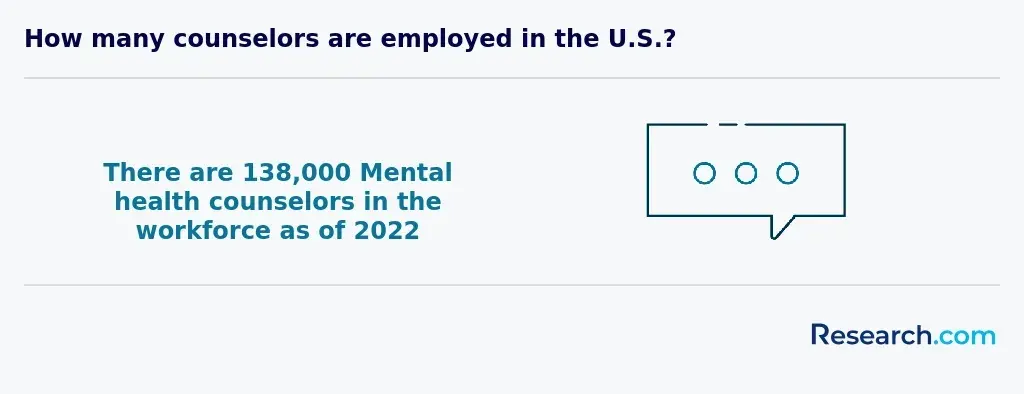
Demand for counseling services is shaped by mental health need, provider availability, insurance coverage, community awareness, substance use trends, school-based needs, and telehealth adoption. Nationally, employment for substance abuse, behavioral disorder, and mental health counselors is expected to grow by 18% between 2022 and 2032 (US BLS, 2024).
Maryland’s access gap is also clear. Between early 2020 and early 2021, 252,000 adult residents of the Old Line State did not get the mental health care that they needed, with 33.7% citing financial cost as the reason (National Alliance on Mental Illness, 2024). Between February 1 and 13, 2023, 27.3% of adult residents in Maryland reported symptoms of anxiety and/or depressive disorder, compared with 32.3% in the entire US (Kaiser Family Foundation, 2023).
Potential employers include hospitals, outpatient clinics, community mental health organizations, substance use programs, correctional systems, school-connected programs, employee assistance programs, and private practices. Counselors researching another state can compare requirements and job framing through Research.com’s guide to the licensed counselor job description New Jersey.
What resources and support are available for aspiring mental health counselors in Maryland?
Aspiring Maryland counselors should use official licensing information first, then supplement it with professional organizations, university advising, career services, and peer networks. This reduces the risk of relying on outdated advice or enrolling in a program that does not support licensure.
- Maryland Board of Professional Counselors and Therapists: The Board is the key source for licensure rules, applications, supervision requirements, examination requirements, and regulatory updates.
- Professional associations: Organizations such as the Maryland Counseling Association and the National Board for Certified Counselors can support networking, continuing education, credential awareness, and professional identity.
- University career offices: Counseling students should use career centers for internship support, resume development, interview preparation, and employer connections.
- Continuing education providers: Approved CE options can help counselors maintain credentials and develop specialty competence after graduation.
- Mentorship and supervision networks: Early-career counselors benefit from experienced supervisors who can help them handle ethical questions, documentation, client risk, and career planning.
For a Maryland-specific licensure overview, review Research.com’s guide on how to become a therapist in Maryland.
What specialized fields can mental health counselors in Maryland pursue for additional career opportunities?
Mental health counselors who want to expand their practice may consider related fields such as marriage and family therapy, addiction counseling, trauma counseling, school-based mental health, or geriatric counseling. Each path has different training, supervision, and credential considerations.
Counselors interested in relationship and family systems can review Research.com’s guide on how to become a marriage and family therapist in Maryland. This pathway may appeal to professionals who want to focus on couples, families, parenting, and relational conflict rather than individual therapy alone.
What careers are available to Mental Health Counseling Graduates in Maryland?
Graduates with mental health counseling preparation may qualify for several helping-profession roles, depending on licensure status, supervision, employer requirements, and specialization. Research.com’s guide to types of therapy careers can help students compare counseling, psychology, therapy, and social service paths.
| Career path | Main focus | Typical work settings |
| Mental health counselor | Therapy, assessment-informed support, treatment planning, and emotional health care. | Clinics, private practices, hospitals, nonprofits, telehealth platforms. |
| Substance abuse counselor | Addiction recovery, relapse prevention, family support, and co-occurring concerns. | Treatment centers, community programs, correctional settings, hospitals. |
| Social worker | Resource coordination, case management, advocacy, and psychosocial support. | Hospitals, schools, agencies, government programs, community organizations. |
| Geriatric counselor | Aging, grief, life transitions, caregiver stress, and later-life mental health. | Senior services, healthcare organizations, private practice, community agencies. |
| Employee Assistance Program counselor | Short-term support for employees facing personal or workplace challenges. | Employers, EAP vendors, telehealth providers, contracted counseling networks. |
One Maryland counselor described choosing a niche as one of the hardest early-career decisions: “I knew I wanted to help, but I had to figure out which population fit my strengths. Once I began working with adolescents, the work became clearer and more purposeful.”
The chart below provides a visualization of the median annual wage of mental health professionals in the US in 2023, according to 2024 data from the US BLS.
How can telehealth expand access to mental health services in Maryland?
Telehealth can reduce barriers for clients who live far from providers, lack transportation, have mobility limitations, need flexible scheduling, or prefer remote sessions because of stigma or privacy concerns. For counselors, telehealth can also expand referral networks and make follow-up care more consistent.
However, telehealth is not simply video calling. Counselors must understand informed consent, emergency planning, identity verification, privacy, secure platforms, documentation, and whether they are legally permitted to serve a client based on location. A master's degree in counseling can provide the clinical foundation, but counselors still need ongoing training in ethical technology use.
What legal and ethical frameworks guide mental health counseling practices in Maryland?
Maryland counselors must practice within state licensing rules, professional ethics, confidentiality requirements, supervision standards, and documentation expectations. Legal and ethical competence is not optional; it is part of safe practice.
Key areas include informed consent, mandated reporting, client records, telehealth procedures, crisis response, dual relationships, competence, billing integrity, and supervision. Counselors who work with couples and families may also need to understand related requirements, including marriage counselor education requirements in Maryland.
What challenges do mental health counselors face in Maryland?
Mental health counseling can be deeply meaningful, but it is not an easy profession. Candidates should understand the pressures before committing to the path.
- Access gaps: Across the US, over half of the population, or 169 million Americans, lives in a Mental Health Professional Shortage Area (Mental Health HPSA) (National Center for Health Workforce, 2023). Shortages can increase waitlists, crisis pressure, and counselor caseloads.
- Licensure complexity: New graduates must track requirements carefully. Missing coursework, incomplete supervision records, or misunderstanding the Board’s rules can delay practice.
- Affordability barriers for clients: Insurance limitations, out-of-pocket costs, transportation, and provider availability can keep clients from receiving consistent care.
- Economic pressure: By August 2024, Maryland ranked 45th out of all 50 states in the US in terms of economic performance (Rich States, Poor States, 2024). Economic conditions can affect agencies, clients, and public funding.
- Burnout risk: Crisis work, trauma exposure, documentation demands, and large caseloads can make self-care difficult unless counselors build sustainable routines.
- Ongoing training demands: Counselors must keep up with new research, ethics rules, technology changes, and best practices while maintaining a full workload.
Common mistakes to avoid
| Mistake | Why it can hurt your career | Better approach |
| Choosing a program before checking licensure alignment | You may graduate with missing coursework or field-hour problems. | Confirm requirements with the Maryland Board and ask the program for licensure outcome details. |
| Looking only at tuition | Fees, unpaid fieldwork, commuting, books, and exam costs can change affordability. | Calculate total cost and lost work time before enrolling. |
| Assuming online programs automatically qualify | Online delivery does not guarantee Maryland licensure eligibility. | Verify accreditation, curriculum, and Maryland approval before applying. |
| Ignoring supervision quality | Poor supervision can slow skill development and create documentation problems. | Ask how supervisors are selected, trained, and evaluated. |
| Assuming salary outcomes are guaranteed | Pay varies by employer, license level, location, and experience. | Compare local job postings, benefits, supervision support, and advancement paths. |
What strategies can Maryland mental health counselors use to address the unmet needs of underserved populations?
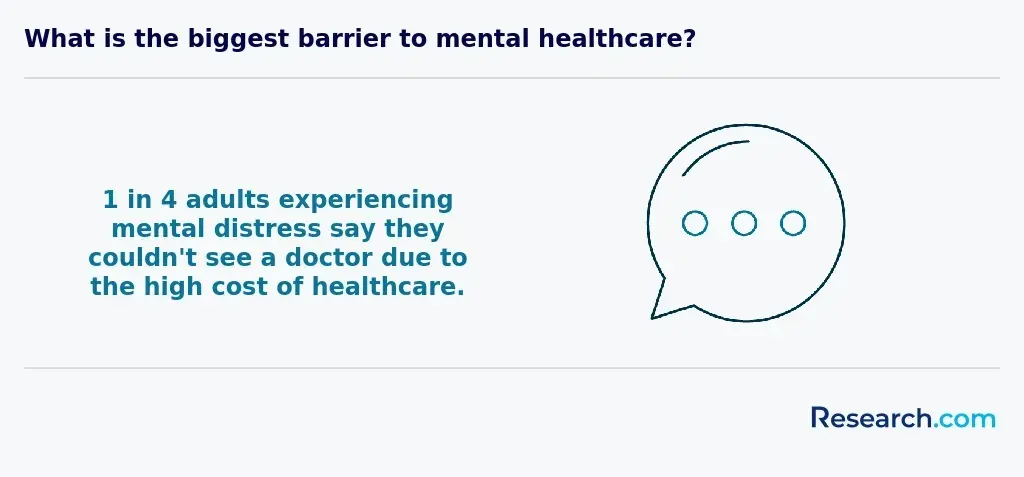
Maryland counselors can help narrow access gaps by designing services around real barriers rather than expecting clients to adapt to traditional office-based care. More than 30% of adults were unable to receive necessary treatment, which shows why access strategy matters.
- Use telehealth when clinically appropriate: Virtual care can reduce travel barriers for rural residents, people with disabilities, caregivers, and clients with limited transportation.
- Offer flexible payment options where possible: Sliding-scale fees, community partnerships, or pro bono slots may help clients who cannot afford standard rates.
- Partner with trusted community organizations: Schools, faith communities, libraries, shelters, and nonprofits can help counselors reach people who may not seek therapy through traditional channels.
- Practice culturally responsive care: Counselors should adapt engagement, communication, and treatment planning to the client’s cultural context without stereotyping.
- Advocate for better systems: Counselors can support policies that improve insurance coverage, community mental health funding, and workforce development in underserved areas.
Counselors interested in grief or trauma work can use Research.com’s guide, How long does it take to become a grief counselor, to understand how additional training may shape the timeline.
How can mental health counselors effectively integrate substance abuse counseling into their practice in Maryland?
Many clients do not experience mental health and substance use concerns separately. Anxiety, depression, trauma, housing instability, chronic stress, and addiction can overlap. Counselors who understand integrated care can better screen for substance use, coordinate referrals, and support recovery-informed treatment plans.
Professionals who want this dual focus should review the pathway for how to become a substance abuse counselor in Maryland. Specialized preparation can be especially useful in community clinics, hospitals, correctional settings, and recovery programs.
How can choosing an accredited program elevate your mental health counseling career in Maryland?
Accreditation is one of the most important factors in counseling education because it signals that a program has been reviewed against established academic and professional standards. For students, accreditation can affect licensure eligibility, practicum structure, employer confidence, and mobility if they move later.
Students comparing psychology and counseling-related options in the state can start with Research.com’s overview of the best psychology schools in Maryland, then verify whether the specific counseling program meets Maryland licensing requirements.
How to advance your career as a mental health counselor in Maryland?
After licensure, counselors can advance by developing deeper expertise, moving into leadership, supervising others, teaching, opening a private practice, or expanding into telehealth and interdisciplinary care. Advancement should be intentional; adding credentials without a career strategy can waste time and money.
- Build a specialty: Addiction counseling, trauma recovery, family therapy, grief, adolescent counseling, and geriatric counseling can help define your clinical niche.
- Pursue advanced education when it serves a clear goal: A doctorate may support teaching, research, clinical leadership, or advanced professional roles, but it requires significant commitment.
- Become a supervisor: Experienced counselors may support new professionals during their supervised clinical experience.
- Explore telehealth carefully: Remote practice can expand access, but counselors must follow legal, ethical, privacy, and emergency-planning rules.
- Use professional organizations: Networking through state and national associations can lead to referrals, mentorship, continuing education, and leadership roles.
- Consider private practice only when ready: Private practice requires clinical skill plus billing, compliance, marketing, scheduling, risk management, and business planning.
Counselors seeking flexible educational pathways can compare options such as the easiest online counseling degree programs, while remembering that “easy” should never replace licensure fit, accreditation, and clinical quality.
How can mental health counselors collaborate with educational professionals to support student mental health in Maryland?
Student mental health often requires coordination among counselors, school counselors, teachers, administrators, families, pediatricians, and community providers. Mental health counselors can support schools through referral partnerships, crisis response planning, parent education, group interventions, and consultation.
Professionals interested in school-based roles can review Research.com’s guide on how to become a school counselor in Maryland. School counseling and clinical mental health counseling are related but not identical, so students should confirm which credential fits their intended role.
How can mental health counselors build robust professional networks in Maryland?
Networking is not just job hunting. For counselors, a strong professional network improves referrals, supervision, consultation, continuing education, ethical decision-making, and resilience. New counselors should connect with supervisors, former faculty, community agencies, peer consultation groups, and professional associations.
Understanding the LPC license requirements in Maryland can also make networking more productive because candidates can ask experienced professionals informed questions about supervision, documentation, exams, and early-career jobs.
How can interdisciplinary collaboration enhance mental health counseling outcomes in Maryland?
Clients often need more than one type of support. Counselors may coordinate with primary care doctors, psychiatrists, school psychologists, social workers, case managers, substance use specialists, and community organizations. Collaboration can reduce fragmented care and help clients receive the right service at the right time.
For education-related collaboration, Research.com’s guide, How long does it take to become a school psychologist in Maryland?, can help counselors understand how school psychologists fit into student support systems.
How Can Mental Health Counselors Collaborate with Social Workers to Enhance Holistic Care in Maryland?
Counselors often focus on therapy and emotional health, while social workers may address case management, benefits, housing, family systems, advocacy, and resource coordination. When the two professions collaborate well, clients receive more complete support.
Joint case reviews, coordinated referrals, shared safety planning, and community outreach can improve continuity of care. Counselors who want to better understand the social work pathway can review social worker education requirements in Maryland.
How can mental health counselors maintain their resilience and well-being in Maryland?
Counselors are trained to support others, but they also need systems that protect their own mental health. Burnout prevention should be treated as a professional responsibility, not a personal luxury.
- Maintain realistic caseload limits when possible.
- Use supervision and consultation for complex cases.
- Set boundaries around after-hours communication and documentation.
- Schedule recovery time after crisis-heavy work.
- Keep professional learning focused instead of overloading on unrelated trainings.
- Seek personal therapy or peer support when the work begins to affect health, relationships, or clinical judgment.
Expanding competence in adjacent areas, such as the substance abuse counselor career requirements, can also help counselors feel better prepared when clients present with co-occurring concerns.
How can mental health counselors ensure cultural competence in Maryland's diverse communities?
Cultural competence requires more than good intentions. Maryland counselors should actively learn how culture, language, immigration history, race, religion, gender identity, sexual orientation, disability, age, military experience, and socioeconomic status can shape a client’s experience of mental health care.
Effective counselors ask respectful questions, avoid assumptions, use interpreters when needed, adapt treatment plans to client context, and seek feedback from the communities they serve. Students who want a faster route into the profession should still evaluate quality and licensure alignment when considering the quickest path to becoming a counselor in Maryland.
What do mental health counselors in Maryland say about the career?
- “Counseling in Maryland has allowed me to work with clients from many backgrounds. The work is challenging, but seeing clients regain stability and hope makes the effort worthwhile.” — Jeremiah
- “This profession has strengthened both my clinical skills and my empathy. Continuing education and local professional support have helped me keep improving.” — Eric
- “Maryland offers room to specialize, collaborate, and grow. The most rewarding part is helping people move through difficult moments with support and dignity.” — Jesse
Related Articles for Nearby States
- 2027 How to Become a Mental Health Counselor in Virginia
- 2027 How to Become a Mental Health Counselor in West Virginia
- 2027 How to Become a Mental Health Counselor in Pennsylvania
- 2027 How to Become a Mental Health Counselor in Delaware
- 2027 How to Become a Mental Health Counselor in New Jersey
- 2027 How to Become a Mental Health Counselor in New York
- 2027 How to Become a Mental Health Counselor in Ohio
- 2027 How to Become a Mental Health Counselor in North Carolina
- 2027 How to Become a Mental Health Counselor in Kentucky
- 2027 How to Become a Mental Health Counselor in Connecticut
References
- American Legislative Exchange Council. (2024). Maryland. Rich States, Poor States. https://www.richstatespoorstates.org/states/MD
- bhw.hrsa.gov. (n.d.). Health Workforce Projections: Mental Health Counselors. https://bhw.hrsa.gov/sites/default/files/bureau-health-workforce/data-research/mental-health-counselors.pdf
- bouve.northeastern.edu. (2023, May 28). What do Mental Health Counselors Do? Role & Responsibilities. https://bouve.northeastern.edu/news/what-do-mental-health-counselors-do-role-responsibilities
- careervillage.org. (2024, May22). How can I best prepare myself for working in the world of counseling? https://www.careervillage.org/questions/913920/how-can-i-best-prepare-myself-for-working-in-the-world-of-counseling
- The Chicago School. (2019, March 26). Careers You Can Pursue with a Master’s Degree in Clinical Mental Health Counseling. https://www.thechicagoschool.edu/insight/career-development/careers-with-masters-degree-clinical-mental-health-counseling
- counseling.education.wm.edu. (2023, October 24). The Different Types of Counseling Careers and Their Challenges. https://counseling.education.wm.edu/blog/opportunities-and-challenges-in-the-counseling-field
- Glasmeier, A. K. & Massachusetts Institute of Technology. (2024). Living Wage Calculation for Maryland. https://livingwage.mit.edu/states/24
- Grey, S. (2024, Feb 21). How To Become A Mental Health Counselor: Salary, Education Requirements And Job Growth. Forbes. https://www.forbes.com/advisor/education/psychology-and-counseling/become-a-mental-health-counselor
- Kaiser Family Foundation. (2023, March 20). Mental Health and Substance Use State Fact Sheets. https://www.kff.org/statedata/mental-health-and-substance-use-state-fact-sheets
- Kaiser Family Foundation. (2023). Mental Health in Maryland. https://www.kff.org/statedata/mental-health-and-substance-use-state-fact-sheets/maryland
- National Center for Health Workforce Analysis. (2023, December). Behavioral Health Workforce, 2023. Bureau of Health Workforce. https://bhw.hrsa.gov/sites/default/files/bureau-health-workforce/Behavioral-Health-Workforce-Brief-2023.pdf
- oklahoma.gov. (2024, August 05). Review Application Types, Instructions, Information. https://oklahoma.gov/nursing/applications.html
- socialworklicensemap.com. (2022, May 13). What Are the Requirements to Become a Mental Health Counselor?. https://socialworklicensemap.com/social-work-resources/become-mental-health-counselor
- US Bureau of Labor Statistics. (2024, April 3). May 2023 State Occupational Employment and Wage Estimates: Maryland. Occupational Employment and Wage Statistics. https://www.bls.gov/oes/2023/may/oes_md.htm
- US Bureau of Labor Statistics. (2024, April 17). Substance Abuse, Behavioral Disorder, and Mental Health Counselors. Occupational Outlook Handbook. https://www.bls.gov/ooh/community-and-social-service/substance-abuse-behavioral-disorder-and-mental-health-counselors.htm
Key Insights
- Maryland mental health counseling is a graduate-level, licensure-based profession; a short certificate is not enough for independent clinical practice.
- The safest first step is to compare programs by Maryland licensure alignment, accreditation, practicum quality, cost, and supervision support.
- Salary should be evaluated against Maryland’s cost of living. The May 2023 median hourly wage was $26.18, while the living-wage benchmark for a single adult without children was $51,460 in gross annual income.
- Demand is supported by both national job growth projections and Maryland’s unmet care needs, but demand does not guarantee easy jobs, high pay, or low caseloads.
- Practicum, internship, and supervised experience are central to becoming competent; they are not just paperwork requirements.
- Specialization can improve career direction, but it should match the population you want to serve and the settings where you want to work.
- Common errors include choosing a program without checking Board requirements, focusing only on tuition, assuming online programs automatically qualify, and underestimating supervision documentation.
- Strong Maryland counselors combine clinical skill, ethical discipline, cultural responsiveness, collaboration, and sustainable self-care.
Other Things You Should Know About Mental Health Counseling in Missouri
The Maryland Board of Professional Counselors and Therapists issues mental health counselor licenses. Applicants submit licensure materials to the board, which sets the education, supervised experience, and examination standards for becoming a Licensed Clinical Professional Counselor in Maryland.
In 2027, Maryland requires mental health counselors to complete 3,000 hours of supervised experience over a minimum of two years. Supervision must be provided by a licensed mental health professional and must include at least 100 hours of face-to-face supervision.
To become a licensed mental health counselor in Maryland in 2027, candidates must pass the National Counselor Examination (NCE) and the Maryland Jurisprudence Exam. These exams evaluate counseling knowledge and understanding of relevant state laws and regulations.
To become a mental health counselor in Maryland in 2027, you need a master's degree in counseling or a related field from an accredited institution. Additionally, completing supervised clinical experience and passing the National Counselor Examination (NCE) are essential for licensure.