
2027 Accelerated Online Cybersecurity Degree Programs

Co-Founder and Chief Data Scientist
Choosing an accelerated online cybersecurity degree is usually a speed-versus-fit decision. You want a program that can move you into security work faster, but it still needs to be credible, practical, affordable, and aligned with the roles you want. Cybersecurity remains a high-need field: the ISC2 Cybersecurity Workforce Study reported a global workforce shortage of 4 million in 2023, and organizations continue to need people who can protect networks, systems, cloud platforms, data, and critical infrastructure.
This guide is for working adults, transfer students, career changers, and technology professionals comparing faster online cybersecurity bachelor’s programs. You will learn what accelerated programs include, how long they take, what they cost, how online study compares with campus study, which schools offer notable options, and how to judge whether a program is worth the investment.
Quick answer: Is an accelerated online cybersecurity degree worth considering?
An accelerated online cybersecurity degree can be a strong option if you already have college credits, IT experience, military training, or the discipline to manage compressed courses. These programs can shorten the path to a bachelor’s degree, often through transfer credits, competency-based learning, short terms, or heavier course loads. They are best for students who need flexibility but still want a structured credential that may support cybersecurity analyst, incident response, cloud security, penetration testing, or security management roles.
They are not automatically the cheapest or easiest route. Before enrolling, verify accreditation, hands-on lab access, transfer credit rules, certification preparation, total program cost, and whether the curriculum matches the job titles you are targeting.
What are the benefits of getting an accelerated online cybersecurity degree?
- Faster entry into security-focused roles: An accelerated format may help qualified students move more quickly toward cybersecurity analyst, security architect, incident responder, penetration tester, or IT security roles.
- Flexible study for adults with responsibilities: Many online cybersecurity programs use asynchronous courses, virtual labs, and shorter terms so students can study around work, military service, caregiving, or relocation constraints.
- Access to a broad hiring market: Cybersecurity professionals are needed in finance, healthcare, government, education, retail, defense, technology, consulting, and cloud-based organizations.
- Strong earning potential: The median salary for information security analysts is $112,000 annually, with top earners making over $160,000 annually. Senior roles such as security architects may pay more, with experienced professionals earning upwards of $200,000 annually.
- Potential certification alignment: Some programs build in preparation for credentials that employers commonly recognize, which can strengthen a graduate’s job search when paired with practical experience.
What can I expect from an accelerated online cybersecurity degree?
An accelerated online cybersecurity degree usually combines core computing coursework with security-specific training. Students typically study how attackers exploit systems, how organizations defend digital assets, and how security teams detect, investigate, and respond to incidents. Because the pace is compressed, successful students need strong time management and consistent weekly study habits.
| Program feature | What it usually means for students | What to check before enrolling |
| Curriculum | Common subjects include network security, cyber threats and defense, ethical hacking, operating systems security, risk management, and digital forensics. | Confirm that the program includes hands-on labs, secure coding or scripting practice, cloud security exposure, and current security tools. |
| Tuition | Accelerated online cybersecurity degrees often cost $300 to $700 per credit hour, with total program costs typically between $10,000 and $30,000. | Ask for the full cost of attendance, including fees, textbooks, labs, software, and certification exam costs. |
| Completion time | Many accelerated cybersecurity bachelor’s programs can be completed in 12-24 months, depending on transfer credits and course load. | Review how many credits you can transfer and whether accelerated pacing is realistic with your work schedule. |
| Learning format | Courses may be asynchronous, competency-based, term-based, or a mix of live and self-paced learning. | Check deadlines, proctored exam requirements, faculty availability, and how online labs are delivered. |
Where can I work with an accelerated online cybersecurity degree?
Cybersecurity graduates can work anywhere organizations store, process, transmit, or protect sensitive information. Financial institutions need security professionals to defend payment systems, banking platforms, customer accounts, and fraud detection systems. Healthcare organizations rely on cybersecurity teams to secure patient information and support regulatory compliance. Government agencies, defense contractors, and public-sector organizations need talent to protect critical infrastructure, citizen data, and national security systems.
Graduates may also work for cybersecurity vendors, managed security service providers, consulting firms, insurance companies, software companies, universities, retailers, and large corporations with internal security teams. Common job titles include cybersecurity analyst, penetration tester, security engineer, IT security manager, cloud security specialist, digital forensics analyst, and incident responder. Remote and hybrid work have also increased the importance of securing cloud environments, remote access tools, collaboration platforms, and distributed networks.
How much can I make with an accelerated online cybersecurity degree?
Cybersecurity salaries vary by role, location, experience, industry, clearance requirements, and technical depth. The median yearly income for information security analysts was $120,360 in May 2023. Senior positions often pay more. Security architects often earn upwards of $130,000, while CISOs can make more than $200,000 annually, particularly in large organizations or high-risk sectors such as finance and defense.
A degree can help qualify you for roles that require formal education, but it does not guarantee a salary. Employers usually evaluate a combination of degree, hands-on ability, certifications, security projects, internship experience, communication skills, and familiarity with tools such as SIEM platforms, vulnerability scanners, endpoint detection systems, and cloud security controls.
- Accelerated Online Cybersecurity Degree Programs for 2027
- How long does an accelerated online cybersecurity degree take?
- Online vs. campus cybersecurity degrees: which format fits you?
- Average cost of an accelerated online cybersecurity degree
- Financial aid and scholarships for cybersecurity students
- Cybersecurity degree admission requirements and prerequisites
- Common cybersecurity degree courses
- Cybersecurity specializations to compare
- How to choose the best accelerated online cybersecurity degree
- How certifications can strengthen a cybersecurity career
- Important technical and professional cybersecurity skills
- Career paths for cybersecurity degree graduates
- Teaching cybersecurity or digital forensics with your degree
- How cybersecurity degrees differ from other tech programsTeaching optionCareer paths
- Cybersecurity job market outlook
- How to turn your degree into career results
- Common challenges in accelerated online cybersecurity programs
- How to verify program quality and accreditation
- Complementary technical degrees for cybersecurity careers
- ROI of an accelerated online cybersecurity degree
- AI’s role in modern cybersecurityROIRelated technical degreesAccreditationCareer transitionJob marketAdditional guidanceFinal takeaways
Accelerated Online Cybersecurity Degree Programs for 2027
How do we rank schools?
Research.com evaluates programs using a data-informed process rather than relying on promotional claims. Our review incorporates trusted education data sources, including the IPEDS database, Peterson's Distance Learning Licensed Data Set, College Scorecard database, and the National Center for Education Statistics.
To understand how we collect, compare, and interpret school and program information, review our research methodology section.
| School and program | Program length | Cost information | Credits or units | Accreditation |
| Purdue Global, ExcelTrack® Bachelor of Science in Cybersecurity | Varies | $2,500 per term | 180 quarter credits | Accreditation Board for Engineering and Technology (ABET) |
| Western Governors University, BS in Cybersecurity and Information Assurance | Approximately 29 months | $4,365 per six-month term | No information available | Northwest Commission on Colleges and Universities (NWCCU) |
| Capella University, BS in Information Technology-Information Assurance and Cybersecurity | 22 months | $2,500 per 12-week FlexPath session | 180 quarter credits | HLC |
| Southern New Hampshire University, BS in Cybersecurity | 2 years | $330 per credit | 120 | New England Commission of Higher Education (NECHE) |
| Arizona State University, Online BS in Computer Science-Cybersecurity | 3 years | Starts at $8,468 | 120 | ABET |
| Mercy University, BS in Cybersecurity | 4 years | $9,658 per term | 120 | Middle States Commission on Higher Education (MSCHE) |
| Colorado Technical University, Online BS in Computer Science-Cybersecurity Engineering | 2.5 years | $340 per credit | 183 | HLC |
| Drexel University, BS in Computing and Security Technology | 4-5 years | $530 per credit | 185 | MSCHE |
| Dakota State University, BS in Cyber Operations | 4 years or less | $8,956,50 per semester | 120 semester credits | HLC |
| University of Maryland Global Campus, BS in Cybersecurity Management and Policy | Varies | $250-$499 | 120 | Middle States Commission on Higher Education (MSCHE) |
1. Purdue Global, ExcelTrack® Bachelor of Science in Cybersecurity
Purdue Global offers an ExcelTrack® BS in Cybersecurity designed for students who already bring professional or technical knowledge to the program. Its competency-based structure may allow students to move faster through material they already understand, which can reduce time and cost for disciplined learners. The university also provides a three-week trial period for undergraduate programs at no cost.
- Program Length: Varies
- Track/Concentration: CISSP Certification Preparation, Cloud Computing, Data Management, and more
- Cost Per Term: $2,500
- Required Units: 180 quarter credits
- Accreditation: Accreditation Board for Engineering and Technology (ABET)
2. Western Governors University, BS in Cybersecurity and Information Assurance
WGU offers a competency-based BS in Cybersecurity and Information Assurance that may appeal to working adults with IT experience. The program incorporates 15 recognized certifications, including CompTIA Security+ and Certified Cloud Security Professional (CCSP), into the coursework at no additional cost. Students who can demonstrate mastery may progress through requirements more quickly.
- Program Length: Approximately 29 months
- Tracks/Concentrations: No information available
- Cost: $4,365 per six-month term
- Required Units: No information available
- Accreditation: Northwest Commission on Colleges and Universities (NWCCU)
3. Capella University, BS in Information Technology-Information Assurance and Cybersecurity
Capella University offers a BS in Information Technology with an Information Assurance and Cybersecurity specialization. The program is built around IT security needs in banking, commerce, healthcare, telecommunications, and national security. Coursework emphasizes topics such as network security, risk management, and cybersecurity governance.
- Program Length: 22 months
- Track/Concentration: Information Assurance and Cybersecurity
- Tuition: $2,500 per 12-week FlexPath session
- Required Credits: 180 quarter credits
- Accreditation: HLC
4. Southern New Hampshire University, BS in Cybersecurity
SNHU offers an online BS in Cybersecurity that uses virtual labs and applied scenarios to support hands-on learning. Students study areas such as network security, ethical hacking, and digital forensics. The National Security Agency (NSA) has designated the university as a National Center for Academic Excellence in Cyber Defense.
- Program Length: 2 years
- Track/Concentration: Data Analytics Fundamentals, Project Management Fundamentals
- Tuition: $330 per credit
- Required Units: 120
- Accreditation: New England Commission of Higher Education (NECHE)
5. Arizona State University, Online BS in Computer Science-Cybersecurity
Arizona State University offers an online BS in Computer Science with a Cybersecurity concentration for students who want a stronger computer science foundation alongside security training. The program prepares students to design secure software and systems. ASU has been recognized as a National Center for Academic Excellence in Information Assurance Education and a National Center of Academic Excellence in Information Assurance-Research by the NSA and the Department of Homeland Security.
- Program Length: 3 years
- Track/Concentration: Cybersecurity
- Estimated Total Cost: Starts at $8,468
- Required Credits: 120
- Accreditation: ABET
6. Mercy University, BS in Cybersecurity
Mercy University offers a BS in Cybersecurity focused on information security, risk management, and cyber defense. Students may gain applied experience through internships and hands-on projects. Mercy College accepts transfer credits and offers an accelerated 4+1 option that allows students to earn a bachelor’s and master’s degree in five years.
- Program Length: 4 years
- Track/Concentration: No information available
- Estimated Tuition: $9,658 per term
- Required Units: 120
- Accreditation: Middle States Commission on Higher Education (MSCHE)
7. Colorado Technical University, Online BS in Computer Science-Cybersecurity Engineering
CTU offers an online BS in Computer Science with a Cybersecurity Engineering concentration. The program emphasizes software and system design for preventing cyberattacks and detecting network breaches. CTU’s Fast Track™ exams may allow students to earn credit for prior knowledge and shorten the path to completion.
- Program Length: 2.5 years
- Track/Concentration: Cybersecurity Engineering
- Cost: $340 per credit
- Required Units: 183
- Accreditation: HLC
8. Drexel University, BS in Computing and Security Technology
Drexel University offers an online BS in Computing and Security Technology for students preparing for computing administration and cybersecurity responsibilities. The program emphasizes applied learning and practical technical preparation. Drexel’s quarter system can allow students to complete more courses during the year than in a traditional semester calendar.
- Program Length: 4-5 years
- Tracks/Concentrations: Computing Security and Computing Technology
- Estimated Tuition: $530 per credit
- Required Credits: 185
- Accreditation: MSCHE
9. Dakota State University, BS in Cyber Operations
Dakota State University offers an online BS in Cyber Operations that combines research-oriented study with hands-on technical practice. Students build a foundation in computer science topics such as programming, software development, and networking while learning how to identify and investigate cyberattacks. DSU is designated as a National Center of Academic Excellence in Cyber Defense Education by the NSA and the Department of Homeland Security.
- Program Length: 4 years or less
- Tracks/Concentrations: No information available
- Tuition: $8,956,50 per semester
- Required Credit: 120 semester credits
- Accreditation: HLC
10. University of Maryland Global Campus, BS in Cybersecurity Management and Policy
UMGC offers a BS in Cybersecurity Management and Policy for students interested in the operational, policy, and leadership side of security. The curriculum includes cybersecurity policy, digital forensics, and network security. UMGC accepts up to 90 transfer credits, which can significantly shorten completion time for eligible students.
- Program Length: Varies
- Tracks/Concentrations: No information available
- Tuition: $250-$499
- Required Credit: 120
- Accreditation: Middle States Commission on Higher Education (MSCHE)
How long does it take to complete an accelerated online cybersecurity degree?
Accelerated online cybersecurity bachelor’s programs commonly take 12 to 24 months for students who can transfer credits, complete courses at a faster pace, or use competency-based options. Students starting with few or no credits may need longer, especially if the program requires 120 or more credits.
The fastest path is usually available to students who have prior college coursework, military credits, professional certifications, or documented IT experience. However, speed should not be the only goal. Cybersecurity requires practical repetition. If a program moves so quickly that you cannot practice networking, scripting, system hardening, threat analysis, and incident response, the shorter timeline may not help your career.
| Student profile | Likely timeline | Best strategy |
| Student with many transfer credits | Often closer to the accelerated range | Request a written transfer evaluation before committing. |
| Working adult with IT experience | May move faster in competency-based courses | Choose a program that recognizes prior knowledge or certifications. |
| First-time college student | May need more time than advertised accelerated timelines | Prioritize foundational computer science, networking, and math support. |
| Full-time employee with family obligations | Completion depends heavily on weekly availability | Avoid overloading terms if it weakens learning or grades. |
How does an accelerated online cybersecurity degree compare to an on-campus program?
An accelerated online cybersecurity degree is typically better for students who need flexibility, already have some academic or professional background, and can learn independently. Online formats can include asynchronous courses, condensed terms, virtual labs, and remote collaboration tools. If you are comparing related options, Research.com also covers online cybercrime degree programs for students interested in investigations, digital evidence, and cyber law.
Campus programs may be a better fit for students who want a more structured schedule, in-person faculty access, local internships, physical labs, and face-to-face peer networking. Online programs reduce commuting and relocation barriers; resources such as this list of online trade school programs can also help students compare practical online training models across fields. The right choice depends on your learning style, location, schedule, budget, and need for direct supervision.
| Factor | Accelerated online cybersecurity degree | On-campus cybersecurity degree |
| Schedule | Often more flexible, with asynchronous or self-paced options | Usually follows fixed class times and campus calendars |
| Speed | May be faster with transfer credits, competency-based learning, or condensed terms | Often follows a traditional 3-4 year bachelor’s timeline |
| Hands-on practice | Delivered through virtual labs, simulations, cloud labs, and remote tools | May include physical labs, in-person projects, and campus equipment |
| Networking | Requires intentional participation in forums, groups, internships, and professional associations | Can offer easier in-person contact with peers, faculty, and local employers |
| Best for | Working adults, transfer students, military learners, and self-directed students | Students who prefer structure, campus life, and direct interaction |
What is the average cost of an accelerated online cybersecurity degree?
The average cost of an accelerated online cybersecurity degree usually falls between $10,000 and $30,000 for the full program. Per-credit tuition commonly ranges from $300 to $700. The final price depends on the school, number of required credits, transfer credit policy, tuition model, residency status, military benefits, technology fees, and whether certification costs are included.
Do not compare programs by tuition alone. Some accelerated online degree programs for working adults bundle virtual labs, software access, tutoring, career services, or certification preparation into the tuition. Others charge separate fees that can change the real cost.
Certifications are among the most important job qualifications, as shown in the figures below.
What are the financial aid options for students enrolling in a cybersecurity degree?
Cybersecurity students may be able to use federal financial aid, institutional scholarships, private scholarships, veteran or military education benefits, employer tuition assistance, and payment plans. Always confirm that the school participates in the aid programs you plan to use and that your enrollment pace meets eligibility requirements.
- ISC2 Undergraduate Scholarship: Offered by the Center for Cyber Safety and Education, this award provides up to $5,000 for students studying cybersecurity or information assurance. Applicants must have a minimum GPA of 3.3 and may attend online or on-campus, full-time or part-time.
- AFCEA War Veterans Scholarship: This $2,500 award supports active-duty service members or honorably discharged U.S. military veterans pursuing undergraduate degrees in cybersecurity or related fields. Applicants must be sophomores or juniors enrolled full-time at accredited U.S. institutions.
- Stokes Educational Scholarship Program (NSA): This program covers tuition and mandatory fees up to $30,000 per year for students planning to study computer science or computer/electrical engineering. Recipients must work for the NSA after graduation for at least one-and-a-half times the length of study.
- Scholarships for Women Studying Information Security (SWSIS): Sponsored by the Applied Computer Security Associates (ACSA), this scholarship awards up to $2,000 or more to women pursuing bachelor’s or master’s degrees connected to information security. Applicants should demonstrate academic strength and commitment to the field.
What are the prerequisites for enrolling in a cybersecurity degree?
Admission requirements vary by school, but most undergraduate cybersecurity programs expect students to have a high school diploma or equivalent. Accelerated programs may also be more suitable for applicants who already have college credits, prior IT coursework, technical certifications, or professional experience.
- Educational background: Undergraduate programs generally require a high school diploma or equivalent. Recommended preparation may include math, computer science, or IT coursework. Graduate cybersecurity programs often require a bachelor’s degree in computer science, information technology, cybersecurity, or a related field such as data analytics degrees.
- Math readiness: Algebra, statistics, and discrete mathematics can support topics such as cryptography, algorithms, network protocols, and risk modeling. Some schools may require prerequisite math before advanced coursework.
- Technical foundation: Familiarity with Python, Java, C++, Linux, Windows, networking basics, and command-line tools can make the transition easier. Certifications such as CompTIA Security+ may also strengthen readiness.
- Work experience for graduate study: Some graduate programs, including pathways students may compare with options at affordable universities in USA for MS in data science, prefer applicants with IT, networking, analytics, or security-related experience.
- Test scores: SAT, ACT, GRE, or GMAT requirements vary by institution and are increasingly optional in many online and accelerated programs. Competitive programs may still consider strong scores as part of a broader application.
Students comparing adjacent public safety and technology fields sometimes ask whether a criminal justice degree is easy or hard. The better question is whether the coursework fits your strengths. Cybersecurity is usually more technical, while criminal justice programs may emphasize law, policy, investigations, and social systems.
What courses are typically in a cybersecurity degree?
A cybersecurity degree should teach both the technical mechanics of securing systems and the judgment required to make risk-based decisions. Strong programs balance theory, lab work, case studies, and applied projects.
- Introduction to Cybersecurity: Students learn core security concepts, common threat types, risk management basics, security policies, and the role of cybersecurity in organizations.
- Network Security: This course covers how networks operate and how to protect them using firewalls, VPNs, intrusion detection systems, segmentation, monitoring, and vulnerability management.
- Cryptography: Students study encryption, secure communication, hashing, key management, and algorithms such as AES and RSA.
- Ethical Hacking and Penetration Testing: Students practice identifying weaknesses in systems using authorized testing methods and learn how to document findings responsibly.
- Operating Systems Security: Coursework focuses on securing Linux, Windows, access controls, authentication, permissions, patching, and system hardening.
- Digital Forensics and Incident Response: Students learn how to preserve evidence, analyze logs, reconstruct events, and support recovery after a security incident.
- Cloud Security: Programs may cover cloud architecture, identity and access management, shared responsibility models, compliance, and platform-specific security risks.
What types of specializations are available in cybersecurity degrees?
Cybersecurity is not a single job track. The right specialization depends on whether you prefer technical defense, offensive testing, investigations, management, cloud systems, or policy. Specialization can also affect job options and cyber security salary potential.
| Specialization | Best for students who want to... | Common career direction |
| Network Security | Protect enterprise networks, monitor traffic, and reduce infrastructure vulnerabilities | Security analyst, network security engineer, SOC analyst |
| Digital Forensics | Investigate incidents, recover evidence, and support legal or internal investigations | Digital forensics analyst, cybercrime investigator, incident response analyst |
| Penetration Testing and Ethical Hacking | Find weaknesses before attackers do and write actionable security reports | Penetration tester, red team associate, vulnerability analyst |
| Cloud Security | Secure cloud platforms, identity systems, workloads, and cloud-based data | Cloud security analyst, cloud security engineer, DevSecOps associate |
| Cybersecurity Management and Policy | Lead teams, manage risk, write policy, and support compliance programs | Security manager, governance analyst, risk and compliance specialist |
Business disruption is the most common cybersecurity consequence in 2023.
How do you choose the best accelerated online cybersecurity degree?
The best accelerated online cybersecurity degree is not simply the fastest program. It is the program that helps you graduate with a credible credential, relevant skills, manageable debt, and a realistic path to the roles you want.
- Verify accreditation first: Look for recognized institutional accreditation and, when relevant, programmatic accreditation such as ABET. Accreditation affects transfer credits, financial aid eligibility, graduate school options, and employer confidence.
- Review the curriculum in detail: A strong program should include network security, operating systems, secure systems, cloud security, ethical hacking, cryptography, risk management, and incident response.
- Look for hands-on learning: Cybersecurity is applied work. Prioritize programs with virtual labs, simulations, projects, capture-the-flag-style exercises, or internship options.
- Compare certification support: Some programs prepare students for credentials or include certification exam costs. Ask exactly which certifications are included and whether passing the exam is required for graduation.
- Ask about transfer credits: Transfer policy can determine whether an accelerated degree is truly accelerated for you. Request a written credit evaluation before enrolling.
- Evaluate student support: Online students benefit from responsive advising, tutoring, faculty access, technical support, career coaching, and job search resources.
- Calculate total cost: Include tuition, fees, books, labs, software, proctoring, equipment, certification exams, and the income impact of reducing work hours.
Questions to ask before you enroll
- Is the institution accredited by a recognized accreditor?
- Is the cybersecurity program ABET-accredited or otherwise aligned with recognized security standards?
- How many of my credits will transfer, and will I receive that evaluation in writing?
- Are labs included in tuition, or are there additional technology fees?
- Which certifications are built into the curriculum, if any?
- How quickly do instructors respond to online students?
- Does the program help students find internships, projects, or entry-level cybersecurity roles?
- What job titles do recent graduates typically pursue?
How can further certifications elevate my cybersecurity career?
Certifications can help cybersecurity professionals document specialized skills that a degree alone may not prove. They can be especially useful in areas such as cloud security, incident response, penetration testing, risk management, and security operations. If you want structured preparation, compare cyber security certifications online that align with your target role.
A smart certification plan depends on your experience level. Entry-level students may focus on broad security and networking credentials, while experienced professionals may pursue advanced or vendor-specific certifications. Do not collect credentials randomly. Choose certifications that match job postings in your target market.
What additional skills are essential for success in cybersecurity careers?
Cybersecurity professionals need more than technical knowledge. They must communicate risk clearly, investigate ambiguous problems, work under pressure, document findings, and make ethical decisions. Employers often value candidates who can explain security issues to nontechnical stakeholders and collaborate with IT, legal, compliance, engineering, and leadership teams.
- Technical problem-solving: Ability to troubleshoot systems, read logs, test controls, and identify patterns in unusual activity.
- Scripting and automation: Familiarity with Python, PowerShell, Bash, or similar tools can improve analysis and response speed.
- Networking knowledge: Understanding protocols, routing, DNS, firewalls, and segmentation is essential for many security roles.
- Cloud awareness: Modern security work increasingly involves cloud identity, storage, monitoring, and configuration management.
- Communication: Clear writing and briefing skills matter when reporting incidents, vulnerabilities, or compliance gaps.
- Continuous learning: Threats, tools, platforms, and regulations change quickly, so cybersecurity professionals must keep skills current.
Students who want broader computing preparation before specializing may also compare a 2-year computer science degree online with cybersecurity-focused programs.
What career paths are available for graduates of cybersecurity degrees?
A cybersecurity degree can support several career directions, but entry requirements vary. Some graduates begin in help desk, systems administration, network support, or SOC analyst positions before moving into more specialized security roles. Others enter cybersecurity directly if they have internships, certifications, military training, or a strong technical portfolio.
| Role | What the role does | Helpful preparation |
| Cybersecurity Analyst | Monitors systems, investigates alerts, reviews vulnerabilities, and helps prevent security breaches. | Networking, SIEM tools, incident response, security fundamentals, documentation. |
| Penetration Tester | Performs authorized testing to identify weaknesses in applications, networks, or systems. | Ethical hacking labs, scripting, web security, reporting skills, legal/ethical training. |
| Security Architect | Designs secure infrastructure and helps organizations build resilient systems. | Advanced networking, cloud architecture, identity management, risk assessment. |
| Incident Responder | Contains attacks, analyzes evidence, coordinates recovery, and recommends prevention steps. | Digital forensics, log analysis, malware basics, crisis communication. |
| CISO | Leads enterprise security strategy, budget, governance, risk management, and compliance. | Leadership experience, business risk knowledge, security management, policy expertise. |
Can I teach cybersecurity or digital forensics with my degree?
A cybersecurity degree can support teaching opportunities, especially in technical training, community education, adjunct instruction, corporate security awareness, or digital forensics labs. Requirements vary widely. College-level teaching often requires a graduate degree, professional experience, and sometimes research or publication credentials. Corporate training roles may place more weight on certifications, field experience, and the ability to explain complex topics clearly.
Academic opportunities
- Community college or university instruction: A master’s degree can help qualify graduates for adjunct roles, while tenure-track positions often require additional academic credentials and research experience.
- Curriculum development: Cybersecurity instructors may design labs, update threat scenarios, write assessments, and build practical exercises that reflect current industry practices.
Benefits of teaching cybersecurity or digital forensics
- Knowledge sharing: Teaching allows experienced professionals to help new learners understand security concepts, investigation methods, and ethical responsibilities.
- Professional visibility: Academic and training roles can create opportunities to attend conferences, publish work, and connect with employers.
- Career flexibility: Some professionals combine consulting, security operations, and part-time teaching.
Transitioning into education
If teaching is part of your long-term plan, consider adding coursework or credentials in instruction, assessment, and curriculum design. Research.com’s guide to affordable online education degrees can help you compare education-focused pathways that may complement technical cybersecurity expertise.
What sets accelerated online cybersecurity degrees apart from other tech programs?
Cybersecurity programs differ from many technology degrees because they focus on protecting systems under real-world adversarial conditions. Students learn how attackers think, how defenses fail, how to respond to incidents, and how to balance security with business operations. By contrast, programs such as a game art degree online may emphasize design, production pipelines, visual development, and interactive media rather than risk management, threat detection, and secure infrastructure.
Compared with general IT or computer science programs, cybersecurity degrees tend to place more emphasis on security operations, vulnerability testing, compliance, incident response, and ethical decision-making. Students who want broad software engineering roles may prefer computer science. Students who want to protect systems, investigate attacks, or manage security risk may find cybersecurity more directly aligned.
What is the job market for graduates with cybersecurity degrees?
The job market for cybersecurity graduates remains strong because organizations face persistent threats and need skilled workers to protect data, systems, and infrastructure. According to the BLS, employment for information security analysts is projected to grow by 33% from 2023 to 2033, much faster than the average for all occupations. Demand is supported by cloud adoption, remote work, digitized healthcare and finance systems, regulatory pressure, and the need for continuous monitoring.
Graduates may pursue roles such as cybersecurity analyst, penetration tester, cloud security specialist, vulnerability analyst, SOC analyst, or cybercrime investigator. Students comparing technical career paths can also review broader computer coding jobs and Research.com’s guide on cybercrime investigator salary and career preparation.
For many students, the core decision is whether the cost, time, and workload justify the credential. Research.com’s guide asking is a cybersecurity degree worth it can help you compare degree value, difficulty, and career outcomes.
How can I transition my cybersecurity degree into real-world career success?
A degree becomes more valuable when you pair it with proof that you can do the work. Build a portfolio of labs, security writeups, incident response exercises, cloud security projects, scripting examples, and penetration testing reports. Apply for internships, apprenticeships, SOC analyst roles, help desk roles with security responsibilities, and junior security positions before graduation.
- Use labs strategically: Document what you did, what tools you used, what you found, and how you would explain the risk to a manager.
- Network before you need a job: Join cybersecurity groups, attend virtual events, participate in capture-the-flag competitions, and connect with alumni.
- Match your resume to job postings: Highlight tools, frameworks, labs, certifications, and projects that appear in the roles you want.
- Track market expectations: Review salary and job benchmarks, including Research.com’s overview of computer science jobs salary, to understand how cybersecurity compares with adjacent technical careers.
What are the common challenges of pursuing an accelerated online cybersecurity degree?
The biggest challenge is usually pace. Cybersecurity concepts build on one another, and accelerated programs leave less time to recover if you fall behind. Online students must also manage lab access, deadlines, isolation, and limited real-time feedback. These problems are manageable, but they require planning.
| Common mistake | Why it creates problems | Better approach |
| Choosing the fastest program without checking quality | A short timeline is not useful if the curriculum lacks labs, support, or employer credibility. | Confirm accreditation, hands-on coursework, faculty access, and career services. |
| Comparing tuition only | Fees, books, software, labs, and certification exams can change the total cost. | Request a full cost breakdown before enrolling. |
| Assuming online means easier | Accelerated online programs can require more self-discipline than traditional formats. | Create a weekly study schedule and limit course overload. |
| Ignoring foundational IT skills | Security coursework is harder without networking, operating systems, and scripting basics. | Strengthen technical foundations before advanced cybersecurity courses. |
| Waiting until graduation to job hunt | Entry-level cybersecurity roles can be competitive. | Build a portfolio, pursue internships, and network throughout the program. |
Students interested in cybersecurity within healthcare environments may also compare an online degree health informatics to understand how health data, privacy, compliance, and information systems intersect.
How can I verify the quality and accreditation of my cybersecurity program?
Start by confirming institutional accreditation through recognized sources. Then review whether the cybersecurity program has specialized accreditation, government designations, industry partnerships, updated curriculum, qualified faculty, and meaningful hands-on learning. Accreditation and program quality matter because they can affect financial aid, transferability, employer recognition, and graduate school eligibility.
- Check the accreditor listed by the school and verify it through official sources.
- Ask whether the program has ABET accreditation or other recognized cybersecurity designations.
- Review course descriptions, not just program marketing pages.
- Confirm that students use current tools, virtual labs, and realistic scenarios.
- Look for transparent tuition, completion expectations, and student support services.
- Compare affordability and program structure using resources such as Research.com’s guide to cyber security online degree options.
How can complementary technical degrees enhance my cybersecurity career?
Cybersecurity overlaps with computer science, information technology, data analytics, cloud computing, electrical engineering, and systems engineering. A complementary technical background can be valuable for roles involving hardware security, embedded systems, industrial control systems, secure software development, network architecture, or cloud infrastructure.
For example, students interested in secure systems design, hardware security, or critical infrastructure may benefit from comparing online electrical engineering degree programs. The best choice depends on whether you want to defend enterprise systems, build secure products, investigate incidents, manage risk, or work with specialized infrastructure.
What is the ROI of an accelerated online cybersecurity degree?
The return on investment of an accelerated online cybersecurity degree depends on four main factors: what you pay, how quickly you finish, whether the program helps you qualify for better roles, and how much debt you take on. A faster program can reduce opportunity cost if it lets you enter or advance in the workforce sooner, but only if the credential and skills are recognized by employers.
| ROI factor | Why it matters | How to evaluate it |
| Total cost | Low tuition may not include fees, labs, software, or certifications. | Ask for the complete cost of attendance and compare net price after aid. |
| Completion speed | Finishing sooner can reduce time away from higher-paying opportunities. | Use your confirmed transfer credit evaluation, not the advertised fastest timeline. |
| Career alignment | A degree has stronger value when coursework matches target job postings. | Compare courses and labs against cybersecurity analyst, SOC, cloud, or penetration testing job requirements. |
| Credential stack | Certifications and projects can strengthen the degree’s practical value. | Look for built-in certification preparation and portfolio-ready assignments. |
Students comparing cybersecurity with other technical pathways may also review inexpensive engineering online colleges to understand cost differences across related STEM fields.
How is artificial intelligence enhancing cybersecurity practices?
Artificial intelligence is increasingly used to support threat detection, anomaly analysis, alert triage, malware analysis, phishing detection, and vulnerability prioritization. AI can help security teams process large volumes of data more quickly, identify unusual behavior, and reduce the manual burden of repetitive monitoring tasks.
AI does not replace cybersecurity professionals. It changes what they need to understand. Security teams must know how to validate AI-generated alerts, investigate false positives, protect AI systems from misuse, and monitor how attackers use automation. Students who want deeper preparation in machine learning and security analytics may compare an online AI degree with cybersecurity-focused programs.
Key Insights
- An accelerated online cybersecurity degree is best for disciplined students who can handle compressed coursework and already have credits, experience, or strong technical readiness.
- Expected tuition commonly ranges from $300 to $700 per credit hour, and total program costs typically fall between $10,000 and $30,000.
- Accreditation, hands-on labs, transfer credit policies, certification support, and career services matter more than advertised speed alone.
- At least 32% of cybersecurity job postings require relevant certifications, so students should consider how a degree and certification plan work together.
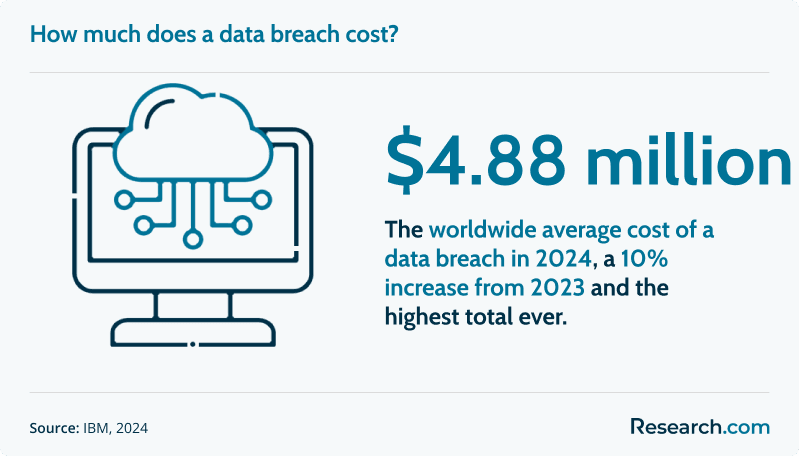
- In 2024, the average cost of a data breach is $4.88 million worldwide, which helps explain why organizations continue investing in cybersecurity talent.
- 56.6% of global organizations experienced business disruption/revenue loss in 2023 due to sensitive information loss.
- The BLS projects information security analyst employment to grow by 33% from 2023 to 2033, but individual outcomes depend on skills, experience, location, industry, and role.
- The strongest ROI usually comes from choosing an accredited program you can finish at a realistic pace while building projects, certifications, internships, and professional connections.
References:
- BLS. (2024, August 29). Information Security Analysts: Job Outlook. Retrieved January 6, 2025, from BLS.
- Bureau of Justice Statistics. (2024, August 29). Information Security Analysts: Pay. Retrieved January 6, 2025, from BLS.
- ISC2 Cybersecurity Workforce Study. (2023). How the Economy, Skills Gap and Artificial Intelligence are Challenging the Global Cybersecurity Workforce. Retrieved January 17, 2025, from ISC2.
- Yadav, P. (2024, December 1). Guide on How to Become Cyber Security Analyst in 2025. Retrieved January 17, 2025, from LinkedIn.
Other Things You Should Know About a Cybersecurity Degree
A typical 2027 accelerated online cybersecurity degree program can be completed in approximately 12 to 24 months. The duration depends on the institution and the student's ability to manage a full course load.
Yes. Many 2027 accelerated online cybersecurity degree programs require a capstone, practicum, or senior project in the final term. These are often tied to 3 to 6 credit hours and may require passing grades in core security, networking, and systems courses before enrollment.


