
2027 Best Online CISM Training Bootcamps

Co-Founder and Chief Data Scientist
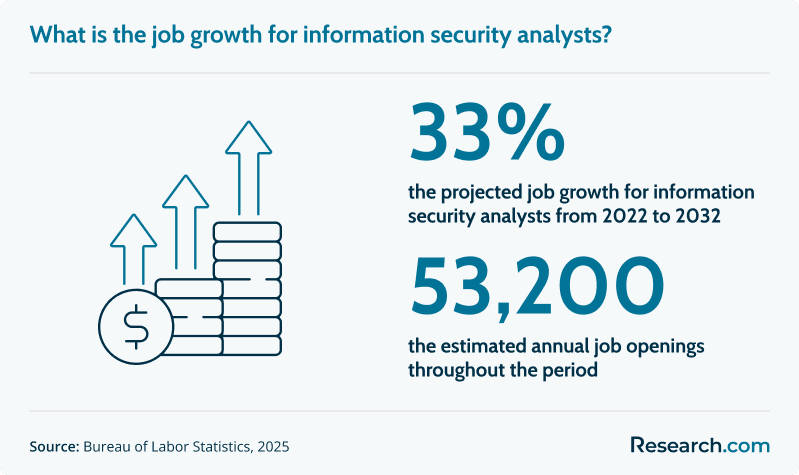
With over 3.5 million unfilled cybersecurity jobs worldwide and a projected 33% growth rate, the pressure to advance into leadership has never been greater. You’ve proven your technical skills and put in the years as a hands-on expert, but now you’re at a crossroads: pursue the CISSP path toward technical architecture, or follow the CISM track to become a strategic business leader.
This guide cuts through the noise surrounding online CISM training bootcamps. Drawing on over a decade of experience, our career planning experts provide a clear framework to evaluate programs and choose the one that will most effectively accelerate your move into information security management.
What are the benefits of getting an online CISM training bootcamp program?
- Unlock access to senior management and director-level roles in high-demand industries like finance, consulting, and technology.
- Command a significant salary increase, with CISM-certified professionals earning an average of $140,000 annually.
- Gain the flexibility to prepare for a career-defining exam without pausing your current professional responsibilities.
What can I expect from an online CISM training bootcamp program?
You can expect the program to be focused entirely on management and business strategy, not hands-on technical skills. Think of the career path like this: general cybersecurity bootcamps build the foundation, ethical hacking programs create the technical specialists, and CISM develops the strategic managers. You won't be in labs learning to hack; you'll be in discussions learning to lead.
The curriculum is built around the four official CISM domains: information security governance, risk management, program development, and incident management. You’ll work through case studies, learn to develop security policies, and focus on how to align a security program with an organization's core business objectives. The entire mindset is about shifting from a technician who solves immediate problems to a manager who builds resilient, long-term security frameworks.
Where can I work with an online CISM training bootcamp program?
Graduates with a CISM certification work in mid-to-senior management roles across nearly every major industry, including finance, technology, healthcare, and government contracting. While many aim for the Chief Information Security Officer (CISO) role, the opportunities are much broader, spanning titles like Information Security Manager, Director of IT Security, and Senior Security Consultant.
It's important to be realistic about the nature of these positions. They are high-responsibility, high-stress roles that often require being on-call to lead incident response. The trade-off for this pressure is significant strategic influence and the opportunity to protect an organization's most critical assets.
How much can I make with an online CISM training bootcamp program?
The CISM certification is directly linked to a significant increase in earning potential. On average, professionals holding the CISM credential earn a salary of around $140,000 per year, with senior roles like CISO commanding even higher figures.
However, it's crucial to see the certification as the key that unlocks access to these higher salary bands, not a guarantee of a specific number. Your final salary will be a reflection of your total value to an employer, which includes your years of hands-on experience, your leadership skills, the industry you work in, and your ability to negotiate effectively.
- List of the Best Online CISM Training Bootcamp Programs for 2027 List of Bootcamps
- How long does it take to complete an online CISM training bootcamp program? Completion Time
- How does an online CISM training bootcamp program compare to an on-campus program? How does an online CISM training bootcamp program compare to an on-campus program?
- What is the average cost of an online CISM training bootcamp program? Program Cost
- What are the financial aid options for students enrolling in an online CISM training bootcamp program? Financial Aid
- What are the prerequisites for enrolling in an online CISM training bootcamp program? What are the prerequisites for enrolling in an online CISM training bootcamp program?
- What courses are typically in an online CISM training bootcamp program? What courses are typically in an online CISM training bootcamp program?
- What types of specializations are available in an online CISM training bootcamp program? What types of specializations are available in an online CISM training bootcamp program?
- How to Choose the Best Online CISM Training Bootcamp Program How to Choose the Best Online CISM Training Bootcamp Program
- What career paths are available for graduates of an online CISM training bootcamp program? Career Paths
- What is the job market for graduates with an online CISM training bootcamp program? Job Market
- Should I Consider Complementary Advanced Degrees Alongside an Online CISM Bootcamp Program? Should I Consider Complementary Advanced Degrees Alongside an Online CISM Bootcamp Program?
- What post-bootcamp career support services are available for continued growth? What post-bootcamp career support services are available for continued growth?
Best Online CISM Training Bootcamp Programs for 2027
Choosing an online CISM training bootcamp is not the same as picking a beginner cybersecurity course. The Certified Information Security Manager credential is designed for experienced security professionals who are moving into governance, risk, program leadership, incident management, and executive-facing roles. A bootcamp can help you prepare for the exam, but it cannot replace the professional experience ISACA requires for certification.
This guide is for IT managers, security analysts, consultants, auditors, GRC professionals, and technical leaders who want a structured path toward CISM exam readiness. It explains how online CISM bootcamps work, how the listed programs compare, what they cost, what prerequisites matter, and how to decide whether a bootcamp is worth the investment for your career stage.
Quick Answer: What Is the Best Online CISM Bootcamp?
The best online CISM bootcamp is the one that matches your timeline, budget, experience level, and preferred learning format. If you need a low-cost introduction, a free or inexpensive self-paced course may be enough. If you want instructor support, official materials, exam vouchers, practice questions, and retake support, a live bootcamp from an ISACA partner or established training provider is usually the stronger option.
Before enrolling, confirm whether the course covers all four CISM domains, whether instructors have real security management experience, whether the program includes official ISACA resources, and whether the cost includes the exam voucher or practice database access.
How We Rank the Programs
Because bootcamp tuition can represent a meaningful professional investment, our ranking approach emphasizes transparency, program details, and decision-useful comparisons. Research.com reviews information from reliable education and institutional data sources, including the IPEDS database, Peterson's database, the College Scorecard database, and The National Center for Education Statistics. These sources help support a consistent evaluation process for the best online CISM training bootcamp programs. To learn more about how Research.com evaluates programs, visit our methodology page.
Best Online CISM Training Bootcamp Programs: At-a-Glance Comparison
| Program | Format and Length | Cost | Best Fit |
| Udemy - CISM Certification: CISM Domain 1 Video Boot Camp 2025 | 5.5 hours, self-paced | $50.00 | Professionals who want focused review of Information Security Governance |
| Certified Information Security - Certified Information Security Manager (CISM) | Self-paced | Pricing available upon inquiry | Learners who want embedded practice questions and extended access options |
| Learning Tree International - CISM Certified Information Security Manager | 4 days | $3,850.00 | Professionals who want official curriculum, an exam voucher, and instructor coaching |
| IT Governance - CISM Training Course | 4 days | $2,639.99 | UK-based or online learners seeking official materials and CPD points |
| Infosec - ISACA Certified Information Security Manager (CISM) Training Boot Camp | 5 days | Pricing available upon inquiry | Learners who want a full bootcamp with retake support and extended recordings |
| Simplilearn - CISM Certification: Certified Information Security Manager | 4 days, weekends | $1,799.00 | Busy professionals who prefer weekend training with ISACA partner support |
| Cybrary - CISM Certification Course & Training | 9 hours, 45 minutes, self-paced | Free | Learners who want no-cost exam familiarization before paying for a bootcamp |
| Cyberkraft Training - ISACA CISM Bootcamp | 40 hours, live instruction | $2,670.00 | Professionals seeking live instruction from an ISACA Accredited Premium Partner |
1. Udemy - CISM Certification: CISM Domain 1 Video Boot Camp 2025
Udemy provides a self-paced video program built specifically around Domain 1 of the CISM exam. With 5.5 hours of instruction and downloadable study guides, this option is best used as a targeted supplement for learners who need extra help with information security governance rather than a complete CISM preparation plan.
- Program Length: 5.5 hours, self-paced
- Total Cost: $50.00
- Accreditation: Not Applicable
2. Certified Information Security - Certified Information Security Manager (CISM)
Certified Information Security offers a self-paced CISM course developed by ISACA expert Allen Keele. The lessons include over 800 practice questions, making the program useful for professionals who want exam-style reinforcement while studying. Students who do not pass on the first attempt receive a free six-month extension.
- Program Length: Self-paced
- Total Cost: Pricing available upon inquiry
- Accreditation: Not Applicable
3. Learning Tree International - CISM Certified Information Security Manager
Learning Tree International runs a four-day CISM training program using official ISACA curriculum. Learners can attend online or in person, and the package includes an ISACA exam voucher. The program is especially useful for professionals who want structured instruction plus one-on-one coaching after the class ends.
- Program Length: 4 days
- Total Cost: $3,850.00
- Accreditation: Not Applicable
4. IT Governance - CISM Training Course
IT Governance delivers a four-day CISM exam preparation course available online or in person in the UK. The course provides 28 CPD points, uses official ISACA materials, and includes a “pass first time or train again for free” guarantee for eligible learners.
- Program Length: 4 days
- Total Cost: $2,639.99
- Accreditation: Not Applicable
5. Infosec - ISACA Certified Information Security Manager (CISM) Training Boot Camp
Infosec offers a five-day CISM boot camp designed for intensive exam preparation. The program includes an Exam Pass Guarantee that covers the cost of a second attempt if needed, 90-day extended access to recordings, and a 12-month subscription to ISACA's official question database.
- Program Length: 5 days
- Total Cost: Pricing available upon inquiry
- Accreditation: Not Applicable
6. Simplilearn - CISM Certification: Certified Information Security Manager
Simplilearn is an ISACA Elite Training Partner offering a four-day weekend CISM course. The package includes the official ISACA learning kit and an exam voucher, and instruction is delivered by accredited instructors. The program also advertises a 100% money-back guarantee.
- Program Length: 4 days, weekends
- Total Cost: $1,799.00
- Accreditation: ISACA Elite Training Partner
7. Cybrary - CISM Certification Course & Training
Cybrary provides a free self-paced CISM course taught by Kelly Handerhan. The course covers all four core domains and works well as a first review for IT professionals who want to understand CISM concepts before committing to a paid bootcamp or official exam preparation package.
- Program Length: 9 hours, 45 minutes, self-paced
- Total Cost: Free
- Accreditation: Not Applicable
8. Cyberkraft Training - ISACA CISM Bootcamp
Cyberkraft Training is an ISACA Accredited Premium Partner offering a 40-hour live CISM bootcamp. The course uses official materials, is taught by accredited instructors, emphasizes real-world scenarios, and is designed to align with U.S. Department of Defense (DoD) 8140/8570 requirements.
- Program Length: 40 hours, live instruction
- Total Cost: $2,670.00
- Accreditation: ISACA Accredited Premium Partner
How Long Does an Online CISM Training Bootcamp Take?
Most online CISM bootcamps are short, concentrated exam-preparation programs. Some are completed in a few days through live instruction, while others allow learners to study at their own pace over a longer period. If speed is your priority, an accelerated CISM online training format may be completed in just a few days.
Bootcamp Duration Is Different From Certification Eligibility
A bootcamp can prepare you for the exam content, but it does not satisfy the work experience requirement for the CISM credential. ISACA requires five years of professional information security experience, including at least three years in direct information security management. That means the course may take days or weeks, but the credential itself reflects years of verified professional responsibility.
| Timeline Component | Typical Time Commitment | What It Means for You |
| Self-paced review course | Several hours or more, depending on the course | Good for refreshing specific domains or testing your readiness |
| Live CISM bootcamp | 4 days, 5 days, or 40 hours depending on provider | Best for structured, intensive preparation with instructor support |
| Required professional experience | Five years, including at least three years in information security management | Required for the official CISM credential, separate from bootcamp completion |
Online vs. On-Campus CISM Training: Which Format Should You Choose?
Online and on-campus CISM programs prepare learners for the same ISACA exam. The core content should cover Information Security Governance, Information Security Risk Management, Information Security Program Development and Management, and Incident Management. These domains matter not only for exam performance but also for the ongoing professional development required to maintain CISM certification.
The main differences are delivery style, scheduling, interaction, and total cost. Online programs are usually easier to fit around full-time work, travel, and family responsibilities. On-campus options may provide more direct classroom interaction and face-to-face networking, but they can also require travel time and added expenses.
Online vs. On-Campus CISM Bootcamps
| Factor | Online CISM Bootcamp | On-Campus CISM Bootcamp |
| Schedule flexibility | Strong fit for working professionals, especially self-paced or weekend formats | More rigid because attendance is tied to a physical location and set class times |
| Networking | May include virtual study groups, discussion channels, and instructor access | Often better for in-person peer and instructor interaction |
| Cost considerations | Can reduce travel, lodging, and commuting expenses | May involve additional travel-related costs |
| Best for | Experienced professionals balancing study with demanding roles | Learners who prefer classroom structure and face-to-face engagement |
Choosing the Right Format for Your Life and Workload
If you already manage security projects, travel for work, or lead a team, online training may be the most practical option. Look for programs that reduce isolation through live office hours, instructor Q&A, peer discussion spaces, or post-course coaching. If you learn best through real-time classroom interaction, an on-campus or live virtual option may be worth the added structure.
How Much Does an Online CISM Training Bootcamp Cost?
Online CISM bootcamp pricing varies widely. The listed options range from Free and $50.00 self-paced courses to multi-day instructor-led programs costing $1,799.00, $2,639.99, $2,670.00, or $3,850.00, while some providers list pricing only upon inquiry. The broader market can range from a few thousand dollars to over $10,000, depending on what is included.
Do not compare programs by tuition alone. A higher-priced bootcamp may include official ISACA materials, an exam voucher, practice database access, recordings, instructor coaching, a second-attempt guarantee, or extended support. A lower-cost course can still be useful, but it may function more as a supplement than a complete exam preparation package.
The decision is similar to evaluating a specialized credential such as a post master's adult gerontology acute care NP certificate online: the right choice depends on credibility, fit, support, and whether the training advances a specific professional goal.
What to Check Before Paying
- Exam voucher: Confirm whether the CISM exam fee is included or separate.
- Official materials: Ask whether the course uses official ISACA resources.
- Practice questions: Look for realistic question banks and explanations, not just lecture videos.
- Retake or pass support: Review the exact terms of any pass guarantee.
- Access period: Check how long you can use recordings, slides, labs, or question databases after the course.
- Instructor access: Determine whether support ends when the class ends or continues afterward.
Investing in a High-Demand Security Leadership Path
The case for paying for CISM preparation depends on your career goals and readiness. The job market continues to reward professionals who can connect security controls, risk, governance, and business priorities. The cited outlook includes projected growth of 33 percent over the next decade, which reflects strong demand for qualified cybersecurity talent. Still, a bootcamp does not guarantee a promotion or salary increase; it works best when paired with relevant experience and a clear leadership trajectory.
Financial Aid and Funding Options for Online CISM Bootcamps
CISM bootcamps are professional training programs, not traditional degree programs. As a result, they typically do not qualify for FAFSA because they are not degree-granting programs. Most learners pay through employer training budgets, professional development funds, veterans benefits where applicable, or personal savings.
This is similar to how professionals pursuing a doctorate in human services online may compare scholarships, grants, and employer tuition assistance. For CISM learners, employer support is often the most realistic funding route because the credential is directly tied to organizational risk management and security leadership.
How to Ask Your Employer to Pay for CISM Training
When requesting sponsorship, avoid framing the bootcamp as a personal benefit only. Build a business case around measurable organizational value: stronger governance, improved incident response planning, better risk communication, and more effective oversight of security programs. If the bootcamp includes an exam voucher, official materials, coaching, or retake support, include those details to show the full value of the package.
- Identify how CISM knowledge connects to your current responsibilities.
- Explain how the training can reduce risk, improve compliance work, or strengthen leadership coverage.
- Compare the bootcamp cost with the cost of hiring external consultants or recruiting senior security talent.
- Offer to share what you learn with your team through a workshop or internal documentation.
- Ask whether professional development, cybersecurity, compliance, or department-level training budgets can be used.
The chart below shows typical salaries associated with CISM-related roles and can help support a funding request.
Prerequisites for an Online CISM Training Bootcamp
Most bootcamp providers allow learners to enroll even if they have not yet met ISACA's certification experience requirement. However, enrollment eligibility and certification eligibility are not the same. The official CISM credential requires five years of work experience in information security, with at least three of those years in direct information security management.
You can use a bootcamp to learn the exam framework before or during your eligibility period, but you cannot earn the full credential without verified experience. In that sense, the pathway resembles an online geography degree that builds from foundational work toward specialized knowledge; CISM assumes a professional base before awarding the credential.
Experience Waivers and Alternative Starting Points
ISACA allows certain waivers that may reduce the five-year general experience requirement. For example, a certification such as CISSP or a master's degree in a relevant field can waive up to two years of the general, non-management experience requirement. These waivers do not eliminate the need for management-related security experience.
If you are too early in your career for CISM, consider building technical and operational foundations first. Entry-level or early-career training such as the fastest online CompTIA A+ training bootcamps may be more appropriate before moving into security operations, risk, and management-focused credentials.
| Your Current Situation | Should You Take a CISM Bootcamp Now? | Better Next Step |
| You have security management experience and are preparing for the exam | Yes, a bootcamp can help structure review and close knowledge gaps | Choose a program with full-domain coverage and strong practice questions |
| You work in cybersecurity but have limited management responsibility | Maybe, if you are planning a move into leadership | Build management exposure through projects, risk work, or team leadership |
| You are new to IT or cybersecurity | Probably not yet | Start with foundational IT and cybersecurity training before CISM |
| You want the credential immediately but lack required experience | No bootcamp can bypass ISACA's experience rules | Review ISACA requirements and plan a realistic certification timeline |
What Do Online CISM Bootcamps Teach?
Quality CISM bootcamps are organized around the four official ISACA domains. These domains are designed for security managers, not entry-level technicians, and they focus on aligning security decisions with business objectives, risk tolerance, program execution, and incident response.
- Information Security Governance: Covers how to build and maintain a security governance structure that supports organizational strategy.
- Information Security Risk Management: Focuses on identifying, assessing, communicating, and reducing information security risk.
- Information Security Program: Addresses how security programs are developed, managed, resourced, and measured.
- Incident Management: Teaches planning, response, communication, recovery, and continuous improvement after security incidents.
Like a graduate certificate in nursing informatics online, which is organized around defined professional knowledge areas, CISM bootcamps use domain-based instruction to keep preparation consistent and job-relevant.
How the Curriculum Connects to Real Security Leadership
CISM training is less about configuring tools and more about making decisions. The curriculum helps professionals move from hands-on security work into roles where they must brief executives, prioritize investments, supervise teams, manage controls, and translate technical risk into business language.
The data below highlights where employers continue to see important capability gaps. CISM-related training can help address these gaps by strengthening communication, governance, risk management, cloud-aware oversight, and security controls leadership.
Top Cybersecurity Skills Gaps Reported by Employers

CISM Specializations and Career Focus Areas
CISM is already a specialization: it positions you as a security management and governance professional rather than a purely technical practitioner. Within that management track, your specialization usually comes from the industry, regulatory environment, or business problem you support.
For example, one CISM professional may focus on Governance, Risk, and Compliance in financial services, while another may manage privacy and incident response programs in healthcare. Others may specialize in cloud governance, third-party risk, public-sector security requirements, or enterprise security program maturity.
Using the CISM Framework in Different Technical Environments
The value of CISM is that the framework can be applied across industries and technologies. A CISM-certified manager may supervise specialists in network security, cloud security, application security, compliance, or incident response. The manager does not need to be the deepest technical expert in every area; the job is to connect technical work to policy, risk, budgets, and business priorities.
For example, a team member may build technical depth through a fast-track CompTIA network+ training certification online, while the CISM-trained manager ensures that network security decisions fit the organization’s broader governance and risk framework.
How to Choose the Best Online CISM Training Bootcamp
The best CISM bootcamp is not always the most expensive, the longest, or the one with the strongest advertising. It is the program that gives you the right level of structure, practice, instructor access, and post-course support based on your current readiness.
CISM Bootcamp Evaluation Checklist
- Domain coverage: Confirm that the course covers all four CISM domains unless you are intentionally buying a single-domain supplement.
- Instructor background: Look for instructors with security leadership, governance, risk, audit, or CISO-level experience.
- Official resources: Ask whether the program uses official ISACA curriculum, learning kits, or question databases.
- Practice quality: Prioritize programs with realistic practice questions, explanations, and exam strategy support.
- Access after class: Check whether you can review recordings, slides, notes, or practice tools after the bootcamp ends.
- Pass guarantee terms: Read the fine print. A guarantee may cover another training session, a second attempt, or only limited support.
- Schedule fit: Decide whether you can handle a concentrated live bootcamp or need a self-paced format.
- Total cost: Include exam vouchers, materials, retake support, travel, and time away from work when comparing options.
Common Mistakes to Avoid
| Mistake | Why It Can Hurt You | Better Approach |
| Choosing only by price | The cheapest course may not include full preparation, official materials, or support | Compare total value, not just tuition |
| Ignoring CISM experience rules | You may complete a bootcamp but still be ineligible for certification | Review ISACA requirements before enrolling |
| Assuming all bootcamps are equivalent | Some programs are full bootcamps, while others are short domain reviews | Check domain coverage, hours, materials, and practice resources |
| Overlooking post-course access | You may need more study time after live instruction ends | Choose a program with recordings, question banks, or extended access |
| Relying only on rankings | A top-ranked program may not match your schedule, budget, or learning style | Use rankings as a shortlist, then evaluate fit |
Be realistic about timing. If you do not yet have the required experience, a CISM bootcamp may still help you understand the leadership framework, but it may not be your best immediate investment. In that case, prioritize experience-building roles and foundational credentials first.
Career Paths After an Online CISM Training Bootcamp
A CISM bootcamp can support advancement into security leadership roles, especially for professionals who already have cybersecurity, IT risk, audit, compliance, or management experience. Common career targets include Information Security Manager, Director of IT Security, Security Architect, senior security consultant, and eventually Chief Information Security Officer.
Where CISM Fits in a Cybersecurity Career Ladder
CISM is most valuable when it marks a transition from individual technical execution to management of people, processes, risk, and strategy. Many professionals first build technical and analytical credibility, then use CISM to demonstrate readiness for leadership.
For example, a professional may move through security operations or analysis, complete training from one of the fastest online CompTIA CySA+ training bootcamps, gain experience managing risk or incidents, and then pursue CISM to formalize a leadership shift.
| Role | How CISM Training Helps | Typical Focus |
| Information Security Manager | Builds governance, risk, program, and incident management knowledge | Managing security teams, policies, controls, and reporting |
| Director of IT Security | Supports executive communication and program oversight | Security strategy, budgets, staffing, and performance |
| Security Architect | Adds risk and governance perspective to technical design decisions | Designing secure systems aligned with business requirements |
| Senior Security Consultant | Improves the ability to advise executives and frame risk in business terms | Client strategy, assessments, governance, and remediation planning |
| Chief Information Security Officer | Signals readiness for enterprise-level security leadership | Security vision, risk ownership, board reporting, and organizational resilience |
The chart below shows demand patterns across critical sectors where security leadership is especially important.
Job Market Outlook for CISM-Trained Professionals
The market for experienced cybersecurity leaders remains strong because organizations need professionals who can manage risk, lead teams, respond to incidents, and communicate security priorities to executives. CISM is often valued because it focuses on management and governance rather than narrow technical execution.
Why Demand for Security Managers Remains High
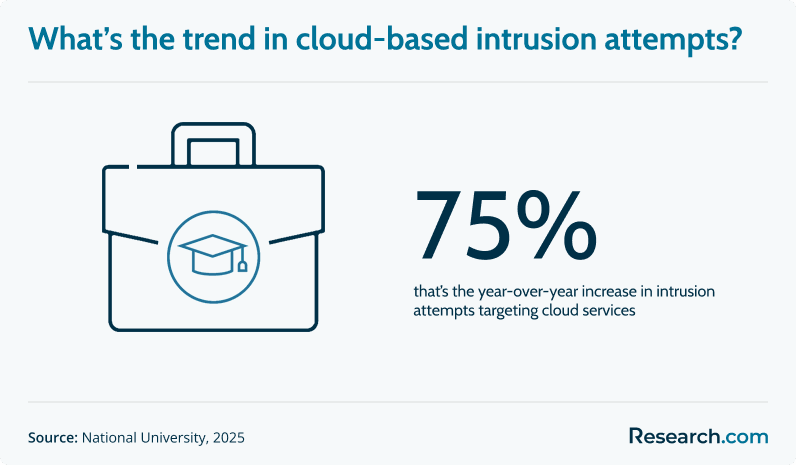
Cyber threats continue to change, and organizations are under pressure to secure cloud environments, protect data, manage vendors, satisfy regulatory expectations, and recover quickly from incidents. Those pressures increase the need for leaders who can build programs rather than simply operate tools.
CISM-trained professionals may also be responsible for hiring or developing team members with more foundational security skills. For example, leaders may look for staff who completed the shortest CompTIA security online training as part of a broader security operations talent pipeline.
The data below illustrates the high-stakes environment in which cybersecurity leaders operate.
Should You Combine an Online CISM Bootcamp With an Advanced Degree?
An online CISM bootcamp and an advanced degree serve different purposes. A bootcamp is focused, exam-oriented, and designed for professionals who need CISM domain preparation. A graduate degree is broader and may develop research, leadership, analytics, policy, or industry-specific expertise over a longer academic path.
Combining both can make sense if you want a wider leadership profile. For instance, professionals who work at the intersection of cybersecurity, healthcare data, privacy, and information systems may compare CISM preparation with options such as the fastest online health informatics masters degree. The right choice depends on whether your immediate goal is certification readiness, academic advancement, industry specialization, or executive mobility.
What Career Support Should an Online CISM Bootcamp Offer?
Post-bootcamp support can make a major difference, especially for learners who need time after class to complete practice questions, review weak domains, or translate the credential into career advancement. Useful services may include mentorship, alumni communities, networking events, instructor follow-up, career coaching, and access to continuing education resources.
Some professionals also use the post-bootcamp period to evaluate broader leadership education. For example, a security manager in a healthcare organization may consider whether a healthcare administration degree online could strengthen executive readiness beyond cybersecurity alone.
Questions to Ask About Post-Bootcamp Support
- How long can I access course recordings and materials?
- Is instructor support available after the live course ends?
- Does the provider offer alumni networking or peer study groups?
- Are practice questions included, and for how long?
- What exactly happens if I do not pass the exam on the first attempt?
- Does career support focus on cybersecurity leadership roles or general job search advice?
What Graduates Say About Online CISM Training Bootcamps
- Priya: "My employer made CISM mandatory for IT directors, but my travel schedule made classroom training unrealistic. A self-paced online course let me study during flights and hotel stays instead of stepping away from work. I passed the exam on my first attempt and met the company requirement without pausing my career."
- Jeremy: "Managing talented security engineers without a formal management credential made me question myself at times. CISM training gave me a framework and shared vocabulary for the leadership work I was already doing. I now discuss security strategy with more confidence because I can connect technical decisions to business priorities."
- Angela: "As a security consultant, I knew how to explain vulnerabilities, but I was less effective when speaking with executives. CISM training helped me discuss security in terms of business impact, investment, and liability. Because the program was online, I could apply the concepts in client meetings almost immediately."
Key Insights
- CISM bootcamps prepare you for the exam, not for the experience requirement. ISACA still requires five years of information security experience, including at least three years in information security management.
- Online programs are often the practical choice for working professionals. They allow experienced security staff, consultants, and managers to study without leaving full-time roles.
- Costs vary because included features vary. Compare exam vouchers, official ISACA materials, practice databases, recordings, coaching, and retake support before choosing.
- Self-paced courses can be useful, but they are not always complete bootcamps. Low-cost or free options may work best as supplements or early-stage review tools.
- CISM is a management credential. It is most useful for professionals moving from technical execution into governance, risk, program leadership, incident response, consulting, or CISO-track roles.
- Employer sponsorship is often the best funding strategy. Build your request around risk reduction, stronger governance, incident readiness, and leadership development.
- The best bootcamp depends on fit. Choose based on your eligibility, schedule, learning style, domain weaknesses, budget, and need for instructor support.
References:
- IT Governance Blog. (2024, April 4). An expert overview of CISM®. IT Governance. Retrieved May 24, 2024, from https://www.itgovernance.co.uk/blog/an-expert-overview-of-cism
- National University. (n.d.). Cybersecurity statistics. Retrieved May 24, 2024, from https://www.nu.edu/blog/cybersecurity-statistics/
- PayScale. (n.d.). Certified Information Security Manager (CISM) salary. Retrieved May 24, 2024, from https://www.payscale.com/research/US/Certification=Certified_Information_Security_Manager_(CISM)/Salary
- U.S. Bureau of Labor Statistics. (2025, April). Information security analysts. Occupational Outlook Handbook. Retrieved May 24, 2024, from https://www.bls.gov/ooh/computer-and-information-technology/information-security-analysts.htm
- Zippia. (2025, January 8). Cyber security analyst education requirements. Retrieved May 24, 2024, from https://www.zippia.com/cyber-security-analyst-jobs/education/
- Zippia. (n.d.). Cyber security analyst demographics and statistics in the US. Retrieved May 24, 2024, from https://www.zippia.com/cyber-security-analyst-jobs/demographics/
- ZipRecruiter. (n.d.). CISM salary. Retrieved May 24, 2024, from https://www.ziprecruiter.com/Salaries/Cism-Salary
Other Things You Should Know About Online CISM Training Bootcamp Programs
ISACA-approved CISM bootcamps usually provide 16 to 40 CPE hours, depending on the program length and delivery format. To claim them, learners must attend the required sessions and complete any attendance or participation checks set by the training provider and ISACA.
The CISM certification exam, post-2027 bootcamp, consists of 150 multiple-choice questions. It covers four domains: Information Security Governance, Risk Management, Information Security Program, and Incident Management. Candidates have four hours to complete the exam, administered by ISACA.





