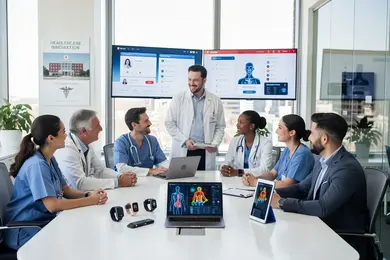
2027 Easiest Online Healthcare Innovation Master's Degree Programs That Pay Well: High-Salary Degrees with Simple Admissions

Co-Founder and Chief Data Scientist
If you want a graduate degree that can move you into healthcare innovation without a long, test-heavy admissions process, the key question is not simply “Which program is easiest?” It is “Which accessible program is credible, affordable, flexible, and connected to roles that can justify the investment?” Healthcare innovation sits at the intersection of care delivery, technology, operations, analytics, patient experience, and leadership. That makes it attractive to clinicians, administrators, analysts, consultants, and career changers who want to help healthcare organizations improve how services are designed and delivered.
The field also has strong workforce momentum. Healthcare innovation roles are projected to grow 16% from 2020 to 2030, but admissions policies, tuition, transfer credit rules, and career outcomes vary widely by school. This guide explains how to identify online healthcare innovation master’s degree programs with easier admission requirements while still checking the factors that matter most: accreditation, cost, time to completion, academic support, and access to high-paying career paths.
Key Benefits of Online Healthcare Innovation Master's Degree Programs That Have Simple Admissions and Pay Well
- Many online healthcare innovation master's programs feature simplified admissions, often waiving GRE scores and requiring only a bachelor's degree plus relevant experience, reflecting a 15% increase in accessible program options since 2020.
- Flexible online learning formats, including asynchronous classes and part-time pathways, accommodate working professionals, with online healthcare graduate enrollment growing 12% annually.
- Graduates in healthcare innovation report median salaries exceeding $95,000, driven by a 20% projected job growth in healthcare management and technology roles through 2030.
How Can You Tell If Online Healthcare Innovation Master's Degree Programs Have Easy Admission Requirements?
An online healthcare innovation master’s program is usually easier to enter when it reduces unnecessary application barriers without lowering academic expectations after enrollment. For working adults, clinicians, administrators, and career changers, the most accessible programs tend to focus on readiness, professional goals, and relevant experience rather than standardized test scores alone.
Look for admissions policies that make the process faster and more practical while still signaling that the school takes graduate preparation seriously.
- No standardized exams: Programs that do not require GRE or GMAT scores remove a major time and cost barrier. This can be especially helpful for applicants who have strong professional experience but have been out of school for several years.
- Holistic application review: A holistic process considers your resume, personal statement, leadership experience, healthcare exposure, technical skills, and career goals. This is useful in healthcare innovation because the field benefits from interdisciplinary backgrounds.
- Minimal prerequisite coursework: Some programs accept students from healthcare, business, technology, public health, nursing, or liberal arts backgrounds. Fewer prerequisites can shorten the time between applying and enrolling.
- Provisional acceptance options: Conditional or provisional admission may allow applicants to begin coursework while satisfying specific requirements. This can help students who are otherwise promising but need to strengthen one part of their academic record.
- Clear documentation requirements: Easy admission should also mean transparent instructions. Programs that clearly list transcript, resume, essay, and recommendation requirements are often easier to navigate than schools with vague or shifting criteria.
Do not confuse “easy admission” with “low value.” A strong accessible program should still have qualified faculty, a coherent curriculum, student support, and recognized accreditation. The best fit is a program that lets you enter efficiently while preparing you for real healthcare innovation work in areas such as digital health, process improvement, implementation, analytics, and strategy.
Applicants comparing healthcare pathways may also want to review related options such as the shortest DNP program online, especially if they are considering advanced clinical leadership in addition to innovation-focused roles.
What High-Paying Jobs Can You Get With an Easy Online Healthcare Innovation Master's Degree Program?
An accessible online master’s degree in healthcare innovation can support advancement into roles that combine healthcare knowledge with project leadership, technology adoption, data use, and organizational change. The strongest salary outcomes usually go to graduates who pair the degree with relevant experience in healthcare operations, IT, analytics, consulting, clinical leadership, or administration.
Demand is one reason these programs appeal to working adults. Healthcare management positions are projected to grow 32% from 2021 to 2031, which points to continued need for professionals who can improve systems, manage change, and lead innovation initiatives.
- Healthcare Project Manager: Leads projects such as clinical workflow redesign, digital platform implementation, quality improvement, or new service launches. Responsibilities often include budgets, timelines, stakeholder communication, and cross-functional coordination. Salaries range from $90,000 to $130,000 annually.
- Health IT Consultant: Advises organizations on technology selection, system adoption, data security improvements, interoperability, and regulatory compliance. This role may work inside a health system or through a consulting firm. Earnings typically range from $85,000 to $125,000 per year.
- Clinical Innovation Specialist: Helps design, test, and evaluate healthcare solutions intended to improve patient outcomes, reduce friction in care delivery, or increase operational efficiency. Compensation is around $80,000 to $115,000.
- Healthcare Data Analyst: Uses healthcare data to identify trends, measure performance, support innovation strategies, and improve clinical or operational results. This role typically pays $75,000 to $110,000 annually.
- Healthcare Innovation Director: Oversees innovation strategy across a healthcare organization, aligning technology adoption, patient experience, operations, and business goals. This is a senior role, with salaries from $110,000 to $150,000.
Salary outcomes depend on more than the degree title. Employers typically look for evidence that you can solve problems in real healthcare environments. When comparing programs, review whether coursework includes applied projects, analytics, implementation methods, change management, healthcare finance, digital health, or capstone work that can become part of a professional portfolio.
Students considering broader administrative pathways can also compare an online health administration degree, which may lead to overlapping roles in healthcare leadership, operations, and management.
Can You Get Into an Online Healthcare Innovation Master's Degree Program With a Low GPA?
Yes, a low GPA does not automatically prevent admission to an online healthcare innovation master’s program, but it usually means the rest of the application must work harder. Admissions committees may still want evidence that you can handle graduate-level reading, writing, quantitative analysis, collaboration, and project-based work.
Recent data shows that approximately 40% of these programs follow a holistic admission process that evaluates more than grades. That can benefit applicants whose academic record does not fully reflect their current ability, especially those with strong professional experience or clear career direction.
How to strengthen an application with a low GPA
- Use relevant work experience strategically: Healthcare, technology, operations, consulting, administration, quality improvement, informatics, or leadership experience can show that you understand real organizational problems and are prepared to apply graduate learning immediately.
- Request specific recommendation letters: Strong letters should do more than say you are reliable. Ask supervisors, faculty, or mentors to address your problem-solving ability, communication skills, leadership potential, resilience, and readiness for graduate study.
- Complete foundational coursework: If your transcript is weak in quantitative, writing, research, or healthcare-related subjects, completing relevant coursework before applying can show recent academic discipline and reduce concerns about preparedness.
- Write a focused personal statement: Do not ignore the GPA. Briefly explain the context if appropriate, then emphasize what has changed, what you have accomplished since then, and why healthcare innovation is a logical next step.
- Consider provisional admission: Some schools may allow conditional enrollment. If offered, treat the first term seriously because strong early performance can confirm that you belong in the program.
The main mistake is applying with a low GPA and a generic application. If your grades are the weakest part of your file, your resume, essay, recommendations, and recent coursework should all point to the same message: you are now prepared for graduate-level work and have a clear plan for using the degree.
Can Easy Online Healthcare Innovation Master's Degree Programs Be Completed in Under a Year?
Some easy online healthcare innovation master’s degree programs may be completed in under a year, but that timeline is usually realistic only for students who can commit to an intensive pace, enter with transferable credits, or choose an accelerated curriculum. Fast completion can be valuable, but speed should not come at the expense of accreditation, academic support, or career relevance.
Several features can make a shorter timeline possible.
- Accelerated courses: Short, intensive terms can let students complete more courses across the year. These formats work best for organized learners who can manage frequent deadlines and concentrated assignments.
- Full-time enrollment: A full course load moves students through requirements faster than part-time study. The trade-off is workload. Working professionals should realistically assess whether they can handle graduate coursework alongside employment and family responsibilities.
- Prior academic credits or professional experience: Some programs may evaluate previous graduate coursework, certificates, or relevant learning. Accepted credits can reduce the number of courses required after enrollment.
- Flexible scheduling and asynchronous coursework: Asynchronous classes can help students study outside traditional class times. This flexibility can support faster progress, but it also requires strong self-management.
Before choosing a program primarily because it is fast, ask how many credits are required, how often courses are offered, whether any courses must be taken in sequence, and whether the capstone or final project can be completed within the advertised timeline. A program that looks short on paper may take longer if required courses are not available every term.
Students comparing healthcare education options may also want to explore online nursing degree programs, particularly if they are weighing innovation-focused leadership against direct clinical preparation.
Accelerated pathways can be a strong fit for working adults, career changers, and applicants pursuing accelerated healthcare innovation master’s degrees online, but the best programs balance speed with enough depth to support long-term career growth.
Are Online Healthcare Innovation Master's Degree Programs Easier Than On-Campus Ones?
Online healthcare innovation master’s programs are not automatically easier than on-campus programs. They can feel more manageable because they reduce commuting, offer flexible scheduling, and allow students to study around work. The academic expectations, however, may be just as rigorous as in-person programs, especially when assignments involve research, group projects, analytics, strategy, and applied healthcare problem-solving.
Recent data shows that around 75% of graduate students in online programs express satisfaction with course pacing. That satisfaction often reflects flexibility rather than lower difficulty.
- Self-paced or flexible learning: Many online courses allow students to review lectures, complete modules, or participate in discussions at times that fit their schedules. This can make the experience more manageable for working adults.
- No commute: Eliminating travel time can free up hours each week for reading, assignments, projects, or professional responsibilities.
- Digital learning resources: Online students often use recorded lectures, discussion boards, virtual libraries, databases, collaboration tools, and faculty messaging systems. These resources can make it easier to revisit difficult material.
- Greater need for discipline: Flexibility cuts both ways. Without regular in-person meetings, students must track deadlines, participate consistently, and ask for help early. Falling behind in an accelerated online course can be difficult to recover from.
- Different networking experience: Online programs may offer virtual networking, group projects, and alumni connections, but students may need to be more intentional about building relationships than they would on campus.
- Graduation expectations still matter: Studies show about 65% of online healthcare innovation master’s students graduate within expected timelines, which suggests that online study still requires sustained commitment.
The better question is whether the online format matches your learning style. If you are self-directed, comfortable with technology, and able to manage deadlines independently, an online program may be easier to fit into your life. If you need frequent in-person structure, a campus or hybrid format may be more effective.
Are Easy Online Healthcare Innovation Master's Degree Programs Accredited?
Many easy online healthcare innovation master’s degree programs are accredited, but students should verify this before applying. Easy admission does not guarantee quality, and accreditation is one of the clearest ways to confirm that a college or university meets recognized academic standards.
Accreditation matters for employer recognition, federal financial aid eligibility, credit transfer, and future education options. Over 90% of well-established online degree programs in healthcare innovation hold regional or national accreditation, reflecting broader acceptance of online graduate education.
Types of accreditation to check
- Regional Accreditation: This is widely regarded as the highest standard for U.S. colleges and universities. It is provided by seven regional agencies in the U.S. Regional accreditation is often important for credit transfer, employer acceptance, and admission to future graduate or doctoral programs.
- Programmatic Accreditation: This applies to specific fields or disciplines. In healthcare management, organizations such as the Commission on Accreditation of Healthcare Management Education (CAHME) may provide specialized recognition. Not every healthcare innovation program will have programmatic accreditation, but when available, it can signal stronger alignment with industry expectations.
Before enrolling, confirm accreditation through reliable sources such as the Council for Higher Education Accreditation (CHEA) or the U.S. Department of Education’s official database. Also check whether the accreditation applies to the institution, the specific program, or both. This distinction matters because institutional accreditation and programmatic accreditation serve different purposes.
Be cautious with programs that advertise quick admission, unusually low tuition, or guaranteed outcomes but provide limited accreditation information. A degree that is easy to start but not recognized by employers or other institutions can create long-term problems.
What Is the Average Tuition for Easy Online Healthcare Innovation Master's Degree Programs?
Average tuition for fully online graduate programs in healthcare innovation typically ranges from $500 to $1,200 per credit hour, with total tuition of approximately $15,000 to $40,000. The final cost depends on the school, number of credits, tuition structure, fees, transfer credit policy, and whether the program is fully online or hybrid.
When comparing costs, look beyond the advertised per-credit rate. A program with a lower credit-hour price may still cost more overall if it requires more credits or charges substantial fees.
- Cost range: Most easy online healthcare innovation master’s degree tuition fees fall within $15,000 to $40,000 for the full program, depending on credit requirements and institutional policies.
- Program format differences: Fully online programs may cost less than hybrid programs because students can avoid travel, lodging, commuting, and some campus-based costs. Hybrid options may include in-person sessions or facility fees that increase total expenses.
- Credit hour variability: Tuition is often charged per credit hour, with rates ranging from $500 to $1,200 depending on whether the institution is public or private and how the program is structured.
- Additional fees: Technology fees, online learning fees, administrative fees, graduation fees, and course-specific costs can increase the final bill. Ask for a complete cost breakdown before comparing programs.
- Accelerated and flexible options: Some accelerated programs may charge more per credit but reduce overall cost if they require fewer credits or allow transfer credits. Others may cost more because of intensive scheduling.
For return on investment, compare tuition with likely career outcomes, employer tuition assistance, financial aid options, and how quickly the degree can help you move into a better-paying role. A lower-cost program is not automatically the best choice if it lacks accreditation, career support, or relevant coursework.
Students exploring other healthcare credentials may also consider a fast track LPN program alongside master’s-level options, depending on whether their goal is clinical entry, career change, or healthcare leadership.
Can Transfer Credits Make an Online Healthcare Innovation Master's Degree Program Easier to Complete?
Yes. Transfer credits can make an online healthcare innovation master’s degree easier to complete by reducing the number of courses you must take, lowering tuition, and shortening the time to graduation. This is especially useful for students who have completed prior graduate coursework, certificates, or related study in healthcare, business, analytics, technology, or administration.
About 40% of graduate students report utilizing transfer credits to speed up their progress, showing how important these policies can be for adult learners and career changers.
- Shortening program duration: Accepted transfer credits may let students skip courses that duplicate previous learning, helping them finish sooner.
- Lowering tuition expenses: Fewer required credits usually means lower total tuition, though students should confirm whether transfer credit evaluations or administrative fees apply.
- Supporting career transitions: Students moving from another field can apply prior coursework where relevant and focus more quickly on healthcare innovation content.
- Customizing the degree pathway: Transfer credits may free room for advanced or specialized courses in innovation strategy, healthcare technology, data analytics, or leadership.
Before applying, ask each school how many credits can be transferred, whether credits must come from an accredited institution, whether there is a minimum grade requirement, and whether older coursework is accepted. Also ask whether transfer credits apply to core requirements, electives, or both. A generous transfer policy is most valuable when it reduces required coursework without delaying enrollment.
Students who want to shorten time to completion can also research accelerated career programs, many of which use transfer credit strategies to help learners finish faster.
What Kind of Academic Support Do Online Healthcare Innovation Master's Degree Students Receive?
Strong academic support can determine whether an online healthcare innovation master’s program feels manageable or overwhelming. Because students often balance coursework with full-time jobs, caregiving, and professional responsibilities, the best programs provide structured support before problems become serious.
- Academic advising: Advisors help students understand degree requirements, choose courses, plan enrollment loads, and stay on track for graduation. Good advising is especially important in accelerated programs where missed prerequisites or course sequencing issues can delay completion.
- Tutoring services: Tutoring can support students in quantitative, technical, or research-heavy subjects such as data analytics, healthcare systems, technology integration, finance, or evidence-based decision-making.
- Career services: Career offices may help with resumes, interviews, job search strategy, salary conversations, networking, and employer connections in healthcare innovation, health IT, consulting, operations, and administration.
- Technical support: Online learners need reliable access to learning platforms, video tools, digital libraries, and collaboration systems. Responsive technical support reduces disruption and helps students stay engaged.
- Faculty access: Look for programs where instructors provide clear office hours, timely feedback, and practical guidance on applying course concepts to real healthcare settings.
- Peer and alumni networks: Discussion boards, group projects, virtual events, and alumni communities can help online students build professional relationships even without a campus experience.
When evaluating support, do not rely only on marketing language. Ask how quickly advisors respond, whether tutoring is included in tuition, how career services support online students, and whether support is available outside standard business hours. These details matter for working adults.
How Do You Choose the Easiest Online Healthcare Innovation Master's Degree Program That Pays Well?
To choose the easiest online healthcare innovation master’s degree program that can still pay well, evaluate access and outcomes together. A program should be simple to enter, realistic to complete, and credible enough to help you compete for better roles. The easiest option is not always the best investment.
- Program cost: Compare total tuition, not just per-credit pricing. Include fees, required credits, books, technology costs, and potential travel for any in-person components.
- Duration: Decide whether you need an accelerated, part-time, or flexible pace. Faster programs can help you finish sooner, but they may require heavier weekly workloads.
- Accreditation: Confirm institutional accreditation and, where relevant, programmatic accreditation. This protects the value of the degree and may affect financial aid, transfer options, and employer recognition.
- Career support: Look for resume help, networking opportunities, employer connections, alumni access, capstone projects, and career coaching. These services can improve the practical value of the degree.
- Alignment with job market demands: Prioritize programs that build skills in digital health, data analytics, patient experience, process improvement, healthcare operations, leadership, and change management.
- Admissions fit: If you want easier entry, check whether the school waives standardized exams, accepts varied undergraduate backgrounds, offers holistic review, or provides provisional admission.
- Transfer credit policy: A program that accepts relevant prior credits may be easier, faster, and less expensive to complete.
A practical selection strategy is to create a shortlist of accredited programs, eliminate any that do not fit your budget or schedule, then compare curriculum and career support. Finally, contact admissions and ask specific questions about GPA flexibility, transfer credit, course pacing, and graduate outcomes. The best choice should make enrollment accessible without weakening the degree’s long-term value.
What Graduates Say About Their Easy Online Healthcare Innovation Master's Degree Programs That Pay Well
- : "I was initially drawn to the program because it offered a straightforward online format, making it possible to balance graduate school with my full-time job. The cost was around $15,000 for the entire master’s degree, which felt like a reasonable investment compared with similar programs. Since graduating, my salary has increased significantly, and I now lead healthcare technology projects. The degree helped me move into work that matches both my experience and my long-term goals. — Casey"
- : "Choosing an easy online master’s in healthcare innovation was a practical decision for me. I wanted a program that respected my prior experience without overwhelming me with unnecessary barriers. The affordability, roughly $12,500 total, made the program accessible while still feeling academically worthwhile. It strengthened my strategic thinking and helped position me for leadership roles. — Jules"
- : "What stood out was how manageable the program was in both workload and cost, just under $14,000 for the degree. I appreciated that the coursework focused on practical innovation instead of theory alone. Since completing it, I secured a position that uses my new skills to improve patient outcomes through technology. For me, it was a smart professional move. — Harren"
Other Things You Should Know About Healthcare Innovation Degrees
In 2027, online healthcare innovation master's programs typically require a bachelor's degree in a related field, a minimum GPA, and often some professional experience. Many programs also require submission of a personal statement, recommendation letters, and a resume. Some might waive test scores for work experience.
Graduates with an online healthcare innovation master's degree in 2027 can pursue careers as healthcare administrators, innovation consultants, or project managers in healthcare settings. These roles typically focus on implementing and managing innovations to improve healthcare delivery and patient outcomes.
References
- Career Opportunities After an Online Masters in Healthcare Informatics https://snatika.com/single-blog/career-opportunities-after-an-online-masters-in-healthcare-informatics
- 35 Most Affordable Online Master's Degrees in Healthcare Administration - Healthcare Administration Degree Programs https://www.healthcare-administration-degree.net/best/affordable-online-masters-degrees-in-healthcare-administration-22/
- Master in Technological Innovation in Health | EIT Health https://eithealth.eu/programmes/master-innovation-health/
- Arizona State University Online Master of Healthcare Innovation https://www.mhaonline.com/school-profiles/asu-online-healthcare-innovation-mhi-program
- Highest-Paying Healthcare Degrees Online | EduMed.org https://www.edumed.org/articles/highest-paying-healthcare-degrees/
- What You Can Do with an MHCI Degree https://improvinghealthcare.mehp.upenn.edu/programs/master-health-care-innovation/what-you-can-do-mhci-degree
- 2025 Most Affordable Online Healthcare Informatics Degrees https://www.onlineu.com/most-affordable-colleges/healthcare-informatics-degrees
- Master’s in Healthcare Administration Online https://www.snhu.edu/online-degrees/masters/ms-in-healthcare-administration
- Which Healthcare Certifications Pay the Most? A Guide to Higher-Earning Medical Jobs Through Certification https://www.pennfoster.edu/blog/10-medical-certifications-that-pay-well
- MSc in Healthcare Innovation & Data Science https://em-lyon.com/en/student/master/msc-healthcare-innovation