2027 Reviewing the Sustainability of a Maternal Health Outreach Program: A DrPH Applied Project Planning Guide

Co-Founder and Chief Data Scientist
A maternal health outreach program may reach families during a grant period yet struggle to continue when funding, staff time, or referral partnerships change. For an experienced practitioner planning a DrPH applied project, the useful question is not simply whether outreach works - it is what the organization can sustain, for whom, and under what conditions. This guide shows how to scope that decision, select measures and frameworks, protect community interests, and turn findings into an actionable plan. It also explains what to verify about doctoral requirements, project access, cost, and career fit before enrolling.
Key Things You Should Know
- Define sustainability as the capacity to maintain valued outreach functions - not necessarily every grant-funded activity - without shifting unmanageable costs to families, staff, or partners.
- Assess at least four decision areas together: financing, workforce capacity, referral and community partnerships, and organizational authority. A stable budget alone does not establish a sustainable program.
- A feasible DrPH output is a partner-approved sustainability assessment and action plan, not a claim of lasting impact. Confirm site access, data permissions, academic requirements, and a realistic observation period before committing.
What Is a DrPH Applied Project on Maternal Health Outreach?
A DrPH applied project addresses a practice problem with an organization that can use the result. Here, the decision might be whether a health department or community organization can continue prenatal and postpartum navigation after a time-limited award ends. The project could identify which outreach functions families value, what each requires, where referrals break down, and which changes leadership can authorize.
Sustainability does not mean freezing the program in its original form. A partner might retain trusted navigators and referral follow-up while changing recruitment channels or funding arrangements. The student should distinguish that organizational decision from a research question about an intervention's causal effect. A practice-focused DrPH generally fits the former; readers whose main goal is independent scholarly research can compare affordable public health PhD pathways instead.
The project remains a proposal until the organization and university approve its scope. Prior employment at a site does not automatically grant access to records, authority to interview clients, or permission to share findings.
How Do You Evaluate the Sustainability of a Maternal Health Outreach Program?
Begin with a decision the partner must make - for example, which outreach activities to retain in its next operating plan. Establish the service area, eligible population, activities, funding sources, and likely changes in staffing or referrals. Then examine whether the program can deliver its most valued functions under those conditions, rather than treating current enrollment as proof of future capacity.
The following sequence keeps the evaluation useful to leaders and accountable to community partners:
- Agree on the decision and governance. Identify who can change staffing, budgets, contracts, or referral workflows and how people served by the program will help interpret priorities.
- Describe the baseline. Map outreach, contact attempts, completed connections to care, staffing time, referral handoffs, and existing funding commitments using records the site is authorized to share.
- Test plausible continuation scenarios. Compare what happens if a grant ends, referrals increase, a navigator leaves, or a partner changes its eligibility rules; document assumptions rather than forecasting false precision.
- Check burden and equity. Ask whether a seemingly cheaper model transfers travel, language-access, digital, or follow-up work to families or unpaid community partners.
- Recommend and revisit. Assign an owner, resources, monitoring indicator, and review point to each proposed change.
Possible indicators include the share of attempted contacts completed, time from referral to first contact, navigator caseload, and the portion of essential operating costs covered by committed funds. Define each denominator and data source before interpreting a trend. Small counts, incomplete records, changing eligibility, and differences between neighborhoods can limit conclusions. If the immediate need is to learn evaluation skills rather than lead organizational change, compare public health degrees by price and completion time with targeted training and supervised project work before pursuing a doctorate.
What Does CEPH Accreditation Require for a DrPH Applied Project?
The Council on Education for Public Health (CEPH) accredits eligible public health schools and programs, not a student's individual project. Its DrPH criteria address advanced practice preparation, including applied experience and an integrative learning experience that demonstrates competencies. CEPH does not prescribe one universal maternal health topic, sustainability framework, or final-document format. The university determines how its requirements are assessed and how any dissertation or other culminating work relates to the applied project.
Before relying on a school's accreditation claim, check the CEPH listing for the accredited unit and whether the proposed DrPH falls within its scope. Then request the current handbook and ask which competencies the project must demonstrate, who approves the site and supervisor, what products are required, and whether an existing job can be used. Institutional accreditation, CEPH scope, and professional credentials answer different questions; matching public health graduate degrees to careers also requires looking beyond the accreditation label to the work a program prepares students to perform.
Frameworks organize questions; they do not produce a sustainability score that overrides partner judgment. Choose one that fits the decision, then adapt its domains with staff, referral partners, and representatives of the people the outreach serves.
The Program Sustainability Assessment Tool (PSAT) can structure discussion of funding stability, organizational capacity, partnerships, evaluation, adaptation, communication, and planning. RE-AIM helps examine reach, effectiveness, adoption, implementation, and maintenance; its maintenance dimension is useful, but RE-AIM alone does not replace a financing or staffing analysis. The Consolidated Framework for Implementation Research (CFIR) can help explain organizational and external conditions affecting continuation, such as workflow fit and partner relationships.
For this project, a practical combination is a sustainability-domain assessment plus a small set of clearly defined outreach and referral measures. If the proposed work exceeds the student's preparation in interviews, cost analysis, or implementation evaluation, address that gap before data collection. A prospective student not yet ready for doctoral-level leadership work may find public health master's conditional admission options worth examining, while checking what preparation must be completed and when.
The strongest deliverable tells a named decision-maker what can continue, what must change, and what remains unknown. Its scope should match the partner's authority, available evidence, academic rubric, and time for review - not the ambition of a full program redesign.
A proposed project charter should specify these components before access or analysis begins:
- Decision and boundaries: the outreach functions, population, geography, time horizon, and choices the partner can actually make.
- Stakeholder roles: who represents participants' priorities, approves contact with families, interprets findings, and signs off on recommendations.
- Evidence plan: existing records, approved interviews or observations, indicator definitions, data-quality checks, and a realistic alternative if access is denied.
- Resource analysis: staff time, supervision, training, interpretation, transportation support, technology, and dependable versus uncertain funding.
- Products: a concise findings brief, scenario-based action plan, measure definitions, and a handoff process for continued monitoring.
Determine with the university and site whether the activity is program evaluation, quality improvement, or human-subjects research; labels alone do not settle review obligations. Obtain applicable institutional determinations, community permissions, and data-use approvals before collecting information. Present only authorized, appropriately deidentified material in a portfolio. If an advanced degree is not needed for the role, compare narrower learning options; even public health graduate programs with no recommendation letters still require a separate assessment of cost, skills, and access to supervised work.
Either format can support a local maternal health partner. The important comparison is not where lectures occur, but how the program arranges faculty feedback, site supervision, community engagement, and approval of a practice-based deliverable. Online enrollment does not make partner meetings, live classes, residencies, or data access asynchronous.
Ask each program for a sample project calendar and identify who is responsible for finding a site, negotiating an agreement, reviewing an ethics or data-access question, and helping if the partner withdraws. A working practitioner should also check live-session times, travel requirements, leave policies, and whether project milestones can fit a grant or budget cycle. Prior experience comparing online MPH admissions flexibility comparisons may help frame format questions, but MPH admission practices do not establish a DrPH program's project requirements.
Requirements vary by school. Programs may assess prior graduate education, relevant professional experience, leadership responsibilities, academic preparation, recommendations, and the fit between an applicant's goals and available supervision. An MPH or a particular job title is not a universal prerequisite. For this project, readiness also means being able to describe a feasible practice decision and a credible route to partner collaboration - without implying that access is already approved.
Document what you have actually led: budget or staffing decisions, changes to referral processes, community accountability, evaluation use, and results within your authority. Ask admissions staff how the program defines qualifying experience, whether an employer site is acceptable, and when a formal project agreement is required. If academic history is a concern, low-GPA public health graduate application strategies may suggest ways to document later preparation, but confirm the doctoral program's own rules rather than assuming master's admissions policies apply.
There is no reliable project-wide time or price without a specific program's curriculum and an approved site plan. Coursework and progression milestones may precede project approval; agreement review, data permissions, recruitment, analysis, partner feedback, and revisions can extend the work. A site may also change its priorities during that period.
Request a term-by-term plan showing tuition and required fees, minimum enrollment or continuation charges, travel or residency costs, software, and any unpaid time needed for partner meetings. Ask whether employer assistance covers doctoral credits and whether project delays create additional charges. Use the school's published schedule and your likely enrollment pattern to calculate a range, rather than multiplying an advertised per-credit rate by coursework alone. Online public health doctoral tuition and duration comparisons can help generate questions, but the school must confirm charges and milestones for your entry term.
A well-executed project can provide evidence of readiness for responsibilities such as maternal and child health program leadership, health-department planning, nonprofit evaluation, health-system community partnerships, or grant-funded implementation oversight. It does not itself confer a promotion, clinical license, or eligibility for every director role.
The career value lies in demonstrable work: negotiating priorities with community partners, interpreting imperfect service data, making defensible resource choices, and presenting an implementable plan. Match those examples to job descriptions and identify remaining gaps, such as staff supervision, public budgeting, or contract management. For a practitioner seeking a narrower move into evaluation rather than senior leadership, compare the commitment against online public health master's tuition and job prospects and opportunities to gain supervised experience without another doctorate.
What Salaries and Job Outlook Apply to Maternal Health Careers?
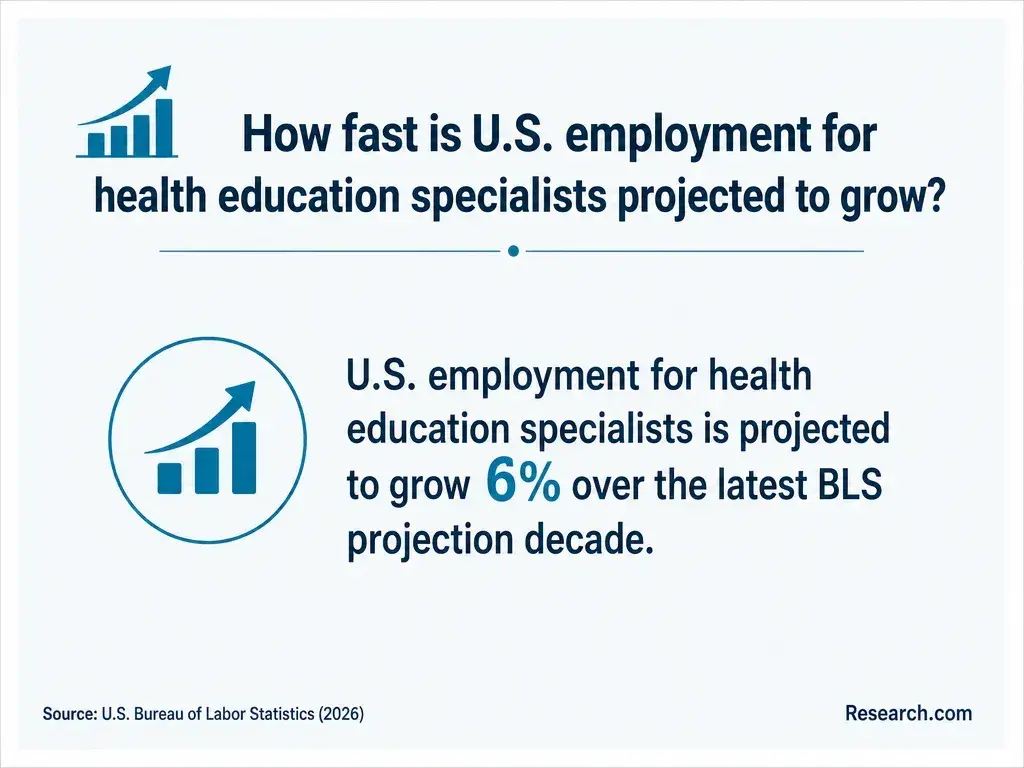
There is no Bureau of Labor Statistics wage category for "maternal health DrPH graduate." Pay depends on the actual position, employer, location, and responsibility. As one broad comparison - not a projected graduate salary - the Bureau of Labor Statistics reports a May 2024 median annual wage of $117,960 for medical and health services managers. That occupation includes many roles outside maternal health outreach, so its median should not be used to price a nonprofit evaluator or assume a doctoral pay increase.
Medical and health services management has a favorable national employment outlook, but openings in maternal health depend on local budgets, grants, and hiring rules. Compare posted pay ranges for the specific jobs you could plausibly pursue with your current experience, then weigh any likely change against total education cost and foregone work time. If your target is entry-level community health rather than management, public health undergraduate tuition comparisons may be a more relevant education-cost starting point than a doctoral return-on-investment calculation.
Other Things You Should Know About Public Health
Only with the required site and university permissions. Remove identifiable and sensitive information, check small-cell disclosure risks, and confirm what the partner agrees can be made public.
Ask the faculty adviser and partner whether an approved pivot could examine the closure decision, referral handoff, or transition plan. Do not assume a changed project will satisfy the original academic approval.
Yes, where their contributions warrant acknowledgment or authorship and they consent to being named. Agree on review and credit expectations with the partner early rather than treating frontline expertise as anonymous input.
They can inform questions elsewhere, but not establish that another site has the same staffing, funding, relationships, or participant needs. Document those conditions so readers can judge what may transfer.
- Program planning and review | who.int https://www.who.int/teams/maternal-newborn-child-adolescent-health-and-ageing/handbooks/programme-manager-s-handbook-mncah/program-planning---review
- A scoping review of community health needs and assets assessment: concepts, rationale, tools and uses - PMC https://pmc.ncbi.nlm.nih.gov/articles/PMC9847055/
- Monitoring and Evaluating Maternal and Neonatal Health Programs | Global Reproductive Health | CDC https://www.cdc.gov/global-reproductive-health/php/monitoring-evaluating-programs/index.html
- BETA Maternal Health Indicators | ahrq.gov https://qualityindicators.ahrq.gov/tools/maternal_health_indicators
- Public Health Agencies: Their Roles in Educating... - NCBI - NIH https://www.ncbi.nlm.nih.gov/books/NBK221185/
- Step 6: Planning for Sustainability | Agency for Healthcare Research and Quality https://www.ahrq.gov/funding/training-grants/hsrguide/hsrguide6.html
- Services to Pregnant Women and Expectant Families in Early Head Start | HeadStart.gov https://headstart.gov/publication/services-pregnant-women-expectant-families-early-head-start
- Evaluating Comprehensive Community Initiatives - Main Section https://ctb.ku.edu/en/table-of-contents/overview/model-for-community-change-and-improvement/evaluation-model/main
- Sustainability | Washington University in St. Louis https://cphss.wustl.edu/items/program-sustainability-assessment-tool-project/
- Frontiers | Assessing the sustainability capacity of evidence-based programs in community and health settings https://www.frontiersin.org/journals/health-services/articles/10.3389/frhs.2022.1004167/full