2027 Does a Public Health BS Prepare You for Public Health Internship Coordination?

Co-Founder and Chief Data Scientist
A public health BS can give you the subject knowledge to help students find meaningful field placements, but coordinating those placements also takes scheduling, partner management, documentation, and judgment that coursework alone may not teach. This guide is for students and early-career professionals considering internship coordination at a university, health department, or community organization. It explains what the job involves, how to build evidence of readiness, and when a different degree - or simply more hands-on experience - would be the better next step.
Key Things You Should Know
- Yes, with practical experience: A public health BS is relevant preparation, but supervised placement or program-support work is often the stronger evidence that you can coordinate internships.
- Check the job's scope: Supporting schedules and records can be an early-career role; approving sites, resolving complex placement problems, or directing a field program may require substantial experience or a graduate degree.
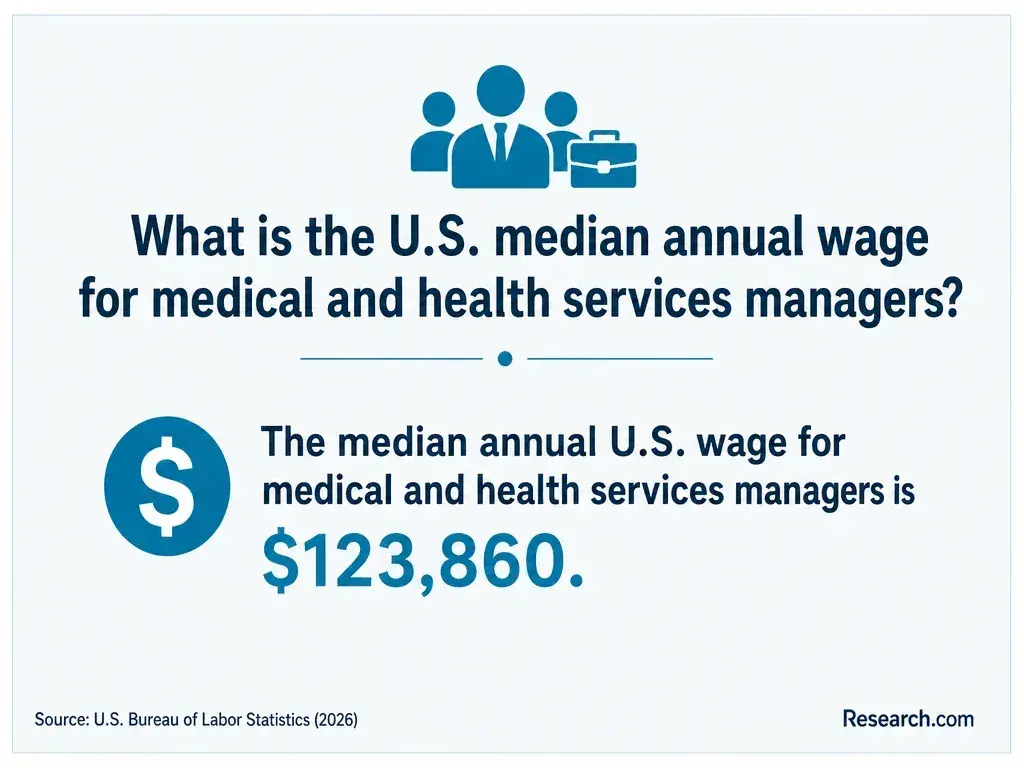
- Do not mistake a related wage for a coordinator salary: The U.S. Bureau of Labor Statistics reported a May 2024 median annual wage of $63,000 for health education specialists, a different occupation whose pay cannot predict an internship coordinator offer.
Does a public health BS prepare you for public health internship coordination?
A public health BS can prepare you for the public health side of internship coordination, but it is not, by itself, proof that you can run a placement program. Coordinators connect students, academic staff, and host organizations. Depending on the employer, they may recruit sites, track agreements and deadlines, explain learning objectives, monitor progress, and help resolve problems before a placement fails.
Undergraduate study can help you recognize whether a proposed placement involves meaningful population-health work rather than observation alone. Experience is what shows you can follow up with a busy supervisor, maintain accurate records, and escalate a concern appropriately. An entry-level program assistant role can be a sensible bridge if you have the degree but have not yet managed placements.
A graduate degree may become useful for broader academic or program leadership, but it is not an automatic prerequisite for coordination. If that later goal interests you, comparing graduate public health degree types can help you distinguish practice-focused study from more specialized research training.
What skills do public health internship coordinators need?
The work combines public health judgment with dependable administration. A coordinator must understand what students are supposed to learn while making it practical for a host site to supervise them.
These skill groups are useful for assessing both a degree program and your own experience:
- Partner communication: Explain placement expectations, maintain relationships, and respond respectfully when a site's capacity changes.
- Operations: Track applications, agreements, supervisor contacts, deadlines, and evaluations without losing sight of individual students.
- Learning assessment: Connect proposed tasks and deliverables to course objectives, then recognize when a placement needs faculty review.
- Ethics and problem-solving: Protect confidential information, respect community partners, and know when to refer safety, conduct, or access concerns to the appropriate office.
Basic spreadsheet and reporting skills help coordinators spot missing documents or recurring placement bottlenecks. Advanced statistical training is usually not the priority for this role; balancing employment with a biostatistics master's is a separate decision for someone moving toward quantitative analysis rather than placement operations.
What education and experience do internship coordinator jobs require?
There is no single national qualification for a job titled "public health internship coordinator." Employers set their own requirements, and similar duties may appear under titles such as field placement coordinator, experiential learning specialist, or program coordinator. Read the responsibilities alongside the degree requirement: a bachelor's degree may fit a support role, while responsibility for site approval, supervision systems, or program policy may call for more experience or graduate preparation.
Experience supporting students, volunteers, community programs, or employer partnerships can be relevant even if your title did not include "internship." Show what you actually handled: the number and type of stakeholders, the records you maintained, the issues you escalated, and the process you improved. If a posting requires an MPH, do not assume an undergraduate degree plus enthusiasm is equivalent; check whether the employer accepts comparable experience.
If a specific advancement role does call for graduate study, review its actual entry rules before applying. Public health master's admissions exceptions explained may help you frame questions for admissions staff, but an employer's job requirements remain a separate decision.
Prioritize courses that help you evaluate placements and work with their partners. Public health foundations, community health, health communication, program planning, evaluation, and ethics are especially relevant. Introductory epidemiology and statistics help you understand a student's proposed work and interpret basic reports; they do not make you an advanced analyst.
Look beyond course titles for assignments involving a community partner, a work plan, a logic model, or a short evaluation brief. An organizational leadership or project-management elective may add more coordination value than another narrowly technical course. Check the actual catalog and course sequence: an elective listed online may not be offered before you graduate.
A research doctorate is a different academic destination, not a prerequisite hidden inside this role. Comparing public health doctorate entry requirements is relevant only if your longer-term aim shifts toward doctoral-level practice or research.
The most useful placement lets you see how a program is organized, not only how its services are delivered. A student might help prepare orientation materials, track approved learning objectives, organize supervisor feedback, or improve a placement checklist under supervision. Those tasks produce more direct evidence for coordination jobs than an internship spent solely observing meetings.
Before accepting a placement, ask who will supervise you, which coordination tasks you may perform, what deliverable you can complete, and whether the school will approve the site and work plan. Host-site willingness does not replace academic approval. Likewise, permission to help with records does not mean permission to retain student, client, or partner information in a job portfolio; use a redacted template or a clearly labeled sample instead.
If you later consider research-intensive study, assess its funding separately from undergraduate fieldwork. Epidemiology doctorate net tuition planning addresses a substantially different commitment and should not distract from gaining supervised coordination experience now.
They can, if students can obtain relevant applied experience and meaningful feedback. Online coursework can teach public health concepts and documentation practices, but placement coordination also requires live interaction with students and partners. Ask whether the program helps identify field sites, permits a local placement, specifies who approves it, and provides faculty or staff support when problems arise.
Do not equate online delivery with an entirely self-paced degree. Group projects, scheduled meetings, field hours, and required site visits may still affect your work schedule. Compare the total cost - including fees and possible fieldwork travel - not just advertised tuition. Low-tuition online public health degree options can be a starting point, but confirm each school's current degree requirements and placement support directly.
CEPH accreditation can be a useful sign that a public health school, unit, or program has undergone public health-specific review. It is distinct from an institution's accreditation, and its scope matters: verify whether the particular bachelor's degree you are considering is covered. Neither form of accreditation certifies an individual graduate as an internship coordinator or guarantees a placement.
For this career goal, pair the accreditation check with a more practical one: examine the degree's fieldwork expectations, access to community partners, and opportunities to practice coordination. A program's status alone cannot tell you how much responsibility a student will have in an internship.
Keep accreditation and cost comparisons tied to the degree you would actually pursue. Public health research doctorate tuition options concern a different level of study and are not evidence that a bachelor's program will prepare you for this job.
No single national certification is required for every public health internship coordinator position. Credentials such as Certified in Public Health (CPH) or Certified Health Education Specialist (CHES) may be relevant when a job combines coordination with public health practice or health education, but eligibility and employer recognition depend on the credential and the role. Check the certifying organization's current requirements before paying for an exam or assuming a BS qualifies you.
For a coordination-focused job, training in student privacy, accessible practices, project management, or your institution's placement software may address a more immediate gap. Ask employers which credentials they value; a certification cannot substitute for evidence that you can manage partners and deadlines.
If advancement eventually requires an MPH, compare its cost with the additional responsibilities it would make possible. Master of Public Health affordability comparisons can inform that later choice, rather than turning a possible future degree into an assumed entry requirement.
Relevant starting points include internship program assistant, public health program assistant, community outreach assistant, and roles supporting health education or student services. These jobs can build the scheduling, communication, and reporting experience needed for a coordinator opening. Titles vary widely, so compare actual duties rather than assuming every "coordinator" position has the same seniority.
The U.S. Bureau of Labor Statistics does not publish a distinct national wage series for public health internship coordinators. Its May 2024 median annual wage for health education specialists was $63,000, but that occupation includes jobs beyond internship coordination and its median is not an entry-level offer or a BS graduate outcome. For a realistic pay comparison, examine current local postings with similar duties, employer type, and experience requirements.
A graduate degree might support a later move into program leadership, but compare its costs against plausible openings rather than assuming a salary increase. Cost and duration of public health master's degrees are relevant only after you identify roles for which graduate study would materially improve your qualifications.
How can you choose a public health BS for internship coordination?
Choose for demonstrable preparation, not degree title alone. Ask each program whether students can take community-facing coursework, complete an approved placement with coordination tasks, and get feedback from both an academic contact and a site supervisor. If you are transferring, request a degree audit showing which credits satisfy major and fieldwork requirements; accepted credits do not necessarily shorten the path to graduation.
Compare the remaining credits, course availability, tuition and fees, fieldwork logistics, and any income you would give up to complete a placement. A lower-priced option may cost more in practice if required courses or site hours delay completion. Online public health cost-duration tradeoffs are useful to examine, provided you verify the figures and requirements for your own entry term.
Before enrolling, read several coordinator and assistant postings in your target area. If your existing degree already meets their education requirement, supervised program-support experience may be a faster, less costly route than a second bachelor's degree.
Other Things You Should Know About Public Health
Yes, if it involved relevant responsibilities. Describe the scheduling, partner communication, recordkeeping, or problem-solving you performed; volunteer hours alone say less about your readiness.
Often. Helping students prepare for placements or communicating with employers can build transferable skills, especially when you can also demonstrate familiarity with public health fieldwork.
Not always. Some employers may value your coordination record and accept a different bachelor's degree. Compare job postings and strengthen any missing public health knowledge before committing to another degree.
State your actual tasks, tools, and approved deliverables. Distinguish assisting a coordinator from independently approving sites or supervising students, and omit confidential information.
- Fact Sheet #71: Internship Programs Under The Fair Labor Standards Act | U.S. Department of Labor https://www.dol.gov/agencies/whd/fact-sheets/71-flsa-internships
- A narrative review of the CEPH-accredited bachelor's public health programs' curricula in the United States | nih.gov https://pmc.ncbi.nlm.nih.gov/articles/PMC11371682/
- Competencies for Public Health Professionals | cdc.gov https://www.cdc.gov/infrastructure/training-professional-development/competencies-for-public-health-professionals.html
- What to expect during your public health internship | Oregon State University https://health.oregonstate.edu/news-and-stories/2022-09/what-expect-during-your-public-health-internship
- BSPH Degree Requirements - Public Health https://cosspp.fsu.edu/publichealth/bachelors-degree-requirements/
- Internships in Global Health | princeton.edu https://globalhealth.princeton.edu/internships
- Bachelor's in Public Health | Departments of Kinesiology and Public Health https://phes.appstate.edu/academic-programs/public-health/public-health-academics/major-public-health
- Bachelor of Science in Public Health | healthstudies | Chicago State University https://www.csu.edu/healthsciandpharm/publichealth/bachelors.htm
- Internship Policies and Procedures - APEx https://sites.uab.edu/apex/for-mph-students/internship-policies-and-procedures/
- FAQs - Public Health Internships - University of Arkansas https://pbhlinternships.uark.edu/faqs/