2027 AI Bachelor's Degrees for Healthcare Professionals

Co-Founder and Chief Data Scientist
Healthcare professionals seeking to integrate ai into clinical practice often face the challenge of finding accredited bachelor's programs tailored to their schedules and backgrounds. Traditional degrees may not address the specialized intersection of healthcare and technology that professionals need to pivot effectively.
The rapid growth of AI in medicine demands formal education that equips learners with both technical skills and industry-relevant knowledge. This article highlights the top 2027 AI bachelor's degrees designed specifically for healthcare practitioners, emphasizing program flexibility, accreditation, and practical outcomes to guide readers toward informed enrollment decisions.
Key Things You Should Know
- AI bachelor's degrees tailored for healthcare professionals integrate data science, machine learning, and medical ethics, preparing students for roles in health informatics and clinical decision support.
- By 2026, the demand for AI-skilled healthcare workers is projected to grow 40%, reflecting broader adoption of AI technologies in diagnostics, patient monitoring, and personalized medicine.
- Programs typically require interdisciplinary coursework and clinical applications, with many offering hybrid or online formats to accommodate working healthcare professionals.
What is an AI bachelor's degree for healthcare professionals, and how does it differ from traditional computer science programs?
An ai bachelor's degree for healthcare professionals offers a focused undergraduate curriculum merging artificial intelligence with healthcare expertise. Unlike traditional computer science degrees, which emphasize programming and theory, these programs concentrate on AI's uses in medical settings, including health data analytics, medical imaging, clinical decision support, and patient management technologies. This specialized approach equips students with skills tailored to healthcare environments.
Curricula often blend machine learning, natural language processing, and robotics with healthcare-specific subjects like anatomy, biostatistics, and healthcare regulations. Projects might involve developing algorithms to detect anomalies in MRI scans or predictive models for patient readmission risks. The ai bachelor's degree healthcare professionals curriculum ensures learners understand both technical AI tools and clinical applications.
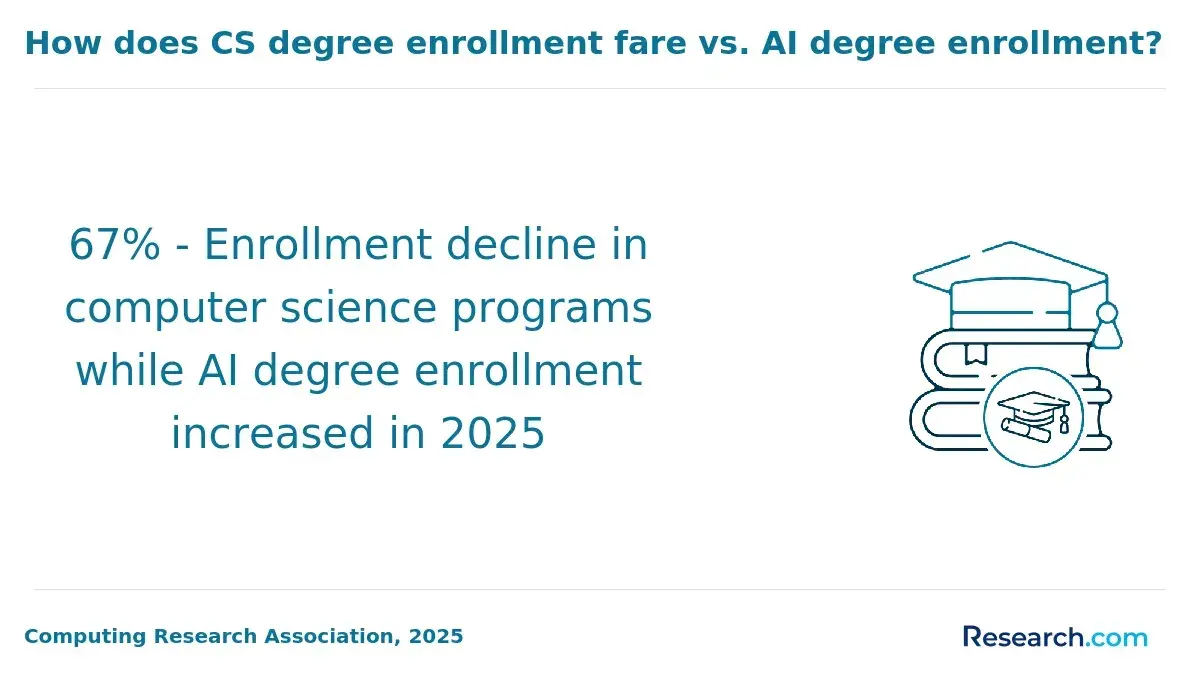
Distinct from general computer science degrees, these programs address critical healthcare challenges such as data privacy, diverse data formats, and compliance needs, all essential for safe AI deployment. This difference highlights why healthcare professionals seeking to combine clinical knowledge with technical innovation find these programs valuable. Students interested in an artificial intelligence major should consider programs offering interdisciplinary training and access to real healthcare datasets.
Healthcare ai applications are rapidly expanding, projected to reach a $67.4 billion market by 2027 with a CAGR of 38.1%. This growth outpaces many traditional software sectors, increasing demand for graduates who understand both AI development and clinical workflows. The differences between ai and computer science degrees in healthcare underscore the importance of specialized education to prepare for this evolving field.
What are the admission requirements and prerequisites for AI bachelor's degrees designed for healthcare professionals?
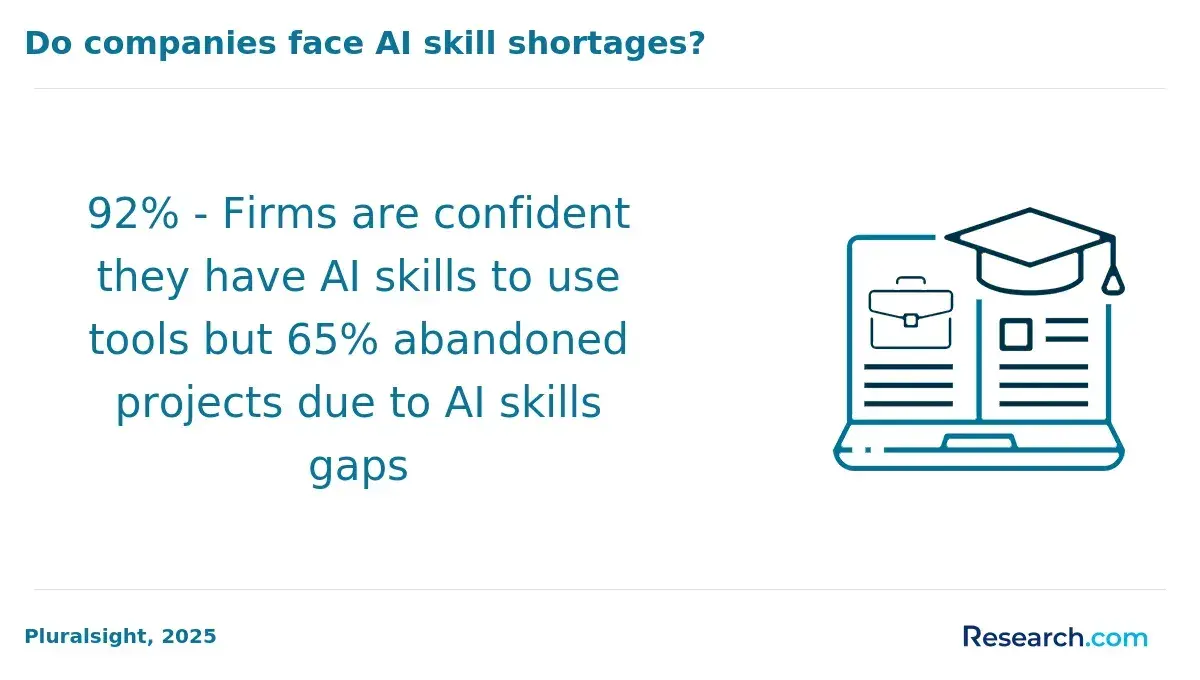
Bachelor's degrees in ai designed for healthcare professionals typically require applicants to hold a high school diploma or equivalent, with a solid foundation in mathematics and science. Key prerequisites often include algebra, statistics, biology, and chemistry to support understanding of both healthcare principles and computational aspects of ai. Many programs also expect prior coursework or proficiency in programming languages such as Python or R, addressing significant industry needs since 81% of healthcare organizations report skill gaps in AI competency, with 64% highlighting deficiencies in mathematics and programming (Deloitte Healthcare AI Skills Survey, 2024).
Admission requirements for ai bachelor's degrees in healthcare often include preparatory courses for those without computer science backgrounds. Foundational units in coding logic, data structures, and quantitative analysis may be mandatory to build necessary skills. Some programs ask for relevant experience or certifications reflecting clinical practice or healthcare technology, helping align artificial intelligence expertise with patient care contexts.
Standardized test scores, such as the SAT or ACT math sections, remain important at some institutions to gauge analytical readiness. Competitive programs may require letters of recommendation that emphasize STEM academic achievements or healthcare experience. Prospective students with nontraditional backgrounds should check for conditional admission options or concurrent enrollment in prerequisite courses.
Prerequisites for healthcare professionals pursuing ai bachelor programs emphasize a balance of quantitative, programming, and healthcare knowledge to meet acute industry skill shortages. For those interested in other technical degrees, consider exploring the online mechanical engineering bachelor degree as an alternative pathway.
Are AI bachelor's degrees for healthcare professionals available online, and how do online and campus formats compare?
Online ai bachelor's degrees for healthcare professionals have expanded rapidly due to their flexibility, which suits many working individuals. Enrollments in these healthcare technology programs have increased by 34% year-over-year, reflecting strong demand. Many professionals prefer online studies because asynchronous lectures and virtual labs allow balancing work, family, and education without relocating or adhering to fixed schedules. A registered nurse, for example, can maintain full-time employment while advancing skills in ai technology. That said, success in these programs requires discipline and comfort with digital tools.
Campus programs remain attractive for those seeking hands-on experience, direct mentorship, and access to specialized research facilities. They offer immersive opportunities to apply ai in clinical settings or internships, which some students find crucial for networking and motivation. Hybrid models, blending online coursework with occasional on-site sessions, are also becoming popular as they offer a balanced approach.
A comparison of online and campus ai healthcare programs shows that choice often depends on personal circumstances such as learning preferences, work commitments, and location. Regardless of delivery format, accreditation, faculty expertise, and resources should guide enrollment decisions to ensure quality education tailored to healthcare ai integration.
Prospective students looking to explore other fields may consider game design schools online as an alternative technology path.
What is the typical curriculum and core coursework in an AI bachelor's degree for healthcare professionals?
The typical curriculum for AI bachelor's in healthcare combines foundational healthcare knowledge with hands-on training in artificial intelligence. Core subjects include machine learning, data analytics, medical imaging, and predictive modeling, all tailored to the healthcare sector's needs. For example, many courses focus on clinical decision support systems, which 47% of healthcare organizations prioritize for AI applications (McKinsey Healthcare AI Report, 2024). Students learn to develop algorithms for diagnosing illnesses and recommending treatments based on patient data.
Medical imaging analysis, emphasized in about 39% of healthcare AI applications, trains students to use neural networks and computer vision to interpret X-rays and MRIs with real-world datasets. Predictive analytics, important to 36% of organizations, teaches modeling patient outcomes and optimizing resource allocation for proactive healthcare delivery. This blend of subjects illustrates a comprehensive approach to AI healthcare degree core subjects.
Beyond technical skills, programs cover healthcare informatics, bioethics, and health data privacy, preparing students to navigate regulatory and ethical challenges. Programming languages like Python and R are standard tools, while electives may include natural language processing for electronic health records or surgical robotics. This curriculum ensures graduates can integrate AI into healthcare workflows effectively.
Prospective students seeking an advanced technical focus may also explore an online master in data science to deepen applied AI skills. Verifying that programs emphasize healthcare-driven machine learning rather than generic AI theory is essential.
How long does it take to complete an AI bachelor's degree for healthcare professionals, and what are the typical program costs?
Completing a bachelor's degree in artificial intelligence for healthcare professionals typically requires four years of full-time study. Accelerated options can shorten this to three years through intensive coursework or credits for prior healthcare experience. Part-time and online formats extend completion to five or six years, helping working professionals balance their jobs and education.
Tuition costs vary significantly based on whether the institution is public or private, its location, and delivery method. Specialized AI healthcare bachelor's programs generally range from $45,000 to $120,000 in total tuition. Public universities tend to offer lower rates between $45,000 and $70,000, while private schools or programs with advanced AI labs and partnerships may exceed $100,000. Additional fees for technology, software licenses, and clinical practicums can add to the overall cost.
Data from the Bureau of Labor Statistics (2024) indicate graduates can recoup their investment in about 3.2 years thanks to salary premiums averaging $28,000 above typical healthcare IT roles. For instance, a registered nurse who earns an AI degree and moves into healthcare AI analytics can expect substantially higher earnings. Evaluating program structure and costs against potential salary gains is essential for prospective students.
Flexible scheduling and credit transfer policies help reduce time and expense, especially for experienced healthcare workers. Financial aid, scholarships, and employer tuition reimbursement programs also play a key role in making these degrees more accessible.
What accreditation and professional certifications should you verify when choosing an AI healthcare degree program?
Verify that an AI healthcare degree program holds accreditation from both computing and healthcare organizations. Look for ABET (Accreditation Board for Engineering and Technology) accreditation for computing components and healthcare accreditation from bodies like CAHIIM (Commission on Accreditation for Health Informatics and Information Management Education). Dual accreditation ensures the program meets high standards in technology and clinical training.
Only 23% of AI healthcare programs have this dual accreditation, reflecting variability in program quality and graduate readiness for clinical environments. Programs accredited by only one sector may fail to provide essential interdisciplinary skills, leaving students less prepared for healthcare-specific AI challenges.
Check if the program prepares students for professional certifications such as Registered Health Information Administrator (RHIA) or Certified Health Data Analyst (CHDA), which are recognized by the American Health Information Management Association (AHIMA). Computing certifications like Certified Analytics Professional (CAP) and IEEE certifications also enhance career prospects.
Ensure the curriculum features current clinical datasets, ethical AI practices, and hands-on experience with healthcare technology. Faculty qualifications and industry connections play a critical role in aligning education with evolving AI healthcare demands. Graduate success rates in certification exams are important indicators of effective preparation for professional roles.
What career roles and job titles can healthcare professionals pursue after earning an AI bachelor's degree?
Healthcare professionals holding a bachelor's degree in Artificial Intelligence have access to specialized career opportunities shaped by the rise of medical data digitization and AI integration. Key roles include healthcare AI specialist, clinical informatics specialist, medical imaging AI engineer, and healthcare data scientist. These professionals play a crucial role in improving patient care through AI-driven diagnostics, data analysis, and workflow optimization.
Healthcare AI specialists develop and deploy AI systems that support clinical decisions or automate administrative tasks. Clinical informatics specialists bridge the gap between healthcare providers and IT teams by enhancing electronic health record systems with AI technology. Medical imaging AI engineers create algorithms that improve accuracy and speed in radiology, pathology, and cardiology diagnoses. Healthcare data scientists use machine learning to uncover patterns from patient data, enabling personalized treatments and better health outcomes.
The job market for these positions is expanding rapidly, with healthcare AI specialist postings growing by 156% from 2022 to 2024. Additionally, clinical informatics specialists, medical imaging AI engineers, and healthcare data scientists together represent 71% of new sector openings (LinkedIn Jobs Report, 2024). These roles are increasingly sought after in hospitals, health technology startups, insurance firms, and research organizations.
Students aiming to blend clinical expertise with AI should consider gaining certifications in data science or advanced AI programming to enhance their career prospects.
What is the salary potential and job outlook for AI professionals in the healthcare industry?
Healthcare AI professionals command median salaries between $127,000 and $156,000 annually, reflecting a 34% premium over general healthcare IT and a 67% premium over non-AI clinical roles. This salary advantage highlights the growing demand for AI expertise in healthcare sectors focused on patient care optimization, predictive analytics, and operational efficiency.
The demand for AI specialists remains strong, with roles spanning healthcare data scientists, AI system developers, and clinical informatics analysts. Employers-ranging from hospitals to biotech firms and health tech startups-seek professionals skilled in developing algorithms that manage large datasets and enhance health outcomes.
Graduates holding a bachelor's degree in AI tailored for healthcare benefit from opportunities in diverse settings, including large hospital systems and research institutions. Enhancing employability requires mastery of machine learning, natural language processing, and data ethics. Combining technical skills with clinical knowledge is highly valued, as it facilitates smooth integration of AI tools within healthcare teams.
Prospective students should prioritize AI bachelor's programs emphasizing healthcare applications to leverage strong salaries and steady job growth. Constantly updating skills with emerging AI technologies is essential for advancing a career in this dynamic and expanding field.
How do you evaluate and compare accredited AI bachelor's degree programs for healthcare professionals?
When selecting accredited AI bachelor's degree programs tailored for healthcare professionals, prioritize curricula that emphasize practical skills like electronic health record (EHR) integration, clinical validation, and HIPAA-compliant data management. The American Medical Informatics Association Employer Survey highlights that while 68% of healthcare employers value hands-on EHR experience, only 41% of programs provide it, underscoring the importance of experiential learning through externships and specialized courses.
Accreditation from respected bodies such as the Commission on Accreditation of Healthcare Management Education (CAHME) or regional agencies ensures academic rigor and aligns programs with industry expectations. Additionally, faculty expertise-particularly those with clinical informatics backgrounds-and partnerships with healthcare providers enhance opportunities for real-world exposure and professional networking.
Technological resources also matter; programs incorporating current healthcare AI software, simulation tools, and robust data security protocols better equip students for workforce demands. Interdisciplinary coursework covering AI, healthcare ethics, and data privacy law further prepares graduates to navigate complex regulatory environments.
Lastly, consider graduate outcomes like job placement rates in AI-enabled healthcare roles and employer feedback to verify that the program effectively meets market needs and fosters career readiness.
What prior healthcare experience or clinical knowledge is required or recommended for healthcare professionals pursuing an AI degree?
Healthcare professionals pursuing an AI bachelor's degree often benefit from foundational clinical knowledge or prior healthcare experience. Most programs require or recommend at least an associate degree or certification in nursing, medical technology, or allied health fields to ensure students understand clinical workflows and patient care contexts. This familiarity is vital when applying AI systems in medical settings. For example, registered nurses or radiologic technologists possess an advantage in managing patient data complexities, which enhances their ability to create relevant AI solutions.
Some programs accept students with limited clinical experience, provided they complete prerequisite courses in human anatomy, physiology, and healthcare ethics. These courses offer clinical insight for students primarily from computer science or data analytics backgrounds. Yet, those with direct healthcare roles, such as licensed practical nurses, paramedics, or health information specialists, typically grasp AI applications like predictive analytics or diagnostic imaging analysis more readily.
Clinical experience also significantly boosts employment success in healthcare AI careers. According to the National Association of Health Career Schools Graduate Outcomes Study, healthcare professionals with clinical backgrounds achieve employment rates 2.3 times higher within six months post-graduation than peers from purely computer science backgrounds. This highlights the value of combining clinical insight with AI expertise.
Prospective students should verify program prerequisites and consider gaining healthcare certifications or clinical hours before enrollment. Hands-on experience with patient care and electronic health records (EHR) systems improves proficiency in AI-driven healthcare innovations and enhances job market competitiveness.
Other Things You Should Know About Artificial Intelligence
A 2027 AI Bachelor's Degree for healthcare professionals often includes interdisciplinary subjects such as medical informatics, bioethics, data analytics, and machine learning. These subjects aim to equip students with the skills needed to integrate AI effectively in healthcare settings.
To enroll in a 2027 AI Bachelor's Degree program tailored for healthcare professionals, applicants typically need a high school diploma, proficiency in mathematics and science subjects, and sometimes relevant experience or coursework related to healthcare or computer science. Specific requirements can vary by institution.
A 2027 AI Bachelor's Degree in healthcare typically requires proficiency in programming languages such as Python and R. Students are expected to have foundational skills in algorithms, data structures, and machine learning to effectively apply AI technologies in healthcare settings.
Registered nurses, radiologic technologists, medical laboratory scientists, and health information technicians benefit most because they already work with patient data and clinical workflows. Programs aligned with AACN or CAHIIM standards often include analytics, informatics, and data governance courses that support these roles.
References
- Comparative Analysis of Artificial Intelligence Methods in Clinical Implementation: A Review of Techniques, Validation Strategies, and Success Metrics https://www.isjtrend.com/article_220117.html
- Ultimate Guide: How to Choose the Right AI Training Course to Boost Your Career - ONLC https://www.onlc.com/blog/how-to-choose-ai-training-courses/
- AI Certifications: Accredited Programs, Vendor Credentials, and Emerging Standards - Total Seminars https://totalsem.com/ai-certifications-accredited-programs-vendor-credentials-and-emerging-standards/
- Best AI in Healthcare Courses and Certifications for 2025 https://learnprompting.org/blog/ai-in-healthcare-courses-and-certifications
- AI Jobs in Healthcare - Healthcare IT Leaders https://www.healthcareitleaders.com/blog/ai-jobs-in-healthcare/
- Course syllabus for Applied Artificial Intelligence (AI) in Healthcare https://education.ki.se/course-and-programme-syllabi/course-syllabus-2QA338
- How to Choose Between BS Artificial Intelligence vs Traditional Computer Science https://giu.edu.pk/blog-detail/how-to-choose-between-bs-artificial-intelligence-vs-traditional-computer-science
- What’s the Difference Between AI and Regular Computing? https://www.rigb.org/explore-science/explore/blog/whats-difference-between-ai-and-regular-computing
- A Complete 4-Year Course Plan for an Artificial Intelligence Undergraduate Degree https://www.mihaileric.com/posts/complete-artificial-intelligence-undergraduate-course-plan/
- AI in Healthcare https://www.rcsi.com/online/find-a-course/cpd/a/i/ai-in-healthcare