2027 Best AI Degrees With the Best Graduation Rates

Co-Founder and Chief Data Scientist
Switching into the artificial intelligence field can be daunting, especially for those holding degrees unrelated to technology. Many face uncertainty about which graduate programs offer the best return on investment, balancing quality education with high graduation rates. This decision is critical for busy professionals seeking flexible yet reputable options to maximize career prospects. Understanding which degrees have proven success through graduation outcomes helps avoid costly missteps and long delays in career advancement. This article highlights top artificial intelligence graduate degrees known for strong completion rates, helping readers identify accredited programs that align with their goals and increase their chances of success.
Key Things You Should Know
- U.S. universities offering AI degrees reported an average graduation rate of 72% in 2025, significantly higher than the national average of 60% for STEM programs.
- Programs focusing on practical AI skills, such as machine learning and data analytics, show a 20% higher retention rate due to industry demand alignment.
- State-funded institutions with dedicated AI labs and internship partnerships boast the highest graduation outcomes, reaching rates above 80% in recent cohorts.
What are the best AI degrees with the highest graduation rates?
The best AI degrees with highest graduation rates in the US are often found in leading computer science and electrical engineering departments at top research universities. For example, MIT's computer science and electrical engineering programs reported a six-year graduation rate of 97%, setting a strong benchmark for AI specialization tracks. These highly ranked artificial intelligence degree programs with strong completion rates share key features:
- Comprehensive academic advising and mentoring designed for AI-focused curricula.
- Active faculty involvement in AI research with hands-on projects and internship opportunities.
- Access to advanced AI labs and resources that encourage sustained student engagement.
Students should assess programs based on these qualities rather than degree titles alone. Degrees labeled as "computer science with AI concentration" or "electrical engineering with machine learning specialization" at prestigious institutions often outperform standalone AI degrees at less established schools in retention and graduation.
Graduation statistics help identify programs that effectively support students through challenging AI coursework. Early intervention, tutoring, and career services geared toward AI fields improve student success. Choosing programs with high retention rates lowers dropout risk and ensures a solid foundation for competitive careers.
Prospective students interested in an applied artificial intelligence degree should verify retention and graduation data published in official university datasets to align their academic investment with career goals.
Which schools have accredited AI programs with strong graduation outcomes?
ABET accreditation is a key indicator of program quality for accredited artificial intelligence programs with high graduation rates in computer science and engineering. Currently, 451 computing programs in the U.S. are accredited by ABET's Computing Accreditation Commission, ensuring rigorous curricula and consistent student success. Graduation rates at these schools often exceed 80%, significantly higher than non-accredited programs, which can have rates below 60%.
Top schools offering AI degrees with strong completion outcomes include Carnegie Mellon University, the University of Illinois Urbana-Champaign, and Georgia Institute of Technology. Their programs blend practical experience and project-based learning with core AI coursework. Students benefit from dedicated academic advising tailored to AI disciplines, access to research labs and internships, and curriculums integrating ethics, machine learning theory, and software engineering.
Prospective students should explore resources like the ABET Accredited Program Search tool to identify well-supported programs and reduce risks associated with lesser-known options. For those seeking comprehensive rankings and affordability insights, the data science master degree ranking can provide valuable guidance.
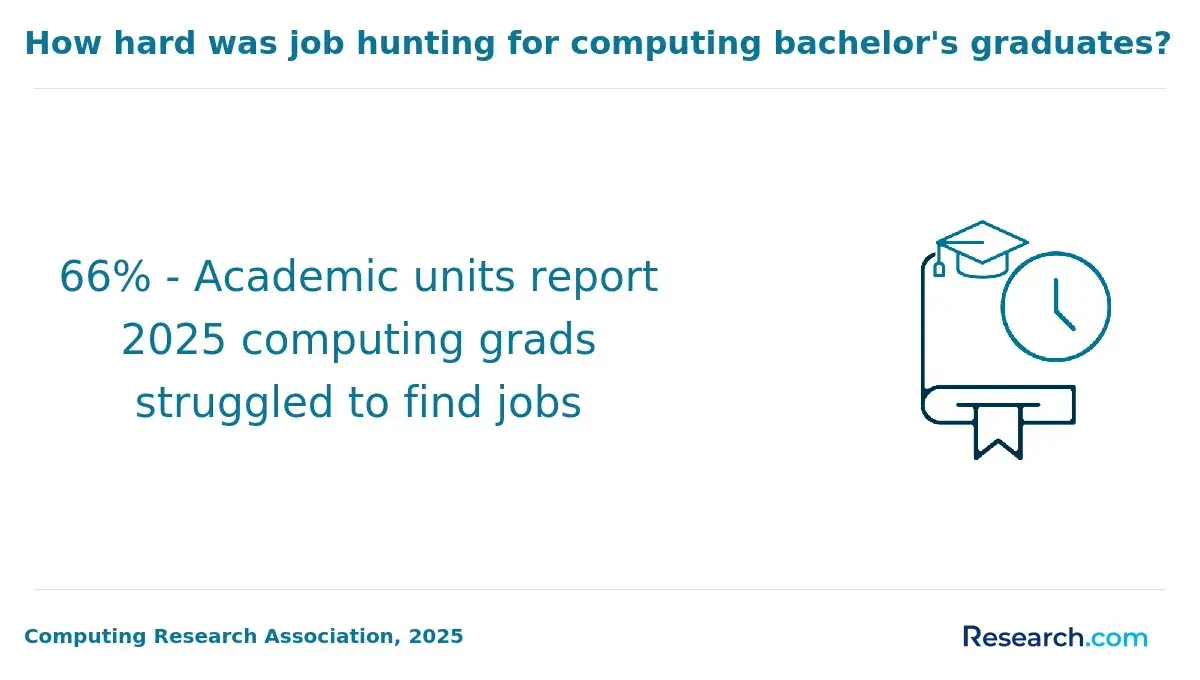
How can you compare AI programs by graduation rate, retention, and job placement?
When deciding among AI degree programs, focus on three key metrics: graduation rate, retention rate, and job placement statistics. Graduation rate measures how many students finish their program within the expected time frame. High graduation rates suggest well-designed curricula and effective academic support, while low rates may indicate difficult coursework or limited resources. Retention rate tracks the percentage of students who stay enrolled year-over-year, reflecting student satisfaction and engagement.
Job placement rates reveal how well an AI program prepares graduates for careers or further education. The National Association of Colleges and Employers reports that 86.7% of the Class of 2023 secured employment or continued education within six months. Choosing programs that publish verified placement data-including employment sectors, job titles, and median salaries-can provide critical insight. When comparing AI program retention and job placement statistics, consider how these figures align with your career goals.
Transparency in how institutions report these statistics is essential. Some schools may count internships or part-time roles, which affects comparability. Accreditation also plays a role in ensuring consistent quality standards across graduation, retention, and placement metrics. Different programs might report, for example, a 90% graduation rate with 70% retention and 88% placement, or alternatively, 75%, 85%, and 95%, depending on institutional focus.
Prospective students can also explore online colleges for game design that balance affordability with strong outcomes, offering another lens on educational value when considering AI-related fields.
What degree levels are available in AI, and which fits your career goals?
The primary degree levels in artificial intelligence programs for career advancement include bachelor's, master's, and doctoral degrees, each catering to specific professional goals. A bachelor's degree in AI or related fields such as computer science provides foundational skills for entry-level roles like AI software developer or data analyst. These programs typically last four years, covering programming, algorithms, and basic AI principles.
Master's degrees offer deeper specialization in applied AI, advanced machine learning, and research methods, preparing graduates for competitive roles in research, development, and leadership. According to the U.S. Bureau of Labor Statistics, master's degree holders experience lower unemployment rates (2.1%) compared to bachelor's degree holders (3.4%), reflecting stronger job security in technology sectors.
Doctoral degrees (PhDs) focus on original research and prepare students for academic, research, or high-level development careers. Although more time-intensive, PhDs open pathways to university teaching and pioneering AI innovations.
When choosing the best artificial intelligence degrees to match your professional goals, consider the following:
- Bachelor's degrees suit practical AI development roles but pursuing a master's can improve prospects and reduce unemployment risk.
- PhDs are essential for research and academic careers.
- Working professionals aiming to switch to AI should evaluate master's programs for their balance of depth and time commitment.
Students interested in transitioning to cybersecurity may also explore highly affordable online options, such as the cybersecurity programs listed on Research.com.
What AI curriculum and specializations should you expect in top programs?
Top AI programs focus on a strong foundation in machine learning, data science, and programming, particularly emphasizing Python. According to GitHub's Octoverse 2024, Python remains the most used language on GitHub, underscoring its central role in AI education. Core coursework typically covers algorithms, statistics, linear algebra, and probability, essential for mastering AI models.
Specializations frequently include:
- Machine learning engineering with supervised and unsupervised learning, neural networks, and deep learning.
- Natural language processing covering text analysis, speech recognition, and language generation.
- Computer vision involving image and video processing and real-time detection.
- Reinforcement learning studying agent-based models and decision-making under uncertainty.
- Ethics and societal implications of AI, including bias and fairness.
Hands-on experience with Python libraries like TensorFlow, PyTorch, scikit-learn, and pandas is integral to many programs. Cross-disciplinary electives such as robotics, cognitive science, and cybersecurity broaden the scope of AI applications. Project-based learning and research provide practical skills addressing real-world challenges, including autonomous systems and healthcare analytics.
Advanced curricula often include training in cloud computing platforms such as AWS and Google Cloud to enable scalable AI deployments. This combination of theory and applied skills is crucial for meeting industry demands and enhancing career readiness in artificial intelligence fields.
What are common admission requirements for AI bachelor's and master's programs?
Admission requirements for artificial intelligence bachelor's and master's programs emphasize strong academic backgrounds, relevant experience, and supporting documents. Bachelor's applicants usually need a high school diploma with solid skills in math areas like calculus, algebra, and statistics. Coursework in computer science fundamentals or programming languages such as Python or Java is often required. Typical high school GPAs range from 3.0 to 3.7, depending on how competitive the program is.
Master's programs expect a completed bachelor's degree in computer science, engineering, mathematics, or a related STEM field. Some accept candidates from other disciplines if they complete prerequisite courses like programming and linear algebra. Graduate applicants might submit GRE or GMAT scores, though many programs have adopted test-optional policies. The combined GMAT mean score for fall 2024 was 546, serving as a benchmark for AI-related graduate studies where exams are required or recommended.
Essential application materials include letters of recommendation emphasizing technical skills and research potential, a statement of purpose outlining career objectives and program fit, plus a résumé highlighting AI or data science projects or internships. Some programs also require coding assessments or interviews to assess problem-solving abilities.
International students must often provide proof of English proficiency through exams like TOEFL or IELTS. Meeting these criteria ensures applicants have a strong quantitative foundation, technical skills, and motivation to succeed in challenging artificial intelligence curricula.
How do online AI degrees compare with campus programs for graduation rates?
Online AI degrees show graduation rates similar to traditional campus programs when compared at the institutional level. According to the National Center for Education Statistics, over half of postsecondary students enroll in at least one online course, highlighting the widespread adoption of online learning. This has led many institutions to invest equally in resources and student support for both online and campus formats, reducing the graduation rate gap.
Graduation success depends more on program quality, student engagement, and institutional support than on whether the degree is earned online or in person. Established universities with strong mentorship and interactive platforms often have graduation rates within 5 percentage points of their on-campus cohorts, while programs with fewer services may face larger disparities.
Key factors influencing success include accessible faculty, academic advising, and hands-on AI projects. Online students benefit from engaging with peer networks and using virtual labs. Programs that offer synchronous classes and cohort models help create community and improve retention.
Working professionals especially gain from the flexible scheduling of online AI degrees without compromising graduation prospects if they choose schools with robust support systems. Evaluating accreditation, institution-level data, and student services is critical when comparing outcomes across programs.
How long do AI degrees take, and what do they typically cost?
Bachelor's degrees in artificial intelligence typically require four years of full-time study, with some accelerated programs reducing this to three years. Part-time and online options may extend the timeline to five years or more. Master's degrees in AI or related fields usually take one to two years, depending on the program structure. Doctoral programs focus on research specialization and often last three to six years beyond the master's level.
Tuition costs vary by institution type and residency. In-state students at public four-year universities pay an average of $11,260, while out-of-state students face about $29,150. Private nonprofit colleges have higher tuition, averaging $41,540. These estimates apply broadly as many AI programs are offered through computer science or engineering departments.
Additional expenses such as textbooks, software, and necessary hardware can add several hundred to a few thousand dollars annually. Financial aid, scholarships, and assistantships may reduce these costs but depend on the institution and the student's qualifications.
Students should weigh public versus private costs, program length, and delivery format to align with their career and financial goals. Intensive master's programs can benefit working professionals seeking skills upgrades, while traditional bachelor's degrees offer a foundational education despite a longer time commitment.
What AI jobs can you get after graduation, and what are typical duties?
Graduates with degrees in artificial intelligence can pursue a range of careers, including AI engineer, data scientist, machine learning engineer, and AI research scientist. AI engineers focus on designing and maintaining AI models adapted to business needs, often deploying machine learning algorithms into production. Data scientists analyze vast datasets to uncover insights, relying on strong statistics and programming skills.
Machine learning engineers create scalable AI solutions by tuning algorithms and ensuring optimal model performance in real-world scenarios. Their roles involve data preprocessing, feature engineering, and ongoing model evaluation. AI research scientists push the field forward through foundational research, publishing discoveries and developing innovative AI architectures.
Other key roles involve AI ethicists, who explore the societal impacts of AI applications, and AI product managers, who connect technical development with market strategy.
Common duties across AI careers include:
- Designing, training, and testing machine learning models
- Collecting, cleaning, and managing large datasets
- Implementing AI algorithms within software
- Collaborating with diverse teams to deploy AI solutions
- Monitoring and troubleshooting AI systems
Demand for generative AI skills is surging, with job postings mentioning these expertise areas growing fourfold year-over-year. Proficiency in generative AI tools is now a valued asset across industries such as technology, healthcare, and finance, highlighting the importance of advanced artificial intelligence education for career success.
What are typical AI salaries and job outlook across major industries?
The median annual wage for data scientists, a core profession within artificial intelligence and machine learning, was $108,020 according to the U.S. Bureau of Labor Statistics (BLS) in May 2024. Salaries vary widely based on industry, specialization, and experience.
Key industries fueling AI demand include technology, finance, healthcare, automotive, and government sectors. Technology companies, especially in software development, cloud computing, and robotics, typically offer between $120,000 and $160,000 annually. Finance roles centered on algorithmic trading and fraud detection pay from $110,000 to $150,000. Healthcare jobs like medical imaging and predictive diagnostics generally range from $100,000 to $140,000. The growing autonomous vehicle sector in automotive pays between $105,000 and $130,000. Government positions often offer $90,000 to $130,000 plus benefits and job security.
The BLS forecasts 36% growth for data science and related AI roles over the next decade, driven by widespread AI adoption and digital transformation. Candidates with advanced degrees and specialized skills in machine learning, natural language processing, or computer vision have strong career prospects.
To advance in AI careers, gain hands-on experience through internships and projects, stay current with AI frameworks, and develop expertise relevant to specific industries.
Other Things You Should Know About Artificial Intelligence
Students pursuing AI degrees in 2027 can explore scholarships, grants, work-study programs, and student loans. Specific universities may offer merit-based scholarships for AI students. External organizations and industry leaders also provide financial aid opportunities for those excelling in AI studies.
Yes, internships provide practical experience that complements academic learning and can improve student engagement and graduation outcomes. They offer real-world exposure to AI applications, help build professional networks, and often lead to job offers that motivate students to complete their degrees.
Many AI programs include dedicated coursework on AI ethics, covering fairness, accountability, transparency, and the societal impact of AI systems. This helps students understand the implications of AI technology and prepares them to develop responsible and ethical AI solutions.
Transfer credits can positively impact graduation rates by allowing students to fulfill degree requirements faster and reduce tuition costs. However, acceptance of credits depends on the institution's policies, and students should ensure relevant AI or STEM coursework transfers appropriately to avoid delays.
References
- AI Employment Outlook: Salary Trends and Future Projections - AI Time Journal - Artificial Intelligence, Automation, Work and Business https://www.aitimejournal.com/ai-employment-outlook-salary-trends-and-future-projections/46785/
- Finding Your Ideal AI Career Path: Which Field in Artificial Intelligence Suits You Best? https://dev.to/furqanahmadrao/finding-your-ideal-ai-career-path-which-field-in-artificial-intelligence-suits-you-best-an5
- Ultimate Guide: How to Choose the Right AI Training Course to Boost Your Career - ONLC https://www.onlc.com/blog/how-to-choose-ai-training-courses/
- AI Program Rankings on AIDegreePrograms.org https://aidegreeprograms.org/rankings/
- The Top U.S. & European MBA Programs With AI Concentrations https://poetsandquantsforexecs.com/news/the-top-u-s-european-mba-programs-with-ai-concentrations/
- Online vs On-Campus Artificial Intelligence Degrees: Which Is Better? https://hakia.com/degrees/artificial-intelligence/online-vs-campus/
- Client Challenge https://www.scribd.com/document/638931213/Untitled
- Top AI Specialization Courses Which Helps You to Get High Paying Job https://blog.hikeeducation.com/online-program/top-ai-specialization-courses/
- Top AI job roles you can apply for after completing a course https://aiiteacademy.in/blogs/ai-job-roles-after-course-completion.php
- Top AI Graduate Programs To Kickstart Your Career in Artificial Intelligence Today https://www.investopedia.com/top-ai-graduate-programs-to-kickstart-your-career-in-artificial-intelligence-today-11916749