2027 AI Master's Degrees With Math Refresher Modules

Co-Founder and Chief Data Scientist
Many professionals with non-technical backgrounds face a steep learning curve when transitioning into AI roles due to a lack of foundational math skills. This gap often delays their career pivot or deters them from pursuing advanced degrees entirely. Master's programs with integrated math refresher modules address this challenge by providing targeted coursework that builds essential competencies in calculus, linear algebra, and statistics alongside AI concepts.
This article explores available master's degrees offering these supportive math components, detailing how they enable learners to overcome educational barriers and successfully enter the AI field with confidence and strong technical preparation.
Key Things You Should Know
- About 65% of AI master's programs in 2026 include math refresher modules, crucial for students lacking advanced calculus or linear algebra backgrounds.
- These modules enhance success rates, with programs reporting a 20% higher course completion among students who completed math refreshers.
- Employers increasingly expect graduates to demonstrate strong quantitative skills, making refresher modules vital for bridging academic and industry demands.
What are AI master's degrees with built-in math refresher modules?
AI master's degrees with integrated math refresher courses are designed to incorporate essential mathematical concepts such as linear algebra, calculus, probability, and statistics directly into the curriculum. These modules help close knowledge gaps for students who may lack a strong math foundation, a common hurdle in AI studies. According to Coursera's Global Skills Report, mathematics continues to be a rapidly growing and crucial skill, emphasizing the need for these refreshers to support success in advanced AI coursework.
Master's programs in artificial intelligence offering math review modules use varied approaches. Some provide dedicated math refresher courses before diving into core AI topics, while others embed math lessons within AI subjects to highlight practical applications. For example, neural networks classes often parallel matrix operations and vector calculus for contextual understanding.
This integrated math support benefits non-STEM graduates and working professionals by reinforcing foundational skills early. Many programs are self-paced or incorporate regular assessments to track progress, helping learners build confidence and reduce dropout rates linked to math difficulties.
When exploring degrees in AI, ensure the program offers math instruction tailored to AI rather than generic courses. This tailored support significantly enhances mastery and career readiness in the field.
Which accredited schools offer AI master's programs that include math refreshers?
Several accredited U.S. schools offer AI master's programs that include math refresher or bridge modules to support students from diverse academic backgrounds. These programs address challenges faced by students lacking advanced prerequisites in calculus, linear algebra, and probability-core mathematical concepts critical for AI mastery. Such math refreshers broaden accessibility beyond traditional STEM graduates, improving retention amid demanding curricula.
Top North American universities offering AI master's degrees with mathematics review include Georgia Institute of Technology's Online Master of Science in Computer Science with a machine learning specialization, which integrates foundational math review early in the coursework. Northeastern University's Master of Science in Artificial Intelligence also features prerequisite courses focusing on essential math skills to prepare students without extensive quantitative backgrounds.
Carnegie Mellon University's Master of Science in Artificial Intelligence and Innovation incorporates refresher modules during orientation and early terms, emphasizing discrete mathematics and statistics to ease transitions for applicants from humanities or non-technical fields. In total, over 100 U.S. institutions award master's degrees in AI or AI-related CIP-coded programs, reflecting widespread adoption of math bridge designs.
Prospective students should verify if programs explicitly offer math preparation courses, especially if their undergraduate studies lacked rigorous math. Reviewing catalogs, contacting admissions, or consulting advisors helps clarify how these refreshers are integrated-key for building competence without repeating full undergraduate math sequences while preparing for advanced AI topics.
Additionally, understanding potential financial investment is crucial; those considering graduate education may explore options related to mechanical engineering degree cost as a comparable benchmark for affordable, accredited programs in technical fields.
How do online AI master's programs with math refreshers compare to on-campus options?
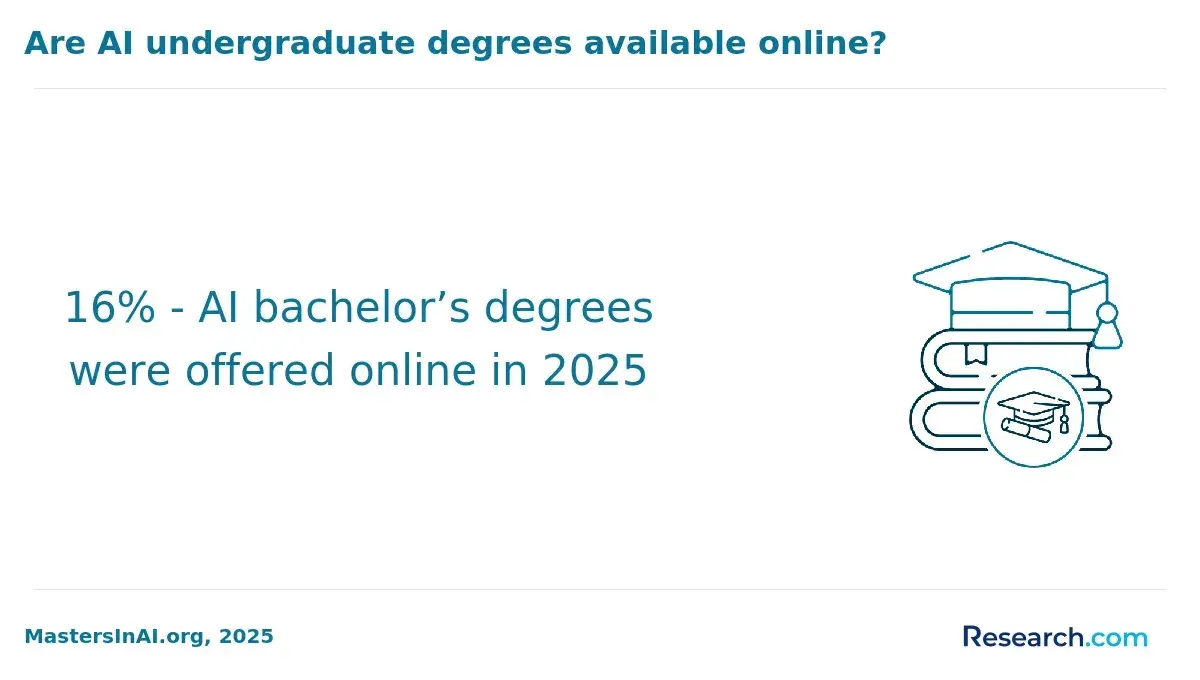
Online AI master's programs with math refresher courses are increasingly matching the quality of on-campus programs in curriculum and student outcomes. These programs incorporate essential math refreshers in areas like linear algebra, calculus, probability, and statistics, which are vital for grasping AI concepts. This makes online options especially helpful for professionals without recent academic math training.
Online master's programs make up the largest share of graduate-only distance education enrollments in the U.S., reflecting growing acceptance and rigor. However, there remain key differences in experience and interaction between formats:
- On-campus programs provide face-to-face mentorship, immediate lab access, and networking events that foster collaboration.
- Online options offer flexible asynchronous lectures, discussion boards, and virtual office hours, requiring strong self-discipline and proactive participation.
A comparison of on-campus versus online AI master's degrees highlights important considerations including accreditation, faculty expertise, access to live instructor sessions, technical resources like GPU clusters, and cost flexibility. These factors influence the learning experience and hands-on training quality.
- Graduates from both formats report comparable employment outcomes when math foundations are strong.
- Those seeking structured, interactive study may lean toward on-campus programs.
- Others benefit from online programs that integrate robust math refreshers to prepare for AI careers efficiently.
Prospective students balancing work and study should also explore options for a cheap online engineering degree to reduce costs while advancing in AI fields.
What math topics do refresher modules cover for AI master's students?
Math refresher modules for AI master's students cover key mathematical concepts including linear algebra, calculus, probability, and statistics. These areas provide essential foundations for designing machine learning algorithms, data modeling, and neural networks. Recent analyses of machine-learning job postings highlight these subjects as the most-requested skills in AI and ML roles.
Linear algebra focuses on matrix operations, vector spaces, eigenvalues, and eigenvectors-crucial for data representation and transformations in AI models like principal component analysis and convolutional neural networks. Calculus sections review differential and integral calculus, with emphasis on multivariate derivatives and the chain rule. This supports understanding gradient descent and backpropagation in neural networks.
Probability topics include random variables, probability distributions, Bayes' theorem, expectation, variance, and conditional probability, foundational for Bayesian inference and uncertainty quantification. Statistics covers descriptive statistics, hypothesis testing, confidence intervals, and regression analysis, important for evaluating AI models and feature selection.
Students studying math foundations for AI master's programs often face challenges bridging gaps in multivariate calculus or matrix factorization. Practical advice suggests targeted practice on applied problems and leveraging software tools like MATLAB or Python's NumPy to strengthen theoretical concepts through computation.
Prospective students seeking an online master in data science can benefit from strong math foundations to successfully engage complex AI coursework and career opportunities.
What are the admission prerequisites for AI master's programs with math refreshers?
Admission requirements for AI master's programs with math refresher modules typically include a bachelor's degree in fields like computer science, engineering, mathematics, or statistics. Candidates lacking strong quantitative skills may need to complete foundational math courses that cover linear algebra, calculus, probability, and statistics. These refresher modules help bridge gaps in prior education and prepare students for rigorous AI coursework.
Most programs expect a minimum GPA around 3.0 on a 4.0 scale. Standardized tests such as the GRE are often optional, reflecting a trend toward flexible admissions. According to the GMAC 2024 Prospective Students Survey, test-optional policies and math refresher options have expanded access for non-traditional applicants, including professionals transitioning from social sciences or business backgrounds.
Additional typical application components include:
- Statement of purpose outlining AI interest and background
- Letters of recommendation from academic or professional sources familiar with quantitative expertise
- Relevant coding experience, especially in Python or R
- Proof of English proficiency for international students
Some programs also use preliminary online math assessments or interviews to customize refresher content. Conditional admission may be granted contingent on successful completion of the math refresher during the first semester, broadening access while ensuring readiness for core AI topics.
How long do AI master's programs with math refreshers take to complete?
Master's programs in artificial intelligence that include math refresher modules generally require about two years to complete. U.S. data from NCES indicates a median time-to-degree of roughly 24 months for master's recipients, which sets a realistic expectation for these programs. Many universities incorporate math refreshers through pre-term sessions or early classes, thereby minimizing any significant extension of the overall timeline.
Several programs provide intensive summer boot camps or accelerated math courses before starting core AI classes. These sessions cover essential topics like linear algebra, calculus, and probability to prepare students effectively without delaying the primary curriculum. Other programs integrate math review into the first two semesters, balancing foundational math with specialized artificial intelligence coursework.
Students with a solid quantitative background may complete the math refresher in a single semester, maintaining the standard two-year duration. In contrast, those needing more support might extend their studies by a few months or choose part-time enrollment, which affects completion time. Flexible pacing and online options further allow adjustments based on individual circumstances.
Ultimately, math refreshers are designed as targeted preparation phases closely aligned with AI studies, rarely adding a full semester to program length. Prospective students should carefully examine the math competencies required and the structure of each program to plan their personal timeline accordingly.
What do AI master's degrees with math refreshers cost, and what aid exists?
AI master's degrees with math refresher modules typically range from $20,000 to $60,000 for the full program. Public universities generally charge between $20,000 and $35,000 for in-state students, while private institutions can exceed $50,000. The added math coursework often increases costs by $2,000 to $5,000.
Financial aid plays a key role in managing these expenses. Federal Direct Unsubsidized Loans and Grad PLUS loans are common funding sources for graduate students, covering tuition and living costs but requiring careful debt management. Additionally, merit-based scholarships and assistantships can slash costs by 20% to 50%. Working professionals may qualify for employer tuition reimbursement, particularly in STEM-related AI programs.
Cost-effective options include online AI master's programs with math refreshers, which often have lower tuition and flexible payment plans. Some institutions offer pay-per-course models to spread out expenses and minimize upfront financial strain.
When budgeting, anticipate at least $25,000 annually for tuition and fees at public universities. Exploring loan terms, scholarships, and employer benefits helps optimize overall affordability.
What core courses and specializations are typical in AI master's curricula?
Core courses in AI master's programs cover machine learning, data structures, algorithms, probability and statistics, and optimization methods. These fundamentals help students develop, analyze, and implement AI models effectively. Many programs also include studies in computer vision, natural language processing, and reinforcement learning, balancing theoretical knowledge with practical applications.
Specializations often focus on machine learning engineering, data science, and applied AI-fields highlighted by the 2025 World Economic Forum Future of Jobs report as rapidly growing. Machine learning engineering emphasizes scalable algorithm design and model deployment using Python and frameworks like TensorFlow or PyTorch. Data science addresses data mining, statistical analysis, and big data tools such as Hadoop and Spark, while applied AI targets industry-specific solutions including healthcare diagnostics and autonomous systems.
Students may take advanced electives in areas such as deep learning, ethical AI, explainable AI, and robotics to tackle emerging challenges. Hands-on projects and capstone courses integrate academic theory with practical experience. Many programs offer math refreshers in linear algebra, calculus, and discrete mathematics, essential for understanding algorithms and model training.
Prospective students should check whether course content and specializations align with their career objectives. Practical skills in programming, statistics, and domain-specific AI applications remain critical for employability in diverse AI roles across industries.
What jobs can you get with an AI master's, and which industries hire?
Graduates holding a master's degree in Artificial Intelligence qualify for specialized roles including machine learning engineer, data scientist, AI research scientist, computer vision engineer, natural language processing specialist, and AI product manager. These positions demand expertise in algorithm design, model optimization, and processing large datasets to enhance automation, user experience, and decision-making support.
Key industries employing AI master's graduates include software publishers, computer systems design firms, management of companies, finance and insurance, as well as professional, scientific, and technical service providers. Each sector leverages AI to drive innovation, streamline operations, assess risks, and support complex workflows:
- Software publishers develop AI applications, intelligent assistants, and automated testing tools.
- Computer systems design firms build AI infrastructure and enterprise solutions.
- Corporate management integrates AI for strategic planning and efficiency.
- Finance and insurance sectors apply AI for fraud detection, algorithmic trading, and risk assessment.
- Professional, scientific, and technical service firms use AI in research, consulting, and engineering projects.
Professionals with strong foundations in programming, linear algebra, calculus, and statistics are highly sought after. Additionally, roles focused on AI ethics, explainability, and regulatory compliance are growing, particularly in finance and technical consulting environments.
What salaries and job outlook can AI master's graduates expect in the U.S.?
Graduates with a master's degree in artificial intelligence in the U.S. can expect strong salary prospects and significant job growth. The median annual wage for related data scientist roles is $108,020, with expected employment growth of 35% from 2022 to 2032. This rapid increase reflects growing demand across sectors like technology, healthcare, finance, and manufacturing.
Salaries vary by experience and specialization. Entry-level AI specialists or machine learning engineers typically earn between $80,000 and $95,000. Those with robust mathematical skills or who complete math refresher modules during their AI master's programs often secure higher starting salaries due to enhanced analytical capabilities.
Senior positions in AI development, research, or data strategy can exceed $150,000 annually, especially in major tech hubs like Silicon Valley, Seattle, and New York. Areas such as AI product management, natural language processing, and computer vision frequently offer premium compensation.
Continuous skill development is essential to stay competitive, especially proficiency in programming languages like Python and R, as well as AI frameworks. Certifications and contributions to open-source AI initiatives enhance employability. Geographic location also influences salary and opportunities; urban centers offer more roles but higher living costs, whereas remote work options provide broader access to high-paying jobs.
Other Things You Should Know About Artificial Intelligence
Most AI master's programs recommend or require some prior coding knowledge, especially in languages like Python or R, as programming is fundamental to AI development. However, programs with math refresher modules often provide introductory coding support or resources to help students with limited experience get up to speed early in the curriculum.
Yes, many AI master's programs with math refresher modules are designed to bridge gaps for students coming from non-technical or less quantitatively focused fields. These refresher courses cover essential math topics and sometimes basic programming, enabling a broader range of students to transition successfully into AI studies.
Practical experience is a key component of most AI master's programs, including those with math refreshers. Students typically engage in hands-on projects, labs, or capstone assignments that apply mathematical concepts, programming skills, and AI algorithms to real-world problems, enhancing their practical understanding.
AI master's degrees with math refresher modules in 2027 are widely recognized by employers across various industries. They equip students with essential skills in mathematics and artificial intelligence, ensuring they meet the rigorous demands of the industry. Employers highly value the blend of theoretical knowledge and practical experience that these programs provide.
References
- Blogs https://www.leoglobaloverseas.com/blogdetails/ai-career-pathways-from-msc-to-industry-roles
- 16 Artificial Intelligence Career Paths https://www.calmu.edu/news/artificial-intelligence-career-paths
- Most Affordable Online Master's in AI for 2026 https://aidegreeprograms.org/rankings/affordable-online-ai-masters/
- Jobs After MS in AI in USA https://mentr-me.com/blogs/ms-ai-in-usa-jobs
- Math Foundations for ML: Refresher for CS Masters https://www.uphop.ai/app/c/math_foundations_for_ml_refresher_for_cs_masters
- 6 High-Paying Jobs With a Master’s in AI | University of Bridgeport https://www.bridgeport.edu/news/high-paying-jobs-with-a-masters-in-ai/
- Are online electives different from on-campus options? https://online.seas.upenn.edu/faqs/are-online-electives-different-from-on-campus-options/
- Master of Artificial Intelligence https://wscs.eu/master-of-artificial-intelligence/
- Application and admission - Master Artificial Intelligence https://www.uva.nl/shared-content/programmas/en/masters/artificial-intelligence/application-and-admission/international-prior-education/international-prior-education-foldout-menu.html
- Masters Artificial Intelligence https://www.udacity.com/masters-artificial-intelligence