2027 Best AI Degrees With Co-Op Opportunities

Co-Founder and Chief Data Scientist
Many professionals with degrees in unrelated fields face challenges entering the artificial intelligence sector due to a lack of practical experience and industry connections. Traditional programs often do not offer hands-on learning or integrate work opportunities that build relevant skills. This gap can limit job prospects and slow career transitions despite growing demand for AI talent.
The article explores graduate degrees that combine rigorous coursework with co-op placements, providing both academic credentials and valuable real-world experience. It aims to guide readers toward flexible, accredited programs designed to accelerate entry into the artificial intelligence industry through practical engagement.
Key Things You Should Know
- Top AI degree programs with co-op opportunities combine rigorous technical training with paid work placements, boosting graduate employability by up to 25% compared to traditional degrees as of 2025.
- Universities increasingly integrate interdisciplinary coursework in machine learning, data ethics, and robotics, reflecting industry demand for well-rounded AI professionals.
- Over 60% of U.S. AI graduates in 2025 secured co-op roles at tech firms offering an average salary 15% higher than peers without co-op experience.
What is an AI degree with co-op, and how does co-op work?
An AI degree with co-op programs blends academic course work with paid, structured work experience at industry employers. These co-op placements typically last 3 to 6 months and alternate with regular semesters, allowing students to apply classroom knowledge directly to real-world AI challenges such as machine learning, data analysis, or robotics engineering.
This integration strengthens the practical experience in AI degrees by building professional networks and honing skills relevant to employers.
Most students complete two to three co-op terms before graduation. Employers mentor students and evaluate their performance, and universities ensure co-op work aligns with curriculum goals. This creates a "try-before-you-hire" environment where students gain essential hands-on skills and employers can assess job fit early.
According to NACE, 69.6% of interns received job offers, highlighting co-ops as effective pipelines to employment in competitive AI roles. Program structures vary widely; some degrees mandate co-op participation, others offer it as an option. Remote and international placements are increasingly available, reflecting modern work trends.
Prospective students should consider co-op program structure, employer partnerships, and support services like resume coaching when evaluating AI degrees. Aligning co-op experience with career goals enhances job prospects beyond classroom study.
Learn more about artificial intelligence career paths to understand how co-op roles fit into the broader AI field.
Which colleges offer accredited AI degrees with strong co-op placements?
Several U.S. colleges provide accredited artificial intelligence degrees with strong co-op programs, essential for gaining practical experience and launching careers. ABET accreditation is a key quality marker, with 83% of graduates from these accredited programs securing jobs or graduate placements within three months.
Universities known for strong AI co-op placements and accreditation include Carnegie Mellon University, which offers specialized AI degrees through its School of Computer Science paired with internships at leading tech companies.
Northeastern University is distinguished for its cooperative education model, allowing AI students to alternate semesters of study with paid work, building industry connections.
Other top colleges offering accredited AI degrees with co-op programs include the University of Michigan and Georgia Institute of Technology. Both provide ABET-accredited AI programs with structured internship tracks and partnerships with major corporations like Google, Amazon, and IBM.
When choosing a program, students should verify ABET accreditation to ensure curriculum standards and employer acceptance. Curricula emphasizing machine learning, data science, and deep learning combined with project-based learning and mentorships enhance readiness for AI careers.
Prospective students should also assess the geographic reach of employer networks and alumni placement rates to gauge program effectiveness.
For those seeking flexible options, exploring a mechanical engineering online degree may offer a complementary skill set relevant to AI fields.
How do AI co-op programs improve job placement and starting salaries?
AI co-op programs in North America significantly improve job placement and starting salaries by providing essential hands-on experience. According to NACE, graduates who completed a paid internship or co-op reported an average starting salary of $63,215, compared to $56,421 for those without such experience. This $6,794 gap highlights the financial benefits of co-op education.
Employers highly value candidates with practical skills that match current industry needs. Co-op programs deliver this through structured work placements involving tasks such as machine learning model deployment, data pipeline development, and ethical AI practices.
These experiences smooth transitions from academia to professional roles, lowering hiring risks for companies. For those exploring different fields within AI, co-op opportunities provide a chance to test sectors like robotics, computer vision, or data science to find the best fit.
Starting salaries after AI co-op education in Canada reflect these advantages, showing a competitive edge for participating students. Co-op placements also expand professional networks, connecting students with mentors and potential employers who can offer job leads or referrals.
For instance, a co-op student working on natural language processing projects at a tech company may leverage connections there to secure full-time employment.
Moreover, these programs enhance interview readiness by exposing students to workplace demands and technical challenges, building confidence and a proactive learning attitude employers seek. Prospective students looking for the best online master's in artificial intelligence can benefit from choosing programs that incorporate co-op components for a more career-ready experience.
What AI degree types most often include co-op options?
Degrees in computer science and engineering frequently offer co-op placements that connect students to AI-related roles. According to the Lightcast report "AI Skills in the Labor Market," these programs show some of the highest demand for AI skills in job postings.
Such alignment between industry needs and academic training makes these co-op programs strong pathways for students pursuing AI careers.
Typical computer science co-op roles focus on software development, machine learning, and data analysis. Engineering co-ops, especially in electrical or computer engineering, emphasize AI hardware integration, robotics, and system design.
Many universities ensure co-ops blend coursework with hands-on AI applications, building both technical expertise and professional experience.
Specialized AI degree programs with co-op placements, such as data science or AI engineering, often provide opportunities in AI model training, natural language processing, or computer vision.
Additionally, some interdisciplinary undergraduate artificial intelligence degrees offering co-op address AI's application in business or healthcare, though these options are less common.
Students should verify that their institution supports formal co-op tracks or internship pipelines. Employers hiring co-op students usually expect foundational programming skills, knowledge of AI frameworks, and coursework related to algorithms or statistics.
Those interested in AI careers can also explore data science degrees as a complementary path with co-op opportunities aligned to AI roles.
What courses and skills are taught in AI co-op degree programs?
AI co-op degree programs emphasize programming languages essential for practical AI roles, with Python being the dominant language. It consistently ranks as the most requested language in AI/ML job postings, underscoring its importance in curricula.
Students gain hands-on experience with key Python libraries such as TensorFlow, PyTorch, and scikit-learn, which are fundamental for machine learning and deep learning projects.
Foundational subjects include linear algebra, probability, statistics, and discrete mathematics, providing the mathematical background needed for algorithm development and modeling. Programs teach a variety of machine learning techniques like supervised, unsupervised, and reinforcement learning to equip students with versatile skills.
Practical competencies cover data processing and feature engineering, focusing on cleaning and preparing large datasets. Specialized courses in natural language processing explore text analysis, sentiment detection, and language generation, while computer vision units focus on image recognition and object detection algorithms.
Programming tasks and co-op work terms allow students to apply their knowledge in real-world AI system development and deployment.
Students also learn software engineering best practices, algorithm optimization, and cloud computing platforms such as AWS and Azure for scalable AI solutions. Ethical considerations and bias mitigation are integrated to promote responsible AI development. Graduates emerge prepared to code, design models, analyze complex data, and contribute effectively in multidisciplinary teams.
What are the admission requirements for AI co-op programs?
Admission for AI co-op programs usually requires a minimum GPA of 3.0, reflecting the competitive nature of these pathways. This standard is widely recognized across U.S. institutions and employers, serving as a fundamental eligibility threshold.
Students often must also have a solid foundation in computer science, mathematics, and programming languages, demonstrated by completed coursework in data structures, algorithms, linear algebra, and statistics.
Applicants typically submit:
- Official transcripts confirming GPA and coursework
- Letters of recommendation emphasizing technical skills and teamwork
- A portfolio or résumé showcasing programming projects, research, or past internships
- Personal statements outlining career objectives related to AI and co-op goals
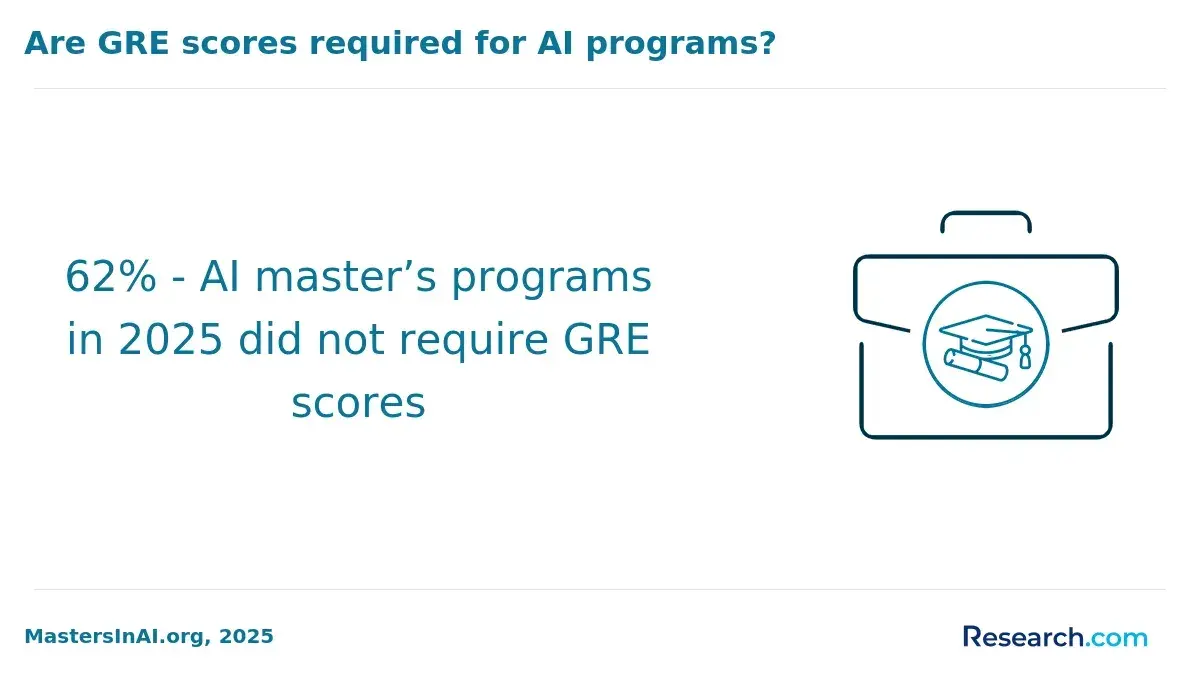
Graduate-level programs may demand GRE scores or professional experience in software development or data science. Many programs include technical interviews to assess coding and problem-solving abilities.
International students often face extra requirements such as English proficiency exams (TOEFL or IELTS) and visa documentation, with co-op opportunities contingent on valid work authorization.
These admission standards help applicants focus their preparation to meet competitive expectations in AI co-op opportunities, increasing the likelihood of acceptance and success in this evolving field.
How long do AI co-op degrees take, and what do they cost?
AI co-op degrees generally take four to five years to complete, longer than standard bachelor's programs due to alternating academic semesters with paid work placements. For example, students might experience three academic semesters and two co-op terms each year, which extends the duration but provides valuable hands-on experience.
Tuition costs vary widely depending on the institution and residency. Public four-year in-state universities charge around $11,610 annually, leading to total tuition expenses between $46,000 and $58,000 over the program's duration, excluding living costs. Private universities can exceed $40,000 per year, pushing total tuition above $160,000.
Co-op work terms pay between $15 and $25 per hour, helping to offset some costs, although they rarely cover full tuition. Graduate AI co-op programs typically last 18 to 24 months but may extend to three years part-time. Tuition fees for these programs range from $20,000 to $60,000 annually depending on the school.
Key considerations for prospective students include
- Co-op earnings provide partial financial relief
- In-state public universities offer the most affordable options
- Graduate co-op program length and cost vary significantly
- Longer program lengths raise total tuition and living costs
Can you earn an AI co-op degree online, and what are the tradeoffs?
Online AI degree programs increasingly include co-op or internship components, often through virtual arrangements or partnerships with local employers. These options offer valuable practical experience while accommodating student schedules.
For instance, Northeastern University's online AI programs provide structured co-op opportunities that blend remote and local placements, enhancing real-world learning within an online format.
Nevertheless, the six-year completion rate for purely online bachelor's students is markedly lower-32% versus 63% for in-person students. This gap suggests online learners may struggle with balancing academics and co-op commitments without direct campus support.
Key factors to keep in mind when pursuing an online AI co-op degree include:
- Availability of local or virtual co-op positions depends heavily on a school's employer network and geographic reach.
- Online students must be highly self-motivated and able to manage their time effectively.
- Networking and job placement can be more challenging without face-to-face interactions.
- Some employers still prioritize in-person candidates for co-ops, limiting onsite opportunities for remote learners.
Choosing a program with strong employer partnerships, clear co-op integration, and excellent student support services helps mitigate these risks. Hybrid options that include occasional campus visits may further support successful course and co-op completion, balancing flexibility with needed structure.
What jobs do AI co-op graduates qualify for in the U.S.?
AI co-op graduates in the U.S. qualify for several high-demand roles across technology, data, and research sectors. Key positions include data scientist, machine learning engineer, AI research analyst, and AI software developer, each requiring strong skills in programming, data analysis, and algorithm development acquired through co-op experiences.
Data scientists are a primary career target, with job growth projected at 36% over a decade, according to the U.S. Bureau of Labor Statistics Occupational Outlook Handbook. They build predictive models and analyze complex data to inform decisions in industries like healthcare, finance, and technology.
Machine learning engineers design, test, and deploy AI models, improving systems such as recommendations, autonomous vehicles, and fraud detection. AI research analysts focus on applying cutting-edge AI methods to practical company needs.
Additional roles include AI software developers who embed AI into broader systems and AI product managers who align technical and business goals.
Graduates often find roles in startups, major tech firms, healthcare, and government, benefiting from hands-on projects involving cloud platforms, neural networks, and natural language processing. Proficiency in Python, TensorFlow, PyTorch, and data engineering tools is essential.
AI co-op students are also well-suited for interdisciplinary careers in robotics, cybersecurity, and human-computer interaction, broadening career pathways beyond classic data roles.
What certifications pair best with an AI degree and co-op experience?
Certifications that complement an AI degree and co-op experience focus on generative AI, machine learning, and data science skills. According to Coursera's 2025 Job Skills Report, generative AI is the fastest-growing skill category year over year, highlighting the importance of GenAI-focused credentials alongside traditional education.
Practical certifications like the TensorFlow Developer Certificate and Microsoft Certified: Azure AI Fundamentals enhance your ability to develop and deploy AI models effectively. Data science certificates-such as the IBM Data Science Professional Certificate and Google Data Analytics Certificate-build strong analytical skills vital for analyzing complex datasets during co-op roles.
Additional machine learning certifications from AWS or Stanford offer applied expertise highly valued by employers. Cloud computing credentials, including AWS Certified Machine Learning - Specialty and Google Cloud Professional Machine Learning Engineer, demonstrate proficiency integrating AI into scalable enterprise systems.
Programming certifications from the Python Institute (PCAP) or DataCamp also support core coding skills essential for AI projects. Combining an AI degree with these certificates creates a versatile profile that helps validate hands-on experience and prove readiness for evolving roles in artificial intelligence.
Other Things You Should Know About Artificial Intelligence
In 2027, top AI degrees with outstanding co-op opportunities include Stanford University, MIT, and Carnegie Mellon. These programs offer rich collaborations with tech giants and startups focused on machine learning and AI advancements, providing students with valuable hands-on experience.
Graduates with artificial intelligence degrees find opportunities in technology, healthcare, finance, automotive, and manufacturing sectors, among others. Industries use AI for applications like predictive analytics, autonomous systems, natural language processing, and robotics. This diversity allows AI graduates to work in roles ranging from software development to research and data science.
Artificial intelligence can automate certain repetitive and data-driven tasks but is generally seen as augmenting rather than fully replacing human jobs. While some roles may change or become obsolete, AI also creates new job categories that require human oversight, creativity, and ethical judgment. Professionals with AI knowledge can help shape the technology's responsible integration.
Success in artificial intelligence programs requires strong foundations in programming, mathematics, and statistics. Critical skills include knowledge of machine learning algorithms, data structures, and proficiency in languages like Python or R. Additionally, problem-solving abilities and understanding of data ethics enhance a student's effectiveness in both academic and professional settings.
Students should seek co-op opportunities that align with cutting-edge fields like autonomous systems, AI-driven healthcare, or sustainable AI technologies, ensuring practical experience to complement their coursework. A relevant program could be a master’s in machine learning and finance, which provides insights into AI's application in finance.
References
- How AI is depressing entry-level wages and hiring https://www.iese.edu/insight/articles/artificial-intelligence-junior-employees-wages/
- How AI may reshape career pathways to better jobs | Brookings https://www.brookings.edu/articles/how-ai-may-reshape-career-pathways-to-better-jobs/
- These 3 charts show how AI is affecting wages, job quality and hiring decisions https://www.weforum.org/stories/2026/02/ai-improving-wages-job-quality/
- Artificial Intelligence and Machine Learning (Co-op) https://www.fanshawec.ca/programs/aim2-artificial-intelligence-and-machine-learning-co-op/next
- What is Cooperative AI? https://www.cooperativeai.com/curriculum/1-what-is-cooperative-ai
- Best AI Courses for Working Professionals to Advance in 2026 https://amityonline.com/blog/ai-courses-for-working-professionals
- qa.com | Top 10 Must Have AI Certifications in 2026 https://www.qa.com/browse/certifications/ai-certifications/
- Bachelor in Management and Artificial Intelligence https://www.kozminski.edu.pl/en/programs/undergraduate-programs-bachelor/bachelor-management-and-artificial-intelligence
- Best Colleges to Study Artificial Intelligence https://www.collegeadvisor.com/resources/study-artificial-intelligence/
- Jobright: Your AI Job Search Copilot https://jobright.ai/jobs/artificial-intelligence-(ai)-co-op-jobs-in-united-states