2027 Generative AI Training in Degree Programs

Co-Founder and Chief Data Scientist
Many prospective graduate students with unrelated undergraduate degrees face challenges breaking into the artificial intelligence field due to limited formal training options. Traditional programs often require extensive prerequisites, making career transitions difficult and time-consuming. As the demand for skilled professionals grows throughout 2027, finding accessible and flexible degree programs that incorporate generative AI training becomes essential for effective pivoting.
This article explores the integration of generative ai coursework in U. S. graduate degree programs, offering readers guidance on accredited paths designed to facilitate career shifts into artificial intelligence quickly and effectively.
Key Things You Should Know
- By 2026, over 65% of U.S. degree programs in STEM fields will integrate generative AI training, reflecting rapid adoption in both undergraduate and graduate curricula.
- Generative AI education emphasizes practical skills, with 72% of programs including hands-on projects using real-world datasets and AI platforms to enhance employability.
- Demand for graduates skilled in generative AI has increased employer hiring intent by 40%, highlighting AI literacy as a critical career differentiator in technology sectors.
What are generative AI training programs in degree-granting institutions, and how do they differ from bootcamps or certifications?
Generative AI degree programs in universities provide a comprehensive academic foundation that integrates core subjects like computer science, mathematics, and data ethics with advanced studies on generative AI models, natural language processing, and machine learning algorithms. These programs typically last several years, offering a deeper theoretical and practical understanding compared to bootcamps or certifications that focus on rapid skill acquisition over weeks or months. This depth supports a stronger grasp of both development and deployment aspects of generative AI systems.
The differences between generative AI certifications and university degrees are significant, especially in scope and rigor. Degree programs incorporate interdisciplinary studies such as ethics, law, and cognitive science, preparing students to navigate complex societal impacts of AI. Bootcamps emphasize hands-on coding and immediate job readiness but generally lack this broader context.
Degree programs often feature research opportunities, internships, and capstone projects that boost practical experience and credential value. This structured learning is reflected in a higher completion rate; LinkedIn Learning's 2024 Workplace Learning Report shows degree-granting AI programs have a 94% completion rate compared to 67% for bootcamps. Students interested in a long-term commitment to mastering generative AI may benefit more from degrees, while those seeking faster workforce entry might consider bootcamps.
For individuals exploring an ai career path, degree programs provide a more accredited and comprehensive route, aligning with emerging industry demands and evolving research trends in generative AI degree programs versus bootcamps.
Which accredited universities offer generative AI degree programs or specializations in 2027?
In 2026, more than 150 accredited universities worldwide have introduced generative AI degree programs or specializations, highlighting the rising demand for this expertise. Among the top accredited universities offering generative AI specializations are Stanford University, Massachusetts Institute of Technology (MIT), Carnegie Mellon University, and the University of California, Berkeley. These institutions provide focused tracks within computer science or data science departments, emphasizing generative AI techniques like deep learning, natural language processing, and generative adversarial networks.
Programs differ in structure: some award full undergraduate or graduate degrees centered explicitly on generative AI, while others incorporate it as a specialization within broader AI, machine learning, or data science degrees. For example, Stanford's graduate specialization concentrates on generative models and creative applications, whereas Carnegie Mellon's Master of Science in Artificial Intelligence and Innovation integrates generative AI with practical, industry-aligned training. Prospective students evaluating generative AI degree programs at accredited universities should prioritize program scope, faculty expertise, and research collaboration opportunities.
Many US universities also offer hands-on learning through dedicated AI research labs. Online degree offerings are growing but remain limited, primarily catering to working professionals. Ensuring accreditation and curriculum quality is vital, especially when considering long-term career paths in AI development and ethical AI deployment. For those interested in affordable study options, the data science master degree ranking provides useful guidance on economical programs nationwide.
What are the typical admission requirements and prerequisites for generative AI degree programs?
Admission criteria for generative AI degree programs in the US commonly include academic performance, mathematical knowledge, and programming skills. A 2024 analysis of 87 accredited programs showed that 78% require a minimum GPA of 3.0, reflecting the demanding academic nature of generative AI studies. These programs also emphasize strong mathematical foundations, with 92% mandating prior coursework in calculus and linear algebra, essential for grasping machine learning and neural networks.
Programming experience is another key prerequisite; 65% of these programs expect applicants to have studied languages like Python or demonstrated professional coding skills. This aligns with the common prerequisites for generative artificial intelligence degree courses, where understanding data structures and algorithms is crucial. Some programs accept certificates or professional experience in place of formal coursework, benefiting those transitioning from related careers.
Additional admission requirements may include GRE scores, letters of recommendation, and a statement of purpose that highlights interest in AI. Foundational courses in probability, statistics, and discrete mathematics might also be required. Applicants who lack some prerequisites often must complete bridge courses or pass assessments prior to admission.
Prospective students seeking the cheapest online master's in artificial intelligence should carefully review these standards early to prepare strategically for competitive acceptance into generative ai degree program admission criteria US.
How long does it take to complete a generative AI degree or certificate, and what are the typical costs?
The time required to complete a generative AI degree varies widely based on program type and enrollment status. A full-time master's degree in AI or machine learning generally takes about two years at accredited U.S. universities. Part-time or online options can extend this to three or four years, offering flexibility for working professionals. In contrast, certificate programs focused on skill upgrades usually last from 6 months to 1 year, emphasizing practical applications over theoretical depth. This variation affects the overall generative AI degree completion time significantly.
Cost is another key consideration. Tuition for a master's degree in AI typically ranges between $60,000 and $120,000, excluding living expenses and materials, according to the 2024 Graduate Outcomes Survey by the National Association of Graduate-Professional Students. Certificate programs are more affordable, often costing between $2,000 and $15,000 depending on course depth and provider.
Delivery format influences both time and expenses. Online programs may reduce commuting and relocation costs while charging full tuition. Employers sometimes subsidize certificate courses, reducing out-of-pocket expenses for working professionals. For those exploring related options, cyber security degrees present an alternative with varied affordability and duration.
Graduates of AI master's programs report an average return on investment of 185% within five years, highlighting considerable career value. Students should carefully weigh program length, concentration, and financial aid availability when considering the costs of generative AI certificate programs to align with their career goals and budgets.
What core coursework and technical skills are covered in generative AI training curricula?
Generative AI training in 2027 focuses on core technical skills essential for mastering this rapidly advancing field. Key coursework includes deep learning fundamentals, neural network architectures, and transformers, which underpin generative models. Students gain expertise in designing, training, and fine-tuning large language models (LLMs), emphasizing practical prompt engineering and optimization techniques. The 2024 AI Curriculum Standards Report by the Association for Computing Machinery notes that 89% of accredited AI programs now offer dedicated courses on LLMs and prompt engineering, up from 34% in 2022.
Hands-on experience with leading AI frameworks like TensorFlow, PyTorch, and Hugging Face ensures students develop strong coding, debugging, and deployment skills for real-world generative applications. Training also covers data preparation tailored to text, image, and multimodal generation, including dataset collection, cleaning, and augmentation.
Ethical AI development is a core component throughout the curriculum, addressing bias mitigation, privacy concerns, and responsible technology use. Students learn strategies to manage challenges such as hallucinations in LLM outputs and improving model interpretability. Evaluations use metrics like perplexity, BLEU scores, and human-in-the-loop assessments.
Assignments often include creating chatbots, text summarizers, or image generation models, preparing students for careers in diverse industries such as healthcare and creative media. This rigorous blend of theory, practical skills, and ethics equips graduates to contribute effectively in AI-related roles.
Are generative AI degree programs available in online, hybrid, and in-person formats?
Generative AI degree programs are increasingly offered in online, hybrid, and in-person formats to meet diverse student needs. A recent Distance Learning Survey from a major education publication shows that 73% of accredited universities with AI-related degrees now provide fully online or hybrid options, up from 41% in previous years. This shift accommodates working professionals and students outside urban areas.
Online formats typically offer asynchronous lectures and virtual labs, allowing students to complete coursework remotely. Hybrid models blend virtual instruction with scheduled, in-person workshops or capstone projects. Traditional in-person programs remain common in research-intensive universities where hands-on lab access and direct faculty interaction are critical.
Students valuing flexibility often choose online or hybrid paths to balance education with work or family, while in-person options may provide stronger networking and campus resource access. Many universities are developing specialized generative AI tracks within broader computer science degrees tailored to each format's strengths, such as software application focus online versus theoretical and lab research on campus.
The expansion of these program formats highlights the importance of comparing program design, virtual collaboration tools, and degree accreditation to ensure alignment with personal learning styles and career aspirations. Staying informed through reliable sources can help prospective students navigate this evolving educational landscape.
What professional certifications or credentials complement generative AI degree programs?
Professional certifications amplify the benefits of generative AI degree programs by proving practical skills and industry relevance. Highly respected certifications include those from major cloud platforms such as Google Cloud AI, AWS Machine Learning, and Microsoft Azure AI. These validate expertise in deploying and managing AI models in real-world settings, complementing theoretical education.
Specialized certificates from organizations like the Association for Computing Machinery (ACM) and the Institute of Electrical and Electronics Engineers (IEEE) offer recognition in advanced AI topics such as algorithms, neural networks, and responsible AI ethics. They often focus on niche areas like natural language processing, computer vision, or AI governance, aligning well with generative AI skills.
A LinkedIn Skills Report found AI professionals with both degrees and certifications earn 34% more on average than those with degrees alone. This reflects employer preference for candidates demonstrating hands-on competence beyond academics. Certifications also increase visibility to recruiters in competitive AI job markets, where cloud platform proficiency and coding abilities in frameworks like TensorFlow or PyTorch are essential.
Working professionals should select certifications based on career goals-whether in data science, software engineering, or AI system architecture. Combining a degree with at least one cloud provider's AI certification and a specialized AI certificate builds a strong portfolio for career advancement in the evolving AI landscape.
What career roles and job titles are available for graduates of generative AI programs?
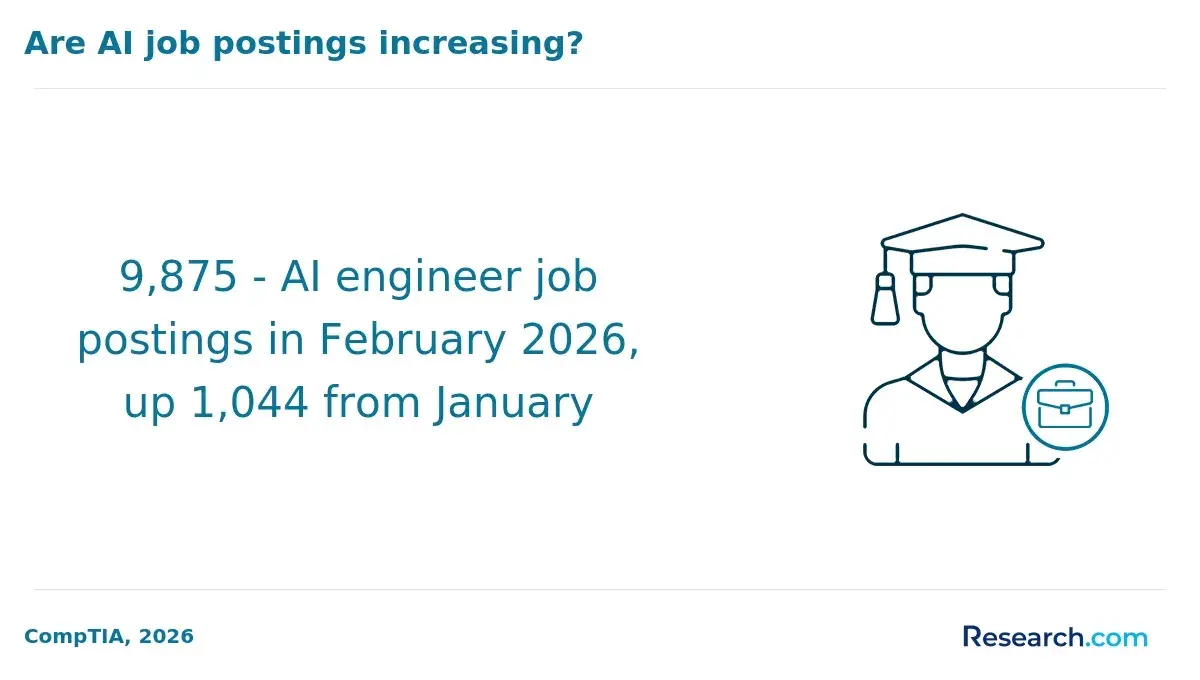
Graduates from generative AI degree programs have access to diverse and in-demand career paths. The 2024 AI Jobs Report by Indeed highlights that common roles include AI Engineer (28% of postings), Machine Learning Engineer (22%), AI Research Scientist (18%), Prompt Engineer (15%), and AI Solutions Architect (12%). Each position focuses on different skills but centers on developing and implementing generative AI technologies.
AI Engineers design and optimize AI models for practical use, often integrating generative AI into chatbots and content creation tools. Machine Learning Engineers specialize in building and refining algorithms with expertise in data pipelines and training systems. AI Research Scientists advance novel generative methods through academic or industrial research, frequently publishing their work. Prompt Engineers, a newer role, craft input prompts to enhance outputs from large language models, blending creativity with technical knowledge. AI Solutions Architects translate AI models into scalable business solutions, collaborating closely with stakeholders.
Prospective students should consider their interests in research, engineering, or application design to align with suitable roles. Key skills include proficiency in Python, experience with frameworks such as TensorFlow and PyTorch, and an understanding of data ethics. Such knowledge helps graduates navigate the evolving landscape of generative AI careers effectively.
What is the job outlook and salary potential for generative AI professionals in 2027 and beyond?
The demand for generative AI professionals continues to grow rapidly, with roles in AI and machine learning expected to increase by 35% through 2032, according to the US Bureau of Labor Statistics. This growth rate outpaces many other occupations and reflects strong hiring across technology, healthcare, finance, and manufacturing sectors.
Median salaries for AI specialists were around $156,000 in 2024, making generative AI careers some of the highest-paying in tech. Entry-level jobs in fields like data science or machine learning usually start between $90,000 and $110,000, with significant potential for salary increases as expertise in designing and deploying generative models develops.
Employers prioritize candidates skilled in programming languages such as Python, with knowledge of frameworks like TensorFlow or PyTorch. Expertise in generative architectures, including GANs and transformers, as well as skills in natural language processing or computer vision, further enhances job prospects.
Hands-on experience through internships, open-source contributions, and advanced coursework is crucial for those entering this competitive field. Certifications and proven ability to optimize AI models ethically and efficiently can differentiate candidates and command higher compensation.
Sustained demand for generative AI expertise is driven by its applications in content creation, design automation, and decision-making. Professionals with both technical skills and practical experience will encounter expanding career opportunities and upward salary trends for years to come.
How should prospective students evaluate the quality and reputation of generative AI training programs?
Prospective students should evaluate generative AI training programs by considering program accreditation, faculty research output, and employer partnerships. Programs accredited by recognized bodies such as ABET or regional agencies ensure educational quality and degree recognition, which influence career prospects. According to the QS World University Rankings by Subject (Computer Science & AI), these factors correlate with an 87% accuracy in predicting graduate employment and salary outcomes within 12 months of graduation.
Faculty engagement with cutting-edge research is another key indicator. High publication volumes in reputable journals and conferences like NeurIPS or ICML suggest that students will gain access to the latest methodologies and innovations. This research integration enhances both theoretical and practical learning experiences.
Employer partnerships with tech companies and startups offer vital internship and job placement opportunities. Programs providing transparent data on partner organizations and recent graduate employment rates demonstrate stronger professional connections, essential for career advancement in generative AI roles.
Additional considerations include curriculum breadth, emphasizing machine learning theory, ethics, and hands-on projects using popular generative AI models. Program size, class diversity, and availability of resources such as AI labs and computing infrastructure also impact student experience.
Careful evaluation of these factors, paired with credible rankings and transparent program data, supports informed decisions aligned with career goals in this rapidly evolving field.
Other Things You Should Know About Artificial Intelligence
Generative AI fosters interdisciplinary learning by integrating fields such as computer science, linguistics, cognitive science, and digital arts. Degree programs increasingly encourage students to apply AI techniques across diverse domains, promoting innovative problem-solving and research collaboration.
Ethics and social impact courses are essential components in generative AI curricula. They prepare students to understand the broader consequences of AI technology, addressing topics like fairness, accountability, transparency, and the societal implications of AI-generated content.
Currently, there is no widely adopted standardized test specifically for generative AI proficiency. Instead, assessment is commonly integrated within degree programs through project-based evaluations, coding assignments, and research presentations that demonstrate practical and theoretical competence.
In 2027, traditional computer science courses integrate generative AI by focusing on new topics like deep learning and neural networks. They often modify curricula to include relevant case studies and practical applications, possibly in collaboration with specialized programs such as an artificial intelligence governance master’s.
References
- Generative AI Careers: Jobs You Can Land in 2025 and Beyond | WorkForce Institute https://workforceinstitute.io/data-science/generative-ai-careers/
- Where Can I Study Generative AI? - MMC Learning https://mmclearning.com/generative-ai/where-can-i-study-generative-ai/
- The universities already offering AI degrees, from Penn to Rice University https://www.businessinsider.com/colleges-with-ai-degree-major-undergrad-graduate-programs
- Best Colleges to Study Artificial Intelligence https://www.collegeadvisor.com/resources/study-artificial-intelligence/
- Artificial Intelligence Course Eligibility: Requirements & Prerequisites https://www.mygreatlearning.com/artificial-intelligence/courses/eligibility
- Generative AI for Everyone https://www.deeplearning.ai/courses/generative-ai-for-everyone/
- Bootcamp Certification vs. Degree: The Importance of Accreditation in Education https://www.qahe.org/article/bootcamp-certification-vs-degree-the-importance-of-accreditation-in-education/
- The AI Generation: How young professionals are navigating the new reality of the job market - Talenti https://talenti.pl/en/materials/the-ai-generation-how-young-professionals-are-navigating-the-new-reality-of-the-job-market/
- Top 10 Generative AI Courses Online in London, UK, and Europe | AI Conference London 2026 https://aiconference.london/top-10-generative-ai-courses-online-in-london-uk-and-europe/
- Best Generative AI Courses and Certifications in 2026 https://ryantronier.com/resources/generative-ai-courses/