2027 Best AI Degrees for Students Interested in Recommendation Systems

Co-Founder and Chief Data Scientist
Many students with non-technical backgrounds face challenges when seeking to enter fields specializing in recommendation systems. Without a clear educational path, transitioning into this niche can feel overwhelming due to the evolving demands in machine learning and algorithm development. This knowledge gap often limits career opportunities in tech industries reliant on personalized content delivery.
Understanding which AI degrees offer relevant skills and flexible formats is crucial for making informed decisions. This article explores the best AI degrees tailored for those interested in recommendation systems, guiding prospective students toward accredited programs that enable a smooth pivot into this dynamic sector.
Key Things You Should Know
- Recommendation systems expertise is increasingly sought after, with a 25% job growth projected by 2030 in AI-related roles focusing on personalized technology solutions.
- Top AI degrees combine programming, data science, and machine learning, emphasizing practical skills in neural networks and collaborative filtering techniques.
- Leading universities now integrate ethics and bias mitigation in AI curricula, addressing concerns in recommendation systems and boosting graduate employability in responsible AI development.
What are recommendation systems, and what AI skills do they require?
Recommendation systems are advanced AI models that analyze user data to predict preferences and deliver personalized suggestions. They play a crucial role in platforms like Amazon and Netflix, where recommendation engines account for about 35% of consumer purchases on Amazon and 75% of Netflix's viewership, according to McKinsey. This highlights how recommendation systems use AI techniques to boost user engagement and business success.
Key skills developed in artificial intelligence degrees to work with these systems include:
- Mastering supervised and unsupervised learning methods such as classification, clustering, and regression algorithms.
- Applying collaborative filtering to analyze user-item interactions and find similar patterns.
- Utilizing content-based filtering by focusing on item attributes for tailored recommendations.
- Understanding neural networks and deep learning structures like autoencoders and recurrent neural networks for complex preference modeling.
- Employing natural language processing to manage textual data like reviews, enhancing recommendation accuracy.
- Programming proficiency in languages like Python, using libraries including TensorFlow, PyTorch, and Scikit-learn.
- Data engineering skills to organize, preprocess, and handle large-scale datasets effectively.
Challenges such as data sparsity and cold start problems require careful strategy, while practical projects help students grasp evaluation metrics like precision, recall, and Mean Average Precision (MAP). Students interested in gaining these competencies can explore an accelerated computer science degree online to advance their expertise in recommendation system skills in artificial intelligence degrees.
Which degrees best prepare students to build recommendation systems?
Degrees in computer science with a focus on recommendation systems typically cover machine learning, data engineering, and scalable computing. These programs provide core knowledge in algorithms, statistics, and programming essential for designing recommendation algorithms. Specialized tracks in data science emphasize data wrangling, feature engineering, and evaluation metrics, all critical for addressing real-world challenges in recommendation systems. For those seeking the best artificial Intelligence programs for recommendation algorithm development, interdisciplinary degrees that combine computer science and business analytics add valuable insights into interpreting recommendation outputs in marketing or e-commerce contexts.
Electrical engineering degrees concentrating on signal processing and machine learning offer strong mathematical foundations to model user preferences effectively. Practical experience with distributed computing frameworks like Apache Spark or Hadoop is vital for building scalable recommendation engines. NVIDIA highlights recommendation systems as a premier machine learning application, underscoring the importance of hands-on experience with deep learning frameworks and high-performance computing environments.
Advanced study at the master's or PhD level often involves researching new recommendation algorithms using neural networks or graph-based models. Coursework in software engineering equips graduates with skills to integrate systems through APIs and databases while considering user privacy.
Prospective students should explore data science programs that emphasize these areas to meet industry demand for efficient, accurate, and large-scale recommendation systems.
What majors and concentrations align most with recommendation system careers?
Majors and concentrations with the strongest alignment to careers in recommendation systems include computer science, data science, and applied mathematics. These fields offer foundational expertise in algorithms, statistics, and programming essential for optimizing recommendation engines. Computer science majors focused on recommendation algorithms should prioritize courses in machine learning, data structures, database systems, and software engineering, as machine learning skills are crucial for building predictive models that drive recommender systems.
Data science programs provide practical experience in extracting insights from large datasets through statistical methods and data visualization, improving system accuracy and user personalization. Applied mathematics concentrations in linear algebra, probability, and optimization support the mathematical foundations behind many recommendation algorithms. Operations research and mathematical statistics cultivate problem-solving skills needed for tuning and scaling systems.
Additional relevant fields include artificial intelligence, especially natural language processing and neural networks, which enhance content recommendation such as movies or articles. Business analytics offers complementary insights into user behavior and decision-making, strengthening the context where recommendation systems operate.
Students and professionals aiming for roles in this sector should pursue internships or projects focused on recommender algorithms, collaborative filtering, and user behavior analysis. Gaining domain experience alongside technical skills in machine learning and data handling improves job prospects in this AI niche. For related educational pathways, consider exploring options like a game design degree online, which can provide additional technical perspectives and programming experience.
How do online AI degrees compare with campus programs for recommender training?
Online AI degrees increasingly match or exceed campus programs in delivering recommender system training through flexible, scalable curricula. Platforms like Coursera report millions of learners enrolling globally in generative AI and data/machine learning courses focused on real-world, job-relevant skills. This scale enables online AI degrees to quickly incorporate diverse datasets and advanced algorithms, often faster than traditional campus-based AI programs. For students seeking the online ai degree benefits for recommender systems training, these programs offer specialized modules on collaborative filtering, matrix factorization, and deep learning recommendation systems taught by industry experts.
Campus-based AI programs versus online courses for recommendation systems differ notably. Campus programs emphasize immersive, in-person experiences, including hands-on labs, group work, and faculty mentorship. These foster deep theoretical understanding and peer networking but may have limited enrollment and slower curriculum updates that lag behind industry trends.
Students should consider career goals and learning styles carefully. Accelerated entry into recommender system roles aligns well with accredited online degrees offering practical projects. Those targeting research-intensive or PhD paths may prefer traditional campus programs with stronger theoretical emphasis and lab access. For prospective students comparing costs and options, exploring the cheapest online data science masters can help identify affordable pathways in this evolving field.
What coursework should an AI degree include for recommendation systems?
An AI degree focused on recommendation systems should provide a strong foundation in machine learning fundamentals, emphasizing representation learning and scalable retrieval. According to Google Research (2024), modern recommendation engines rely heavily on deep learning techniques with embedding methods such as two-tower or dual-encoder architectures. This makes mastering neural networks and learning dense vector representations of users and items essential.
Core coursework typically includes:
- Machine learning algorithms with a focus on supervised and unsupervised methods
- Deep learning architectures like convolutional and recurrent neural networks
- Natural language processing for handling textual recommendation data
- Representation learning targeting embeddings and dimensionality reduction
- Scalable information retrieval for efficient large-scale ranking
- Data mining and recommender system design covering collaborative filtering and content-based models
- Advanced mathematics such as linear algebra, probability, and statistics
Practical skills in Python and frameworks like TensorFlow or PyTorch are critical. Hands-on projects, including building two-tower retrieval systems, help reinforce theoretical concepts. Electives may include database management and cloud computing to manage large datasets vital for recommendation algorithms.
Ethical considerations are also key, addressing biases and user privacy to evaluate and mitigate potential harms in deployed models. Comprehensive training in these areas equips students for roles in industry or research focused on next-generation recommendation systems.
What accreditation should AI and computer science degrees have in the U.S.?
ABET accreditation plays a crucial role in U.S. computer science and artificial intelligence degree programs, ensuring they meet rigorous educational standards recognized by both academia and industry. This accreditation verifies that a program offers comprehensive training in essential areas such as algorithms, data structures, machine learning, and ethical AI practices-foundational knowledge for those pursuing careers in recommendation systems.
Programs without ABET accreditation might lack in curriculum rigor, faculty expertise, or facility resources, which can affect the quality of education and career readiness. Employers increasingly prefer graduates from ABET-accredited programs because the credential signals a candidate's technical competence and theoretical grounding.
Accreditation also impacts graduate school admissions and eligibility for professional certifications, making it a significant factor for long-term career development in advanced AI fields. ABET accreditation serves as a reliable benchmark for students and professionals aiming to excel in recommendation system development and other AI-related roles.
What are typical admission requirements for AI-focused bachelor's and master's programs?
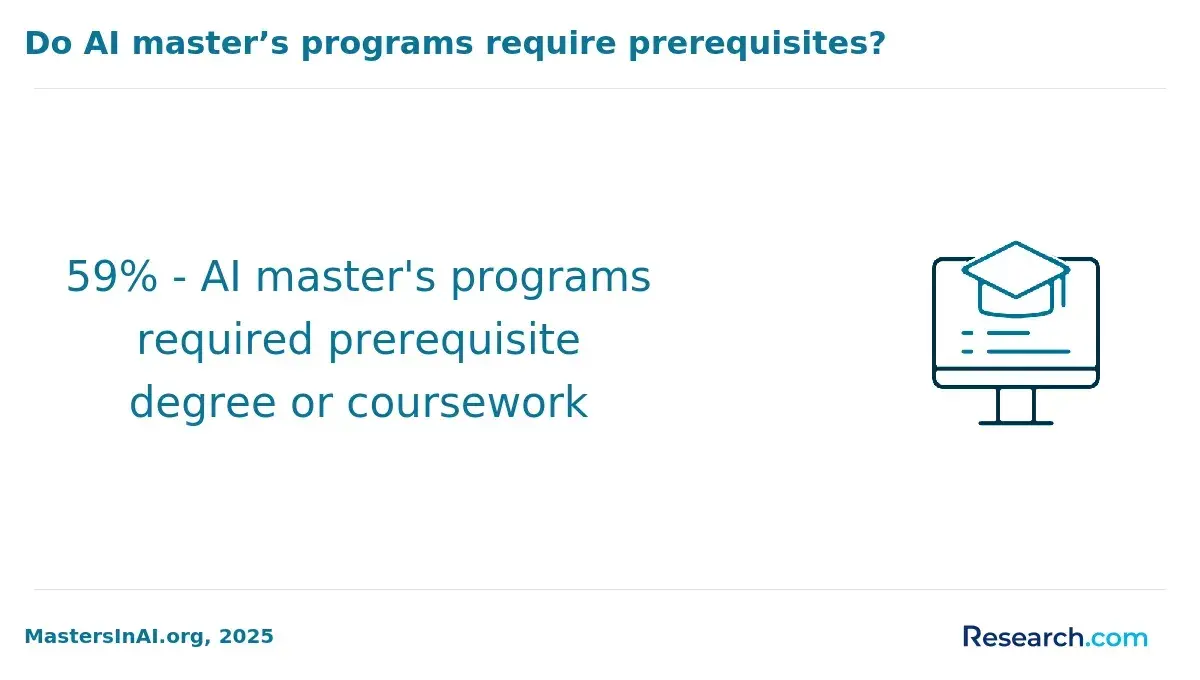
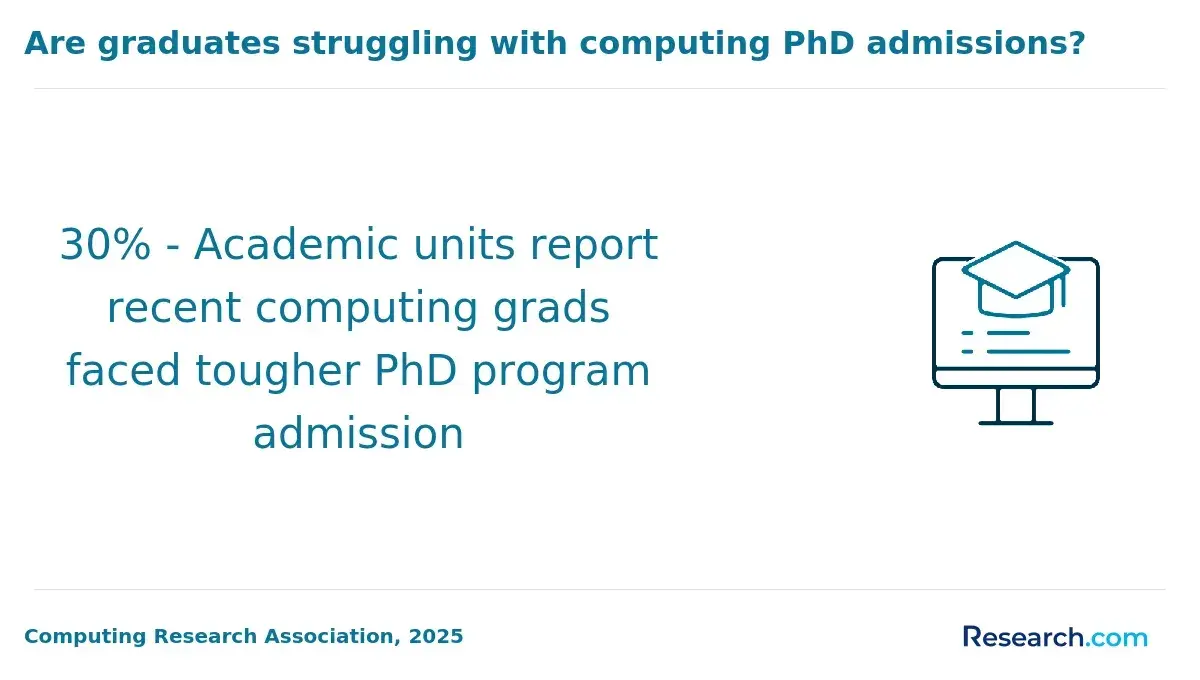
Admission to AI-focused bachelor's programs typically requires a high school diploma with strong grades in calculus, algebra, and programming. Many institutions ask for SAT or ACT scores, although some have moved to test-optional policies to broaden access. For master's programs, a bachelor's degree in computer science, engineering, mathematics, or related fields is preferred. Applicants need to demonstrate skills in programming, statistics, and algorithms, often through transcripts and prerequisite courses.
GRE scores are commonly requested but are increasingly optional, reflecting a trend toward holistic application reviews emphasizing GPA, research experience, and statements of purpose. Additional application materials include letters of recommendation, personal statements, and resumes showcasing relevant projects, internships, or research experiences.
Practical expertise with machine learning tools such as Python, TensorFlow, or PyTorch strengthens applications. Some master's programs offer conditional admission with preparatory coursework if prerequisites are lacking. International applicants must provide proof of English proficiency, usually via TOEFL or IELTS.
Applicants should review individual program requirements carefully, as some may ask for coding portfolios or interviews to assess readiness. Tailoring applications with these elements can improve acceptance chances and facilitate a successful AI education journey.
How long do AI degrees take, and what do they cost?
AI degree programs typically range from two to six years, varying by level and format. A bachelor's degree in AI or computer science with a focus on recommendation systems usually takes four years of full-time study. Master's degrees require one to two years, while doctoral programs often last four to six years, emphasizing research and dissertation work. Online and part-time options offer more flexibility but can extend the duration.
Tuition costs vary significantly. Private nonprofit four-year colleges often charge over $40,000 annually, while public universities typically range from $10,000 to $25,000 per year for in-state students. Out-of-state and private institution fees may surpass $40,000. Additional expenses such as textbooks, software licenses, and commuting or relocation should also be considered. Many graduate students benefit from scholarships, assistantships, or employer tuition reimbursement.
- Bachelor's degree in AI or related fields: 4 years, $40,000+ per year at private colleges
- Master's degree specializing in recommendation systems: 1-2 years, $20,000 to $50,000 per year depending on institution
- PhD programs: 4-6 years, often funded or with partial tuition waivers
Students must weigh total costs against potential career outcomes, including salaries and job placement rates. Many master's programs offer accelerated or part-time schedules, providing flexibility but possibly increasing overall expenses and prolonging study. Considering financial aid options and the institution's research reputation is vital for informed decision-making.
What jobs can you get designing recommendation systems with an AI degree?
Designing recommendation systems with an AI degree opens diverse career paths that focus on personalized user experiences and data-driven decision-making. Key roles include data scientists who develop algorithms to analyze behavior and predict preferences, and machine learning engineers who create scalable recommendation models for industries like e-commerce, streaming, and social media.
AI research scientists focus on advancing recommendation methodologies using deep learning and natural language processing, while product managers leverage AI skills to integrate recommendation features into broader platforms aligning tech with business goals.
Practical applications often involve optimizing product suggestions for retail giants, improving content delivery on platforms such as Netflix or Spotify, and developing personalized advertising algorithms. These roles require strong programming skills, proficiency with machine learning frameworks, and understanding of data structures and user interaction data.
According to the U.S. Bureau of Labor Statistics, data scientists and machine learning-focused jobs are among the fastest growing in the U.S., reflecting sustained demand. Salaries range from $85,000 to over $150,000 annually, varying by experience and sector.
Additional opportunities exist in research labs, startups, and tech companies innovating AI solutions, as well as in user experience analytics, fraud detection systems, and AI ethics teams that ensure fairness and transparency in automated recommendations.
What salary and job outlook can recommender-system professionals expect?
Professionals in recommender systems benefit from strong earning potential and promising job growth. The U.S. Bureau of Labor Statistics reports the median annual wage for data scientists exceeds $100,000 nationwide, reflecting high demand for expertise in recommendation algorithms. This field requires advanced skills in machine learning, data analysis, and software engineering.
Job opportunities are expected to grow rapidly due to the increasing importance of personalized digital experiences in sectors like e-commerce, streaming services, and social media platforms. Employers continuously seek specialists to enhance algorithm performance and user engagement.
Typical job titles include machine learning engineer, data scientist, AI researcher, and software developer focusing on recommender systems. Salaries vary by experience, education, and location, with entry-level roles earning about $85,000 to $95,000 annually, and senior positions or those at top tech firms exceeding $150,000.
Expertise in natural language processing or deep learning often leads to higher salaries. For students and recent graduates, gaining practical experience through internships or projects involving large-scale user data can offer a significant advantage when entering the job market.
Other Things You Should Know About Artificial Intelligence
Most AI degree programs expect students to have some foundational programming knowledge before enrolling, typically in languages like Python, Java, or C++. However, many undergraduate programs include introductory programming courses to help newcomers build these skills early on. Graduate-level AI programs generally assume prior coding experience as a prerequisite.
Students can engage in research related to improving algorithm accuracy, user personalization, scalability, and ethical considerations in recommendation systems. Opportunities often include working with faculty on cutting-edge projects, participating in internships, or contributing to open-source AI frameworks. Collaborative research with industry partners is also common in this field.
Internships are critical for practical experience and networking in the AI field. They allow students to apply theoretical knowledge to real-world problems, often in fast-paced environments. Many AI degree programs encourage or require internships to enhance job readiness and improve employment prospects after graduation.
In 2027, AI degree programs specializing in recommendation systems emphasize interdisciplinary coursework, integrating computer science, data science, and user experience design. Look for programs that offer industry partnerships and hands-on projects. For broader AI applications, consider pursuing an artificial intelligence in finance master’s.
References
- Course Recommendations for Education | Kumo.ai | Kumo.ai https://kumo.ai/solutions/industries/education/course-recommendations/
- Course Recommender Systems Need to Consider the Job Market https://arxiv.org/html/2404.10876v1
- B.Sc. in Artificial Intelligence https://www.studyinpoland.pl/en/programme
- Best AI Bachelor's Degrees - AIDegreeProgams.org https://aidegreeprograms.org/rankings/best-ai-bachelor-degrees/
- Guide to Computer Science Degree and Program Accreditation https://www.computerscience.org/resources/college-accreditation/
- What are Recommender Systems? - GeeksforGeeks https://www.geeksforgeeks.org/machine-learning/what-are-recommender-systems/
- Careers and Majors: How Do They Align? | Coalition for College https://www.coalitionforcollegeaccess.org/mycoalition-counselor-all/careers-and-majors
- A Complete 4-Year Course Plan for an Artificial Intelligence Undergraduate Degree https://www.mihaileric.com/posts/complete-artificial-intelligence-undergraduate-course-plan/
- AI Certificate vs. Degree: Which One Is Right for You - IABAC https://iabac.org/blog/ai-certificate-vs-degree-which-one-is-right-for-you
- 16 Artificial Intelligence Career Paths https://www.calmu.edu/news/artificial-intelligence-career-paths