2027 Most Affordable Community College AI Degree Programs in the U.S.

Co-Founder and Chief Data Scientist
Many working professionals with degrees in unrelated fields face the challenge of transitioning into the rapidly growing artificial intelligence industry without incurring massive debt. High tuition costs and limited program flexibility often deter those seeking affordable education options. Community colleges offer a practical solution by providing accessible, accredited ai degree programs that balance cost, quality, and convenience.
This article highlights the most affordable community college artificial intelligence degree programs in the U. S. for 2026. It aims to guide prospective students toward flexible paths that align with career goals and financial constraints in this competitive field.
Key Things You Should Know
- Community colleges in the U.S. offer affordable ai degree programs, with average annual tuition under $5,000, making them accessible for diverse economic backgrounds in 2026.
- These programs emphasize practical skills in machine learning, data analysis, and neural networks, aligning curricula with current industry demands and certifications.
- Enrollment in ai associate degrees at community colleges has grown by over 40% since 2024, reflecting increasing interest and workforce demand in this field.
What are the most affordable community college AI degree programs available in the United States?
Community college ai degree programs in the United States offer some of the most affordable community college artificial intelligence degree programs, with average tuition around $3,800 annually. This is a stark contrast to $28,000 at public four-year universities, making these colleges ideal for those seeking cost-effective education in ai skills.
Top inexpensive AI degree options at U.S. community colleges include Northern Virginia Community College, Maricopa Community Colleges in Arizona, and Miami Dade College. These institutions offer associate degrees and certificates centered on machine learning, data analytics, and programming fundamentals specialized for ai applications. Many programs support credit transfer to four-year universities for students wishing to continue their studies.
Hands-on labs, internships, and collaborations with local tech companies enhance real-world experience, while online and hybrid schedules cater to working adults balancing education and employment. Financial aid and scholarships targeted at STEM and ai students frequently reduce overall costs further.
Students should carefully assess curriculum depth, faculty expertise, and access to technologies aligned with certifications like TensorFlow, Python, or cloud platforms, ensuring preparedness for evolving industry needs. For learners planning to advance, exploring an accelerated bachelor's degree computer science online can be a valuable next step after community college.
How much does a community college AI degree cost compared to four-year universities?
Community college artificial intelligence degree costs in the U.S. are significantly lower than those at four-year universities, making them an attractive option for many students. Completing an associate degree at a community college before transferring can save approximately $45,000 to $60,000 in total education expenses compared to enrolling directly in a four-year institution. This cost advantage results primarily from lower tuition rates, with community colleges charging around $3,500 annually for in-district students, while four-year universities can range from $10,000 to $25,000 or more per year.
An associate degree in AI at a community college typically takes two years and costs between $7,000 and $8,000 in total tuition. Students often transfer to universities as juniors, benefiting from residency-based reduced tuition or transfer agreements. This cost comparison of community college AI programs versus four-year universities highlights a practical pathway to affordable AI education while maintaining academic progress.
Community colleges also offer flexible scheduling and part-time attendance options that help students manage work and family commitments without incurring high expenses. Such flexibility benefits many nontraditional students pursuing an AI-related career.
For those exploring affordable options in related fields, consider this online degree in mechanical engineering as well, which exemplifies cost-effective pathways in STEM education.
Overall, community colleges provide substantial financial advantages without compromising quality in the expanding field of artificial intelligence.
What is the typical curriculum and coursework structure in a community college AI program?
Community colleges in the U.S. offering artificial intelligence programs typically structure their curriculum around foundational computer science and advanced AI topics. Students learn programming languages such as Python and Java, essential for AI development, alongside courses in data structures, algorithms, and discrete mathematics. This foundation supports skills needed for machine learning areas like supervised and unsupervised learning, classification, regression, and neural networks.
The typical coursework structure for AI programs at U.S. community colleges often includes hands-on machine learning projects using real-world datasets from industries like healthcare, finance, and retail. About 84% of these colleges integrate practical experience, enabling students to apply data preprocessing, model training, and evaluation skills in realistic settings.
Elections or advanced classes frequently cover artificial neural networks, natural language processing, computer vision, robotics, and ethical considerations of AI technology. Collaborative labs, coding workshops, and capstone projects, such as building chatbots or image recognition tools, enhance students' practical abilities and employability.
This community college AI degree curriculum in the U.S. emphasizes software tools like TensorFlow, PyTorch, and scikit-learn, equipping graduates for entry-level roles in AI development or data analysis. Those interested in related tech fields might also explore a game development degree as an alternative pathway.
What are the admission requirements and prerequisites for enrolling in a community college AI program?
Community college ai program admission requirements in the U.S. are designed to be broadly accessible, with most schools following open-enrollment policies that admit around 96% of applicants. Typically, a high school diploma or GED is necessary, but this alone does not ensure entry into specialized ai programs. Many colleges insist on demonstrating foundational math skills, as 73% require completion of remedial math courses before advancing to technical ai subjects. This might include placement tests or developmental courses in algebra or statistics to prepare students for programming and data-focused modules.
Prerequisites for enrolling in U.S. community college artificial intelligence programs may also include placement exams in English or computer literacy, reflecting the field's multidisciplinary nature. While prior coding or computer science experience is not mandatory, it can enhance a student's competitiveness and preparedness. Additional documentation such as transcripts, residency proof, or vaccination records might be requested depending on the institution.
Working professionals seeking flexible schedules should check if part-time or evening classes are available. Early consultation with admissions offices is advisable, as requirements can vary by state or region. Many colleges offer tutoring or workshops to help meet prerequisites and reduce time spent in remedial courses. For students concerned about costs, exploring options like the cheapest online cyber security degree programs may provide valuable financial alternatives.
How long does it take to complete a community college AI degree, and what are the program format options?
Completing a community college degree in artificial intelligence usually requires about two years for full-time students. Those studying part-time, often balancing work or family commitments, typically take around 3.2 years to finish. This extended timeline is due to part-time students taking fewer credits each semester, which prolongs their program duration.
About 68% of community college AI degrees use a hybrid format, combining online coursework with in-person classes. This flexible approach allows learners to attend programming labs or machine learning workshops on campus while completing lectures and theory modules online. Fully online degree programs are less common but offer maximum scheduling flexibility, especially for students living far from campus. On-campus options provide immersive, face-to-face instruction ideal for hands-on practice and networking opportunities.
Students working full-time often find hybrid or part-time study paths more manageable, even if it means a longer period to graduate. Those aiming to enter the workforce quickly tend to benefit most from full-time, on-campus study. Engaging with admissions officers to discuss scheduling and program expectations helps ensure the chosen path fits individual needs and career goals.
What career opportunities and job titles are available after graduating from a community college AI program?
Graduates of community college AI programs can pursue various roles in expanding technology sectors. Common jobs include machine learning technician, AI data specialist, AI software developer, and AI quality assurance analyst. These positions focus on designing, implementing, or supporting AI systems across industries like healthcare, finance, automotive, and retail.
Positions in machine learning and AI data specialization are growing rapidly, with a 74% year-over-year increase in AI-related job postings according to the LinkedIn Jobs Report 2024. Machine learning technicians contribute to data preprocessing, model testing, and deployment, while AI data specialists ensure data quality for accurate AI performance. Other roles include AI application tester, who validates AI-driven software, and AI solutions analyst, who interprets AI outputs to guide business decisions.
Community college graduates may also work as robotics technicians or assistant data scientists, leveraging foundational AI skills for automation and analytics. Employers highly value practical experience gained through internships or projects. Building a portfolio with algorithm implementations, data pipeline management, or basic model development can enhance job prospects by showcasing technical aptitude and problem-solving abilities.
Early career roles often support AI engineers or data scientists, with growth paths leading to specialized positions or transfer into four-year programs for advanced study in AI and data science. This progressive pathway allows graduates to deepen expertise and expand career opportunities over time.
What is the average salary and job outlook for AI professionals with a community college degree?
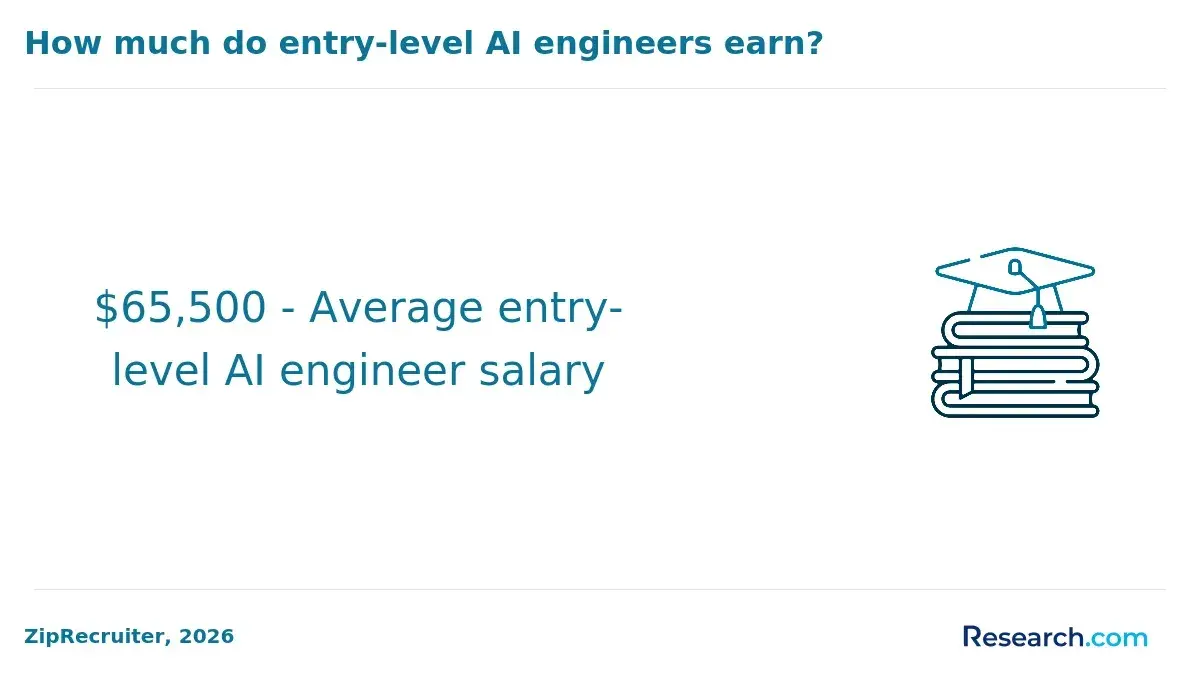
AI professionals with associate degrees from community colleges earn median annual salaries between $62,000 and $75,000. This reflects Bureau of Labor Statistics data showing earnings for AI technicians with such degrees are about 31% higher than those of high school graduates in similar technical roles. This salary advantage highlights the value of pursuing a focused two-year AI program rather than entering the workforce immediately after high school.
The employment outlook for AI technicians holding community college degrees is strong. As AI applications expand across industries like manufacturing, healthcare, and information technology, the demand for technicians skilled in AI system maintenance, data management, and automation is expected to grow faster than average. Job opportunities are available in both urban and regional markets, providing multiple entry points for graduates.
Typical roles for those with two-year AI degrees include AI support specialists, machine learning technicians, and data analysis assistants. Employers prioritize practical skills such as programming, algorithm implementation, and hardware interfacing emphasized in associate programs. Combining an associate degree with certifications in cloud computing or data science can further increase earning potential and job competitiveness.
These community college AI programs offer a strategic path for students seeking cost-effective education with strong salary prospects and robust job growth.
What accreditation standards and certifications should you verify when choosing a community college AI program?
Accreditation is a key factor when selecting a community college AI program. The most critical accreditation for technical programs is from ABET (Accreditation Board for Engineering and Technology), specifically its Computing Accreditation Commission (CAC). ABET accreditation confirms rigorous standards in computing education and aligns with employer expectations. Notably, only 42% of community college ai programs hold specialized ABET or computing accreditation, reflecting significant variability in program quality and industry recognition (Accreditation Board for Engineering and Technology 2024).
Regional accreditation from agencies recognized by the U.S. Department of Education, such as the Higher Learning Commission or the Accrediting Commission for Community and Junior Colleges, ensures overall academic quality but does not guarantee AI-specific curriculum standards. The strongest programs combine regional accreditation with ABET or similar computing accreditation to assure both institutional and programmatic excellence.
Alignment with industry certifications and curriculum frameworks is also important. Programs incorporating certifications like CompTIA's AI+ or Microsoft Certified: Azure AI Fundamentals offer practical benefits. Adherence to frameworks from organizations such as the Computing Technology Industry Association (CompTIA) and the Association for Computing Machinery (ACM) helps bridge education with job market needs.
Prospective students should request information on graduate job placement rates and employer partnerships. Accreditation alone does not guarantee career success; transparent employment data in AI roles demonstrates program relevance. Prioritizing programs with ABET (CAC) and regional accreditation, alongside industry-aligned curricula, enhances degree value and employer trust.
How do online community college AI programs compare to in-person options in terms of quality and outcomes?
Online community college programs in artificial intelligence often have lower completion and outcome rates compared to in-person options. Research from the Babson Survey Research Group highlights that STEM students studying online graduate at 12% lower rates. A key reason is limited access to hands-on labs and technical support, which 68% of students identify as a major drawback. In-person AI programs enable direct interaction with hardware, face-to-face teamwork, and immediate help, all crucial for mastering AI skills.
Although online programs offer flexibility for working adults or those in remote locations, they struggle to provide the practical experiences needed to develop core AI competencies. Some community colleges address this by integrating virtual labs or using hybrid models that include remote access to cloud-based AI tools and occasional campus visits for hands-on work.
Employers seeking AI talent prioritize hands-on experience with coding frameworks and data handling. In-person programs naturally support this through guided practice and peer collaboration, but motivated online learners can close the gap by supplementing studies with internships, projects, or bootcamps.
Prospective students should consider their learning style, technical support, and access to experiential opportunities when choosing between online or in-person AI community college programs to better align with their career goals.
What transfer pathways and bachelor's degree options exist after completing a community college AI associate degree?
Transfer pathways from community college AI associate degrees to bachelor's programs are well-established, with about 63% of community colleges having formal articulation agreements with four-year universities. These agreements ensure credit transfers, helping students avoid repeating courses and saving time and money (American Association of Community Colleges 2024).
Common bachelor's degree options include computer science, data science, AI and machine learning, software engineering, and robotics. Some institutions offer specialized AI bachelor's degrees that align directly with community college curricula. For example, California Community Colleges frequently partner with the California State University system, providing a smooth transfer into AI-focused programs.
Students are advised to confirm that their AI coursework matches the requirements of the receiving university to prevent delays in graduation. Certain agreements also include guaranteed admission based on GPA or completion of specific AI courses.
Online and hybrid learning options offer flexibility but may influence transfer eligibility depending on university policies. Early consultation of articulation agreements and academic advising tailored to AI programs is crucial.
Many students pursue related fields such as cybersecurity, information systems, or cognitive science, leveraging the analytical and technical skills developed in AI associate degrees. Planning transfer pathways strategically can optimize educational investment and advance careers in this dynamic field.
Other Things You Should Know About Artificial Intelligence
Graduates of affordable community college AI degree programs in 2027 can look forward to entry-level positions such as AI technician, machine learning assistant, or data analyst. These roles often involve supporting AI projects, data processing, or assisting in developing AI solutions, providing a strong foundation for career advancement.
Many community colleges offer opportunities for students to engage in AI research, either through partnerships with four-year institutions, faculty-led projects, or internship programs. While the scope may be more limited than at research universities, these experiences can provide valuable hands-on learning and enhance practical skills.
Community college AI programs typically focus on languages widely used in the industry, such as Python, Java, and R. Python is especially prevalent due to its extensive AI libraries and ease of learning, making it a core skill for students pursuing artificial intelligence careers.
Yes, certificates in artificial intelligence can complement degree programs by providing specialized knowledge in niche areas, such as machine learning or data analytics. They are often shorter and can enhance a student's resume or help working professionals update skills without committing to a full degree program.
References
- Questions? Contact Us. https://www.alamancecc.edu/curriculum_programs/business-arts-and-science/ai.php
- Artificial Intelligence https://bristolcc.edu/learnatbristol/degreescertificatesandclasses/computerscience/artificialintelligence.html
- Transfer Pathways Steer Students and Institutions to Undergraduate Success https://agb.org/trusteeship-article/transfer-pathways-steer-students-and-institutions-to-undergraduate-success/
- How to choose a bachelor's in artificial intelligence | edX https://www.edx.org/resources/how-to-choose-a-bachelors-in-artificial-intelligence
- Online Data Science & Artificial Intelligence Course from Tulsa Community College https://careertraining.tulsacc.edu/training-programs/data-science-and-artificial-intelligence-course/
- Share On Social https://www.northampton.edu/news/online-vs-on-campus-degree-whats-the-best-option-for-me.html
- How to Go from an Associate’s Degree to a Bachelor’s Degree | George Fox University https://www.georgefox.edu/adult-degree/articles/associate-to-bachelor-degree.html
- Artificial Intelligence https://catalog.ccbcmd.edu/preview_program.php
- AI Certifications: Accredited Programs, Vendor Credentials, and Emerging Standards - Total Seminars https://totalsem.com/ai-certifications-accredited-programs-vendor-credentials-and-emerging-standards/
- Applied associate of science degrees: Pathways for workforce and transfer - Community College Daily https://www.ccdaily.com/2025/07/applied-associate-of-science-degrees-pathways-for-workforce-and-transfer/