2027 The Rise of Online AI Degrees

Co-Founder and Chief Data Scientist
Many professionals with undergraduate degrees in unrelated fields face barriers entering the fast-growing artificial intelligence sector due to rigid schedules and geographic limitations of traditional graduate programs. This challenge slows career pivots and delays access to emerging job opportunities. Online AI degrees offer a flexible alternative, allowing learners to study at their own pace while maintaining work and personal commitments. However, choosing the right accredited program and understanding its value can be daunting. This article examines the rise of online AI degrees, highlighting key factors to consider and how these programs can effectively support a successful transition into the artificial intelligence industry.
Key Things You Should Know
- By 2025, over 60% of U.S. universities will offer online AI degrees, reflecting a major shift toward accessible, flexible education for diverse student populations.
- Online AI programs are increasingly integrating hands-on projects and collaborations with industry, boosting graduate job placement rates to nearly 75% within six months.
- Tuition for online AI degrees averages 20-40% less than on-campus programs, attracting working professionals seeking career advancement without relocating.
What is an online artificial intelligence degree, and how does it work?
An online artificial intelligence degree program delivers comprehensive instruction on AI fundamentals, including machine learning, data science, neural networks, robotics, and ethical AI practices through virtual platforms. These programs blend video lectures, interactive assignments, and remote labs to recreate the traditional classroom experience digitally. Such online artificial intelligence degree programs explained show that they often accommodate self-paced study alongside scheduled live sessions to facilitate interaction with faculty and peers.
Students can enroll via accredited universities or specialized institutes offering fully online or hybrid formats. Assessments typically involve quizzes, coding projects, and capstone research to build practical skills. The rise in online AI degrees reflects growing industry demand; U.S. bachelor's programs increased by 114%, according to the 2025 AI Degree Report by MastersinAI.org.
These degrees fit varied learners, including undergraduates who prefer not to relocate, working professionals aiming to upskill, and graduates seeking AI specialization in sectors like healthcare or finance. Crucial factors for prospective students include program accreditation, curriculum depth, access to cloud computing resources, and opportunities for internships or industry collaborations. Platforms offering discussion boards and mentorship are also valuable for skill development.
Overall, an online artificial intelligence degree works by integrating theoretical knowledge with hands-on training fully through digital means, providing flexible pathways into a rapidly growing field. For insights on career prospects, see artificial intelligence degree jobs.
Are online artificial intelligence degrees respected and accredited like campus programs?
Online artificial intelligence degrees are increasingly respected by employers when offered by accredited institutions meeting rigorous academic standards. Accreditation agencies like ABET and regional bodies now approve numerous reputable universities that provide fully online AI degrees. Many of these programs ensure parity with their on-campus counterparts in curriculum, faculty expertise, and academic outcomes. For instance, universities such as Georgia Tech and the University of Illinois Urbana-Champaign hold identical accreditation for both delivery formats, reinforcing the credibility of online credentials.
Accredited online artificial intelligence degree programs in the US often include practical elements like virtual labs, projects, and capstone experiences essential for career readiness. Some also offer industry partnerships and virtual internships, which help students acquire applicable skills in real-world contexts. These features enhance the market value and employer recognition of online qualifications.
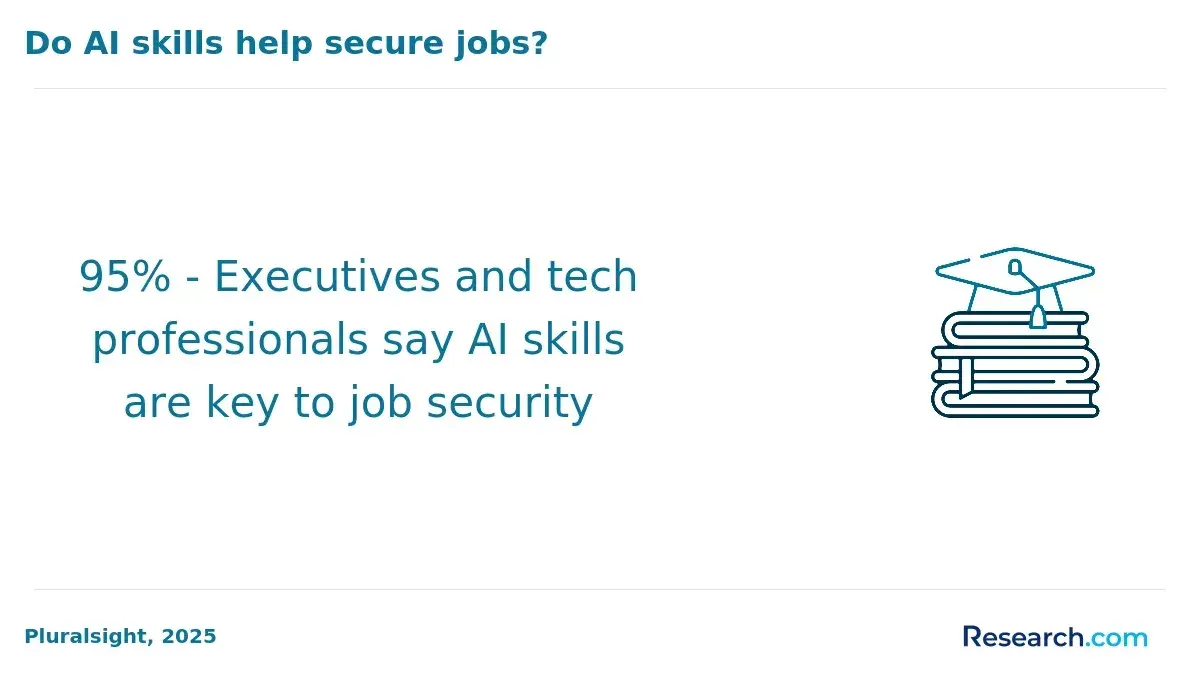
Students should verify program accreditation through listings by the U.S. Department of Education or CHEA and seek degrees aligned with the evolving AI industry standards. The growing use of AI tools in education, such as the 95% of UK undergraduates using AI technologies, supports wider acceptance of digital learning formats, according to HEPI data cited by TheAIDaily.
For those exploring affordable options, a comprehensive list of degrees in AI online offers valuable insight into cost-effective, accredited programs available today.
How do online AI degree programs compare to on-campus options for flexibility and quality?
Online AI degree programs offer unmatched flexibility compared to on-campus options, which benefits working professionals and students balancing multiple commitments. Many online curricula support asynchronous learning, allowing students to study on their own schedules. This flexibility alleviates geographic and timing barriers, a significant advantage for those far from major research universities. When considering online AI degree flexibility comparison, it is clear that remote programs cater well to diverse lifestyles.
Regarding quality differences between online and on-campus AI programs, many accredited online degrees maintain academic rigor parallel to traditional options. Top universities design their online courses with matching syllabi, evaluations, and faculty engagement to ensure consistency. Yet, replicating hands-on experiences such as labs and live collaboration proves more challenging in fully virtual settings. Prospective students should look for programs with interactive elements like virtual labs, AI project simulations, and mentorship, or hybrid formats combining online coursework with occasional campus visits.
The demand for AI education remains strong, with a 5% annual increase in related degree conferrals in U.S. colleges since 2010, according to Georgetown's Center for Security and Emerging Technology. This trend highlights growing investment in both online and campus AI education models. To help find suitable pathways, individuals may explore resources on programs like the online master in data science, which often overlap with AI skill sets. Students should weigh their preferences for direct faculty interaction, networking, and practical experiences to align their choices with career goals.
What AI degree levels and specializations can you earn fully online?
Students pursuing online artificial intelligence degree programs can choose from associate to doctoral levels, all fully online. Undergraduate degrees build foundational knowledge in computer science, data science, and machine learning, essential for entry-level AI roles or further study. Master's programs let students specialize in advanced topics like natural language processing, robotics, computer vision, or AI ethics. Although less common, doctoral programs focus on research-intensive applied AI or algorithm development.
Fully online ai specialization options cater to diverse careers. Data science tracks emphasize statistical modeling and big data, while robotics programs focus on AI-driven automation. Cybersecurity combined with AI is critical because of increasing digital threats, and interdisciplinary options bridge AI with health informatics, business analytics, or cognitive computing.
Cost and flexibility are key benefits of major online AI degree programs. According to Intelligent.com's 2025 guide, median annual tuition is $10,037 at public universities versus $55,651 at private universities, highlighting savings at public institutions. Online formats also support working professionals with asynchronous and modular courses.
Evaluating accreditation, faculty expertise, curriculum depth, and hands-on opportunities like virtual labs or internships is essential. This helps ensure the program matches career objectives in AI development, research, or implementation. Veterans interested in cybersecurity should consider a veteran friendly online cybersecurity degree that integrates AI skills for enhanced job prospects.
What courses and skills are typically taught in an online AI curriculum?
Online artificial intelligence degree programs offer comprehensive training in machine learning, data science, and statistics, which are fundamental for analyzing large datasets used in AI applications. Programming languages such as Python, R, and Java are integral throughout these courses, equipping students with essential coding proficiency.
Advanced topics include neural networks and deep learning, enabling students to create models that simulate brain functions, useful in image and speech recognition. Natural language processing (NLP) also plays a crucial role by teaching machines to understand and generate human language.
Additional coursework often covers computer vision, robotics, reinforcement learning, and cloud computing. Hands-on experience with AI frameworks like TensorFlow and PyTorch prepares students for real-world projects. Ethical issues and AI governance are emphasized, focusing on bias, transparency, and regulation.
According to UCAS data reported by BCS, artificial intelligence now represents 5% of full-time undergraduate computing applications in the UK, increasing demand for skilled professionals. Many programs emphasize balancing theoretical knowledge with practical skills, often through capstone projects or internships. Working professionals may find courses that include automated decision-making and AI business integration especially relevant.
What are the usual admission requirements for online artificial intelligence programs?
Admission requirements for online artificial intelligence programs typically include a bachelor's degree from an accredited university, ideally in computer science, engineering, mathematics, or related STEM fields. Applicants must often submit official transcripts showing strong coursework in programming, calculus, linear algebra, and statistics. A minimum GPA of 3.0 on a 4.0 scale is commonly required to demonstrate academic readiness.
Many programs have moved toward test-optional policies, reducing the emphasis on GRE scores, though some still request them. Professional experience in software development, data science, or machine learning can enhance one's application and sometimes offset less competitive academic records.
Standard application materials include letters of recommendation from professors or employers verifying quantitative skills and research ability, plus a statement of purpose outlining motivations and career goals in alignment with industry needs. Technical prerequisites often involve proficiency in programming languages such as Python or Java and familiarity with AI frameworks, with some programs offering bridge courses for applicants requiring skill development.
Career outcomes for graduates are promising. The median advertised salary for AI and machine learning roles in the U.S. exceeds $120,000, surpassing many other technology jobs, according to aggregated labor data cited by National University's 2026 AI statistics and trends.
How long do online AI degrees take, and what do they cost?
Online AI degrees usually take between 1 and 3 years, depending on the program type and study format. Master's degrees, the most common for AI specialization, typically last 18 to 24 months full-time, while part-time study can extend to 3 years or longer to accommodate working professionals. Certificate programs or graduate diplomas offer a faster alternative, often completed in 6 to 12 months, focusing on specific skill sets without the commitment of a full degree.
Tuition costs vary widely by institution, program length, and delivery mode. Public universities generally charge between $15,000 and $40,000 for total tuition, while private schools may demand $40,000 to over $70,000 for an online master's in AI. Certificates usually range from $2,000 to $10,000. Available financial aid and employer tuition reimbursement programs can reduce overall expenses.
The number of AI master's programs in the U.S. surged by 167% from 2022 to 2025, with 194 new programs added, reflecting strong industry demand. Many curricula offer specialized tracks like AI ethics, machine learning, or data science, plus accelerated or modular formats for flexibility.
Prospective students should assess factors such as program depth, faculty expertise, and flexibility to align their studies with evolving career goals in this dynamic sector.
What AI careers can you pursue with an online degree, and what do they pay?
Graduates with an online artificial intelligence degree have diverse career options across industries like technology, healthcare, finance, and automotive. Common positions include data scientist, machine learning engineer, AI research scientist, and AI product manager. Entry-level data scientists earn between $85,000 and $110,000 annually, while machine learning engineers typically make $100,000 to $130,000. Senior AI research scientists can expect $140,000 to $180,000, depending on experience and specialization.
Specializing in natural language processing (NLP) or computer vision enhances both employability and salary. NLP experts often work on chatbots or automated transcription services, earning $95,000 to $125,000. Computer vision specialists contribute to autonomous vehicles and medical imaging, with salaries ranging from $110,000 to $150,000.
Leadership roles such as AI product managers combine technical skills with project oversight and offer $120,000 to $160,000. Freelance AI consultants and remote engineers benefit from flexible online degrees, with hourly rates often exceeding $100.
Career advancement depends on continuous learning and certifications. Online artificial intelligence degrees build strong foundations in programming, algorithm design, and AI ethics, enabling rapid employment.
Diversity is improving in AI education; for example, UK applications by women rose 15% in 2025, narrowing the gender gap. This trend suggests expanding inclusivity, which may affect future U.S. hiring and salary trends, as reported by UCAS and BCS data.
What is the job outlook for artificial intelligence roles in the U.S. labor market?
The job outlook for artificial intelligence roles in the U.S. labor market continues to expand steadily. Degree output in AI-related fields has grown approximately 5% annually since 2010, reflecting sustained employer demand and evolving qualification standards that include both online programs and traditional campuses.
Employers across healthcare, finance, manufacturing, and technology increasingly demand professionals skilled in AI specialties such as machine learning, natural language processing, and data analytics. Job openings for AI specialists, data scientists, machine learning engineers, and AI research scientists are projected to grow faster than average for most occupations.
Practical advice for job seekers includes:
- Online AI degrees are gaining credibility and acceptance on par with campus-based programs.
- Employers emphasize demonstrated applied skills alongside foundational AI knowledge.
- Specialization and continuous learning in emerging AI subfields improve competitiveness.
Graduates should look beyond development roles to areas like AI ethics, policy advisory, and system integration, where multidisciplinary expertise offers an advantage. Combining AI training with business or domain-specific knowledge often enhances employability.
How can you choose a reputable online AI program and avoid diploma mills?
Choosing a reputable online AI program means verifying proper accreditation, curriculum quality, and institutional reputation. Look for accreditation from recognized bodies like regional accreditors or ABET for technical programs. Lack of accreditation often indicates diploma mills, which offer degrees with little academic value. Ensure the curriculum covers essential AI topics such as machine learning, neural networks, natural language processing, and ethics.
With over 300 U.S. institutions offering AI degrees, including bachelor's and master's options, selecting the right program requires careful research. Focus on programs providing hands-on experience with modern AI tools and datasets. Practical coursework and capstone projects suggest a strong emphasis on employability.
Investigate faculty credentials; programs led by PhD-qualified or industry-experienced instructors typically deliver higher quality education. Also, check for student support services like career counseling, mentorship, and networking opportunities to boost professional outcomes.
Regional factors matter: the Southern U.S. alone hosts more than one-third of all AI programs, creating a competitive academic hub with valuable industry ties. Confirm the program's recognition by employers through alumni job placements and partnerships.
Avoid programs with unusually low tuition or promises of easy degrees, as these are common signs of diploma mills.
Other Things You Should Know About Artificial Intelligence
In 2027, obtaining an online AI degree can significantly boost your career prospects. Graduates can expect to access diverse roles, such as AI engineer, data scientist, and machine learning specialist. The flexibility of online study also allows for a broader reach in global job markets, often with competitive salaries and opportunities for advancement in tech-driven industries.
Yes, many online AI degree programs provide pathways to research, particularly at the graduate level. Students can participate in virtual labs, collaborate on projects with faculty, and contribute to published work. These opportunities often depend on the program's resources and connections with research institutions.
Mathematics is fundamental to artificial intelligence, especially areas like linear algebra, calculus, probability, and statistics. These subjects underpin machine learning algorithms and data modeling. Students with strong math skills have an advantage in understanding and developing AI systems.
Internships provide practical experience and industry exposure that complement online AI education. They help students apply theoretical knowledge to real-world problems and improve employability. Many online programs encourage or facilitate internships through partnerships with companies in the tech sector.
References
- Online Bachelor’s Degree: Artificial Intelligence https://www.umgc.edu/online-degrees/bachelors/artificial-intelligence-ai
- What Do You Learn In an Artificial Intelligence Course? | CompSci https://www.computerscience.org/resources/artificial-intelligence/
- AI Jobs on the Rise: Q1 2025 Labor Market Analysis - Veritone https://www.veritone.com/blog/ai-jobs-growth-q1-2025-labor-market-analysis/
- Online Degrees: A Flexible and Affordable Way to Learn - Arab international Academy https://aiacademy.info/en/online-degrees-a-flexible-and-affordable-way-to-learn/
- Online vs Campus Artificial Intelligence Degree Programs: Complete Comparison https://hakia.com/compare/artificial-intelligence-online-vs-campus/
- Here’s How an AI Degree Stacks Up Against Other Options https://www.aidegree.org/blog/comparison-table
- Ultimate Guide: How to Choose the Right AI Training Course to Boost Your Career - ONLC https://www.onlc.com/blog/how-to-choose-ai-training-courses/
- AI careers: top jobs, salaries, and skills for 2025 | edX https://www.edx.org/become/ai-careers
- Blog https://admissiongoals.com/post/ai-machine-learning-programs-europe-admission-guide-international-students
- Online MSc Computer Science with Artificial Intelligence | Walbrook https://www.walbrook.ac.uk/degrees/postgraduate/msc-computer-science-with-artificial-intelligence/