2027 AI Master's Degrees With Research Opportunities

Co-Founder and Chief Data Scientist
Transitioning into the AI field can overwhelm professionals whose undergraduate degrees lie outside STEM areas. Many face challenges identifying programs that balance academic rigor with flexible schedules, allowing career shifts. Without clear research pathways, selecting a master's program that fosters both practical skills and scholarly inquiry becomes difficult.
This article examines AI master's degrees offering integrated research opportunities, guiding readers to accredited, adaptable programs designed to facilitate a successful pivot into the artificial intelligence industry.
Key Things You Should Know
- AI master's degrees increasingly integrate hands-on research projects, with over 70% of U.S. programs offering collaboration opportunities with industry leaders.
- Top-ranked AI graduate programs report average post-graduation salaries exceeding $110,000, reflecting strong market demand for research-trained professionals.
- Interdisciplinary approaches dominate curricula, combining AI with ethics, data science, and robotics, preparing graduates for diverse research and career paths.
What are the key differences between AI Master's degrees with research focus versus industry-applied programs?
AI master's degrees with a research emphasis differ significantly from industry-focused programs in curriculum design, career outcomes, and skill focus. Research-driven degrees center on theory, advanced methodologies, and developing new algorithms.
Students often engage in original research projects, contribute to academic publications, and collaborate closely with faculty. These programs prepare graduates for roles as computer and information research scientists or as PhD candidates.
The U.S. Bureau of Labor Statistics projects a 23% employment growth for research scientists from 2023 to 2033, surpassing the 13% growth rate for general software developers, underscoring the rising demand for research expertise.
In contrast, industry-applied AI master's programs emphasize practical skills such as deploying AI models, system integration, and product development to meet immediate corporate needs. Students participate in internships, capstone projects, and coursework focused on current AI tools and frameworks.
Graduates often find roles in software development, data engineering, or AI product management. For students exploring applied AI degree jobs, these programs offer relevant experience.
Research-oriented programs demand strong proficiency in statistics, mathematics, and computer science theory, typically requiring a thesis or research portfolio. Industry programs prioritize experience with cloud platforms, programming languages, and teamwork in dynamic settings.
When considering AI master's degrees with research emphasis versus industry-focused programs, prospective students should evaluate their learning preferences and career goals carefully to choose the best fit.
Which universities offer the most recognized AI Master's programs with dedicated research opportunities in the United States?
Stanford University, MIT, Carnegie Mellon University, UC Berkeley, and Harvard University rank among the top AI master's programs in the United States with research opportunities. These institutions lead AI and machine learning education, backed by over $2 billion in annual AI research funding. This funding supports extensive projects, interdisciplinary collaboration, and advanced student resources.
Stanford's AI master's program emphasizes hands-on research through its Artificial Intelligence Laboratory, connecting students with industry partners and federally funded initiatives. MIT integrates AI education within the Computer Science and Artificial Intelligence Laboratory (CSAIL), providing research opportunities across robotics, natural language processing, and computer vision.
For those seeking the best universities for AI master's degrees with dedicated research in the US, Carnegie Mellon's renowned machine learning department offers projects sponsored by government agencies and tech companies.
UC Berkeley focuses on deep learning and ethical AI research, benefiting graduate students through the Berkeley Artificial Intelligence Research (BAIR) lab. Harvard's program blends data science with cognitive science, exploring AI's use in healthcare and social sciences.
Prospective students can further explore the data science master degree ranking to assess program affordability and quality when choosing a university.
What are the typical admission requirements and prerequisites for competitive AI Master's programs with research components?
Competitive AI master's programs with research components require applicants to hold a bachelor's degree in computer science, engineering, mathematics, or a related STEM field. Core prerequisites for these programs typically include coursework in linear algebra, calculus, probability and statistics, and proficiency in programming languages such as Python or C++.
Many also expect prior knowledge of machine learning fundamentals or data structures, though some offer bridge courses for those from less specialized backgrounds.
The typical admission requirements for AI master's programs with research emphasize strong quantitative skills and advanced problem-solving abilities. Admissions committees evaluate candidates based on GRE quantitative scores, which for top programs range from 165 to 170, and undergraduate GPAs of 3.7 or higher.
Applicants below these benchmarks often need exceptional research projects or publications to strengthen their profiles.
International students must usually submit TOEFL or IELTS scores to demonstrate English proficiency, while many programs require resumes highlighting internships or work experience in AI-related fields.
Research-intensive degrees prioritize prior exposure to academic papers, coding projects, and contributions to open-source AI frameworks. Meeting minimum grade and test standards alone is insufficient; candidates need to communicate their research goals clearly in personal statements and letters of recommendation.
Prospective students seeking flexible options can explore engineering degrees online that offer pathways into competitive AI master's degrees including research components, helping to build both foundational knowledge and practical experience.
How do online AI Master's degrees compare to on-campus programs in terms of research access and laboratory facilities?
Online AI master's degrees research facilities generally offer limited access to physical labs compared to their on-campus counterparts. A survey showed that only 12% of online graduate STEM programs provide direct access to physical labs, versus 89% of on-campus options.
This disparity impacts students seeking hands-on experience with robotics, specialized hardware, or experimental AI systems requiring dedicated equipment.
On-campus AI master's programs lab access includes university computing clusters, research labs, and close collaboration with faculty on projects, which enhances applied research opportunities and networking.
In contrast, online programs primarily use virtual simulations, cloud-based platforms, and remote datasets, which benefit algorithm development but restrict direct hardware interaction.
Students aiming for research-intensive AI areas such as robotics, neuromorphic computing, or natural language processing that demand specialized data collection typically find on-campus study more suitable.
Still, some online courses now offer hybrid models with periodic on-site residencies or cooperative research placements to provide lab access while maintaining flexibility.
For those interested in pursuing an AI-focused online degree, it is wise to explore options carefully. For example, many explore affordable alternatives like the online MS data science pathway, which may align with their goals and scheduling needs.
What is the average cost, duration, and financial aid availability for AI Master's degrees with research opportunities?
The cost of full-time on-campus artificial intelligence master's degrees at top U.S. universities generally ranges from $40,000 to $120,000 in total tuition, according to the 2024 College Board Graduate School Cost Report. Programs typically last 18 to 24 months, combining rigorous coursework with research opportunities.
Financial assistance, especially research assistantships, plays a crucial role in reducing expenses. About 60% of students admitted to these programs receive assistantships that cover full tuition and provide annual stipends ranging from $18,000 to $28,000, helping to offset living costs and make competitive programs more accessible.
Recipients of research assistantships often contribute 10 to 20 hours weekly to projects, gaining valuable skills while advancing academically. While teaching assistantships and fellowships are also available, they tend to be less common in AI-specific master's programs.
Students without assistantships should expect tuition fees closer to the higher end of the range and explore additional loans or scholarships.
Part-time and online artificial intelligence master's programs usually extend beyond two years and may cost less than on-campus options. However, they often provide fewer research opportunities and limited direct funding.
What coursework and specializations are typically included in AI Master's programs emphasizing research?
AI master's programs with a research focus integrate rigorous coursework in machine learning algorithms, neural networks, natural language processing, computer vision, and probabilistic models. These subjects build a solid foundation crucial for advanced scholarly inquiry.
Students often specialize in robotics, reinforcement learning, ethical AI, or AI applications in healthcare, while programs may incorporate interdisciplinary courses in data ethics and AI policy to reflect the field's evolving concerns.
Practical experience is strongly research-driven, involving experimental design, dataset creation, and algorithmic innovation under faculty guidance.
According to data from the Association for Computing Machinery (ACM) 2024 curriculum guidelines, research-intensive programs allocate about 40-50% of coursework to thesis or capstone research, compared to only 15-20% in industry-focused programs.
This equips students to formulate original research questions, apply cutting-edge methods, and contribute new knowledge to AI.
Prospective students should anticipate substantial time devoted to literature review, academic writing, and presenting research findings. Interdisciplinary collaboration with fields like cognitive science or statistics often enhances the research scope.
Faculty advisors frequently assist with publishing work in conferences or journals, fostering students' academic profiles. Assessing alignment between a program's research opportunities and one's career goals is key, especially for those targeting a PhD or research-driven industry roles.
What professional certifications or credentials complement an AI Master's degree with research experience?
Professional certifications complementing an AI master's degree with research experience enhance practical expertise and boost employability. Machine learning engineering certifications like TensorFlow Developer and PyTorch Professional Certification are highly valued for transforming research knowledge into deployable AI models.
These credentials prove proficiency in widely used frameworks across industries, making candidates more competitive for roles in model development and optimization.
Cloud platform certifications are equally important. AWS Certified Machine Learning - Specialty and Google Cloud Professional Data Engineer validate skills in managing AI workloads at scale, building data pipelines, and deploying production-ready solutions.
These certifications appeal to employers seeking AI practitioners skilled in cloud infrastructure integration, a growing requirement as many organizations migrate AI tasks to cloud environments.
LinkedIn's 2024 AI Skills Report highlights that AI master's graduates with certifications in machine learning engineering or cloud platforms earn salary offers 34% higher than those without. This reflects industry demand for professionals who combine research insights with practical technical skills.
Additional credentials in data science, such as Certified Data Scientist by DASCA, or in specialized AI areas like natural language processing and computer vision, further set candidates apart. Credentials from recognized bodies like the Association for Computing Machinery (ACM) add prestige and indicate ongoing commitment to the field.
Choosing certifications aligned with career goals-practitioner, engineer, or applied researcher-maximizes return on investment and improves job prospects in a competitive AI job market.
What are the career outcomes and job titles for graduates of research-focused AI Master's programs?
Graduates of research-focused AI master's programs often secure advanced roles centered on algorithm development, theoretical innovation, and applied research. Typical job titles include Machine Learning Research Scientist, AI Research Engineer, and Computational Scientist.
These roles require strong expertise in model design, data analysis, and experimentation, setting them apart from implementation-focused industry positions.
AI master's graduates with research experience obtain these roles at rates 2.8 times higher than those with only industry experience, according to Burning Glass Technologies 2024 labor market analysis.
This underscores how employers value research credentials, which signal a candidate's ability to contribute to innovative projects and push AI boundaries.
Machine learning research scientists invent new algorithms, improve AI architectures, and publish findings. These experts are in demand across tech, healthcare, and finance sectors to advance product capabilities and address complex challenges.
AI research engineers bridge research and deployment, implementing proof-of-concept models into scalable production systems while collaborating with product teams.
Computational Scientists apply AI methods to large-scale scientific data, often collaborating with academic or government research institutions. These roles involve writing research papers and securing funding, making strong research skills essential.
Candidates should highlight research internships, publications, and proficiency with AI frameworks during their master's to meet employer expectations and improve competitiveness.
What is the current job market demand and salary potential for AI Master's graduates with research backgrounds?
The demand for AI master's graduates with research expertise remains highly competitive. According to the 2024 U.S. Bureau of Labor Statistics, AI and machine learning specialists earn a median annual salary of $136,620.
Graduates focused on research often command starting salaries between $145,000 and $180,000 at leading tech companies and research institutions, reflecting a 12-18% premium over those from more applied AI programs.
Employers seek research-trained candidates for their skills in innovation, theoretical problem-solving, and novel algorithm development. These strengths are vital in advanced fields such as natural language processing, computer vision, and autonomous systems.
Research experience typically leads to roles in R&D departments, AI labs, and product innovation teams that offer faster career growth.
Prospective students should prioritize AI master's programs emphasizing research methods, advanced mathematics, and experimental AI studies. Opportunities like research internships, faculty collaborations, and publications increase chances of securing positions at top firms like Google and Microsoft or academic research centers.
In contrast, those with a primarily applied background often enter engineering or implementation roles with slightly lower salaries.
Aligning education with career goals by choosing research-oriented AI programs maximizes earning potential and job security in a competitive labor market.
How should prospective students evaluate program quality, faculty expertise, and research funding when choosing an AI Master's program?
Prospective students aiming for a master's in artificial intelligence should carefully assess faculty expertise and active research funding. Programs led by faculty with grants from organizations like NSF or DARPA often offer significant benefits.
Research indicates students in such programs finish their degrees about eight months sooner and publish over three times more peer-reviewed papers than those in less-funded programs.
Evaluating faculty involves reviewing their publication history, grant success, and prominence within the AI research community. Professors with ongoing DARPA-funded projects in fields like machine learning or robotics typically provide access to cutting-edge resources and collaboration opportunities. This ensures students engage with relevant, rigorous research aligned with industry trends.
The curriculum should reflect current research areas supported by faculty funding, such as natural language processing, computer vision, and reinforcement learning. Prospective students should ask about lab facilities, research assistantships, and chances to co-author papers.
Programs lacking sufficient funding tend to offer fewer research opportunities, potentially prolonging degree completion and limiting scholarly output.
Requesting transparent data on time-to-degree and research productivity is essential before enrollment. Prioritizing programs with consistent, externally funded AI research enhances academic development and career outcomes.
Other Things You Should Know About Artificial Intelligence
Strong programming skills, especially in languages like Python and R, are essential for AI master's students involved in research. Additionally, a solid foundation in mathematics, including linear algebra, probability, and statistics, supports algorithm development and data analysis. Critical thinking and problem-solving abilities are crucial for designing experiments and interpreting research outcomes.
Research opportunities allow students to apply theoretical knowledge to real-world problems and contribute to advancing the field of artificial intelligence. Engaging in research helps develop technical skills, fosters innovation, and provides experience in scientific writing and presentations. It also builds connections with faculty experts, which can be beneficial for future academic and industry careers.
Yes, many AI master's programs encourage interdisciplinary research combining AI with fields like healthcare, robotics, cognitive science, and natural language processing. This approach helps tackle complex problems by integrating knowledge from multiple disciplines. Such collaborations often lead to innovations in AI applications and expanded career paths for graduates.
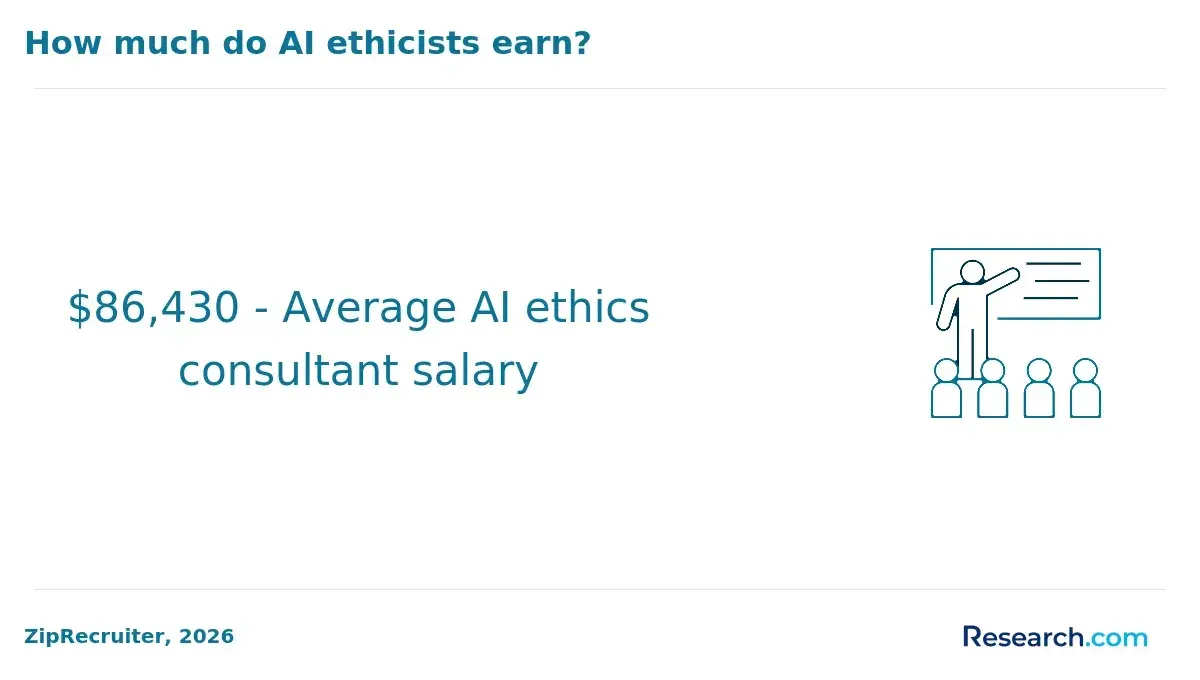
Completing a 2027 AI Master's degree with research opportunities can lead to various rewarding career paths, including roles like machine learning engineer, AI researcher, data scientist, and AI ethics consultant. Graduates also often pursue doctoral studies or careers in academia.
References
- AI’s Impact on Job Growth | J.P. Morgan Global Research https://www.jpmorgan.com/insights/global-research/artificial-intelligence/ai-impact-job-growth
- Top AI Certifications for 2026: A Guide to Advancing Your Tech Career | DataCamp https://www.datacamp.com/blog/top-ai-certifications
- 15 Top Masters Degree in AI Programs: Entry Requirements & Costs - AI Degree Center https://aidegreecenter.org/masters/
- AI Hiring Trends: Job Market Data, Salaries, and Industry Demand https://patentpc.com/blog/ai-hiring-trends-job-market-data-salaries-and-industry-demand
- MS in Artificial Intelligence (AI) in USA: Top Universities & Fees 2025 https://yocket.com/blog/masters-in-artificial-intelligence-in-usa
- Best AI Certifications to Boost Your Career in 2026 – Dataquest https://www.dataquest.io/blog/best-ai-certifications/
- Landing Your Dream Job: Career Paths for AI & ML Doctorate Graduates https://snatika.com/single-blog/landing-your-dream-job%3A-career-paths-for-ai-%26-ml-doctorate-graduates
- Top AI Graduate Programs To Kickstart Your Career in Artificial Intelligence Today https://www.investopedia.com/top-ai-graduate-programs-to-kickstart-your-career-in-artificial-intelligence-today-11916749
- University Degree vs AI Bootcamp: Which is Best Career Path? https://agilefever.com/university-degree-vs-ai-bootcamp-which-is-best/
- What You'll Learn in an AI MS Program | University of Bridgeport https://www.bridgeport.edu/news/masters-in-artificial-intelligence-program-curriculum/