2027 AI Degree Market Report: How Fast AI Programs Are Growing

Co-Founder and Chief Data Scientist
Many professionals with degrees outside STEM face challenges entering the AI field due to limited program availability and unclear growth trends. Choosing the right AI degree program requires understanding how quickly these programs are expanding and which offer flexibility for career pivots. Without accurate data, prospective students risk investing in programs that may not meet evolving industry demands. This article examines the current growth rates of AI degrees in the U. S., highlighting trends in program accessibility and accreditation. The analysis aims to guide graduate students and professionals seeking informed choices for entering the AI industry through adaptable and reputable educational pathways.
Key Things You Should Know
- U.S. enrollment in AI degree programs surged 45% between 2023 and 2025, reflecting strong industry demand for skilled professionals.
- Over 60% of new AI programs launched in 2024 emphasize ethics and interdisciplinary skills alongside technical training.
- Average graduate salaries for AI-related degrees rose to $110,000 in 2025, a 12% increase from 2023, driven by expanding job markets.
What is an AI degree and what does it cover?
An AI degree program curriculum provides students with the essential knowledge and skills to design, develop, and implement artificial intelligence systems. Key areas covered include machine learning, neural networks, natural language processing, computer vision, and robotics. Students also gain expertise in algorithms, data science, programming languages such as Python and R, and ethical considerations involved in AI applications.
What an AI degree covers varies based on the level of study and institution. Bachelor's degrees focus on core computer science, mathematics, and introductory AI techniques, combined with practical coding experience. Master's programs often explore more advanced topics like reinforcement learning, AI theory, and specialized research projects, sometimes offering concentrations in fields such as healthcare AI, autonomous systems, or business analytics.
Core courses frequently include:
- Introduction to artificial intelligence and machine learning
- Data structures and algorithms
- Probability and statistics for AI
- Deep learning and neural networks
- Ethics and policy in AI development
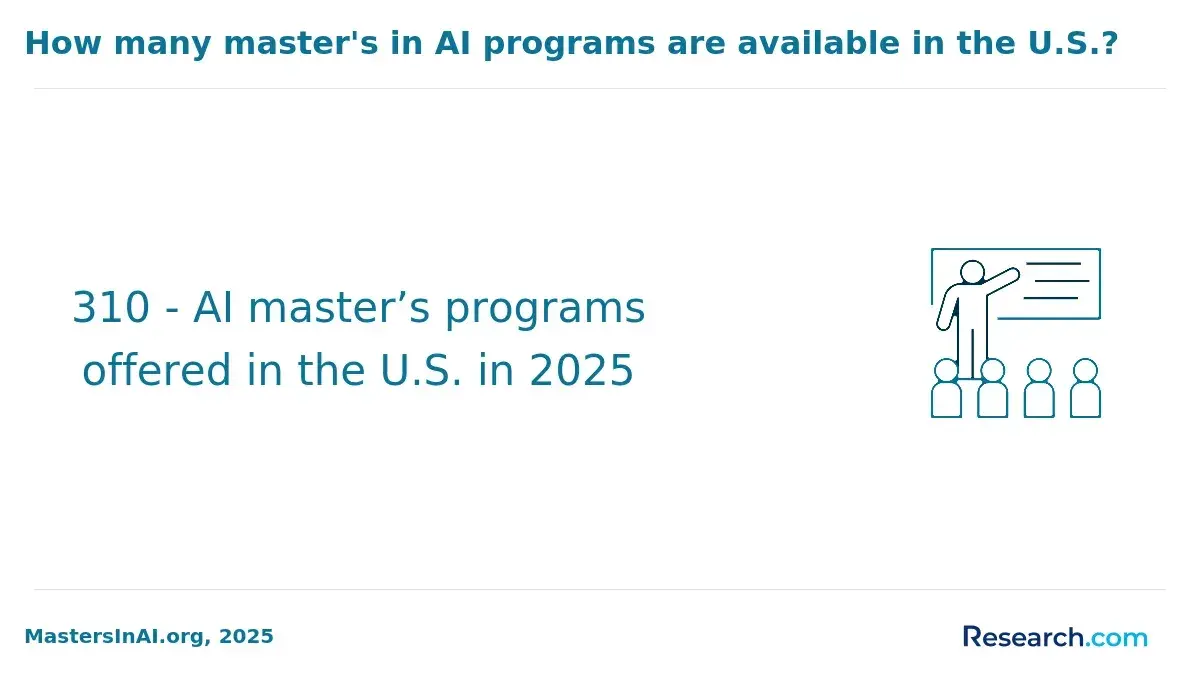
The growth of AI education in the U.S. has been rapid, with 304 universities and colleges offering AI or AI-related degrees. This includes 310 master's and 193 bachelor's programs, nearly doubling the 90 bachelor's programs available previously, according to the AI Education Consortium. To ensure alignment with career goals and industry requirements, prospective students must carefully assess program curricula, faculty expertise, and research opportunities.
For those considering graduate studies, rankings like the data science master US ranking can help evaluate affordability and program quality in related fields.
How fast are AI degree programs growing?
The growth rate of AI degree programs in the US has been remarkable, with completions of graduate certificates in AI increasing by an average of 245% annually from 2019 to 2023. This surge reflects rapid expansion of AI education programs worldwide, driven by the technology's broad applicability across sectors like healthcare, finance, automotive, and entertainment.
Students exploring AI credentials should understand key differences: graduate certificates typically require fewer credits and shorter completion times than full degrees, offering quicker access to practical skills. Meanwhile, comprehensive master's degrees provide deeper theoretical knowledge suitable for advanced technical roles or research pathways.
- Graduate certificates are ideal for professionals seeking skill upgrades without a lengthy commitment.
- Degree programs offer extensive training, which may open doors to specialized careers.
Institutions are responding by offering flexible formats such as online and hybrid models, improving access for part-time learners. Regional disparities exist, with schools near major tech hubs more likely to have specialized programs.
Prospective students should carefully evaluate program content, credential type, and delivery methods. For those interested in affordable options, exploring the highlighted AI degree programs can provide valuable insights into cost-effective pathways.
Which AI degree types are available in the U.S.?
U.S. colleges and universities offering artificial intelligence degrees provide a variety of options to meet diverse educational and career goals. Bachelor's programs focus on foundational knowledge and applied skills in areas like machine learning, robotics, and data analysis, ideal for undergraduates. Master's degrees often concentrate on advanced technical expertise and research with specializations such as natural language processing, computer vision, or AI ethics, attracting professionals seeking to upskill or shift into AI-related roles.
Doctoral programs emphasize original research in AI algorithms, theory, or interdisciplinary applications, preparing students for careers in research labs, academia, or high-level industry R&D. Alongside these, certificate programs and professional diplomas have become popular for working professionals who want targeted skill development in specific AI tools, programming languages, or applications in fields like healthcare or finance.
The rapid expansion of AI education is evident in enrollment growth averaging 45% annually from Fall 2018 to Fall 2023. This surge reflects strong industry demand and expanded program offerings at U.S. universities offering artificial intelligence degrees. Prospective students should weigh whether a broad degree, specialized master's, or shorter certification aligns best with their career stage and goals. Evaluating curriculum relevance and interdisciplinary options can improve job prospects in this evolving field.
Those exploring programs may also consider the best online cyber security degrees as complementary fields to AI expertise.
Are online AI degrees as credible as campus programs?
Online AI degrees are increasingly seen as credible alternatives to traditional campus programs, especially as the demand for AI skills in the workforce grows rapidly. U.S. employers posted nearly 628,000 job ads requiring at least one AI skill, with postings demanding AI competencies rising from 0.5% in 2010 to 1.7% recently. This increase has prompted many accredited universities to expand their online AI degree offerings, bridging accessibility gaps without sacrificing academic standards. Evaluating the value of attending in-person AI education versus online often depends on accreditation, curriculum relevance, and hands-on experience.
Programs from regionally accredited institutions featuring updated content, faculty actively engaged in AI research or industry work, and practical projects or internships tend to carry similar weight as on-campus degrees. Prospective students should assess:
- Whether the program includes capstone projects or practical experience
- If faculty maintain current AI industry collaborations or research
- The institution's support network for job placement and industry partnerships
While some employers still favor candidates with in-person experience for interdisciplinary or cutting-edge research roles, many tech companies prioritize proven skills and portfolios over degree format. Online degrees augmented by strong professional certificates and coding proficiency can effectively position graduates for AI careers. Those interested in related fields may also explore quality options like a cyber security course online.
What accreditation should an AI program have?
Accreditation plays a crucial role in selecting an AI program, ensuring educational quality, credibility, and industry recognition. Prospective students should focus on degrees accredited by reputable bodies such as ABET (Accreditation Board for Engineering and Technology), especially for engineering- and computer science-related AI studies. Regional accreditations like those from the Middle States Commission on Higher Education or the Higher Learning Commission also confirm that an institution meets high academic standards.
Many AI programs are housed within computer science, data science, or engineering departments. It's important that these departments hold appropriate accreditation to guarantee a solid curriculum and qualified faculty. ABET-accredited programs typically cover essential topics including AI fundamentals, machine learning, ethics, and practical applications, providing a well-rounded education.
With a significant labor shortage-estimated at 341,000 AI and machine learning workers, expected to rise to nearly 700,000-employers and graduate schools increasingly prefer candidates from accredited institutions. This accreditation signals that graduates have relevant and current skills aligned with industry needs.
International recognition and credit transferability are additional factors. Accreditation by recognized agencies facilitates broader acceptance of academic achievements.
When evaluating programs, consider these points:
- Verify both institutional and program-specific accreditation.
- Ensure curricula align with industry and academic standards.
- Confirm faculty qualifications and research opportunities.
- Look for alignment with professional AI certifications to enhance career prospects.
What courses are in an AI degree curriculum?
An AI degree program covers essential topics such as machine learning, deep learning, natural language processing, computer vision, and data science. Students typically start with foundational courses in programming languages like Python and key mathematics subjects including linear algebra, calculus, probability, and statistics. Early training in algorithms and data structures is crucial for building efficient AI models.
Advanced coursework includes:
- Supervised and unsupervised machine learning techniques
- Neural networks and deep learning architectures
- Natural language understanding and generation
- Computer vision and image processing
- Reinforcement learning and decision-making frameworks
- Big data analytics and cloud computing applications
- Ethical considerations and AI policy
Specialized electives may cover robotics, AI hardware, and deployment strategies, emphasizing the interdisciplinary nature of the field. Hands-on labs and projects introduce tools like TensorFlow, PyTorch, and cloud AI services, providing practical experience essential for professional roles.
Strong emphasis on statistics and experimental validation prepares graduates to develop robust AI applications. This skillset has driven substantial employment growth globally; for example, AI-related jobs increased by +176% in India and +151% in the UK from 2016 to 2024. According to the ROI and Salary Outcomes report, professionals in AI and machine learning have doubled across various industries, highlighting the high demand and strong return on investment.
The curriculum balances theoretical knowledge and practical skills, preparing students for careers in sectors such as healthcare, finance, autonomous systems, and digital marketing. Prospective students should ensure programs include hands-on projects and ethical considerations for a comprehensive AI education.
What are the admission requirements for AI programs?
Admission requirements for artificial intelligence programs vary by degree level but generally emphasize strong quantitative skills and relevant academic backgrounds. Bachelor's programs typically require a high school diploma with coursework in mathematics, computer science, and sometimes physics. Standardized tests like the SAT or ACT often focus on math proficiency.
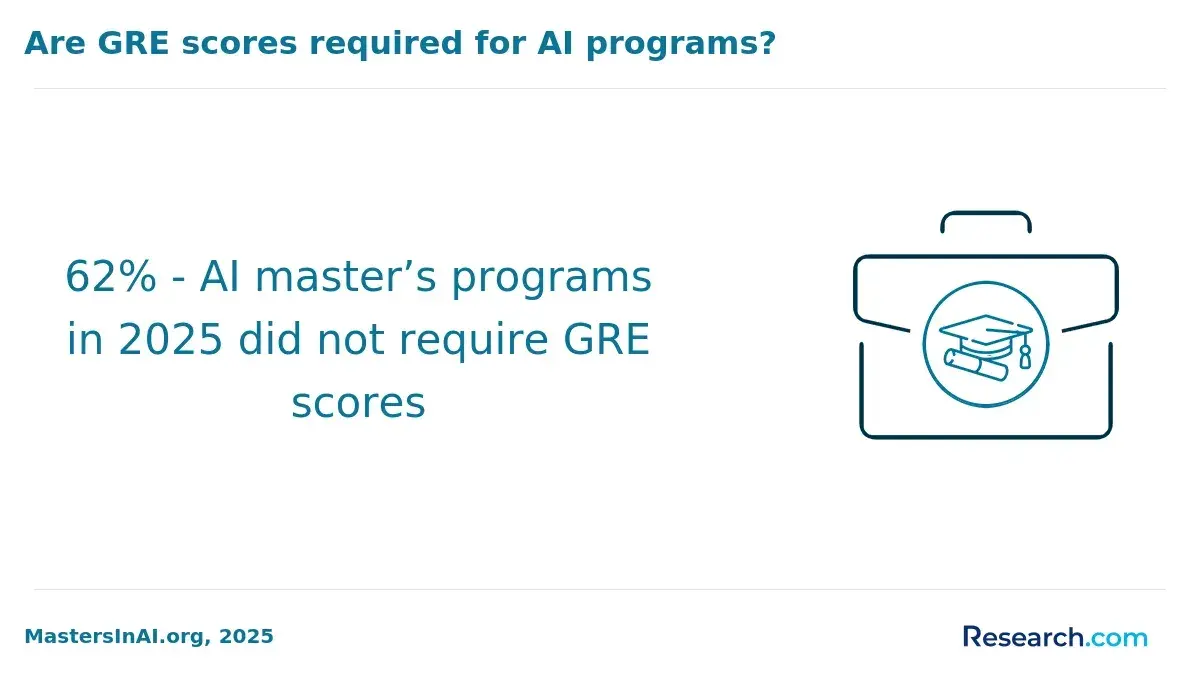
Graduate AI programs, such as master's or doctoral degrees, demand a bachelor's degree in computer science, engineering, mathematics, or related fields. Applicants submit transcripts showing coursework in programming, calculus, linear algebra, statistics, and data structures. GRE scores are commonly required, especially the quantitative sections. Research experience, publications, or projects in machine learning or data analytics can strengthen applications.
Working professionals applying to part-time or online AI programs should highlight technical experience in resumes and provide letters of recommendation verifying analytical skills and technology innovation. International students need to demonstrate English proficiency through TOEFL or IELTS scores if prior education wasn't in English.
Admission standards reflect a rapidly growing AI education market, valued at USD 8.3 billion in 2025 and projected to reach USD 57.2 billion by 2033, with a 25.9% CAGR from 2026 to 2033. Applicants should carefully review specific program prerequisites to meet these competitive criteria.
How long does an AI degree take and what does it cost?
An AI degree generally spans two to four years depending on the program's level and format. A bachelor's degree in AI or a related STEM field typically requires four years of full-time study. Master's degrees, including specialized tracks like AI engineering or data science, usually take one to two years. Flexible options such as part-time and accelerated programs are available to accommodate working professionals. Doctoral programs demand an additional three to six years of focused research beyond the master's degree.
Tuition costs vary significantly by institution and course format. Public universities typically charge $10,000 to $15,000 annually for in-state students, whereas private institutions may exceed $30,000 per year. Online master's degrees generally range from $15,000 to $40,000 in total tuition. Additional expenses may include books, software licenses, and computing resources, adding several hundred to a few thousand dollars yearly.
Financial aid, scholarships, employer sponsorships, and federal loans can considerably reduce overall costs. Prospective students should verify program accreditation and industry relevance to ensure the investment supports career goals. The rising demand for AI education is reflected in a 32% compound annual growth rate (CAGR), leading institutions to expand offerings and improve cost efficiency.
- Program duration and delivery options vary
- Cost considerations include tuition and additional resources
- Accredited programs with industry ties enhance job prospects
What jobs can you get with an AI degree?
An AI degree opens diverse career paths across technology, business, healthcare, and more. Graduates often work as machine learning engineers, data scientists, AI research scientists, and software developers focused on AI systems, designing algorithms and building predictive models to automate tasks and analyze large datasets.
Other roles include AI product managers who connect technical teams with market needs, AI ethics specialists addressing fairness and bias, and AI consultants guiding organizations on AI adoption. In healthcare, AI professionals improve medical imaging, diagnostics, and personalized treatments.
Industries like finance and marketing value AI analysts developing models for risk assessment, customer segmentation, and recommendation engines. Robotics and autonomous systems engineering roles combine AI software skills with hardware expertise. Research positions in academia and industry continue to expand, advancing foundational AI technologies and applications.
Upskilling and certificates significantly boost job prospects. Approximately 4% of the white-collar workforce is pursuing AI upskilling, while about 80% express interest, with 46.9 million planning to upskill within six months. This highlights strong demand for AI-literate professionals and employer value on continuous learning.
Prospective students should target skills like natural language processing, computer vision, or reinforcement learning, aligning these with industry needs. Combining AI expertise with domain knowledge improves employability. Proficiency in programming languages like Python, frameworks such as TensorFlow or PyTorch, and data engineering tools is essential to maximize opportunities.
What salary and job outlook can AI graduates expect?
AI graduates can expect strong salary prospects and robust job growth across various industries. Entry-level positions such as data analyst or machine learning engineer typically start with salaries between $85,000 and $110,000 annually. Mid-career professionals often see compensation rise to $130,000-$160,000, depending on specialization and location. Senior roles, including AI architect or research scientist, may command salaries exceeding $200,000. These figures vary based on industry, job role, geographic region, and level of education or certification.
The U.S. AI market, valued at approximately USD 93.9 billion in 2025, is projected to grow at a 27.0% compound annual growth rate through 2031, expanding over fourfold in size. This rapid growth drives demand for skills in natural language processing, computer vision, robotics, and AI ethics compliance. Employers span technology, automotive, healthcare, and financial sectors.
Acquiring interdisciplinary skills such as data engineering, cloud computing, and cybersecurity enhances employability. Gaining practical experience through internships, project work, or open-source contributions is vital, as are certifications from recognized platforms, which signal proficiency to recruiters.
In summary, AI degree holders will find diverse, well-paying roles aligned with their skills and interests amid a growing sector fueled by strong economic trends and market demand.
Other Things You Should Know About Artificial Intelligence
Yes, AI degrees provide skills that apply beyond traditional tech roles. Graduates can work in fields like finance, healthcare, marketing, and manufacturing, where data analysis and automation are increasingly valuable. The problem-solving and programming knowledge gained also support interdisciplinary positions that involve AI integration.
AI certifications can be beneficial for gaining targeted skills or updating knowledge quickly, but they generally offer less depth than full degrees. Certifications are ideal for professionals seeking specific expertise or career shifts, while degrees provide comprehensive foundations needed for advanced roles or research careers.
Industries investing heavily in AI talent include technology, finance, healthcare, automotive, and retail. These sectors use AI to enhance data processing, predictive analytics, automation, and customer experience. The growing demand for AI professionals reflects these industries' commitment to integrating intelligent systems.
In 2027, experience in AI has become crucial alongside academic qualifications. Employers increasingly value practical experience, such as internships and projects, which complement theoretical knowledge obtained from degrees. This blend is essential for navigating the rapidly evolving AI landscape, highlighting the need for graduates to demonstrate both skill sets.
References
- Application and admission - Master Artificial Intelligence https://www.uva.nl/shared-content/programmas/en/masters/artificial-intelligence/application-and-admission/international-prior-education/international-prior-education-foldout-menu.html
- Artificial Intelligence Course Syllabus: Topics and Modules https://futurense.com/blog/artificial-intelligence-course-syllabus
- Growth of Degrees & Other Credentials in Artificial Intelligence | Learn & Work Ecosystem Library https://learnworkecosystemlibrary.com/topics/growth-of-postsecondary-degrees-in-artificial-intelligence/
- Do AI Degree Programs Worth It?Cost,Time, Career Alternative https://agilefever.com/artificial-intelligence-degree-programs/
- Tracking the Rise of AI Academic Programs: Methods, Metrics, and What the Data Tell Us https://cra.org/cerp/tracking-the-rise-of-ai-academic-programs/
- A Complete 4-Year Course Plan for an Artificial Intelligence Undergraduate Degree https://www.mihaileric.com/posts/complete-artificial-intelligence-undergraduate-course-plan/
- AI Degrees: All Schools with Artificial Intelligence Bachelor’s Degrees - MastersInAI.org https://www.mastersinai.org/degrees/artificial-intelligence-degrees/
- Understanding AI: AI tools, training, and skills https://ai.google/learn-ai-skills/
- Artificial Intelligence » DirectTrust Accreditation https://accreditation.directtrust.org/programs/artificial-intelligence
- Eligibility Criteria for AI Courses in Germany https://www.yesgermany.com/eligibility-criteria-for-ai-courses-in-germany/