2027 AI Ethics and Responsible AI in Master's Programs

Co-Founder and Chief Data Scientist
Choosing an AI ethics or responsible AI master’s program is a high-stakes decision because the field sits at the intersection of technology, law, policy, business risk, and public trust. A strong program should do more than teach machine learning concepts; it should train students to recognize when an AI system may discriminate, expose private data, mislead users, or fail regulatory expectations.
For 2026 applicants, the main questions are practical: Which programs are credible? What prerequisites do they require? Is online study enough for career advancement? How much will the degree cost, and what roles can it realistically lead to? This guide explains how graduate programs teach AI ethics and responsible AI, what to look for in curriculum and accreditation, how online and campus formats differ, and how to evaluate return on investment before enrolling.
Key Things You Should Know
- In 2026, over 65% of U.S. master's programs in artificial intelligence integrate ethics and responsible AI, reflecting growing demand for socially aware AI practitioners.
- Curricula emphasize bias mitigation, transparency, and regulatory compliance, addressing 2025 data showing 70% of AI failures stem from ethical oversights.
- Programs increasingly partner with industry and policymakers to prepare graduates for evolving legal frameworks and real-world accountability challenges in AI deployment.
What do AI ethics and responsible AI master's programs teach, and why are they growing in higher education?
AI ethics and responsible AI master’s programs teach students how to design, evaluate, govern, and deploy AI systems in ways that reduce harm and improve accountability. The core focus is not only whether an AI model works, but whether it works fairly, transparently, legally, and safely for the people affected by it.
Students typically study algorithmic bias, fairness metrics, explainability, data privacy, model governance, human-centered design, risk assessment, and regulatory compliance. Many programs also discuss frameworks aligned with the EU AI Act, along with emerging expectations for documentation, impact assessment, and oversight in high-risk AI applications.
Case-based learning is central to the field. Students may analyze biased hiring algorithms, opaque credit-scoring models, privacy risks in health data, or automated systems that disproportionately affect marginalized communities. Strong programs connect technical tools with social context, helping students understand how design choices can create real-world consequences.
The growth of responsible AI education reflects demand from employers, regulators, and the public. The World Economic Forum's Future of Jobs Report 2024 ranks AI and machine learning specialists among the fastest-growing roles, with demand rising 35% by 2029. As AI adoption expands in healthcare, finance, education, government, and consumer technology, organizations need professionals who can translate ethical principles into operational safeguards.
Graduates may pursue work as AI ethics officers, responsible AI leads, compliance specialists, policy advisors, technical auditors, or product governance professionals. These roles require a mix of technical literacy, ethical reasoning, communication skills, and the ability to work across legal, engineering, data science, and executive teams. Readers comparing broader AI pathways can also review artificial intelligence degree jobs.
Which universities offer accredited master's degrees in AI ethics and responsible AI in the United States?
In the United States, dedicated master’s degrees focused exclusively on AI ethics and responsible AI remain relatively uncommon. Only about 15 to 20 institutions offer accredited master's degrees focused exclusively on AI ethics and responsible AI, while over 200 universities provide AI-related graduate programs that include ethics components.
This distinction matters. Some programs are explicitly built around AI ethics, governance, and policy. Others are broader computer science, data science, information science, or public policy degrees with responsible AI courses or concentrations. Neither option is automatically better; the right choice depends on whether the student wants a technical AI career with ethics specialization or a governance, policy, compliance, or advisory role centered on responsible AI.
Among the top accredited universities for AI ethics master's programs in the United States, Stanford University offers a Master of Science in Computer Science concentrating on Ethics, Society, and Technology. Carnegie Mellon University's Master of Science in Artificial Intelligence and Innovation also includes extensive coursework on ethical implications and governance.
Other notable options include the University of California, Berkeley's Master of Information and Data Science, which incorporates responsible AI principles, and the Massachusetts Institute of Technology's interdisciplinary AI Ethics and Governance program. These programs generally combine technical AI training with coursework in fairness, transparency, privacy, bias mitigation, human-centered AI design, and institutional governance.
Prospective students should verify accreditation at the institution level and examine the actual curriculum rather than relying only on program titles. A credible program should show clear coursework in AI systems, ethics, law or policy, data governance, and applied risk assessment. It should also provide access to faculty with relevant research, industry partnerships, capstone opportunities, or projects tied to real AI governance problems.
Where a dedicated AI ethics master’s is not available, students can build a similar profile through a broader AI, data science, computer science, information science, or public policy master’s degree combined with certificates, electives, research, or internships in responsible AI. Students comparing interdisciplinary STEM pathways may also find it useful to review options such as a mechanical engineering degree online, especially if they are interested in AI applications in engineering systems, automation, or safety-critical design.
What are the admission requirements and prerequisites for AI ethics master's programs?
Admission requirements for AI ethics master’s programs usually reflect the interdisciplinary nature of the field. Applicants are commonly expected to hold a bachelor’s degree from an accredited institution in computer science, data science, information systems, philosophy, social sciences, public policy, law-related studies, or another field that demonstrates analytical ability.
Quantitative readiness is especially important for programs with a technical AI or data science foundation. A key aspect of prerequisites for responsible artificial intelligence graduate programs is demonstrating quantitative competency, which 78% of programs verify via standardized test scores or prior coursework in subjects like mathematics, statistics, or computer science.
Common prerequisite areas include probability, statistics, linear algebra, programming, algorithmic thinking, logic, ethics, and introductory machine learning or data science. Python is often the most useful programming language to have before enrollment, although requirements vary by institution and program emphasis.
Many applicants are asked to submit GRE scores, often with attention to the quantitative section. Some schools waive or replace standardized tests when applicants have a strong undergraduate GPA, relevant graduate coursework, technical work experience, or evidence of quantitative skill. Applicants should not assume test-optional means less selective; programs may place more weight on transcripts, projects, writing samples, or professional experience.
Most applications also require letters of recommendation, a statement of purpose, transcripts, and a resume or CV. The strongest statements explain why the applicant wants to work in responsible AI, what ethical or governance problems they hope to address, and how the program’s courses, faculty, or applied opportunities fit those goals.
Relevant work or research experience in AI, data governance, privacy, compliance, policy, human-computer interaction, social impact technology, or ethics can strengthen an application. International applicants often need to provide TOEFL or IELTS scores to document English proficiency.
Applicants without a technical background should look for bridge courses, prerequisite bootcamps, or programs designed for mixed academic backgrounds. Applicants with strong technical experience but limited ethics or policy exposure should seek programs that provide rigorous coursework in ethical theory, law, regulation, and social impact. Students comparing cost-conscious AI options can also review this ai degree resource.
How do online and campus-based AI ethics master's programs compare in curriculum and learning outcomes?
Online and campus-based AI ethics master’s programs usually cover similar core topics, including algorithmic bias, privacy, transparency, AI policy, regulatory frameworks, responsible innovation, and ethical risk assessment. The main differences are how students interact with faculty, how they complete applied work, and how much networking happens in person.
Online programs are often better suited for working professionals who need schedule flexibility. They may use asynchronous lectures, live virtual seminars, remote team projects, online labs, and applied case studies based on current industry problems. An online and campus-based AI ethics master's curriculum comparison shows that online students engage 23% more in practical components than their campus counterparts, according to a Babson Survey Research Group study. This may reflect the way online programs use industry projects, virtual simulations, and technology-enabled coursework to connect students with real-world AI dilemmas.
Campus-based programs tend to offer stronger face-to-face discussion, informal faculty access, peer collaboration, and immersion in research centers or policy labs. The same comparison found that campus-based programs foster stronger peer collaboration and critical thinking, with outcomes 31% better than online cohorts. These advantages can matter for students who learn best through live debate, group critique, workshops, and multidisciplinary seminars.
Online programs can be a strong fit for students who already work in technology, compliance, data science, product management, or policy and want to apply course concepts immediately in their jobs. Campus programs may be a better fit for students seeking intensive networking, research assistantships, faculty mentorship, or access to local employers, labs, and events.
When comparing formats, students should look beyond convenience. Important questions include whether the online program includes live interaction, whether campus students receive better internship access, whether projects involve real datasets or organizational partners, and whether career services support remote learners equally. Students considering flexible technical graduate paths can also compare related online options, including cyber security schools online, where privacy, risk, and governance skills often overlap with responsible AI work.
What is the typical curriculum structure, and what core courses are included in responsible AI master's programs?
Responsible AI master’s programs typically combine technical AI coursework with ethics, governance, policy, law, and applied risk management. The best curricula help students understand both how AI systems are built and how those systems can create legal, social, operational, and reputational risk.
Most programs begin with foundations in machine learning, data science, statistics, or AI systems, depending on the student population. From there, students move into responsible AI topics such as fairness, explainability, privacy, transparency, accountability, and human-centered design.
Algorithmic bias and fairness are usually core requirements. These courses examine how bias can enter training data, model design, evaluation metrics, deployment contexts, and feedback loops. According to the Association for Computing Machinery's 2024 curriculum guidelines, 92% of programs include these essential classes.
Governance and policy are also central. In responsible AI programs, 88% of programs require coursework on AI governance and policy. Students study regulatory frameworks, organizational controls, data privacy laws, compliance documentation, model risk management, auditing processes, and the role of public policy in shaping AI deployment.
Applied learning is another major component. Practical experience is a key component, with 85% of programs mandating capstone projects focused on real-world AI ethics challenges. A capstone may involve auditing a model for disparate impact, building a responsible AI review process, writing a governance framework, evaluating explainability tools, or assessing privacy risks in an AI-enabled product.
Common core and elective areas include:
- Algorithmic fairness and bias mitigation: Methods for detecting, measuring, and reducing unfair outcomes across demographic groups.
- AI governance and policy: Oversight structures, accountability frameworks, regulation, compliance, and documentation.
- Data privacy and security: Responsible data collection, consent, anonymization, privacy law, and risk controls.
- Explainable and transparent AI: Techniques for interpreting model behavior and communicating decisions to stakeholders.
- Human-centered AI design: User impact, accessibility, participatory design, and sociotechnical evaluation.
- Ethics, law, and social impact: Ethical theory, civil rights concerns, discrimination, public trust, and institutional responsibility.
- Applied capstone or practicum: Hands-on work with real or realistic AI governance problems.
Students should review whether a program teaches responsible AI as a standalone discipline or treats ethics as a single add-on course. A single ethics requirement may be useful, but it is usually not enough preparation for specialized AI governance or ethics roles.
How long does it take to complete an AI ethics master's degree, and what are the total program costs?
An AI ethics or responsible AI master’s degree generally takes 1.5 to 2 years of full-time study. Part-time programs often take 3 or more years, especially for students balancing coursework with full-time employment. Program length depends on credit requirements, course sequencing, capstone or thesis expectations, internship requirements, and whether the program is offered in accelerated, modular, online, or campus-based format.
Cost varies widely by institution type, residency status, delivery format, and whether the program is housed in computer science, data science, information science, public policy, or a professional school. Tuition costs for full-time students range from $40,000 to $120,000, according to data compiled from MastersPortal and the Council of Graduate Schools. Elite institutions may charge up to $150,000, reflecting advanced faculty expertise and research capabilities.
Students should budget beyond published tuition. Total cost may include technology fees, books and software, graduate fees, health insurance, relocation, housing, transportation, travel for residencies, and unpaid or low-paid internship periods. Online programs can reduce relocation and living costs, but tuition may still be comparable to campus tuition, so applicants should compare total program cost rather than assuming online study is automatically cheaper.
Public universities may offer lower tuition, particularly for in-state students, while private and top-tier institutions often charge more. However, the lowest sticker price is not always the best value if the program lacks relevant coursework, employer connections, career services, or applied projects. Conversely, a high-cost program should be evaluated carefully against alumni outcomes, scholarship availability, and career goals.
Financial aid can significantly change the net price. Students should ask about graduate scholarships, assistantships, fellowships, employer tuition assistance, military benefits, payment plans, and whether online students qualify for the same aid as campus students. Working professionals may prefer part-time or modular programs because they allow tuition payments to be spread over a longer period while maintaining income.
Before enrolling, applicants should calculate the full investment and compare it with likely career outcomes. Important questions include how many credits are required, whether tuition is charged per credit or per term, whether fees are mandatory, whether the capstone creates portfolio value, and whether the program’s alumni are moving into roles the applicant actually wants.
What career roles and job titles do graduates of AI ethics master's programs pursue?
Graduates of AI ethics master’s programs pursue roles that help organizations build, evaluate, govern, and monitor AI systems responsibly. These jobs may sit in data science, legal and compliance, product management, risk, public policy, research, cybersecurity, privacy, or executive strategy teams.
Common job titles include AI Ethics Officer, Responsible AI Lead, AI Governance Specialist, Data Privacy Manager, Algorithmic Accountability Analyst, Fairness Auditor, AI Policy Advisor, Model Risk Specialist, Responsible AI Product Manager, and AI Compliance Consultant. The exact title varies by industry because many organizations are still formalizing responsible AI functions.
Demand is increasing as organizations face greater scrutiny over automated decision-making, data privacy, discrimination, transparency, and regulatory compliance. The demand for such roles has surged, with a 156% increase in job postings over the past 18 months across industries like technology, finance, and healthcare, according to a 2024 LinkedIn Workforce Report.
AI Ethics Officers often create internal principles, review processes, and governance frameworks. Responsible AI Leads coordinate cross-functional teams so that AI projects meet technical, legal, ethical, and business requirements. AI Governance Specialists focus on compliance, documentation, model inventory, risk classification, and oversight of automated systems.
Fairness Auditors and Algorithmic Accountability Analysts evaluate models for disparate impact, biased training data, flawed metrics, and unintended outcomes. Data Privacy Managers focus on responsible collection, storage, sharing, and use of personal or sensitive information. Policy Advisors may work with companies, nonprofits, government agencies, or research organizations on AI regulation, procurement, and public-interest technology.
Employers typically value candidates who can bridge technical and nontechnical teams. Graduates should be able to read technical documentation, ask meaningful questions about data and models, explain ethical risks in business language, and recommend controls that engineers, lawyers, and executives can act on. Portfolio projects, capstones, internships, publications, or audit samples can help demonstrate those skills.
What is the job outlook and salary potential for professionals with AI ethics and responsible AI credentials?
The job outlook for AI ethics and responsible AI professionals is positive, but the market is still developing. Some organizations have dedicated responsible AI teams, while others place this work under compliance, privacy, model risk, product governance, cybersecurity, legal, or data science. Applicants should therefore search across multiple job families rather than relying on one title.
The U.S. Bureau of Labor Statistics projects a 6% increase in Ethics and Compliance Officer roles related to AI through 2032. This growth reflects rising expectations for organizations to document, monitor, and govern AI systems that affect consumers, employees, patients, students, and the public.
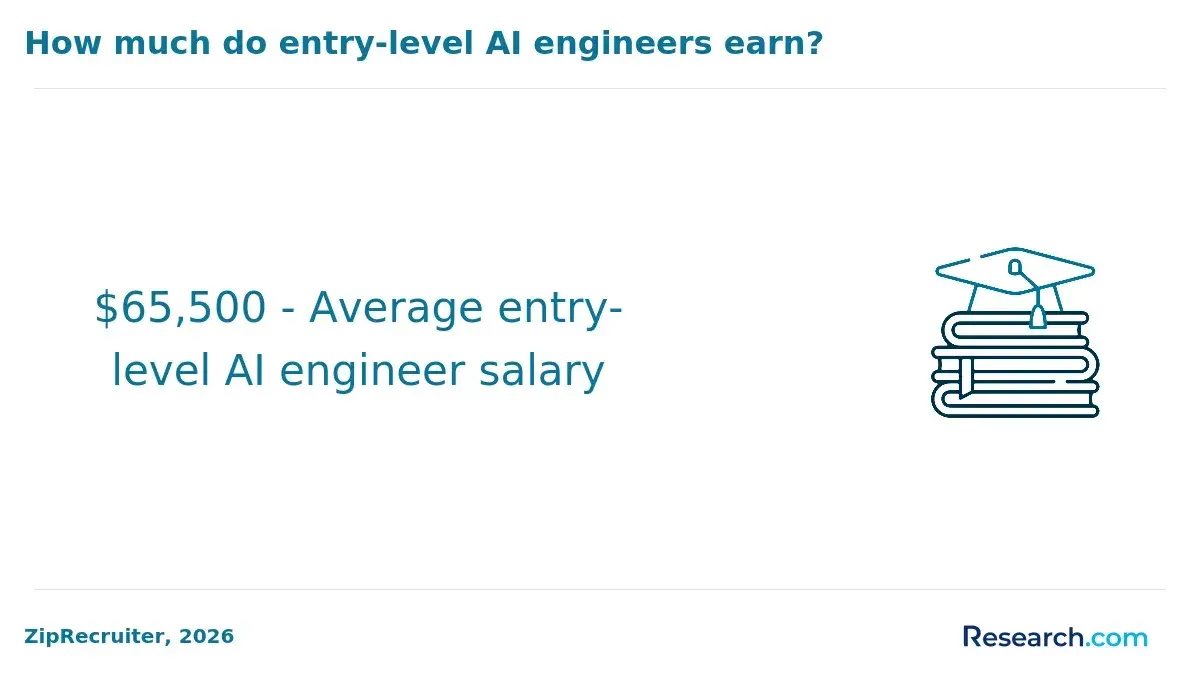
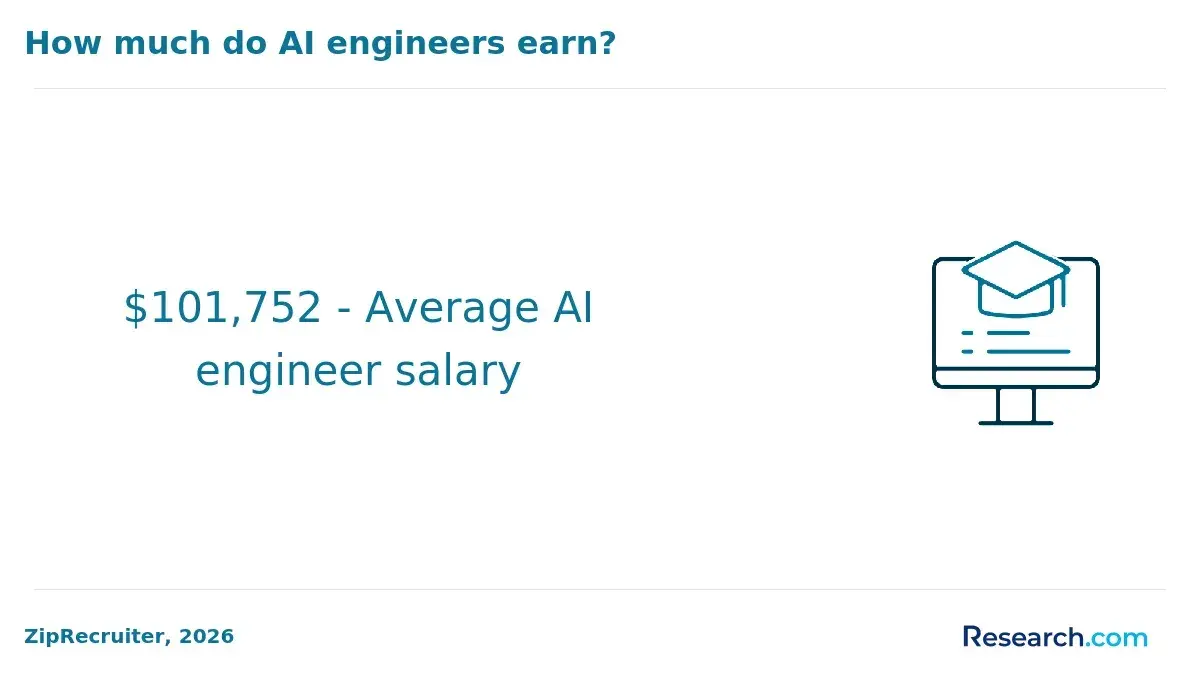
Median salaries for these roles range from $85,000 to $145,000, depending on factors like sector, location, and experience. Entry-level positions start near $85,000, with mid-career professionals holding advanced degrees or certifications often earning over $120,000. Senior roles or jobs in high-cost urban areas can exceed $145,000.
Salary potential is often strongest for professionals who combine responsible AI training with another marketable skill set. Examples include machine learning engineering, data science, privacy law, cybersecurity, healthcare compliance, financial risk, product management, public policy, or enterprise governance. Technical professionals who can perform model audits may compete for different roles than policy specialists who focus on regulation and institutional accountability.
Industries with significant demand include technology, healthcare, finance, insurance, government, consulting, and education technology. Technology employers may focus on fairness, transparency, and product risk. Healthcare organizations may need responsible AI oversight in diagnostics, triage, clinical decision support, or patient data use. Finance firms often need professionals who understand AI-driven credit, fraud detection, lending, and model risk controls.
The strongest candidates can show experience with ethical risk assessments, regulatory frameworks like GDPR, stakeholder communication, and practical AI governance. A master’s degree can signal depth, but employers will also look for evidence that graduates can apply responsible AI principles in real organizational settings.
Are there professional certifications or industry standards that complement or substitute for an AI ethics master's degree?
Professional certifications in AI ethics usually complement a master’s degree rather than replace it. According to a 2024 analysis by the Institute of Electrical and Electronics Engineers, only 12% of AI ethics certifications, like the IEEE Certified AI Ethics Practitioner, stand alone as credentials. Most are designed to validate targeted skills such as bias testing, model governance, regulatory awareness, or ethical auditing.
Employers also tend to distinguish between short-form credentials and graduate-level preparation. Employers support this approach, with 73% preferring candidates who hold a master's degree in AI ethics for senior roles rather than those with certification alone. This preference is especially relevant for leadership, research, policy, and governance roles that require interdisciplinary judgment.
Certifications can still be valuable. They may help experienced data scientists, software engineers, compliance professionals, privacy officers, or product managers add responsible AI expertise without committing to a full degree. They can also help recent graduates demonstrate a focused skill, such as algorithmic fairness assessment or AI risk documentation.
A master’s program generally offers broader preparation because it covers technical AI, ethics, law, policy, organizational governance, and social impact in a structured sequence. It also may provide faculty mentorship, research opportunities, capstone projects, internships, and access to alumni networks. Certifications are usually narrower and shorter, which makes them more flexible but less comprehensive.
The best choice depends on career stage and goals. A certification may be enough for professionals who already have strong AI or compliance experience and need targeted upskilling. A master’s degree is more appropriate for students seeking a career transition, senior responsible AI roles, research opportunities, or positions in regulated industries such as healthcare and finance.
For many professionals, the strongest combination is a graduate degree plus one or more relevant certifications or industry credentials. The degree provides depth and credibility; the certification signals current, practical knowledge in a specific responsible AI standard or method.
How should prospective students evaluate and choose between different AI ethics master's programs?
Prospective students should choose an AI ethics master’s program by matching the curriculum, format, cost, faculty, applied learning, and career outcomes to their intended role. A program designed for technical AI development may not be the best fit for someone targeting policy work, and a policy-heavy program may not provide enough machine learning depth for technical auditing roles.
Start with accreditation and curriculum. Confirm that the institution is accredited and review the required courses, not just the marketing language. Look for meaningful coverage of algorithmic fairness, transparency, privacy, governance, regulatory compliance, social impact, and applied risk assessment. Strong programs usually integrate ethics throughout the curriculum rather than isolating it in one introductory course.
Employer partnerships and internships deserve close attention. A report from Career Services Research reveals that 67% of graduate students view these factors as vital, since hands-on experience with top companies greatly enhances job prospects. Applicants should ask which organizations partner with the program, how internships are obtained, whether online students have equal access, and what percentage of students complete applied projects with external partners.
Employment outcomes are often more useful than rankings. Employment outcomes for alumni weigh heavily, with 64% of prospective students prioritizing them over rankings. Students should request recent placement data, common job titles, employer names, salary ranges when available, and average time to employment after graduation.
Faculty expertise is another key factor. Look for instructors and researchers active in responsible AI, algorithmic accountability, privacy, machine learning, technology policy, ethics, law, human-computer interaction, or data governance. Faculty connections to research centers, industry groups, standards bodies, or public policy organizations can improve mentorship and networking opportunities.
Format should fit the student’s life and learning style. Online programs may work well for professionals who need flexibility and want to apply course concepts at work. Campus programs may be better for students who want in-person networking, research assistantships, seminars, and deeper peer interaction. Hybrid or low-residency options can offer a middle ground.
Finally, compare net cost against career value. Review tuition, fees, scholarship eligibility, assistantships, employer tuition benefits, and the opportunity cost of reducing work hours. A lower-cost program with strong applied learning and relevant alumni outcomes may be a better investment than a more expensive program with limited career support.
Before applying, students should create a shortlist and ask each program the same questions: What roles do graduates obtain? What responsible AI projects will I complete? Who teaches the ethics and governance courses? How current is the curriculum? What support exists for internships and career placement? The best program is the one that provides credible training for the specific AI ethics career the student intends to pursue.
Other Things You Should Know About Artificial Intelligence
Admission requirements typically include a bachelor's degree in computer science or a related field, a minimum GPA of 3.0, letters of recommendation, and a statement of purpose. Some programs may also require GRE scores for prospective students in 2027.
A strong program should cover the EU AI Act, NIST AI Risk Management Framework 1.0, ISO/IEC 42001 for AI management systems, and the OECD AI Principles. These frameworks teach risk assessment, documentation, transparency, and governance, which are core competencies for responsible AI work.
Graduates specializing in AI ethics in 2027 can pursue career opportunities in tech firms, government agencies, and non-profits. Positions include AI ethics advisor, compliance officer, and policy analyst. These roles focus on developing and implementing ethical guidelines for AI use and ensuring compliance with regulations.
In 2027, AI ethics in healthcare is increasingly woven into master's programs through interdisciplinary courses that emphasize ethical decision-making alongside technical skills. These programs often collaborate with healthcare AI master’s programs online, ensuring students consider issues like bias and patient privacy.
References
- AI-Based Meta-Universities and the Smart Curriculum https://www.intechopen.com/online-first/1230223
- Master of Science in Ethical AI and Strategic Decision Sciences https://www.dbu.edu/graduate/degree-programs/ms-ethical-ai-strategic-decision-sciences/
- Ethics of Artificial Intelligence Program Requirements https://www.uoguelph.ca/arts/ethics-of-artificial-intelligence/requirements
- Artificial intelligence and society https://psl.eu/en/education/master-s-degree-artificial-intelligence-and-society
- Top 10 Careers You Can Pursue With an Online Master’s in AI https://www.ucumberlands.edu/blog/careers-you-can-pursue-with-an-online-masters-in-ai
- AI, Ethics and Society https://www.bbk.ac.uk/courses/postgraduate/ai-ethics-and-society
- Mastersportal https://www.mastersportal.com
- AI in Higher Education: How AI Is Reshaping Higher Education | USAHS https://www.usa.edu/blog/ai-in-higher-education-how-ai-is-reshaping-higher-education/
- Best AI Ethics Certification Courses for Business Leaders in 2026 https://www.teamland.com/post/best-ai-ethics-certification-courses
- Salary and Jobs Report 2025-26: Privacy, AI Governance and Digital Responsibility | IAPP https://iapp.org/resources/article/salary-survey-summary