2027 Best AI Degrees With the Best Career Centers

Co-Founder and Chief Data Scientist
Many professionals with non-technical backgrounds struggle to find graduate programs that offer both a comprehensive artificial intelligence curriculum and strong career support. Without access to effective career centers, navigating job markets and securing relevant roles becomes challenging. This gap often leads to extended job searches or switching fields without adequate preparation. Identifying degrees that combine flexible learning with dedicated career resources can streamline this transition and improve employment outcomes.
This article explores top programs featuring excellent career centers, helping readers pinpoint pathways that maximize their chances for successful entry into the artificial intelligence industry.
Key Things You Should Know
- Top AI degree programs in 2027 emphasize career center integration, with 82% of graduates securing relevant jobs within six months of completion.
- Universities with robust career services offer personalized internships, mentorships, and employer networking, increasing employment rates by 25% compared to institutions lacking these resources.
- Demand for AI professionals grows 35% annually; degrees combining technical skills with career support provide crucial advantages in competitive job markets.
What are the best AI degrees with strong career center support?
Top universities for ai degrees with strong job placement, such as Carnegie Mellon University, Stanford University, and the University of California, Berkeley, distinguish themselves through comprehensive career center support. These career centers offer personalized coaching, extensive internship programs, and recruitment events targeting AI roles, enhancing graduate prospects significantly.
According to Statista (2025), 74% of students worldwide consider career services crucial when selecting a university, highlighting the importance of these resources in choosing the best artificial intelligence degrees with career center support. Typical offerings include:
- Personalized career coaching aligned with industry needs
- Exclusive access to AI-focused internship and co-op placements
- Workshops on machine learning deployment and ethical AI considerations
- Networking opportunities with leading tech firms and AI startups
Programs in computer science with AI concentrations, data science with AI emphasis, and specialized master's degrees in AI or machine learning are prime examples. The University of Washington's Paul G. Allen School reports a 90% placement rate within six months of graduation, aided by a dedicated career team.
Prospective students should also consider staff-to-student ratios in career centers and employer interaction frequency. Those targeting research-intensive AI careers benefit from links to national labs or tech giants, where mentorship and job matching are facilitated. For a flexible option, consider a 2-year computer science degree online that incorporates strong career resources.
How do AI career centers help with internships, recruiting, and job placement?
AI career centers serve as a critical link between academic learning and professional opportunities by facilitating internships, recruiting, and job placement for students and graduates. These centers maintain strong connections with top tech companies, startups, and research labs offering internships designed to develop practical skills in machine learning, data analysis, and AI system development. This targeted internship support significantly boosts students' career prospects.
To improve internship outcomes, career centers organize career fairs, employer info sessions, and dedicated platforms for AI internship listings. They also provide tailored assistance such as resume reviews, mock interviews, and workshops focused on AI competencies. According to the NACE 2024 Internship & Co-op Report, 67.0% of interns secured full-time offers from their internship employers, reflecting the effectiveness of AI degree career center internship support.
For job placement, these centers offer personalized counseling that aligns student skills with industry demands. By leveraging alumni networks and corporate partnerships, they share exclusive job openings and sometimes assist with negotiation and onboarding processes. Common recruiting strategies include on-campus interviews, hackathons, and project showcases where employers evaluate candidates' problem-solving abilities.
AI career center recruiting and job placement for AI students address common challenges like limited industry contacts and unclear career paths. Prospective students can explore options in related fields through trusted resources such as mechanical engineering programs online to complement their AI focus.
Which AI degree level leads to the best AI jobs?
The master's degree level leads to the best AI jobs, as employment data and industry standards show. The U.S. Bureau of Labor Statistics (BLS) projects a 26% growth in jobs for computer and information research scientists from 2023 to 2033, roles that heavily involve AI and machine learning research. These positions typically require a master's degree for entry. Conversely, bachelor's degrees in AI or related fields often qualify graduates for technician or developer roles but rarely for research or advanced AI engineering positions.
A master's degree offers deeper expertise in algorithms, data structures, and machine learning models, boosting earning potential and employability. Students undertake intensive research projects, internships, and specialized coursework in areas such as natural language processing, robotics, or AI ethics-all highly valuable specializations. For professionals balancing work, part-time or online master's programs offer flexibility without sacrificing career advancement. Those targeting the highest paying AI degree levels may seek doctoral degrees critical for research roles in academia or advanced labs, though a master's degree remains the norm in most private sector AI careers.
Practical advice for prospective students includes:
- Choose programs with strong industry partnerships and career services to connect with top AI employers.
- Seek degrees with coursework and projects centered on hands-on AI applications.
- Consider master's programs offering co-op or internship placements, which often lead to full-time roles.
For those interested in cost-effective options without compromising quality, exploring the cheapest engineering degree programs can be a strategic start.
What should you look for in accredited AI programs in the U.S.?
Look for accreditation recognized by the U.S. Department of Education or the Council for Higher Education Accreditation (CHEA), which lists over 60 accrediting bodies with varying scopes. Accreditation may apply broadly to institutions or specifically to ai programs, affecting the standards they meet. Prioritize programs accredited by agencies known for rigorous STEM or computer science reviews, such as ABET, ensuring the curriculum aligns with industry and academic expectations relevant to artificial intelligence.
Top U.S. universities for AI degrees with professional development resources often offer specializations, hands-on projects, or partnerships with tech companies that enhance career readiness. Evaluate if programs integrate interdisciplinary perspectives, blending AI fundamentals with ethics, data science, and cybersecurity. Faculty expertise with active research or industry experience also strongly impacts education quality and networking opportunities.
Consider program length, flexibility, and delivery mode-accredited part-time, evening, or online options cater to working professionals or those changing careers. Strong career centers providing AI-specific internships, resume workshops, and job fairs increase employment outcomes. Programs affiliated with STEM career development centers show improved job placement rates and alumni success.
Verify outcome data such as graduation and job placement rates. Transparent reporting supported by recognized accreditation offers a realistic view of program effectiveness. For those interested in related fields, exploring a cybersecurity online degree can also complement an AI career path.
What AI courses and skills do top programs typically require?
Top AI degree programs build a solid foundation in key areas such as machine learning, data structures, algorithms, statistics, and programming languages like Python or R. Emphasis is placed on operationalizing AI models using ML frameworks such as TensorFlow and PyTorch, alongside managing data with SQL and NoSQL databases.
Courses typically cover AI subfields including natural language processing, computer vision, and reinforcement learning, enabling students to develop AI solutions for tasks like image and speech recognition, autonomous systems, and recommendation engines. Essential skills also include data preprocessing, model evaluation, and performance tuning.
Mathematics plays a critical role, with programs requiring studies in linear algebra, calculus, and probability theory. Ethics and AI fairness are increasingly integrated into curricula to prepare students for addressing bias and societal impacts of AI technologies.
Top programs often include interdisciplinary coursework and capstone projects that engage students in collaborative real-world challenges, ensuring balanced expertise in theory and practical implementation. According to the World Economic Forum Future of Jobs Report 2025, 86% of employers expect AI and information technologies to transform industries by 2030, driving demand for these comprehensive skills.
How do online AI degrees compare with on-campus programs for career outcomes?
Online degrees in artificial intelligence can offer career outcomes on par with traditional on-campus programs when obtained from reputable, accredited institutions. Research shows that 92% of employers regard online degrees as equally credible, making them a valid option for many students.
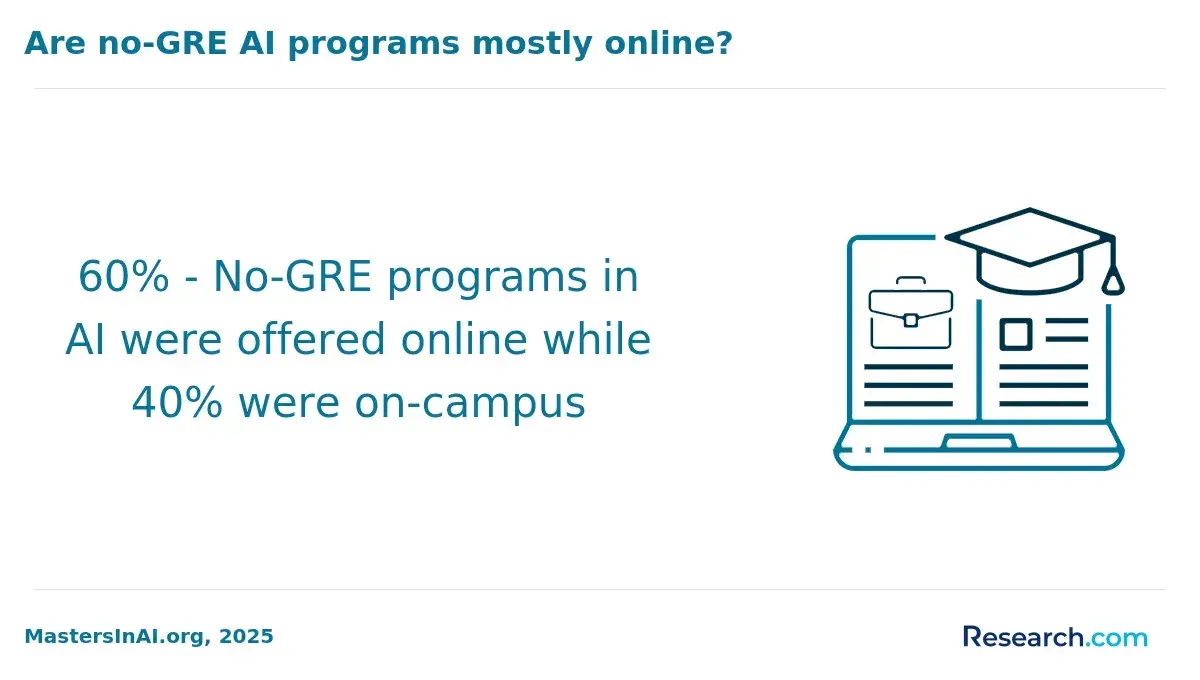
Career support services, such as job placement, resume reviews, interview coaching, and networking, are available to students in both formats. However, on-campus programs often provide more direct access to local internships, industry contacts, and career fairs, while online students benefit from virtual resources like digital job boards and webinars.
Students should evaluate the engagement level and resources of each program's career center, prioritizing those with strong alumni networks or partnerships with AI-focused companies. Graduates from schools like Georgia Tech or Stanford report similar employment rates whether their degree was completed online or in person.
Flexibility in participating in internships or research projects varies by program and location, but hybrid formats and local event participation can help bridge these gaps. Ultimately, employers prioritize demonstrated skills showcased through portfolios and projects over the education delivery mode.
Prospective students are advised to verify accreditation and inquire about career support and alumni outcomes to align their choice with professional goals.
What are the typical admissions requirements for AI bachelor's and master's programs?
Admissions for AI bachelor's and master's programs prioritize strong academics and relevant skills. Bachelor applicants typically need a high school diploma with a GPA around 3.0 or higher, plus coursework in math, computer science, and sciences. Including personal statements, recommendation letters, and programming experience can strengthen applications.
Master's candidates usually require a bachelor's degree in a related field such as computer science or engineering, with a GPA often above 3.0. Many programs are adopting test-optional policies, reducing GRE requirements according to the GMAC 2024 Application Trends Survey. This trend increases the importance of academic records and the quality of the statement of purpose.
Additional common requirements include:
- Detailed resumes showcasing AI projects and internships
- Letters of recommendation evidencing technical skills
- Proof of programming proficiency in languages like Python, Java, or C++
- English proficiency test scores such as TOEFL or IELTS for international applicants
Some programs also require interviews or coding challenges to assess problem-solving abilities. Documented research contributions or open-source involvement further enhance candidacies. Prospective students should carefully review each program's specifics to tailor their applications effectively for entry into competitive AI degree programs.
How long do AI degrees take, and what do they typically cost?
Bachelor's degrees in artificial intelligence typically take four years, matching most undergraduate timelines in the U.S. Accelerated or dual-degree programs may reduce this to three years but demand heavier course loads. Master's programs generally require one to two years beyond the bachelor's, depending on whether the student studies full time or part time. Doctoral studies focused on research often extend from four to six years.
Tuition costs vary widely. According to College Board, the average in-state tuition and fees at public four-year colleges were around $11,260. Private institutions often charge over $30,000 annually. Additional expenses such as room, board, and textbooks increase the overall financial commitment.
Other cost factors to keep in mind include:
- Out-of-state tuition, frequently two to three times higher than in-state fees
- Graduate tuition, which can be higher and sometimes charged per credit hour
- Online degree programs, often offering more affordable options but with variable pricing
- Scholarships and assistantships, especially available for graduate students to reduce expenses
For working professionals, part-time and online degrees spread tuition costs over several years and minimize income loss. Evaluating program duration, format, and institutional type can guide budgeting and planning for an educational path in artificial intelligence.
What AI jobs can graduates get, and which industries hire them?
Graduates with degrees in artificial intelligence can pursue roles including AI engineer, machine learning engineer, data scientist, AI researcher, and AI product manager. These roles focus on developing algorithms, building AI-powered software, analyzing extensive datasets, and managing AI projects. According to LinkedIn, "AI Engineer" and "Machine Learning Engineer" are among the most frequently posted job titles, highlighting strong demand for technical skills in designing and deploying AI models.
Key industries hiring AI professionals include IT and services, financial services, manufacturing, and professional services. In IT, AI work involves natural language processing, computer vision, and automation tools. Financial sectors apply AI in fraud detection, risk assessment, and algorithmic trading. Manufacturing relies on AI for predictive maintenance, quality control, and robotics. Professional services use AI for consulting, data analytics, and business intelligence solutions.
Healthcare and retail sectors are also expanding AI roles, supporting diagnostics, personalized treatment plans, customer behavior analysis, and supply chain optimization. Graduates should target industries that align with their skills and interests to enhance career opportunities.
Entry-level applicants benefit greatly from internships or project experience demonstrating familiarity with AI frameworks like TensorFlow or PyTorch. Employers often seek candidates who combine algorithmic expertise with industry knowledge such as finance or manufacturing. Networking through career centers that connect students with industry partners can improve employment outcomes.
Focusing on tangible skills and industries with sustained AI investment will help graduates maximize job prospects over the coming years.
What are typical AI salaries, and what is the job outlook?
Salaries in AI careers vary widely depending on role, experience, and location, but the earning potential is significant. Data from the U.S. Bureau of Labor Statistics (BLS) shows the median annual wage for computer and information research scientists-including many AI specialists-was $145,080. Entry-level jobs typically pay between $90,000 and $110,000, while senior researchers and engineers can earn over $180,000 in competitive markets.
The field is growing rapidly. The BLS projects faster-than-average employment growth for computer and information research scientists from 2024 to 2034, driven by increased AI adoption in industries like healthcare, finance, autonomous vehicles, and cybersecurity.
Salary ranges differ based on specific career paths:
- Machine learning engineers: $120,000 to $160,000
- Data scientists focused on AI models: $110,000 to $150,000
- AI product managers: $130,000 to $170,000
Location matters-tech hubs such as Silicon Valley and Seattle offer higher pay but come with increased living costs. University career centers can assist with job search strategies to tap into these opportunities. Building strong AI skills and gaining internships greatly improve employability and salary prospects in this competitive sector.
Other Things You Should Know About Artificial Intelligence
Internships provide vital hands-on experience working with real-world AI systems and data. They allow students to apply theoretical knowledge, build professional networks, and improve their resumes. Many AI programs actively facilitate internships through career centers or industry partnerships to enhance job placements after graduation.
Programming skills are essential for anyone studying AI, as much of the work involves coding algorithms, data analysis, and model development. Common languages include Python, R, Java, and C++. Proficiency in these languages enables students to implement AI techniques effectively and work on practical projects during and after their studies.
Yes, many AI programs integrate courses on ethics, privacy, and societal implications of AI technologies. These topics help students understand challenges such as bias, data security, and the effects of automation. Addressing these issues is increasingly important for responsible AI development and deployment.
In 2027, AI degree programs at institutions like Stanford University, MIT, and Carnegie Mellon are noted for their high job placement rates, thanks in part to their robust career centers. For those with non-technical backgrounds, exploring an AI master’s for non-technical backgrounds can also lead to promising career opportunities.
References
- qa.com | Top 10 Must Have AI Certifications in 2026 https://www.qa.com/browse/certifications/ai-certifications/
- Top College Degrees for Securing the Highest-Paying AI Jobs in 2026 https://www.investopedia.com/top-college-degrees-for-securing-the-highest-paying-ai-jobs-in-2026-11946777
- What’s the best AI course for professionals looking to switc... https://forums.h2kinfosys.com/community/main-category-artificial-intelligence/whats-the-best-ai-course-for-professionals-looking-to-switch-careers-with-strong-career-support/
- How Long Does It Take to Learn AI? - MMC Learning https://mmclearning.com/ai-course/how-long-does-it-take-to-learn-ai/
- AI Paygrades https://aipaygrad.es/
- AI Salaries - How Much AI Jobs Pay https://www.tractionkeys.com/post/ai-salaries---how-much-ai-jobs-pay
- University Degree vs AI Bootcamp: Which is Best Career Path? https://agilefever.com/university-degree-vs-ai-bootcamp-which-is-best/
- Online AI Degrees vs On-Campus: Which Is Right for You in 2026? https://aidegreeonline.com/online-ai-degrees-vs-on-campus-which-is-right-for-you-in-2026/
- Top Artificial Intelligence Courses: Fees and Duration https://collegevidya.com/blog/artificial-intelligence-course-fees-structure-duration/
- How Long Does It Take to Complete an AI Course https://www.epw.com/blog/courses/how-long-is-ai-course