2027 AI Master's Degrees for Healthcare Professionals

Co-Founder and Chief Data Scientist
Healthcare professionals often face challenges adapting to the rapid integration of artificial intelligence technologies in clinical settings. Many lack formal training in AI, hindering their ability to leverage data-driven tools for improving patient outcomes. The complexity of AI concepts combined with demanding work schedules leaves little room for traditional degree programs.
Understanding these barriers, this article explores flexible, accredited AI master's degrees tailored for healthcare professionals. It highlights accessible pathways designed for those with unrelated undergraduate backgrounds seeking to pivot into this transformative field in 2027. The information provided aims to guide informed decisions toward advancing careers in healthcare through AI expertise.
Key Things You Should Know
- In 2027, AI master's degrees for healthcare professionals emphasize practical skills in data analysis, machine learning, and clinical applications, responding to a healthcare AI market projected to reach $51 billion by 2027.
- Programs increasingly offer interdisciplinary curricula combining healthcare knowledge with AI ethics, programming, and regulatory compliance to prepare graduates for evolving roles in clinical decision support and health informatics.
- Flexible online and hybrid formats dominate enrollment growth, with 40% of new students in 2025 choosing remote study to balance work and education in fast-paced healthcare environments.
What are AI Master's degrees and how do they differ from other graduate programs in healthcare technology?
Master's degrees in artificial intelligence for healthcare professionals focus on developing and applying AI technologies specifically within medical environments. Unlike broader healthcare technology degrees, these programs emphasize areas such as machine learning, data analytics, natural language processing, and deep learning, training students to design algorithms that enhance patient outcomes, optimize treatments, and improve diagnostic accuracy.
The differences between AI graduate programs and healthcare technology degrees are notable. AI master's curricula include hands-on work with programming languages like Python and R, and specialized training in neural networks for medical imaging or genomics data. In contrast, traditional health information management often centers on system administration and electronic health records, not on building AI models tailored to healthcare challenges.
The healthcare AI market is expected to reach $67.4 billion by 2027, growing at a 38.1% compound annual growth rate, highlighting strong demand for AI expertise in medicine. Graduates with this specialization are well-positioned for careers such as clinical data scientist, AI product manager, or healthcare algorithm developer. Prospective students should consider faculty research, interdisciplinary collaboration opportunities, and access to healthcare datasets when selecting programs aligned with their career goals.
For those exploring career paths, resources explaining what can you do with an applied artificial intelligence degree offer important guidance on leveraging an AI master's degree within healthcare and beyond.
Which accredited universities offer AI Master's degrees specifically designed for healthcare professionals?
Several accredited universities offering AI master's degrees for healthcare professionals in the U.S. have developed specialized programs integrating advanced AI tools with medical expertise. Carnegie Mellon University offers a Master of Science in Artificial Intelligence and Innovation with a healthcare track focusing on clinical decision-making. Stanford University's Master of Science in Biomedical Informatics includes extensive AI coursework aimed at enhancing diagnostics and personalized treatment. Northwestern University provides a Master of Science in Artificial Intelligence for Medicine and Healthcare, emphasizing machine learning for patient data analysis and healthcare operations.
These top accredited healthcare AI master's programs in the US address the dual need for mastery in healthcare systems and AI technology, preparing graduates for roles in hospitals, research centers, or health tech companies. Curricula often combine core AI subjects like machine learning, natural language processing, and computer vision with healthcare-specific courses on bioinformatics, clinical workflows, and ethics. Flexible online or part-time formats are available to accommodate working professionals.
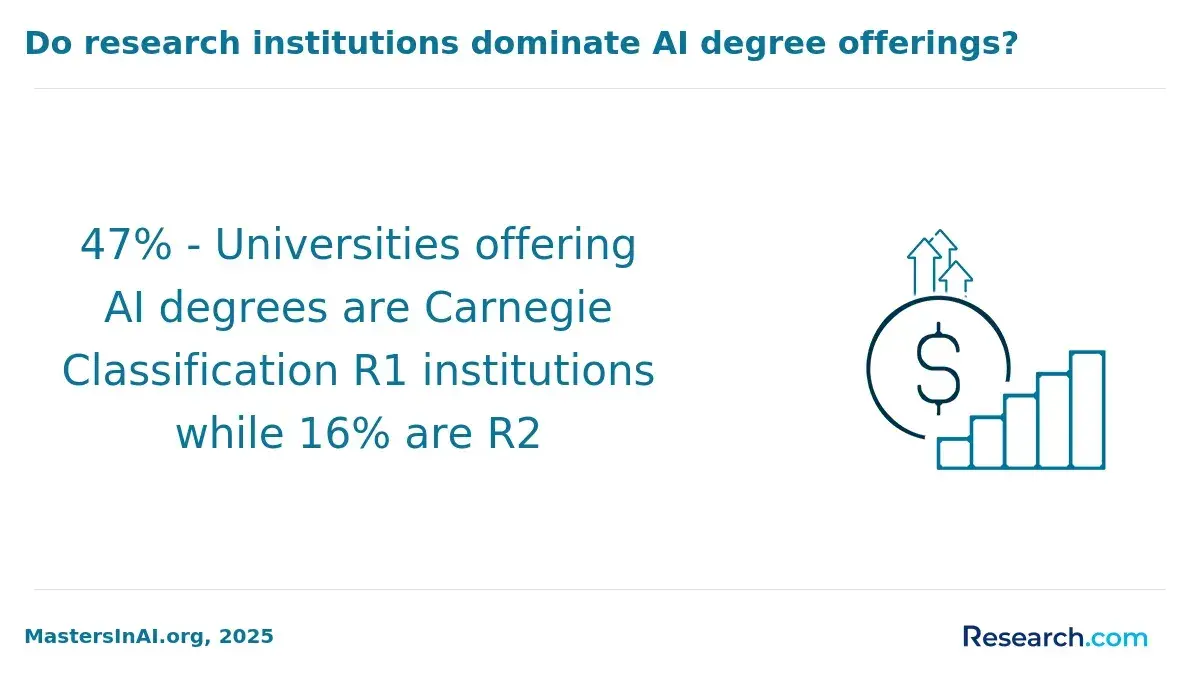
This growth aligns with a national trend: U.S. master's programs focused on AI increased by 58% between 2022 and 2024, with 23% of new offerings targeting healthcare fields. Prospective students should verify accreditation, clinical relevance, and faculty expertise to align with career goals. For those exploring affordable options in related engineering fields, see online mechanical engineering degrees.
What are the admission requirements and prerequisites for healthcare professionals entering an AI Master's program?
Admission requirements for healthcare professionals entering AI master's programs often include a bachelor's degree in nursing, medicine, public health, or health sciences. Programs look for proficiency in quantitative reasoning and basic programming skills. Many applicants without formal computer science training must complete prerequisite courses or bridge programs covering Python programming, statistics, and data structures to tackle core AI concepts. This is a common path reflecting prerequisites for healthcare professionals entering AI master's degrees.
Seventy-three percent of healthcare professionals pursuing AI master's degrees start without a computer science background but succeed via these foundational courses (Coursera & LinkedIn Learning Skills Report, 2024). Tailored curricula help clinical professionals shift into computational thinking and AI methodologies efficiently.
GRE scores are optional in many programs but could be required for more competitive admissions. Applicants may also need professional healthcare experience, a minimum GPA (typically around 3.0), and strong letters of recommendation emphasizing analytical and problem-solving skills.
A statement of purpose explaining the integration of AI and healthcare is essential, highlighting relevant work or research. Familiarity with healthcare data privacy regulations like HIPAA is recommended to prepare students for practical AI applications in medicine. For those exploring affordable education options, the cheapest online masters in artificial intelligence can provide cost-effective pathways without sacrificing quality.
How do online, hybrid, and campus-based AI Master's programs compare for working healthcare professionals?
Online and hybrid AI master's programs for healthcare professionals provide greater flexibility and improved completion rates compared to campus-based options. Research shows online or hybrid learners have an 89% completion rate, outperforming the 76% rate of full-time campus cohorts (Gallup Education & Skills Survey, 2024). These virtual formats better fit the demanding schedules of healthcare workers.
Professionals studying online maintain employment 94% of the time, minimizing income disruption and supporting career growth. Hybrid programs combine asynchronous coursework with occasional in-person sessions, balancing flexibility with valuable face-to-face networking. Campus-based programs demand regular presence, which can be challenging alongside shifts and family responsibilities.
Healthcare workers seeking hands-on experience with AI applications in clinical settings may lean toward campus-based programs that offer lab access, mentorship, and collaboration opportunities, but these come with higher dropout risks and potential job interruptions. Evaluating a comparative analysis of hybrid and campus-based AI degrees in healthcare helps clarify which format aligns best with individual work flexibility and learning preferences.
Students are encouraged to assess support structures and learning environments carefully. Online courses often deliver extensive digital resources and virtual office hours, whereas campuses promote deeper immersion. Hybrid models serve those wanting a mix of digital and personal engagement without sacrificing career duties. Prospective students can also explore related fields like a cybersecurity online degree for alternative tech-driven healthcare roles.
What core coursework and specializations are included in healthcare-focused AI Master's curricula?
Healthcare-focused AI master's programs frequently include core courses on machine learning fundamentals, data mining, statistical analysis, and biomedical informatics. These subjects prepare students to develop algorithms that can analyze complex medical information. Programming languages such as Python and R are commonly taught to create AI models and manage healthcare data systems.
Specializations often emphasize three areas: machine learning for clinical diagnostics, natural language processing (NLP) for medical records, and predictive analytics to forecast patient outcomes. According to the Association of American Medical Colleges (2024), these focus areas appear in 87% of accredited healthcare AI master's programs. Machine learning courses train students to develop models that assist with disease diagnosis using imaging and genomic data. NLP coursework teaches how to extract meaningful insights from unstructured electronic health records, improving clinical decisions. Predictive analytics focuses on algorithms that predict patient risks and personalize treatments.
Elective options may cover medical robotics, health data privacy, and ethical issues related to AI in healthcare. Practical experience often comes through capstone projects or internships offered by hospitals, biotech companies, or research institutes. Many programs also provide flexible online or hybrid formats to accommodate working professionals.
Effective curricula balance theoretical knowledge with hands-on training relevant to healthcare challenges. This approach prepares graduates for interdisciplinary roles such as AI data scientist in clinical informatics or healthcare AI project manager.
How long does an AI Master's degree take to complete, and what are typical tuition costs?
AI master's degree programs tailored for healthcare professionals typically last between 1.5 and 3 years full-time. Part-time and online formats can extend this to 3 or more years, accommodating those balancing clinical work or other responsibilities. Some programs offer accelerated tracks, allowing completion in as few as 12 to 18 months by increasing course loads or incorporating summer sessions.
Tuition costs vary widely, generally ranging from $40,000 to $120,000 total. Factors influencing cost include the institution's prestige, delivery method, and curriculum depth. Public universities often offer more affordable rates, while private institutions with specialized healthcare analytics or clinical application focuses tend to be pricier. For instance, a state university may charge around $45,000 for a two-year program, whereas private programs emphasizing machine learning in medical imaging can exceed $100,000. Additional fees or proprietary software access may further increase expenses.
The financial investment can yield strong returns; graduates report a median return on investment of 156% within five years of working in healthcare AI roles, according to the Graduate Management Admission Council. Prospective students should weigh program duration against career plans and evaluate costs relative to expected salary growth and job market demand in healthcare AI to make informed decisions.
What professional certifications or credentials complement an AI Master's degree in healthcare?
Professional certifications significantly boost the value of an AI master's degree in healthcare by validating specialized expertise essential for the industry. Credentials such as the Certified Machine Learning Professional (CMLP) or IEEE certifications showcase skills in algorithm development and data modeling crucial for healthcare applications. Similarly, healthcare informatics certifications like the Certified Professional in Healthcare Information and Management Systems (CPHIMS) or the Health Informatics Certification from the American Health Information Management Association (AHIMA) integrate clinical knowledge with data analytics, aiding roles focused on electronic health record optimization and clinical decision support systems.
Additional certifications in data analytics, such as the Certified Health Data Analyst (CHDA), strengthen one's ability to manage complex healthcare datasets and ensure regulatory compliance. These qualifications prepare graduates for practical responsibilities like predictive modeling for patient outcomes and effective healthcare resource allocation. Furthermore, credentials in clinical coding, health data security, or interoperability standards provide critical support for professionals balancing clinical experience with emerging AI technologies, enhancing integration into multidisciplinary healthcare teams.
Acquiring certifications from recognized bodies validates technical proficiency and improves employability. Labor market data from Burning Glass Technologies Labor Insights reveals that healthcare professionals holding both an AI master's degree and industry certifications in machine learning or healthcare informatics earn approximately 34% higher salaries compared to those with the degree alone, emphasizing their competitive advantage.
Targeted certifications thus elevate career prospects for graduates by combining technical depth with industry relevance, making them more effective contributors to evolving healthcare environments.
What career roles and job titles do AI Master's graduates pursue in healthcare organizations?
Graduates of AI master's programs in healthcare often step into roles such as clinical AI analyst (28%), healthcare data scientist (24%), and AI implementation specialist (19%). These positions underline the demand for experts who can build, analyze, and apply AI systems in clinical and operational healthcare environments. Clinical AI analysts interpret AI-driven data to improve patient care and diagnostic accuracy, while healthcare data scientists utilize machine learning on large datasets-including electronic health records and medical imaging-to detect trends that inform treatment strategies. AI implementation specialists ensure the smooth integration of AI tools within healthcare infrastructures.
The LinkedIn Career Outcomes Report (2024) shows that 67% of AI master's graduates find employment within three months. Other possible careers include AI product manager, clinical informatics specialist, and medical AI research scientist. Employers span hospitals, technology firms, government health agencies, and research institutions. Challenges faced by professionals include meeting regulatory standards and harmonizing AI applications with existing clinical workflows, demanding both technical skill and healthcare domain knowledge.
Prospective students should focus on programming expertise, medical domain understanding, and health data privacy laws. Hands-on internships or projects with clinical partners significantly boost job prospects. Staying current on AI applications in telemedicine, personalized medicine, and predictive analytics widens career opportunities in this evolving field.
What is the job outlook and salary potential for AI Master's graduates in healthcare sectors?
Healthcare AI specialist roles are expanding rapidly, with a projected growth rate of 42% through 2029, far exceeding the 5% average for all occupations according to the U.S. Bureau of Labor Statistics. This demand spans healthcare organizations, technology companies, and research institutions. Graduates holding a master's degree in healthcare AI can expect median salaries between $125,000 and $165,000, influenced by specialization, geographic area, and experience.
Specialties such as medical imaging AI, clinical decision support, and predictive analytics often command higher pay, especially in major urban areas and top hospital networks. For instance, AI experts working in radiology applications tend to earn toward the higher end of the salary spectrum due to the intricate nature of their work. Conversely, roles in smaller or rural healthcare settings might start near the median but offer strong growth potential as AI adoption increases.
Opportunities are not limited to clinical roles; positions in AI project management, data governance, and AI ethics advisory also broaden career options for those with a healthcare AI master's degree. Healthcare professionals moving into AI can leverage their domain knowledge to boost their salary and employability.
Prospective students should research local job markets and pursue internships in high-growth healthcare AI sectors. Aligning skills with employer priorities enhances job placement and salary outcomes after graduation.
How should healthcare professionals evaluate and select a reputable AI Master's program?
Healthcare professionals interested in AI master's programs should prioritize those accredited by recognized bodies like ABET or CAHIIM, as these accreditations guarantee curricula that align with industry standards critical for healthcare AI applications. Faculty expertise is essential; programs with instructors actively publishing research in healthcare AI demonstrate ongoing engagement with current developments, ensuring students gain relevant, practical knowledge.
Partnerships with employers such as healthcare providers, technology firms, and medical device manufacturers enhance opportunities for internships, job placements, and professional networking. These collaborations strongly influence graduate employment outcomes. According to the QS Graduate Employability Rankings, programs combining accreditation, active faculty research, and employer partnerships report a 91% graduate employment rate and 4.2/5.0 alumni satisfaction.
Prospective students should scrutinize detailed employment outcome reports and seek alumni feedback. Look for programs offering hands-on training like clinical data projects and healthcare-specific AI model development to build applicable skills. Flexible scheduling options, including part-time and online formats, are valuable for working professionals. Additionally, assess tuition costs against potential earnings after graduation, as accredited and research-driven programs with robust industry ties typically yield stronger job prospects.
Other Things You Should Know About Artificial Intelligence
The curriculum typically includes courses in machine learning, data analysis, and health informatics, with a focus on practical applications in healthcare settings. Programs may also require a capstone project or internship specifically tailored to industry needs in healthcare AI by 2027.
In 2027, healthcare professionals with an AI master's degree can pursue roles such as clinical data analysts, AI solution architects in healthcare settings, AI policy advisors, and healthcare innovation consultants. These positions focus on integrating AI technologies to enhance patient outcomes and operational efficiency.
Prerequisites for enrolling in a 2027 AI master's degree may include a bachelor's degree in healthcare or a related field, basic knowledge of statistics, understanding of healthcare systems, and competency in programming languages like Python. Schools may also require work experience in healthcare settings.
A 2027 AI master's degree should be accredited by a recognized regional or national accreditor, and the college or university should be authorized to award graduate degrees. For health-focused programs, also check whether the curriculum aligns with standards used by bodies such as CAHIIM or ABET-related computing criteria.
References
- Best AI in Healthcare Courses and Certifications for 2025 https://learnprompting.org/blog/ai-in-healthcare-courses-and-certifications
- Medical Practitioners’ Perceptions of Artificial Intelligence in Healthcare: A Mixed-Methods Study https://jpmsonline.com/article/title-medical-practitioners-perceptions-of-artificial-intelligence-in-healthcare-a-mixed-methods-study-843/
- Career After Studying Artificial Intelligence in Healthcare https://www.learntoupgrade.com/blog/career-after-studying-artificial-intelligence-in-healthcare
- AiWebix | Learn AI, ML & Data Science with Guaranteed Internship https://aiwebix.com/blogs/masters-in-artificial-intelligence
- Certificate in Applied AI for Health Systems at Cedars-Sinai https://www.cedars-sinai.edu/education/professional-training-programs/certificate-in-applied-ai-for-health-systems.html
- MSc Artificial Intelligence for Healthcare https://www.hull.ac.uk/study/postgraduate-taught/courses/artificial-intelligence-for-healthcare-msc
- Most Affordable Online Master's in AI for 2025 https://www.mastersinai.org/degrees/affordable-online-masters-in-ai/
- Master in Artificial Intelligence in Healthcare. 16th Edition - ONLINE https://masteraihealth.com/
- MSc Artificial Intelligence-career prospects University of Hull Online https://online.hull.ac.uk/courses/msc-artificial-intelligence/careers
- Artificial Intelligence Enabled Healthcare MRes https://www.ucl.ac.uk/prospective-students/graduate/taught-degrees/artificial-intelligence-enabled-healthcare-mres