2027 AI Associate Degrees at Urban Community Colleges

Co-Founder and Chief Data Scientist
Changing careers into emerging tech fields often presents barriers such as time constraints, financial limits, and lack of relevant credentials. Urban community colleges offer accessible, affordable associate degrees tailored to those seeking foundational expertise in artificial intelligence without committing to lengthy programs. These programs provide practical, up-to-date skills aligned with industry needs, enabling professionals with unrelated backgrounds to pivot efficiently.
This article explores current associate degree options at urban community colleges, detailing program structures, accessibility, and learning outcomes to help readers identify pathways that balance flexibility and quality for entering the artificial intelligence field.
Key Things You Should Know
- In 2026, over 200 urban community colleges across the U.S. offer AI associate degrees, reflecting a 35% growth since 2024 to meet rising technology job demands.
- These programs emphasize practical skills in machine learning, data analytics, and ethical AI, preparing students for immediate employment in tech-driven industries.
- Tuition averages $4,200 annually at urban community colleges, providing affordable pathways into AI careers compared to four-year institutions.
What is an AI associate degree at an urban community college?
An AI associate degree at an urban community college provides foundational knowledge and practical skills in artificial intelligence technologies through a two-year program. Students study programming, data analysis, machine learning, and computer science fundamentals, gaining hands-on experience with AI tools and frameworks. These programs often include classes like Python programming, statistics, algorithms, and data structures, plus projects in neural networks, natural language processing, or robotics.
Urban community college artificial intelligence curriculum sometimes integrates data science to reflect interdisciplinary demands, meeting the needs of learners seeking affordable and accessible education in this expanding field. Flexible scheduling options, evening classes, and partnerships with local tech firms frequently support internships or job placement opportunities.
Those enrolling in ai associate degree programs at urban community colleges often aim for quick workforce entry in roles such as AI technicians, data analysts, or software developers. The curriculum also facilitates transfer pathways to four-year universities for bachelor's degrees in computer science or engineering. Students should assess accreditation, faculty expertise, and resources like AI labs or cloud computing access when selecting programs.
Growing interest is reflected in rising associate completions in data science, highlighting AI's evolving relevance. For more insight into career options, explore artificial intelligence degree jobs.
Are AI associate degrees at community colleges accredited and reputable?
Accredited AI associate degrees at urban community colleges typically offer strong reputations, especially when granted by established public institutions. According to data from the National Center for Education Statistics (IPEDS, 2024), 96% of public community colleges hold accreditation recognized by the U.S. Department of Education. This accreditation guarantees education quality and impacts credit transfer, federal financial aid eligibility, and employer recognition.
Reputable community colleges offering AI associate programs often maintain advisory boards with industry professionals and regularly update their curricula to reflect current technological trends. This alignment supports better student satisfaction and job placement outcomes.
Prospective students should confirm accreditation with recognized bodies such as the Higher Learning Commission or the Southern Association of Colleges and Schools and be cautious about programs from private or newer institutions with limited accreditation. The U.S. Department of Education's Database of Accredited Postsecondary Institutions and Programs is a helpful resource for verification.
Many AI associate programs also integrate industry-recognized certifications or partnerships, enhancing graduate employability. Ensuring a program's accreditation and industry ties is vital before enrollment.
Students interested in related fields may also explore affordable pathways such as the mechanical engineering degree through online programs, which can complement AI skills.
What jobs can you get with an AI associate degree from a community college?
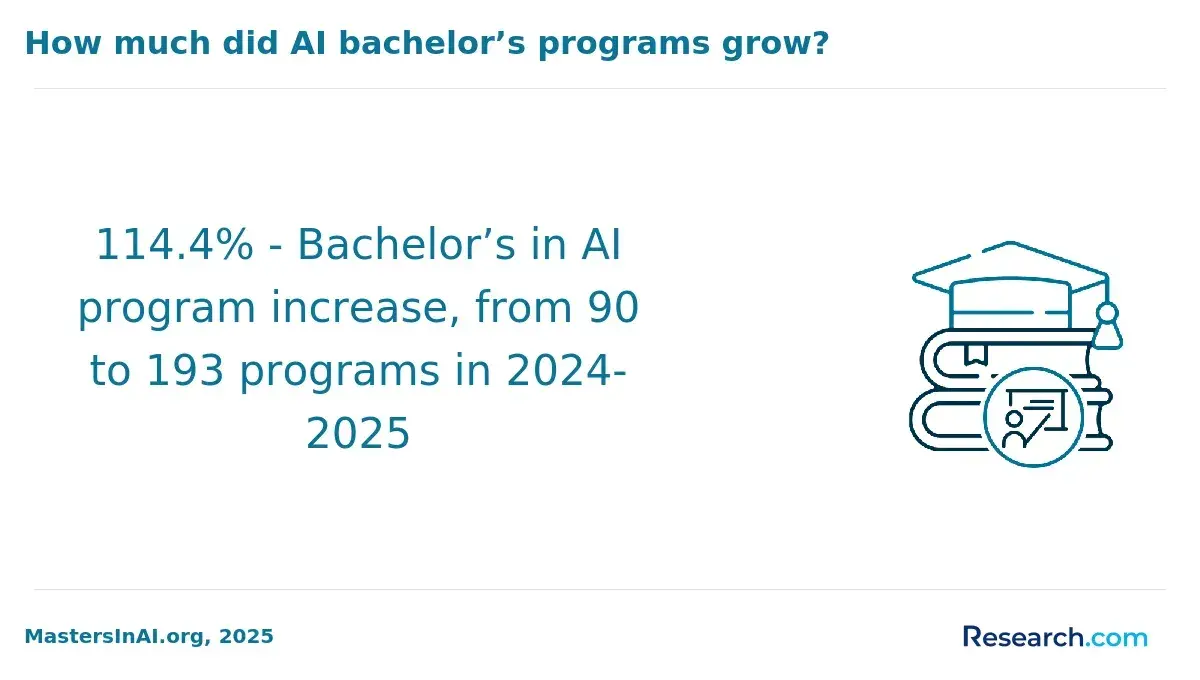
An AI associate degree from an urban community college opens doors to various technology and data-focused career opportunities. Graduates often find roles as data analysts, machine learning technicians, AI support specialists, and automation analysts. These positions emphasize skills like data cleaning, model testing, and algorithm implementation, which are central to associate degree programs.
Data analyst remains one of the top job titles for those with community college AI degrees. Such roles involve interpreting datasets, generating reports, and aiding decision-making across sectors like healthcare, finance, and retail. Other options include AI quality assurance testers who ensure system accuracy, junior AI software developers involved in coding AI tools, and automation analysts who enhance business workflows using AI and robotic process automation.
Additional roles often pursued by graduates include database technicians and IT support specialists focused on sustaining AI infrastructure. Entry-level positions such as AI project coordinators help teams deploy AI solutions smoothly. Employers seek candidates skilled in programming languages like Python, familiar with AI frameworks, and strong in analytical thinking. Certifications and internships further improve job prospects.
Many urban community colleges connect students with internships in local tech hubs, boosting readiness and placement. Those exploring affordable education options can consider online degrees in AI as a flexible alternative.
What courses and hands-on projects are included in AI associate programs?
AI associate degree courses at urban community colleges commonly cover programming languages like Python and SQL, data analytics, machine learning fundamentals, and data visualization tools such as Tableau or Power BI. These curricula align closely with employer demands, emphasizing top skills identified in reports like the 2024 Lightcast, including SQL, Python, and data visualization. Students gain knowledge in algorithm design, database management, and statistical analysis to prepare for entry-level positions.
Hands-on projects in urban community college AI programs play a vital role, offering practical experience through tasks like building recommendation engines, training neural networks, and performing AI-driven data interpretation. These projects replicate industry workflows, from data cleaning and transformation to model evaluation and reporting, strengthening students' real-world skills.
Collaboration is emphasized through group assignments, reflecting AI's interdisciplinary nature. Students often use cloud platforms such as AWS or Google Cloud to deploy models, gaining relevant workplace experience. Coursework also covers ethics and bias in AI, requiring critical assessment of consequences within AI systems.
By combining structured study with applied projects, these programs help students develop practical AI competencies valued by employers. Prospective learners interested in advancing can explore options like an online data science masters to deepen their expertise.
How do online AI associate degrees compare with on-campus urban programs?
Online ai associate degrees offer flexibility for working adults and those constrained by geography or schedules, but retention rates lag behind those of on-campus urban programs. In particular, fully online community college students show a several-percentage-point drop in fall-to-spring persistence compared to in-person learners, reflecting challenges in engagement and motivation. Urban programs benefit from face-to-face interaction, immediate academic support, and hands-on labs vital for courses in programming and data analysis.
Urban community colleges often provide richer experiential learning through local business partnerships and ai research centers, fostering peer collaboration that enhances problem-solving skills. Online students should seek programs with strong synchronous sessions and mentoring to counteract isolation. Success in either format demands self-discipline, but data show that urban on-campus ai associate degrees currently deliver better retention and more immersive training overall.
What are the admission requirements and prerequisites for AI associate programs?
Admission to ai associate degree programs at urban community colleges generally requires a high school diploma or equivalent, such as a GED. Many programs include placement testing to assess readiness, particularly in math and English. Since ai coursework demands solid math skills, students often must show proficiency in algebra or higher-level math.
Placement exams like ACCUPLACER or ALEKS are common tools to determine appropriate course placement. For those needing remedial support, accelerated or co-requisite models allow students to begin ai classes while fulfilling foundational math requirements. Roughly three in ten incoming community college students enter developmental math, which can delay progress in technical fields (Complete College America, 2024 remediation/reporting).
Applicants may also need to submit transcripts, placement scores, or prove competency via prior coursework or industry certifications. Holistic admissions increasingly consider factors such as relevant work experience, potentially waiving some prerequisites.
Contacting admissions early is advisable to confirm specific requirements and explore supports like tutoring or bridge programs designed to reduce remediation needs. Preparing with online math refreshers or coding bootcamps before enrollment can improve readiness and speed up completion.
How long do AI associate degrees take, and what do they cost?
AI associate degrees typically require about two years of full-time study at urban community colleges, aligning with standard associate degree timelines. Students enrolling part-time or opting for summer sessions may extend or accelerate this period. Some institutions offer flexible pacing, enabling completion in as little as 18 months or up to three years for those balancing work and study.
Tuition costs for these programs generally average around $4,000 per year at public two-year colleges for in-district students, with a total of about $8,000 over two years. Additional expenses often include textbooks, software licenses, and lab fees associated with AI coursework.
Many community colleges incorporate specialized AI training, such as machine learning, data analytics, and programming languages like Python, through certificate programs nested within the associate degree. These focused pathways can influence both the cost and duration of study.
- Full-time study typically lasts two years, with possible acceleration through summer classes.
- In-district tuition averages $4,000 annually, totaling near $8,000 for two years.
- Additional fees may cover required software and lab access.
- Certificate options offer specialized skills in areas like machine learning and Python.
Considering in-district rates, financial aid availability, and online or hybrid course options can impact the overall investment and timeline. Prospective students planning careers in AI-related roles benefit from evaluating these factors closely before enrollment.
Which AI certifications pair best with an AI associate degree?
Complementing an AI associate degree with targeted certifications greatly boosts job prospects for entry-level roles in data and IT. Certifications that validate skills in cloud computing, data management, and programming frameworks are especially valuable because they align with practical AI demands. According to Lightcast data on certification demand, AWS credentials like the Cloud Practitioner and Solutions Architect Associate are more frequently mentioned in job postings than single AI-specific certifications, highlighting the growing importance of cloud expertise alongside AI knowledge.
Consider pursuing certifications such as:
- AWS Certified Cloud Practitioner - foundations of cloud computing supporting scalable AI applications.
- AWS Certified Solutions Architect - Associate - skills to design and integrate cloud infrastructure for AI models.
- Microsoft Certified: Azure AI Fundamentals - useful for AI tasks on Azure platforms.
- Google Cloud Professional Data Engineer - focuses on machine learning and data pipelines.
- Certified Data Scientist (CDS) or similar - credentials in data analytics closely tied to AI workflows.
Hands-on experience with Python and AI libraries like TensorFlow or PyTorch remains essential, with preference for certifications offering practical labs. Cloud certifications provide adaptability given the widespread adoption of cloud-based AI across industries. AWS and Google Cloud certifications tend to dominate tech sectors, while Azure is favored in enterprise settings.
Strategic certification choices combined with an AI associate degree establish a competitive edge, equipping candidates with skills highly demanded across evolving AI career paths.
What salary can AI associate degree graduates expect in entry-level roles?
Graduates with an associate degree in artificial intelligence from urban community colleges typically see entry-level salaries ranging from $50,000 to $60,000 annually. This aligns with U.S. Bureau of Labor Statistics data reporting that median annual wages for Computer User Support Specialists-a role related to AI-are in the high $50,000s nationwide. Positions for associate-level AI graduates often include AI technician, data analyst assistant, or junior machine learning operator, with starting pay generally reflecting this range.
Several factors influence earning potential:
- Geographic location: Urban tech hubs tend to offer salaries above the national median.
- Industry: AI roles in healthcare, finance, and defense often pay more than general IT support.
- Technical skills: Knowledge of programming languages like Python, machine learning tools, and database management enhances salary prospects.
- Certifications: Additional credentials in cloud computing or cybersecurity increase starting wages.
Graduates should research local job markets and seek employers valuing AI specialization at the associate degree level. Early-career salaries near $55,000 provide a solid foundation, with potential for rapid growth as skills and responsibilities advance.
What is the job outlook for AI and machine learning support roles?
Employment in AI and machine learning support roles is growing rapidly, with data scientist positions projected to increase by about 36% from 2024 to 2034, significantly outpacing average occupational growth (U.S. Bureau of Labor Statistics, Employment Projections 2024-2034). This trend highlights growing demand for junior professionals who assist with data preparation, model training, evaluation, and deployment.
Entry-level roles such as machine learning technician, data analyst assistant, and AI operations specialist are becoming essential. These positions play a crucial role in managing large datasets, automating tasks, and maintaining AI system performance. Many candidates with associate degrees in AI qualify for these roles, gaining hands-on experience that supports career advancement.
Businesses across healthcare, finance, and manufacturing increasingly rely on AI-driven decision making and automation. Employers look for skills in programming languages like Python and R, data management, and familiarity with basic machine learning frameworks. Practical experience through projects or internships enhances job prospects.
Key responsibilities in these roles often include:
- Supporting data cleaning and labeling
- Assisting in model development and testing
- Monitoring and troubleshooting AI systems
- Collaborating with data scientists and engineers
Associate degree holders in AI are well positioned to fill critical talent gaps as organizations expand AI capabilities amid entry and mid-level hiring shortages.
Other Things You Should Know About Artificial Intelligence
Many urban community colleges have articulation agreements with four-year institutions, allowing students to transfer AI associate degree credits toward a bachelor's degree in computer science or related fields. However, it's essential to verify transfer policies with both the community college and the target university beforehand.
Some community colleges include internships, cooperative education, or hands-on projects as integral components of their AI associate degree programs. These experiences provide real-world AI exposure and networking opportunities that enhance employability after graduation.
Languages such as Python, Java, and R are frequently part of the curriculum since they are widely used in AI development and data science. Learning these languages equips students with skills to implement machine learning models and work with AI frameworks.
Graduates can pursue roles such as AI support specialists, data analysts, and junior machine learning engineers. These roles provide foundational experience for advanced careers, such as the AI finance master’s, where deeper expertise in AI might be required for higher-level positions.
References
- Certification https://trailhead.salesforce.com/credentials/aiassociate
- 11 Amazing Future Job Opportunities in the AI Industry - 2iResourcing https://2iresourcing.ca/11-amazing-future-job-opportunities-in-the-ai-industry/
- OPINION: Community colleges are uniquely positioned to train the nation’s AI workforce https://hechingerreport.org/opinion-community-colleges-are-uniquely-positioned-to-train-the-nations-ai-workforce/
- The latest intelligence on AI degrees https://www.ccdaily.com/2024/03/the-latest-intelligence-on-ai-degrees/
- Associate Degree in Artificial Intelligence https://aidegreeguide.com/degrees/ai-associate-degree-and-certificate-programs/
- Top Artificial Intelligence Courses: Fees and Duration https://collegevidya.com/blog/artificial-intelligence-course-fees-structure-duration/
- How Long Does It Take to Complete an AI Course https://www.epw.com/blog/courses/how-long-is-ai-course
- Top AI Certifications for 2026: A Guide to Advancing Your Tech Career | DataCamp https://www.datacamp.com/blog/top-ai-certifications
- CCBC launches new associate degree program in Artificial Intelligence https://www.ccbcmd.edu/About/News/2025/07/PR-CCBC-Launches-Artificial-Intelligence-Program.html
- How Long Do AI Courses Take? https://www.nobledesktop.com/learn/ai/how-long-do-ai-courses-take