2027 Best AI Degrees With Student Hackathons

Co-Founder and Chief Data Scientist
Many professionals with backgrounds unrelated to AI struggle to find credible education paths that balance theory and practical experience. Traditional degree programs often lack flexible options and real-world engagement, leaving students unprepared for fast-evolving industry demands. Hands-on learning through student hackathons remains underutilized despite its proven effectiveness in skill-building and networking.
This gap creates barriers for those aiming to pivot careers into artificial intelligence confidently. This article examines the best graduate AI degrees that incorporate student hackathons, helping prospective learners identify programs combining academic rigor with immersive, project-based opportunities to accelerate their transition into the AI field.
Key Things You Should Know
- Top AI degree programs in 2026 integrate student hackathons to enhance real-world problem-solving skills, with 72% of participants reporting improved job readiness.
- Hackathons foster collaboration and innovation, offering students hands-on experience with cutting-edge AI tools and frameworks often absent from traditional curricula.
- Universities hosting frequent hackathons see a 35% increase in AI research projects and stronger industry partnerships, benefiting student career prospects.
What are the best AI degrees that include student hackathons?
Stanford University's Computer Science program, particularly its AI track, is renowned for integrating student hackathons throughout its curriculum. Ranked #1 among U.S. Computer Science graduate programs by the U.S. News & World Report, it offers a blend of rigorous AI coursework and frequent hackathon events that encourage practical problem-solving and innovation.
These interdisciplinary challenges, often hosted with local tech organizations, equip students with skills applicable in real-world AI scenarios. This program is among the best ai degrees with student hackathon opportunities, providing an enriched learning environment.
Other top accredited Artificial Intelligence programs featuring student hackathons include Carnegie Mellon University and the Massachusetts Institute of Technology. Carnegie Mellon partners with industry for hackathons focusing on applied machine learning and robotics, while MIT's hackathons cover areas such as natural language processing, computer vision, and reinforcement learning. These events attract diverse student teams and foster collaboration across fields.
Participating in student hackathons during AI degree programs helps students:
- Build portfolios through completed projects and prototypes
- Network with recruiters and tech companies actively sponsoring these events
- Develop teamwork and coding skills under practical constraints
- Gain exposure to the latest AI technologies and tools
When choosing a program, it is crucial to verify the frequency and scale of these hackathons, as offerings vary widely. Programs located near Silicon Valley or major tech hubs tend to offer more robust hackathon ecosystems, significantly enhancing career readiness.
Prospective students seeking insight on what is applied artificial intelligence will find that hands-on experience through hackathons is a valuable complement to academic study.
How do hackathons in AI programs improve learning and job readiness?
Hackathons in ai programs offer immersive, hands-on experiences that enhance skill development by simulating real-world problem solving. Participants quickly apply theoretical knowledge to coding, data analysis, and machine learning projects, fostering rapid skill acquisition. These events also promote teamwork and communication, essential skills for professional environments, especially under tight deadlines.
Evidence from the Stack Overflow Developer Survey shows 80% of developers gain new skills through hackathons, and 69% find these events improve their job market visibility. This highlights the impact of hackathons on ai job readiness by boosting both technical expertise and career prospects.
These competitions expose students to diverse challenges, from natural language processing to computer vision, broadening their practical knowledge. For example, teams may create an ai chatbot or predictive model within limited timeframes, encouraging experimentation and problem-solving beyond traditional lectures.
Additionally, hackathons replicate high-pressure environments common in tech roles, improving resilience and quick decision-making. They also expand professional networks by connecting students with peers, mentors, and recruiters seeking innovative talent.
For AI student hackathons for skill development to be most effective, participants should align challenges with their career goals and seek constructive feedback. Employers value hackathon experience as a signal of initiative and practical capability. Students interested in advancing their expertise can explore affordable data science degrees to complement hackathon experiences.
Which AI degree level is right for your career goals?
The right AI degree level depends largely on your career goals and the roles you want to pursue. Entry-level jobs like AI analyst, data technician, or junior machine learning engineer generally require a bachelor's degree in computer science, data science, or AI. These roles focus on applying existing algorithms and handling data, which undergraduate programs prepare you for effectively.
For advanced positions such as AI research scientist, machine learning engineer, or AI product manager, a master's degree is often necessary. Graduates with a master's earn about 16% more weekly than those with a bachelor's, reflecting higher technical skills and specialized knowledge gained through graduate-level study, including complex AI models and research experience. Choosing the right AI degree level for job opportunities means recognizing that higher degrees provide deeper expertise and career growth.
Ph.D. programs are suited for professionals aiming for cutting-edge research, academia, or leadership in innovation. These roles require original contributions to AI theory and often involve publishing research or leading teams. A doctorate is recommended if influencing AI's future direction or teaching at universities is your goal.
Consider program length and cost: bachelor's typically last four years, master's one to two, and Ph.D.s three to five or more years. Engaging in hackathons enhances practical skills and networking beyond formal learning. For those searching for affordable options, the cheapest online computer engineering degree may be an excellent starting point.
Many students prioritize the best AI degree programs for career advancement by balancing education level, practical experience, and cost.
What should you look for in accredited AI programs with hackathon opportunities?
Choosing accredited artificial intelligence programs with hackathon participation enhances career prospects. Accreditation by recognized bodies like ABET ensures the curriculum meets industry standards and equips students with current, in-demand skills. Graduates from ABET-accredited computing programs often see better early-career outcomes, as employers prioritize such credentials.
Top universities offering AI degrees and student hackathon experiences tend to integrate hackathons into their curriculum or extracurricular activities. These events, focusing on topics like machine learning and computer vision, foster practical skills, collaboration, and real-world problem solving. Programs with strong industry ties often have partners sponsoring or judging hackathons, expanding networking and internship opportunities.
Students benefit from access to resources such as cloud platforms, AI tools, and extensive datasets during hackathons. Dedicated AI labs or innovation centers further support continuous project development. Alumni success and placement rates in AI roles frequently reflect the experiential learning gained through these hackathon opportunities.
For those interested in related fields, exploring an accelerated cyber security program can provide another pathway in technology careers with strong job demand.
Can you join AI hackathons in online degree programs?
You can participate in AI hackathons through online degree programs, with many accredited universities and platforms hosting virtual competitions. These hackathons provide practical experience, enabling students to apply their theoretical knowledge, tackle real-world problems, and enhance their portfolios from any location.
Virtual AI hackathons utilize tools like GitHub, Slack, and Zoom for seamless collaboration and project management, closely simulating in-person events. Institutions such as Georgia Tech and the University of Illinois integrate remote AI challenges into their online Master's programs, benefiting distance learners.
Key opportunities for online students include:
- Joining public AI hackathons hosted by platforms like Major League Hacking (MLH), which encourage virtual participation.
- Accessing exclusive university-hosted virtual hackathons for networking with peers and faculty members.
- Gaining exposure to tech companies actively recruiting emerging AI talent through these competitions.
The National Center for Education Statistics (NCES/IPEDS, 2024) reports that over a quarter of U.S. postsecondary students enroll exclusively in distance education courses, supporting the growth of virtual hackathons. This expanding online student base ensures robust competition and ample resources. Distance education thus broadens access to essential, hands-on AI experiences without geographic barriers.
What courses and skills are taught in AI degrees that emphasize hackathons?
AI degrees with a hackathon focus equip students with practical technical skills and problem-solving expertise crucial for real-world scenarios. Core coursework typically covers machine learning, data structures, algorithms, and neural networks to build strong mathematical and computational foundations.
Hands-on programming in Python and SQL plays a central role, aligning with their top demand in job markets according to Lightcast Labor Market Insights. Students also gain experience using machine learning frameworks like TensorFlow and PyTorch, practicing data preprocessing, feature engineering, and model optimization.
These programs integrate software engineering principles, including cloud computing, containerization, and API development, to prepare students for building scalable applications during hackathons. Emphasis on collaboration, rapid prototyping, and agile project management fosters effective teamwork and version control skills with Git.
Communication training helps present complex ideas clearly, while advanced topics such as reinforcement learning, natural language processing, and computer vision prepare students for sophisticated challenges.
Students develop competencies to:
- Apply theoretical AI concepts to coding challenges relevant in hackathons.
- Collaborate efficiently within diverse teams under time pressure.
- Use Python and SQL for data manipulation and analysis.
- Design and deliver innovative AI prototypes and demos.
What are the admission requirements for AI degrees with competitive hackathon teams?
Admission requirements for artificial intelligence degrees with competitive hackathon teams focus on a blend of academic achievement, technical skills, and problem-solving aptitude. Strong foundations in mathematics, computer science, and programming languages such as Python or Java are essential. Applicants usually submit transcripts showing coursework in calculus, linear algebra, and statistics, which are critical for success in AI programs.
Standardized test policies have evolved, with many U.S. colleges adopting test-optional admissions for some or all applicants. While SAT or ACT scores may not be mandatory, submitting strong scores can still enhance an application.
Competitive hackathon teams value hands-on experience and creativity demonstrated through participation in coding competitions, hackathons, or contributions to open-source AI projects. Portfolios showcasing algorithms, machine learning models, or app prototypes highlight readiness for collaborative, time-sensitive challenges.
Letters of recommendation from STEM instructors or mentors that emphasize analytic thinking and teamwork are typically required. Personal statements are reviewed for passion and commitment to AI innovation and problem-driven learning. Some top programs also recommend supplemental applications related to hackathon involvement or AI research, distinguishing candidates with practical skills.
Successful applicants combine strong STEM academics, relevant project experience, and clear communication of their potential contributions to competitive hackathons within AI degrees.
How long do AI degrees take, and what do they typically cost?
AI degrees generally require two to four years to complete, depending on the program level. A bachelor's degree in artificial intelligence or a related STEM area typically takes four years of full-time study. Master's degrees can be earned in one to two years, while doctoral programs usually range from three to six years. Part-time and online options may extend these timelines based on student pacing.
Tuition costs vary by type of institution and residency. Public four-year universities charge in-state students around $11,610 annually on average, while private institutions often range between $35,000 and $50,000 per year, sometimes offset by grants or scholarships. Beyond tuition, students should also consider additional expenses like fees, textbooks, and living costs, which can exceed $10,000 annually.
Options such as accelerated master's programs or combined bachelor's/master's tracks can reduce time and cost. AI certifications and bootcamps offer shorter, lower-cost alternatives, though they usually lack the recognition and depth of formal degrees.
Financial aid, scholarships, and employer tuition assistance are critical for managing education costs, especially at private or out-of-state public schools. Evaluating program length, cost structure, internship opportunities, and post-graduate support helps ensure a strong return on investment in AI education.
What AI jobs do graduates get from hackathon-focused degree programs?
Graduates from hackathon-driven AI degree programs often secure roles requiring strong practical problem-solving and rapid prototyping skills. Common careers include machine learning engineer, data scientist, AI research analyst, and AI software developer. The hands-on experience gained in hackathons equips graduates to apply theory directly to real-world challenges under pressure.
Machine learning engineer was among the fastest-growing job titles in the U.S., reflecting high demand for professionals who can quickly design, implement, and optimize models. Hackathon environments foster these abilities by simulating industry deadlines and emphasizing teamwork.
These programs also prepare students for specialized fields such as natural language processing, computer vision, and robotics through multidisciplinary projects with tight timelines. Students develop skills in integrating diverse data sources, testing novel algorithms, and managing version control, all relevant to roles like AI product manager or AI systems engineer.
Employers value key competencies cultivated by hackathon education, including:
- Collaborative coding and agile development practices
- Creative application of machine learning libraries and frameworks
- Rapid iteration and clear communication of technical solutions
Graduates pursuing AI consulting or startup innovation benefit from strong hackathon portfolios that highlight both impact and leadership. This practical experience frequently outweighs traditional academic credentials in a competitive job market.
What salaries and job outlook can AI graduates expect in the U.S.?
Graduates with degrees in artificial intelligence in the U.S. can expect competitive salaries and strong job growth. According to the U.S. Bureau of Labor Statistics, the median annual wage for computer and information research scientists-roles closely linked with AI such as machine learning engineers and AI researchers-was $145,080.
Employment in these fields is projected to grow by 23% from 2022 to 2032, outpacing many other occupations due to rising demand across technology, healthcare, finance, and autonomous systems sectors.
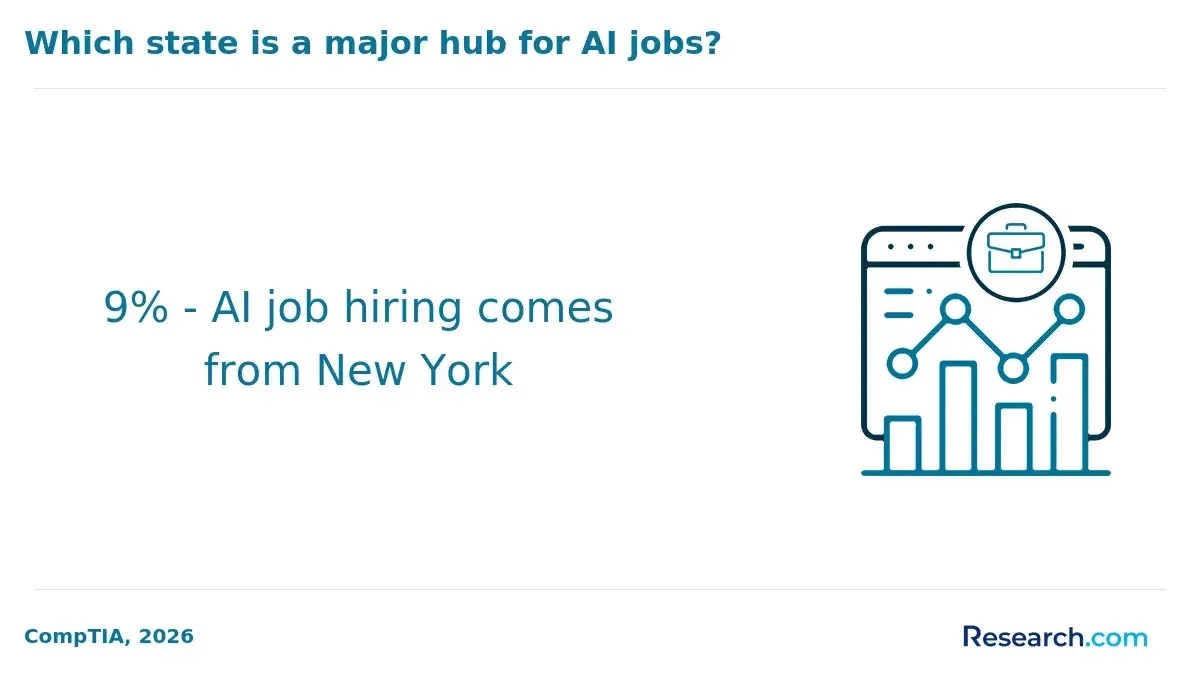
Entry-level salaries generally range from $85,000 to $110,000 in major tech hubs, while experienced specialists in Silicon Valley and New York can earn $160,000 or more, especially with expertise in deep learning, natural language processing, or robotics.
Common job roles for AI graduates include:
- Machine Learning Engineer
- Data Scientist focusing on AI models
- AI Research Scientist
- Robotics Engineer
Participating in student hackathons and contributing to open-source AI projects can enhance practical skills and improve job prospects. Professionals face challenges in keeping pace with rapidly evolving AI technologies and developing interdisciplinary skills such as software engineering and statistics.
Success often depends on practical experience and continuous learning in this fast-changing field.
Other Things You Should Know About Artificial Intelligence
Success in artificial intelligence requires a strong foundation in mathematics, particularly linear algebra, calculus, and statistics. Programming skills in languages like Python and knowledge of machine learning frameworks are essential. Critical thinking, problem-solving, and the ability to work collaboratively on projects such as hackathons also play a significant role.
AI hackathon projects often involve developing solutions using machine learning, natural language processing, or computer vision. Participants create prototypes such as predictive models, chatbots, recommendation systems, or data-driven apps within a limited timeframe. These projects prioritize innovation, collaboration, and practical use cases relevant to real-world problems.
Yes, ethical considerations are an important part of many artificial intelligence curricula, especially in programs that emphasize hackathons. Topics include bias in algorithms, data privacy, transparency, and the societal impact of AI technologies. Understanding these issues prepares students to develop responsible AI systems aligned with ethical standards.
Hackathons offer students invaluable hands-on experience, fostering collaboration and innovation under time constraints. Participants can network with industry professionals, gain practical insights, and enhance their portfolios. Some programs, like the AI governance master’s program, integrate hackathons to prepare students for real-world challenges.
References
- Eligibility Criteria https://nextgen.thescrs.org/eligibility-criteria/
- All Hackathons https://reskilll.com/allhacks
- Best Colleges for Artificial Intelligence (AI) Majors — Lantern College Counseling https://www.lanterncollegecounseling.com/insights/artificial-intelligence-ai-as-an-undergraduate-major-what-you-need-to-know
- AI Hackathon https://ai-at.eu/training/ai-hackathon/
- Recent AI Hackathons Winners | Lablab.ai https://lablab.ai/apps/recent-winners
- Machine Learning/AI on Devpost - The home for hackathons https://devpost.com/c/artificial-intelligence
- 10 Major AI Hackathon Events in 2025 Worth Joining | DigitalOcean https://www.digitalocean.com/resources/articles/ai-hackathon-events
- Guide: Career as an Artificial Intelligence (AI) Specialist in IT https://itcompare.pl/en-us/articles/60/guide%3A-career-as-an-artificial-intelligence-bropaibrcl-specialist-in-it
- A Step-by-Step Guide to AI Design Sprint Hackathons https://www.designsprint.academy/blog/a-step-by-step-guide-to-ai-design-sprint-hackathons
- Top College Degrees That Will Land You the Highest-Paying AI Jobs in 2026 https://www.investopedia.com/top-college-degrees-that-will-land-you-the-highest-paying-ai-careers-in-2026-11923863