2027 Best AI Master's Degrees for Autonomous Systems Careers

Co-Founder and Chief Data Scientist
Many professionals with unrelated undergraduate degrees find themselves blocked when seeking to enter autonomous systems careers due to a lack of specialized education. Without relevant credentials, transitioning into fields driven by artificial intelligence can be daunting and inaccessible. This dilemma limits opportunities despite growing industry demand for skilled workers. Navigating which master's degrees offer the most practical, flexible, and accredited routes into this advanced sector remains challenging. This article presents a carefully researched overview of the best master's programs tailored to prepare graduates for autonomous systems roles, helping readers identify credible pathways to successfully pivot their careers into artificial intelligence-driven industries.
Key Things You Should Know
- Master's degrees in AI for autonomous systems focus on robotics, machine learning, and computer vision, crucial for developing self-driving cars, drones, and industrial automation.
- By 2025, AI-related autonomous systems jobs are projected to grow 28%, with median salaries exceeding $110,000, reflecting strong market demand.
- Top programs combine interdisciplinary coursework and hands-on projects, partnering with industry leaders to ensure graduates meet evolving technical and ethical standards.
What is an AI master's degree focused on autonomous systems careers?
An AI master's degree programs focused on autonomous systems careers train students in designing and managing intelligent machines that operate without human control. These programs combine core artificial intelligence topics-machine learning, computer vision, natural language processing-with robotics, control systems, and sensor fusion. Graduates develop skills to create autonomous vehicles, drones, and industrial robots, applications that span transportation, manufacturing, logistics, and defense sectors.
Curricula often emphasize advanced areas such as real-time decision-making algorithms, multi-agent systems, perception, and safety-critical design. Hands-on projects include autonomous navigation, object detection, sensor integration, and human-robot interaction. Variations may focus on UAVs, self-driving cars, or automation depending on institutional expertise.
The expanding market underscores the value of graduate skills in artificial intelligence for autonomous systems engineering. The global autonomous mobile robots market is projected to grow significantly, boosting opportunities in design, research, development, testing, and deployment.
Prospective students should seek programs blending AI theory, robotics engineering, and applied system development. Employers look for proficiency in Python and C++, experience with robotics middleware like ROS, and cybersecurity knowledge for autonomous platforms. Accreditation and strong faculty research are key considerations.
For those exploring career paths, an artificial intelligence major with a focus on autonomous systems offers robust preparation to meet industry demand through rigorous study and practical skills.
Which accredited universities offer top AI master's programs for autonomous systems?
Several accredited universities offer top AI master's programs for autonomous systems, especially in North America where leading institutions dominate. According to the 2025 QS World University Rankings by Subject (Computer Science & Information Systems), seven of the top ten globally are U.S. schools, underscoring their strength in preparing students for careers in autonomous systems.
Focusing on leading North American AI master's degrees for autonomous systems careers, prominent universities such as Massachusetts Institute of Technology (MIT), Stanford University, and Carnegie Mellon University provide specialized tracks. These programs emphasize machine learning, computer vision, control systems, and sensor integration, which are essential for robotics, drones, and autonomous vehicle technology.
U.K. universities, including the University of Cambridge and Imperial College London, also offer accredited AI master's degrees with electives in autonomous systems that balance theoretical knowledge with practical applications like autonomous navigation and real-time decision making. When choosing a program, students should consider accreditation by recognized engineering or computing bodies, faculty expertise, and opportunities for hands-on projects or industry partnerships.
Given the competitive landscape, evaluating collaboration with autonomous system companies and access to specialized labs is crucial. Additionally, students looking for flexible options might explore a mechanical engineering program online that integrates AI elements relevant to autonomous systems engineering.
What jobs can you get with an AI master's for autonomous systems?
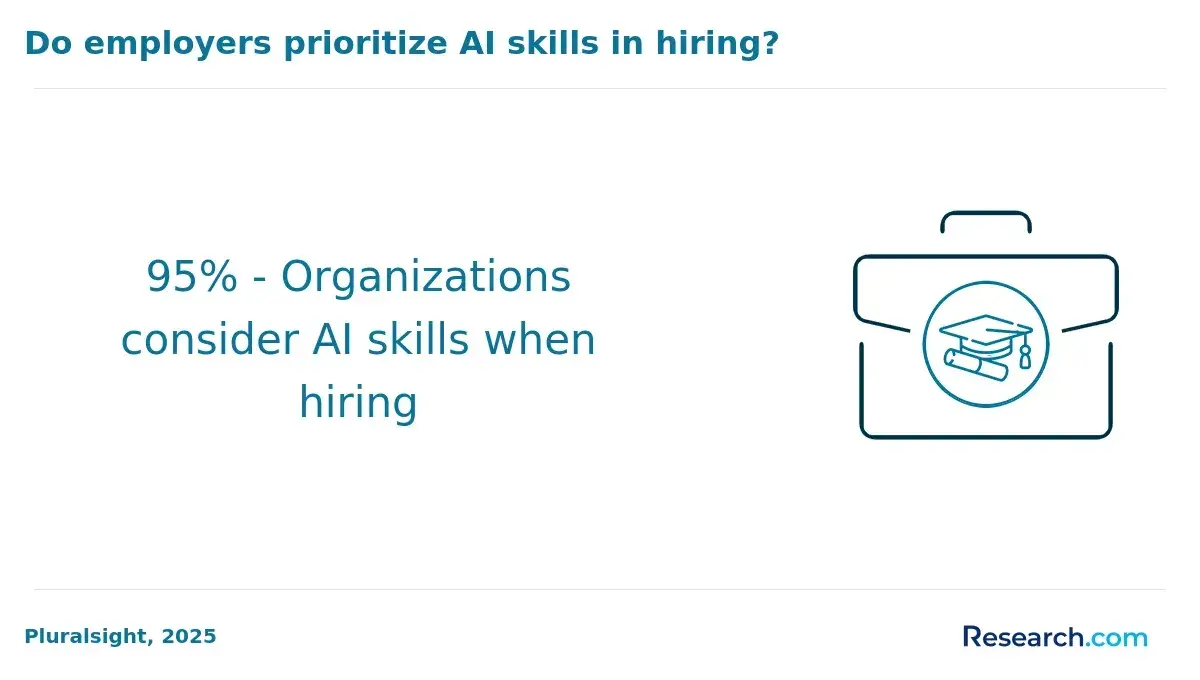
An AI master's degree focused on autonomous systems leads to diverse career opportunities for AI graduates in autonomous technology. Graduates often take roles such as Autonomous Systems Engineer, Machine Learning Engineer, Robotics Software Developer, and AI Research Scientist. These positions involve designing, programming, and optimizing autonomous systems like self-driving cars, drones, and robotic process automation in industries including automotive, aerospace, manufacturing, and defense.
Responsibilities include developing sensor fusion algorithms, real-time decision-making models, and improving machine perception and control systems. Graduates may also engage in simulation environments for autonomous navigation or safety validation necessary for regulatory compliance. Jobs in autonomous systems with an AI master's degree usually require interdisciplinary teamwork and proficiency in programming languages such as Python and C++, along with frameworks like TensorFlow or ROS (Robot Operating System).
The World Economic Forum projects a 40% job growth for AI and machine learning specialists by 2027, highlighting increasing demand across logistics, healthcare, and smart manufacturing sectors. Professionals advancing to AI product manager or technical lead roles benefit from understanding business needs and regulatory challenges associated with autonomous technology.
Students and professionals should pursue internships or projects in autonomous vehicles, robotics labs, or AI startups to boost employability. Targeting fields with strong automation investment, such as electric vehicle manufacturing or defense contracting, is advantageous. For those exploring educational options, consider the cheapest online masters in artificial intelligence to enter this growing field.
How do online and on-campus AI master's programs compare for autonomy careers?
Online and on-campus AI master's programs for autonomy careers offer distinct advantages depending on students' needs and goals. Online AI degrees provide flexibility essential for working professionals or those balancing family and work, as more students engage with distance education-a trend evident from 36% to 54% enrollment growth in at least one online course at U.S. postsecondary institutions. This makes remote learning a practical option for many seeking specialized skills in autonomous systems.
Conversely, on-campus programs shine in delivering hands-on experience through advanced robotics labs and real-time collaboration, crucial for mastering sensor fusion, hardware integration, and embedded systems. Such direct access often enhances employability in highly technical fields. Both modalities cover core topics like machine learning, computer vision, and control systems, but students should consider key factors:
- Access to internships and industry connections, often richer through campus career services
- Opportunities for live research projects and teamwork
- Scheduling flexibility based on life demands
- Program accreditation and faculty expertise aligned with autonomous systems
For those exploring benefits of online AI degrees for autonomous systems professionals, selecting the right format involves balancing flexibility with hands-on training quality. Prospective students can also check affordable options through platforms like online cybersecurity degree listings, which often overlap with AI program affordability and delivery modes.
What coursework and labs prepare you for robotics and autonomous systems roles?
Robotics and autonomous systems programs emphasize hands-on learning in robotics, perception, and control systems. Key courses cover robot kinematics, sensor integration, machine learning for perception, and real-time control algorithms. Programming skills in Python, C++, and ROS (Robot Operating System) are essential for developing autonomous platforms.
Laboratories focus on practical projects such as robot manipulation, mobile navigation, and sensor fusion, addressing challenges like obstacle avoidance and environment mapping with tools like LiDAR, cameras, and IMUs (Inertial Measurement Units). Using physical robots or simulators such as Gazebo enhances problem-solving and debugging skills important for careers in autonomy.
Advanced classes may include probabilistic robotics, control theory, and multi-agent systems, supporting design of complex algorithms for autonomous decision-making and coordination. Integration of AI for perception and planning prepares students for intelligent system development roles.
With industrial robot installations growing 10% year-over-year to over 550,000 units, many programs align curricula to industry demand, often including certifications or partnerships with robotics firms to boost career readiness.
Students should look for programs offering:
- Extensive robotics labs with access to physical systems
- Project-based learning centered on autonomy challenges
- Courses in perception, control, and AI integration
- Hands-on experience with industry-standard tools like ROS
- Collaborations exposing students to real-world robotics applications
What admissions requirements do AI master's programs typically have?
AI master's programs generally require a bachelor's degree in computer science, engineering, math, or related STEM fields. Strong quantitative skills are essential and often demonstrated through coursework or professional experience. Applicants typically submit transcripts, letters of recommendation, a statement of purpose, and a résumé or CV emphasizing relevant projects or work experience. Some programs set a minimum GPA, usually near 3.0 on a 4.0 scale, though this varies by institution.
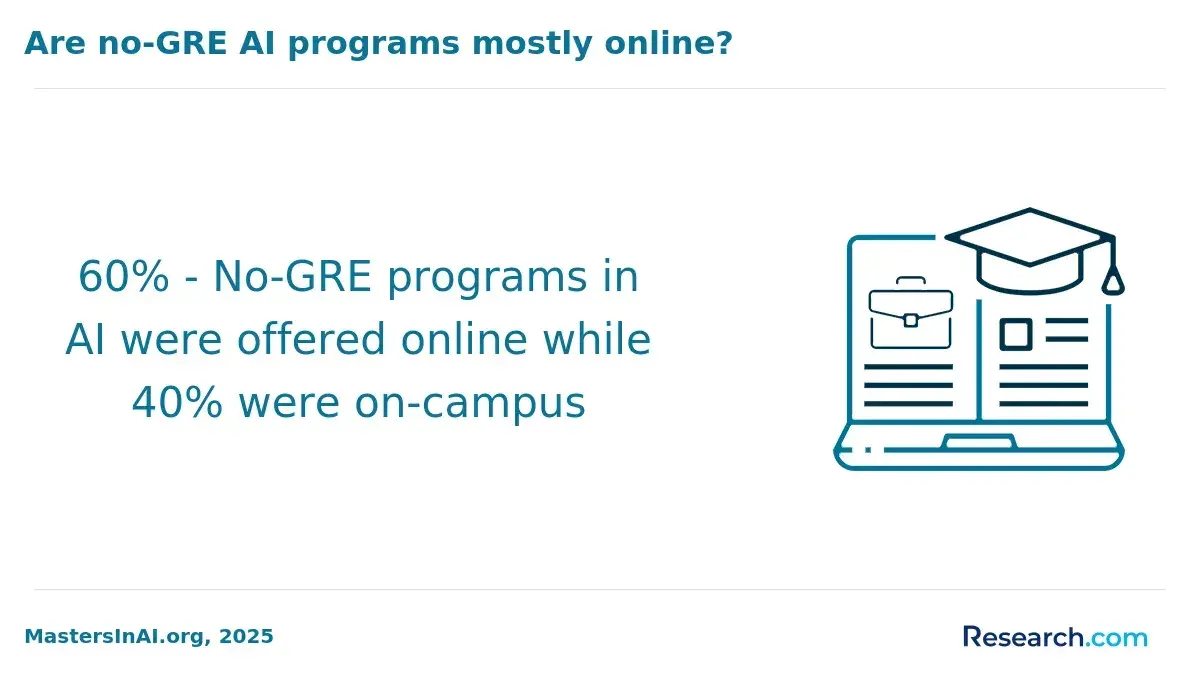
Standardized testing policies have changed notably. For example, 32% of U.S. engineering graduate programs reported not accepting GRE scores for admissions recently. Many AI master's programs now either do not require GRE scores or make them optional. However, elite institutions may still recommend or require GRE results, especially for international applicants.
Additional admissions elements often include programming proficiency shown through coding samples, portfolios, or online tests. Some programs require prerequisite courses in machine learning, statistics, or data structures if a candidate's background is outside AI or computer science. Experience with languages like Python or frameworks such as TensorFlow can enhance applications.
Admissions committees also assess leadership potential, research aptitude, and alignment with faculty expertise. Applicants should check each program's website for specific requirements and plan ahead to highlight these strengths early in their applications.
How long does an AI master's take, and what does it cost?
An AI master's degree focused on autonomous systems generally requires 1.5 to 2 years of full-time study, with part-time options extending to 3 or more years. These programs emphasize core subjects like machine learning, robotics, and control systems, often including projects or theses on autonomous technology applications.
Tuition costs vary based on institution type, residency, and program length. Public universities average about $20,513 annually for graduate tuition and fees, while private nonprofit institutions charge approximately $29,931. This puts the total tuition for a two-year public master's near $41,000 and close to $60,000 for private nonprofit degrees.
Additional yearly expenses such as textbooks, software, and living costs may add $10,000 to $20,000. Some students benefit from stipends or research assistantships that help offset these costs. Employers may also assist with tuition for part-time students.
- Program accreditation and access to advanced labs are key factors affecting education quality and potential return on investment.
- Considering online or hybrid formats can offer flexibility and cost savings.
- Starting salaries in autonomous systems fields often exceed $90,000, making investment evaluation essential.
How can you evaluate program quality, accreditation, and industry partnerships?
Accreditation from recognized bodies like ABET or regional agencies is essential to ensure that an autonomous systems or AI program meets industry standards and that credits transfer effectively. Degrees without proper accreditation may be viewed skeptically by employers. Examining curriculum rigor and relevance is equally important-programs that emphasize hands-on projects, applied AI pipelines, and real-world autonomous systems scenarios tend to offer stronger preparation. Faculty expertise with industry or research experience adds further value.
Strong industry partnerships significantly enhance career outcomes. Organizations with high AI adoption, according to McKinsey's The State of AI 2024, are 4.8× more likely to achieve productivity growth than those with low adoption. Programs that provide internships, co-op roles, or capstone projects tied to companies-such as automotive manufacturers, robotics firms, or AI startups-offer critical access to current technologies and better job placement prospects. Advisory boards with industry leaders and joint research projects signal active engagement with the evolving workforce.
- What percentage of students secure internships or employment through industry partners?
- Does the program facilitate certification in industry tools or platforms?
- Are there guest lectures or networking events led by professionals working in autonomous systems?
Careful evaluation of these factors helps identify programs that balance academic rigor with direct career pathways in autonomous systems and AI.
What salaries can autonomous systems AI master's graduates expect?
Graduates holding a master's degree focused on autonomous systems and artificial intelligence can anticipate competitive salaries that reflect their specialized skills. In the U.S., the median annual pay for related roles such as Computer and Information Research Scientists is around $145,080, according to the U.S. Bureau of Labor Statistics. This serves as a solid benchmark for many roles in AI and autonomy research and development requiring graduate training.
Salary levels vary by industry, location, experience, and job function. Robotics firms, autonomous vehicle companies, and aerospace sectors often offer salaries above the national median due to their technical demands. Entry-level positions typically start between $90,000 and $110,000, with professionals having 5 to 10 years of experience exceeding $160,000 annually.
Government and defense roles usually provide competitive pay ranging from $110,000 to $150,000, often combined with robust benefits. Startups might offer lower base salaries but compensate with equity options, which can significantly boost long-term earnings.
Academic and industrial research labs generally pay between $120,000 and $145,000 and provide strong career growth opportunities. Continuous skill development in machine learning, sensor fusion, and systems engineering enhances earning potential.
- Median salary for autonomous systems and AI roles: $145,080
- Entry-level pay range: $90,000-$110,000
- Experienced professionals: above $160,000
- Government and defense: $110,000-$150,000
What certifications complement an AI master's for autonomous systems work?
Certifications that complement a master's degree in artificial intelligence for autonomous systems careers increasingly emphasize cloud computing, machine learning operations (MLOps), and deployment expertise. Gartner forecasts that by 2025, 70% of new applications will leverage low-code/no-code platforms, highlighting the need for skills in scalable deployment and seamless system integration alongside core AI knowledge.
Key certifications include cloud provider credentials such as AWS Certified Machine Learning - Specialty, Google Cloud Professional Machine Learning Engineer, and Microsoft Certified: Azure AI Engineer Associate. These programs train candidates on cloud infrastructure and model deployment necessary for autonomous systems operating at scale.
Machine learning operations certifications, like those from Coursera or the TensorFlow Developer Certificate, focus on managing AI model lifecycles in production. This expertise is essential for maintaining reliable, real-time autonomous vehicle systems.
Additional valuable certifications cover robotic process automation (RPA) and data engineering tools such as UiPath and Apache Spark, reflecting crucial skills for handling automation workflows and data pipelines in autonomous system architectures.
Given the safety-critical nature of autonomous systems, cybersecurity credentials like the Certified Information Systems Security Professional (CISSP) enhance trust and resilience of deployed AI solutions.
Aligning these certifications with a master's specialization ensures prospective autonomous systems professionals build market-ready capabilities in deployment, scaling, and security consistent with industry trends (Gartner, 2021).
Other Things You Should Know About Artificial Intelligence
In 2027, consider program reputation, faculty expertise, industry partnerships, and curriculum focus on AI and autonomous systems. Look for hands-on projects, internship opportunities, and courses covering machine learning, robotics, and ethics to ensure the program aligns with career goals in autonomous systems.
AI enhances the reliability of autonomous systems by enabling continuous learning and adaptation to changing environments. Machine learning algorithms improve decision-making accuracy, and sensor fusion techniques help reduce errors by combining data from multiple sources. This leads to safer and more dependable autonomous operations.
Ethical considerations in AI for autonomous systems include ensuring transparency, accountability, and fairness in algorithm design and deployment. It is vital to address bias in training data, protect user privacy, and establish clear guidelines for autonomous decision-making. These factors help build trust and social acceptance of autonomous technologies.
Yes, AI master's graduates with an autonomous systems focus can work in various industries beyond traditional robotics. These include automotive, aerospace, defense, healthcare, and agriculture, where autonomous technologies are increasingly adopted. Skills in AI and autonomous systems are applicable to any sector utilizing intelligent automation and smart devices.
References
- Quality Assurance of Joint Programmes | Showcase Online Toolkit https://joint-edu-offerings.unite-university.eu/quality-assurance-of-joint-programmes
- The Best Robotics Degrees & Certifications to Launch Your Career | Robotics Jobs https://roboticsjobs.co.uk/career-advice/the-best-robotics-degrees-certifications-to-launch-your-career
- Top 10 Careers You Can Pursue With an Online Master’s in AI https://www.ucumberlands.edu/blog/careers-you-can-pursue-with-an-online-masters-in-ai
- Top AI Graduate Programs To Kickstart Your Career in Artificial Intelligence Today https://www.investopedia.com/top-ai-graduate-programs-to-kickstart-your-career-in-artificial-intelligence-today-11916749
- Artificial Intelligence Jobs: Salary Overview by Seniority | Leland https://www.joinleland.com/library/a/ai-jobs-and-salaries
- What Can I Do With a Master’s Degree in Artificial Intelligence (AI)? https://wp.wpi.edu/catalyst/2024/04/03/what-can-i-do-with-a-masters-degree-in-artificial-intelligence-ai/
- Top AI Certifications: The Best Programs to Master AI in 2026 https://www.sprintzeal.com/blog/top-ai-certifications
- What to Study for a Career in Robotics? https://blog.robotiq.com/what-to-study-for-a-career-in-robotics
- Best AI Certifications to Boost Your Career in 2026 – Dataquest https://www.dataquest.io/blog/best-ai-certifications/
- Agentic AI and Autonomous Systems https://schoolofai.amityonline.com/certifications/agentic-ai-and-autonomous-systems