2027 Scholarship Trends for Artificial Intelligence Students

Co-Founder and Chief Data Scientist
Many students and professionals with unrelated undergraduate degrees face a challenge when seeking financial support to transition into artificial intelligence. Scholarships often target traditional STEM backgrounds, leaving others unsure where to begin or how to qualify. Navigating eligibility requirements and discovering relevant funding amid shifting trends can be overwhelming. This article examines current scholarship trends tailored for those pivoting into artificial intelligence, highlighting key opportunities, eligibility shifts, and strategic approaches to secure funding for graduate studies while maintaining career flexibility.
Key Things You Should Know
- Scholarship funding for artificial intelligence students increased by 25% in 2025, reflecting growing industry demand and government investments in STEM education.
- Discipline-specific scholarships now prioritize AI ethics and interdisciplinary research, encouraging diverse academic approaches beyond traditional computer science.
- Top private foundations and tech companies offer merit-based AI scholarships averaging $10,000 annually, aiding students in managing rising tuition costs.
What scholarship options exist for artificial intelligence students in U.S. colleges and universities?
Scholarships for artificial intelligence students in U.S. universities have expanded rapidly, with Sallie Mae reporting 2,716 new AI-related awards since 2022. These include grants, fellowships, scholarships, and program funding, with California, Texas, and New York contributing over a quarter of this growth. Financial aid opportunities for artificial intelligence majors in American colleges come from federal, state, institutional, and private sources.
Federal programs like the National Science Foundation (NSF) Graduate Research Fellowship offer strong support for STEM-related AI fields. State grants often target in-state students at universities in leading states such as California, Texas, and New York. Many institutions now provide scholarships specifically for AI or machine learning studies, including merit-based and need-based options.
Private organizations and tech corporations frequently combine scholarships with internships or mentorships. Notable examples include scholarships from Google and Microsoft that emphasize academic excellence and innovation in AI projects. Students from underrepresented groups, including women, minorities, and veterans, may find specialized scholarships aimed at increasing diversity in AI fields.
Successful applicants usually present strong academic records, relevant AI project experience, and clear career objectives. Keeping track of announcements from university AI departments and professional AI societies is essential. For those considering accelerated paths, exploring the fastest way to get a computer science degree can be beneficial.
How can artificial intelligence students qualify and apply for major AI-related scholarships?
To qualify for artificial intelligence scholarships in the United States, students must focus on opportunities that emphasize AI, machine learning, or related computational fields. Eligibility usually requires enrollment in an accredited undergraduate or graduate program with a strong AI curriculum and maintaining a high GPA, often above 3.5. Demonstrated experience in AI through projects, research, or internships is also essential.
When applying for major AI-related scholarships for graduate students, the process typically involves submitting detailed transcripts, letters of recommendation, and a personal statement highlighting career goals and research interests in artificial intelligence. Graduate applicants may need to provide a research proposal aligned with the funding organization's objectives.
Prestigious programs, such as the U.S. Department of Energy's Computational Science Graduate Fellowship, offer up to $45,000 per year plus full tuition and fees, showcasing the substantial funding available for advanced AI expertise. Candidates must demonstrate prior experience in high-performance computing and AI methodologies.
Additional steps to enhance qualification include publishing at reputable AI conferences, gaining endorsements from recognized AI researchers, participating in competitive AI challenges or hackathons, and showing leadership in AI-related organizations.
Students benefit from planning applications early and tailoring documents to emphasize relevant AI skills. They should also explore resources like university scholarship offices and AI research centers. For those seeking flexible education options, exploring the best online AI degree programs can be a practical route for building qualifications efficiently.
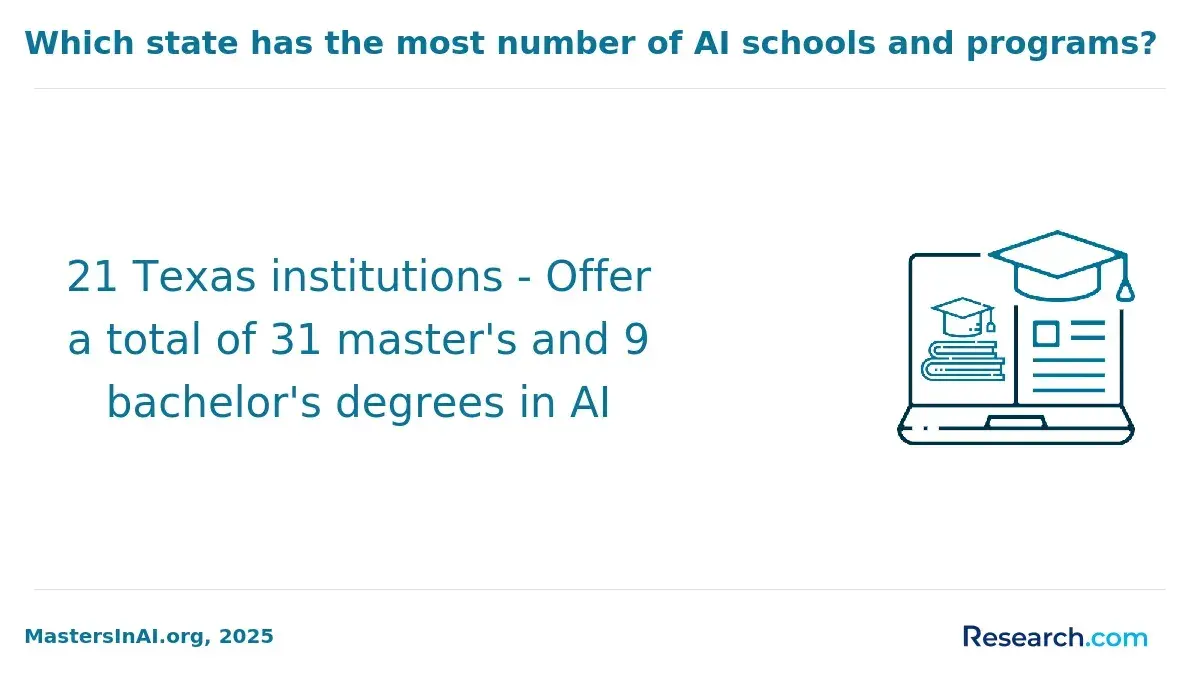
Which accredited U.S. universities offer strong artificial intelligence programs with dedicated funding support?
Several accredited American universities are well recognized for their strong artificial intelligence programs and dedicated funding support. Top U.S. universities with artificial intelligence scholarships include Stanford University, Massachusetts Institute of Technology (MIT), Carnegie Mellon University, and the University of California, Berkeley. These institutions offer a variety of scholarships, fellowships, and research grants targeting AI students.
Stanford's AI Lab offers funding through fellowships linked to advanced research projects and industry collaborations. MIT's Computer Science and Artificial Intelligence Laboratory (CSAIL) provides numerous scholarship opportunities supported by private donors and government programs. Carnegie Mellon University focuses on diversity with fellowships aimed at underrepresented STEM groups, while UC Berkeley promotes diversity in technology through competitive scholarships at its Artificial Intelligence Research Center.
Students seeking funding should explore university-specific websites and departmental announcements early. Many programs prioritize candidates showing research potential and AI innovation goals. Additionally, many schools participate in national funding initiatives and industry-sponsored awards that replenish AI scholarships annually. Accredited American universities offering funding for artificial intelligence students often encourage interdisciplinary collaboration and real-world project experience.
The UK Office for Students highlights the scale of investment in AI education, allocating £18.1 million since April 2020 for 1,818 AI and data-science postgraduate conversion scholarships, plus an additional £8.1 million set for 2023-24 that emphasizes diversity and digital skills gaps.
Prospective students can also consider flexible options like masters in data science online programs, which often include AI-focused curricula and scholarship opportunities.
What artificial intelligence degree pathways are available, from bachelor's to Ph.D. programs?
Bachelor's degree programs in artificial intelligence often come as specialized AI degrees or as concentrations within computer science, data science, or software engineering. Common titles include "BSc in Artificial Intelligence," "Computer Science with AI," and "Data Science." These programs emphasize foundational skills such as programming, machine learning, and algorithms, preparing students for entry-level AI roles.
At the graduate level, master's programs focus on advanced AI concepts like neural networks, natural language processing, and computer vision. Degrees such as "MSc in Artificial Intelligence" or interdisciplinary programs combining AI with robotics or cognitive science serve both recent graduates and working professionals. Many offer flexible formats, including part-time or online options. Doctoral programs for artificial intelligence students usually reside within computer science or engineering faculties, specializing in research areas like reinforcement learning, ethical AI, or autonomous systems. A Ph.D. is essential for careers in academia, advanced research and development, or senior technical leadership.
For non-technical graduates, the UK's AI and data-science conversion scheme provides an alternative path, though financial considerations are key since scholarships may not fully cover living expenses. Applicants should also evaluate program accreditation, faculty expertise, and hands-on opportunities such as internships or industry projects to ensure alignment with career goals.
Those interested in AI training jobs can explore further details at AI training jobs. Flexibility continues to expand, helping professionals reskill or specialize in this dynamic field.
How do online artificial intelligence programs compare to campus-based options for scholarship access?
Online artificial intelligence programs offer greater access to scholarships than traditional campus-based options. This advantage stems largely from AI-powered scholarship platforms that use advanced matching algorithms. These systems reduce the time students spend searching for funding by up to 70% and increase successful matches by about 30%, benefiting students without access to in-person campus resources.
Campus students rely on institutional aid offices, faculty recommendations, and alumni networks, but these often require manual effort and proactive engagement. In contrast, online students benefit from AI systems that analyze academic records, interests, and financial needs to connect them with relevant scholarships, including those less publicized or outside their institution.
Many online programs partner with third-party AI scholarship platforms offering personalized dashboards, alerts, and application support around the clock. This is especially helpful for working professionals or part-time students pursuing AI-related degrees remotely.
For best results, online students should choose programs with integrated AI scholarship support and also independently search for sponsor-specific and merit-based scholarships targeting artificial intelligence fields. Combining AI-driven matching with strategic manual research improves funding opportunities significantly.
What core courses and specializations do artificial intelligence degree programs typically include?
Artificial intelligence degree programs focus on core areas such as machine learning, data structures, algorithms, probability, and statistics, combined with programming languages like Python and Java. Students develop expertise in neural networks, natural language processing, and computer vision, supported by essential mathematics like linear algebra and calculus for model development.
Specializations allow deeper study in subjects including robotics, reinforcement learning, ethical AI, and AI applications in healthcare. For instance, robotics coursework often incorporates control systems and sensor technology, while ethical AI explores bias, privacy, and social impact, which are critical as AI technology becomes more widespread.
Practical experience is a key component, with many programs offering projects, internships, and partnerships with industry. Working with real-world data and open-source AI tools helps students build strong portfolios. Electives frequently cover human-computer interaction, data mining, and cloud computing to address emerging AI deployment trends.
Aston University's AI scholarships promote diversity by providing additional awards specifically targeted at women, Black, and disabled graduates, enhancing representation in AI fields. This approach reflects increasing awareness of diverse perspectives' importance in AI research and application.
What are the tuition costs and typical financial aid packages for artificial intelligence majors?
Tuition fees for artificial intelligence programs in the United States differ significantly by institution type. Public universities typically charge in-state students between $10,000 and $25,000 per year, while out-of-state students may pay up to $40,000 annually. Private universities often have tuition exceeding $50,000, and graduate AI programs at elite schools can cost over $60,000 per year.
Financial aid options are available but competitive. Federal assistance, like Pell Grants and Stafford Loans, applies to many students. Universities also offer merit-based scholarships aimed at STEM and AI majors, frequently ranging from $5,000 to $20,000 per year. Additionally, assistantships and fellowships provide tuition coverage plus stipends in exchange for research or teaching roles.
- Specialized scholarships such as the USAII AI NextGen Challenge award significant funding and industry connections, recognized as "America's largest AI scholarship."
- Private scholarships from tech companies, professional groups, and AI-focused organizations support tuition and project expenses.
- Early application increases chances due to rising demand in the AI field.
Combining federal aid, institutional scholarships, and specialized awards is often essential to manage total education costs. Exploring all funding avenues early helps prospective students navigate financial challenges and maximize support during their AI studies.
What entry-level and advanced career roles can artificial intelligence graduates pursue?
Graduates with expertise in artificial intelligence can access a variety of entry-level and advanced career options across multiple industries. Entry-level roles often include AI software engineers, data analysts focused on machine learning, AI research assistants, and AI quality assurance specialists who ensure systems operate effectively in real-world settings.
Advanced positions typically require experience in areas like model optimization, system architecture, and strategic AI integration. Common roles include machine learning engineers, AI solutions architects, and research scientists, with leadership opportunities such as AI project managers or AI ethics consultants emerging as organizations prioritize innovation alongside ethical and regulatory considerations.
Specialized sectors such as healthcare, finance, and autonomous vehicles open further career pathways, including AI diagnostic tool developers, financial risk modelers, and autonomous systems engineers. Building skills in natural language processing, computer vision, or robotics can help tailor expertise.
Many universities support artificial intelligence students through bursaries. For instance, the University of East London offers eligible students a bursary of £1,000 per year for three years to assist with living and study expenses, encouraging specialization in AI fields.
Success in these careers demands continuous learning in programming languages like Python, familiarity with AI frameworks such as TensorFlow, and understanding ethical AI practices to meet employer expectations.
What salary ranges and earning potential can artificial intelligence professionals expect over time?
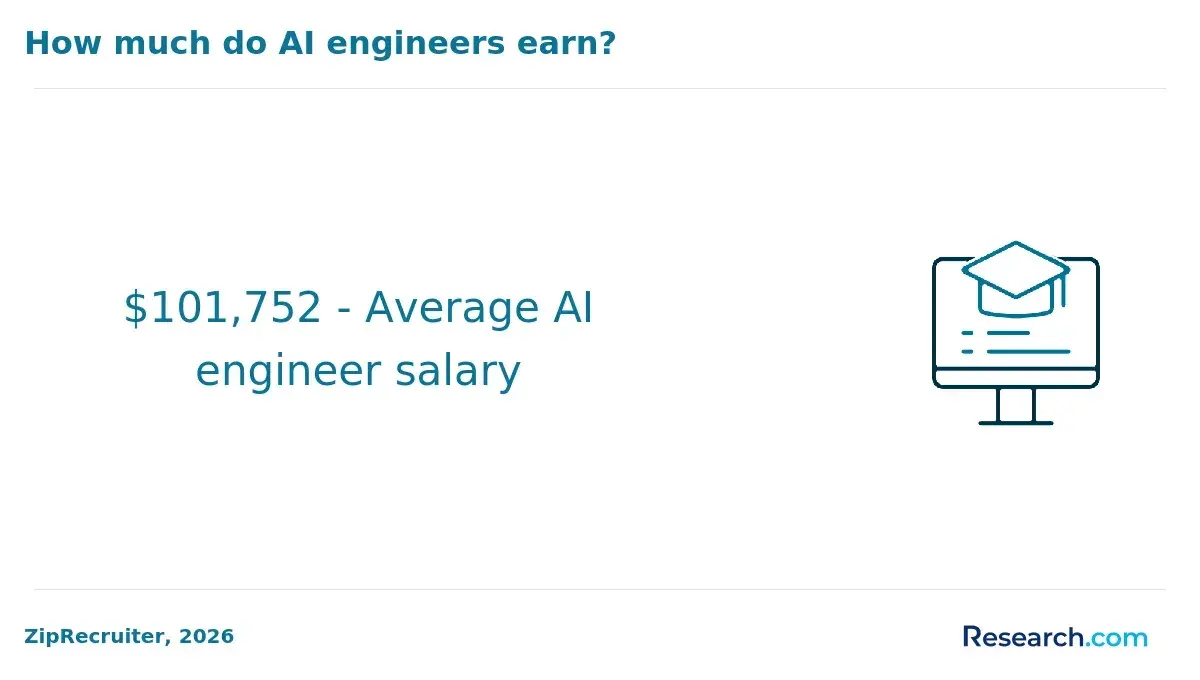
Artificial intelligence professionals in the U.S. see salary growth with experience and specialization. Entry-level AI engineers often earn between $90,000 and $120,000 annually. Those with three to five years experience typically make $130,000 to $160,000. Senior AI experts or researchers with advanced skills and leadership roles can command salaries from $180,000 up to $250,000 or more, especially in major tech firms or specialized sectors like healthcare and finance.
Expertise in machine learning, deep learning, and natural language processing strongly influences salary potential. Combining AI with data engineering or cloud computing skills further enhances earnings. Location matters: professionals in San Francisco or New York usually benefit from higher pay, although cost-of-living factors should be considered.
The demand for skilled workers is reflected in education funding options. For example, an AI-focused DAAD-supported master's program in data science and AI offers full tuition waivers plus an annual living stipend of €11,208. Such fully funded options can reduce financial barriers, giving graduates a competitive edge with less debt.
Early-career individuals should consider funded master's programs or apprenticeships to boost credentials. Mid- and senior-level professionals might pursue certifications or advanced specializations to increase salary negotiations or move into roles such as AI product management or specialized research.
How can students evaluate AI programs and scholarships to maximize job outlook and industry alignment?
Students aiming to advance in artificial intelligence can maximize their opportunities by selecting programs that emphasize practical skills like machine learning frameworks, data engineering, and software development. Ideal programs often feature hands-on projects, internships, and partnerships with leading tech firms, enhancing employability in a competitive job market.
Scholarships play a crucial role in supporting students financially and professionally. Notably, top U.S. national AI/ML scholarships aligned with the Department of Defense provide full tuition coverage along with annual stipends ranging from $30,000 to $46,000. These awards not only alleviate financial burdens but also offer resources comparable to early-career tech salaries, allowing recipients to concentrate on developing relevant skills.
When evaluating programs and scholarships, consider these questions:
- Does the scholarship connect students with industry mentors or guarantee internships?
- Is the curriculum aligned with emerging technologies like natural language processing or autonomous systems?
- What are the graduate employment rates and top hiring companies?
Prioritize opportunities offering networking aligned with your career goals, whether in defense, healthcare, or fintech. Government-backed programs and research centers often grant exclusive access to specialized projects and resources, boosting market competitiveness.
Other Things You Should Know About Artificial Intelligence
In 2027, several scholarships have emerged for AI students focusing on healthcare applications, such as those by the National Institutes of Health and private tech companies. These scholarships emphasize research in medical imaging, predictive analytics, and personalized medicine, reflecting a growing trend of integrating AI into healthcare innovations.
Employer-sponsored funding in 2027 is most often tied to machine learning, robotics, and healthcare AI. These awards usually require full-time enrollment, a 3.0 GPA, and a commitment to a summer internship or post-graduation work term with the sponsoring company.
Ethics is an integral component of artificial intelligence education and practice, focusing on responsible AI development and deployment. Students learn to consider issues such as bias, privacy, transparency, and accountability to ensure AI technologies are safe and equitable. Ethical training prepares graduates to address societal impacts and comply with evolving regulatory standards.
Current trends in artificial intelligence research include advancements in natural language processing, reinforcement learning, explainable AI, and AI-driven automation across various industries. Additionally, growing interest in AI safety, fairness, and human-AI collaboration are shaping the field's direction. Staying updated on these areas can guide students in selecting relevant projects and career paths.
References
- Artificial Intelligence – Martingale Foundation https://martingale.foundation/subjects/artificial-intelligence/
- [2026] What salary can an Artificial Intelligence Engineer expect? https://liora.io/en/all-about-salary-artificial-intelligence-engineer
- Master’s in AI Scholarships for Students from Underrepresented Groups - Zuse School ELIZA https://eliza.school/opportunities/masters-in-ai-scholarships-for-students-from-underrepresented-groups/
- AI or Not AI: What Students Want https://www.digitaleducationcouncil.com/resource-library-items/digital-education-council-global-ai-student-survey-2024
- 14 Best Entry Level AI Jobs: A Beginners Guide | Mercor https://www.mercor.com/resources/experts/best-entry-level-ai-jobs-guide/
- 22 Mature students Artificial Intelligence (Ai) Scholarships available https://www.hotcoursesabroad.com/study/international-scholarships/all/qn/artificial-intelligence-ai/mature-students/all/cid/qid/cb.31/1175/nty/scholarship.html
- Meet Sophia, the all-knowing AI Student Advisor https://studyportals.com/meet-ai-student-advisor/
- AI Jobs With No Experience â 10+ Entry-Level Roles | Beginner Guide 2026 â Mindrift https://mindrift.ai/blog/ai-jobs-with-no-experience
- Master’s in Artificial Intelligence Salary | University of Bridgeport https://www.bridgeport.edu/news/masters-in-artificial-intelligence-salary-expectations/
- Studying online at university https://goingto.university/where-to-study/studying-at-university-online/