2027 Top States With the Best Job Outlook for AI Master's Graduates

Co-Founder and Chief Data Scientist
Graduates holding a master's degree in artificial intelligence often face uncertainty when choosing where to launch their careers. Not all states offer equal opportunities for job growth, salary potential, or industry presence. This challenge intensifies for those transitioning from unrelated fields, seeking the most strategic locations to maximize their investment in education. Understanding regional job markets is crucial for making informed decisions about relocation and career planning.
This article highlights the top states with the best job outlook for AI master's graduates in 2027, providing data-driven insights to help readers identify environments with strong demand and growth potential.
Key Things You Should Know
- The top states for AI master's graduates in 2026 include California, Texas, and Massachusetts, driven by strong tech ecosystems and high AI job growth rates exceeding 15% annually.
- Median salaries for AI-related roles in these states range from $110,000 to $140,000, significantly above the national average for master's-level graduates.
- States with leading research universities and robust startup networks provide the best internship and employment opportunities for AI master's graduates, enhancing career progression.
Which U.S. states have the strongest job market demand for AI master's graduates in 2027?
The strongest job market demand for AI master's graduates in U.S. states centers on California, Massachusetts, and New York. These top states hiring AI master's degree holders combine to cover about 45% of all AI job openings nationwide, according to LinkedIn's Jobs on the Rise report. California's dominance stems from its dense tech ecosystem in Silicon Valley and the Bay Area, offering roles in software development, machine learning engineering, and data science.
Massachusetts has a thriving market fueled by Boston's universities and research labs focusing on healthcare technology, robotics, and autonomous systems. New York's AI jobs revolve around finance, advertising, and cybersecurity, supported by its financial sector and media companies investing heavily in AI analytics and automation. Beyond these, Texas and Washington are emerging as significant hubs, with Texas's tech growth in Austin and Dallas accelerating cloud computing opportunities, and Washington benefiting from AI research teams at Microsoft and Amazon.
Those looking to capitalize on the strongest job market demand for AI master's graduates should consider geographic flexibility to access higher-paying roles and diverse projects. Tailoring skills to dominant industries regionally enhances prospects, while staying connected to local professional networks is vital. For those exploring pathways into tech quickly, the fastest way to get a computer science degree can be a strategic start.
What is the average salary range for AI master's degree holders across different U.S. regions?
The average salary range for AI master's degree holders varies widely across U.S. regions. In high-cost tech hubs such as the San Francisco Bay Area, annual salaries typically range from $165,000 to $185,000. This is about 35-40% above the national average for AI roles, underscoring the demand for advanced AI expertise among leading tech firms and startups.
Regional salary differences for AI master's graduates also show that other metropolitan centers like New York City and Boston offer competitive pay, generally between $120,000 and $140,000. These cities benefit from strong finance, healthcare, and technology sectors employing AI talent.
Midwestern areas and smaller urban locations tend to offer lower salaries, often between $90,000 and $115,000, influenced by lower living costs and fewer AI-focused employers. However, they present valuable opportunities in applied AI within manufacturing, automotive, and agricultural industries.
Graduates contemplating an AI career should factor in how the average salary range for AI master's degree holders by region reflects local market demand and industry focus. Geographic mobility toward established tech ecosystems may lead to higher earnings, while emerging AI markets may offer solid growth potential despite lower starting salaries.
For those exploring a related interdisciplinary path, an online mechanical engineering degree can complement AI skills in fields like robotics and automation.
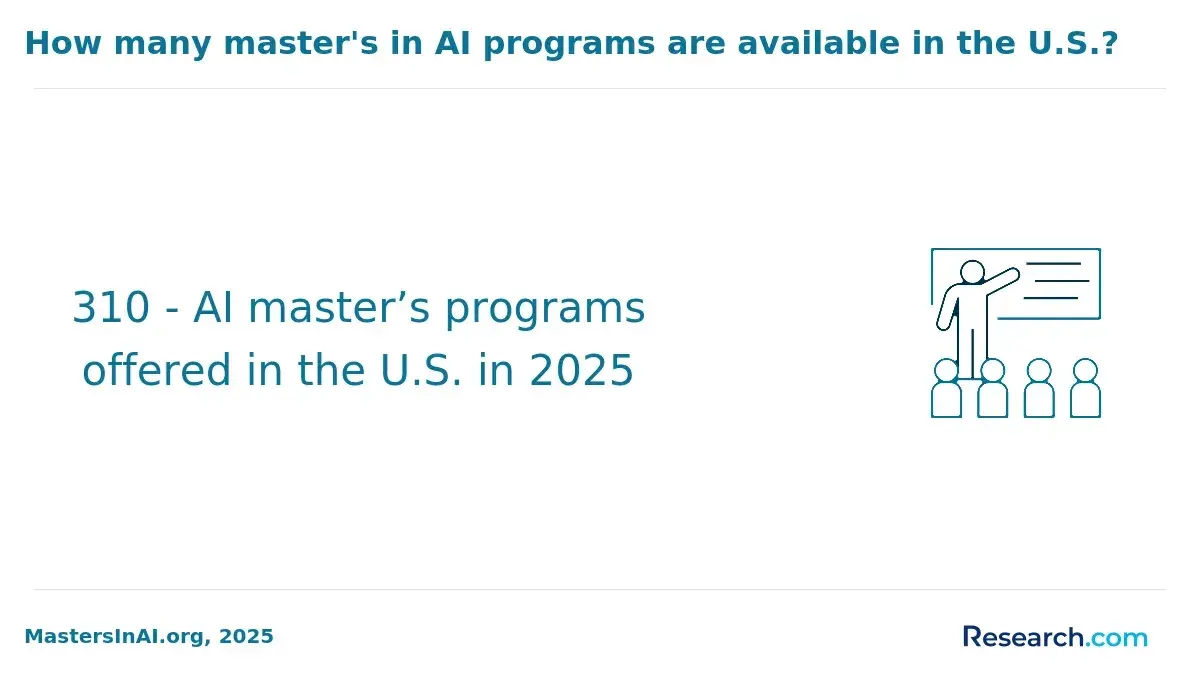
How do regional job growth projections for AI roles compare to national employment trends?
Regional job growth projections for AI roles substantially exceed national employment trends, particularly in major technology hubs. AI specialist positions are forecasted to increase by 35% annually through 2026, compared to the 5.3% average growth rate across all U.S. occupations. This dramatic difference reflects concentrated state employment trends for artificial intelligence careers in regions like California, Washington, and Massachusetts, where tech industry strength offers the best prospects for AI master's graduates.
The rapid expansion of AI applications in sectors such as healthcare, finance, and autonomous vehicles is largely centered in urban tech hubs. Emerging markets like Texas and New York show moderate but growing AI job opportunities, which can be important for candidates unable to relocate to core tech states. Locations like Seattle and Boston have seen particularly strong demand, creating more specialized positions and competitive salary ranges.
These regional patterns also affect related fields like machine learning engineering and data science, with growth varying based on local industry investments. Strategic consideration of geographic factors enhances career planning, allowing students and professionals to target regions with higher demand and negotiate better compensation.
Factors such as job outlook and location are crucial for maximizing the value of an AI master's degree. For those evaluating education options, researching affordable programs can be valuable; for example, details on online engineering degree cost may be a practical starting point.
What are the core admission requirements and prerequisites for accredited AI master's programs?
Core admission requirements for AI master's programs in top US states typically include a bachelor's degree in computer science, engineering, mathematics, or related STEM fields. Applicants without a directly related degree must demonstrate substantial coursework in programming, statistics, linear algebra, and calculus. A minimum cumulative GPA of 3.0 on a 4.0 scale is standard, though more competitive institutions may require higher. Many programs also request standardized test scores; according to Graduate Management Admission Council data, GRE quantitative scores for admitted students generally range between 155 and 165.
Prerequisites for accredited AI master's degrees in the United States often include prior coursework in data structures, algorithms, probability theory, and introductory machine learning or AI fundamentals. Students lacking these must complete remedial classes before or during their first semester. Letters of recommendation-usually two or three-are also essential, providing verification of technical skills and research potential. A statement of purpose outlining motivation and career goals in AI is mandatory, along with a resume showcasing relevant work experience or research projects.
Proof of programming proficiency in languages like Python, Java, or C++ is highly recommended. Applicants are encouraged to prepare portfolios or GitHub repositories demonstrating AI or machine learning projects. International students may be required to submit TOEFL or IELTS scores to confirm English proficiency. Meeting these requirements demands clear documentation of academic strength, technical ability, and a focused career plan aimed at AI specialization. Those exploring affordable options may consider the cheapest masters in data science as part of their preparation.
Which professional certifications or credentials do AI master's graduates need to enhance employment prospects?
Graduates with a master's in AI should focus on professional certifications that validate both technical skills and hands-on expertise to enhance job prospects. Cloud certifications from top providers such as AWS, Google Cloud, and Microsoft Azure stand out as particularly valuable. Data from Indeed shows that cloud-certified graduates earn starting salaries $18,000 to $25,000 higher on average than peers without these credentials. Employers prioritize candidates who can deploy AI solutions using cloud platforms effectively.
Certifications in machine learning frameworks and data science tools also hold significant value. For example, Google's TensorFlow Developer Certification showcases proficiency in AI model development and deployment. The Certified Data Scientist credential from the Data Science Council of America highlights essential programming, statistical, and modeling capabilities for AI careers.
To broaden career opportunities within AI-driven fields, graduates should also consider data engineering and cybersecurity certifications. The Google Professional Data Engineer and Certified Information Systems Security Professional (CISSP) credentials emphasize secure data management and resilient system design. Combining AI knowledge with cloud, data, and security certifications meets diverse employer demands and builds a competitive edge.
Strong technical fluency paired with recognized certifications provides clear evidence of job readiness. Employers increasingly seek proof of working experience with cloud technologies, containerization, and AI workflow orchestration. Pursuing multiple relevant certificates helps align qualifications with evolving industry needs.
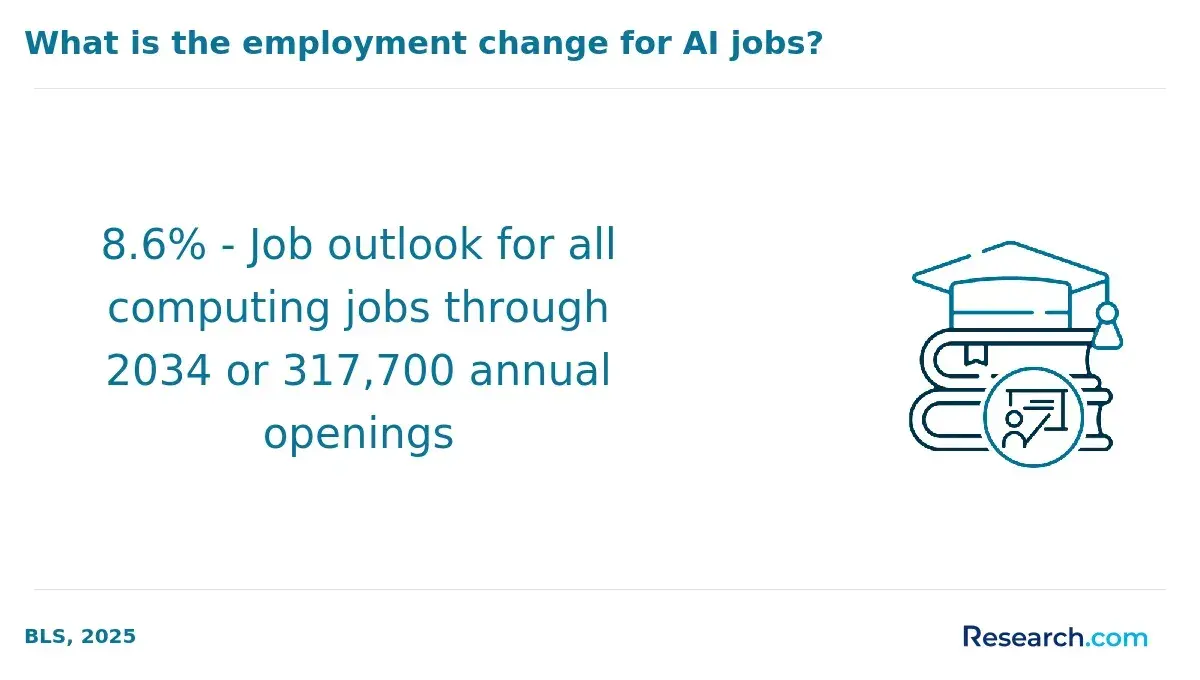
How do online AI master's programs compare to campus-based options in terms of employer recognition?
Employer recognition of online AI master's programs closely matches that of campus-based degrees. According to the 2024 Society for Human Resource Management employer survey, 89% of employers show no preference between graduates of online and traditional AI master's programs. This indicates that earning an accredited online degree carries equivalent weight in the job market.
Accreditation status is crucial for prospective students evaluating online programs. Employers tend to prioritize degrees from regionally or nationally accredited institutions over the mode of delivery. Graduates from online programs offered by reputable universities often earn comparable salaries within the first two years as those from campus-based programs.
Job seekers should confirm program accreditation and look for industry partnerships, such as collaborations with tech companies or research institutes, which can enhance practical experience. Online students who participate in hands-on projects or internships can showcase skills similar to their campus peers. Many employers emphasize measurable competencies in machine learning, data processing, and AI ethics over program format.
Working professionals may find online programs more accessible without compromising employer perception. However, it remains important to assess faculty expertise and available support services, which can vary between online and traditional formats. Ultimately, employer preference focuses on curriculum quality and relevance rather than just online versus campus distinctions when hiring AI master's graduates.
What specific job roles and career titles are most available for AI master's graduates in high-demand states?
Machine Learning Engineer, AI Research Scientist, and Data Scientist roles represent 62% of AI master's graduate job postings in top-demand states such as California, Massachusetts, and Washington, with base salaries typically ranging between $140,000 and $180,000. These positions are highly valued within industries like finance, healthcare, technology, e-commerce, and manufacturing.
Machine learning engineers develop algorithms that enable systems to learn from data, making them crucial across multiple sectors. AI research scientists primarily conduct experimental and development work, often in universities, government labs, or private sector R&D. Data scientists analyze complex datasets to support strategic business decisions. Other important roles include AI software developers who create AI-driven applications, and natural language processing specialists focusing on language-related AI challenges. Emerging positions such as AI ethics specialists and AI product managers are less common but growing.
Graduates aiming for these roles should emphasize skills in machine learning frameworks, statistical analysis, and programming languages like Python and R. Networking within local AI communities and gaining hands-on experience through internships or projects greatly enhance job prospects. Employers prioritize candidates with demonstrated applied AI knowledge rather than purely theoretical expertise.
What is the typical program length, cost, and financial aid availability for accredited AI master's degrees?
Master's programs in artificial intelligence generally take 18 to 24 months for full-time students, while part-time paths extend to three or four years to suit working professionals. Accelerated options are available, allowing completion in 12 to 15 months through increased course loads and summer classes, though these demand significant time investment.
Costs vary widely, with average tuition ranging from $60,000 to $120,000. Public universities tend to be more affordable for in-state students by 30-50%, whereas private institutions typically have higher fees but may offer enhanced resources and industry connections. Program delivery format-online or on campus-also affects cost.
Financial aid opportunities are strong in accredited programs. Federal student loans up to $20,500 annually are available for graduate students who are U.S. citizens. Scholarships, assistantships, and fellowships may cover between 25% and 100% of tuition. Employer tuition reimbursement plays an important role for professionals, especially when the coursework aligns with their roles. Grants are sometimes offered specifically for STEM fields, including artificial intelligence.
Graduates report a median return on investment of 150% within five years, underscoring the long-term value despite upfront expenses. Students should carefully assess program duration, costs, and aid options alongside their career goals to maximize educational and financial outcomes.
Which industries and sectors are hiring the most AI master's graduates in top-performing states?
Technology and software development dominate employment for AI master's graduates in leading U.S. states, making up 41% of job opportunities. Employers in this sector look for candidates with expertise in machine learning, natural language processing, and data engineering to innovate in cloud computing, cybersecurity, and autonomous systems. Common roles include AI research scientist, AI-focused software engineer, and data scientist positions within established tech firms and startups.
The financial services industry represents 18% of AI-related hires, emphasizing applications like fraud detection, algorithmic trading, and personalized banking solutions. Graduates often fill roles such as quant analysts, risk modelers, and AI engineers specializing in financial analytics. Banking hubs across various states support these positions by integrating AI to improve decision-making and regulatory compliance.
Healthcare accounts for 15% of employment for AI master's holders, where AI enhances diagnostic imaging, patient data analysis, and drug discovery. Available roles include healthcare data scientists, clinical AI developers, and bioinformatics specialists. States with major medical research centers see significant growth in AI-driven health tech, including electronic health records and telemedicine.
Manufacturing employs 12% of graduates, focusing on automation, predictive maintenance, and supply chain optimization. Robotics engineers, process automation specialists, and quality control analysts are common positions. AI-powered manufacturing increases operational efficiency and reduces downtime, particularly in states with advanced industrial sectors.
How should prospective students evaluate and compare accreditation quality across different AI master's programs?
Program accreditation should be a top priority when evaluating AI master's degrees, as it ensures educational quality and improves employment prospects. ABET accreditation is a well-regarded standard for computer science and engineering programs, closely linked to career success. Data from the 2024 ABET outcomes report shows that graduates from ABET-accredited programs have a 94% employment placement rate within six months, significantly higher than the 76% rate for non-accredited programs. This 18% gap highlights accreditation's role in employer confidence.
Prospective students need to confirm whether programs hold current ABET accreditation or equivalent regional accreditations recognized by the U.S. Department of Education. Understanding whether accreditation covers the full program or specific AI-related disciplines, such as software engineering or data science, is equally important.
Curriculum comparison is essential to ensure accredited programs prioritize rigorous AI coursework, hands-on labs, and research aligned with industry standards. Faculty involvement in AI research and industry partnerships often indicates updated content and valuable networking opportunities. Program outcomes data-like employment rates, salary statistics, and alumni feedback-also signal a program's value. Accredited programs typically offer eligibility for certain federal financial aid and facilitate credit transfers for further studies.
Choosing an ABET-accredited or equivalently certified AI master's program with transparent success metrics empowers students to make well-informed decisions about their education and career pathways.
Other Things You Should Know About Artificial Intelligence
The most important skills for a career in artificial intelligence include strong programming proficiency, especially in languages like Python and R. Additionally, knowledge of machine learning algorithms, data analysis, and statistical modeling are critical. Soft skills like problem-solving, critical thinking, and communication also play a vital role in effectively working on AI projects.
Artificial intelligence master's graduates find opportunities in a wide range of companies, from large tech firms like Google, Microsoft, and Amazon to startups focused on AI-driven products. Other sectors such as finance, healthcare, automotive, and manufacturing increasingly employ AI experts to develop automation, predictive analytics, and intelligent systems.
Artificial intelligence is expanding job opportunities in industries beyond tech by enabling automation, improving decision-making, and creating new product demands. Fields such as healthcare use AI for diagnostics, finance applies it to fraud detection and trading, while retail employs AI for customer insights and supply chain optimization, leading to diverse career options for graduates.
The future outlook for artificial intelligence specialization is very strong, driven by increasing adoption across sectors and continual technological advancement. STEM fields are increasingly integrating AI-focused roles, resulting in sustained demand for skilled professionals with master's level expertise to design, implement, and manage AI solutions.
In 2027, the top states with promising job prospects for AI Master's graduates include California, New York, Texas, and Washington. These states are home to a thriving tech industry, numerous AI start-ups, and major companies heavily investing in AI research and development.
References
- The State of AI Jobs and Talent — We've Ranked Every MSA https://www.chmura.com/blog/the-state-of-ai-jobs-and-talent
- The Rise of AI: Top In-Demand Roles for 2025 and Beyond https://www.dewintergroup.com/top-in-demand-ai-job-titles-and-what-they-mean-for-hiring-managers-and-candidates
- Data Science Master's: Career Opportunities USA & UK https://edglobalacademy.com/masters-in-data-science-ai-career-opportunities-in-the-usa-uk/
- 59 AI Job Statistics: Future of U.S. Jobs | National University https://www.nu.edu/blog/ai-job-statistics/
- How an Online Master’s in AI Can Prepare You for the Future of Tech https://www.ucumberlands.edu/blog/how-online-masters-ai-can-prepare-you-future-tech
- Ranked: U.S. States by AI and Data Center Jobs https://www.visualcapitalist.com/ranked-states-by-ai-data-center-jobs/
- What Global Employers Really Think About Online Degrees https://edutech.global/global-employer-view-on-online-degrees/
- Peterson Technology Partners https://www.ptechpartners.com/2025/03/06/top-ai-certifications-to-stand-out-to-employers/
- Where AI Is Booming: Top U.S. States, Research Areas, and Industries - Fonzi AI Recruiter https://fonzi.ai/blog/ai-hotspots
- Mapping the AI Education Surge: Which States and Schools Are Leading the Pack in 2025 - KDnuggets https://www.kdnuggets.com/mapping-the-ai-education-surge-which-states-and-schools-are-leading-the-pack-in-2025