2027 AI Bachelor's vs Data Science Bachelor's: Key Differences

Co-Founder and Chief Data Scientist
Choosing between a 2027 AI bachelor's and a data science bachelor's can create confusion for career changers seeking clear direction. The rapid growth of both fields intensifies decisions about specialization, skill sets, and industry demands. Many prospective students struggle to identify which degree better aligns with their goals in AI-driven sectors.
Understanding the distinct focus areas, curriculum depth, and job outcomes of each program is crucial. This article clarifies the key differences between these degrees, aiming to guide readers in selecting the most strategic path for entering the evolving Artificial Intelligence workforce with confidence and clarity.
Key Things You Should Know
- AI bachelor's programs emphasize machine learning, neural networks, and automation, with 65% of graduates entering software development or robotics industries by 2025.
- Data science bachelor's focus more on statistics, data analysis, and database management, with 70% of students pursuing careers in business intelligence and analytics fields.
- Both degrees increasingly integrate interdisciplinary skills, but AI coursework requires stronger programming fundamentals, while data science programs prioritize data modeling and visualization techniques.
What are the core differences between an AI bachelor's degree and a data science bachelor's degree?
The core differences between an AI bachelor's degree and a data science bachelor's degree lie in their focus, skill sets, and career paths. AI programs concentrate on creating and optimizing intelligent systems through machine learning, neural networks, natural language processing, and robotics. Students explore algorithms enabling machines to mimic human decision-making, such as reinforcement learning used in autonomous vehicles and conversational AI development.
Data science degrees, by contrast, emphasize techniques in data collection, statistical analysis, and predictive modeling to generate actionable insights from large datasets. Graduates typically pursue careers like data analysts or business intelligence specialists, applying their skills to sectors such as healthcare, finance, or marketing. These key distinctions between artificial Intelligence and data science undergraduate programs reflect their differing applications and methodologies.
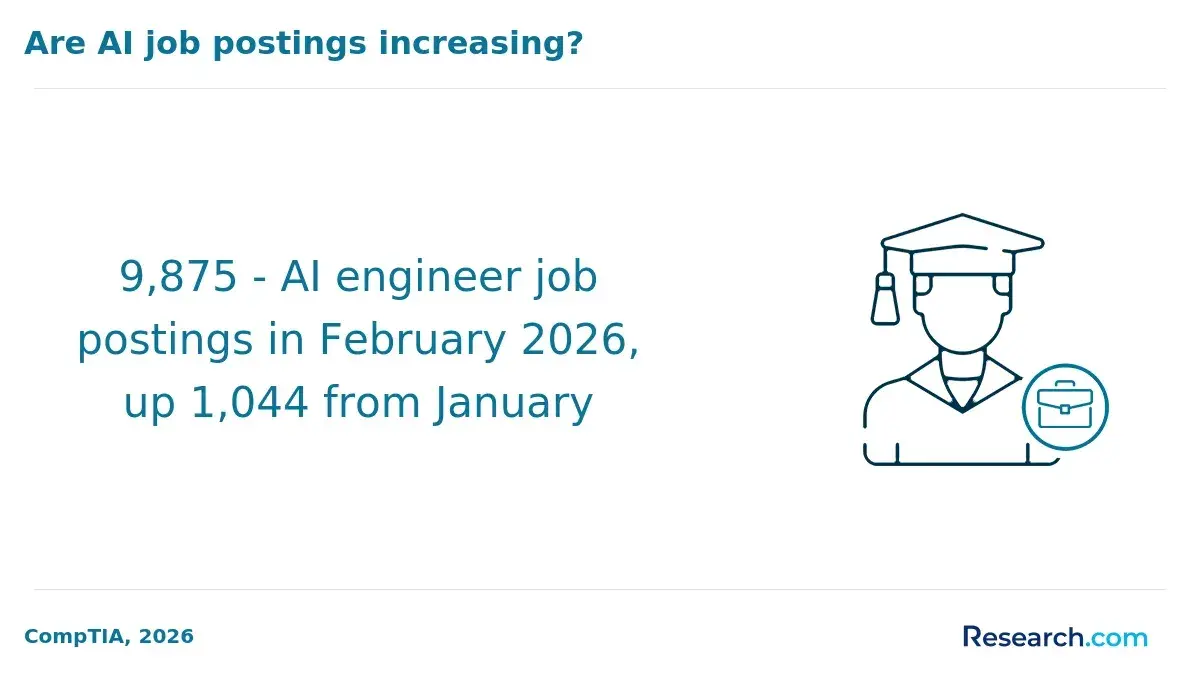
Labor market trends underscore these differences. According to the LinkedIn Jobs Report 2024, AI job listings rose 74% year-over-year, compared to 28% growth in data science postings. This increased demand for AI expertise is an important consideration for students weighing these fields. Additionally, AI degrees usually demand stronger foundations in computer science and programming, whereas data science involves more coursework in statistics and domain-specific knowledge.
Those aiming for research or technology development roles benefit from AI programs, while data science degrees prepare students well for applied analytics and data strategy positions. Exploring artificial intelligence career paths can provide further clarity on choosing the right degree.
Which degree offers better career prospects and salary potential in the current job market?
A bachelor's degree in artificial intelligence offers stronger career prospects for AI bachelor graduates in the United States, outpacing traditional data science degrees. According to the U.S. Bureau of Labor Statistics, machine learning engineers-an in-demand AI specialization-earn a median annual salary of $165,000, which is 37.5% higher than the $120,000 median for data scientists. This salary potential comparison between AI and data science degrees in the US job market highlights the premium placed on AI skills.
AI programs focus on advanced machine learning, neural networks, robotics, and natural language processing, preparing graduates for specialized roles in tech companies and research facilities. In contrast, data science emphasizes statistics, data analysis, and business intelligence, providing broader industry flexibility but typically lower entry-level pay. AI graduates often pursue careers as machine learning engineers or AI developers, which command higher salaries than the analyst or BI roles common for data science graduates.
Employers increasingly emphasize AI proficiency due to its impact on automation and innovation, fostering faster career advancement. Still, students valuing versatility may choose data science for its wider industry applications, including finance and healthcare. Candidates should consider their priorities, as both paths require lifelong learning. For students exploring interdisciplinary options, an online mechanical engineering degree might offer additional career opportunities.
What are the typical admission requirements and prerequisites for each degree program?
Admission requirements for AI bachelor's programs in the US emphasize advanced mathematics. Approximately 73% of these programs require prerequisites in calculus and linear algebra, reflecting AI's heavy reliance on matrix operations, optimization, and probability theory. In comparison, prerequisites for data science bachelor's degrees in North America emphasize statistics and applied math more heavily, with about 64% requiring calculus and linear algebra. Both degree paths typically require a high school diploma or equivalent, including competencies in math and science.
Many institutions also look for standardized test scores like the SAT or ACT, focusing on math sub-scores. Some schools offer conditional acceptance or math boot camps to support those lacking advanced coursework. For example, competitive AI programs may require prior courses in programming or discrete mathematics, while data science programs often prioritize experience with statistics or data analysis tools.
Applicants with strong backgrounds in STEM, computer science, or engineering have an advantage. AI programs often value demonstrated skills in programming languages like Python or Java, whereas data science admissions tend to favor familiarity with data manipulation and visualization software. Prospective students should carefully review specific prerequisites to avoid gaps that could delay progression through required curricula. For those interested, an AI online degree can offer a flexible option for meeting these requirements.
How do curriculum and coursework differ between AI and data science bachelor's programs?
Curriculum differences between artificial intelligence and data science bachelor's degrees highlight distinct academic focuses. AI programs allocate roughly 35% of coursework to neural networks and deep learning, emphasizing systems that replicate human cognition through computer vision, natural language processing, and robotics.
Core coursework comparison in AI and data science undergraduate programs reveals that data science degrees dedicate about 15% of their classes to neural networks and deep learning, instead prioritizing statistical techniques, data visualization, and tools like Tableau or Power BI for effective communication of insights. Data science students often study regression analysis, clustering, and time series forecasting, with practical skills in data wrangling and database management, which are less stressed in AI curricula.
AI students typically work with frameworks like TensorFlow and PyTorch, while data science favors statistical languages such as R and Python libraries centered on data analysis. Career goals strongly influence program choice: AI suits those developing intelligent agents or autonomous systems, whereas data science prepares graduates for data interpretation and decision support roles.
Prospective students seeking interdisciplinary opportunities may find options through cyber security schools online, which sometimes integrate both AI and data science principles. This nuanced understanding of curriculum differences aligns with national trends and educational standards guiding modern degree design.
Are AI and data science bachelor's degrees available in online, hybrid, and campus formats?
Bachelor's degrees in artificial intelligence and data science come in online, hybrid, and traditional campus formats, each with distinct accessibility and learning experiences. Online data science programs are notably more common, accounting for 41% of all data science bachelor's offerings, while online artificial intelligence degrees represent just 22% nationwide (Course Report 2024). This reflects data science's greater adaptability to remote learning, which suits working professionals and students requiring flexible schedules.
Hybrid formats that blend online coursework with on-campus sessions are growing in both fields but remain more prevalent in data science. These hybrid options support hands-on learning in key areas like data analytics and visualization, benefiting those unable to attend full-time on campus. Artificial intelligence programs, however, emphasize in-person labs and specialized equipment, limiting the availability of hybrid models.
Campus-based degrees dominate artificial intelligence due to the need for direct access to AI labs, faculty expertise, and research opportunities. Students prioritizing practical, technical immersion in AI often favor traditional campus programs. In contrast, data science's focus on computational tools allows for a smoother transition to online education.
When choosing a program format, students should consider their learning preferences, career objectives, and logistical needs. Those seeking flexibility will find data science online options more abundant, while aspiring artificial intelligence professionals needing hands-on experiences should carefully evaluate campus and hybrid offerings.
How long does each degree take to complete, and what are the typical program costs?
Bachelor's degrees in artificial intelligence and data science usually take four years of full-time study to complete. Accelerated programs can shorten this to three years, while part-time or online study options may extend the duration based on course load and scheduling flexibility.
Annual in-state tuition averages $28,500 for AI bachelor's programs at public universities, compared with $26,200 for data science. Over four years, this difference totals about $9,200, mainly due to variations in faculty expertise, specialized resources, and lab facilities needed for AI studies.
Additional expenses include technology fees, software licenses, and internship costs. These tend to be higher for AI students because of advanced computing platforms and specialized hardware requirements. Financial aid, scholarships, and residency status can significantly affect net costs, so students should carefully review eligibility criteria and institution-specific aid options targeting STEM and emerging technology fields.
Students aiming to start their careers sooner or facing financial constraints might consider accelerated degrees or community college pathways that transfer to four-year universities. Balancing program length and total cost is essential for aligning education with career goals and financial realities in these evolving fields.
What specific job roles and career paths does each degree prepare graduates to pursue?
An AI bachelor's degree prepares graduates for careers in robotics engineering, computer vision, and autonomous systems. These roles involve creating intelligent machines and algorithms for automation, perception, and decision-making. Graduates often work at innovative companies like Tesla and Boston Dynamics, contributing to self-driving cars, drones, and humanoid robots. Their tasks include programming machine learning models, integrating sensors, and enhancing real-time data processing for autonomous operations.
In contrast, a data science bachelor's degree focuses on careers in business analytics, financial modeling, and data strategy. This path emphasizes data interpretation, predictive analytics, and statistical modeling to guide corporate decisions. Graduates typically join Fortune 500 firms, optimizing performance, conducting market analysis, assessing risk, and delivering customer insights. They may build dashboards for key metrics, run regression analyses on sales, and develop forecasting models for inventory management.
The differences arise from foundational training: AI students specialize in algorithm development and system integration, while data science students focus on data manipulation and statistical inference. Research shows AI grads mainly pursue robotics and autonomous system roles, whereas data science grads enter business analytics and financial modeling fields. Prospective students should align their degree choice with whether they prefer engineering intelligent machines or extracting meaning from complex data.
Which professional certifications and credentials complement AI and data science bachelor's degrees?
Certifications amplify the value of AI and data science bachelor's degrees by validating skills and improving job prospects. For AI graduates, deep learning certifications like TensorFlow and PyTorch are highly valued. According to the Stack Overflow Developer Survey 2024, 88% of AI professionals hold such credentials, reflecting industry demand for expertise in neural networks and model deployment. These certifications offer practical experience in designing and optimizing machine learning models, enabling smooth transitions into roles involving natural language processing, computer vision, and autonomous systems.
Data science graduates often obtain cloud computing certifications from platforms such as AWS and Azure, with 62% reporting these credentials. Certifications like AWS Certified Data Analytics and Microsoft Certified: Azure Data Scientist Associate demonstrate proficiency in managing large datasets, scalable infrastructure, and implementing advanced analytics in cloud environments. This hands-on knowledge is vital for deploying data science techniques at scale.
Both AI and data science fields benefit from complementary certifications in programming languages (Python, R), SQL, and version control. Security-focused credentials like Certified Information Systems Security Professional are increasingly relevant due to data privacy needs. Choosing certifications aligned with specific career goals enhances employability and sets candidates apart in competitive markets.
How should prospective students evaluate accreditation and program quality when choosing between these degrees?
Accreditation and program quality are crucial when choosing between an ai bachelor's and a data science bachelor's degree. Only 34% of ai bachelor's programs hold ABET accreditation, compared to 58% of data science programs, making it essential for students to verify accreditation by recognized bodies like ABET. This ensures that the curriculum, faculty qualifications, and student outcomes meet rigorous academic standards.
Program quality also hinges on faculty expertise, research opportunities, facilities, and industry partnerships. An ai program with active collaborations in machine learning or robotics may provide hands-on experience that enhances job prospects. In contrast, data science programs often focus on statistical analysis and data management, preparing students for a broader range of industries.
Curriculum relevance is another key factor. Students aiming for careers in ai research should seek courses in neural networks, natural language processing, and computer vision, while data science students benefit from training in big data platforms, statistical modeling, and visualization tools. Graduate employment rates and strong alumni networks reflect a program's industry recognition and value.
Prospective students should also consider employer expectations and professional certifications that support career advancement in each field. Careful evaluation of these elements will help students select programs that best align with their career goals and industry demands.
What are the key differences in technical skills and programming languages taught in each program?
Python is the dominant programming language in both AI and data science bachelor's programs, with 95% of curricula incorporating it for its versatility and rich libraries. However, AI programs focus on languages that enhance systems-level programming and performance optimization. Around 72% of AI curricula include C++, and 68% teach Java, reflecting the field's emphasis on efficient algorithms, real-time systems, and robotics control. These languages prepare students to develop software that interacts with hardware and supports advanced machine learning applications requiring optimized computation.
Data science programs highlight statistical and database languages, with 81% covering R for powerful statistical analysis and visualization. SQL is also essential, appearing in 89% of data science programs to address structured data querying and management. This enables graduates to handle large-scale data processing in business and research.
The differing language emphases illustrate the distinct career focuses: AI students gain skills suited for intelligent systems and embedded programming, while data science students develop expertise in statistical computing and data infrastructure. Students aiming for AI roles should build strong foundations in lower-level programming and algorithm design, whereas those interested in data science should prioritize statistical and database technologies.
According to GitHub Octoverse 2024, these educational trends align with industry needs, helping students match their studies to their career goals in AI or data science.
Other Things You Should Know About Artificial Intelligence
In 2027, AI and Data Science Bachelor's programs have integrated cutting-edge technologies, with a focus on interdisciplinary skills such as machine learning, data visualization, and ethics. Both programs emphasize real-world applications through project-based learning, reflecting industry demands for versatility and innovation.
Students in an artificial intelligence degree program acquire skills in programming languages such as Python and Java, neural networks, and statistical analysis. They also learn about computer vision, robotics, and cognitive computing. Emphasis is often placed on problem-solving, algorithm optimization, and applying AI principles to real-world scenarios.
Yes, artificial intelligence graduates can work beyond traditional tech companies in industries like healthcare, finance, automotive, and manufacturing. AI skills are increasingly applied to automate processes, improve diagnostics, and enhance decision-making in various sectors. This versatility makes AI graduates valuable assets in both established and emerging industries.
Ethical training in artificial intelligence programs covers topics such as bias in algorithms, data privacy, and the societal impact of automation. Students learn to design AI systems that promote fairness, transparency, and accountability. This education prepares graduates to navigate complex moral challenges as AI technologies become more integrated into daily life.
References
- Data Science vs. AI: How I Would Choose My Path https://roadmap.sh/ai-data-scientist/vs-ai
- AI vs DS: Understanding the Differences and Overlaps | Flatiron School https://flatironschool.com/blog/ai-vs-ds-understanding-the-differences-and-overlaps/
- How can you evaluate the quality of a degree or institute? https://www.bangladesh.campusfrance.org/en/how-can-you-evaluate-the-quality-of-a-degree-or-institute
- Online Bachelor's Degree: Data Science https://www.umgc.edu/online-degrees/bachelors/data-science
- The Average Student Takes Six Years to Earn a Four-Year Degree. Some States, Schools, and Organizations Are Working to Change That. | Insight Into Academia https://insightintoacademia.com/the-average-student-takes-six-years-to-earn-a-four-year-degree-some-states-schools-and-organizations-are-working-to-change-that/
- An In-Depth Analysis Between BSc in Data Science & BSc in Artificial Intelligence - Woxsen Blog https://woxsen.edu.in/blog/an-in-depth-analysis-between-bsc-in-data-science-bsc-in-artificial-intelligence/
- Graduate Program Requirements: Your Roadmap to Grad School https://bemoacademicconsulting.com/blog/graduate-program-requirements
- 11 Brilliant Careers You Can Pursue With Almost Any Degree https://www.oxford-royale.com/articles/careers-any-degree
- AI vs Data Science: Which Is a Better Career in 2026? https://www.fusion-institute.com/ai-vs-data-science-which-is-a-better-career-in-2026
- Introduction to Programming Languages - GeeksforGeeks https://www.geeksforgeeks.org/computer-science-fundamentals/introduction-to-programming-languages/