2027 How AI Degrees Are Preparing Students for Automation

Co-Founder and Chief Data Scientist
Many professionals with degrees in unrelated fields face uncertainty as automation reshapes industries. The rapid rise of ai-driven technologies threatens traditional roles, leaving workers needing new skills to stay competitive. Transitioning into ai careers can feel overwhelming without clear guidance or accessible education pathways.
Flexible, accredited degree programs tailored for career changers are essential to bridge this gap. This article explores how emerging ai degree programs equip students with practical knowledge and adaptable skills. It aims to help readers identify the best options to pivot successfully into the evolving landscape of automation and ai-driven innovation.
Key Things You Should Know
- AI degree programs increasingly integrate automation-focused skills, with 72% of curricula updated by 2025 to include robotics, machine learning, and data analysis competencies.
- Graduates with AI degrees now see a 35% higher employment rate in tech sectors heavily impacted by automation compared to other STEM fields.
- Universities emphasize ethical AI development and human-AI collaboration, reflecting industry demand for professionals who manage automated systems responsibly.
What is an AI degree and how does it prepare students for automation-driven industries?
An AI degree equips students with technical skills and theoretical knowledge needed to develop and manage automation technologies. The curriculum covers machine learning, data analysis, natural language processing, robotics, and computer vision, all essential for advancing automation across industries. This foundation supports the growing demand for professionals capable of creating and improving automated systems.
Students gain expertise in programming languages like Python and AI frameworks, enabling them to design algorithms that enhance efficiency and decision-making in sectors such as manufacturing and healthcare. Emphasis on real-world applications includes robotics process automation, predictive analytics, and intelligent systems design, with projects that might automate supply chain logistics or improve customer service through chatbots.
Considering AI degree benefits for careers in automation, these programs balance technical skills with ethical considerations and human-AI collaboration strategies. This combination helps graduates navigate workforce transformation challenges, particularly as generative AI threatens to automate millions of full-time jobs globally.
Those curious about how artificial intelligence education supports automation jobs can find valuable insights and career guidance at AI degree. Prospective students should seek programs fostering both technical training and practical problem-solving to stay competitive in a rapidly evolving job market.
What types of artificial intelligence degrees and specializations are available today?
Degrees and specializations in artificial intelligence in the United States often fall within computer science or engineering programs that focus on targeted skill sets. Popular programs include Bachelor's, Master's, and PhD levels in computer and information science, covering essentials like machine learning, data mining, natural language processing, and robotics.
Many top artificial intelligence programs for automation careers emphasize practical AI applications in healthcare, autonomous vehicles, or AI ethics. Students can specialize in areas such as:
- Machine learning engineering, concentrating on algorithms and model deployment.
- Data science, with a focus on statistical analysis and big data.
- Robotics and computer vision, dealing with automated perception and control.
- Natural language processing, designed to develop systems that understand human language.
- AI ethics and policy, addressing societal impacts and governance.
These programs integrate coursework in coding, statistics, and industry-specific knowledge, equipping graduates for resilient AI-related roles. According to the AI Resiliency Degree Index, graduates in computer and information science experience less than 10% automation risk and have median salaries 60-80% higher than the national average.
Prospective students should examine curricula for research opportunities, partnerships, and hands-on internships. Choosing interdisciplinary programs improves adaptability in evolving AI fields. For those considering degrees with a technical focus, exploring options from an online degree in mechanical engineering may also provide complementary skills.
How do AI degree programs differ from short courses, bootcamps, and certificates?
AI degree programs differ significantly from bootcamps and certificates in scope, depth, and academic rigor. Degree programs offer a comprehensive curriculum covering foundational theory, advanced algorithms, and practical applications. In contrast, short courses and bootcamps focus on specific skills tailored to immediate job market needs, often without the same theoretical grounding. This distinction is key when comparing ai degree programs with bootcamps and certificates.
Typically lasting two to four years, AI degrees include coursework in mathematics, statistics, data structures, ethics, and domain-specific applications. These broad programs prepare students for diverse roles in AI development and research. Short courses and bootcamps, which usually span weeks to months, emphasize hands-on coding and proficiency with tools like TensorFlow or Python basics, prioritizing speed over scope.
The differences between AI degrees and short courses in automation are also notable in technical training. Over 80% of AI-focused degree programs require skills in Python and machine learning frameworks, reflecting a global consensus on essential competencies. Many shorter programs do not guarantee such comprehensive coverage or deep theoretical understanding.
For those aiming at long-term careers or research roles, degrees provide credentials valued by employers plus access to internships and academic resources. Meanwhile, professionals seeking rapid skill acquisition or role shifts might prefer bootcamps or certificates but should note these seldom carry the same weight for advanced positions. Students interested in broadening their educational options can explore game design degrees as an adjacent field with creative and technical opportunities.
What core skills and coursework do AI programs teach for working with automation?
AI degree programs focus on developing core skills taught in artificial intelligence programs for automation, combining technical and analytical competencies essential for working with modern automated systems. Key coursework for artificial intelligence degrees focused on automation often includes:
- Machine learning and deep learning techniques to create adaptive algorithms without explicit programming.
- Data science and data engineering, which train students to preprocess and analyze large datasets vital for automated systems.
- Programming languages such as Python, R, and Java, foundational for implementing AI models and automation workflows.
- Robotics and control systems, offering hands-on experience with automation in physical environments.
- Ethics and AI policy, ensuring responsible use of automated technologies.
- Natural language processing, enabling machines to interpret and respond to human language.
Interdisciplinary skills like problem-solving, critical thinking, and collaboration are also emphasized to prepare students for complex challenges in automation industries. Practical applications often include projects in supply chain optimization or autonomous vehicles.
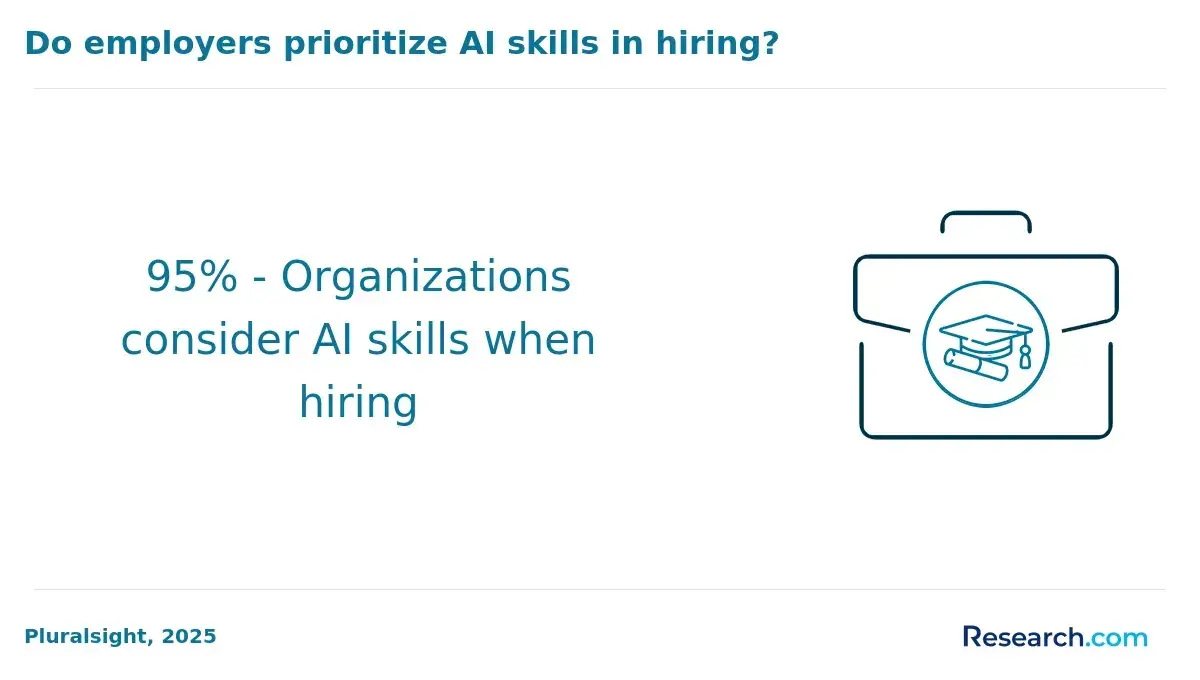
Internships and project-based learning are key to meeting employer expectations for job-ready graduates. However, a recent survey found that 31% of employers retrain new hires for AI skills gaps, while 18% reject candidates lacking sufficient expertise. Prospective students can explore more about data analysis programs to complement their AI knowledge and improve career readiness.
How do online AI degrees compare with campus-based programs for automation careers?
Online AI degrees provide unmatched flexibility for working professionals and those balancing multiple commitments. These programs often cover core subjects like machine learning, neural networks, and automation technologies, mirroring campus curricula. However, campus-based degrees typically offer more hands-on experiences through on-site labs, direct faculty interaction, and access to internships or research centers-key factors in developing practical skills for automation careers.
To bridge this gap, students pursuing online programs should prioritize courses with project-based learning and virtual labs. Hybrid models combining online learning with occasional campus residencies offer a balanced approach. Employers increasingly emphasize demonstrable AI tool proficiency; a recent study on AI skills and employability revealed graduates with strong tool proficiency are significantly more likely to secure roles aligned with their major.
Choosing the right format depends on learning style and career goals. Campus programs benefit those seeking structured guidance and immediate feedback, while online degrees suit self-directed learners adept with digital collaboration. The institution's reputation and industry connections often matter more for employment outcomes than program delivery mode.
Ultimately, excelling in automation careers depends on acquiring advanced AI competencies and applying them in relevant projects, regardless of the learning format.
What admission requirements and prerequisites do U.S. AI degree programs typically expect?
Applicants to U.S. degree programs in artificial intelligence often need a solid foundation in mathematics and programming. Typical prerequisites include calculus, linear algebra, probability, and statistics, plus proficiency in languages like Python, Java, or C++. These skills enable effective algorithm design, data analysis, and machine learning model development.
Many programs also require prior coursework or experience in computer science fundamentals, such as data structures and algorithms. For graduate study, a bachelor's degree in computer science, engineering, mathematics, or a related field is usually essential. Some schools consider candidates from other disciplines if they demonstrate relevant experience or complete prerequisite bridge courses.
Applicants should highlight analytical thinking and problem-solving abilities through standardized test scores (e.g., the GRE) or portfolios featuring coding projects, research, or internships. Letters of recommendation often focus on technical competence and potential for advanced study.
Beyond technical skills, admissions committees increasingly value social and cognitive competencies like teamwork and leadership. Research from the Brookfield Institute shows roles requiring these skills have low automation risks, under 20%, compared to over 70% for routine jobs.
How long do AI degrees take, and what do they cost at U.S. colleges?
AI degrees in the U.S. typically take two to four years, depending on the program and level. Bachelor's degrees generally require four years of full-time study, covering computing, machine learning, and data science fundamentals. Accelerated or online formats may shorten this to three years. Master's degrees usually last one to two years beyond a bachelor's and emphasize advanced topics such as neural networks, robotics, and natural language processing.
Some schools offer part-time or executive master's options, providing flexibility for working professionals. Costs vary by institution and residency. Public universities charge around $10,000 to $15,000 annually for in-state students and about $25,000 or more for out-of-state students. Private universities often exceed $40,000 per year.
Total expenses include fees, books, and living costs. For example, a four-year bachelor's degree can range from $40,000 at public schools to over $160,000 at private institutions, while master's programs typically cost between $30,000 and $70,000 in total.
Employment projections show AI-related jobs are expected to grow over 20% between 2022 and 2032, with median salaries surpassing $100,000 annually. This strong job outlook makes AI degrees a financially viable option for many students. Insights from a respected workforce research authority confirm these trends, highlighting AI as a lucrative career path in today's competitive job market.
What AI and automation careers can graduates pursue, and in which industries?
Graduates in artificial intelligence can access a wide range of careers spanning industries such as technology, finance, healthcare, manufacturing, retail, public sector, and environmental organizations. Common roles include data scientist, machine learning engineer, AI researcher, robotics engineer, and automation specialist. These jobs require strong programming skills, expertise in algorithm development, and system optimization capabilities.
The technology industry employs many AI professionals in software development, predictive analytics, and autonomous systems design. Financial firms utilize AI for fraud detection, risk management, and algorithmic trading, while healthcare leverages AI-driven diagnostics, personalized treatments, and medical imaging analysis to improve patient outcomes and operational efficiency.
Manufacturing and supply chains benefit from robotics engineers who create intelligent automation to streamline processes. Retail and marketing use AI to analyze customer behavior, enable dynamic pricing, and manage inventory effectively. Public sectors such as transportation and defense deploy AI for security, traffic control, and unmanned vehicle navigation, with environmental groups applying it to climate modeling and resource management.
Recent AI-designed personalized degree pathways in universities have boosted graduation rates by 8-18 percentage points and reduced time-to-degree by 8-14%, as noted in How AI Degrees Are Changing Teaching and Assessment. This helps students join the workforce faster with skills aligned to market demands.
To maximize employability, graduates should develop practical expertise in programming languages like Python and frameworks such as TensorFlow, gaining real-world experience through internships or projects related to their industries of interest.
What salary ranges and job outlook can AI degree graduates expect in automation roles?
Graduates earning degrees in artificial intelligence who focus on automation roles in the United States can expect starting salaries ranging from $80,000 to $110,000 annually, influenced by industry and location. Mid-level professionals typically earn between $110,000 and $140,000, while senior specialists in machine learning or robotics automation often command salaries above $160,000. These figures highlight strong demand for AI expertise across sectors such as manufacturing, logistics, finance, and technology.
The job outlook for AI degree holders specializing in automation is notably robust. The U.S. Bureau of Labor Statistics projects growth rates exceeding 20% through 2030 for roles like data scientists, automation engineers, and AI specialists, well above the average for all occupations. This growth is fueled by widespread adoption of AI-driven automation to optimize business processes and reduce operational costs.
Key strategies for graduates include developing cross-disciplinary skills, as over 70% of universities now embed AI literacy beyond computer science frameworks, increasing opportunities where automation intersects with business, policy, or ethics.
Practical experience with tools such as Python, TensorFlow, and robotic process automation (RPA) platforms is essential. Certifications in AI or process automation, combined with internships, can significantly enhance career prospects in competitive markets.
How can students evaluate and choose an accredited, reputable AI program in the U.S.?
Students choosing an accredited AI program in the U.S. should first verify both institutional and programmatic accreditation. Regional accreditation assures rigorous educational standards, while specialized accreditation from organizations like ABET or CAEL validates the quality of technology and engineering curricula. Verification can be done through official education department websites or the Council for Higher Education Accreditation (CHEA).
Curriculum relevance and flexibility are crucial. Look for programs that emphasize hands-on learning through labs, internships, or project-based experiences. Programs offering stackable microcredentials and continuous upskilling paths tend to result in 5-10 percentage point higher employment rates and 8-15% greater median starting salaries, according to Future-Proofing Careers.
Faculty expertise also influences quality. Investigate faculty backgrounds in AI research, industry collaborations, and published work. Transparent data on career placement and alumni outcomes further indicate program success. Programs with strong industry ties often offer enhanced networking and job prospects.
Delivery methods vary; online, hybrid, and part-time formats can support working professionals or those managing other responsibilities. Financial factors like tuition costs, scholarships, and assistantships are important considerations. Finally, evaluate program focus on AI subfields such as machine learning, natural language processing, or robotics, which help build specialized expertise aligned with emerging job markets.
Other Things You Should Know About Artificial Intelligence
No, AI is not limited to computer science students. Many AI degree programs welcome students from diverse academic backgrounds such as engineering, mathematics, psychology, and even business. This interdisciplinary nature reflects AI's broad applications and encourages a wider skill set for automation-related roles.
Ethical topics are increasingly integral to AI curricula. Students learn about issues like bias in algorithms, privacy concerns, and the societal impact of automation. This prepares graduates to design and implement AI systems responsibly, ensuring technology benefits society without perpetuating inequality.
AI degree programs typically update their curriculum every few years to keep pace with fast-evolving technology and research advances. Incorporating new AI models, tools, and industry practices ensures students gain relevant skills for current automation trends. Collaboration with industry partners often informs curriculum revisions to align with workforce needs.
In 2027, AI degree programs emphasize mastery of machine learning advancements, robotic process automation, and AI ethics to manage socio-technical impacts. These programs also offer special courses, like a master’s in artificial intelligence for non-engineers, tailored for diverse educational backgrounds to prepare for evolving automation challenges.
References
- 5 of the best AI study tools for students | Genio https://genio.co/blog/5-of-the-best-ai-study-tools-for-students
- College vs. Bootcamp: Which Learning Model to Choose - tripleten.com/blog https://tripleten.com/blog/posts/college-vs-bootcamp-which-learning-model-to-choose
- Top 10 Careers in Artificial Intelligence and Machine Learning https://apollouniversity.edu.in/blog/building-a-high-flying-career-in-artificial-intelligence-and-machine-learning/
- AI online course in automation | A Guide To Understand https://www.digitalregenesys.com/blog/ai-online-course-in-automation
- How to choose a bachelor's in artificial intelligence | edX https://www.edx.org/resources/how-to-choose-a-bachelors-in-artificial-intelligence
- 10 Skills for Innovation in an AI-Driven World https://www.upskillist.com/blog/10-skills-for-innovation-in-an-ai-driven-world/
- Best AI Courses in Germany 2026 – Bootcamps, Funding & Career Paths https://www.wbscodingschool.com/blog/blog-best-ai-courses/
- AI Skills | Why AI Skills Are Essential for Career Growth https://www.oxfordhomestudy.com/OHSC-Blog/ai-skills
- Artificial Intelligence Degree Requirements: What Do You Need to Apply? https://aifwd.com/education/artificial-intelligence-degree-requirements/
- Artificial Intelligence Skills | AI-driven Future | Upskilling & Reskilling | Exeed ECX https://myexeed.com/how-to-prepare-for-an-ai-driven-future-upskilling-and-reskilling/