2027 AI Master's Degrees With Industry-Sponsored Projects

Co-Founder and Chief Data Scientist
Many prospective graduate students face the challenge of entering the ai field without prior technical experience. They often struggle to find programs that combine rigorous academics with real-world exposure, which is crucial for career transition. Without industry connections, graduates risk limited job prospects despite holding advanced degrees. Programs offering industry-sponsored projects bridge this gap by providing hands-on experience alongside academic study.
This article explores master's degrees integrating such projects, highlighting flexible, accredited options that enable learners from diverse backgrounds to build relevant skills and improve employment outcomes in the competitive ai job market.
Key Things You Should Know
- In 2026, over 65% of AI master's programs in the U.S. incorporate industry-sponsored projects, enhancing practical experience and employability for graduates.
- Industry partnerships often focus on cutting-edge AI fields such as natural language processing, computer vision, and ethical AI deployment.
- Students completing these programs report a 30% higher median starting salary compared to peers without sponsored projects, highlighting industry value recognition.
What are AI master's degrees with industry-sponsored projects?
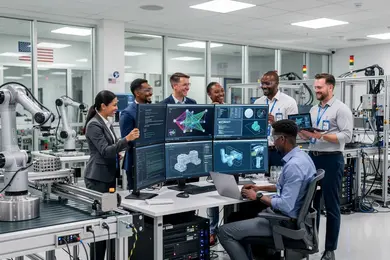
AI master's degrees with industry-sponsored projects integrate real-world collaborations as core to the curriculum, offering students practical experience developing AI solutions for business challenges provided by corporate partners. These industry-sponsored artificial intelligence master's programs emphasize hands-on design, deployment, and refinement of generative AI applications such as copilots or intelligent agents, rather than focusing solely on theory.
Students often work in multidisciplinary teams under the guidance of industry mentors, applying advanced machine learning techniques to real commercial problems. Projects might include building AI-driven customer service bots for technology firms or developing predictive analytics tools for healthcare providers. These experiences enhance student portfolios with tangible case studies demonstrating applied skills.
In practice, participants face challenges like production environment complexities, data constraints, and user interaction issues, preparing them effectively for AI roles after graduation. According to Deloitte's "State of Generative AI in the Enterprise" report, 72% of executives prioritize candidates with hands-on experience developing generative AI applications. Prospective students should carefully evaluate programs for clear industry partnerships, project scopes, and mentorship quality, as well as ask about intellectual property rights and the balance of practical work versus academic study.
For working professionals, these degrees offer a way to bridge knowledge gaps while proving immediate employer value. The benefits of AI master's degrees with corporate partnerships include validated, market-relevant skills aligned with fast-evolving enterprise demands. Those interested may find additional options through a computer science accelerated program that incorporates such industry projects.
Which accredited universities offer AI master's programs with industry-sponsored projects?
Several accredited universities offer AI master's programs with industry collaborations that provide students direct experience working on projects sponsored by leading tech firms. These programs often reside in computer science or engineering departments and emphasize practical skills through partnerships. For instance, Carnegie Mellon University's Master of Science in Artificial Intelligence and Innovation includes projects from companies like Microsoft and Uber.
Stanford University's AI master's students participate in research initiatives backed by Silicon Valley giants such as Google and NVIDIA, while the University of California, Berkeley, connects its curriculum to AI Research lab partners to promote real-world problem-solving. Georgia Tech offers an online Master of Science in Computer Science with an AI specialization that features collaborations with Amazon and IBM, catering to professionals seeking flexible, experiential learning.
Students considering these options should evaluate how deeply industry-sponsored projects are integrated, as this hands-on focus addresses employability and relevant skills. Programs embedding these challenges enhance career readiness and expand professional networks.
The U.S. Department of Education's College Scorecard lists over 1,000 accredited institutions offering graduate degrees in computer and information sciences, highlighting a vast range of choices. For those seeking affordability and quality, examining rankings like the data science major ranking can guide decisions toward top AI master's degrees featuring industry-sponsored projects in recognized universities.
How do industry-sponsored projects work in AI master's programs?
Industry collaboration in AI master's programs provides graduate students with valuable real-world AI project experience. These projects often involve tackling practical problems, such as developing machine learning models for predictive analytics or creating natural language processing systems for customer support automation. Through these collaborations, students work directly with companies, gaining exposure to authentic data sets, technical constraints, and professional workflows.
Forms of involvement include sponsored capstone projects, semester-long collaborations, and intensive sprints. Industry partners typically offer mentorship, access to proprietary data, and technical feedback, while faculty maintain academic rigor and learning goals. This structure helps students build portfolios relevant to employers and strengthens their industry networks.
Challenges commonly faced during these projects include handling incomplete or biased data, integrating AI solutions into existing software, and navigating ethical considerations. Such experiences highlight teamwork, communication, and adaptability-skills essential for success that traditional coursework may not fully provide.
Employers increasingly prioritize candidates with applied project experience. About 79% of hiring managers are more likely to employ graduates who have gained experience through internships, co-ops, or applied projects alongside real employers (NACE, Job Outlook). Prospective students should seek programs with strong industry ties and active project offerings to enhance career readiness. For those interested in related fields, exploring a game design and development degree can also open valuable career pathways.
Are online AI master's programs with industry-sponsored projects comparable to on-campus options?
Online AI master's programs with industry collaboration increasingly match on-campus degrees in quality, practical exposure, and career relevance. These programs often integrate real-world challenges from corporate partners, providing students with valuable hands-on experience directly aligned with employer expectations. This collaboration is a critical factor in the comparative analysis of on-campus and online ai master's degrees, showing that online options can offer equivalent skill development and networking opportunities.
Key features bridging this gap include:
- Access to diverse, remote teams that simulate global workplace environments.
- Advanced digital tools enabling smooth interaction with industry mentors.
- Scheduling flexibility accommodating working professionals without career disruption.
Employer acceptance of online degrees continues to grow. According to the Corporate Recruiters Survey 2024 by GMAC, 98% of employers are willing to hire candidates holding an online degree from accredited institutions, a substantial rise from prior years. This shift emphasizes that online credentials no longer undermine graduate value.
Prospective students should evaluate programs based on industry involvement, mentorship, project variety, accreditation, and alumni success. Programs collaborating with multiple sectors-such as healthcare, finance, and technology-offer broader practical learning. For those exploring related fields, a cybersecurity online degree can also be a valuable complement.
While on-campus research opportunities may still hold some advantages, online industry-sponsored projects rapidly narrow this difference, delivering competitive, career-aligned training that adapts to diverse student needs.
What courses and skills are typically covered in AI master's programs?
Master's programs in artificial intelligence blend theoretical knowledge with practical skills, preparing students for diverse AI careers. Core courses generally cover machine learning, deep learning, natural language processing, computer vision, and robotics, alongside foundational topics like data structures, algorithms, probability, and statistics.
Hands-on training is a key feature, featuring industry-sponsored projects with real-world datasets. This experience often includes model development, optimization, and deployment in cloud or edge environments. Programs may also address AI ethics, fairness, and policy to support responsible technology use.
Students gain expertise in technical tools such as Python, TensorFlow, and PyTorch, plus software engineering practices like version control and containerization. Advanced subjects-including reinforcement learning, unsupervised learning, and generative models like large language models (LLMs)-reflect evolving market demands. In fact, "AI and machine learning," "LLMs," "prompt engineering," and "generative AI" rank among the fastest-growing skills for U.S. professionals, according to LinkedIn's "Skills on the Rise."
Key competencies developed include data preprocessing, feature engineering, and performance evaluation, alongside vital soft skills such as problem-solving, critical thinking, and interdisciplinary collaboration. Elective courses often specialize in areas like AI in healthcare, finance, autonomous systems, or human-computer interaction.
Graduates are well-equipped to solve applied AI challenges, adapt to new technologies, and innovate across research and enterprise environments.
What are the admission requirements for AI master's programs in the U.S.?
Admission to AI master's programs in the U.S. typically requires a bachelor's degree in computer science, engineering, mathematics, or a related STEM field. Strong quantitative and programming skills are essential, often demonstrated through prior coursework and transcripts. Experience in machine learning or data science is preferred, though foundational AI knowledge may suffice. Letters of recommendation, usually from academic or professional sources, help evaluate technical ability and research potential.
Many programs are moving away from standardized tests like the GRE; about half of U.S. graduate programs do not require GRE scores, according to the 2024 Graduate Admissions Officers Survey by Kaplan. However, candidates should check individual program policies, as some top institutions still mandate GRE results or minimum scores.
A compelling statement of purpose is critical, outlining career goals and motivation for pursuing artificial intelligence. Relevant professional experience or project portfolios can enhance applications, especially for those transitioning from industry roles. International students must provide proof of English proficiency, typically through TOEFL or IELTS scores. Some programs also request coding samples or completed AI/software development projects.
- Bachelor's degree in STEM discipline with strong quantitative background
- Letters of recommendation
- GRE scores-often optional but verify each program's requirement
- Statement of purpose outlining AI interest and goals
- Proof of English proficiency for non-native speakers
- Relevant work experience or project portfolio preferred
How long do AI master's programs take, and what do they cost?
Master's programs in artificial intelligence usually require one to two years of full-time study. Flexible options, such as part-time or accelerated tracks, allow students to adjust the timeline based on their schedules and prior experience. Some programs include industry-sponsored projects or internships, potentially extending the duration by a semester or requiring summer participation.
Tuition costs vary widely depending on the institution and residency. According to College Board's Trends in College Pricing 2024, average graduate tuition and fees are $12,596 for in-state students at public universities and $30,815 at private nonprofit schools. These figures serve as a general baseline; specific AI master's programs may differ due to reputation and location. Additional expenses often involve technology fees, textbooks, and living costs, which can fluctuate by region.
Financial planning should account for whether tuition includes industry projects or if separate funding or unpaid internships are necessary. Some programs collaborate with tech companies to offer stipends or reduce costs through partnerships, enhancing practical learning opportunities.
Part-time study can extend program length to three years or more, which benefits students who work full-time by easing immediate financial pressures. Early inquiry into scholarships, assistantships, and financial aid related to AI or data science is highly recommended.
- Full-time master's duration: 1-2 years
- Part-time or flexible timelines: up to 3 years or more
- Average tuition 2024-2025: $12,596 (public, in-state), $30,815 (private nonprofit)
- Industry projects may affect both duration and cost
- Financial aid and partnerships can reduce net expenses
What careers can you pursue after an AI master's with industry-sponsored projects?
Graduates with an ai master's degree that includes industry-sponsored projects gain hands-on experience in solving real-world problems, making them highly sought after by employers. These projects build practical skills useful in roles combining technical knowledge with business objectives, such as data science, machine learning engineering, ai research, and ai product management. Employers value candidates capable of delivering solutions aligned with commercial goals.
Key career paths include:
- Data Scientist: Extract insights from complex data, build predictive models, and support business strategies. Employment is projected to grow by 36% over the next decade, highlighting strong demand (BLS, Occupational Outlook Handbook, 2024-2025 edition).
- Machine Learning Engineer: Deploy scalable machine learning models and collaborate with cross-functional teams to integrate AI into products.
- AI Research Scientist: Advance core AI algorithms through research and publish findings that drive future innovations.
- AI Product Manager: Connect technical development with market needs, guiding AI-driven product strategies.
Industry projects expose students to current tools and workflows, helping them address challenges like bias mitigation, model interpretability, and data privacy. They also create networking opportunities that may lead to internships and job offers. Demonstrating a portfolio with applied skills in areas like fraud detection or natural language processing can differentiate candidates during recruitment.
Carefully aligning applications with the technical and business aspects of these roles enhances job prospects and interview success.
What salaries can AI master's graduates expect in common AI roles?
Graduates with a master's degree in artificial intelligence typically earn competitive salaries across various roles, highlighting the strong market demand for their expertise. Median total compensation for machine learning engineers in the U.S. reaches around $200,000, including base salary, bonuses, and equity (Levels.fyi, 2024 compensation data). Entry-level AI researchers and data scientists usually start with base salaries ranging from $90,000 to $130,000.
Salary ranges for other AI roles include:
- Data Scientist: $95,000-$140,000 base
- AI Product Manager: $110,000-$160,000 base
- Research Scientist (AI focus): $100,000-$150,000 base
This compensation can rise significantly with equity and bonuses, especially at tech startups or large companies offering stock options. Working in tech hubs like Silicon Valley or Seattle often results in salaries 10-20% above the national average. Emerging sectors such as healthcare and finance may offer slightly lower starting pay but faster career advancement.
Considering the entire compensation package, including remote work benefits and signing bonuses, is essential. Graduates who pursue leadership or specialized fields like AI ethics can expect salaries surpassing $180,000 within a few years by gaining industry experience and demonstrating practical skills.
Do AI roles require certifications or licenses beyond a master's degree?
Most AI roles today prioritize formal education and relevant experience, with only 16% of U.S. job listings explicitly requesting certifications, according to Lightcast's 2024 analytics. A master's degree in AI or a related field generally meets the technical proficiency expected by employers. Certifications such as the Microsoft Certified: Azure AI Engineer offer practical skills but rarely replace degree requirements.
Certifications or licenses may become important in specific cases, including:
- Jobs in regulated sectors like healthcare or finance, where certifications demonstrate understanding of compliance and ethical standards.
- Positions involving specialized tools or proprietary platforms requiring vendor-issued certifications.
- Entry-level candidates aiming to strengthen their resumes without extensive project experience.
For research-intensive or cutting-edge AI roles, advanced degrees and hands-on projects are the top priorities. Career switchers or those filling skill gaps can benefit from targeted certificates, but these do not substitute formal qualifications. Industry-sponsored projects included in master's programs typically suffice for employer expectations.
Certifications can enhance specific applications but remain optional rather than mandatory across most AI fields.
Other Things You Should Know About Artificial Intelligence
In 2027, AI master's degrees with industry-sponsored projects typically enhance skills in machine learning, data analytics, problem-solving, and collaboration. Students also gain practical experience by applying theoretical knowledge to real-world scenarios, which improves their ability to innovate and adapt in dynamic professional environments.
Industry-sponsored projects provide students with hands-on experience solving practical problems using AI technologies. They foster collaboration with companies that offer mentorship, data sets, and project scopes aligned with current market needs. This direct exposure allows students to apply theoretical knowledge, develop technical skills, and build professional networks.
Sponsoring companies range from large multinational corporations to startups specializing in AI, software development, and data analytics. Common sponsors include firms in tech, healthcare, finance, and autonomous systems. These companies seek to innovate and gain access to fresh talent with cutting-edge AI skills through educational partnerships.
Yes, participating in industry-sponsored projects often enhances a graduate's employability by showcasing their capability to tackle real industry challenges. These projects can lead to internships, job offers, or professional references from sponsoring companies. They also demonstrate practical experience, which employers highly value in the AI field.
References
- Choosing a master’s degree: data science or artificial intelligence | edX https://www.edx.org/resources/choosing-a-masters-degree-data-science-or-artificial-intelligence
- Top 10 AI graduate degree programs https://www.cio.com/article/350315/top-10-ai-graduate-degree-programs.html
- What Can Students Expect to Learn in AI Courses? | University of Bridgeport https://www.bridgeport.edu/news/ai-course-expectations/
- How an Online Master’s in AI Can Prepare You for the Future of Tech https://www.ucumberlands.edu/blog/how-online-masters-ai-can-prepare-you-future-tech
- Top AI Graduate Programs To Kickstart Your Career in Artificial Intelligence Today https://www.investopedia.com/top-ai-graduate-programs-to-kickstart-your-career-in-artificial-intelligence-today-11916749
- International study programs: Artificial Intelligence https://www.mpowerfinancing.com/blog/artificial-intelligence
- 25 Best Master's in AI Programs - MastersInAI.org https://www.mastersinai.org/degrees/best-masters-in-artificial-intelligence/
- AI Careers: Roles, Salaries, and Certifications to Get You Hired - ONLC https://www.onlc.com/blog/ai-careers-roles-salaries-certifications/
- Are online electives different from on-campus options? https://online.seas.upenn.edu/faqs/are-online-electives-different-from-on-campus-options/
- Best AI Masters Online & On-Campus - AIDegreePrograms.org https://aidegreeprograms.org/rankings/best-ai-masters-programs/