2027 Best AI Master's Degrees for AI Product Management

Co-Founder and Chief Data Scientist
Many professionals with backgrounds unrelated to artificial intelligence struggle to break into AI product management due to gaps in specialized knowledge and industry credentials. Navigating this transition can be daunting without formal education that balances technical expertise with business acumen. Flexible, accredited master's programs tailored for working adults offer a viable solution, equipping candidates with the skills to lead AI-driven projects effectively.
This article examines the best AI master's degrees designed to prepare career changers for product management roles, focusing on program accessibility, curriculum relevance, and industry alignment to help readers make informed decisions about their education paths.
Key Things You Should Know
- AI master’s degrees for AI product management typically combine technical foundations with business strategy and user-centered design, enabling students to bridge the gap between engineering teams and market-driven product decisions.
- These programs often emphasize skills in data-driven decision-making, machine learning fundamentals, and product lifecycle management, ensuring graduates can evaluate AI features based on feasibility, ethics, and user impact.
- Career pathways from AI product management programs are expanding rapidly across technology companies and startups, where professionals are needed to guide AI product development, prioritize features, and align innovation with organizational goals.
What is an AI product management master's degree, and who is it for?
An AI product management master's degree equips students with essential skills to oversee the development, launch, and growth of AI-driven products. It integrates core product management tactics with technical knowledge of AI, machine learning, data analytics, and ethics.
Graduates learn to translate AI capabilities into user-centered business solutions that balance innovation with market needs.
This degree is designed for professionals bridging technology and business, including product managers, engineers, and business strategists. It also benefits those transitioning from general product management or technical roles, alongside recent graduates from computer science, engineering, or business backgrounds seeking AI specialization.
Core coursework often covers AI model lifecycle management, human-centered design, data governance, and AI ethics, enabling graduates to lead multidisciplinary teams confidently. Such programs provide valuable career opportunities in AI product management.
Industry demand for AI expertise is shaping hiring preferences. Microsoft & LinkedIn's Work Trend Index shows that 71% of business leaders prefer hiring less experienced candidates with AI skills over more experienced ones without, highlighting the value of AI proficiency regardless of traditional experience.
Example roles include AI product managers focused on autonomous systems, healthcare AI solutions, or fintech products. Programs may vary in emphasis, from hands-on AI application to strategic leadership, allowing learners to align their education with goals in product development, AI ethics, or technical project delivery.
Prospective students should also explore accelerated options, such as the fastest computer science degree pathways, to swiftly gain foundational knowledge supporting AI mastery.
Which universities offer accredited AI master's programs suited for product managers?
Several U.S. universities offer accredited AI master's programs for product management in North America that combine technical expertise with managerial skills. Notably, programs with ABET accreditation provide a rigorous quality framework; ABET accredits over 4,300 programs worldwide, emphasizing reliability and academic excellence.
Carnegie Mellon University's Master of Science in Artificial Intelligence and Innovation offers a curriculum that integrates AI technology with product development strategy, preparing students to lead AI projects effectively. Similarly, the University of Southern California's MS in Computer Science with an AI concentration emphasizes data-driven decision-making, a critical skill for product managers.
Both programs are ABET-accredited, ensuring high educational standards.
Other top universities like the University of Texas at Austin and Georgia Institute of Technology also provide master's degrees tailored for product managers, focusing on AI applications within product strategy. These programs often feature project-based learning and interdisciplinary collaboration to simulate real-world challenges.
Choosing accredited programs is crucial for validating curriculum quality, faculty expertise, and access to resources. Prospective students should seek hands-on experience with AI models, data ethics, and user interface integration. Researching each program's alignment with your goals and networking opportunities is equally important.
For those interested in an affordable data science degree, comparing tuition and financial aid options across these programs can guide smart investment decisions.
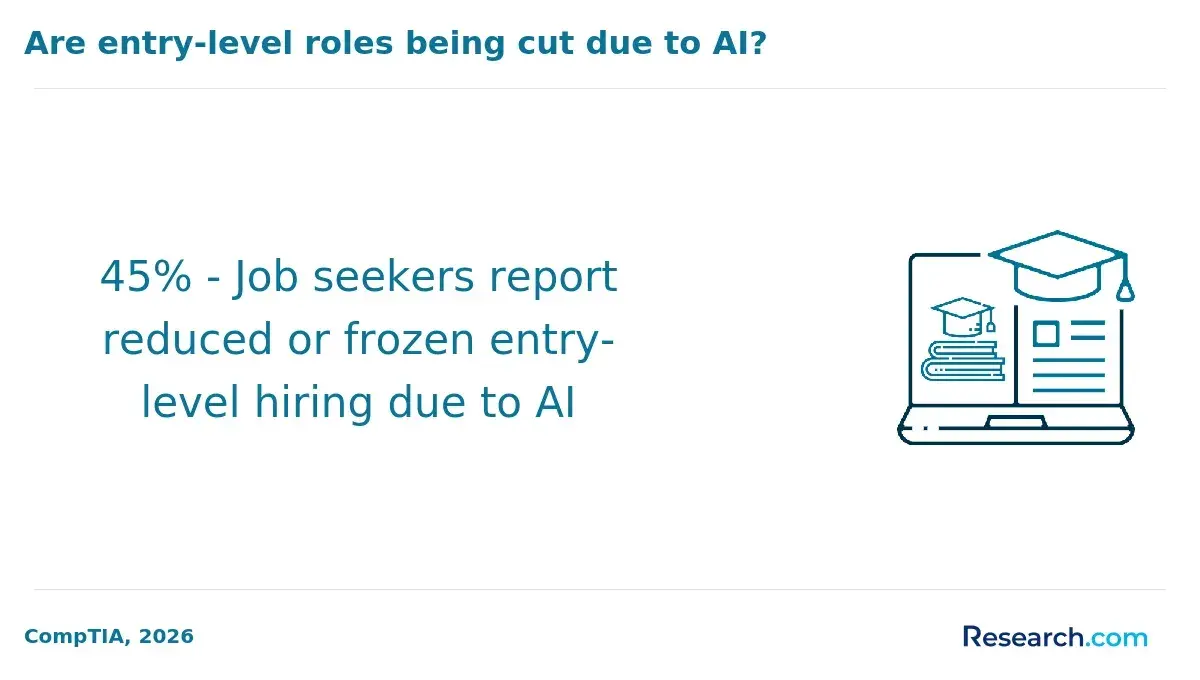
What careers can an AI master's lead to in AI product management?
Master's degrees in AI prepare graduates for diverse roles in AI product management across the United States, where they lead the development and deployment of AI-driven products. Typical positions include AI product manager, responsible for defining product vision, coordinating cross-functional AI teams, and translating complex machine learning concepts into market-ready solutions.
Another career path is AI program manager, overseeing multiple AI projects with a strong technical foundation while managing budgets and timelines. AI strategy consultants often advise organizations on integrating AI to address business challenges and improve customer experiences, highlighting job opportunities with an AI master's degree in product management.
Demand for AI product management skills now stretches beyond traditional tech firms. Lightcast's latest job-posting analytics reveal rising emphasis on "Generative AI" expertise across product, marketing, and sales roles, expanding opportunities in healthcare, finance, and retail.
This trend shifts expectations, requiring AI product managers to understand specific industry challenges and align AI innovations with business objectives.
Graduates should prepare for ethical AI deployment challenges, performance measurement, and balancing user needs with technical constraints. Proficiency in data governance and regulatory compliance is increasingly vital.
Strong communication skills to act as liaisons between data scientists, engineers, and business stakeholders remain highly sought after.
Prospective students might explore affordable engineering schools offering AI-related master's degrees to enhance their qualifications. Exploring options at affordable engineering schools can be a strategic step toward advancing a career in AI product management.
What prerequisites and admissions requirements do AI master's programs typically have?
AI master's program admission criteria typically require a strong quantitative and technical foundation. Prerequisites for AI product management degrees often include undergraduate coursework in computer science, mathematics, statistics, or engineering.
Specific classes like linear algebra, calculus, probability, and programming languages such as Python or Java may be required. Applicants lacking this background might need to complete bridge courses before full admission.
Common admissions requirements include:
- A bachelor's degree from an accredited institution, usually in a related STEM field
- Submission of transcripts showing academic competence
- Letters of recommendation from professors or employers familiar with the applicant's quantitative and analytical skills
- A statement of purpose outlining career goals and motivation in AI product management
- Professional experience in AI, machine learning, data science, or product management, with 1-3 years often preferred
Standardized test scores like the GRE have become less critical, reflecting a broader shift toward test-optional policies highlighted by ETS' 2024 "State of the GRE" report. Admissions committees now often prioritize practical portfolios showcasing projects, research, and relevant coursework over exam results.
Top U.S. AI master's programs may accept GitHub repositories or project documentation as part of applications.
International students usually face additional requirements, such as English proficiency tests (e.g., TOEFL or IELTS). Some programs also conduct interviews to evaluate problem-solving and communication skills needed for AI product management roles.
Early preparation in technical abilities, a well-documented project portfolio, and clear career articulation can strengthen applications in 2026.
For those comparing educational options, resources like the cheapest online cyber security degree may offer insight into affordable pathways in related STEM fields.
What core courses and skills should an AI product management-focused curriculum include?
AI product management curricula blend technical skills with strategic leadership, centering on applied machine learning and generative AI techniques that innovate product features. Mastery of data literacy is crucial, including interpreting datasets, designing experiments, and using analytics to inform decisions.
Courses in model evaluation and monitoring emphasize assessing AI system performance, identifying biases, and implementing corrective measures to maintain ethical and reliable products. Managing AI product lifecycles requires understanding integration, scalability, and cross-functional collaboration.
Regulatory frameworks and AI ethics are key topics, helping mitigate risks and align products with governance standards to improve market acceptance. Communication and stakeholder management skills enable leaders to translate complex technical concepts into actionable business strategies.
Practical experience via capstone projects or internships is essential for applying theoretical knowledge to real-world product design, user feedback, and iteration cycles. Electives like natural language processing, reinforcement learning, or AI-driven customer experience strategies offer specialization options.
The World Economic Forum's Future of Jobs Report 2025 identifies "AI and big data" as top growth areas, emphasizing the need for programs focused on applied ML, generative AI, data literacy, and continuous model evaluation to prepare graduates for evolving AI product leadership.
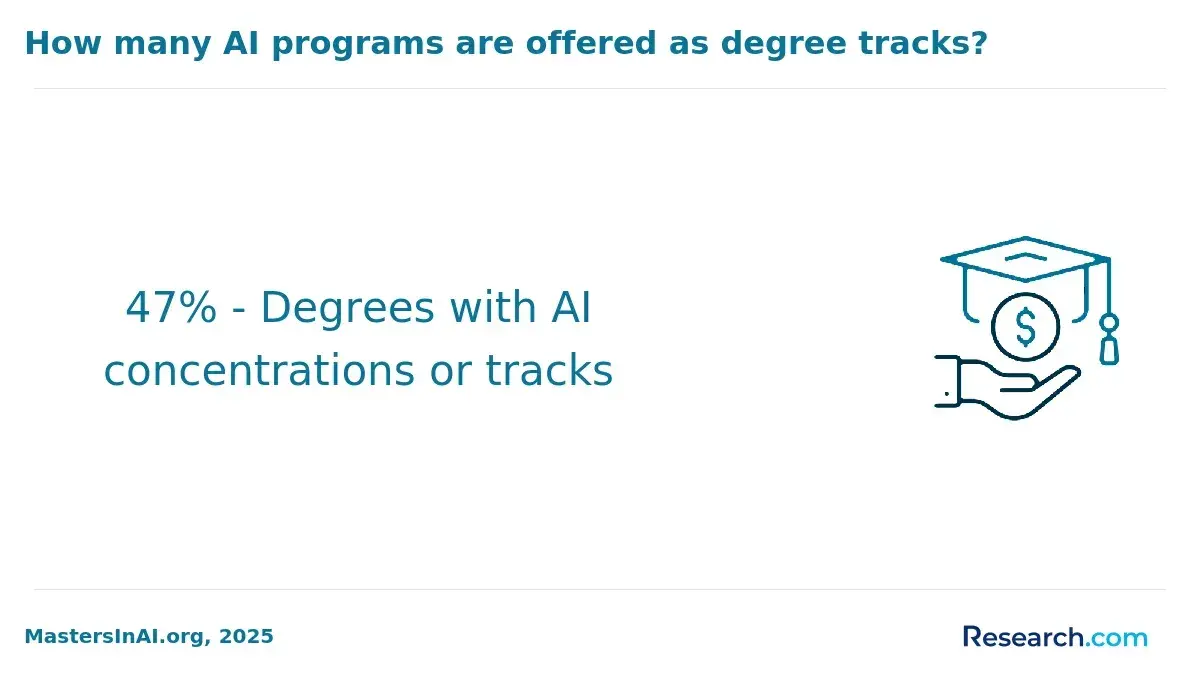
How do online AI master's programs compare with on-campus options for product managers?
Online AI master's programs offer product managers flexible options to advance their education while continuing full-time work. According to the National Center for Education Statistics, many graduate students pursue programs fully online, benefiting from interactive platforms with live sessions, discussion forums, and collaborative projects.
These programs often include case studies tailored specifically for AI product management, helping students develop skills directly applicable to their careers.
While on-campus programs provide valuable face-to-face networking and access to campus resources, online formats increasingly feature virtual advising and career services to support students. Asynchronous learning options make it easier for working professionals to balance responsibilities.
Cost savings are a significant advantage of online programs, reducing expenses like commuting and housing. Some online degrees also offer accelerated or modular formats that allow faster completion.
When choosing between online and on-campus AI programs, consider factors such as accreditation, curriculum relevance, and employer recognition. Evaluating individual learning preferences and career goals is crucial.
- Flexible schedules enable balancing work and study
- Interactive learning platforms simulate in-person engagement
- Cost-effective by eliminating commuting and housing costs
- Virtual advising and career services available
How long do AI master's programs take, and what do they cost?
AI master's programs range from 12 to 24 months based on enrollment type. Full-time students typically finish in 1 to 1.5 years, while part-time options may last up to 2 years or more. Many programs provide accelerated or hybrid formats, which help working professionals balance study and employment.
Tuition varies significantly, with public universities charging around $15,000 to $30,000 for in-state students, and private institutions often exceeding $60,000. These differences reflect program prestige, faculty expertise, campus resources, and networking opportunities.
Additional costs such as textbooks, software licenses, and living expenses can add several thousand dollars yearly. Financial aid and employer tuition reimbursement may help reduce these costs.
Students pursuing AI product management should weigh program length and costs alongside curriculum details. More affordable, shorter programs might lack specialized product strategy courses, necessitating extra certifications or experience. In contrast, longer, costlier programs often offer integrated training in AI development, ethics, and business, supporting faster career advancement.
- Full- and part-time enrollment options
- Wide tuition range reflecting institution type
- Consideration of additional expenses beyond tuition
- Importance of curriculum and training for career goals
Aligning application, enrollment, and completion timelines with personal goals ensures the chosen program maximizes value and advances careers in AI product management.
What is the salary range for AI product managers with a master's degree?
AI product managers holding a master's degree in artificial intelligence can expect annual salaries between $120,000 and $180,000 in the U.S., with total compensation often boosted by bonuses and equity. According to Built In's 2025 salary data, this role is among the highest-paid product specializations in the tech sector, reflecting the strong market demand for advanced AI expertise combined with product management skills.
Salary variations are influenced by multiple factors:
- Experience level: Entry-level professionals with a master's degree typically start near $110,000, whereas those with five or more years of experience often exceed $170,000 in base pay.
- Company size and sector: Larger companies and AI-focused startups tend to offer higher salaries and stock options compared to smaller firms.
- Location: Key tech hubs such as San Francisco, New York, and Seattle usually provide salaries above national averages, sometimes surpassing $200,000 in total compensation.
- Bonuses and equity: Performance-related bonuses and equity stakes can increase total annual earnings by 20% to 50%.
Graduates with a master's in artificial intelligence are well positioned to negotiate favorable salaries and advance their careers, thanks to the growing value employers place on combined technical knowledge and product leadership. Developing expertise in both AI technology and product management can significantly enhance a candidate's marketability in this competitive field.
What is the job outlook and demand for AI product management roles in the U.S.?
The demand for AI product managers in the U.S. is growing rapidly across diverse sectors, including healthcare, finance, manufacturing, and software development. This trend reflects the expanding role AI plays beyond niche markets, as highlighted by CompTIA's 2024 Tech Jobs Report, which shows widespread hiring signals for AI expertise in multiple tech occupations.
Successful AI product managers blend strong technical skills with business insight to guide products from concept to launch. They work closely with data scientists and engineers while addressing market demands and ethical standards.
As AI-driven automation, predictive analytics, and personalization gain prominence, these professionals become crucial in translating complex technology into practical, compliant solutions.
Projected growth for AI-related roles in product management exceeds 25% annually through 2030. Employers seek candidates versed in AI frameworks, agile methodologies, and regulations.
Those without formal AI education may benefit from pursuing master's programs focusing on AI product management to build necessary interdisciplinary skills.
Key competencies include:
- Technical expertise combined with business acumen
- Agile and regulatory knowledge
- Strong communication and strategic thinking
These roles are at the forefront of technological innovation, making them attractive for students and professionals aiming to lead AI-driven product development effectively.
Which certifications complement an AI master's for AI product management?
Professional certifications in cloud computing and generative AI platforms are vital complements to an AI master's degree for product management roles, as they verify the practical skills employers increasingly seek. The Coursera 2024 Global Skills Report highlights a rise in demand for GenAI credentials and professional certificates, signaling their value as indicators of job readiness alongside traditional degrees.
This trend suggests that a master's degree alone may not fully demonstrate applied expertise in fast-evolving AI product environments.
Key certifications to consider include:
- Cloud platform certifications: AWS Certified Machine Learning Specialty, Google Professional Machine Learning Engineer, and Microsoft Azure AI Fundamentals, which focus on deploying and managing AI models within cloud infrastructures essential for AI products.
- Generative AI-specific certificates: Credentials from platforms like OpenAI, Hugging Face, or NVIDIA's AI tools demonstrate skills in building and integrating generative models crucial for today's AI product strategies.
- Data science and MLOps credentials: Certifications like the TensorFlow Developer Certificate or those in MLOps verify proficiency in the full machine learning lifecycle, a key asset for product managers managing model deployment and monitoring.
Since AI product management bridges technology and business, pairing a master's degree with certifications that prove mastery of current AI tools enhances employment opportunities. Employers prioritize hands-on skills in cloud infrastructure and operationalizing machine learning beyond theoretical knowledge, aligning with U.S. market demands and industry standards.
Other Things You Should Know About Artificial Intelligence
Admission prerequisites typically include a bachelor's degree in computer science or related fields, proficiency in programming (Python, Java), and basic knowledge of machine learning concepts. Additional requirements might include professional experience in tech industries or GRE scores.
Yes, several AI master's programs now integrate sustainable product management components, addressing AI's environmental and ethical implications. These programs often include modules on sustainable technologies and practices within their 2027 curriculum, geared towards creating eco-friendly AI solutions in product management.
Many 2027 AI product management master’s programs require a capstone or final project instead of a thesis. A capstone is often completed in the last semester and may count for 3 to 6 credit hours. Some universities allow a thesis track only for students with research goals.
For AI product management, knowing Python, R, and SQL is beneficial. Python is widely used for AI development and data analysis. R is excellent for statistical computing, while SQL is essential for database management. Familiarity with these languages enhances the ability to collaborate with technical teams effectively.
References
- VinUniversity Launches Master of Product Management in Artificial Intelligence Program - VinUni https://vinuni.edu.vn/vinuni-announces-admissions-for-the-master-of-product-management-in-ai-program/
- Will AI Replace Product Managers by 2035? | A CEO’s Take https://productschool.com/blog/artificial-intelligence/will-ai-replace-product-managers
- AI Product Manager Salary (2026): USA Data, Global Trends & Hiring Strategy https://qubit-labs.com/ai-product-manager-salary/
- The 12 Best AI PM Courses to Supercharge Your Career in 2025 https://www.aakashg.com/ai-pm-courses/
- Online vs On-Campus Artificial Intelligence Degrees: Which Is Better? https://hakia.com/degrees/artificial-intelligence/online-vs-campus/
- Career in AI as a product manager https://community.deeplearning.ai/t/career-in-ai-as-a-product-manager/827582
- AI Product Manager: Role, Skills, Salary & Career Path (2026) https://futurense.com/blog/ai-product-manager
- The Evolution of AI-Forward Product Management: Market Analysis and Career Implications | HackerNoon https://hackernoon.com/the-evolution-of-ai-forward-product-management-market-analysis-and-career-implications
- AI Product Manager Salary 2026 - $162K to https://pecollective.com/salaries/ai-product-manager/
- The Sound of Silence: When a Lack of Customer Feedback Derails Your Strategy https://scaledagile.com/blog/ai-certifications-product-managers/