2027 Online BS in Business Administration vs. an Associate Degree in Business: Which Route Fits Your Career Plan?
Audited and Verified:
Our Editorial and Data Verification Process
Research.com uses government datasets, official education statistics and primary institutional information to support its career and degree guides. Our review process checks factual accuracy, occupational definitions, source dates and the requirements associated with the credentials discussed.
How This Article Was Fact-Checked
Our editorial team verifies salary estimates, employment projections, education requirements and program information against original data providers and official organizations. Salary figures are checked against the relevant occupational definitions and reporting periods. Information about licensure, accreditation and required in-person training is reviewed separately.
Fact-checked and verified on:

Co-Founder and Chief Data Scientist
An associate degree can help you enter business work sooner, while an online BS in Business Administration may open access to jobs that require a bachelor's degree. The better route depends on the role you want, the credits you already have, and what you can afford to finish. This comparison is for students starting college, employees seeking advancement, and returning students weighing a transfer. It explains the academic and career trade-offs - and the questions to resolve with a school before you enroll.
Key Things You Should Know
- An associate degree commonly requires about 60 semester credits; a bachelor's commonly requires about 120 in total. Transferring does not guarantee that every associate-level course will fulfill a bachelor's requirement.
- Choose the associate route for a lower-commitment entry point or a planned transfer; favor the BS when your target jobs require a bachelor's and you can complete the remaining coursework without disproportionate debt or delay.
- Compare the credits that apply to graduation, the full cost to finish, and actual job requirements - not the degree label alone. A BS does not guarantee a management role or a higher salary.
What's the Difference Between an Online Bachelor's and Associate Degree in Business?
An associate degree in business is generally an undergraduate credential built around introductory business and general education courses. An online BS in Business Administration is a bachelor's degree with a broader upper-division business core and, depending on the school, electives or a formal concentration. "Online" describes how the BS is delivered, not a different academic degree.
The comparison below shows the usual distinction. Actual curricula, credit requirements, and transfer policies belong to the individual institution.
| Decision factor | Associate degree in business | Online BS in Business Administration |
| Typical total credits | About 60 semester credits | About 120 semester credits, including applicable transfer credits |
| Academic depth | Introductory business and general education | Introductory and upper-division business study |
| Best immediate fit | Entering support roles, testing an interest in business, or preparing to transfer | Meeting a bachelor's requirement and building broader preparation for professional roles |
| Main risk to check | Courses may not all apply to a later BS | Remaining cost and course sequence may exceed expectations |
An AA or AS designed for transfer can differ substantially from an applied associate degree, often called an AAS. If you are already working toward a specific function, compare general business with a more focused option rather than assuming either credential is the best fit. For example, shorter study timelines for leadership bachelor's students are worth exploring only if the curriculum and remaining requirements match your advancement goal.
Which Business Degree Offers Better Career Opportunities and Salary Potential?
The BS generally offers access to a wider range of postings that specify a bachelor's degree. An associate degree may be enough for some administrative, customer-facing, sales-support, or operations-support positions. Neither credential alone substitutes for the work experience employers may expect in management or specialized roles.
For context, the U.S. Bureau of Labor Statistics reports a May 2025 median annual wage of $75,940 for human resources specialists and projects 6% employment growth from 2025 to 2035. That is an occupation-wide figure, not a starting salary or an earnings estimate for business graduates.
HR specialist positions typically call for a bachelor's degree, but employers also assess relevant skills and experience; an associate graduate might instead pursue HR assistant work while continuing school.
Start with postings for roles you would realistically seek in your area. Separate "bachelor's required" from "bachelor's preferred," and note the software, projects, and experience requested. If HR is the goal, compare the business BS curriculum with human resources degree costs and options; more focused study may serve you better than general business electives.
How Long and How Much Does Each Business Degree Take?
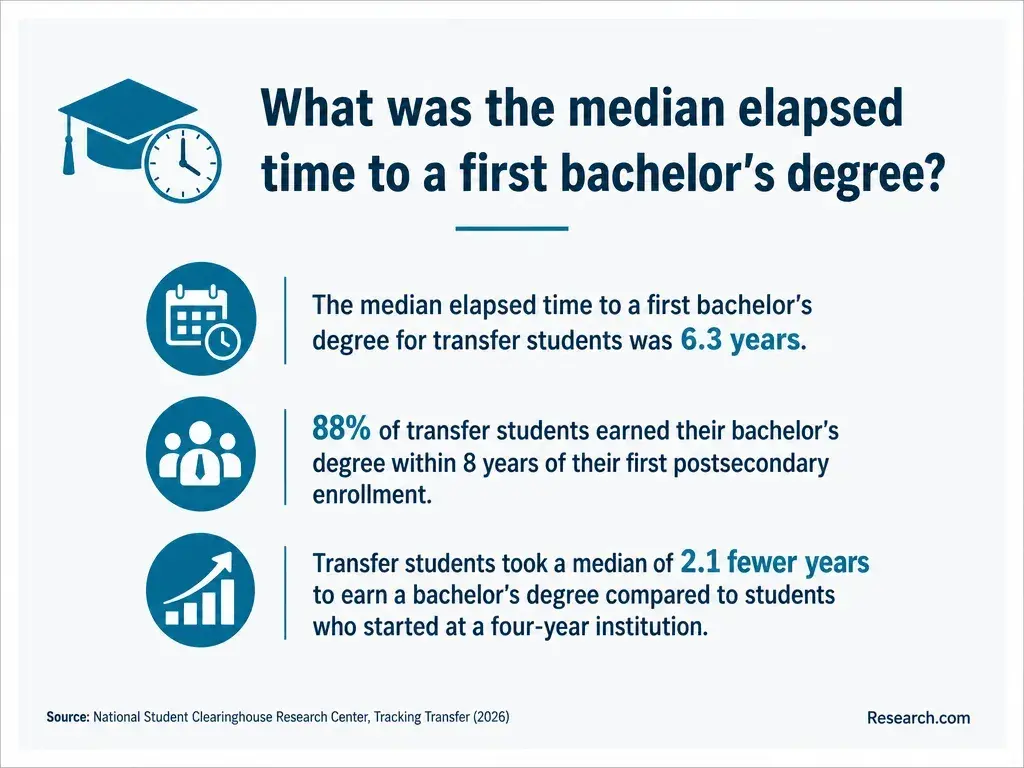
At a conventional full-time pace, an associate degree often takes about two academic years and a bachelor's about four years from the start of college. An associate-to-BS route may take roughly the same total study time as starting a BS immediately - but only if enough credits apply and required courses are available in sequence. Part-time enrollment, prerequisites, and work or caregiving commitments change the calendar.
There is no reliable single price for either route. Compare total cost to graduation, not tuition per credit alone: include required remaining credits, mandatory fees, books and software, possible campus visits, financing costs, and earnings affected by your schedule. Grants, employer assistance, and transfer awards can change your net cost, but none should be assumed before eligibility is confirmed.
Ask each school for a written estimate based on your records and planned enrollment pace. Compare low-cost online business administration pathways as a starting point, then check each institution's current charges and your own degree audit. An inexpensive credit is not a saving if it does not satisfy a remaining requirement.
An online BS can represent the same degree-level achievement as an on-campus BS when it is awarded by a recognized, accredited institution and meets that school's academic requirements. Its value for you also depends on whether you can complete it and demonstrate relevant skills. Delivery mode does not establish identical curricula or employer outcomes across different schools.
Check live-session requirements, group meetings, exam proctoring, presentation schedules, internship rules, and any campus visits before treating "online" as flexible. An accelerated term may compress the same work into fewer weeks. If speed matters, use bachelor's programs for faster completion to identify possibilities, then request a sample course schedule and confirm how frequently required classes run.
Associate programs commonly introduce accounting, economics, business communication, management, and general education. A BS typically builds on that foundation with upper-division work in areas such as finance, marketing, operations, organizational behavior, analytics, strategy, and a capstone.
Requirements vary: a BS may offer a formal concentration, while another program offers only related electives. Compare course level and sequence, not just titles. An introductory spreadsheet or accounting course can prepare you for later study but does not establish specialist competence.
If supply chain work interests you, check for operations and quantitative coursework, relevant projects, and the prerequisites behind them. Shorter completion timelines for supply chain bachelor's students are useful comparisons only when the specialized curriculum fits your intended role.
Associate applicants commonly submit a high school credential or accepted equivalent and any prior college transcripts. First-time bachelor's applicants may face additional institutional criteria; students transferring into an online BS may need prior college work and, at some schools, prerequisites for admission to the business major. Test, GPA, mathematics, and English requirements differ by institution.
Ask admissions to distinguish admission to the college from admission to the business program. Then ask the transfer office what documentation it needs to evaluate previous courses. Application charges are a separate, smaller cost consideration; online college options without an application fee may help you build a shortlist, but a waived fee says nothing about degree fit or total tuition.
Check that the institution holds accreditation recognized by the U.S. Department of Education or the Council for Higher Education Accreditation. AACSB, ACBSP, and IACBE are separate business-accreditation organizations; if a school cites one, confirm its current scope and whether the specific business program is covered. Accreditation matters, but it does not guarantee that another school will accept a particular course.
For a prospective transfer student, the decisive document is an official evaluation showing where credits apply: general education, business core, prerequisites, concentration, or electives.
Accepted elective credits may add to your total without shortening the required course sequence. An AAS and an AA or AS can therefore produce different completion plans even when they contain similar numbers of credits.
Obtain the receiving school's degree audit before committing to an associate-to-BS plan. The same principle applies when comparing project management bachelor's credit transfer rules: a school's willingness to accept credits is not a promise that they replace required major courses.
With an associate degree, plausible starting points include administrative assistant, customer service representative, sales support specialist, and operations assistant. The work may involve records, scheduling, customer communication, order tracking, or basic reporting. Requirements vary by employer, and some applicants qualify through experience without either degree.
A BS can support applications for roles such as HR specialist, marketing coordinator, procurement staff member, or project coordinator when the coursework and your experience match the duties. More analytical or supervisory positions may require additional technical preparation or a record of responsibility. For example, coordinating project schedules is different from managing a major project budget.
If project work is your target, compare a general BS with cost-conscious project management college options and inspect the actual job postings you hope to pursue. An internship, relevant current job, or well-documented supervised project may help demonstrate readiness more directly than a degree title alone.
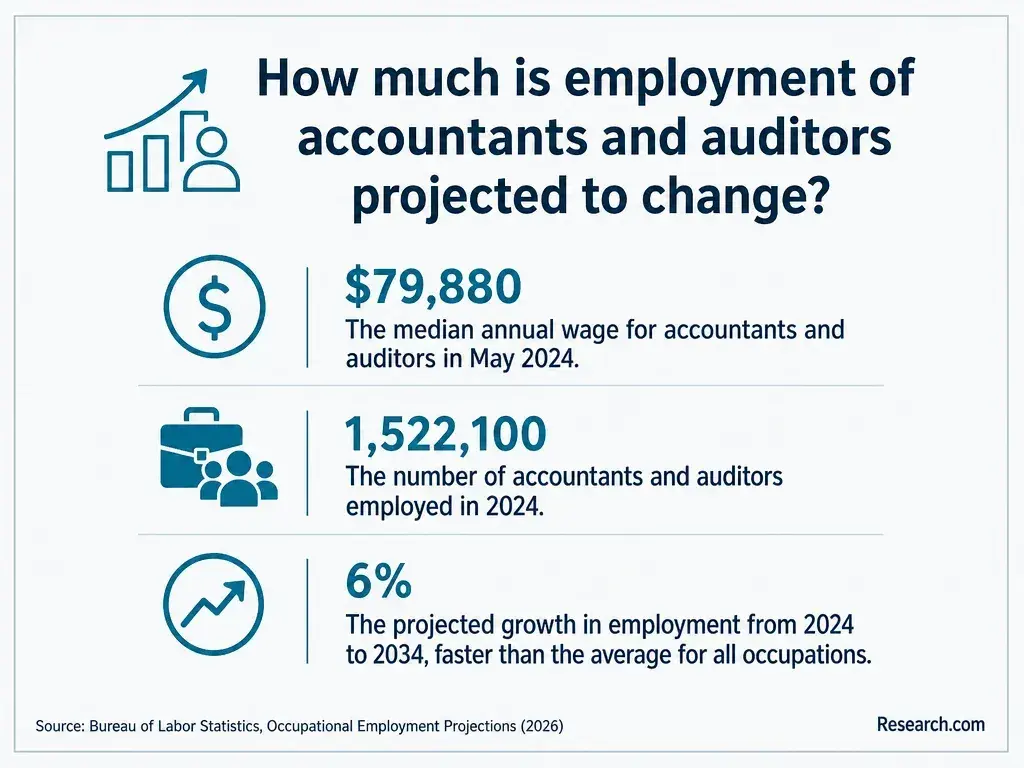
There is no general license required simply to hold an associate degree in business or a BS in Business Administration. Requirements attach to particular activities and occupations. Accounting licensure, certain financial-services work, and other regulated practices have separate rules; a general business degree alone does not meet them automatically.
Voluntary HR, project management, or other professional certifications can have their own education, experience, examination, and renewal requirements. Check the issuing organization before choosing coursework around one.
If your aim is advancement into a supervisory role rather than regulated practice, documented workplace results and employer training may be more immediately useful than a certificate. Compare those options with a degree pathway - including accelerated online pathways for business students - only after identifying what the target employer actually requires.
How Can You Choose a Reputable Online Business Administration Program?
Shortlist programs by the role you want and the credits you already hold. A fast advertised timeline is useful only if it survives an individual transfer evaluation and a workable schedule. American colleges offering fast-track business bachelor's can provide candidates to investigate, not a personal graduation date.
Before enrolling, ask each school for the following evidence and compare the answers side by side:
- A current degree plan identifying accepted credits, requirements they satisfy, remaining courses, and any residency rule.
- A schedule showing when required online classes run, including live meetings, exams, group work, and any in-person obligations.
- A personalized cost estimate covering tuition, fees, likely aid, and the enrollment pace used in the estimate.
- Confirmation of institutional accreditation, any claimed business accreditation, and available advising and career support.
Choose the associate route if it offers an affordable near-term credential and a credible transfer or employment plan. Choose the online BS now if bachelor's-level jobs are your clear target and the verified path to completion fits your finances and weekly life. If neither program closes the skill gap for your target role, relevant experience or targeted training may be the better next step.
Other Things You Should Know About Business Administration
Often, yes, but check weekly deadlines and required meetings before enrolling. A part-time course load may be more sustainable, even if it extends your completion date.
Yes, if you meet the receiving school's admission rules. Ask it to evaluate your transcript and check whether older courses meet current major requirements.
Not necessarily. Compare the target job's requirements with a certificate, specific prerequisite courses, employer training, or graduate study before committing to another full degree.
Possibly, but employment alone does not award credit. Ask the program whether it permits your role, what faculty approval and supervision it requires, and whether your employer authorizes the proposed work.
- Fast Facts: Tuition costs of colleges and universities (76) | ed.gov https://nces.ed.gov/fastfacts/display.asp
- Accreditation in the U.S. | ed.gov http://www.ed.gov/laws-and-policy/higher-education-laws-and-policy/college-accreditation/accreditation-in-the-us
- Higher Education: Students Need More Information to Help Reduce Challenges in Transferring College Credits | U.S. GAO https://www.gao.gov/products/gao-17-574
- Business Administration | Academic Catalog https://catalog.oaklandcc.edu/programs/business-administration/
- Online Business Administration Degrees: A Guide to Your Options and How to Choose | University of Arkansas Grantham https://www.uagrantham.edu/blog/business-admin-degree-online/
- Online Associate's Degree in Business Administration | Purdue Global https://www.purdueglobal.edu/degree-programs/business/associate-degree-business-administration/
- How Colleges Can Simplify Transfer Credit Policies | American College of Education https://ace.edu/blog/how-the-college-credit-transfer-process-works-and-how-it-can-be-improved/
- Transfer Glossary - NCCCS https://www.nccommunitycolleges.edu/transfer-glossary/
- BBA in General Business Online - Online Degrees & Programs | Kent State Online https://onlinedegrees.kent.edu/degrees/bachelor-of-business-administration-in-general-business
- Associate in Business Administration Careers | University of Bridgeport https://www.bridgeport.edu/news/what-can-you-do-with-business-administration-associate-degree/