2027 Best Accredited Online Colleges with No Application Fee

Co-Founder and Chief Data Scientist
Application fees can make college comparison more expensive before you even know whether a program fits your goals. For adults returning to school, first-generation applicants, military learners, transfer students, and budget-conscious families, choosing accredited online colleges with no application fee can reduce upfront costs while preserving access to legitimate degrees, financial aid, and employer-recognized credentials.
This guide explains how no-fee online colleges work, how to confirm accreditation, which degree fields are commonly available online, and what questions to ask before enrolling. It also compares online and campus learning, outlines financial aid options, and shows how to evaluate cost, transfer credits, career support, and long-term return on investment.
Quick Answer: Are Online Colleges With No Application Fee Worth Considering?
Yes, accredited online colleges with no application fee can be a practical option if the school is properly accredited, the program matches your career goal, and the total cost is transparent. A waived application fee does not automatically mean lower quality or easier admission. It simply means the institution has removed one upfront cost from the admissions process.
The safest approach is to verify institutional accreditation, check whether your specific program needs specialized accreditation for licensure, compare total tuition and fees, and confirm that online students receive the same academic and career support as campus students.
What to know before applying
- Accredited online and campus programs are designed to meet academic standards and prepare students for professional responsibilities in their field.
- Online colleges can improve access for learners who need flexible schedules and want to avoid relocation, commuting, or campus housing costs.
- No-fee colleges often request the same core admissions materials as fee-charging schools, including transcripts, recommendation letters, essays, or other program-specific documents.
| Decision Factor | Why It Matters | What to Check |
| Application fee | Removes one upfront cost while comparing schools | Confirm whether the fee is permanently waived or limited to certain programs |
| Accreditation | Affects financial aid, transfer credits, licensure, and employer recognition | Search official accreditation databases, not only the school website |
| Total program cost | Tuition alone may not show the real price | Ask about technology fees, online course fees, books, software, and proctoring |
| Program format | Determines whether the schedule fits work and family obligations | Compare asynchronous, synchronous, hybrid, full-time, and part-time options |
| Career alignment | The degree should lead to a realistic next step | Review curriculum, internship expectations, licensure rules, and career services |
Fast, Affordable Online Degree Fields With Broad Admissions Access for 2027
Many students searching for online colleges with no application fee are also looking for programs that are flexible, affordable, and realistic to complete. The following fields are commonly offered online and may appeal to students who want a degree connected to broad employment options or career advancement.
1. Business Administration
A business administration degree gives students a broad foundation in how organizations operate. Coursework typically includes accounting, finance, marketing, operations, management, and strategic decision-making. Many programs use case studies, collaborative projects, simulations, and internships so students can connect business theory with workplace practice.
This degree can fit students who want flexibility because business knowledge applies across corporate, nonprofit, consulting, entrepreneurial, and public-sector settings. It is especially useful for learners who want to strengthen communication, leadership, analytical thinking, and problem-solving skills without committing to one narrow technical specialty too early.
2. Psychology
A psychology degree introduces students to human behavior, thinking, emotion, development, mental health, research methods, and social interaction. It can be a strong option for students interested in people-focused careers, including human resources, social services, healthcare support, community programs, or future graduate study in psychology or counseling.
Students should understand that many licensed psychology and counseling roles require graduate education. At the bachelor’s level, psychology is often best viewed as a flexible foundation rather than a direct path to independent clinical practice.
3. Counseling
Counseling programs focus on helping individuals, families, and groups navigate personal, emotional, behavioral, and social challenges. Students may study counseling theories, ethics, communication strategies, mental health concerns, lifespan development, and client support techniques.
Before choosing a counseling program, confirm whether the degree level and accreditation meet the requirements for the role you want. Many professional counseling licenses require a graduate degree, supervised experience, and state approval.
4. Computer Science
Computer science programs usually combine programming, algorithms, data structures, software engineering, systems design, and computer architecture. Online students often complete coding assignments, software projects, labs, internships, or research-based work that builds technical problem-solving ability.
This field can be a good fit for students who enjoy logic, independent troubleshooting, and continuous learning. Because technology changes quickly, graduates benefit from building a project portfolio, learning industry tools, and keeping skills current in areas such as software development, cybersecurity, data analysis, and cloud computing.
5. Healthcare Administration
Healthcare administration degrees prepare students for the business and operational side of healthcare. Programs commonly include healthcare management, health economics, policy analysis, organizational behavior, quality improvement, compliance, and strategic planning. Some programs include internships or practicum experiences in healthcare environments.
This major can suit students who want to work in healthcare but prefer leadership, operations, finance, policy, or administrative roles rather than direct clinical care. Graduates may pursue opportunities in hospital administration, insurance organizations, public health agencies, consulting firms, and healthcare service organizations.
6. Nursing
Nursing programs combine science, clinical judgment, patient care, and hands-on training. Coursework often includes anatomy, physiology, pharmacology, assessment, care planning, and clinical practice. Depending on the program, students may complete laboratory requirements, simulations, and supervised clinical rotations in approved healthcare settings.
Nursing is one of the online fields where accreditation and state authorization are especially important. Students should confirm that the program meets licensure requirements in the state where they plan to practice and that clinical placements are feasible for their location.
7. Management
A management degree emphasizes leading people, projects, resources, and organizational change. Students usually study organizational behavior, human resources, strategy, finance, marketing, communication, and decision-making. Many programs use case-based learning, group projects, and applied assignments to build practical leadership skills.
This degree may be useful for professionals who already have work experience and want to move into supervisory, operations, administrative, or team leadership roles. It can also support entrepreneurs who need stronger planning, budgeting, and people-management skills.
8. Accounting
Accounting programs teach students how to record, analyze, audit, and communicate financial information. Common courses include financial accounting, managerial accounting, taxation, auditing, business law, and accounting systems. Some programs include internships or coursework that can help students prepare for certification pathways such as the CPA (Certified Public Accountant).
Students considering accounting should compare curriculum requirements carefully, especially if they plan to pursue CPA eligibility. Certification rules vary by jurisdiction, so it is important to ask whether the program’s credits align with the requirements where you intend to work.
9. Economics
Economics degrees focus on how individuals, businesses, governments, and markets make decisions. Students typically study microeconomics, macroeconomics, econometrics, economic theory, and quantitative analysis. Research projects, data work, and policy analysis are common parts of the curriculum.
This field can appeal to students who enjoy data, policy, finance, forecasting, and analytical problem-solving. Graduates may apply economic reasoning in finance, government, consulting, market research, policy analysis, and academic pathways.
10. Special Education
Special education programs prepare students to support learners with disabilities and diverse educational needs. Coursework often includes educational psychology, behavior management, assessment, inclusive instruction, legal responsibilities, and instructional strategies for different learning profiles. Fieldwork or practicum experiences may take place in inclusive classrooms or specialized educational settings.
Students who want to become licensed teachers should confirm state approval, field placement requirements, and whether the program meets special education licensure standards in their state.
Guide Navigation
- Accredited online colleges with no application fee for 2027
- Online classes versus campus classes
- Why accreditation matters
- Benefits of accredited online colleges
- How to confirm accreditation
- Why some schools charge application fees
- Admissions requirements at no-fee colleges
- Financial aid options for online learners
- How to choose an online college
- Employer views of online degrees
- Career outcomes for online graduates
- Career services for online students
- National accreditation and transferability
- Credibility checklist for online colleges
- Finding affordable accredited online colleges
- Using online degrees for high-demand industries
- Online degree return on investment
- Transitioning successfully to online learning
- Online doctoral programs and career growth
- Accelerated online programs
- Technology trends in online learning
- Online colleges for working adults
- Key insights for choosing wisely
Accredited Online Colleges With No Application Fee for 2027
How the Schools Were Selected
To identify online colleges with no application fee, our review focused on institutions that combine accessible admissions with recognized academic oversight. The school list was developed using the Research.com research methodology and data sources such as the IPEDS database, Peterson's database, the College Scorecard database, and the National Center for Education Statistics.
Use this list as a starting point, not as a substitute for your own due diligence. Program availability, tuition, admissions policies, and online formats can change, so always confirm details directly with the school before applying.
1. Elmhurst University
Elmhurst University, founded in 1871, is a private institution in Illinois. It offers undergraduate and graduate study in the liberal arts and applied sciences. Students can choose from over 70 majors, 15 master's-level programs, several adult degree completion options, and certificate programs. Online and hybrid offerings include areas such as nursing, psychology, information technology, data science, and public health.
- Accreditation: Higher Learning Commission (HLC); Commission on Collegiate Nursing Education (CCNE)
- Online programs to review:
- Accelerated BSN Online
- Online Master’s Entry in Nursing Practice
- Master of Public Health
- Master of Science in Data Science
- Applied Psychology Degree Completion Program (Hybrid)
- Graduate Certificate in Information Technology: Network Administration
- Graduate Certificate in Information Technology: Application Development
- Graduate Certificate in Data Science
- Graduate Certificate in Enterprise Optimization
2. Franciscan University of Steubenville
Franciscan University of Steubenville is a private Catholic institution in Ohio. It offers online associate, bachelor’s, and master’s degrees, along with campus-based options in fields such as business administration, psychology, philosophy, theology, and criminal justice.
- Accreditation: HLC
- Online programs to review:
- Associate in Theology
- Associate in Philosophy
- Bachelor in Philosophy
- Bachelor in Theology
- Bachelor of Management
- Bachelor of Psychology-Clinical
- Bachelor of Criminal Justice
- Master of Arts in Catechetics and Evangelization
- Master of Business Administration
- Master of Arts in Theology and Christian Ministry
- Master of Arts in Catholic Studies
- Master of Science in Criminal Justice
3. Lindsey Wilson College
Lindsey Wilson College, established in 1903 in Kentucky, provides online undergraduate and master’s programs designed for students balancing school with work and personal responsibilities. The college also offers on-campus associate, bachelor’s, master’s, and doctoral programs in fields including business administration, media studies, education, nursing, and psychology.
- Accreditation: Southern Association of Colleges and Schools Commission on Colleges (SACSCOC)
- Online programs to review:
- Business Administration (Undergraduate and Graduate)
- Human Services and Counseling (Undergraduate)
- Criminal Justice (Undergraduate)
- Master of Education in Counseling
4. Chadron State College
Chadron State College is a public college in Nebraska and part of the Nebraska State College System. Founded in 1911, the college offers 51 undergraduate programs and nine graduate programs. Chadron State currently lists eight online undergraduate degree programs, and prospective students should contact the college for the latest program availability.
- Accreditation: HLC
- Online programs to review:
- Applied Sciences in Technical Occupations
- BusinessEducation
- Family and Consumer Sciences
- Geoscience
- Interdisciplinary Studies
- Mathematics
- Psychological Sciences
5. Norwich University
Norwich University, located in Vermont, is a private senior military institution founded in 1819. Its College of Graduate and Continuing Studies delivers online undergraduate and graduate programs in several disciplines. The university also reports more than 25 years of experience in online education.
- Accreditation: New England Commission of Higher Education (NECHE)
- Online programs to review:
- Business Administration
- Computer Science and Information Systems
- Criminal Justice
- Management
- Nursing
- Cybersecurity
- Diplomacy
- History
- International Relations
- Public Health
6. McKendree University
McKendree University is a private Illinois institution founded in 1828. It offers 55 majors, 41 minors, 11 graduate programs, and two doctorate programs. Online study options include nursing, healthcare administration, business administration, psychology, education, and related fields. According to McKendree data, tuition for full-time students in the academic year 2022–2023 was $32,020.
- Accreditation: HLC
- Online programs to review:
- Psychology (Undergraduate)
- Sociology (Undergraduate)
- Healthcare Management (Undergraduate and Master’s)
- Business Administration (Undergraduate and Master’s)
- Computer Information Systems (Undergraduate)
- Nursing (RN-BSN and MSN)
- Education (Master’s)
- Performance Psychology and Leadership (Master’s)
- Doctor of Nursing Practice
- Doctor of Education and Specialist in Education
7. Grand Canyon University
Grand Canyon University is a private, for-profit Christian university in Arizona that was established in 1949. It offers bachelor’s, master’s, doctoral, certificate, bridge, and post-master’s programs. Students can explore online and campus options in business, teaching, nursing, engineering and technology, digital arts, and other disciplines. Its online undergraduate and graduate courses cost between $250 and $740 per credit, depending on course and level.
- Accreditation: HLC
- Online programs to review:
- Advertising and Graphic Design (Undergraduate)
- Christian Studies (Undergraduate)
- Government (Undergraduate)
- Accounting (Undergraduate)
- Behavioral Health Science (Undergraduate)
- Christian Ministry (Graduate)
- Communication (Undergraduate and Graduate)
- Business Administration (Graduate)
- Education (Undergraduate and Graduate)
- Nursing (Undergraduate and Graduate)
8. Baker University
Baker University, founded in Kansas in 1858, offers over 50 undergraduate, graduate, and certificate programs. The university provides online and hybrid formats, including accelerated options for learners managing employment and personal responsibilities. Areas of study include business, computer science and technology, education, healthcare, and social sciences.
- Accreditation: HLC
- Online programs to review:
- Business Administration (Undergraduate and Graduate)
- Criminal Justice (Undergraduate)
- Psychology (Undergraduate)
- Nursing (Undergraduate and Graduate)
- Education (Graduate)
How Online Classes Compare With Campus-Based Learning
Online courses can deliver the same academic content as campus courses, but the learning experience is different. Campus programs build structure into the day through in-person lectures, physical labs, scheduled meetings, and immediate access to classmates. Online programs place more responsibility on the student to manage deadlines, participate in digital discussions, solve technology problems, and stay engaged without a classroom routine.
This difference matters for students comparing flexible programs such as an affordable online teaching degree, specialized online colleges for early childhood education, or an affordable online software engineering degree. Education majors may need field placements, while software engineering students may need hands-on coding support and project feedback. The right format depends on your schedule, learning style, support needs, and the practical requirements of the program.
| Format | Best For | Potential Drawback |
| Fully asynchronous online | Working adults who need maximum schedule control | Requires strong self-discipline and independent planning |
| Synchronous online | Students who want live interaction without commuting | Class meeting times may conflict with work or caregiving |
| Hybrid | Learners who want online flexibility plus some campus or field experiences | Travel may still be required |
| Campus-based | Students who prefer in-person structure, labs, and local networking | Less flexible and may include commuting or housing costs |
Why Accreditation Is Essential for Online Colleges
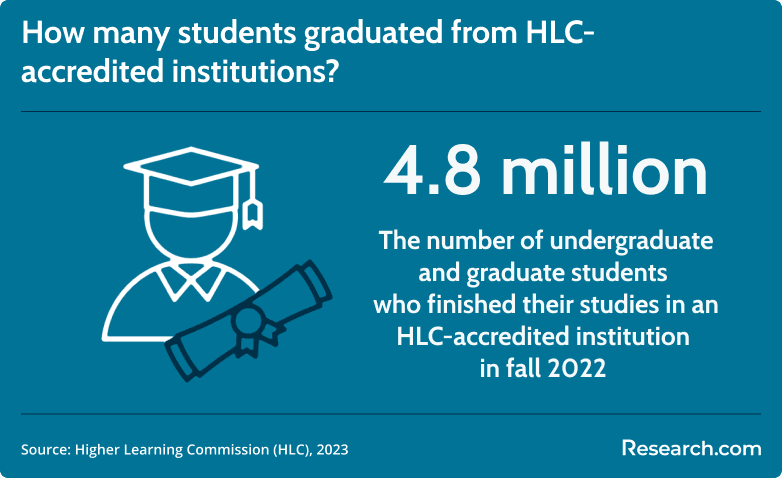
Accreditation is one of the most important protections for students. It signals that an outside accrediting body has reviewed the institution or program against recognized standards. It also affects practical outcomes such as federal financial aid, transfer credit, graduate school admission, employer reimbursement, and professional licensure.
Students attending unaccredited institutions may lose access to Title IV funding, including Pell Grants and federal student loans. Employer tuition assistance under Section 127 of the IRS tax code may also depend on whether the school is properly accredited. In licensed fields such as nursing, teaching, and counseling, state boards may reject degrees from programs that lack the required recognition.
In the United States, reputable institutions may be accredited by national, regional, or programmatic accrediting organizations. Examples include:
- Higher Learning Commission (HLC)
- Accrediting Commission for Community and Junior Colleges (ACCJC)
- Middle States Commission on Higher Education (MSCHE)
- Western Association of Schools and Colleges Senior College and University Commission (WSCUC)
- Northwest Commission on Colleges and Universities (NWCCU)
Main Benefits of Accredited Online Colleges
Accredited online colleges can be valuable when they combine flexible delivery with clear academic standards and student support. The biggest advantages include:
- Schedule flexibility. Online programs can make it easier to study while working, parenting, serving in the military, or managing other responsibilities.
- Geographic access. Students can participate from many locations if they have a reliable device, stable internet access, and required software.
- Broader program choice. Online learning now spans many disciplines, including affordable online public relations degree programs and cheap online supply chain management degree programs.
- Comparable academic expectations. Accredited online programs are reviewed against academic standards, which helps protect educational quality.
- Potential cost savings. Some affordable online colleges reduce costs through flat-rate tuition, no application fees, fewer campus-based expenses, and no relocation requirement.
How to Verify Accreditation Before You Apply
Do not rely only on a logo or claim on a school’s website. Verify accreditation independently through recognized databases maintained by the Council for Higher Education Accreditation (CHEA) or the U.S. Department of Education (USDOE). If you cannot locate the institution in a trusted database, proceed carefully and ask direct questions before submitting documents or payments.
Students should also distinguish institutional accreditation from programmatic accreditation. Institutional accreditation applies to the college or university as a whole and is important for federal aid and credit transfer. Programmatic accreditation applies to specific degrees or departments. In fields such as nursing, engineering, social work, counseling, and education, program-level accreditation may determine whether your degree meets licensing or professional expectations.
- Search the institution in a recognized accreditation database.
- Confirm the accreditor’s name and current status.
- Check whether the specific program has specialized accreditation if your career requires it.
- Ask the admissions office whether the program meets licensure requirements in your state.
- Save written confirmation for your records before enrolling.
Why Colleges Charge Application Fees
Application fees exist for several reasons. Traditional colleges may use them to offset the cost of reviewing transcripts, essays, test scores, recommendation letters, and other admissions materials. Fees can also discourage casual applications from students who are unlikely to enroll.
Online and adult-focused institutions often operate differently. Many use rolling admissions, streamlined transcript review, or enrollment models designed for working learners. Waiving the application fee can reduce friction for students who are comparing programs but do not want to spend money before understanding transfer credits, costs, and program fit.
- Lower upfront barrier: A waived fee makes it easier for budget-conscious applicants to explore options.
- More streamlined admissions: Some online programs rely on simpler admissions workflows, which can reduce administrative costs.
- Adult learner focus: No-fee policies can appeal to students returning to school after time in the workforce.
Do No-Application-Fee Colleges Have Easier Admissions?
Not necessarily. A waived application fee does not mean the school has lower standards. Accredited online colleges with no application fee may still require official transcripts, minimum academic preparation, essays, recommendation letters, placement assessments, or proof of prerequisites.
The requirements depend on the institution, degree level, and field. Nursing, counseling, education, and other professional programs may have additional standards because of clinical, fieldwork, or licensure requirements. Always compare the full admissions checklist, not just the application fee.
Financial Aid Options for Online College Students
Online learners at accredited institutions may qualify for the same major forms of federal financial aid as campus students. Completing the Free Application for Federal Student Aid (FAFSA) can help determine eligibility for Pell Grants, subsidized loans, federal work-study, and other aid programs.
Working adults should also ask employers about tuition reimbursement or tuition assistance. Some large employers, health systems, public agencies, and regional companies help employees pay for education that supports workforce development. This can be especially valuable when a degree aligns with a current or future role.
Technology costs are another part of the affordability equation. Some institutions operate as online colleges that offer laptops or include software access in the cost structure. Others charge separately for devices, proctoring, digital materials, or platform access.
| Aid or Cost-Reduction Option | Who May Benefit | Question to Ask |
| FAFSA-based aid | Students attending accredited institutions | Is the school eligible for federal student aid? |
| Employer tuition assistance | Working adults and career changers | Does my employer require a specific accreditation type or grade minimum? |
| Transfer credits | Students with prior college, military, or professional training | How many credits will the school accept before I enroll? |
| Flat-rate or subscription tuition | Self-directed students who can move quickly | Can I reduce cost by completing more courses in a term? |
| Included technology | Students without updated devices or required software | Are laptops, software, or online tools included in tuition? |
Factors to Consider When Choosing an Online College
The best online college is not always the one with the lowest advertised tuition. Total value depends on accreditation, transfer credits, program quality, schedule fit, student support, career alignment, and the real cost after fees and aid.
Transfer policies can have a major financial impact. A school that accepts previous college coursework, military education, industry certifications, or prior learning assessments may shorten your degree timeline and reduce tuition. Ask for an official transfer evaluation before committing.
Also review the delivery model. Asynchronous programs may fit full-time workers better, while synchronous courses can provide more live interaction. Students in clinical, teaching, or technical programs should also ask about in-person requirements, local placements, lab work, and proctored exams.
Questions to ask before enrolling
- Is the institution currently accredited by a recognized accreditor?
- Does my program need specialized accreditation for licensure or certification?
- What is the total cost, including tuition, fees, books, software, and proctoring?
- How many transfer credits will be accepted?
- Are courses asynchronous, synchronous, hybrid, full-time, or part-time?
- What support is available for online tutoring, advising, library access, and career planning?
- Will the degree meet requirements in the state where I plan to work?
How Employers View Accredited Online Degrees
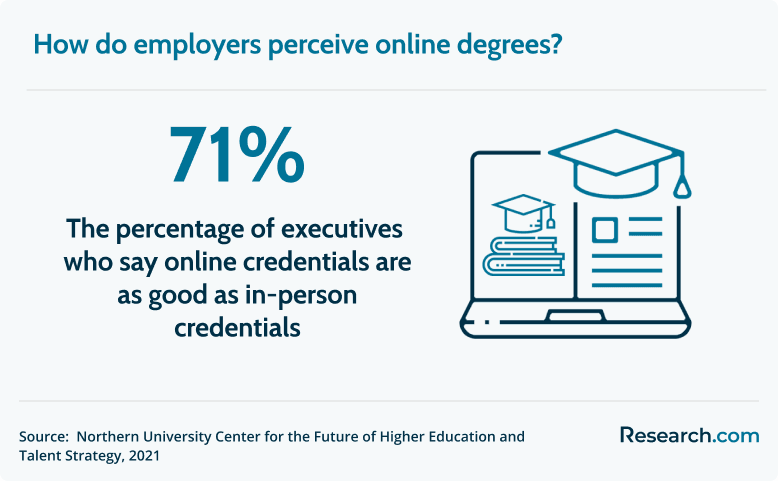
Employer attitudes toward online education have become more practical and less focused on delivery format. Recent data indicate that 71% of U.S. C-suite executives view online degrees as credible, and 84% of adults believe distance learning is an effective educational pathway. The key qualifier is accreditation: employers are more likely to respect degrees from recognized institutions.
A case study from the Society for Human Resource Management (SHRM) also points to the growing importance of skills-based hiring. For example, completing CSWE accredited online BSW programs may help meet baseline requirements, but employers still want evidence of communication ability, field readiness, ethical judgment, and job-relevant skills.
Online graduates can strengthen their applications by highlighting digital collaboration, independent time management, project work, technical tools, and measurable outcomes from coursework or internships.
Career Prospects for Graduates of Accredited Online Colleges
Career outcomes depend on the field, degree level, student experience, local labor market, licensure requirements, and the learner’s ability to demonstrate skills. An accredited online degree can help satisfy educational requirements, but it does not guarantee employment, promotion, or a specific salary.
Students in technical and professional fields should build proof of ability while enrolled. For example, an industrial engineering masters online may help a candidate meet academic expectations, but projects, process improvement experience, software skills, and certifications can make the graduate more competitive.
- Create a portfolio: Save projects, case studies, writing samples, technical work, research, or presentations that show practical ability.
- Add targeted credentials: Consider industry-recognized certifications that complement the degree when they are relevant to your career goal.
- Show remote work readiness: Emphasize online collaboration, project management, digital communication, and self-directed learning.
Career Support Services Online Students Should Expect
Online students should not have to rely only on campus-based services. Strong online colleges provide digital access to career advising, resume reviews, interview preparation, internship guidance, job boards, alumni networks, and employer events.
Before enrolling, ask whether career services are designed for distance learners or simply available in theory. A helpful online career center should offer virtual appointments, online workshops, employer networking events, and guidance for remote interviews. It should also understand the needs of adult learners, career changers, and students outside the campus region.
Why National Accreditation Requires Careful Review
Nationally accredited online colleges can be legitimate, especially for vocational, technical, career-focused, or specialized training. However, students should understand how national accreditation may affect transfer credits and future academic options.
Many regionally accredited institutions are cautious about accepting credits from nationally accredited schools. If you plan to transfer later, pursue graduate school, or enter a licensed profession, confirm credit acceptance and eligibility before enrolling. National accreditation may work well for a direct career-training goal, but it can limit academic mobility in some situations.
| Accreditation Type | Common Use | Main Student Risk |
| Institutional accreditation | Applies to the whole college or university | Choosing a school without recognized accreditation can affect aid and transferability |
| Programmatic accreditation | Applies to a specific degree or professional program | A degree may not meet licensure or certification standards if the program lacks required recognition |
| National accreditation | Often associated with career, vocational, or specialized institutions | Credits may be harder to transfer to many regionally accredited colleges |
| Regional accreditation | Common among public and private nonprofit colleges and universities | Still requires program-level review for licensed fields |
How to Evaluate an Online College’s Credibility
Credibility matters because your degree should hold value after graduation. Use multiple signals rather than relying on one ranking, advertisement, or admissions conversation.
Confirm recognized accreditation
Start with institutional accreditation. A school’s status should be verifiable through a recognized database. Students comparing options can also review a broader list of regionally accredited online colleges.
Review faculty qualifications
Look for instructors with appropriate graduate credentials, teaching experience, professional background, or research activity in the field. Faculty quality affects feedback, mentoring, and academic rigor.
Check retention and graduation information
Retention and graduation patterns can help you understand whether students are supported through completion. These measures should be interpreted alongside student demographics, program type, and enrollment status.
Verify program-specific requirements
Professional fields may require specialized approval or accreditation. Ask the school to explain how the program aligns with licensing, certification, field placement, or exam requirements.
Read student and alumni feedback carefully
Reviews can reveal issues with advising, course access, billing, technology, faculty response times, and career services. Look for patterns instead of relying on one positive or negative comment.
Investigate employer recognition
Contact alumni, review LinkedIn outcomes, ask program advisors about employer partnerships, and research whether graduates work in roles similar to the ones you want.
How to Find Affordable Accredited Online Colleges
Affordability is more than a low per-credit price. The real cost depends on tuition model, transfer credits, fees, pacing, textbooks, technology, financial aid, and how long it takes to finish.
Students comparing cheap accredited online colleges should ask whether the school uses a traditional credit-hour model, flat-rate tuition, or Competency-Based Education (CBE). CBE programs often charge a flat subscription rate per term and allow students to complete as much coursework as they can master during that term.
CBE can be cost-effective for experienced, motivated learners who already know some of the material. It may not be ideal for students who need frequent instructor guidance, fixed weekly structure, or slower pacing.
Common mistakes when choosing an online college
| Mistake | Why It Can Hurt You | Better Approach |
| Choosing only because there is no application fee | The waived fee is small compared with total degree cost | Compare accreditation, tuition, fees, transfer credits, and outcomes |
| Ignoring accreditation | Can affect aid, transfer credits, licensure, and employer recognition | Verify institutional and programmatic accreditation independently |
| Looking only at tuition per credit | Extra fees can raise the real cost | Request a full cost breakdown in writing |
| Assuming online means self-paced | Some online courses require live attendance | Confirm whether courses are asynchronous or synchronous |
| Overlooking state licensure rules | A program may not qualify you where you live or plan to work | Ask the program and state board before enrolling |
| Relying only on rankings | A highly ranked school may not fit your schedule, budget, or career goal | Use rankings as one input among several decision factors |
How Online Degrees Can Support Advancement in High-Demand Fields
Online degrees can help students build credentials for changing industries when the program is aligned with employer expectations. Strong programs connect coursework to current tools, applied projects, case studies, internships, simulations, or competency-based assessments.
Students targeting leadership or advanced roles should compare curriculum content with job postings in their field. If you are exploring graduate-level options tied to earning potential, review related guidance on masters degrees that pay well.
How to Think About Return on Investment for an Online Degree
Return on investment should be evaluated by comparing total cost with realistic career benefits. Consider tuition, fees, books, time to completion, transfer credits, financial aid, employer reimbursement, and opportunity cost. Then compare those costs with potential outcomes such as qualification for a new field, promotion eligibility, licensure, skill development, or long-term career mobility.
Do not assume that a degree automatically produces a salary increase. The strongest ROI cases usually occur when the degree is required for a specific credential, clearly connected to advancement, or paired with experience and in-demand skills. Students comparing graduate options can review affordable online masters programs to reduce cost while preserving academic quality.
Strategies for a Smooth Transition to Online Learning
Online learning rewards planning. Students who succeed usually create a weekly schedule, set up a dedicated study space, use reminders for assignments, attend orientations, and communicate early with instructors and advisors.
Accelerated options, such as an associate degree in 6 months online, can be attractive for motivated learners, but speed increases workload. Before choosing an accelerated format, confirm how many hours per week the program expects and whether you can meet deadlines while managing work and personal obligations.
- Block fixed study times each week before classes begin.
- Test your internet, learning platform, webcam, and required software.
- Introduce yourself to instructors and advisors early.
- Use tutoring, library, writing, and technology support before problems escalate.
- Keep copies of syllabi, transfer evaluations, billing documents, and accreditation confirmations.
Are Online Doctoral Programs a Smart Investment?
Online doctoral programs can make sense for professionals who need advanced expertise, research training, leadership preparation, or terminal credentials. They may support goals in academia, executive leadership, consulting, public service, or specialized professional practice.
Because doctoral study is demanding, applicants should evaluate mentorship quality, research fit, program length, dissertation or capstone expectations, residency requirements, funding, and career relevance. For a comparison of duration and delivery models, see online doctoral programs.
Can Accelerated Online Programs Maintain Quality?
Accelerated online programs can be rigorous when they preserve clear learning outcomes, meaningful faculty interaction, strong assessment, and adequate time for skill development. The risk is not acceleration itself; the risk is choosing a compressed program that does not provide enough support or depth.
Students considering options such as 1 year master degree programs should compare workload, prerequisites, graduation expectations, capstone requirements, and employer or licensure recognition before enrolling.
How Technology Is Changing Online Learning
Online education now relies on more than recorded lectures. Many programs use virtual classrooms, collaboration platforms, adaptive quizzes, simulations, remote proctoring, digital labs, and AI-supported learning tools. These technologies can improve access and feedback, but they also require students to be comfortable with digital workflows.
Technology can be especially useful in programs where students need practice, immediate feedback, or applied demonstrations. If you are comparing flexible career-focused options, review guidance on the best online degrees to get.
Are Online Colleges Designed for Working Adults?
Many online colleges are built around the needs of adults who are employed, caring for family, serving in the military, or returning to school after a break. Common features include asynchronous coursework, part-time pathways, evening support, rolling start dates, transfer credit evaluations, and career advising for experienced professionals.
Working adults should look for programs that respect limited time and provide clear cost information. Compare pacing, credit transfer, employer tuition assistance compatibility, and support services. Budget-focused learners can also review the cheapest online colleges for working adults.
References
- Higher Learning Commission. (2023). HLC Membership by the Numbers. https://download.hlcommission.org/BytheNumbers-2023InstUpdate_2023-09_INF.pdf
- Northern University Center for the Future of Higher Education and Talent Strategy. (2021). Employers’ Post-COVID Business Strategy and the Race for Talent: A View from the C-Suite. https://cps.northeastern.edu/wp-content/uploads/2022/01/NUReport_CFHETS_EmployersPostCovid_12-22-2021.pdf
Key Insights
- Accredited online colleges with no application fee can reduce upfront costs, but the waived fee should be only one part of your decision.
- Accreditation is non-negotiable. Verify both institutional accreditation and any programmatic accreditation required for licensure or certification.
- The lowest advertised tuition may not be the lowest total cost. Compare fees, transfer credits, books, software, proctoring, and time to completion.
- Online learning works best for students who can manage time independently, communicate proactively, and stay organized without a physical classroom routine.
- Employers increasingly focus on skills, projects, experience, and accreditation rather than whether a degree was earned online or on campus.
- Before enrolling, ask for written confirmation about transfer credits, program format, total cost, financial aid eligibility, career services, and state licensure alignment.
Other Things You Need to Know about Online Colleges with No Application Fee
Applicants should check whether the school accepts credits only from regionally accredited institutions, how many transfer credits it allows, and whether courses must match the degree plan. Many schools cap transfers at 60 to 90 semester credits, and some require official transcripts before evaluation.
Students should ensure they have a reliable internet connection and a computer that meets minimum specifications set by each college. Often required are Windows or macOS operating systems, at least 8GB RAM, and specific software like Zoom or Microsoft Office for online courses.
Students attending these colleges can access federal aid by completing the FAFSA. Scholarships and grants from institutions or external organizations are also available. Additional state-level grants may be offered depending on the student's residency and chosen school in 2027.