
2027 Best Accredited BSW Online Programs

Co-Founder and Chief Data Scientist
Choosing an online Bachelor of Social Work program is not just a question of convenience. The right BSW program should be accredited, affordable enough to make sense for your budget, flexible enough to fit your schedule, and strong enough to prepare you for field education, licensure requirements, graduate study, and entry-level social work roles. This guide is for students comparing accredited online BSW programs, transfer students looking for a degree-completion path, and working adults who want to enter human services without relocating.
You will find ranked program options, cost and financial aid considerations, common BSW courses, online versus campus trade-offs, licensure preparation, career paths, salary information, and practical questions to ask before enrolling.
Quick Answer: Is an Online BSW Degree Worth Considering?
An accredited online BSW can be a practical path into entry-level social work and human services roles, especially for students who need scheduling flexibility. It can also serve as preparation for a Master of Social Work, which is often required for clinical practice and advanced licensure. The strongest programs are accredited by the Council on Social Work Education, include supervised fieldwork, and clearly explain how online students complete in-person practicum requirements.
- There were more than 708,000 social work jobs in 2021, giving BSW graduates access to a broad employment field.
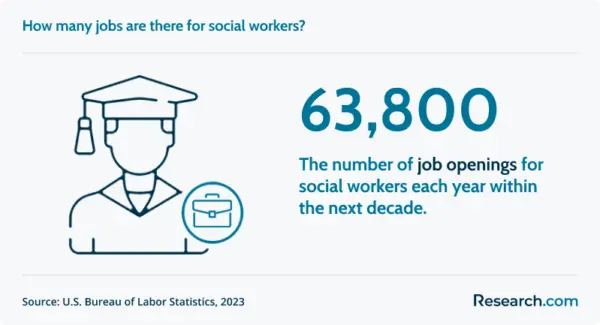
- About 63,800 job openings for social workers are projected each year on average.
- An online BSW can help students move toward an MSW or related graduate degree, but students should verify accreditation, licensure alignment, field placement support, and total cost before enrolling.
What can I expect from an accredited online BSW program?
An accredited online Bachelor of Social Work program prepares students for generalist social work practice. That usually means learning how to assess client needs, connect people with services, understand social welfare systems, advocate for vulnerable populations, and work ethically across diverse communities. A BSW can qualify graduates for entry-level roles such as community outreach coordinator and can also provide a foundation for work connected to public child welfare.
Students may encounter coursework and applied learning connected to mental health, criminal justice, policy and planning, substance abuse, advocacy, research, and community services. Even when classes are online, BSW programs typically require field education in an approved local agency or organization.
| BSW curriculum area | What students learn | Why it matters in practice |
| Social Welfare Policies | How public programs, laws, and agencies shape access to services | Social workers often help clients navigate systems that affect housing, healthcare, income support, and child welfare. |
| Human Development | How people change across the lifespan and how environment affects behavior | This helps social workers assess needs in children, families, adults, and older adults. |
| Social Justice | How inequality, discrimination, and power affect individuals and communities | Advocacy and ethical practice are central to social work. |
| Diversity and Cultural Competence | How to work respectfully across race, class, gender, culture, ability, religion, and identity | Effective practice requires trust, awareness, and culturally responsive communication. |
| Case Management | How to coordinate services, track client progress, and document care | Many entry-level BSW roles involve connecting clients with resources and following up. |
| Counseling | Basic helping skills, interviewing, crisis response, and client communication | BSW graduates may provide support, screening, referrals, and non-clinical interventions. |
The degree also develops transferable skills, including leadership, research, documentation, communication, planning, and ethical decision-making. These skills can apply in nonprofit work, public agencies, healthcare settings, advocacy organizations, and graduate education.
Where can I work with an online BSW degree?
BSW graduates commonly work in public, private, and nonprofit organizations that provide social services to individuals, families, and communities. Employment settings may focus on child welfare, family services, homelessness, mental health, substance abuse, aging, disability services, public health, or community development.
Graduates may also work in nonprofit organizations, where they may support programs, provide direct services, coordinate referrals, or participate in advocacy and policy work. Government agencies at the local, state, and federal levels may hire social workers or human services professionals for roles in child protective services, public assistance, corrections, community health initiatives, and public service programs.
How much can I make with an online social work degree?
Based on our research, social workers with a BSW make an average base salary of $64,786. Students who continue into graduate education, such as an MSW, can expect a base salary of $71,534. Actual earnings vary by employer, location, licensure status, specialization, experience, and job responsibilities.
Some areas of social work may offer stronger salary potential than others. Healthcare, mental health, school services, substance abuse, and management roles can create opportunities for higher compensation, especially when paired with the appropriate license or certification. However, a degree alone does not guarantee a specific salary; students should compare outcomes by state, employer type, and role before estimating return on investment.
- Best accredited online BSW programs for 2027
- How long online BSW programs usually take
- Online BSW versus on-campus BSW programs
- Average cost of an online BSW program
- Financial aid options for social work students
- Common admission requirements for BSW programs
- Typical online BSW courses
- Online BSW specialization options
- How to choose the right online BSW program
- How online BSW programs support licensure preparation
- Career paths for BSW graduates
- Balancing affordability and quality in online BSW programs
- Student support services online BSW students should look for
- How online social work students can succeed
- Social work versus psychology career paths
- How advanced degrees affect social work earnings
- Whether a doctorate in social work is worth it
- State requirements for school social worker licensure
- Job market outlook for social work graduates
- How accredited online BSW programs can improve career options
- Options for advancing your social work education
- Career growth opportunities in social work
- Why an advanced degree can expand social work careers
Best Accredited BSW Online Programs for 2027
The programs below were selected for students looking for accredited online or hybrid BSW options. Accreditation, curriculum design, faculty expertise, field education, delivery format, and available student support are important factors because they affect academic quality, transferability, licensure preparation, and graduate school eligibility.
How do we rank schools?
Our rankings are built using a data-informed process aligned with our research methodology. The analysis uses institutional and program information from sources such as the IPEDS database, the Distance Learning Licensed Data Set from Peterson’s Data, the College Scorecard, and the National Center for Education Statistics. Students should still confirm current tuition, delivery format, field placement rules, and state licensure alignment directly with each school.
| School | Program length | Credits required | Cost per credit | Accreditation |
| University of Michigan, Flint | Four Years | 124 | $542 | Council on Social Work Education’s Commission on Accreditation (CSWE) |
| Texas State University | Four Years | 120 | $800 | Council on Social Work Education (CSWE) |
| University of Cincinnati | Two to Four Years | 57 | $573 | Council on Social Work Education (CSWE) |
| University of Utah | Two Years | 48 | $260 | Council on Social Work Education (CSWE) |
| University of Alabama | Four Years | 120 | $385 | Council on Social Work Education (CSWE) |
| California State University at Chico | Four Years | 120 | $471 | Council on Social Work Education (CSWE) |
| University of North Dakota | Four Years | 120 | $390 | Council on Social Work Education (CSWE) |
| Western Kentucky University | Four Years | 120 | $540 | Council on Social Work Education (CSWE) |
| Wayne State University | Four Years | 120 | $519 | Council on Social Work Education (CSWE) |
| University of Nebraska | Four Years | 120 | $268 (online in-state), $410 (online out-of-state) | Council on Social Work Education (CSWE) |
1. University of Michigan, Flint
The University of Michigan, Flint’s BSW program emphasizes current issues in social work and gives students options for hybrid or online learning. The program includes community-based learning opportunities and interactive training designed to help students build practical skills for social work settings.
- Program Length: Four Years
- Tracks/concentrations: N/A
- Cost per credit: $542
- Required Credits to Graduate: 124
- Accreditation: Council on Social Work Education’s Commission on Accreditation (CSWE)
2. Texas State University
Texas State University’s online BSW is designed to prepare students for generalist social work practice with individuals, families, and communities. The curriculum emphasizes diversity, experiential projects, and macro social work, helping students understand both direct service and broader systems-level practice. Graduates may also pursue pathways connected to clinical social work licensure.
- Program Length: Four Years
- Tracks/concentrations: N/A
- Cost per credit: $800
- Required Credits to Graduate: 120
- Accreditation: Council on Social Work Education (CSWE)
3. University of Cincinnati
The University of Cincinnati’s online BSW is a strong fit for students who already have a two-year associate degree in social work and want a degree-completion pathway with multiple start dates. The program includes fieldwork in the final year, giving students structured opportunities to apply classroom learning and build professional connections in community settings.
- Program Length: Two to Four Years
- Tracks/concentrations: N/A
- Cost per credit: $573
- Required Credits to Graduate: 57
- Accreditation: Council on Social Work Education (CSWE)
4. University of Utah
The University of Utah offers an online social work program built around research-informed curriculum, accreditation standards, and input from social work professionals. Students study case management, client service systems, and responses to critical care needs while preparing for professional practice.
- Program Length: Two Years
- Tracks/concentrations: N/A
- Cost per credit: $260
- Required Credits to Graduate: 48
- Accreditation: Council on Social Work Education (CSWE)
5. University of Alabama
The University of Alabama’s BSW is a hybrid option that combines online coursework with in-person fieldwork and occasional weekend skills labs. The curriculum focuses on serving clients across the lifespan in settings such as healthcare organizations, substance abuse centers, schools, and home-based environments.
- Program Length: Four Years
- Tracks/concentrations: social work practice, social psychology, human behavior, and more.
- Cost per credit: $385
- Required Credits to Graduate: 120
- Accreditation: Council on Social Work Education (CSWE)
6. California State University at Chico
California State University at Chico offers a BSW professional degree with online coursework and an option for on-campus classes. The distributed learning format gives students a hybrid path while still incorporating in-person training expectations. Students must also complete an additional 60 hours of human services experience beyond the program’s required credits.
- Program Length: Four Years
- Tracks/concentrations: N/A
- Cost per credit: $471
- Required Credits to Graduate: 120
- Accreditation: Council on Social Work Education (CSWE)
7. University of North Dakota
The University of North Dakota’s Bachelor of Science in Social Work online program can serve students pursuing a first or second degree, including those interested in an interdisciplinary minor. The program provides undergraduate social work preparation and may support students who later seek licensure through the Addiction Counselor Training Program.
- Program Length: Four Years
- Tracks/concentrations: human behavior and the social environment
- Cost per credit: $390
- Required Credits to Graduate: 120
- Accreditation: Council on Social Work Education (CSWE)
8. Western Kentucky University
Western Kentucky University’s online BSW places significant emphasis on applied learning. Students complete a 400-hour field practicum in addition to the program’s required credits. Graduates may apply to CSWE-accredited master’s degree programs in social work across the country.
- Program Length: Four Years
- Tracks/concentrations: N/A
- Cost per credit: $540
- Required Credits to Graduate: 120
- Accreditation: Council on Social Work Education (CSWE)
9. Wayne State University
Wayne State University offers a CSWE-accredited BSW with online social work coursework and scheduling choices that include full-time, part-time, evening, day, and weekend options. Online students should note that the required two-semester internship must be completed in person.
- Program Length: Four Years
- Tracks/concentrations: human behavior, social welfare policy, field education, social environment, and more.
- Cost per credit: $519
- Required Credits to Graduate: 120
- Accreditation: Council on Social Work Education (CSWE)
10. University of Nebraska
The University of Nebraska’s online BSW prepares students with social work knowledge, professional values, ethics, and practice skills. The school also offers a social work minor for students interested in both online and campus-based classes. Financial aid, scholarships, and military and veterans services are available for eligible students, including military-connected learners.
- Program Length: Four Years
- Tracks/concentrations: N/A
- Cost per credit: $268 (online in-state), $410 (online out-of-state).
- Required Credits to Graduate: 120
- Accreditation: Council on Social Work Education (CSWE)
What online BSW graduates say about the experience
“Studying social work online changed how I understood communities. I could keep learning while engaging with people locally, and the virtual discussions helped connect theory to practical issues.” Emma
“The online format gave me room to review lectures when I needed to, but the discussion boards and group work still made the program feel collaborative.” Liam
“The biggest benefit was balance. I could continue working while completing coursework, and the field experience helped me prepare for real social work settings.” Sophia
Key Findings
- Social workers with a BSW average a base salary of $64,786 annually.
- An online BSW can support entry-level employment and create a pathway toward an MSW.
- Employers and graduate programs generally value accredited social work education because it signals that the curriculum meets recognized standards.
- BSW graduates may work in healthcare, government, nonprofit, school, and community service settings.
- Online BSW programs can improve flexibility, but students should expect in-person fieldwork requirements.
How long does it take to complete an accredited BSW program?
Most Bachelor of Social Work programs take around four years for full-time students. Some schools offer part-time schedules for working adults, caregivers, or transfer students who need a slower pace. Online programs may use recorded lectures, live sessions, discussion boards, group projects, video meetings, virtual role plays, and other formats, but students should not assume that every requirement can be finished online.
Field education is the major scheduling factor. Even fully online BSW programs typically require supervised experience in an approved agency, and those placements may involve daytime hours, background checks, transportation, and coordination with local organizations.
How does an accredited online degree in social work compare to an on-campus program?
An online BSW can offer more flexibility than a campus-based program, especially for students who cannot commute, relocate, or attend classes at fixed times. It may also reduce transportation and campus-related costs. However, online learning requires strong time management, comfort with technology, and proactive communication with faculty, advisors, and field placement coordinators.
According to statistics, about 9.4 million undergraduate students were enrolled in at least one online class, and about 4.4 million students took exclusively online education courses. This growth shows that online learning has become a major part of undergraduate education. The chart below, assembled from National Center for Education Statistics data, illustrates the shift toward distance learning.
| Factor | Online BSW | On-campus BSW |
| Schedule | Often better for working students or learners with caregiving responsibilities | More structured class times and campus routines |
| Fieldwork | Usually completed in person through an approved local placement | Usually coordinated near or through the campus community |
| Interaction | Uses video meetings, discussion boards, email, and virtual collaboration | Includes face-to-face classroom interaction and campus events |
| Costs | May reduce commuting or relocation expenses, though online fees can apply | May include commuting, housing, parking, or campus-based fees |
| Best fit | Students who are self-directed and need flexibility | Students who prefer in-person learning and campus access |
What is the average cost of an accredited online BSW program?
The cost of an online BSW varies by school, residency status, enrollment pace, credit requirements, fees, and financial aid. Based on our research, a full-time in-state student can expect to spend around $34,300, while a full-time out-of-state student can expect to spend a total of $35,200 for the program.
Part-time students may see different totals. A part-time in-state student can expect costs of about $32,661, while a part-time out-of-state student can expect around $33,516. Other cost factors include program length, online course fees, practicum expenses, books, technology requirements, transportation to fieldwork, and whether the school or state offers financial aid. Using University of Cincinnati data, the following chart illustrates cost differences by enrollment and residency type.
| Enrollment and residency category | Estimated program cost |
| Full-time in-state student | $34,300 |
| Full-time out-of-state student | $35,200 |
| Part-time in-state student | $32,661 |
| Part-time out-of-state student | $33,516 |
What are the financial aid options for students enrolling in an accredited online BSW program?
Students in accredited online BSW programs may qualify for federal aid, scholarships, grants, loans, work-study opportunities, and service-based funding. The first step is usually completing the FAFSA and confirming that the school participates in federal student aid programs.
- Pell Grants
- Federal Supplemental Educational Opportunity Grants (FSEOG)
- Teacher Education Assistance for College and Higher Education (TEACH) Grants
Social work students may also find need-based scholarships, merit-based awards, scholarships tied to specific populations, and funding connected to service commitments. Before borrowing, compare the total program price, likely transfer credits, fees, fieldwork costs, and expected employment outcomes.
What are the prerequisites for enrolling in an accredited online BSW program?
Admission requirements vary, but many BSW programs require 56 to 60 credit hours in social work, pre-social work, a related major, or an associate degree pathway that includes prerequisite coursework. Some programs recommend a GPA of 3.0 or higher. Transfer students may need specific courses such as Introduction to Social Work Practice, General Psychology, and Introduction to Statistics.
Applicants should also ask whether the program requires background checks, volunteer or human services experience, professional references, a personal statement, or separate admission into the social work major after completing general education courses.
What courses are typically in an accredited online BSW program?
Online BSW programs usually combine social science foundations, social work theory, practice methods, policy analysis, ethics, research, and field education. Common courses include:
- Basics of Psychology
- Basics of Sociology
- Basics of Economics
- Human Behavior and The Social Environment
- Social Issues
- State and Local Government
- Social Welfare and Policy
- Social Work Practice
Together, these courses help students understand human behavior, social systems, policy environments, service delivery, and the ethical responsibilities of social workers.
What types of specializations are available in accredited online BSW programs?
Not every BSW program offers formal concentrations, but many allow students to choose electives, field placements, or projects aligned with a professional interest. Common focus areas include child welfare, behavioral health, healthcare, and community practice.
| Specialization area | Main focus | Possible work settings |
| Child Welfare | Services for children and families, including child protection, foster care, and adoption | Child welfare agencies, family service organizations, foster care programs |
| Mental Health and Substance Abuse | Support, counseling, case management, and referral services for people experiencing mental health or substance use challenges | Behavioral health agencies, treatment centers, community programs |
| Healthcare Social Work | Support for patients and families navigating medical systems, care transitions, and resources | Hospitals, clinics, long-term care facilities, rehabilitation settings |
| Community Social Work | Community organizing, advocacy, program development, and policy-focused work | Nonprofits, advocacy groups, local agencies, community organizations |
Students interested in addiction services should review education and credential expectations carefully. One pathway may connect to drug counselor job requirements, but requirements differ by state and role.
How do I choose the best accredited online BSW program?
The best online BSW program is the one that matches your goals, budget, location, learning style, and licensure plans. Start with accreditation, but do not stop there. A program can be accredited and still be a poor fit if it lacks field placement support in your area, charges high fees, or does not offer the schedule you need.
- Verify accreditation: Confirm whether the program is accredited by the Council on Social Work Education’s (CSWE). CSWE accreditation is especially important for students planning to pursue licensure or an MSW.
- Review the curriculum: Look for coursework in ethics, social welfare policy, human behavior, research, practice methods, diversity, and field education.
- Ask about field placement support: Find out whether the school helps online students secure placements near home or expects students to find their own agency sites.
- Calculate the full cost: Compare tuition, fees, books, technology needs, transfer credits, travel to fieldwork, and financial aid.
- Evaluate faculty and advising: Strong programs provide access to experienced faculty, academic advisors, career support, and field education staff.
- Check transfer policies: Transfer students should ask how previous credits will apply and whether social work courses must be repeated.
- Confirm licensure alignment: Ask whether the program meets educational requirements in your state or the state where you plan to work.
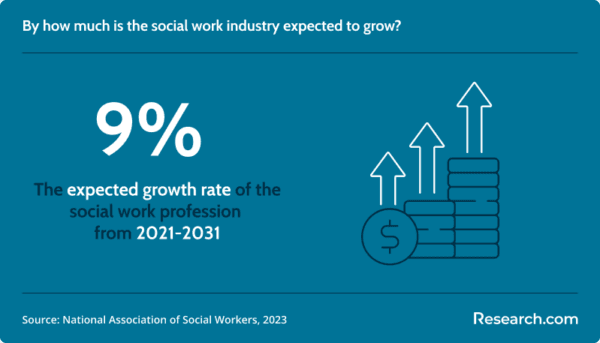
The social work profession is expected to increase by nine percent from 2021 to 2031, but job outcomes still depend on location, specialization, licensure, and experience. Choose a program that builds both academic knowledge and practical readiness.
| Common mistake | Why it can be costly | Better approach |
| Choosing a program before checking CSWE accreditation | It may limit licensure or MSW options. | Verify accreditation directly before applying. |
| Looking only at tuition | Fees, books, technology, and fieldwork travel can change the real cost. | Request a full cost estimate from the school. |
| Assuming online means no in-person requirements | Most BSW programs require supervised field education. | Ask how placements are arranged and when hours are completed. |
| Ignoring state licensure rules | Requirements vary by state and role. | Contact the relevant licensing board before enrolling. |
| Relying only on rankings | A highly ranked program may not fit your schedule, budget, or location. | Use rankings as one tool, then compare fit and outcomes. |
How do online BSW programs prepare students for licensure?
Online BSW programs can support licensure preparation when they combine accredited coursework, supervised field education, ethical training, and guidance on state requirements. Licensure rules are set by states, so students should confirm requirements with the licensing board where they plan to practice.
- Accreditation provides the academic foundation: CSWE-accredited programs are reviewed against recognized social work education standards, including competencies related to ethics, diversity, human behavior, policy, and practice.
- Field practicum builds supervised experience: Online programs usually coordinate or approve in-person placements in community agencies, schools, healthcare organizations, child welfare agencies, or similar settings.
- Coursework supports exam readiness: Classes in human behavior, social policy, ethics, intervention methods, research, and practice help students build the knowledge base commonly tested in licensing processes.
- Advising helps students understand the process: Strong programs explain licensing steps, documentation, field hour expectations, and post-graduation options.
Because licensure categories and titles differ across states, students should not assume that a program automatically qualifies them for every role. Always verify state-specific requirements before committing to a program.
What career paths are available for graduates of accredited online BSW programs?
A BSW can lead to roles in human services, community support, advocacy, program coordination, and case management. Many roles involve helping clients access services, documenting needs, supporting families, coordinating care, or working with community partners.
- Healthcare Facilities: Hospitals, clinics, rehabilitation centers, and hospices may employ social workers to help patients and families with emotional support, discharge planning, referrals, and access to community resources.
- Schools and Educational Institutions: BSW graduates may support students and families in school settings, collaborate with teachers, and help address academic, behavioral, and social challenges. Social work can also be one of the alternative jobs for school psychologist professionals to consider.
- Community Organizations: Graduates may work with organizations serving immigrants, LGBTQ+ communities, people with disabilities, families, older adults, or people facing housing insecurity. Some students also compare social work with counseling careers when planning their long-term path.
Are Affordability and Quality Achievable in Online BSW Programs?
Yes, affordability and quality can align, but students need to compare more than tuition. A lower-cost program is only a good value if it is accredited, offers adequate advising, supports field placement, and prepares students for their intended career or graduate program. Review tuition, fees, transfer credit acceptance, financial aid, fieldwork requirements, and student support before deciding.
Students focused on cost can start by comparing cheapest online BSW programs, then narrow the list by accreditation, practicum support, graduation requirements, and licensure relevance.
What student support services are essential in online BSW programs?
Online social work students need more than a learning platform. Strong programs provide academic advising, responsive faculty access, technical support, field placement coordination, career counseling, library resources, writing support, and mental health resources. Peer discussion spaces and group projects can also help students build connection in a virtual environment.
Support becomes especially important for students planning to continue into graduate education. Students considering faster graduate pathways may also want to compare 16-month MSW programs online after completing the BSW.
How Can Online Social Work Students Maximize Their Success?
Online BSW students succeed when they treat the program as structured professional preparation, not just a flexible set of courses. Create a weekly study calendar, protect consistent work blocks, organize deadlines early, and communicate with instructors before problems become urgent. Because social work is practice-based, students should also take discussion boards, role plays, and field seminars seriously.
- Use a digital calendar for readings, assignments, practicum hours, and advising appointments.
- Set up a quiet workspace for live sessions, writing, and case-based assignments.
- Participate in virtual study groups to discuss ethical dilemmas, policy issues, and practice scenarios.
- Ask field supervisors for feedback regularly rather than waiting until final evaluations.
- Connect coursework to real community needs through volunteer work, practicum tasks, or local research.
Students who later want advanced clinical preparation may also compare an online social work program at the master’s level that emphasizes applied practice.
Is Social Work or Psychology Better for My Career Goals?
Social work and psychology overlap, but they lead to different kinds of work. Social work often focuses on client support, community systems, social services, advocacy, policy, and resource coordination. Psychology generally emphasizes assessment, behavior, mental processes, research, and therapeutic methods, depending on the degree and license.
If you want to work directly with communities, agencies, families, and service systems, social work may be the better fit. If you are more interested in psychological assessment, therapy models, and research into behavior, psychology may align better. For a closer comparison, review this guide on Is social work or psychology better?
How Does Obtaining an Advanced Degree Impact Earning Potential in Social Work?
An advanced social work degree can open roles that may not be available with a bachelor’s degree alone. MSW graduates often pursue clinical practice, program leadership, policy work, specialized services, and supervisory positions. These roles can come with greater responsibility and stronger salary potential, though outcomes still vary by state, license, employer, and specialization.
Students comparing long-term financial outcomes can review master in social work salary information to understand how graduate education may affect career options.
Is a Doctorate in Social Work Worth the Investment?
A doctorate in social work may be worthwhile for professionals pursuing advanced leadership, research, teaching, policy, or high-level practice roles. A Doctor of Social Work can help experienced practitioners deepen clinical knowledge, influence systems, guide organizations, and mentor future professionals. It is less likely to be necessary for someone whose main goal is entry-level practice.
Before enrolling, compare the cost, time commitment, employer expectations, and whether the degree supports your specific career target. Students prioritizing price may want to explore affordable DSW programs online.
What are the state-specific licensure requirements for becoming a school social worker?
School social worker requirements vary by state. Common expectations include completing an accredited social work program, meeting field practicum requirements, passing a state-approved exam, completing background checks, and maintaining continuing education. Some states also require school-specific credentials or education department approval.
Because requirements are state-controlled, students should verify details before choosing a program or moving across state lines. For a state-focused overview, review school social worker requirements by state.
What is the job market for graduates with a degree in social work?
The social work job market includes many roles across healthcare, schools, family services, public agencies, behavioral health, community organizations, and nonprofits. It is projected that there will be about 63,800 job openings for social workers each year over the next decade. Child, family, and school social workers may support parenting capacity, child abuse prevention, permanency planning, and student well-being, although public-sector budget limits can affect hiring.
Healthcare social workers are also needed to help aging populations and families adjust to care needs, medications, and service transitions. Demand for mental health and substance abuse services may also support employment opportunities as more people seek treatment for mental illness and substance abuse.
How do accredited online BSW programs boost career opportunities?
Accredited online BSW programs can strengthen career opportunities by giving students a recognized academic foundation, supervised field experience, and preparation for entry-level practice or graduate study. Accreditation matters because it signals that the program meets social work education standards and may support licensure or MSW admission pathways.
Key Benefits of Accredited Online BSW Programs
- Licensure readiness: CSWE-accredited programs align coursework and field education with social work competencies used in many licensure pathways. For students asking whether an online degree is recognized for licensure, accreditation is one of the first items to verify.
- Broader career options: Graduates may pursue roles in school support, healthcare advocacy, community development, case management, and substance abuse services, depending on state rules and employer requirements.
- Graduate school preparation: A BSW can help students move into an MSW program. Students comparing broader undergraduate options can review an accredited online bachelor degree guide for additional context.
- Practical skill development: Online BSW programs teach case management, cultural competence, policy analysis, documentation, ethical practice, and client-centered communication.
Field Practicum—Where Classroom Learning Becomes Practice
Field education is one of the most important parts of a BSW. It allows students to work in approved agencies, practice professional skills, receive supervision, and connect academic concepts to real client and community needs.
Preparing for Licensure Exams
Some accredited online BSW programs include licensing guidance, practice materials, exam-focused review, or faculty mentoring. These resources can help students understand what to expect after graduation, but students remain responsible for checking requirements in their own state.
What Are the Options for Advancing My Social Work Education?
After earning a BSW, many students pursue a Master of Social Work. An MSW can support clinical practice, leadership, policy analysis, program management, and specialized roles. When comparing graduate programs, students should evaluate accreditation, admissions requirements, field placement structure, cost, modality, and state licensure alignment.
Students looking for programs with more accessible admissions pathways can compare the easiest social work masters programs while still checking quality, accreditation, and field education expectations.
What are the career growth opportunities in social work?
Social work offers several advancement paths, but growth usually depends on education, licensure, specialization, experience, and leadership ability. If you are weighing whether Is social work a good career, consider how far you want to progress and what credentials your target roles require.
- Advanced degrees: An MSW can support progression into clinical practice, management, school social work, healthcare social work, substance abuse services, or policy-focused work.
- Licensure and certification: State licensure, including clinical licensure where applicable, can expand the services a social worker may provide.
- Specialization: Focus areas such as mental health, child welfare, substance abuse, healthcare, and advocacy can help professionals build expertise.
- Leadership roles: Experienced social workers may move into supervision, program management, agency leadership, or department-level roles.
- Public and nonprofit influence: Social workers can contribute to policy, public health, community planning, and systems change.
Why Pursuing an Advanced Degree Enhances Social Work Careers
A BSW can prepare graduates for entry-level roles, but an MSW often becomes important for clinical practice, supervision, specialized services, and senior positions. Advanced study may also help social workers move into healthcare, mental health therapy, substance abuse counseling, policy analysis, and program leadership.
Students who need a flexible and cost-conscious graduate route can compare affordable accredited online MSW programs. The right MSW can improve eligibility for advanced licensure, deepen practice skills, and expand professional networks through practicums, faculty mentorship, and alumni connections.
An advanced degree is not necessary for every social work job, but it can be a major advantage for students who want clinical authority, leadership responsibility, or specialized practice options.
Current Trends Affecting Online BSW Students
- Online learning is now mainstream: With millions of undergraduates taking online courses, employers and schools are increasingly familiar with distance education, especially when the program is accredited.
- Field education remains in person: Even flexible online programs usually require supervised practice in real agencies, so students need to plan for transportation, scheduling, and local placement availability.
- Behavioral health needs are shaping demand: Mental health and substance abuse services remain important employment areas for social work graduates.
- Technology is part of practice: Social workers increasingly use case management systems, telehealth-related tools, online documentation, and digital communication, making technology skills useful for students entering the field.
- Credential awareness matters: Employers, licensing boards, and graduate programs may care about CSWE accreditation, supervised field hours, and state-specific educational requirements.
Questions to Ask Before Enrolling in an Online BSW Program
| Question | Why it matters |
| Is the program CSWE-accredited? | Accreditation can affect licensure preparation, MSW eligibility, and employer confidence. |
| How are field placements arranged for online students? | Field education is required and usually must be completed in person. |
| Will my credits transfer? | Transfer policy can change your graduation timeline and total cost. |
| What is the full cost after fees? | Tuition alone may not reflect the real price of attendance. |
| Does the program meet requirements in my state? | Licensure and school social work rules differ by state. |
| What support is available online? | Advising, tutoring, career services, tech help, and field placement support can affect completion. |
| What are recent graduate outcomes? | Employment, MSW admission, and licensure support can help you evaluate value. |
Key Insights
- An accredited online BSW can be a flexible route into social work, but students should expect in-person field education.
- CSWE accreditation is one of the most important factors to verify because it can affect licensure preparation and MSW admission.
- Cost comparisons should include tuition, fees, books, technology, transfer credits, and travel to field placements.
- BSW graduates can work in healthcare, schools, nonprofits, government agencies, community organizations, and human services settings.
- Social workers with a BSW average a base salary of $64,786, while those with an MSW can expect a base salary of $71,534, though actual pay depends on role, location, employer, license, and experience.
- Students planning for clinical practice, leadership, or specialized roles should view the BSW as a foundation and compare MSW options early.
- The best online BSW program is not necessarily the cheapest or highest ranked; it is the accredited program that fits your state requirements, schedule, budget, field placement needs, and career goals.
References:
- National Association of Social Workers. (2023). Facts page. https://www.socialworkers.org/News/Facts
- National Center for Education Statistics. (2023). Distance learning fast facts. https://nces.ed.gov/fastfacts/display.asp?id=80
- Salary.com. (2023). Social Worker (BSW) salary information. https://www.salary.com/research/salary/benchmark/social-worker-bsw-salary
- University of Cincinnati. (2023). Bachelor of Social Work tuition. https://online.uc.edu/undergraduate-degrees/bsw-social-work/tuition
- U.S. Bureau of Labor Statistics. (2022). Occupational Outlook Handbook: Social Workers. https://www.bls.gov/ooh/community-and-social-service/social-workers.htm#tab-6
Other things you should know about accredited online BSW programs
A 2027 online BSW program should hold accreditation from the Council on Social Work Education, or CSWE. CSWE accreditation shows the curriculum meets national social work standards and is the key credential many state licensing boards and graduate schools expect when reviewing a BSW degree.
Typical admission requirements for 2027's best accredited BSW online programs include a high school diploma or GED, a minimum GPA, and completion of prerequisite courses. Some programs may also require a personal statement, letters of recommendation, or relevant volunteer or work experience.


