2027 Cheapest Online Colleges That Accept FAFSA

Co-Founder and Chief Data Scientist
Finding the cheapest online college that accepts FAFSA is not as simple as sorting schools by tuition. The amount you actually pay depends on whether the institution is eligible for federal aid, how much grant aid you receive, whether you qualify for in-state or online tuition rates, how many credits transfer, and how quickly you finish the program.
This guide is for students who want an accredited online degree but need to keep debt manageable. It explains how FAFSA works for online colleges, what “affordable” really means after financial aid, which online programs and schools may be cost-effective, and how to compare options without relying only on sticker price.
Quick Answer: What Are the Cheapest Online Colleges That Accept FAFSA?
The cheapest online colleges that accept FAFSA are accredited institutions that participate in federal student aid programs and offer low tuition, strong transfer credit policies, grants, scholarships, or flat-rate pricing. The best option depends on your net cost after aid, not tuition alone. A school with a higher advertised rate may cost less out of pocket if it awards more grants or accepts more transfer credits.
| What to Compare | Why It Matters | What to Ask Before Enrolling |
| FAFSA eligibility | Only eligible institutions can offer federal grants, loans, and work-study. | Does the school participate in Title IV federal student aid? |
| Accreditation | Accreditation affects financial aid, credit transfer, graduate school admission, and employer recognition. | Is the institution regionally accredited, and does my program need specialized accreditation? |
| Net price after aid | Your real cost may be much lower than the published tuition rate. | What will my estimated cost be after Pell Grants, scholarships, and institutional aid? |
| Transfer credit policy | Accepted credits can reduce both time and total cost. | How many credits can I transfer toward my degree? |
| Program length | Longer timelines can increase tuition, fees, and borrowing. | Can I study full-time, part-time, or in an accelerated format? |
| Career alignment | A low-cost degree has more value when it leads to realistic employment outcomes. | What roles do graduates pursue, and are licensure or certifications required? |
Key Things You Should Know About the Cheapest Online Colleges That Accept FAFSA
- FAFSA-eligible online colleges can reduce your need for student loans through federal grants, institutional aid, and other funding sources that do not always require repayment.
- Shorter, career-focused programs may help students move into the workforce faster because coursework is often tied to practical job skills.
- Online programs can lower indirect costs by reducing commuting, relocation, campus fees, and room-and-board expenses.
- Federal grant aid may cover some or all tuition and fees for eligible students in quick degrees that pay well.
- Graduates from FAFSA-eligible online degree programs may pursue roles with median annual salaries of at least $50,000 to more than $70,000 for higher positions, depending on field, experience, location, and credentials.
Affordable Quick Online Degree Programs With High Acceptance Rates for 2027
High-acceptance online programs can be useful for students who want a practical credential, flexible admissions, and access to federal aid. The right major should match your academic strengths, career goals, and any licensing requirements in your state.
1. Business Administration
Business administration is a broad online degree for students who want skills that apply across industries. Coursework usually covers accounting, finance, marketing, management, operations, business ethics, organizational behavior, and entrepreneurship. Graduates may move into roles such as business manager, marketing manager, financial analyst, or operations coordinator. This degree is often a strong fit for students who want a flexible credential rather than training for one narrow occupation.
2. Psychology
A psychology degree introduces students to human behavior, cognition, development, emotion, mental health, research methods, and social interaction. It can support entry-level work in human resources, social services, behavioral health support, and community programs. Students who want to become licensed counselors, psychologists, or clinical practitioners should plan for graduate study because a bachelor’s degree alone usually does not meet licensure requirements.
3. Counseling
Counseling programs focus on helping people manage personal, emotional, academic, and social challenges. Students study communication skills, psychological theories, ethics, crisis response, and mental health foundations. Undergraduate programs may lead to support roles in social services or human resources, while licensed counseling careers generally require a graduate degree and state-specific supervised experience.
4. Social Work
Social work programs prepare students to assist individuals, families, groups, and communities facing social, economic, health, or behavioral challenges. Common courses include social welfare policy, human behavior, case management, community practice, and clinical foundations. Graduates may work as case managers, social service coordinators, or social workers, though clinical licensure usually requires additional education and supervised practice.
5. Speech Language Pathology
Speech-language pathology coursework builds a foundation in communication disorders, anatomy, linguistics, language development, assessment, and intervention methods. Graduates may qualify for entry-level support roles in schools, rehabilitation centers, or healthcare environments. Students who want to become licensed speech-language pathologists should verify graduate degree and clinical requirements before choosing a program.
6. Nursing
Nursing programs combine science, patient care, clinical judgment, health promotion, disease prevention, pharmacology, anatomy, physiology, and ethics. Graduates may prepare for careers such as registered nurse, nurse practitioner, or nurse educator, depending on degree level and licensure. Because nursing is regulated, students should confirm that an online program includes approved clinical experiences and meets the requirements of their state board of nursing.
7. Accounting
Accounting degrees train students in financial reporting, auditing, taxation, managerial accounting, and business decision-making. Graduates may pursue roles such as accountant, auditor, bookkeeper, or financial analyst. Students planning to become CPAs should check whether the program meets education requirements in their state, since credit-hour and course rules can vary.
8. Computer Science
Computer science programs teach programming, algorithms, data structures, software design, computer systems, cybersecurity, networks, and artificial intelligence foundations. Students build analytical and technical problem-solving skills through coding assignments and applied projects. Graduates may pursue software development, systems analysis, IT, research, cybersecurity, or data-related roles, depending on electives and hands-on experience.
9. Healthcare Administration
Healthcare administration degrees focus on the business side of healthcare organizations. Students study healthcare policy, finance, management, ethics, quality improvement, compliance, and operations. Graduates may pursue roles such as healthcare administrator, hospital manager, clinic coordinator, or health services manager. This degree is best for students interested in leadership, logistics, and healthcare systems rather than direct patient care.
10. Marketing
Marketing programs cover consumer behavior, digital marketing, advertising, market research, branding, analytics, and sales strategy. Graduates may start in roles such as marketing assistant, sales representative, content coordinator, or social media coordinator. Students can strengthen employment prospects by building a portfolio of campaigns, analytics projects, and writing samples while enrolled.
- Cheapest Online Colleges That Accept FAFSA for 2027
- How long does it take to complete a degree program in online colleges that accept FAFSA?
- How does an online degree compare to an on-campus program?
- What is the average cost of a degree program in online colleges that accept FAFSA?
- What are the financial aid options in online colleges that accept FAFSA?
- What are the prerequisites for enrolling in a degree program in online colleges that accept FAFSA?
- What courses are typically in a degree program in online colleges that accept FAFSA?
- How can I verify if an online college is accredited and reliable?
- What types of specializations are available in online colleges that accept FAFSA?
- What Is the Return on Investment for Online Degrees That Accept FAFSA?
- What is the long-term earning potential of an online degree that accepts FAFSA?
- Can an accelerated master's program boost career advancement?
- How can I maximize my FAFSA benefits for online education?
- How do you choose the best degree program in online colleges that accept FAFSA?
- How do online colleges support student engagement and academic success?
- What career paths are available for graduates from online colleges that accept FAFSA?
- Can certifications enhance the value of your online degree?
- Are online graduate degrees a gateway to higher salaries?
- Do online colleges offer effective career placement and job support services?
- Do employers value online degree credentials?
- How can supplemental certifications boost your career potential?
Cheapest Online Colleges That Accept FAFSA for 2027
How do we rank schools?
Because college is a major financial commitment, a useful affordability ranking should consider more than advertised tuition. Our methodology uses transparent education data sources, including the IPEDS database, Peterson's database and its Distance Learning Licensed Data Set, the College Scorecard database, and the National Center for Education Statistics.
The following schools are examples of online colleges that accept FAFSA and may be affordable for many students. Always confirm current tuition, fees, aid eligibility, and program availability directly with the institution.
| School | Online Strengths | Published Cost Detail From This Guide | Accreditation Listed |
| Grand Canyon University | Large online catalog with faith-based learning options | Approximately $18,000 annually | Higher Learning Commission |
| American Public University | Flexible asynchronous programs and military-friendly pricing | Approximately $285 per credit hour for undergraduate programs | Higher Learning Commission |
| Purdue Global University | Career-aligned online programs with virtual labs | Around $371 per credit for undergraduates | Higher Learning Commission |
| Arizona State University | Broad online program selection and access to university resources | Approximately $561 per credit hour for undergraduate students | Higher Learning Commission |
| Eastern New Mexico University | Lower listed per-credit rates and fully online options | In-State: $170 per credit hour; Out-of-State: $255 per credit hour | Higher Learning Commission |
| Southern New Hampshire University | High transfer credit allowance and broad support services | Undergraduate: $330 per credit; Graduate: $637 per credit | New England Commission of Higher Education |
| Baker College | Online and Online Live formats with multiple term lengths | Estimated $435 per credit hour for undergraduate programs | Higher Learning Commission |
| University of Texas Permian Basin | Asynchronous online programs across multiple fields | In-state: Approximately $7,500 per year for undergraduates | SACSCOC; certain business programs are AACSB-accredited |
| University of Florida | Online bachelor’s programs taught through a major public university | $129.18 per credit hour in-state; $552.62 per credit hour out-of-state | Southern Association of Colleges and Schools Commission on Colleges |
| Western Governors University | Competency-based model with flat-rate six-month terms | Approximately $4,005 per six-month term | Northwest Commission on Colleges and Universities |
1. Grand Canyon University
Grand Canyon University in Phoenix, Arizona, offers online bachelor’s, master’s, and doctoral programs in areas such as business administration, education, psychology, healthcare, and theology. GCU’s online model emphasizes flexibility, digital collaboration, discussion forums, video lectures, and applied projects. Students may also explore scholarships, military discounts, and federal financial aid options.
- Program Length: Varies by degree; bachelor's typically 4 years, master's 1-2 years, doctoral 3+ years
- Tracks/Concentrations: Business, education, psychology, theology, healthcare, and more
- Tuition Cost: Approximately $18,000 annually, same for in-state and out-of-state students
- Required Credits to Graduate: Typically 120 for a bachelor's degree
- Accreditation: Higher Learning Commission (HLC) since 1968
2. American Public University
American Public University offers more than 200 online degree and certificate programs for adult learners, military students, veterans, and working professionals. Program areas include Business Administration, Cybersecurity, Emergency and Disaster Management, Homeland Security, and Environmental Science. Courses are generally asynchronous, which can help students balance school with work and family obligations.
- Program Length: Varies by program; bachelor's degrees typically require four years.
- Tracks/Concentrations: Includes Cybersecurity, Business Analytics, Environmental Science, and many others.
- Tuition Cost: Approximately $285 per credit hour for undergraduate programs; military personnel pay reduced rates.
- Required Credits to Graduate: 120 credits for most bachelor's degrees.
- Accreditation: Accredited by the Higher Learning Commission (HLC
3. Purdue Global University
Purdue Global provides flexible online degree options in fields such as Information Technology, Business, and Nursing. Selected programs include tracks in Cybersecurity, Analytics, and Cloud Computing. Students may complete applied learning activities through virtual labs, including tasks such as configuring active directories and testing applications. Some programs are also designed to align with industry certification goals.
- Program Length: Typically 4 years for bachelor’s programs; associate’s programs can be completed in 2 years.
- Tracks/Concentrations: Cybersecurity, Analytics, Business Management, Cloud Computing, Nursing Administration.
- Tuition Cost: Around $371 per credit for undergraduates, in-state and out-of-state
- Required Credits to Graduate: Bachelor's programs require 180 credits; associate’s degrees require 90 credits.
- Accreditation: Accredited by the Higher Learning Commission
4. Arizona State University (ASU)
Arizona State University (ASU) Online offers more than 300 programs at the undergraduate, graduate, and certificate levels. Popular bachelor’s options include Business, Psychology, Criminology, Health Sciences, and Information Technology, while graduate programs span Engineering, Education, Public Administration, and Global Management. Online students study with the same faculty and can use many of the same academic resources as campus-based students.
- Program Length: Typically 4 years for bachelor's degrees and 1-2 years for master's programs, depending on course load.
- Tracks/Concentrations: Examples include Organizational Leadership, Data Analytics, Forensic Psychology, Emergency Management, and Sustainability.
- Tuition Cost:
- In-State: Approximately $561 per credit hour for undergraduate students.
- Out-of-State: Similar rates apply for online programs. Exact costs vary by program and credit hours.
- Required Credits to Graduate: 120 credits for bachelor's degrees; master's programs vary.
- Accreditation: Accredited by the Higher Learning Commission (HLC)
5. Eastern New Mexico University
Eastern New Mexico University (ENMU) offers affordable online programs for undergraduate and graduate students in areas such as Business, Speech-Language Pathology, Aviation Management, Nursing, Psychology, and Criminal Justice. Programs are delivered through online platforms such as Blackboard, making them accessible to students balancing school with work or personal responsibilities.
- Program Length: Typically 4 years for undergraduate programs; varies for graduate degrees.
- Tracks/Concentrations: Popular majors include Business Administration, Psychology, Criminal Justice, and Nursing.
- Tuition Cost: In-State: $170 per credit hour; Out-of-State: $255 per credit hour
- Required Credits to Graduate: 120 credits for most bachelor's degrees.
- Accreditation: Higher Learning Commission
6. Southern New Hampshire University (SNHU)
Southern New Hampshire University (SNHU) offers online degrees in business, healthcare, criminal justice, education, technology, and other fields. Its flexible format is designed for students who need to complete coursework around existing responsibilities. SNHU accepts up to 90 transfer credits toward bachelor’s programs, which can reduce both cost and time to graduation. Students also have access to tutoring, technical support, career services, and a large alumni network.
- Program Length: Varies; bachelor's degrees typically require 4 years of full-time study, while master's programs can take 1–2 years.
- Tracks/Concentrations: Examples include Accounting, Game Art & Development, Nursing, Cybersecurity, and Marketing.
- Tuition Cost:
- Undergraduate: $330 per credit ($9,900 annually for 30 credits).
- Graduate: $637 per credit ($9,555 annually for 15 credits). Military discounts are available.
- Required Credits to Graduate: Bachelor’s: 120 credits; Master’s: 30–45 credits.
- Accreditation: Regionally accredited by the New England Commission of Higher Education (NECHE).
7. Baker College
Baker College offers online associate, bachelor’s, master’s, and doctoral programs. Available fields include Business Administration, Healthcare Administration, Information Technology, engineering, and more. Students can choose fully online formats or “Online Live” options that include real-time virtual class sessions. Courses may run in 8-week or 16-week terms, depending on format and program.
- Program Length: Varies by program; typically 2–4 years for undergraduate degrees.
- Tracks/Concentrations: Options in business, IT, engineering, healthcare, and more.
- Tuition Cost: Estimated $435 per credit hour for undergraduate programs; rates may vary for in-state and out-of-state students. Additional discounts and financial aid are available for eligible students
- Required Credits to Graduate: 120–128 credits for most bachelor's programs.
- Accreditation: Higher Learning Commission (HLC)
8. University of Texas Permian Basin (UTPB)
University of Texas Permian Basin (UTPB) offers 100% online undergraduate and graduate programs for students who need asynchronous learning. Undergraduate options include Psychology, Communication, Political Science, Sociology, and Business Administration with concentrations such as Accounting, Finance, and Marketing. Graduate options include the Master of Public Administration, MBA concentrations, Criminal Justice Administration, and Special Education.
- Program Length: Undergraduate degrees generally take 4 years; graduate programs vary from 1–2 years depending on part-time or full-time status.
- Tracks/Concentrations: Diverse options including Healthcare Management, Industrial Technology, Spanish, and Energy Business.
- Tuition Cost:
- In-state: Approximately $7,500 per year for undergraduates.
- Out-of-state: Higher, but specific costs vary depending on residency and program
- Required Credits to Graduate:
- Undergraduate: Typically 120 credit hours.
- Graduate: 30–45 credit hours, depending on the program
- Accreditation: UTPB is accredited by the Southern Association of Colleges and Schools Commission on Colleges (SACSCOC). Certain business programs are AACSB-accredited
9. University of Florida
The University of Florida Online offers online bachelor’s degrees in fields including business administration, health education, and computer science. Online learners study through a major public university while maintaining the flexibility to complete coursework from a distance. UF Online also offers graduate and doctoral options and provides financial aid opportunities through FAFSA for eligible students.
- Program Length: Typically 4 years for bachelor's degrees.
- Tracks/Concentrations: Business Administration, Health Education, Computer Science, among others.
- Tuition Cost: $129.18 per credit hour (in-state), $552.62 per credit hour (out-of-state).
- Required Credits to Graduate: Generally 120 credits for a bachelor's degree.
- Accreditation: Southern Association of Colleges and Schools Commission on Colleges.
10. Western Governors University
Western Governors University (WGU) is a fully online university known for competency-based education. Students progress by demonstrating mastery of course material, which may help motivated learners complete faster. WGU offers programs in business, IT, education, and health professions, making it a common option for working adults who want predictable term-based tuition.
- Program Length: Average completion time is about 3 years for bachelor's degrees; 18 months for master's degrees.
- Tracks/Concentrations: Business Management, Information Technology, Education, Health Care
- Tuition Cost: Approximately $4,005 per six-month term (flat rate).
- Required Credits to Graduate: Varies by program; typically around 120 credits for bachelor's degrees.
- Accreditation: Northwest Commission on Colleges and Universities.
Completion time at online colleges accepting FAFSA depends on degree level, transfer credits, enrollment intensity, program structure, and whether the school offers accelerated or competency-based pacing.
| Degree Level | Typical Full-Time Timeline | Typical Part-Time Timeline | Cost Consideration |
| Associate's Degrees | Typically take 2 years of full-time study | About 4 years part-time | Lower total credits can mean lower total tuition. |
| Bachelor's Degrees | Usually require 4 years of full-time study | About 8 years part-time | Transfer credits can make the biggest difference. |
| Master's Degrees | Generally take 1-2 years of full-time study | About 2-4 years part-time | Shorter programs may reduce borrowing and opportunity cost. |
| Doctoral Degrees | Can take 3-7 years or more | Varies widely | Research, dissertation, and residency requirements can affect cost. |
- Program of Study: Some majors include labs, practicums, or certification preparation. For example, students comparing information security vs cyber security degrees may find that practical experience or certification alignment changes the workload.
- Course Load: Full-time students often take 12-18 credits per semester, while part-time students take fewer credits.
- Learning Style: Self-paced and competency-based programs can reward students who are organized and motivated.
- Prior Learning: Military training, professional experience, certifications, and previous college coursework may shorten the path to graduation if the school awards credit.
- University Policies: Some institutions allow accelerated terms, heavier credit loads, or transfer-friendly degree plans.
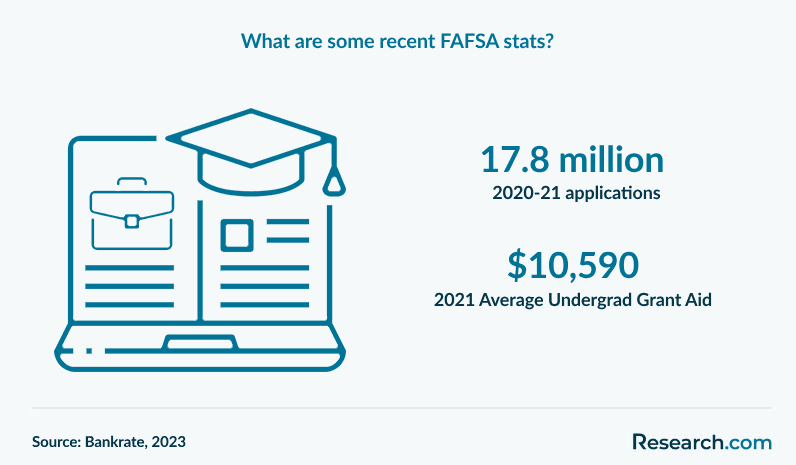
Recent FAFSA statistics show that 17.8 million applications were submitted in the 2020-21 academic year. The average undergraduate grant aid in 2021 was $10,590, as shown below. These figures demonstrate how widely students rely on federal aid to manage college costs (Source: Bankrate, 2023).
Online and campus-based programs can lead to the same degree, but the learning experience and student responsibilities differ. The better choice depends on your schedule, learning habits, career goals, and whether your field requires in-person training.
| Factor | Online Degree | On-Campus Program |
| Curriculum | Often similar or equivalent to the campus curriculum. | Usually follows the same academic standards. |
| Faculty | Typically taught by qualified instructors, sometimes the same faculty as campus programs. | Usually taught by credentialed faculty with in-person availability. |
| Accreditation | Must meet the same institutional accreditation standards when offered by the same accredited school. | Must meet recognized accreditation standards. |
| Flexibility | Better for working adults, parents, military students, and remote learners. | Better for students who want structured schedules and campus access. |
| Interaction | Uses discussion boards, video meetings, messaging, and learning platforms. | Provides face-to-face classroom and campus interaction. |
| Technology | Requires reliable internet, comfort with learning platforms, and self-management. | Requires less dependence on remote technology, though digital tools are still common. |
Online learning is often the better fit if you need flexibility and can manage deadlines independently. Campus learning may be better if you want in-person labs, networking, advising, or a more structured daily routine. Students pursuing regulated healthcare careers should verify whether online coursework satisfies clinical or licensure requirements; those considering physician assistant pathways may also compare admissions accessibility through resources such as the easiest PA schools to get into.
The cost of an online degree varies by school type, degree level, credit requirements, residency rules, fees, transfer credits, and financial aid. The most important number is not tuition; it is the net price after grants, scholarships, and any aid you do not have to repay.
- Institution Type: Public universities often charge lower tuition than private institutions, though aid packages can change the final cost.
- Degree Level: Master’s and doctoral programs usually cost more per credit than undergraduate programs.
- Major: Programs with labs, software, simulations, proctoring, or clinical components may add fees.
- Credits Required: Total price depends on how many credits you must complete after transfer evaluation.
- Financial Aid: Grants, scholarships, work-study, and loans can lower immediate out-of-pocket expenses, but loans must be repaid.
Students researching nursing pathways often ask how long does it take to become a nurse. Timelines vary by credential: Associate Degree in Nursing (ADN) programs can take two years, while a Bachelor of Science in Nursing (BSN) generally takes four years.
Published online tuition varies significantly. For example, Purdue University Global charges $372 per credit hour, Anna Maria College charges approximately $430.51 per credit hour, and the University of Phoenix charges $398 per credit hour. Tuition for online bachelor's degrees at public institutions can exceed $22,000 per year, but FAFSA assistance and institutional aid may reduce the amount eligible students pay.
Students who already work in healthcare and want a more specialized route may compare the easiest online nursing informatics programs, especially if they need flexible programs with limited in-person requirements.
Many FAFSA-eligible online colleges combine competitive tuition with financial aid options, but students should always request a personalized cost estimate before committing.
Students in eligible online programs can often access the same major aid categories as campus-based students. Aid availability depends on the school, program, enrollment level, citizenship or eligible noncitizen status, satisfactory academic progress, and FAFSA results.
| Aid Type | Who It Helps | Repayment Requirement |
| Pell Grants | Need-based aid for eligible undergraduate students | Usually no repayment required |
| Federal Supplemental Educational Opportunity Grants (SEOG) | Undergraduates with exceptional financial need | Usually no repayment required |
| Direct Loans | Undergraduate and graduate students | Must be repaid with interest |
| PLUS Loans | Parents of dependent undergraduate students and graduate students | Must be repaid with interest |
| Work-Study | Eligible students who work part-time through approved jobs | Earned wages; no repayment |
| Scholarships | Students who meet merit, need, identity, field, or institutional criteria | Usually no repayment required |
| Veterans Benefits | Veterans and eligible family members | Depends on benefit type |
Cost-sensitive graduate students may also explore targeted options such as MBA programs under 10k when comparing business programs.
Total student aid has increased over the past five academic years. In 2019-20, total student aid was $234.6 billion. It rose to $236.1 billion in 2020-21, $238.2 billion in 2021-22, $240.5 billion in 2022-23, and $256.7 billion in 2023-24. This pattern shows a consistent rise in overall aid support, as shown below.
Admissions requirements vary by school and program, but most online colleges ask applicants to provide documentation that confirms academic readiness and identity. Selective graduate, clinical, education, and licensure-track programs may require additional materials.
- High School Diploma or GED: Most undergraduate programs require proof of high school completion or an equivalent credential.
- Application: Students usually submit an online application with personal, academic, and program information.
- Transcripts: Colleges typically require official transcripts from high school and all previously attended colleges.
- Entrance Exams: Some programs may request SAT, ACT, GRE, or other standardized test scores, although many schools have test-optional policies.
- Letters of Recommendation: Graduate or selective programs may ask for academic or professional references.
- Personal Statement or Essay: Applicants may need to explain their goals, experience, and reasons for choosing the program.
- Portfolio: Creative fields may require samples of prior work. Some graphic design schools online ask applicants to submit portfolios during admission or placement review.
Before applying, confirm whether your program has prerequisites in math, science, professional experience, clinical clearance, background checks, or technology requirements.
Course requirements depend on the major, degree level, and school. Most undergraduate online degrees combine general education, major coursework, electives, and sometimes capstones, practicums, labs, or internships.
| Course Category | Common Examples | Purpose |
| General Education | English Composition and Literature, Mathematics, Science, Social Sciences, Humanities | Builds broad academic skills required for most undergraduate degrees. |
| Business Major Courses | Accounting, Finance, Marketing, Management | Prepares students for management, operations, finance, and marketing roles. |
| Computer Science Major Courses | Programming, Data Structures, Algorithms, Artificial Intelligence | Develops software, systems, and technical problem-solving skills. |
| Nursing Major Courses | Anatomy and Physiology, Pharmacology, Nursing Fundamentals | Supports clinical knowledge and preparation for nursing practice. |
| Psychology Major Courses | Abnormal Psychology, Developmental Psychology, Social Psychology | Introduces behavior, mental processes, and research-based analysis. |
| Electives | Varies by student interest and program rules | Allows customization or exploration outside the major. |
Students interested in leadership roles in healthcare may also compare the cheapest online healthcare management degree programs to evaluate cost, curriculum, and career fit.
Recent data show that the percentage of families submitting the FAFSA has gradually declined over five academic years. In 2019-20, 71% of families submitted the FAFSA. The rate declined to 70% in 2020-21, stayed at 70% in 2021-22, dropped to 69% in 2022-23, and fell again to 68% in 2023-24. This decline suggests that more outreach and guidance may be needed to help families understand and complete the FAFSA process.
Accreditation is one of the most important checks before enrolling in an online college. It affects FAFSA eligibility, transfer credits, graduate school options, licensure pathways, and how employers may view your degree.
- Confirm that the school is institutionally accredited by a recognized accreditor.
- Use official sources such as the U.S. Department of Education database, accreditor websites, and state higher education agencies.
- Check whether your specific program needs programmatic accreditation, especially in nursing, counseling, social work, education, business, or allied health.
- Ask whether credits transfer to other accredited institutions.
- Review graduation requirements, student complaint data, licensing disclosures, and career support services.
- Compare institution profiles such as non profit universities if you want to evaluate schools focused on nonprofit education models.
Do not rely only on marketing language such as “nationally recognized,” “career-ready,” or “employer-focused.” Accreditation should be independently verifiable.
FAFSA-eligible online colleges offer specializations across many disciplines. Choosing a specialization can improve career alignment, but it can also narrow your options if selected too early.
- Business: Accounting, Finance, Marketing, Management, Human Resources, International Business, Entrepreneurship
- Computer Science: Cybersecurity, Data Science, Artificial Intelligence, Software Engineering, Web Development
- Healthcare: Nursing, Healthcare Administration, Health Informatics, Public Health
- Education: Elementary Education, Secondary Education, Special Education, Educational Leadership
- Psychology: Counseling Psychology, Industrial-Organizational Psychology, Forensic Psychology
- Liberal Arts: English Literature, History, Political Science, Philosophy
- Other Fields: Criminal Justice, Engineering, Environmental Science, and Social Work, including options such as fast track social work degree online programs.
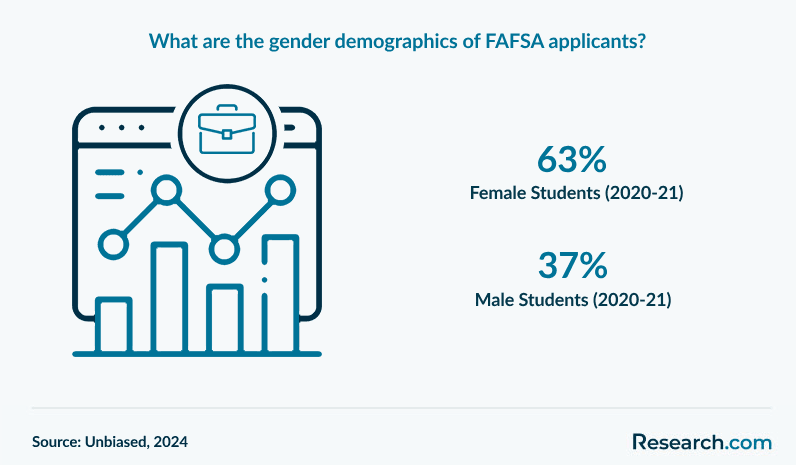
FAFSA gender demographics for the 2020-21 academic year show that 63% of applicants were female students and 37% were male students, as shown below. This gap may indicate a need for additional outreach to encourage more male students to apply for financial aid.
The ROI of a FAFSA-eligible online degree depends on three connected factors: net cost after aid, time-to-completion, and debt after graduation. A low sticker price does not automatically create strong ROI if the program takes longer than expected or requires heavy borrowing.
Our review of the most affordable colleges database shows that financial outcomes often depend on aid packaging and program length as much as the degree category itself. A program with strong transfer policies, clear pacing, and generous grant aid can be more cost-effective than a cheaper program with poor completion support.
How ROI actually forms in FAFSA-supported programs
Start with net price, not tuition. Pell Grants, subsidized loans, institutional grants, and scholarships can lower your upfront cost, but repayment depends on how much you borrow after all aid is applied. Accelerated options such as accelerated college programs may improve ROI by reducing time in school, limiting tuition terms, and helping students re-enter or advance in the workforce sooner.
The strongest ROI often comes from the combination of affordable net cost, efficient completion, and a field with realistic labor-market demand. A degree is not automatically “worth it” because it advertises high salaries; it is worth considering when the total cost is proportionate to your likely career path.
Long-term earning potential depends on your major, industry, location, experience, licensure, certifications, and career progression. To evaluate whether an online degree is likely to pay off, compare median starting salaries, job demand, promotion pathways, and whether employers in your target field require specific credentials.
Students focused on financial return may review online degree programs that pay well, but salary should not be the only deciding factor. Consider completion probability, debt level, job stability, and whether the work fits your interests and strengths.
An accelerated master’s program can help experienced professionals add advanced credentials without spending several years away from the workforce. These programs are often intensive and may require strong time management, especially for students working full-time.
Before enrolling, compare curriculum depth, faculty expertise, career services, networking opportunities, and return on investment. Options such as a master's program online 1 year may be appealing, but students should confirm that the compressed format still meets employer, licensure, and doctoral admission expectations if those goals apply.
To get the most value from FAFSA, apply early, compare aid packages carefully, and avoid borrowing more than you need. The lowest-cost path usually combines federal grants, institutional aid, scholarships, transfer credits, and a realistic completion plan.
- Submit the FAFSA as early as possible for the applicable aid year.
- List every school you are seriously considering.
- Ask each financial aid office for a full cost breakdown, including tuition, fees, books, technology, and program charges.
- Compare grants and scholarships separately from loans.
- Confirm how enrollment status affects aid eligibility.
- Ask whether your aid changes if you accelerate, pause, or study part-time.
- Search for programs designed for adult learners, including cheap online colleges that serve working students.
- Update your financial information when required and monitor policy changes during your enrollment.
The best FAFSA-eligible online program is the one that matches your budget, schedule, academic needs, and career objective. A school can be inexpensive and still be a poor fit if credits do not transfer, advising is weak, or the degree does not meet licensure requirements.
Our research into the best American colleges shows that students make stronger decisions when they treat accreditation, net cost, and completion efficiency as core filters before comparing convenience features.
Prioritize outcomes before features
- Accreditation status: Treat this as a non-negotiable requirement for credibility, FAFSA access, and future educational options.
- Net cost after aid: Compare personalized aid estimates rather than published tuition alone.
- Completion efficiency: Review term length, transfer credit limits, pacing, and graduation requirements.
- Career alignment: Make sure the degree leads to roles you actually want and meets field requirements.
- Student support: Look for proactive advising, tutoring, writing help, technical support, and career guidance.
- Flexibility: Confirm whether courses are asynchronous, synchronous, part-time, full-time, accelerated, or competency-based.
- Student feedback: Use reviews as directional evidence, not as a substitute for accreditation and outcome data.
For example, RN to BSN no clinicals options may help nurses earn a credential faster, but the accelerated pace can be demanding for working professionals.
| Common Mistake | Why It Can Cost You | Better Approach |
| Choosing only by lowest tuition | Fees, poor transfer policies, or longer timelines may raise total cost. | Compare total net price through graduation. |
| Ignoring accreditation | You may risk financial aid, transfer credit, licensure, or employer recognition. | Verify institutional and programmatic accreditation before applying. |
| Assuming online programs meet licensure rules | Some programs may not satisfy state requirements. | Check state licensing disclosures and professional board rules. |
| Overborrowing because loans are offered | Refunds can increase debt after graduation. | Borrow only what is necessary after grants and scholarships. |
| Relying only on rankings | Rankings may not reflect your aid package, transfer credits, or schedule. | Use rankings as one input, not the final decision tool. |
Strong online colleges do more than upload readings and assignments. They build systems that help students stay enrolled, complete courses, and connect academic work to career goals. This support is increasingly important as FAFSA changes for 2024–2025 use federal poverty guidelines and IRS data to expand Pell Grant eligibility, potentially serving more financially vulnerable and first-generation students.
- Dedicated academic advisors who monitor progress and help students plan courses
- Virtual tutoring for difficult subjects, writing, math, and major-specific coursework
- Interactive tools such as quizzes, discussion boards, webinars, and instructor feedback cycles
- Mentorship programs, cohort groups, and peer networking opportunities
- Career workshops, resume support, interview preparation, and employer connections
- Progress checkpoints built into the learning platform to reduce the risk of falling behind
These services are most useful when they are embedded into the program rather than offered only as optional extras. Comparing curated school profiles such as most accredited online colleges can help students identify institutions where academic support is part of the online learning design.
Graduates from FAFSA-eligible online colleges can pursue many of the same career paths as campus graduates, provided the institution is accredited and the program meets industry or licensing standards.
- Business & Finance: Accounting, Finance, Marketing, Management, Human Resources, International Business, Entrepreneurship, Financial Analyst, Project Manager, Business Development
- Technology: Software Engineer, Data Scientist, Cybersecurity Analyst, Web Developer, IT Manager, Computer Programmer, Systems Analyst, Database Administrator
- Healthcare: Registered Nurse, Physician Assistant, Medical and Health Services Manager, Health Educator, Pharmacist, Physical Therapist, Occupational Therapist
- Education: Teacher, School Counselor, Educational Administrator, Instructional Designer, Curriculum Developer
- Psychology: Mental Health Counselor, School Psychologist, Industrial-Organizational Psychologist, Clinical Psychologist
- Other Fields: Law Enforcement Officer, Social Worker, Engineer, Writer, Artist, Journalist, Politician, Non-profit Professional, Environmental Scientist, Researcher
Career questions to answer before choosing a major
- Career Outlook: Is demand stable or growing in the region where you want to work?
- Salary and Benefits: What are realistic salaries for entry-level and experienced workers?
- Work-Life Balance: Does the role require nights, weekends, travel, emotional labor, or on-call duties?
- Licensure: Does your state require approved coursework, clinical hours, exams, or supervised experience?
- Personal Fit: Does the work match your interests, values, tolerance for stress, and preferred work environment?
Career growth also depends on continuous learning, professional networking, internships, certifications, and demonstrated experience. Use career assessments, informational interviews, job shadowing, and employer research before committing to a major.
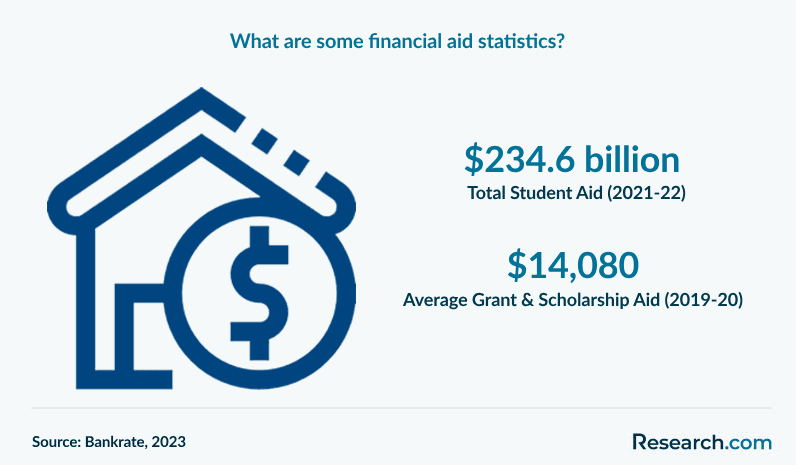
Recent financial aid statistics show that total student aid reached $234.6 billion in the 2021-22 academic year. For full-time students at four-year institutions, the average grant and scholarship aid was $14,080 in 2019-20, as shown below. In addition, 70% of families submitted the FAFSA during the 2021-22 period, underscoring how important financial aid is for college access.
Certifications can make an online degree more career-focused by proving specific skills that employers recognize. They are especially useful in technology, project management, accounting, marketing, healthcare administration, cybersecurity, data analytics, and human resources.
Before paying for a certification, confirm that employers in your target field value it. You can compare options through resources such as what certification pays the most, but the best credential is the one that matches your job target and experience level.
- : "FAFSA made it possible for me to pursue nursing while taking online classes that fit around full-time work. The financial support lowered the pressure of paying for school, and I was able to move toward becoming a registered nurse. Joseph"
- : "I was unsure about online learning at first, but the platform was manageable and the instructors kept the courses engaging. FAFSA helped me attend a university I might not have been able to afford, and I later moved into software engineering. Jessica"
- : "The online format helped me balance school with family responsibilities. FAFSA reduced the amount I needed to borrow, and I felt more confident continuing toward my career goals. Christopher"
Online graduate degrees can support higher salaries when they build advanced, employer-relevant skills and align with promotion requirements. They are often most useful for professionals who already have experience and need a credential for management, specialization, licensure, or career transition.
Students comparing graduate options should review program outcomes, required experience, tuition, completion time, and career fit. Resources such as the highest paying graduate degrees can help identify fields with stronger earning potential, but no degree guarantees a salary increase.
Many online colleges offer career services, but quality varies. Strong programs provide career counseling, resume review, interview preparation, job search coaching, internship support, employer events, alumni networking, and portfolio guidance. Ask whether online students receive the same level of career support as campus students.
Some students may also compare alternative routes such as trade school options if they want a shorter, skills-based path into specialized work.
Employers do not evaluate online degrees in one uniform way. Many focus less on delivery format and more on accreditation, institution reputation, degree relevance, work experience, and demonstrated skills. LinkedIn-based research on nearly 9 million U.S. graduates found that skill differences explain more earnings variation than education and experience alone, which reinforces the importance of applied competencies.
Online degrees are often strongest in skill-driven fields such as IT, business operations, and marketing, where portfolios, certifications, and measurable performance can matter heavily. Regulated fields and brand-sensitive roles may place more weight on clinical experience, accreditation, and institutional reputation.
Where online degrees are strongest—and where they are not
Employer confidence improves when an online program is regionally accredited and includes applied learning such as capstones, projects, certifications, simulations, internships, or practicum experiences. However, some hiring systems and recruiters still screen for degree relevance and school recognition, especially in competitive applicant pools.
Lower-cost programs, including those in the cheapest online college bachelor degree category, can still offer strong value when they are accredited, career-aligned, and paired with evidence of skills. The main question is not whether the degree was online; it is whether the credential clearly maps to the work an employer needs done.
Supplemental certifications can help online degree graduates stand out by documenting specialized knowledge in a focused area. They can be especially helpful when a degree is broad and the job market expects technical tools, compliance knowledge, analytics skills, or industry platforms.
Students can combine a degree with targeted training through online certificate programs that pay well, but they should avoid collecting random credentials. Choose certifications that are requested in job postings for your target role.
- The cheapest online college that accepts FAFSA is the one with the lowest net cost after aid, not necessarily the lowest advertised tuition.
- Accreditation should be checked before cost, because it affects FAFSA eligibility, credit transfer, licensure, and employer trust.
- Total student aid increased from $234.6 billion in 2019-20 to $256.7 billion in 2023-24, showing the continuing importance of financial aid in college affordability.
- Published online college costs vary: Purdue University Global charges $372 per credit, Anna Maria College charges $430.51 per credit, and the University of Phoenix charges $398 per credit. Public institution tuition for online bachelor's degrees can exceed $22,000 annually, though aid may reduce out-of-pocket cost.
- In 2020-21, 17.8 million FAFSA applications were submitted, and average undergraduate grant aid was $10,590 in 2021.
- At four-year institutions, the average grant and scholarship aid for full-time students was $14,080 in 2019-20. In 2021-22, 70% of families submitted the FAFSA.
- Transfer credits, accelerated pacing, and competency-based models can reduce total cost when they shorten time to graduation.
- Online degrees can be valuable to employers when they come from accredited institutions and are supported by projects, certifications, work experience, or licensure preparation.
- Do not assume all online programs meet state licensure requirements. This is especially important in nursing, counseling, social work, education, and allied health.
- Bankrate. (2023). FAFSA statistics. Bankrate.
- Bureau of Labor Statistics. (2021). Average grant aid per full-time undergraduate student. U.S. Department of Education.
- Bureau of Labor Statistics. (2023). FAFSA submission statistics. U.S. Department of Education.
- Bureau of Labor Statistics. (2021). Demographics of FAFSA applicants. U.S. Department of Education.
- College Board. (2023). Trends in Student Aid 2021-22: Total student aid received. College Board.
- Data USA. (2021). Financial aid statistics. Data USA.
- National Center for Education Statistics. (2023). Student Financial Aid Estimates for 2019-20 to 2023-24. U.S. Department of Education.
- National Center for Education Statistics. (2020). Average grant and scholarship aid for full-time students at four-year institutions. U.S. Department of Education.
- Sallie Mae. (2023). How America Pays for College: Sallie Mae/Ipsos Annual Survey. Sallie Mae.
Other Things You Should Know About Online Colleges That Accept FAFSA
To be eligible for FAFSA in 2027, students must be U.S. citizens or eligible non-citizens, have a valid Social Security number, and demonstrate financial need. Enrollment in an accredited program is also required, with specific forms and deadlines applicable to each school.
Yes. Students enrolled at FAFSA-approved online colleges can receive federal Pell Grants, Direct Subsidized Loans, and Direct Unsubsidized Loans if they meet aid rules and attend at least half-time for loans. For 2027–28, Pell Grant amounts are set by the U.S. Department of Education.