2027 Online General Studies Degrees With Applied Learning Coursework

Co-Founder and Chief Data Scientist
Choosing an online general studies degree is often a practical decision: you want a flexible credential, but you also need proof it can connect to real work. College Board's 2024 pricing data shows published in-state tuition and fees at public four-year colleges averaged $11,610, making cost and transfer credit especially important.
This guide is for adult learners, transfer students, career changers, and working professionals comparing online programs. You'll learn how applied coursework works, what careers may fit, how to evaluate accreditation, and how to avoid expensive enrollment mistakes.
Key Things You Should Know
- Online general studies degrees are best for students who need a flexible, interdisciplinary bachelor's path and can use electives, transfer credits, or prior learning to align the degree with a career goal.
- Applied learning matters because capstones, internships, simulations, portfolios, and workplace projects can help turn a broad major into evidence of job-ready skills.
- Cost varies widely, but College Board's 2024 data places average published public four-year in-state tuition and fees at $11,610, so transfer credit and total program fees can strongly affect ROI.
What is an online general studies degree with applied learning coursework?
An online general studies degree is an interdisciplinary associate or bachelor's program that lets students combine coursework from fields such as business, communication, social science, humanities, technology, and public service. "Applied learning" means the curriculum includes assignments that ask students to use those academic concepts in practical settings, such as workplace projects, case analyses, community-based work, internships, consulting-style assignments, or capstone portfolios.
The main value of this degree is flexibility. Instead of following a tightly sequenced major like nursing, accounting, or engineering, students can build a broader academic plan around prior credits, career interests, and employer expectations. That flexibility can be helpful, but it also creates responsibility: the student must choose courses that tell a coherent story to employers or graduate schools.
General studies programs commonly fit students in these situations:
- Adults with previous college credits who want to finish a bachelor's degree without starting over.
- Working professionals who need a degree for promotion but do not need a specific licensed major.
- Students exploring several career areas before committing to a more specialized graduate or certificate path.
- Military-connected learners who want to combine transfer credit, training credit, and online coursework.
- Career changers who need a bachelor's credential plus applied projects that demonstrate transferable skills.
This degree is usually not the best choice for careers that require a state-approved or professionally accredited pathway, such as teaching licensure, registered nursing, engineering licensure, or clinical mental health practice. In those cases, a specialized degree is usually safer.
How do online general studies programs compare to campus-based degrees?
Online and campus-based general studies degrees can lead to the same credential when they are offered by the same accredited institution. The bigger differences are usually format, scheduling, access to campus services, applied learning options, and how much structure the student receives.
The comparison below shows the practical trade-offs to review before choosing a format. It is most useful if you already know whether your biggest constraint is time, cost, location, or career networking.
| Factor | Online general studies degree | Campus-based general studies degree | Best fit |
| Schedule | Often asynchronous or evening-friendly, with weekly deadlines | Usually fixed class times and campus attendance | Online works better for working adults and caregivers |
| Applied learning | May use virtual projects, local internships, employer-based assignments, or online capstones | May offer more in-person labs, local community projects, and campus networking | Choose based on the type of project experience you need |
| Student support | Depends heavily on online advising, tutoring, career services, and response times | More face-to-face access to faculty, advisors, and peer groups | Campus may help students who need high-touch support |
| Cost structure | May reduce commuting and housing costs but can include technology or distance-learning fees | May involve transportation, parking, housing, or campus fees | Online can be cheaper, but only after comparing total cost |
| Networking | Requires intentional participation in discussion boards, virtual events, and career platforms | More informal networking through clubs, campus jobs, and events | Campus can be stronger for students seeking local professional networks |
Online learning is usually the better option when flexibility and transfer completion are the top priorities. Campus learning may be better if you want a highly social college experience, frequent in-person advising, or access to local internships coordinated directly through campus offices.
What careers can you pursue with an online general studies degree?
A general studies degree does not train you for one single occupation. Instead, it can support broad roles where employers value communication, analysis, problem-solving, digital literacy, project coordination, customer service, leadership, and adaptability. The strongest career outcomes usually come from pairing the degree with a focused concentration, internship, work experience, industry certification, or portfolio.
Common career directions include the following, especially when course choices and applied projects are aligned with the role:
- Administrative coordinator or operations assistant roles that require organization, communication, scheduling, records management, and cross-department support.
- Project coordinator roles that involve tracking deadlines, preparing reports, communicating with stakeholders, and supporting project managers.
- Human resources assistant or recruiting coordinator roles that involve onboarding, employee records, scheduling interviews, and policy communication.
- Community program assistant roles in nonprofits, local agencies, or public service organizations.
- Customer success, client services, or account support roles that require writing, problem-solving, data entry, and relationship management.
- Sales support, business development, or marketing coordinator roles when electives include business, communication, analytics, or digital media.
The table below connects career paths to the kinds of applied learning that make a general studies degree more credible. It does not mean the degree alone is sufficient for every employer; it shows how to make the broad major more job-specific.
| Career direction | Helpful coursework | Applied evidence to build | Additional credential to consider |
| Project coordination | Business communication, management, data tools, organizational behavior | Capstone project plan, timeline, budget summary, stakeholder memo | Entry-level project management certificate |
| Human resources support | Psychology, management, employment law basics, communication | Onboarding guide, training module, employee communication sample | HR assistant or associate-level credential |
| Marketing or communications | Writing, digital media, consumer behavior, analytics basics | Content calendar, campaign brief, social media audit, analytics report | Digital marketing certificate |
| Public service or nonprofit work | Sociology, public administration, ethics, grant writing | Community needs assessment, program evaluation, volunteer plan | Grant writing or nonprofit management certificate |
| Business operations | Accounting basics, management, spreadsheet tools, process improvement | Workflow analysis, dashboard mockup, process improvement proposal | Data analytics or operations certificate |
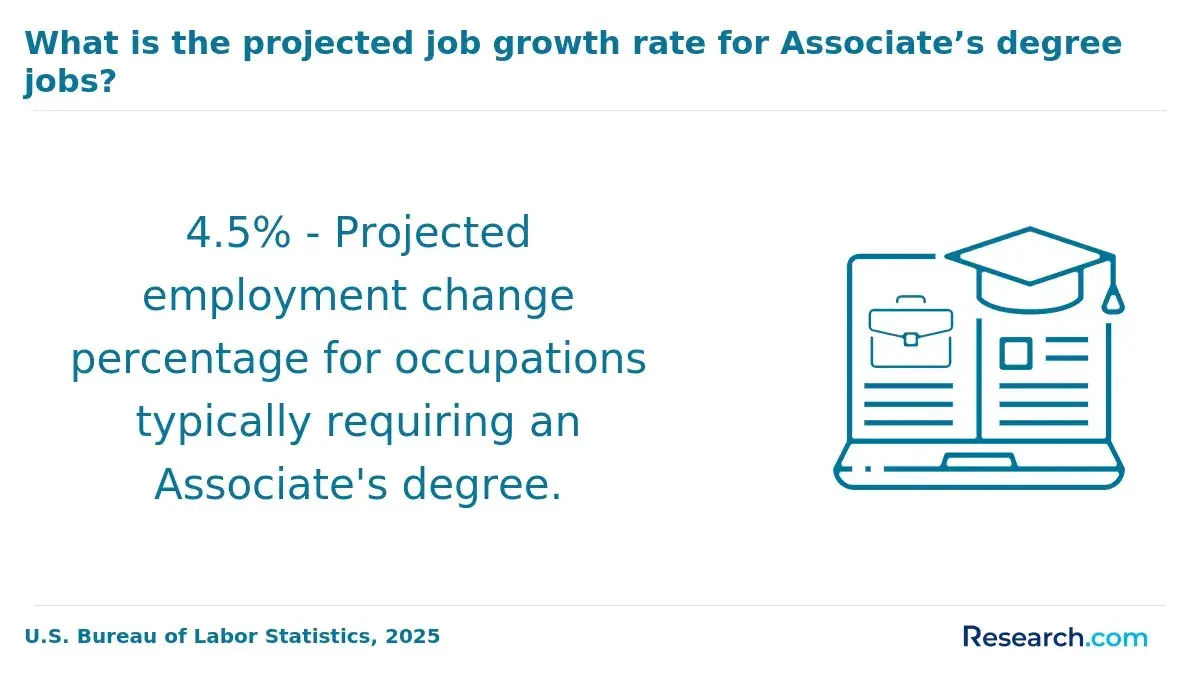
If you already know your target occupation requires a specific degree, choose that degree instead. If your goal is advancement in a broad business, nonprofit, administrative, or service role, general studies can be useful when it is intentionally designed around that path.
What applied learning, internships, or projects are included in general studies programs?
Applied learning turns a flexible curriculum into concrete evidence of skill. In online general studies programs, these experiences are often built into upper-division courses or a final capstone rather than requiring a traditional full-time internship.
Schools use different models, so students should ask how applied work is graded, supervised, and documented. The most common formats include:
- Capstone projects where students solve a practical problem, produce a research-based proposal, or design an implementation plan for an organization or community issue.
- Portfolio courses where students collect writing samples, presentations, project artifacts, reflection essays, and evidence of transferable skills.
- Internships or field experiences completed locally, often with approval from a faculty advisor or internship office.
- Employer-based projects that let working students analyze a real process, communication challenge, customer issue, or training need at their current workplace.
- Simulation-based assignments using business cases, public policy scenarios, ethical decision-making exercises, or team-based problem solving.
- Service-learning projects that connect coursework to community organizations, nonprofits, schools, or local agencies.
A strong applied component should produce something you can discuss in interviews. For example, "I completed a capstone on improving volunteer onboarding for a nonprofit" is more persuasive than "I took interdisciplinary electives." The best programs help students translate academic projects into resumes, LinkedIn profiles, writing samples, or interview stories.
Before enrolling, ask whether online students receive the same access to internship coordination and career services as campus students. Also ask whether remote learners may use their existing workplace for applied assignments, because that can make the degree more practical for adults who cannot pause employment for an unpaid internship.
How do you choose an accredited, reputable online general studies program?
Accreditation is the first filter. For most students, the safest choice is an institution accredited by an agency recognized by the U.S. Department of Education or the Council for Higher Education Accreditation. Institutional accreditation affects transfer credit, federal financial aid eligibility, graduate school recognition, and employer acceptance.
If affordability is also a priority, compare total cost and transfer policy together rather than tuition alone. A school advertising an accredited affordable online general studies degree may still vary in fees, credit acceptance, course availability, and graduation timeline.
Use the following checklist before applying. These steps are especially important because broad degrees can look similar on the surface while offering very different levels of structure and support.
- Verify institutional accreditation through official accreditation databases, not only the school's marketing page.
- Ask how many of your prior credits will apply to the degree, not just how many credits the school will accept in general.
- Review the degree map to confirm you can build a coherent concentration or career-focused pathway.
- Confirm whether applied learning is required, optional, or limited to certain concentrations.
- Ask whether online students have access to career coaching, internship support, tutoring, library services, and faculty advising.
- Request a total cost estimate that includes tuition, online fees, books, technology costs, graduation fees, and repeated-course policies.
- Look for transparent outcomes information, such as retention, graduation, transfer, or career-support data.
Red flags include pressure to enroll immediately, unclear accreditation language, vague transfer evaluations, promises of guaranteed jobs or salaries, and programs that cannot explain how the curriculum connects to your goals. A reputable school should be able to show how your previous credits, concentration, applied coursework, and career plans fit together before you commit.
What are typical admission requirements for online general studies degrees?
Admission requirements depend on degree level and institution type. Online associate programs and degree-completion bachelor's programs are often more accessible than selective campus majors, but applicants still need to submit official records and meet academic policies.
Most online general studies programs ask for some combination of the following documents and requirements:
- High school diploma, GED, or equivalent for first-time college applicants.
- Official transcripts from all previously attended colleges, including unsuccessful or withdrawn coursework.
- Minimum GPA, often with conditional admission options for students below the standard threshold.
- Placement information or completed prerequisites for college-level writing and math.
- Application form and fee, though some public or adult-focused institutions waive fees during certain periods.
- Personal statement or goal statement, especially for degree-completion programs that ask students to explain their academic plan.
- Proof of English proficiency for applicants whose prior education was not in English.
Students with substantial prior credit should pay close attention to residency requirements. Many bachelor's programs require a minimum number of credits to be completed at the degree-granting institution, and upper-division credit requirements may limit how much lower-division transfer work applies.
If you have a low GPA, long enrollment gap, or mixed transcript history, ask about academic renewal, conditional admission, prior learning assessment, and advising before applying. General studies programs are often designed for nontraditional students, so a complicated academic history does not automatically rule you out.
How long do online general studies degrees take and what do they cost?
Program length depends mainly on degree level, transfer credits, enrollment pace, and course availability. An associate degree usually requires about 60 credits, while a bachelor's degree usually requires about 120 credits. A student starting from zero may need four years of full-time bachelor's study, but a transfer student with completed credits may finish much faster.
Cost should be evaluated as total cost to completion, not just cost per credit. College Board's 2024 Trends in College Pricing reported average published tuition and fees of $11,610 for in-state students at public four-year institutions and $43,350 at private nonprofit four-year institutions. Those figures are not online-program prices, but they give students a useful benchmark for judging whether an online quote is unusually high or competitive.
The main timeline and cost variables are summarized below. Use this table to identify which factors may change your personal price or graduation date.
| Factor | How it affects timeline | How it affects cost |
| Transfer credits | Can shorten time if credits apply directly to requirements | Can reduce tuition by lowering remaining credits |
| Prior learning assessment | May award credit for work, military, or professional training | Can reduce cost, though assessment fees may apply |
| Full-time enrollment | Usually fastest path | May increase short-term expenses but reduce extra semesters |
| Part-time enrollment | More manageable for working adults | May extend fees and delay career benefits |
| Course availability | Limited rotations can slow progress | Delayed graduation can increase indirect costs |
| Textbooks and technology | Usually does not change degree length | Can add meaningful costs beyond tuition |
Older adults and retirees with previous credits may want to compare flexible completion options, including a one-year degree for seniors, if their goal is personal enrichment, career transition, or finishing a long-postponed credential. The key is to confirm that the shortened timeline is based on accepted credits or accelerated terms rather than unrealistic course loads.
To control costs, request a written degree audit before enrolling, compare net price after grants and scholarships, ask about employer tuition assistance, and confirm whether tuition is charged by credit, term, or subscription period. A low advertised tuition rate is less valuable if few of your credits transfer or required courses are not offered when you need them.
What core courses and concentrations are common in general studies curricula?
General studies curricula usually combine general education, interdisciplinary electives, concentration courses, and a capstone or portfolio. The strongest programs do not simply let students pick random classes; they require an academic plan that connects courses to a theme, career direction, or transfer goal.
Common core areas include written communication, quantitative reasoning, humanities, natural science, social science, information literacy, ethics, and diversity or civic engagement. Upper-division courses often focus on research, leadership, professional communication, problem-solving, and applied integration across disciplines.
Concentrations vary by school, but the following options are common in online general studies programs:
- Business and leadership, often including management, organizational behavior, workplace communication, and basic finance.
- Social and behavioral sciences, often including psychology, sociology, human development, and community studies.
- Communication and media, often including writing, digital communication, public relations, and presentation skills.
- Public service or community leadership, often including public administration, ethics, nonprofit work, and policy basics.
- Technology or information systems, often including computer applications, data literacy, cybersecurity basics, or web tools.
- Humanities and culture, often including history, literature, philosophy, language, and interdisciplinary inquiry.
When choosing courses, think backward from your next step. A student aiming for project coordination should prioritize business communication, data tools, and team leadership. A student considering graduate counseling, social work, or public administration should choose psychology, sociology, research methods, and human services electives where available.
A common mistake is using maximum flexibility to avoid hard courses. That can weaken the degree's value. Instead, choose electives that build a skill cluster: writing plus analytics, psychology plus human services, business plus project management, or communication plus digital media.
What are salary expectations and job outlook for general studies graduates?
Salary expectations for general studies graduates vary because the degree can lead to many different fields. Employers usually evaluate the full profile: degree level, work history, technical skills, internships, location, industry, and how clearly the applicant can connect coursework to job requirements.
As a baseline, the U.S. Bureau of Labor Statistics reported a median annual wage of $49,500 for all wage and salary workers in May 2024. Many roles that prefer or require a bachelor's degree sit above that baseline, but a general studies degree does not automatically place graduates into higher-paying occupations without relevant experience and skills.
The table below shows examples of career directions that may fit a general studies graduate, along with how to interpret salary potential. Use it as a planning tool, not as a guarantee of outcomes.
| Role category | Typical connection to general studies | Salary context | Outlook considerations |
| Project management support | Fits students with business, communication, operations, and data coursework | BLS May 2024 data lists project management specialists with median pay above the all-worker median | Demand depends on industry, software skills, and experience managing timelines |
| Human resources support | Fits students with psychology, communication, management, and ethics coursework | HR specialist roles commonly require strong interpersonal and compliance skills | Experience with HR systems and employment practices improves competitiveness |
| Marketing or communications coordination | Fits students with writing, media, analytics, and presentation coursework | Pay varies widely by industry, portfolio quality, and digital skills | AI tools are changing content workflows, making analytics and strategy more important |
| Administrative services | Fits students with organization, communication, technology, and leadership coursework | Advancement may depend on supervisory experience and process improvement skills | Automation may reduce routine tasks but increase demand for coordination and judgment |
| Community and nonprofit programs | Fits students with social science, public service, writing, and evaluation coursework | Pay varies by funding source, region, and organization size | Grant writing, data reporting, and program evaluation can strengthen prospects |
If maximizing income is your primary goal, compare general studies against more specialized majors before enrolling. A guide to the best bachelor degrees to get can help you see when a targeted degree in business, technology, engineering, healthcare, or analytics may offer a clearer earnings pathway.
The most realistic salary strategy is to treat general studies as a platform. Add a concentration, applied project, internship, certificate, or work experience that points toward a specific role. Broad education can be valuable, but employers hire for recognizable capabilities.
Can you use an online general studies degree to transfer, upskill, or change careers?
Yes, an online general studies degree can be useful for transfer, upskilling, or career change, especially when you use it as a flexible completion pathway. It is often strongest for students who already have credits, professional experience, or a clear next step that does not require a narrowly prescribed undergraduate major.
For transfer students, general studies can absorb credits from several disciplines that might not fit neatly into a traditional major. That can reduce credit loss, but only if the receiving school applies those credits toward graduation requirements. Always request an official or written preliminary evaluation before assuming your credits will count.
For upskilling, the degree can help working adults add communication, leadership, data literacy, project management, or human behavior coursework to existing job experience. This can support advancement into coordinator, supervisor, analyst-support, or client-facing roles, depending on the industry.
For career changers, the degree works best as a bridge rather than a final answer. Follow these steps to make the transition more intentional:
- Choose a target role or graduate pathway before selecting electives.
- Identify the skills employers request in job postings, such as Excel, writing, customer relationship management, data reporting, training, or project coordination.
- Select a concentration that matches those skills rather than choosing unrelated electives.
- Use capstone and applied assignments to create portfolio artifacts relevant to the new field.
- Add a certificate, volunteer experience, internship, or entry-level role if the new field requires proof beyond the degree.
- Ask advisors whether your undergraduate courses meet prerequisites for graduate programs you may pursue later.
Students considering people-focused graduate fields should be especially careful with prerequisites. For example, an online master's of counseling may require specific psychology, statistics, or human development preparation, and state licensure rules can vary. A general studies degree can prepare you for application, but it does not replace graduate clinical training or licensure requirements.
Consider a different undergraduate major if you need direct preparation for a licensed profession, a highly technical role, or a graduate program with strict prerequisite sequencing. Choose general studies when flexibility, credit recovery, interdisciplinary learning, and applied career evidence matter more than a single-field major label.
Other Things You Should Know About General Studies
Not exactly. Liberal arts usually emphasizes humanities, social sciences, natural sciences, and broad intellectual skills. General studies is often more flexible and may combine liberal arts with business, technology, public service, or career-focused electives.
Usually, diplomas from accredited institutions do not specify online delivery, but policies vary by school. Ask the registrar what appears on the diploma and transcript before enrolling if this matters to you.
Often, yes. Many adult-focused and military-friendly colleges evaluate Joint Services Transcript records, professional training, and prior learning for possible credit. The amount accepted depends on the school's policy and degree requirements.
Yes. To qualify for federal financial aid, the school must hold accreditation recognized by the U.S. Department of Education. The program must also be Title IV-eligible, and students typically complete a FAFSA® before the school sets aid using the Federal Student Aid rules.
References
- A General Studies Degree Is a Launchpad for Career Changers https://www.tuw.edu/gen-ed/general-studies-degree-benefits/
- General Studies Degree Jobs: 10 Careers + Salaries (2026) | Extern https://www.extern.com/post/general-studies-degree-jobs-career-guide
- What are General Education Courses? Its Purpose and Benefits https://www.edvisorly.com/student-guides/general-education-courses-overview
- What Can You Do With a General Studies Degree? https://www.calcoast.edu/news/what-can-you-do-with-a-general-studies-degree
- Online Bachelor's Degree: General Studies https://www.umgc.edu/online-degrees/bachelors/general-studies
- How to Choose an Online College in 10 Easy Steps https://www.straighterline.com/blog/choose-accredited-online-college-10-easy-steps
- Future Career Outlook: General Studies Degree | ALU https://alu.edu/alublog/future-career-outlook-general-studies-degree-alu/
- Online Degree vs. Traditional: Choosing the Right Path https://beal.edu/online-degree-vs-traditional/
- Benefits of a General Studies Degree | University of Bridgeport https://www.bridgeport.edu/news/benefits-of-general-studies-degree/