2027 What Can You Do With a General Studies Degree

Co-Founder and Chief Data Scientist
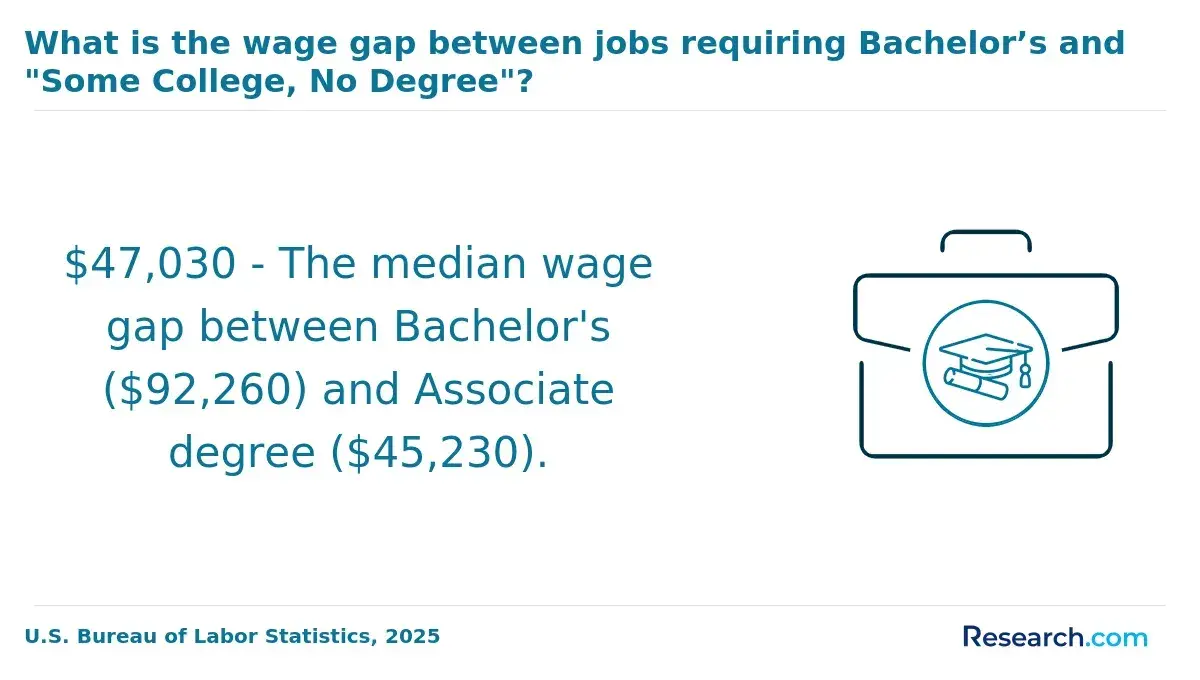
A general studies degree is often the option students consider when they want flexibility but still need a bachelor's credential. That choice matters because the U.S. Bureau of Labor Statistics reported median weekly earnings of $1,543 for workers age 25 and older with a bachelor's degree in 2024, compared with $930 for high school graduates.
This guide is for transfer students, working adults, undecided majors, and career changers. You'll learn what the degree covers, where it can lead, what it costs, and how to judge whether it fits your career goals.
Key Things You Should Know
- A general studies degree is best for students who need a flexible bachelor's pathway, especially those with transfer credits, military credits, prior college coursework, or broad career interests.
- Career outcomes depend heavily on concentrations, internships, work experience, and skills; roles in business, public service, communications, sales, HR, and operations are more realistic than licensed or highly technical fields without added credentials.
- Cost and completion time vary widely, but College Board's 2024-25 pricing data shows average published tuition and fees of $11,610 for in-state public four-year students and $43,350 at private nonprofit four-year colleges.
What is a general studies degree and how does it work in U.S. colleges?
A general studies degree is an interdisciplinary undergraduate program that lets students build a broad plan of study instead of completing one narrowly defined major. It is commonly offered as a Bachelor of Arts, Bachelor of Science, Bachelor of General Studies, or Bachelor of Liberal Studies, depending on the school.
In U.S. colleges, the degree usually combines general education requirements, upper-division electives, and one or more focus areas. A student might combine business, communication, psychology, public administration, information technology, or social sciences. The goal is not to avoid rigor; it is to create a coherent degree plan that fits a student's prior credits and career direction.
This degree is especially common among adult learners and transfer students because many programs accept a wider range of previous coursework than traditional majors. However, schools still require a minimum number of credits, a minimum GPA, upper-level coursework, residency credits taken at the institution, and sometimes a capstone project.
The table below shows how general studies commonly differs by award level. This matters because an associate degree may help with transfer or entry-level work, while a bachelor's degree is more relevant for roles that screen for a four-year credential:
| Degree type | Typical credit requirement | Best fit | Common outcome |
| Associate in General Studies | About 60 credits | Students exploring majors or planning to transfer | Transfer pathway or entry-level administrative work |
| Bachelor's in General Studies | About 120 credits | Transfer students, working adults, and broad-interest learners | Qualification for many bachelor's-preferred roles |
| Degree completion program | Varies based on transfer credits | Students with prior college credits but no completed degree | Faster path to finishing a bachelor's credential |
A well-designed general studies program should still have academic direction. If the curriculum is just a collection of unrelated electives, it may be harder to explain to employers or graduate schools.
Is a general studies degree worth it and what are its pros and cons?
A general studies degree can be worth it when it helps you finish a bachelor's degree efficiently, use credits you already earned, and build a clear skill set for a realistic career path. It is less likely to be worth it if you need a specialized credential for fields such as accounting licensure, engineering, nursing, teacher certification, or clinical practice.
Many students compare general studies with lists of the easiest bachelor's degree options, but "easier" should not be the deciding factor. The better question is whether the program helps you graduate with marketable skills, recognized accreditation, manageable debt, and a story employers can understand.
The table below summarizes the main trade-offs. Use it to decide whether flexibility is an advantage for your situation or a risk that could weaken your career preparation:
| Factor | Potential advantage | Potential drawback |
| Flexibility | You can combine subjects that match your interests and prior credits. | Too much freedom can lead to an unfocused transcript. |
| Transfer credit use | You may lose fewer credits when switching schools or majors. | Some schools limit how many credits can apply to the major or concentration. |
| Career preparation | You can target broad roles in business, administration, communications, or public service. | Specialized fields may require another major, certificate, license, or graduate degree. |
| Graduate school options | A bachelor's degree can meet the basic degree requirement for many programs. | Prerequisite-heavy programs may require specific courses not included in general studies. |
Before enrolling, weigh the degree against your intended outcome. A general studies degree is usually strongest when paired with internships, a concentration, a portfolio, technical tools, professional certifications, or prior work experience.
Consider choosing general studies if several of these conditions apply to you:
- You already have substantial college credit from more than one discipline and want to finish without starting over.
- You are aiming for broad bachelor's-preferred roles rather than a state-licensed profession.
- You can select a concentration that maps to a job family, such as business operations, communication, public administration, or data-informed decision-making.
- You plan to combine the degree with work experience, certificates, internships, military experience, or a graduate program.
Consider a different major if your target job has strict technical, licensing, or prerequisite requirements. In those cases, a more specialized degree may save time and money in the long run.
What jobs can you get with a general studies degree across different industries?
A general studies degree can qualify graduates for many roles that value communication, analysis, coordination, customer service, leadership, and problem-solving. It is not usually a direct pipeline to one occupation, so students should choose electives and experience that point toward a clear industry.
The table below groups realistic career paths by industry. These are not guaranteed outcomes; they are examples of roles where a broad bachelor's degree plus relevant skills or experience may be considered by employers:
| Industry | Possible roles | Useful preparation |
| Business and operations | Operations coordinator, project coordinator, office manager, account coordinator | Business, Excel, project management, budgeting, process improvement |
| Human resources | HR assistant, recruiting coordinator, benefits assistant, training coordinator | Psychology, communication, labor relations, HR software, employment law basics |
| Sales and customer success | Sales representative, client services specialist, customer success associate | Persuasion, CRM tools, presentation skills, industry knowledge |
| Public and nonprofit service | Program assistant, community outreach coordinator, case management assistant | Public administration, sociology, grant writing, community engagement |
| Marketing and communications | Marketing assistant, content coordinator, communications specialist | Writing, analytics, social media tools, design basics, audience research |
| Education support | Admissions counselor, student services coordinator, academic support specialist | Communication, advising basics, student information systems, cultural competence |
Students who want to make the degree more employment-ready should build a bridge between coursework and job postings. The following steps can help turn a flexible major into a credible career plan:
- Choose one target job family before selecting upper-level electives.
- Collect 10 to 15 job postings and identify the software, skills, and experience employers repeatedly request.
- Use your concentration, internship, capstone, and electives to match those requirements.
- Create a resume section that translates the degree into skills, projects, tools, and measurable experience.
- Add a short explanation in interviews that connects your interdisciplinary training to the employer's problem.
Technology is changing these roles. AI tools are increasingly used for drafting, scheduling, customer support, data summaries, and recruiting workflows, so general studies students should not rely on broad communication skills alone. Learning spreadsheet analysis, AI-assisted productivity, CRM systems, project management platforms, and data visualization can make the degree more competitive.
How does a general studies major compare to more specialized bachelor's degrees?
A general studies major offers breadth, while specialized bachelor's degrees offer depth. Neither is automatically better; the right choice depends on whether your goal rewards flexibility or requires specific technical preparation.
If your priority is maximizing income potential, compare general studies with field-specific options before deciding. Lists of top paying degrees often include majors such as engineering, computer science, finance, and nursing-related pathways because they connect directly to high-demand technical or licensed roles.
The comparison below can help you decide whether general studies or a specialized major better fits your next step. Pay close attention to the "best choice when" column because the value of each option depends on your career target:
| Option | Strength | Limitation | Best choice when |
| General studies | Flexible, transfer-friendly, customizable | May need extra explanation to employers | You have varied credits or want a broad bachelor's credential |
| Business administration | Clearer fit for management, operations, and corporate roles | Less flexible if your interests span several fields | You want a broad but career-specific business path |
| Psychology | Strong foundation for human behavior, research, and helping professions | Many clinical roles require graduate education | You plan to pursue counseling, HR, research, or social services |
| Communications | Direct fit for media, marketing, public relations, and writing roles | Portfolio quality may matter as much as the degree title | You want writing, messaging, media, or public-facing work |
| Computer science or IT | Technical preparation for software, systems, data, and cybersecurity roles | More structured math and technical coursework | You want a technical role and are ready for intensive skill development |
A general studies degree can also serve as a practical completion route if switching into a specialized major would add several semesters. However, if your desired job consistently lists a specific major as required, specialization may be the better investment.
What courses and concentrations are typically included in a general studies program?
Most general studies programs include general education courses, interdisciplinary electives, upper-division requirements, and a capstone. The exact structure varies by institution, but the strongest programs require students to organize courses around a concentration or theme.
Common course areas include writing, quantitative reasoning, natural sciences, humanities, social sciences, communication, technology, and ethics. Upper-level coursework may be customized around a focus such as leadership, business, health and society, digital communication, criminal justice, public service, or organizational studies.
Some students use general studies to combine practical interests that do not fit neatly into one traditional major. For example, a student interested in wellness communication might pair public health, writing, psychology, and a nutrition degree online comparison to decide whether a general pathway or a specialized health-related program better fits their goals.
The table below shows common concentrations and what they can support. This is useful because the concentration often matters more to employers than the broad "general studies" label:
| Concentration area | Typical courses | Career direction it may support |
| Business and leadership | Management, accounting basics, organizational behavior, business communication | Operations, administration, sales, team leadership |
| Communication and media | Public speaking, writing, digital media, persuasion, audience analysis | Marketing, communications, public relations, customer engagement |
| Social and behavioral sciences | Psychology, sociology, research methods, human development | Human services, HR support, community programs, student services |
| Public service | Public administration, policy, ethics, nonprofit management | Government support, nonprofit coordination, outreach |
| Technology and data literacy | Information systems, spreadsheets, data basics, cybersecurity foundations | Administrative tech roles, project coordination, operations support |
When possible, choose courses that produce evidence of ability. A research paper, campaign plan, data dashboard, policy memo, training module, or capstone project can give you something concrete to show employers.
Can you earn a general studies degree online, and how does it compare to campus?
Yes, many accredited colleges offer online general studies degrees, especially for adult learners and degree-completion students. Online programs can be a strong fit if you need flexibility, already have credits, or work full time, but they require self-management and careful review of transfer and support policies.
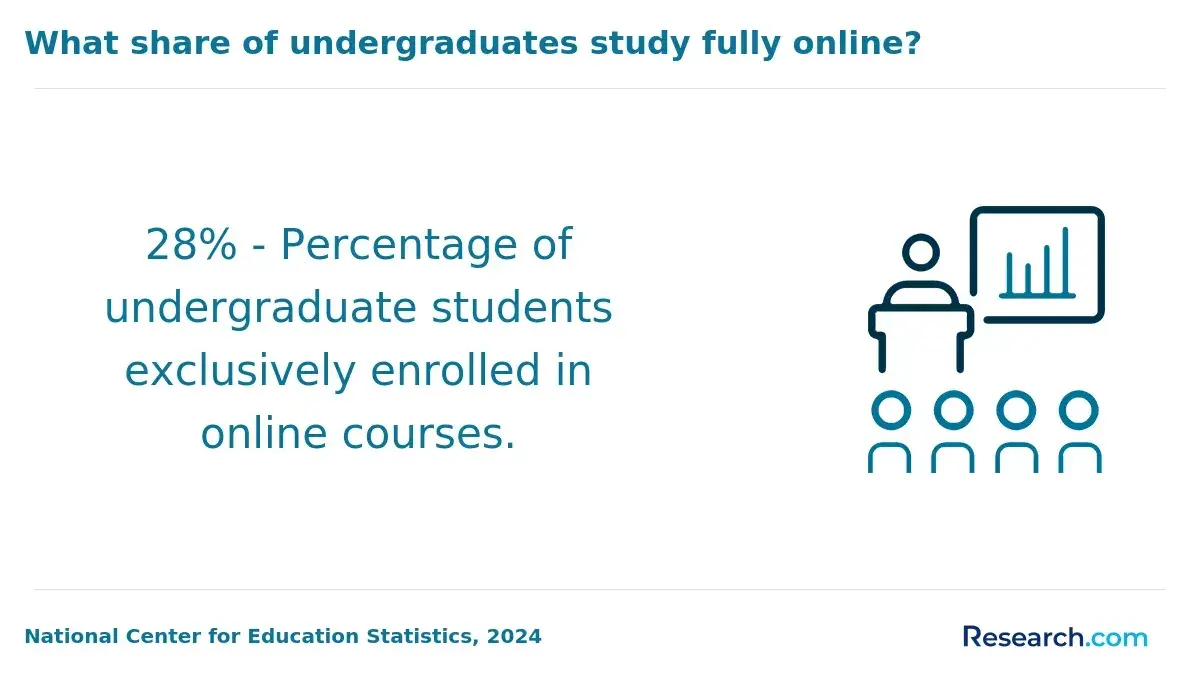
Online learning is now a mainstream option in U.S. higher education. The National Center for Education Statistics reported in 2024 that more than half of undergraduate students took at least one distance education course in fall 2022, showing that online and hybrid learning are no longer unusual pathways.
Students comparing general studies with business-focused online options may also look at an online business administration degree. That comparison is useful if you want flexibility but also prefer a degree title that directly signals business preparation.
The table below compares online and campus formats. Use it to identify which learning environment matches your schedule, support needs, and career-building opportunities:
| Format | Advantages | Trade-offs | Best fit |
| Online | Flexible scheduling, often transfer-friendly, accessible from home | Requires strong time management and proactive networking | Working adults, parents, military students, transfer students |
| Campus | Face-to-face advising, clubs, events, local employer connections | Less flexible and may require commuting or relocation | Traditional-age students or learners who want in-person structure |
| Hybrid | Mixes online convenience with some campus interaction | May still require travel at specific times | Students near campus who want both flexibility and in-person support |
Before choosing an online program, verify more than convenience. Ask whether online students receive the same advising, career services, library access, tutoring, internship support, and transcript designation as campus students.
How long does it take to finish a general studies degree and what does it cost?
A bachelor's degree in general studies typically requires about 120 semester credits. Full-time first-year students often need about four years, while transfer students may finish faster depending on accepted credits, course availability, and whether they enroll year-round.
Cost depends on institution type, residency, transfer credits, fees, books, technology, living expenses, and whether you attend full time or part time.
College Board's 2024-25 data lists average published tuition and fees of $11,610 for in-state students at public four-year colleges, $30,780 for out-of-state students at public four-year colleges, and $43,350 at private nonprofit four-year colleges. Published prices are not the same as net price after grants and scholarships, so always compare aid offers.
The table below explains common cost drivers. It helps you avoid focusing only on tuition, which can hide expenses that affect the real return on investment:
| Cost factor | Why it matters | What to check |
| Transfer credits | Accepted credits can reduce time and tuition. | Ask for an official degree audit before enrolling. |
| Residency status | Public universities may charge different in-state and out-of-state rates. | Confirm online tuition rules because some programs use separate rates. |
| Fees | Technology, distance learning, graduation, and course fees can add up. | Request a full cost of attendance estimate. |
| Pace | Part-time study may be easier to manage but can extend fees and opportunity cost. | Compare full-time, part-time, accelerated, and summer options. |
| Financial aid | Grants and scholarships can lower net price, while loans increase repayment obligations. | Review FAFSA eligibility, institutional aid, employer tuition benefits, and state grants. |
To reduce cost, prioritize accredited public or nonprofit institutions with generous transfer policies, transparent fees, and strong advising. If you have prior credits, do not rely on an informal estimate; request a written transfer evaluation that shows exactly which requirements remain.
What admission requirements do schools set for general studies bachelor's programs?
Admission requirements vary, but most general studies bachelor's programs ask for a high school diploma or equivalent, official transcripts, and proof of prior college coursework if applying as a transfer student. Some programs are designed mainly for students who have already earned a set number of college credits.
Programs for adult learners may offer rolling admissions, test-optional policies, prior learning assessment, military credit review, or portfolio-based credit. However, flexible admission does not mean automatic admission. Schools may still require a minimum GPA, good academic standing, English proficiency for applicable applicants, and completion of placement or readiness steps.
The table below summarizes common requirements. Use it as a checklist before requesting information from schools:
| Requirement | What schools may ask for | Why it matters |
| Academic records | High school and college transcripts | Determines admission eligibility and transfer credit |
| Minimum GPA | Often required for transfer or degree-completion admission | Affects whether you enter directly or need conditions |
| Transfer standing | Proof of credits earned at prior institutions | May determine whether you qualify for a completion program |
| Personal statement | Sometimes required to explain goals or academic history | Helps the school assess fit and readiness |
| Placement or advising | Math, writing, or advising review | Helps place you into appropriate courses |
Applicants should avoid one common mistake: applying before understanding how prior credits will count. A school can admit you but still reject credits you expected to use, which may increase both cost and time to graduation.
What salary ranges and long-term career outlook can general studies graduates expect?
Salary outcomes for general studies graduates vary because the degree does not point to one occupation. Earnings are shaped by industry, location, prior experience, internships, technical skills, management responsibility, and whether the graduate pursues additional credentials.
Instead of treating "general studies salary" as one number, it is more useful to look at occupations that may be accessible with a broad bachelor's degree and relevant preparation. The BLS May 2024 wage data below provides national medians for selected roles; individual offers can be higher or lower based on employer and region:
| Occupation | Typical connection to general studies | Median annual wage, BLS May 2024 |
| Human resources specialist | Relevant for students with communication, psychology, business, or HR coursework | $72,910 |
| Market research analyst | Relevant for students with research, communication, statistics, or marketing coursework | $76,950 |
| Training and development specialist | Relevant for students with education, communication, organizational, or HR coursework | $64,340 |
| Social and community service manager | Relevant after experience in nonprofit, social service, or community programs | $78,240 |
| Project management specialist | Relevant for students with operations, business, technology, or coordination experience | $100,750 |
The long-term outlook is strongest when the graduate aligns the degree with a growing function. BLS projections released in 2024 show faster-than-average growth for several roles that value analytical, people, and coordination skills, including market research analysts and training and development specialists. That does not mean a general studies degree alone is enough; it means students should intentionally build the tools and experience those roles require.
To improve career outcomes, focus on employability before graduation. Build experience through internships, part-time roles, volunteer leadership, student employment, industry certificates, software skills, and a portfolio of completed projects.
How do you choose an accredited, reputable general studies program that fits your goals?
Choosing the right general studies program requires more than finding a flexible curriculum. You need a school that is accredited, transparent about costs, generous but honest about transfer credit, and able to connect your course plan to a career or graduate-school goal.
Start with institutional accreditation recognized by the U.S. Department of Education or the Council for Higher Education Accreditation. For general studies, programmatic accreditation is usually not required, but institutional accreditation is essential for federal financial aid eligibility, credit transfer, employer recognition, and graduate admission.
The table below highlights red flags and better alternatives. It can help you avoid programs that are convenient upfront but costly or limiting later:
| Red flag | Why it is risky | Better alternative |
| No recognized institutional accreditation | Credits and degree may not be widely accepted. | Verify accreditation through official federal or CHEA-recognized listings. |
| No written transfer credit evaluation | You may discover late that many credits do not apply. | Request a degree audit before committing. |
| Vague concentration options | The degree may lack a clear career story. | Choose a program with structured pathways and advisor-approved plans. |
| Unclear total cost | Fees and repeated courses can increase debt. | Ask for tuition, fees, books, technology costs, and estimated net price. |
| Limited career support for online students | You may miss internships, coaching, and employer connections. | Confirm access to career services, tutoring, alumni networks, and internship help. |
Before enrolling, take these practical steps to compare programs:
- Confirm institutional accreditation using official recognition databases.
- Ask for a written transfer credit evaluation and remaining degree plan.
- Compare net price, not just tuition, after grants, scholarships, employer benefits, and fees.
- Review sample courses and make sure the concentration supports a specific job family.
- Ask how many online courses are asynchronous, synchronous, or hybrid.
- Request examples of capstone projects, internships, or portfolios completed by students.
- Check whether graduates have access to career coaching, resume reviews, and employer events.
The best program is not always the fastest or cheapest. It is the one that helps you finish with a credible degree plan, manageable cost, and evidence of skills that match your next career or education step.
Other Things You Should Know About General Studies
Yes, it can meet the bachelor's degree requirement for many graduate programs. However, programs in fields such as counseling, education, healthcare, analytics, or business may require prerequisite courses, entrance exams, work experience, or a minimum GPA.
No, a general studies degree does not by itself meet teacher licensure rules in most states. You usually need a state-approved educator preparation program, student teaching, and passing scores on exams such as Praxis Core and a subject-area test. State education departments set the final requirements.
They are similar but not always identical. General studies often emphasizes flexible degree completion across multiple subjects, while liberal studies may focus more on humanities, social sciences, and interdisciplinary liberal arts coursework. Always compare the actual curriculum.
Possibly, but a general studies degree alone usually does not lead directly to teacher licensure. Requirements vary by state, and you may need an approved teacher preparation program, student teaching, exams, and specific subject-area coursework.
References
- Master's degree guide: How to choose the right programme https://www.rcl.ac.uk/news/how-to-choose-a-masters-degree-programme-postgraduate/
- General Studies Degree Jobs: 10 Careers + Salaries (2026) | Extern https://www.extern.com/post/general-studies-degree-jobs-career-guide
- Benefits of a General Studies Degree | University of Bridgeport https://www.bridgeport.edu/news/benefits-of-general-studies-degree/
- Top Degrees in Demand for the Future: 2026 & Beyond https://skillifysolutions.com/blogs/career-growth/top-degrees-in-demand-for-the-future/
- Online General Studies Degrees https://mycollegeguide.org/online-general-studies-degrees/
- What are General Education Courses? Its Purpose and Benefits https://www.edvisorly.com/student-guides/general-education-courses-overview
- Online Bachelor's Degree: General Studies https://www.umgc.edu/online-degrees/bachelors/general-studies