2027 Online General Studies Degrees With Practice-Ready Interdisciplinary Curricula

Co-Founder and Chief Data Scientist
Choosing an online general studies degree often comes down to one question: will a flexible interdisciplinary major still lead to practical career value? The answer depends on curriculum design, transfer credit, accreditation, and how well the program lets you build marketable skills.
The stakes are real: BLS 2024 data show workers with a bachelor's degree had median weekly earnings of $1,543, higher than those with only a high school diploma. This guide helps adult learners, transfer students, and career changers compare programs, avoid weak options, and choose a degree that fits their goals.
Key Things You Should Know
- Online general studies degrees are strongest for students with transfer credits, broad career goals, or interdisciplinary interests; they are weaker for fields that require a specialized or licensed major.
- A bachelor's general studies program commonly requires about 120 credits, but transfer-friendly policies, prior learning assessment, and accelerated terms can substantially reduce time to completion.
- BLS 2024 Education Pays data report median weekly earnings of $1,543 for bachelor's degree holders, but a general studies graduate's outcome depends heavily on concentration, work experience, internships, and technical skills.
What is an online general studies degree?
An online general studies degree is an associate or bachelor's program that combines courses from multiple academic areas rather than requiring one narrow major. Students usually complete general education, upper-division electives, and one or more focus areas such as business, communication, social science, technology, healthcare administration, public service, or applied leadership.
This degree is often a good fit for adults returning to college, students with credits from several institutions, military-connected learners, and people who want a broad credential for advancement rather than a single technical occupation. It may also appear in searches for easy degrees to get, but "flexible" should not be confused with "low effort." A strong program still requires research, writing, quantitative reasoning, applied projects, and a coherent academic plan.
The main trade-off is specialization. General studies can help you finish a degree efficiently and build a customized skill set, but it may not be the best choice if your target job requires a prescribed major, state licensure, clinical hours, teacher preparation, engineering accreditation, or graduate-school prerequisites.
The table below summarizes common general studies degree levels and how each one is typically used. It can help you decide whether you need a short transfer pathway or a full bachelor's credential.
| Degree option | Typical structure | Best fit | Decision point |
| Associate in General Studies | Lower-division general education and electives | Students planning to transfer or qualify for roles requiring some college | Confirm that credits transfer cleanly into a bachelor's program |
| Bachelor of General Studies | General education, upper-division electives, and customized concentration areas | Adults finishing a degree, career changers, and students with varied credits | Choose concentrations that connect to a realistic career path |
| Bachelor of Interdisciplinary Studies | Integrated study across two or more disciplines, often with a capstone | Students who want a more intentional cross-field academic plan | Look for advising support and applied project requirements |
How does a practice-ready general studies curriculum work?
A practice-ready general studies curriculum turns a flexible degree into an employability-focused plan. Instead of letting students take unrelated electives, stronger programs require concentrations, applied assignments, career-aligned projects, and a capstone that shows how the student can solve workplace problems across disciplines.
This matters because employers increasingly expect graduates to show evidence of communication, analysis, digital fluency, teamwork, and judgment. AI tools have also changed what "entry-level ready" means: graduates benefit when they can evaluate information, use workplace software responsibly, present findings clearly, and adapt to new systems rather than relying only on memorized content.
A well-designed practice-ready curriculum usually includes several connected parts. These features help the degree function as a career platform rather than a loose collection of credits.
- Focused concentrations: Students select related courses in areas such as management, communication, data literacy, health services, public administration, or social science.
- Applied assignments: Courses require workplace-style deliverables, such as policy briefs, business memos, presentations, case analyses, research reports, or project plans.
- Capstone experience: Students complete a final project that integrates multiple disciplines and can be added to a professional portfolio.
- Career mapping: Advising connects course choices to job families, graduate programs, certifications, or advancement goals.
- Transfer-credit strategy: The program uses prior credits efficiently without sacrificing academic coherence.
Before enrolling, ask how the program turns electives into a plan. If an advisor cannot explain which course combinations support your career goal, the curriculum may be flexible but not practice-ready.
Are online general studies degrees accredited?
Yes, reputable online general studies degrees can be accredited, but students need to check the right type of accreditation. The most important credential is institutional accreditation from an agency recognized by the U.S. Department of Education or the Council for Higher Education Accreditation. Institutional accreditation affects credit transfer, graduate-school recognition, and access to federal financial aid.
Most general studies programs do not need specialized programmatic accreditation because the major is broad and interdisciplinary. However, that also means the degree usually does not satisfy licensing requirements for regulated fields such as nursing, teaching, counseling, architecture, or professional engineering unless the school offers a separate approved pathway.
Accreditation is one of the easiest places to make an expensive mistake. Watch for these red flags before you apply.
- The school claims to be "accredited" but does not name a recognized accrediting agency.
- The program promises unusually fast completion without reviewing your prior credits or documenting academic requirements.
- Admissions staff avoid questions about transfer acceptance, financial aid eligibility, or graduate-school recognition.
- The institution is not listed in recognized accreditation databases.
- The program implies that a general studies degree qualifies you for a licensed occupation without explaining state-specific requirements.
The safest approach is to verify the institution directly in recognized databases, then ask the school how credits transfer, whether the diploma or transcript identifies the online format, and whether the degree meets any requirements tied to your career goal.
What courses are included in general studies programs?
General studies programs usually include general education courses, interdisciplinary electives, upper-division coursework, and a capstone or senior project. The exact mix varies by school, but the strongest programs require students to build an intentional concentration instead of choosing random classes.
The table below shows common course areas and what they are meant to develop. Use it to judge whether a program's curriculum matches the skills you want to take into the job market.
| Course area | Common examples | Practical value |
| Communication | Professional writing, public speaking, digital communication | Builds workplace writing, presentation, and collaboration skills |
| Social science | Psychology, sociology, political science, cultural studies | Helps students understand people, organizations, communities, and policy contexts |
| Business and leadership | Management, organizational behavior, project coordination, entrepreneurship | Supports administrative, supervisory, operations, and nonprofit roles |
| Quantitative and data literacy | Statistics, research methods, spreadsheet analysis, data visualization | Strengthens evidence-based decision-making and reporting |
| Technology and digital skills | Information systems, cybersecurity basics, workplace software, AI literacy | Improves adaptability in technology-mediated workplaces |
| Capstone or applied project | Research project, portfolio, case study, community project | Demonstrates integration of knowledge across disciplines |
If your career target is highly technical, compare the curriculum against that field's expectations. For example, a student who wants licensed engineering work would usually need an engineering pathway rather than a general studies concentration with a few technical electives.
How do online and campus general studies programs compare?
Online and campus general studies programs often lead to the same degree when they are offered by the same accredited institution, but the student experience can be very different. The best choice depends on your schedule, learning style, need for campus services, and ability to stay organized without weekly in-person meetings.
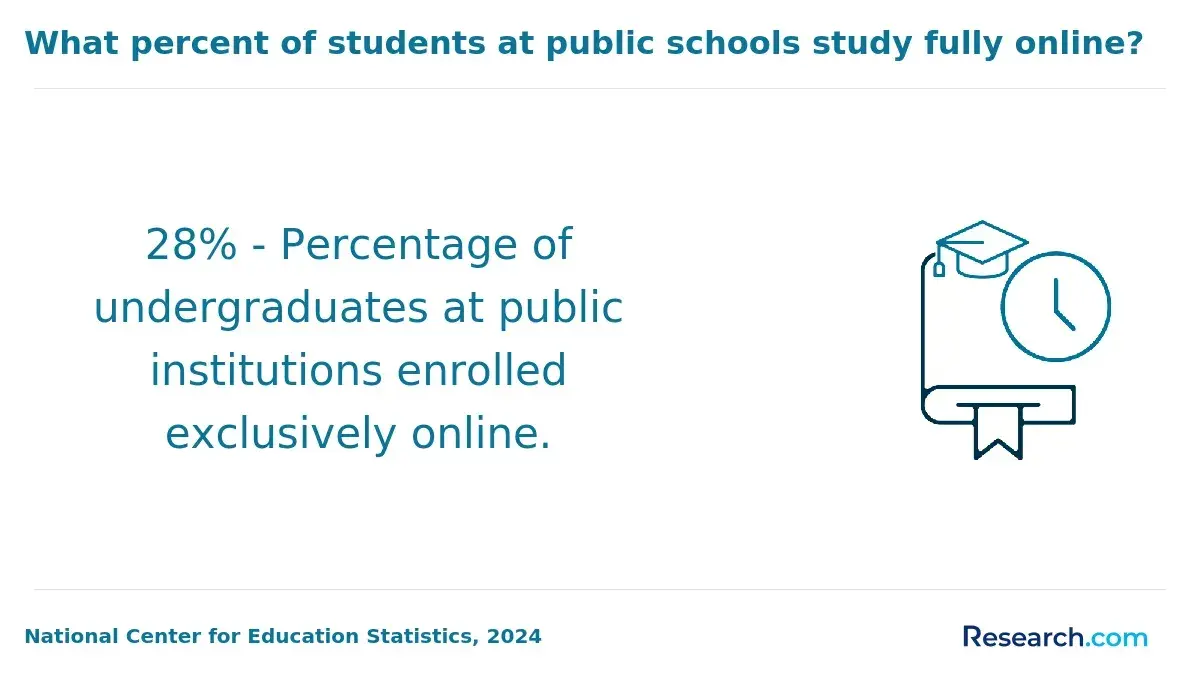
Online learning is no longer a fringe option. NCES data published in 2024 show that more than half of U.S. undergraduates took at least one distance education course in fall 2022. For general studies students, that matters because many are working adults or transfer students who need flexible course access.
The table below compares the major decision factors. It is especially useful if you are choosing between a local campus program and an online degree offered by another accredited institution.
| Factor | Online general studies | Campus general studies | Best choice when |
| Schedule | Often asynchronous or evening-friendly | Usually tied to set class times | Online is better if you work irregular hours or have caregiving duties |
| Peer interaction | Discussion boards, group projects, video meetings | In-person classes, events, and informal networking | Campus may be better if you value face-to-face connection |
| Academic support | Virtual advising, tutoring, library access, career services | In-person advising, labs, offices, and campus resources | Choose the format with support you will actually use |
| Cost structure | May reduce commuting and relocation costs, but can include online fees | May include campus fees, transportation, parking, or housing costs | Compare total cost, not just tuition |
| Self-management | Requires strong planning and independent follow-through | Provides more built-in routine | Campus may help if you need external structure |
A practical rule is to choose online if flexibility is essential and you can manage deadlines independently. Choose campus if you need hands-on services, local networking, or a more structured weekly routine.
What are the admission requirements for general studies degrees?
Admission requirements for online general studies degrees are usually accessible, but they still vary by institution and degree level. Associate programs may require a high school diploma or GED, while bachelor's completion programs often expect prior college credit or a minimum number of transferable credits.
Most schools evaluate applicants using a combination of academic records and identity or residency documentation. Before applying, prepare the materials that admissions offices commonly request.
- Official high school transcript, GED record, or college transcripts from every institution attended
- Application form and possible application fee
- Minimum GPA, which may be flexible for adult learners or transfer applicants
- Placement information for math or writing, if required
- Proof of English proficiency for applicants whose prior education was not in English
- Military transcripts, professional training records, or prior learning documentation if the school awards credit for experience
Transfer students should pay close attention to credit evaluation. A school may accept credits as electives but not apply them toward upper-division requirements, residency requirements, or a concentration. That difference can add time and cost even when the headline transfer policy sounds generous.
Before committing, ask for a written degree audit. It should show how many credits transfer, which requirements remain, estimated time to completion, and whether any courses must be repeated because of age limits, grade minimums, or program rules.
How long does a general studies degree take to complete?
A bachelor's degree in general studies commonly requires about 120 credits, while an associate degree often requires about 60 credits. The actual completion time depends on transfer credits, course load, term length, prior learning credit, and whether the program offers year-round enrollment.
Students who already have significant college credit may finish much faster than first-time students. If speed is a priority, compare general studies options with broader accelerated programs and look closely at whether faster terms increase weekly workload.
The table below outlines common completion scenarios. These are planning ranges, not guarantees, because every school applies transfer credits differently.
| Student profile | Typical path | Possible timeline | Main risk to watch |
| First-time bachelor's student | Full 120-credit program | About four years full time | Changing focus areas too often can delay graduation |
| Part-time working adult | One or two courses per term | Often longer than four years | Stopping out can create financial aid and catalog-year complications |
| Transfer student with 60 credits | Upper-division completion program | About two years full time | Some credits may transfer only as electives |
| Student with prior learning credit | Transfer credit plus assessed work, military, or professional training | Varies widely | Prior learning credit may have caps or fees |
| Accelerated online student | Short terms, year-round study, heavier pacing | Potentially shorter than a traditional schedule | Compressed courses can be difficult while working full time |
To shorten the timeline responsibly, start with a degree audit, avoid unnecessary electives, choose a concentration early, and confirm that every course you take applies to a requirement. Taking more credits is not efficient if those credits do not move you closer to graduation.
What can you do with a general studies degree?
A general studies degree can support many roles that value a bachelor's credential, communication ability, problem-solving, administrative judgment, and cross-functional thinking. It is most useful when paired with a concentration, relevant work experience, internships, military experience, certifications, or a portfolio of applied projects.
Common paths include operations support, human resources, training, nonprofit administration, public service, sales, customer success, project coordination, community programs, and communications. It is usually not the best standalone degree for occupations that require a specific accredited major or state licensure.
If your goal is engineering practice, for example, comparing a cheap online engineering degree may be more appropriate than trying to build an engineering-adjacent general studies plan.
The table below connects general studies preparation to realistic career directions. It shows where the degree can fit and what additional preparation may strengthen your candidacy.
| Career direction | Typical responsibilities | Helpful concentration or add-on | Important limitation |
| Administrative or operations coordinator | Coordinate schedules, processes, reports, vendors, and internal communication | Business, project management, data literacy | Advancement may require industry experience |
| Human resources assistant or specialist track | Support hiring, onboarding, records, benefits communication, and employee relations | Psychology, communication, business, HR certificate | Some employers prefer HR-specific coursework or certification |
| Training and development support | Create learning materials, coordinate training sessions, evaluate learner feedback | Communication, education, instructional technology | Instructional design roles may require a portfolio or graduate study |
| Nonprofit or community program coordinator | Manage outreach, volunteers, grants support, events, and client services | Social science, public administration, nonprofit management | Direct service roles may require background checks or specialized credentials |
| Sales, account, or customer success roles | Communicate with clients, manage accounts, solve service issues, track performance | Communication, business, analytics | Compensation and advancement often depend on performance metrics |
| Graduate-school preparation | Use the bachelor's degree as a foundation for a specialized master's program | Prerequisite courses aligned to the target graduate field | Graduate programs may require specific coursework, GPA, exams, or experience |
To make the degree more career-ready, choose electives around a job family rather than a general interest. Build evidence through a capstone, internship, volunteer leadership, industry software projects, writing samples, or a professional certificate.
How much can general studies graduates earn?
General studies salaries vary widely because the degree does not point to one occupation. Pay depends on the role, industry, location, experience level, concentration, and whether the graduate has complementary skills such as data analysis, project coordination, HR systems, writing, budgeting, or customer relationship management.
One useful benchmark is the degree-level labor market. BLS 2024 Education Pays data show bachelor's degree holders had median weekly earnings of $1,543 and an unemployment rate of 2.5%. This does not isolate general studies majors, but it helps explain why completing a bachelor's degree can matter for roles that screen applicants by education level.
The table below uses BLS May 2024 median wage data for selected U.S. occupations that may be reachable with a relevant bachelor's degree, experience, or additional preparation. These figures describe occupations, not guaranteed outcomes for general studies graduates.
| Occupation | Median annual wage | How general studies can fit |
| Human resources specialists | $72,910 | Works best with HR, communication, psychology, or business coursework |
| Training and development specialists | $65,850 | Works best with communication, education, technology, or workplace learning projects |
| Market research analysts | $76,950 | Requires stronger quantitative, research, spreadsheet, and presentation skills |
| Project management specialists | $100,750 | Usually requires experience, industry knowledge, and project tools beyond the degree |
| Social and community service managers | $78,240 | Often benefits from nonprofit, public administration, social science, or human services experience |
For return on investment, compare expected total cost with the roles you are realistically preparing for. A low-cost program with strong transfer credit and a clear career concentration can be a better investment than a more expensive program with vague electives and limited advising.
How do you choose a reputable online general studies program?
Choosing a reputable online general studies program requires more than finding the lowest tuition or the fastest schedule. You are buying a degree plan, advising system, transfer policy, and credential that employers or graduate schools may evaluate later.
Cost should still be part of the decision. College Board's 2024 Trends in College Pricing reported average published tuition and fees of $11,610 for in-state students at public four-year institutions and $43,350 at private nonprofit four-year institutions for the 2024-2025 academic year.
Those figures are not online-specific, but they show why students should compare total cost carefully and review lists of the cheapest online degrees alongside accreditation, transfer value, and support services.
Use the following steps to evaluate programs before you enroll. The goal is to confirm that the program is legitimate, affordable, and aligned with your next career or education move.
- Verify institutional accreditation through recognized accreditation sources rather than relying only on marketing language.
- Request a written transfer-credit evaluation before committing, especially if you have credits from multiple schools.
- Ask whether the program requires a concentration, capstone, portfolio, internship, or applied project.
- Compare total cost, including tuition, online fees, books, technology fees, graduation fees, and any prior learning assessment fees.
- Review student support services, including online tutoring, advising, library access, disability services, career coaching, and technical support.
- Ask how graduates have used the degree, but treat outcome claims cautiously unless the school provides transparent evidence.
- Confirm whether the degree will meet prerequisites for any graduate program, employer requirement, or state-regulated career you are considering.
Common mistakes include choosing a school without checking accreditation, assuming all transfer credits will apply to graduation, picking electives without a career theme, focusing only on speed, and ignoring whether the program has enough upper-division coursework. A reputable program should be transparent about requirements, costs, policies, and limitations.
Other Things You Should Know About General Studies
While both general studies and liberal arts degrees offer broad academic exposure, 2027 online general studies programs focus on practice-ready interdisciplinary curricula. They uniquely integrate real-world skills across multiple disciplines, emphasizing practical application in diverse career paths, unlike traditional liberal arts that often provide a more theoretical scope.
Yes, but admission depends on the graduate program. Some programs accept any accredited bachelor's degree, while others require specific prerequisites, minimum GPA, test scores, work experience, or a more specialized academic background.
Many 2027 online general studies programs require a capstone portfolio with 12 to 18 credits of applied work. Students usually submit projects showing research, writing, digital communication, and problem-solving across at least two disciplines, plus a faculty evaluation or reflective summary for graduation.
Sometimes. Many adult-friendly programs review military transcripts, workplace training, certifications, exams, or portfolios for possible credit. Policies vary, so request a written evaluation before assuming those credits will apply.
References
- Guideline for practice-ready assessments – specialties other than family medicine https://cpsns.ns.ca/registrants/physicians/policies/guideline-for-practice-ready-assessments-specialists/
- Practice-Ready Assessment | Medical Council of Canada https://mcc.ca/examinations-assessments/practice-ready-assessment/
- General Studies Degree Jobs: 10 Careers + Salaries (2026) | Extern https://www.extern.com/post/general-studies-degree-jobs-career-guide
- Practice Readiness Assessment (PRA) - College of Physicians & Surgeons of Alberta | CPSA https://cpsa.ca/physicians/registration/apply-to-practise/independent-practice/pra/