2027 Best Online Bachelor's in General Studies With Applied Capstone Support

Co-Founder and Chief Data Scientist
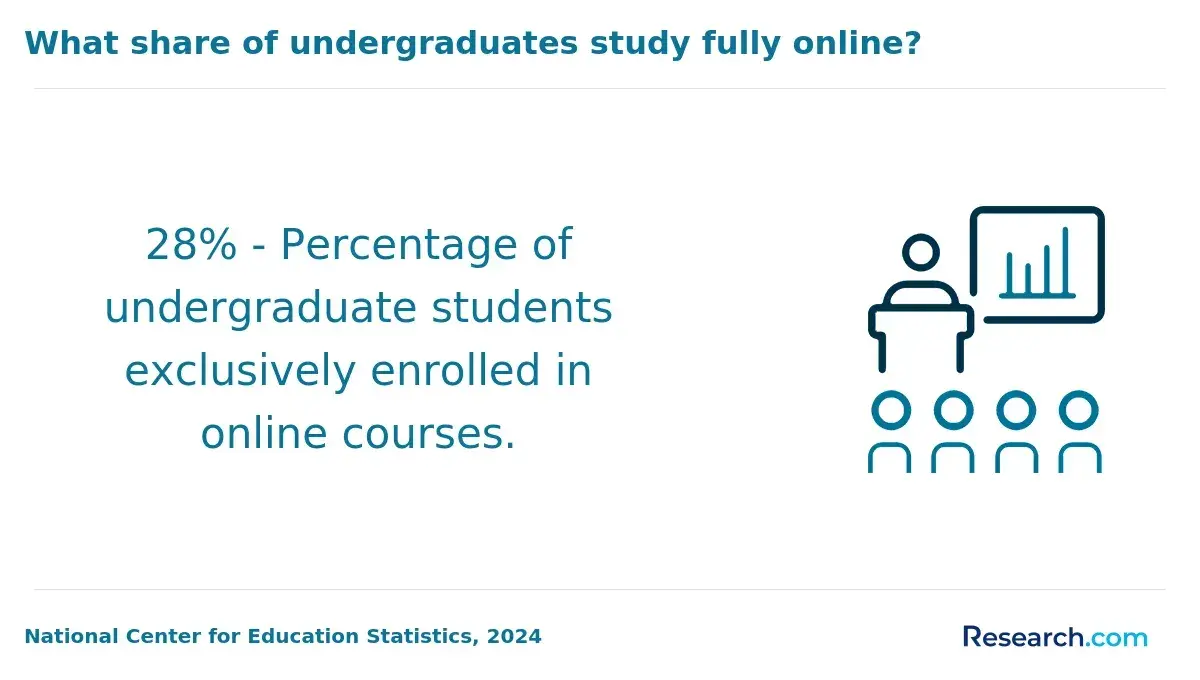
Choosing an online bachelor's in general studies is often a decision about finishing faster, using existing credits wisely, and proving job-ready skills through a capstone. NCES data published in the Digest of Education Statistics shows that more than half of U. S. undergraduates have taken at least one distance education course, making online completion paths mainstream rather than unusual.
This guide is for transfer students, working adults, military learners, and career changers who want flexibility without choosing a narrow major too soon. You'll learn how programs compare, what they cost, and how to select one with credible capstone support.
Key Things You Should Know
- An online bachelor's in general studies is usually a 120-credit completion degree that works best for students with transfer credits, mixed academic interests, or career goals that value broad communication, analysis, leadership, and problem-solving skills.
- Applied capstone support matters because it turns a flexible major into evidence of competence, often through a research project, workplace improvement plan, community project, policy analysis, portfolio, or business-focused deliverable.
- According to College Board's Trends in College Pricing 2024, average published tuition and fees were $11,610 for in-state public four-year institutions and $43,350 for private nonprofit four-year institutions, so transfer credit, residency status, and fees can strongly affect total cost.
What is an online bachelor's in general studies with applied capstone support?
An online bachelor's in general studies is an interdisciplinary undergraduate degree that lets students combine coursework from multiple fields rather than majoring in one tightly defined discipline. It may be called general studies, liberal studies, interdisciplinary studies, multidisciplinary studies, or university studies depending on the school. Most programs include general education, upper-division electives, one or more areas of concentration, and a final capstone.
"Applied capstone support" means the program gives students structured help in planning and completing a final project connected to a real problem, professional goal, community need, or workplace challenge. Support may include a capstone seminar, faculty advisor, project proposal process, research guidance, rubrics, peer review, presentation requirements, or portfolio feedback. This support is important because a broad degree can otherwise be difficult to explain to employers.
This degree is a strong fit for students who want a flexible completion route rather than the single narrowest major. It can also be appropriate for learners comparing the easiest bachelor's degree options, as long as they understand that "easier" should mean better alignment with prior credits and strengths, not lower academic expectations.
Students usually choose this path for one of four reasons. The degree can help them use previously earned credits, build a custom plan around career interests, finish a bachelor's required for promotion, or prepare for graduate study in a field that does not require a specific undergraduate major.
The table below shows how a general studies degree differs from related flexible bachelor's options. This comparison is useful because similar program names can lead to different career and graduate-school outcomes.
| Degree type | Typical focus | Best fit | Watch for |
| General studies | Broad interdisciplinary coursework across multiple fields | Students with varied credits or career goals requiring a bachelor's degree | May need a strong capstone or concentration to signal direction |
| Liberal studies | Humanities, social sciences, communication, and civic learning | Students interested in writing, analysis, education-adjacent work, or public service | Less technical unless paired with applied electives |
| Interdisciplinary studies | Intentional combination of two or more academic areas | Students with a clear cross-field theme such as business and psychology | Requires careful advising to avoid a scattered plan |
| Professional studies | Career-oriented coursework in leadership, administration, or workplace skills | Working adults seeking advancement in organizational roles | May be less suitable for research-heavy graduate programs |
A general studies bachelor's is not the best choice for every goal. Students planning careers in nursing, engineering, accounting licensure, teacher certification, architecture, or clinical practice usually need a field-specific accredited major that meets state or professional requirements.
How does an online general studies degree compare to a campus-based program?
Online and campus-based general studies degrees often lead to the same credential when they come from the same accredited institution. The bigger difference is how students access advising, classes, peer interaction, capstone mentoring, and campus resources. For many adults, the online format is the practical option because it allows continued employment while completing upper-division credits.
The table below compares major decision factors. Use it to decide whether the flexibility of online study outweighs the structure and in-person access of a campus program.
| Factor | Online general studies degree | Campus-based general studies degree | Best choice when |
| Schedule | Often asynchronous or evening-friendly | Usually tied to fixed class times | Online works better for working adults, caregivers, and military students |
| Capstone support | Delivered through virtual advising, learning platforms, video meetings, and online rubrics | May include in-person faculty meetings, presentations, or local projects | Either can work if the capstone process is structured and advisor access is clear |
| Networking | Depends on discussion boards, group projects, alumni platforms, and virtual events | Often easier through campus clubs, offices, and local employers | Campus may be stronger for students who need local internship networks |
| Cost control | May reduce commuting, housing, and relocation costs | May offer campus employment, local resources, and in-person support | Online can be cheaper if tuition and fees are also competitive |
| Learning style | Requires self-management and comfort with digital tools | Provides more face-to-face accountability | Campus may be better for students who struggle without fixed routines |
The strongest online programs do not simply upload readings and leave students alone. They create predictable weekly modules, clear grading standards, responsive advising, library access, career services, and capstone milestones. If a school cannot explain how online students receive faculty feedback during the capstone, treat that as a red flag.
Online study also reflects broader higher education behavior. Federal data published by NCES shows distance education is now a normal part of undergraduate enrollment, not a fringe format. For students, that means employers are generally less concerned about the delivery mode than about accreditation, skills, experience, and whether the degree came from a recognized institution.
Which accredited schools offer reputable online general studies degrees with capstone support?
The best online general studies programs with capstone support are institutionally accredited, transparent about degree requirements, generous but careful with transfer credit, and clear about how students complete the final project. Because program names and capstone requirements change, students should verify the current catalog before applying.
The following schools are examples of reputable U.S. institutions commonly associated with online general studies, interdisciplinary, multidisciplinary, or liberal studies completion pathways. This is not a guaranteed ranking; it is a practical shortlist to help you begin comparing accredited options.
| School | Program type to research | Why it may be worth considering | Capstone-related item to verify |
| Indiana University Online | Bachelor of General Studies | Large public university system with a long-standing adult learner and transfer-friendly structure | Confirm current senior seminar, portfolio, or capstone expectations by campus |
| University of Nebraska Omaha | Bachelor of Multidisciplinary Studies | Designed for flexible concentration building and adult degree completion | Ask how the final project or culminating course connects to concentrations |
| University of North Dakota | Bachelor of General Studies | Public university option with online course delivery and broad elective flexibility | Confirm advisor involvement in selecting emphasis areas and final requirements |
| Fort Hays State University | Bachelor of General Studies | Known for online undergraduate offerings and customizable concentration options | Check whether your chosen concentration includes a senior project or culminating experience |
| University of Missouri Online | General studies or interdisciplinary completion pathway | Public research university system with online student support infrastructure | Verify the exact online campus, degree name, and capstone format |
| Southern New Hampshire University | General studies or liberal arts completion pathway | Private nonprofit institution with extensive online bachelor's delivery for working adults | Ask whether the final course produces a portfolio, project, or employer-facing deliverable |
When comparing "best" programs, prioritize fit over brand alone. A nationally known university may not be the best choice if it accepts fewer of your credits, charges high online fees, or offers limited advising. A less famous public university can be a smarter investment if it has strong transfer policies and a capstone aligned with your career goal.
Ask each school for the current degree plan in writing before you apply. A useful plan should show which credits transfer, which requirements remain, how many upper-division credits are needed, whether a residency requirement applies, and when the capstone is offered.
What admission requirements and prior learning options apply to online general studies programs?
Admission requirements for online general studies programs are usually more flexible than requirements for highly sequenced majors, but they are not automatic. Most schools require a high school diploma or equivalent for first-year applicants and official transcripts from every college previously attended for transfer applicants. Some completion-focused programs expect applicants to have a minimum number of college credits before admission.
Prior learning options can significantly reduce time and cost, especially for adults with military service, professional training, certifications, or prior college attendance. The most valuable policies are the ones that count toward degree requirements rather than only free electives.
Students should review the following prior learning routes because they can change the total value of a program:
- Transfer credit from regionally or institutionally accredited colleges, including community college and previous four-year coursework.
- Military credit evaluated through American Council on Education recommendations or the school's military credit process.
- Credit by examination, such as CLEP, DSST, Advanced Placement, International Baccalaureate, or school-approved challenge exams.
- Portfolio-based prior learning assessment, where students document college-level learning from work, training, volunteering, or professional experience.
- Industry certification credit, which may apply when credentials align with technology, management, healthcare administration, public safety, or business coursework.
The main mistake is assuming that "transfer-friendly" means all credits will apply. Schools may accept credits but place them outside the major, limit old technical credits, require a minimum grade, or cap the number of credits that can be transferred. Before enrolling, ask for an official or near-official transfer evaluation, not just a verbal estimate from admissions.
Admissions teams may also ask for a personal statement, resume, or short goal statement. Treat these as opportunities to show why an interdisciplinary plan makes sense. If your credits are scattered, explain the theme that connects them, such as leadership, human services, business operations, public administration, or communication.
What does the typical curriculum and applied capstone project look like in these programs?
A typical online bachelor's in general studies includes around 120 total credits, although the exact number varies by institution and state requirements. The degree usually combines general education, lower-division electives, upper-division coursework, concentration courses, and a capstone or senior seminar. The strongest programs require intentional planning so the degree does not become a random collection of classes.
The table below summarizes common curriculum components. It helps you see whether a program has enough structure to support a clear academic and career story.
| Curriculum component | Common purpose | Examples of courses or requirements |
| General education | Builds foundational college skills | Writing, quantitative reasoning, natural science, social science, humanities, communication |
| Interdisciplinary core | Teaches students to connect ideas across fields | Interdisciplinary inquiry, research methods, ethics, diversity, civic engagement |
| Concentration or emphasis | Gives the degree a career or academic direction | Business, psychology, communication, public administration, technology, humanities, human services |
| Upper-division electives | Ensures advanced college-level learning | Leadership, organizational behavior, policy analysis, data literacy, project management |
| Applied capstone | Demonstrates integrated learning through a final product | Research paper, portfolio, consulting-style project, community proposal, workplace improvement plan, presentation |
The capstone is often the most important course for career positioning. Instead of choosing a topic only because it is interesting, students should choose a project that can be discussed in interviews, included in a portfolio, or connected to a promotion goal.
A strong applied capstone usually follows a clear sequence. Students can use this structure to judge whether a program offers enough support:
- Define a practical problem or research question connected to your concentration or career goal.
- Review credible academic, industry, or organizational evidence related to the problem.
- Design a realistic solution, analysis, proposal, portfolio, or implementation plan.
- Receive faculty feedback before the final submission rather than only after grading.
- Present the final work in a format that can be explained to employers or graduate admissions committees.
AI tools are also changing capstone expectations. Many schools now require clearer citation practices, originality checks, process documentation, and reflection on how digital tools were used. Students should expect to demonstrate judgment, ethical research habits, and their own analysis rather than relying on AI-generated summaries.
How long does it take to finish an online general studies bachelor's, and can you study part-time?
Completion time depends mainly on how many credits you bring in, how many courses you take per term, and whether the school offers courses year-round. A first-time student may need about four years of full-time study, while a transfer student with an associate degree may finish in about two years if credits apply efficiently. Students with substantial prior learning may finish sooner, but only if the remaining requirements are available when needed.
If speed is a priority, compare course length, start dates, transfer policies, and capstone scheduling. Some students benefit from an accelerated bachelor's degree online, but acceleration is only useful if it does not create overload or reduce the quality of the capstone experience.
The table below shows common pacing options. It can help you estimate workload before committing to a schedule.
| Enrollment pace | Typical course load | Best fit | Trade-off |
| Full-time | Usually 12 or more credits per semester | Students who can make school a primary commitment | Faster completion but less flexibility for work and family obligations |
| Part-time | Often 3 to 9 credits per semester | Working adults, caregivers, and students balancing unpredictable schedules | Lower term-by-term pressure but longer time to degree |
| Accelerated terms | Short sessions, often 5 to 8 weeks | Self-directed students comfortable with condensed assignments | More intense weekly workload and less recovery time between courses |
| Year-round study | Fall, spring, and summer enrollment | Students who want steady progress without heavy semester loads | Less downtime and possible financial aid planning complexity |
Part-time study is common and often wise for adult learners. The risk is losing momentum, especially if the capstone is delayed until the final term. Ask whether capstone courses are offered every term and whether you must complete prerequisites before enrolling.
A practical timeline strategy is to complete general education and elective gaps first, then reserve your final terms for upper-division concentration courses and the capstone. That makes the final project stronger because it draws on your most advanced coursework.
What are the total costs of an online general studies degree, and how can students fund it?
The total cost of an online general studies bachelor's depends on tuition, transfer credit, fees, books, technology, residency rules, and the number of credits you still need. The most affordable program is not always the one with the lowest per-credit tuition; it is the one that gets you to a credible degree with the fewest unnecessary credits.
College Board's Trends in College Pricing 2024 provides a useful national benchmark for published tuition and fees. These figures are not online-specific, but they help students understand why public in-state options and transfer pathways often matter for affordability:
- Public four-year in-state average published tuition and fees: $11,610.
- Public four-year out-of-state average published tuition and fees: $30,780.
- Private nonprofit four-year average published tuition and fees: $43,350.
Students searching for a cheap bachelor degree online should compare total degree cost rather than advertised tuition alone. A low tuition rate can be offset by technology fees, limited transfer acceptance, repeated courses, or required textbooks.
The table below breaks down the main cost factors. It is designed to help you ask better financial questions before enrolling.
| Cost factor | Why it matters | What to ask the school |
| Remaining credits | Every additional required credit increases tuition and time | How many credits will I need after transfer evaluation? |
| Online tuition rate | Some schools charge a flat online rate, while others use residency-based tuition | Is online tuition different for in-state and out-of-state students? |
| Mandatory fees | Technology, distance learning, graduation, and course fees can add up | What fees apply to every online student? |
| Books and materials | Open educational resources can reduce out-of-pocket cost | Which courses use free or low-cost materials? |
| Prior learning assessment | Portfolio or exam fees may be cheaper than taking full courses | What prior learning options are accepted, and how are they charged? |
| Financial aid eligibility | Accreditation and enrollment intensity affect access to federal aid | Is the program eligible for federal financial aid, and how does part-time enrollment affect aid? |
Funding options may include federal Pell Grants, federal student loans, state grants, institutional scholarships, employer tuition assistance, military education benefits, workforce development funding, and payment plans. The best approach is to file the FAFSA early, ask the school for a full cost-of-attendance estimate, and compare net price after grants and scholarships.
Be cautious with borrowing. A general studies degree can support many career paths, but it does not point to one licensed profession with a predictable wage ladder. Borrow only after comparing likely roles, current earnings, employer reimbursement, and how the degree may affect promotion eligibility.
What careers can graduates pursue with a general studies bachelor's and applied capstone experience?
Graduates with a general studies bachelor's can pursue roles that value broad education, communication, coordination, analysis, customer understanding, and leadership potential. The degree is often most useful when paired with a concentration, work experience, a capstone project, internships, certifications, or a clear portfolio.
The table below shows career areas where a general studies graduate may find relevant opportunities. Actual requirements vary by employer, industry, location, and experience level.
| Career area | Possible roles | How the capstone can help |
| Business operations | Operations coordinator, project coordinator, administrative services specialist | Demonstrates process improvement, planning, or organizational analysis |
| Human resources and training | HR assistant, recruiting coordinator, training specialist assistant | Shows ability to analyze workforce needs, create training materials, or evaluate policy |
| Public service and nonprofit work | Program coordinator, community outreach specialist, case support coordinator | Highlights stakeholder analysis, community research, or program evaluation |
| Sales and customer success | Account coordinator, customer success associate, client services representative | Provides evidence of communication, problem solving, and customer-focused recommendations |
| Communication and content | Communications assistant, content coordinator, public relations support role | Builds a writing sample, campaign analysis, or audience research project |
| Graduate school preparation | Future master's student in education, public administration, history, communication, or business-related fields | Shows research ability and academic direction beyond a broad undergraduate major |
A general studies degree can also support graduate study when prerequisites are met. For example, a student who builds a concentration around humanities, research, and writing may later compare online master's history programs if their long-term goal involves teaching, public history, archives, or advanced humanities study.
The degree is less suitable for students who need a credential that directly maps to licensure. If you want to become a registered nurse, licensed teacher, CPA, engineer, or clinical counselor, confirm the required undergraduate pathway before choosing general studies. In some cases, general studies can be a stepping stone; in others, it can add extra time.
To improve career value, students should connect the capstone to a specific employment story. A project on employee onboarding, nonprofit outreach, data-informed customer service, workplace communication, or policy implementation is easier to explain than a purely abstract topic with no audience or outcome.
What salary ranges and job outlook can general studies graduates expect in different industries?
Salary outcomes for general studies graduates vary because the degree can lead into many industries rather than one occupation. The most reliable way to think about earnings is to look at target job families and compare them with your experience, region, and skills. A bachelor's degree may help meet minimum qualifications, but employers still evaluate work history, technical ability, communication skills, and leadership potential.
BLS wage data from May 2024 shows that the median annual wage for business and financial operations occupations was $80,920, compared with $49,500 for all occupations. This does not mean a general studies graduate will automatically enter those roles, but it shows why many students pair the degree with business, data, communication, or operations coursework.
The table below provides salary and outlook context for broad job families that may align with a general studies degree. Use it as a planning tool, not as a promise of individual earnings.
| Job family | Examples of roles | Salary context | Outlook considerations |
| Management support and operations | Project coordinator, operations specialist, administrative services support | Often improves with industry experience, software skills, and supervisory responsibility | Organizations continue to need coordination, compliance, reporting, and process improvement support |
| Business and financial operations | Business analyst assistant, HR specialist pathway, purchasing or logistics support | BLS reports this broad group has a higher median wage than all occupations | Quantitative skills, Excel, data tools, and industry knowledge can strengthen competitiveness |
| Community and social service support | Program coordinator, outreach worker, case management support | Pay varies widely between government, nonprofit, and healthcare-adjacent settings | Demand is influenced by public funding, community needs, and grant-supported programs |
| Marketing, communications, and client services | Content coordinator, account coordinator, customer success associate | Portfolio quality and measurable project outcomes can matter as much as major title | AI tools are changing routine content tasks, increasing the value of strategy, editing, audience insight, and judgment |
| Education and training support | Training coordinator, admissions counselor, student services assistant | Roles may offer stable pathways but often require experience for advancement | Technology-enabled learning and workforce training keep demand active in many organizations |
AI and automation are especially relevant for general studies graduates because many entry-level office tasks are becoming more technology-assisted. Students should build practical skills in data interpretation, project management software, presentation design, ethical AI use, and written communication. A capstone that includes these tools can help show adaptability.
Geography also matters. Large metro areas may offer more corporate, nonprofit, healthcare administration, and government roles, while rural areas may value versatile employees who can manage multiple responsibilities. Remote roles can expand options, but they also increase competition.
How can students evaluate and choose a high-quality, accredited online general studies program?
Choosing a high-quality online general studies program requires more than reading a ranking. The right program should be accredited, affordable for your situation, transparent about transfer credits, strong in advising, and clear about the capstone. It should also help you explain the degree to employers or graduate schools.
Use the following evaluation process before enrolling. These steps are practical because they focus on evidence you can request from schools, not marketing claims.
- Confirm institutional accreditation through the school's accreditor and the U.S. Department of Education or CHEA-recognized listings.
- Request a written transfer credit evaluation that shows exactly which requirements are already satisfied.
- Ask for a full degree map showing remaining courses, upper-division requirements, electives, and capstone timing.
- Compare total cost, including tuition, fees, books, prior learning assessment charges, and graduation fees.
- Review the capstone syllabus or sample project expectations to see whether the final work is applied and portfolio-worthy.
- Ask how online students access academic advising, library help, tutoring, disability services, and career services.
- Check whether concentrations align with your target roles or graduate programs.
- Speak with an advisor about part-time pacing and whether required courses are offered often enough to avoid delays.
Red flags are easier to spot when you know what to look for. Avoid programs that are vague about accreditation, pressure you to enroll before a transfer review, advertise unrealistic completion times, hide fees, lack faculty involvement in the capstone, or cannot explain career support for online students.
Students should also avoid choosing general studies only because it feels broad and safe.
A broad degree works best when you create a coherent theme. Before enrolling, write a one-sentence career story such as, "I am combining business, communication, and psychology to move into employee training," or "I am combining public administration, data literacy, and social science to qualify for nonprofit program roles."
If you cannot create that story, you may need more advising before choosing the program.
The best decision is the one that balances completion speed, cost, academic credibility, and career direction. A program with slightly higher tuition may be worth it if it accepts more credits and has stronger advising. A cheaper program may be better if it is accredited, transparent, and offers a capstone that directly supports your goals.
Other Things You Should Know About General Studies
Yes, many online bachelor's in general studies programs in 2027 offer the flexibility to add a minor or concentration. This allows students to tailor their education to specific interests or career goals, enhancing the value of their degree by providing specialized knowledge in addition to a well-rounded general education.
Most online general studies programs require a final project, portfolio, or research paper worth 3 to 6 credits. Students usually complete it in the last term after finishing core courses, and many schools require a faculty supervisor, topic proposal, and formal presentation or written reflection.
It can work if you complete the prerequisites and build strong writing, research, and recommendation relationships. For graduate programs with specific course requirements, ask admissions offices before committing to a general studies plan.
References
- Future Career Outlook: General Studies Degree | ALU https://alu.edu/alublog/future-career-outlook-general-studies-degree-alu/
- Cost of an Online Degree: Calculate the Cost of Your Higher Education https://www.edumed.org/articles/cost-of-an-online-degree/
- Online College Costs: A Breakdown of Tuition and Fees | OnlineColleges.net https://www.onlinecolleges.net/for-students/online-college-costs/
- Best Accredited Online Universities in 2025 https://www.study.eu/article/best-accredited-online-universities
- Are Online Degrees Accredited? How to Identify Quality Distance Learning Programs https://www.umassglobal.edu/blog-news/online-degrees-accredited-identify-quality-distance-learning-programs
- How long does it take to get a bachelor's degree? | edX https://www.edx.org/resources/how-long-does-it-take-to-get-a-bachelors-degree
- Online Bachelor's Degree: General Studies https://www.umgc.edu/online-degrees/bachelors/general-studies
- General Studies Degree Jobs: 10 Careers + Salaries (2026) | Extern https://www.extern.com/post/general-studies-degree-jobs-career-guide
- Online General Studies Degree -BA - Illinois - Aurora University https://online.aurora.edu/online-degrees/general-studies-bachelors/
- Funded Online Degree Pathways https://www.learndirect.com/category/funded-online-degree-faculty